
Reviewed · KYOTO WALKING TOURS
Kyoto Philosophy Walk with Philosopher (Private/6.5 hour)
Kyoto’s temples and paths become prompts for big questions on this private walk with Hiroki, a nationally licensed guide and trained philosophy researcher. Instead of rushing through a checklist, you’ll consider how Pure Land Buddhism, Shinto, Zen, and modern philosophy shape the way people understand the city.
I like two things in particular: the guide brings philosophy into direct conversation with the places you see, and the route pairs famous sights with quieter corners that are easy to miss on your own. The private format also gives your group room to ask questions and follow an idea rather than a whistle.
One consideration: this is a long day on foot, and the advertised $230 per person does not include lunch, temple admissions, or local transport. You’ll need cash for the listed ¥1,600 admission budget and ¥750 transport cost per person.
What Makes This Walk Different
- Higashi Hongan-ji opens with Pure Land Buddhism, a major tradition in Japanese Buddhism.
- Yoshida Shrine brings Shinto into focus, including the idea of a world filled with spiritual presence.
- At Ginkaku-ji, simplicity is the subject, not just the look of the garden and temple.
- The Philosopher’s Path shifts the discussion to modern thought, and how Japanese philosophers engaged with Western philosophy.
- Nanzen-ji’s brick aqueduct raises a question of design and preservation, while the Sanmon Gate links architecture to Buddhist liberation.
- Konchi-in ends with Zen garden design, a fitting stop for considering how religious ideas take physical form.
A Full Day of Walking, Conversation, and Kyoto
The tour starts at 9:00 am at the Bus Ticket Centre / Information Centre near Kyoto Station, then ends back at the same meeting point. It lasts about six and a half hours. Visits to the seven named sites account for roughly three hours and 45 minutes; the remaining two hours and 45 minutes include a one-hour lunch break and time for backstreet walking and public transport.
That structure matters. This is not a string of quick photo stops. You’ll have time at each place to connect what you see with the guide’s questions, then move between sites at a pace that allows for discussion. Hiroki’s training in philosophy gives the day a clear focus, while his work as a licensed guide provides the practical framework for getting around.
The tour is private, so only your group takes part. That can make a real difference on a discussion-led outing: you can ask questions, compare ideas, and take the conversation in a direction that interests your group. Hiroki is also described as flexible and attentive to what people want from a day, though you should confirm any specific changes to the planned route before booking.
More walking tours in Kyoto:
- Kyoto Geisha Walking Tour: Gion District & Hidden Gems
★ 4.7 · 3,273 reviews - Kyoto: Gion Magical Night Walking Tour with Geisha Trivia
★ 4.9 · 2,393 reviews - Kyoto: Gion Geisha District Walking Tour – Stories of Geisha
★ 4.7 · 2,187 reviews
Higashi Hongan-ji: Starting With the Pure Land
The first stop is Higashi Hongan-ji, about a ten-minute walk from the station area. The opening question is simple to state but not simple to answer: what is the Pure Land, one of the key ideas in Japanese Buddhism?
That makes a useful start. Rather than treating the temple as a beautiful building to photograph and leave, Hiroki uses it to introduce a spiritual concept that can shape how you understand the broader religious tradition. You don’t need a background in Buddhist thought to take part. The point is to listen, ask questions, and see how the idea relates to the place.
The visit is scheduled for 30 minutes, and admission is free. Think of this as an introduction, not an exhaustive study of Buddhist schools. The tour has several traditions to cover, so the value here lies in setting a thoughtful tone early.
Yoshida Shrine: Asking What Shinto Means
At Yoshida Shrine, the conversation turns to Shinto. It is one of Kyoto’s oldest shrines, and the question on the walk is what Shintoism is and how its understanding of spiritual presence differs from other religious traditions.
The tour frames this stop through the idea of Shinto pantheism. That gives you a way into the subject, but it is best approached as a starting point for discussion rather than a complete definition of Shinto. Religious traditions are varied, and a short visit cannot cover every practice or belief.
The 30-minute stop is free to enter. Yoshida Shrine’s age and its role in Kyoto’s religious life make it a fitting place for a conversation about how spiritual ideas are expressed in everyday spaces. If you like asking how beliefs shape places, this should be one of the more engaging early stops.
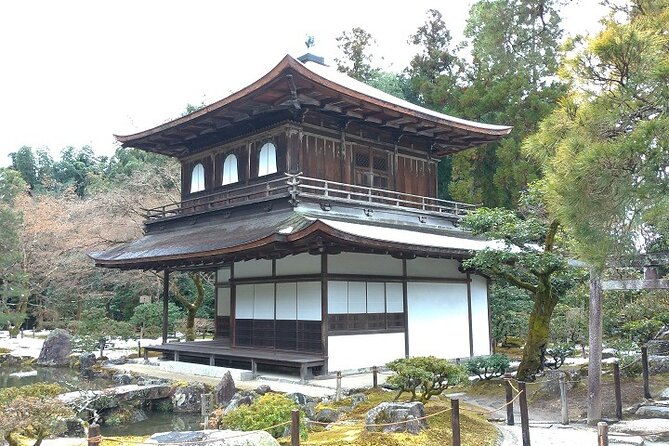
Ginkaku-ji: The Appeal of Less
The route next reaches Ginkaku-ji, a Zen temple and a UNESCO World Heritage site. The focus here is the Japanese ideal often described as less is more: how simplicity can be deliberate, and why restraint can carry meaning.
You’ll spend 45 minutes at the temple. That is enough time to take in the setting and talk through the idea, though not enough for a lingering visit if you want to explore every detail at your own pace. The admission fee is not included, so plan to have cash available.
This stop offers a useful contrast with the grandeur of some other Kyoto temples. The point is not simply that a spare design looks attractive. Hiroki’s approach invites you to think about what simplicity expresses, and how Zen ideas may inform choices about space and attention. That gives the visit a more considered purpose than a quick tour of the grounds.
More private tours in Kyoto:
- Fushimi Inari Hidden Hiking Tour (Private Option Available)
★ 5.0 · 1,750 reviews - Private Kyoto Tour with a Local, Highlights & Hidden Gems, Personalised
★ 5.0 · 1,543 reviews - Kyoto 6hr Private Tour with Government-Licensed Guide
★ 5.0 · 1,369 reviews - 10 Must-see Spots in Kyoto One Day Private Tour (up to 7 people)
★ 5.0 · 1,108 reviews
The Philosopher’s Path: From Zen to Modern Thought
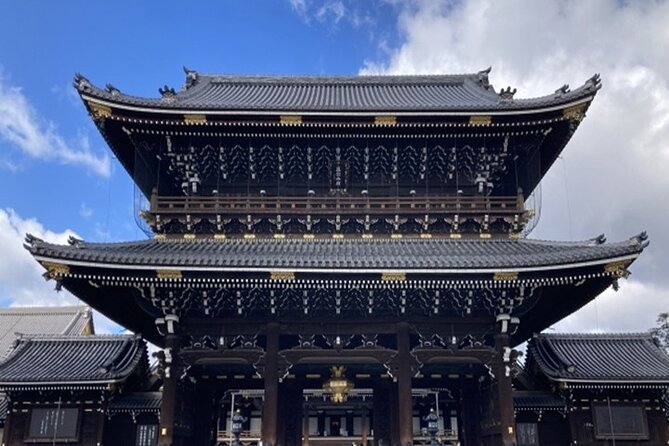
The Philosopher’s Path is the longest single stop, with an hour allotted for walking and conversation. Here, Hiroki brings the focus to Japanese modern philosophy and asks how Japanese thinkers engaged with Western philosophical traditions.
The path itself is well known, but this tour’s emphasis is not just on walking a scenic route. You’ll use the setting to consider ideas and compare ways of thinking. If you enjoy talking through questions rather than receiving a one-way lecture, this is likely to be the heart of the day.
The route includes about one mile of walking on the path. Wear comfortable shoes, and keep in mind that the full tour involves additional walking between places and through backstreets. The exact amount of walking beyond that mile is not specified, but this is not a sit-down experience.
The guide’s role matters especially here. Hiroki’s background as a philosophy researcher gives the discussion a clear intellectual thread, and the private format lets you ask follow-up questions without holding up a larger group. People who have spent time with him also describe him as kind, flexible, and good at managing time. Those traits are particularly useful when a tour depends as much on conversation as on reaching the next stop.
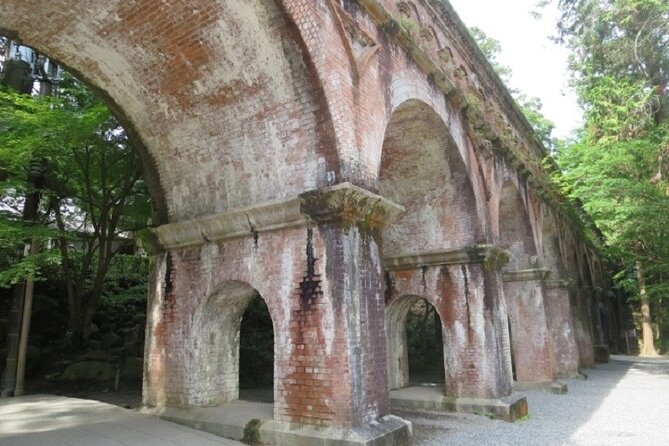
Nanzen-ji Suirokaku: A Brick Aqueduct in a Temple Setting
At Nanzen-ji Suirokaku, the tour turns from religious doctrine to the relationship between design and place. The aqueduct is a Western-style brick structure inside a traditional Buddhist temple setting. The question for the group is what makes landscape protection ideal.
The contrast is the point. Here, you can consider how a structure from a different architectural tradition sits within a setting associated with Buddhist temples, and what it means to preserve both built features and their surroundings. The stop lasts 15 minutes and is free.
This is a brief visit, so expect a focused prompt rather than a long architectural lesson. Still, it breaks up the day’s temple and philosophy discussions with a concrete question about public space, design, and preservation.
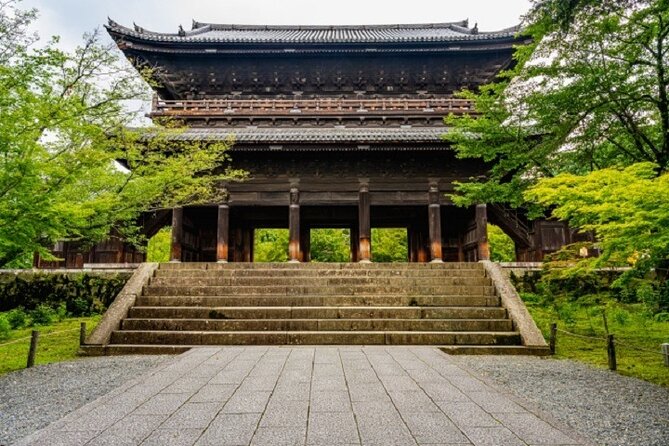
Sanmon Gate: Three Steps Toward Liberation
The Sanmon Gate is a two-story structure whose name represents a gate of three steps toward liberation. The tour uses it to ask how Buddhist teaching describes enlightenment.
You’ll spend about 15 minutes here. Admission is not included, and the gate has stairs only, so this is an important practical detail if stairs are difficult for anyone in your party. The broader itinerary also includes a two-story building accessible only by stairs.
The stop connects a physical threshold with a spiritual idea. That is a recurring strength of the tour: a gate, garden, or path is not just scenery, but a way to raise a question about how belief is understood and experienced. The short visit keeps the day moving, but the question may give you something to think about long after you leave.
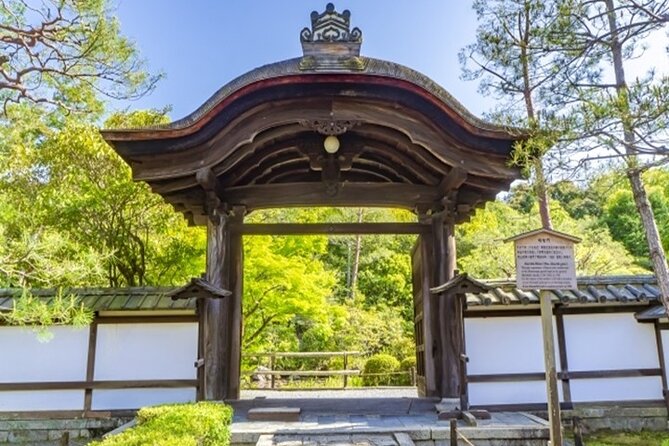
Konchi-in: Reading a Zen Garden
The final listed stop is Konchi-in, a Zen temple known particularly among Japanese history enthusiasts. The subject is what an authentic Zen garden looks like, and how religious ideas can be conveyed through a designed space.
Thirty minutes gives you a chance to look closely and discuss the garden rather than simply pass through. Admission is not included. If you have a particular interest in garden design, ask Hiroki what features he wants you to notice; the tour is built around interpretation, and a well-aimed question can make the visit more rewarding.
Ending here makes sense. After a day spent talking about Buddhist and Shinto ideas, the garden offers a physical setting in which to consider how a religious tradition can be expressed without a long explanation. The exact focus will depend on the conversation, but the stop brings the day back to the link between thought and place.
What the Price Covers, and What It Does Not
The listed price is $230 per person, with group discounts available. It covers the guide fee. You pay separately for lunch, temple admissions, and public transportation. The suggested cash amounts are ¥1,600 per person for temple entry and ¥750 per person for transport, so set aside ¥2,350 in addition to the tour price, plus your meal.
That is a substantial spend for a day out, particularly once those extra costs are added. The value depends on what you want from Kyoto. If your priority is simply seeing the major temples, you can visit many places independently for less. If you want a private guide who can connect the sites to Buddhist, Shinto, and philosophical ideas, the fee buys a more focused kind of day than a standard sightseeing route.
I’d value the tour most if you enjoy asking questions and are comfortable with ideas that do not have quick answers. Hiroki’s combination of licensed guiding and philosophy research is the central reason to choose this experience. You are paying for interpretation and conversation as much as for movement between sights.
The tour is usually booked about 43 days ahead, so it is sensible to plan early if your dates are fixed. Free cancellation is available up to 24 hours before the start time. Changes made less than 24 hours before the start are not accepted, and cancellations within that period are not refundable.
Who Should Take This Tour
This tour suits curious adults, couples, friends, and families with older children who enjoy conversation and can manage a long day of walking. It should appeal to anyone with an interest in religion, Japanese thought, Zen gardens, or the history of ideas. You do not need specialist knowledge; the questions are designed to help you think your way into the subjects.
It is less suited to someone who wants a fast, fact-packed checklist, prefers minimal walking, or needs a fully step-free route. The one-mile Philosopher’s Path section and stairs at a two-story building are worth considering. With the hour-long lunch break and public transport between places, the day has several changes of pace, but it remains a substantial outing.
Should You Book the Kyoto Philosophy Walk?
Book this if you want Kyoto to be more than temples and photographs. Hiroki’s strongest asset is the combination of practical guiding and philosophical discussion, with the private format making it easier to shape the conversation around your interests. The route gives you a varied set of settings, from a major temple to a shrine, a famous path, an aqueduct, and a Zen garden.
Skip it if you mainly want the lowest-cost way to see the sights, or if long walks and stairs are a poor fit. For the right person, though, this is a distinctive way to spend a day: you’ll leave with familiar Kyoto places attached to questions worth carrying home.
FAQ
How long is the Kyoto Philosophy Walk?
The tour lasts about six hours and 30 minutes. It begins at 9:00 am and ends back at the meeting point.
Who leads the tour?
Hiroki leads the tour. He is a nationally licensed guide and trained philosophy researcher.
Is this a private tour?
Yes. Only your group takes part.
What is included in the $230 price?
The listed price includes the guide fee. Lunch, temple admissions, and public transportation are not included.
How much extra cash should I bring?
The stated amounts are ¥1,600 per person for temple admissions and ¥750 per person for public transportation. Bring cash, and budget separately for lunch.
How much walking does the tour involve?
The route includes about one mile of walking on the Philosopher’s Path, along with backstreet walking and travel between sites. The total walking distance is not specified.
Are there stairs on the tour?
Yes. The itinerary includes a two-story building with stairs only. The Sanmon Gate is also two stories high.
Newly added in Kyoto
- Uji: Private immersion into Kyoto’s tea and reglious culture★ 5.0 · 17 reviews
- Whisk Your Own Matcha: A Zen Matcha Experience at Temple★ 3.6 · 7 reviews
- Kyoto tea town for matcha lovers★ 5.0 · 16 reviews
- Treasures of Kyoto: Gion & historical Walking Tour★ 5.0 · 6 reviews
- Kyoto Matcha Green Tea Tour★ 4.5 · 23 reviews
- Uji and Wazuka Matcha Farm Half Day Private Guided Tour★ 5.0 · 21 reviews
- Uji Tea Ceremony and UNESCO Heritage Walking Tour★ 5.0 · 20 reviews
- Utilising upcycled Matcha! Creating matcha incense (Uji, Kyoto)★ 5.0 · 6 reviews
Kyoto Walking Tours, compared.
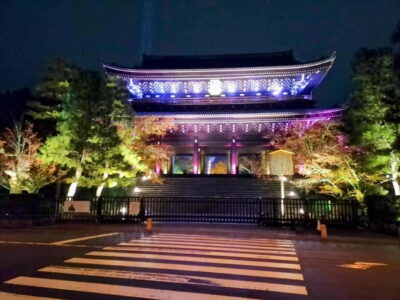
Kyoto Geisha Walking Tour: Gion District & Hidden Gems
Read our review →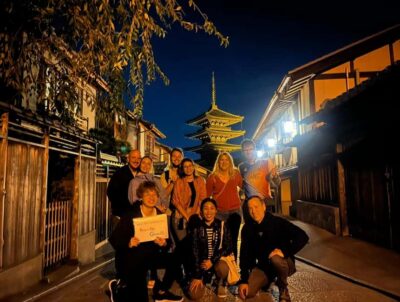
Gion Magical Night Walking Tour with Geisha Trivia
Read our review →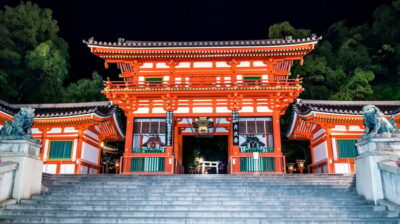
Gion Geisha District Walking Tour – Stories of Geisha
Read our review →

Nishiki Market Brunch Walking Tour (7 Tastings + Brunch)
Read our review →
Kyoto Arashiyama Walking Tour: Bamboo, Monkeys, Gardens & Secrets
Read our review →
Nara Half Day Trip Walking Tour (Private Option Available)
Read our review →Browse the lists this tour appears in