

Reviewed · KYOTO TEA CEREMONIES
Uji Tea Ceremony and UNESCO Heritage Walking Tour
Uji’s appeal comes into focus when you connect its famous green tea with the temples and shrines that shape this old riverside town. This three-hour walk pairs a visit to UNESCO-listed Byodoin Temple with a traditional tea ceremony at Taihoan, then carries on past bridges and sacred sites.
I like two things here: the guide gives historical context as you walk, and the tea ceremony makes Uji’s tea culture something you can experience rather than just read about. The main consideration is time: the ceremony lasts 30 minutes, so it’s a useful introduction, not a long, hands-on lesson.
Key points to know
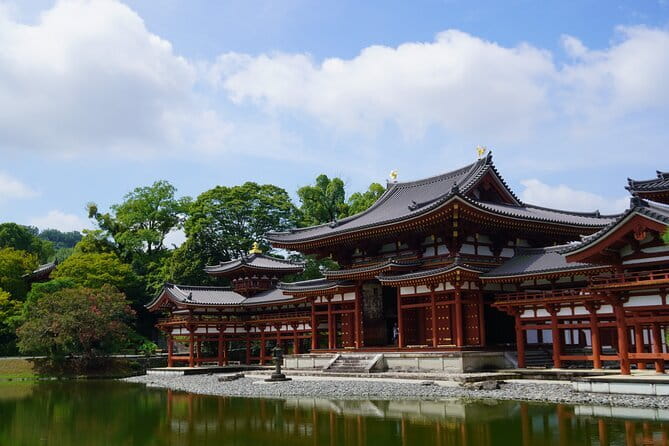
- Byodoin is the main event: Allow about an hour for its famed Phoenix Hall and temple grounds. Admission is included.
- The tea ceremony is brief: The Taihoan stop is 40 minutes, with a 30-minute ceremony.
- The walk connects Uji’s landmarks: Expect two bridges, Uji Shrine, Ujigami Shrine and an ending near Uji Bridge.
- The guide adds context: Past guides have included Naoki, Katsuhiko, Maru and Nobumasa Myake. Your guide may differ.
- Small group, fixed start: The tour begins at 9:45 am at Uji Station and has a maximum group size of nine.
- Budget around $70: Temple admission and the English-speaking guide are included; personal expenses and hotel transfers are not.
Byodoin’s Phoenix Hall sets the tone
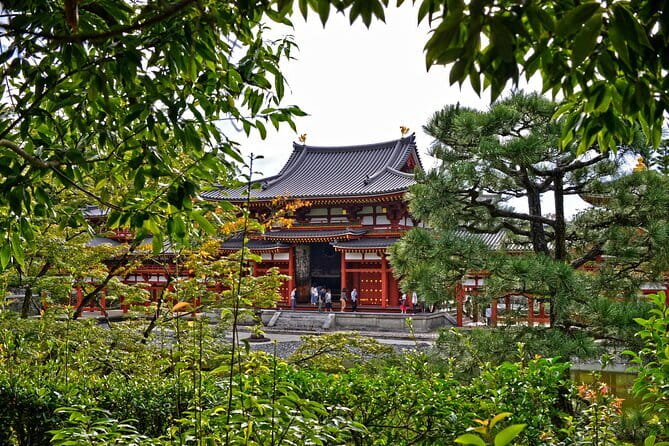
The route opens at Byodoin Temple, where you have about an hour to take in one of Uji’s most important historic sites. The Phoenix Hall is the visual centerpiece, and its more than 1,000 years of history give the visit weight beyond its striking architecture.
A guide can help you read the place as more than a photo stop. Several people on past tours especially valued hearing why the temple and the surrounding area matter, rather than simply walking through without context. That sort of explanation is useful at a site with a long past and details you might otherwise pass by.
There is also a museum associated with Byodoin, and at least one guided visit has included time there as well as at the temple. The exact emphasis can depend on how the hour is used, so if seeing the museum matters to you, ask your guide about the plan at the start.
The temple admission is included in the tour price. That makes the first stop straightforward, though the hour is still a set portion of a broader walk. If you prefer to spend a long time at each exhibit or linger over every architectural detail, you may want to return independently.
More Uji trips in Uji:
- World Heritage Kyoto & Nara Uji Authentic Matcha Experience
★ 5.0 · 1,573 reviews - Osaka: Nara and Uji Day Trip with Deer Park and Hot Spring
★ 4.4 · 302 reviews - Uji: Green Tea Tour with Byodoin and Koshoji Temple Visits
★ 4.8 · 72 reviews
Taihoan turns tea into a practice
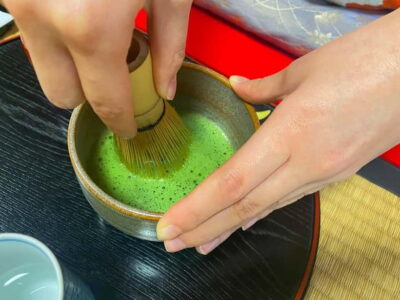
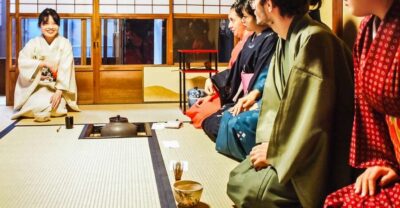
The next main stop is Taihoan, where the tour introduces you to Japanese tea ceremony in Uji, a town closely associated with green tea. The stop lasts about 40 minutes, with a 30-minute ceremony included. Expect a compact lesson in the preparation and customs of tea, not an extended class.
That short format suits a walking tour: it gives you a direct encounter with the ritual without using most of the morning. It can be especially engaging for children and first-time visitors, though the pace leaves limited time to ask every question or practise each step yourself. One past guest specifically noted that the ceremony felt short, a fair point to weigh if tea is your main reason for booking.
The ceremony still adds something that a tea shop visit cannot. You see the preparation treated as a practice with its own form and attention, then can carry that context into the rest of Uji, where green tea is part of the town’s identity. The tour also ends near local food and tea options, making it easy to continue exploring after the guide says goodbye.
Two bridges bring the river into the walk
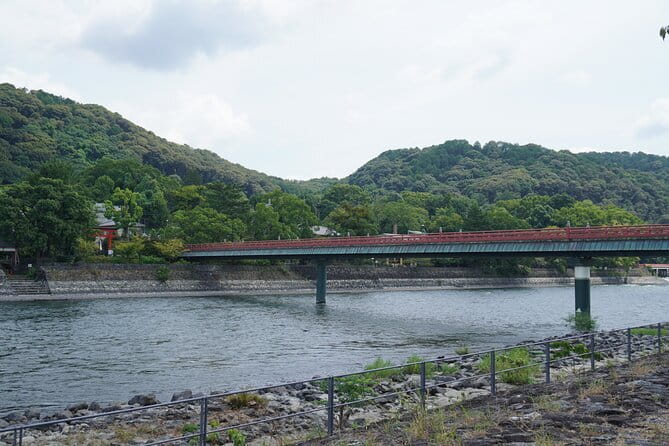
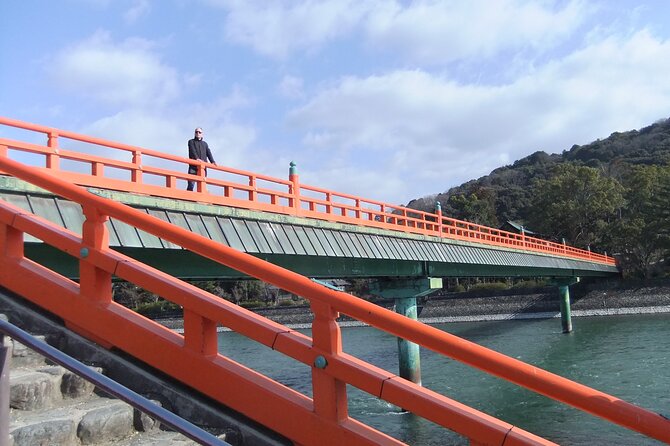
After the temple and tea stop, the route heads outdoors across the Tachibana and Asagiri suspension bridges. This section is about 15 minutes, with views over the Uji area and the river setting that gives the town a different feel from Kyoto’s denser streets.
The bridges offer a welcome change of pace from indoor sites. They also create a natural point to pause for photographs, though the tour allows only a short time here. If you enjoy taking pictures or want to linger over the scenery, be ready to keep your camera handy rather than expecting a long scenic break.
The route is a walking tour, so comfortable shoes are sensible. The supplied details do not give a distance or describe the terrain in more detail, so you should not assume the walk is tailored to a particular mobility need. The operator says most people can participate, but anyone with specific concerns should check before booking.
Uji Shrine and Ujigami Shrine offer a quieter pause
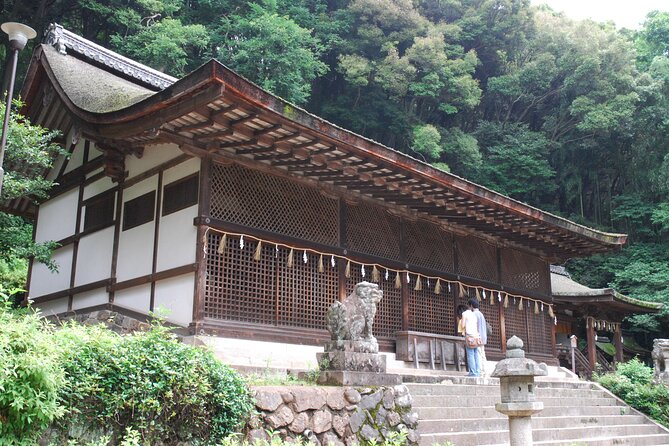
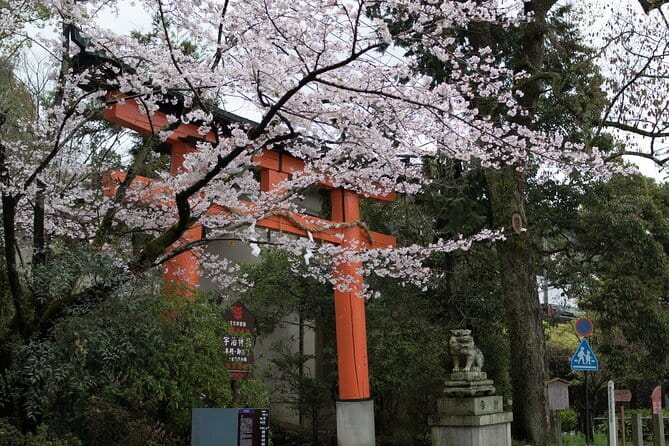
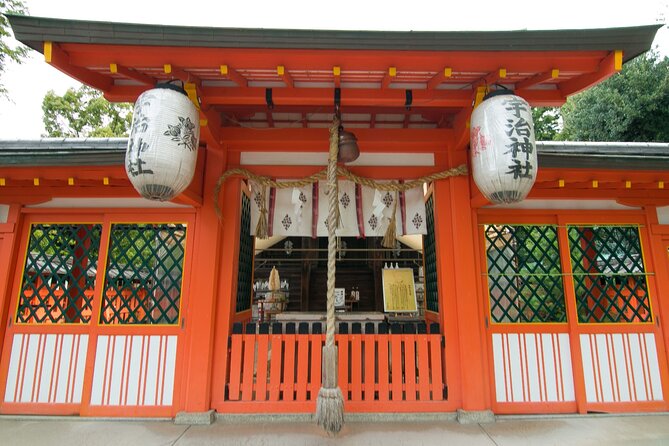
The walk continues to Uji Shrine and Ujigami Shrine, with about 20 minutes set aside for the pair. These sacred sites bring a quieter, more reflective note to a tour that also includes a major temple and the lively subject of tea.
Here, a guide’s local knowledge can make a short stop worthwhile. A shrine may be peaceful to look at, but the stories behind its role and cultural meaning help you understand why it belongs on the route. Past groups have appreciated the guide’s explanations across the town, and this is where those details can turn a brief visit into a more memorable one.
Twenty minutes is enough for an introduction, not a lengthy visit to both sites. If you like to move slowly through religious spaces or study each feature, this stop may feel brisk. Still, the compact timing helps the tour cover several sides of Uji within three hours.
More tea ceremonies in Uji:
- Uji: UNESCO Heritage & Tea Ceremony Walking Tour
★ 4.6 · 54 reviews - Matcha Grinding Experience and Walking Tour in Uji Kyoto
★ 5.0 · 26 reviews - Slow Cycling Tour at Uji’s Matcha Green Tea Fields and Heritage
★ 5.0 · 25 reviews - Uji and Wazuka Matcha Farm Half Day Private Guided Tour
★ 5.0 · 21 reviews
Uji Bridge is the practical finish
The tour ends around Uji Bridge, after about 45 minutes in the area. This final stretch is a chance to connect the sights with the town’s everyday food and tea culture. Uji is famous for green tea, and the route description points to local delicacies as part of the finish.
The exact tasting or purchases are not specified, and food is not listed among the included items. Treat this as time to discover local offerings rather than a promised meal or tasting flight. Bring some spending money if you want to buy tea or snacks; personal expenses are not covered.
The end point is also useful if you want to continue at your own pace. A past guide, Naoki, gave suggestions for matcha shops to visit afterwards, and other guides may have their own recommendations. Ask for ideas before the tour ends, especially if you want to make the most of Uji’s tea shops.
What $70 gets you in three hours

At $70 per person, you are paying for more than a series of brief stops. The price includes an English-speaking guide, entrance to Byodoin and a 30-minute tea ceremony. The guided explanations are a key part of the value: people who have taken the tour have particularly praised the history and local context their guides provided.
The group is capped at nine, which can make it easier to hear the guide and ask questions than on a large coach excursion. It is still a group walk with a fixed schedule, so the guide must balance individual interests against the route. Group discounts are available, though the amount and conditions are not specified.
The price does not include hotel pickup or drop-off, and personal purchases are extra. You meet at Uji Station at 9:45 am and finish at Uji Bridge. That start and end arrangement is convenient if you are already making your own way to Uji, but you will need to plan your transport independently.
The three-hour duration is a good fit if you want an organized introduction rather than a full day devoted to the town. It moves from temple to tea ceremony, then through bridges and shrines, giving you a broad first look. The trade-off is limited free time at each stop.
Who will get the most from this walk
This tour suits you if you are staying in or near Kyoto and want to see Uji with a guide instead of trying to piece its history together on your own. It is also a good match if you are curious about both tea and local heritage, since neither subject is treated as an afterthought.
Families may appreciate the manageable three-hour length. A past group with children found the pace workable, and the mix of temple, ceremony, bridges and shrines gives the walk variety. Still, children who need lots of unstructured time may find the set schedule less flexible.
You will get the most from it if you enjoy asking questions and hearing context while walking. Guides named on past tours include Naoki, Katsuhiko, Maru and Nobumasa Myake, though the assigned guide can vary. Clear communication before one tour and prompt meeting at the station were also noted, but it is wise to arrive on time for the 9:45 start.
If your top priority is a detailed tea lesson, this may not be the right choice on its own. The ceremony is only 30 minutes, and the tour devotes much of its time to other places. If your goal is a balanced introduction to Uji, that mix is precisely the appeal.
Weather and other practical details
The operator requires good weather for the experience. If poor weather forces a cancellation, you can be offered another date or a full refund. You can cancel for a full refund up to 24 hours before the start time; changes or cancellations inside that window are not accepted.
Your booking confirmation is issued at the time of booking, and the tour is near public transportation. The meeting point is Uji Station, at 17-16 Uji Umonji, Uji, Kyoto 611-0021. The ending point is Uji Bridge, Otsukata, Uji, Kyoto 611-0021.
Because the tour covers several stops in three hours, arrive ready to walk and keep the schedule in mind. The listed times for individual stops add up to the approximate tour length, so there is little room for a long independent detour during the guided portion. Save extra shopping or a relaxed tea stop for after the group finishes.
Should you book the Uji tour?
Book it if you want a well-rounded introduction to Uji with a guide who can connect Byodoin, tea culture, shrines and the riverside setting. Its strongest value lies in the combination: you get temple admission, a short ceremony and local explanations in one compact morning.
Think twice if you are booking mainly for an in-depth tea ceremony or want hours at the temple. The ceremony is brief, and the route keeps moving. For a first visit to Uji, though, this is a practical way to get your bearings, learn what makes the town distinctive and leave with ideas for where to spend more time on your own.
FAQ
How long is the tour?
The tour lasts about three hours.
What time and where does the tour start?
It starts at 9:45 am at Uji Station, 17-16 Uji Umonji, Uji, Kyoto 611-0021.
Where does the tour end?
The tour ends at Uji Bridge in Otsukata, Uji, Kyoto 611-0021.
Is Byodoin Temple admission included?
Yes. Entrance fees to Byodoin Temple are included in the price.
How long is the tea ceremony?
The Taihoan stop lasts about 40 minutes, and the included tea ceremony lasts 30 minutes.
Is a guide included?
Yes. The tour includes an English-speaking guide.
How large is the group?
The tour has a maximum of nine participants.
Can I cancel for a refund?
You can cancel for a full refund at least 24 hours before the start time. A cancellation less than 24 hours before the start is not refunded.
More temple and shrine tours in Uji
- Kyoto: Tea Ceremony Ju-An at Jotokuji Temple
★ 4.9 · 3,207 reviews - Arashiyama Bamboo, Temple, Monkeys, or Secret Sake Brewery
★ 4.8 · 886 reviews - Kyoto: Arashiyama Bamboo Forest, Monkeys, Matcha & Temple Tour
★ 5.0 · 759 reviews - Osaka/Kyoto: Arashiyama, Nara & Fushimi Inari Shrine w/Lunch
★ 4.4 · 754 reviews
More walking tours in Uji
- Uji Walking Tour – Byodo-in temple and Tea Ceremony from Kyoto
★ 3.5 · 3 reviews - Kyoto Geisha Walking Tour: Gion District & Hidden Gems
★ 4.7 · 3,273 reviews - Kyoto: Gion Magical Night Walking Tour with Geisha Trivia
★ 4.9 · 2,393 reviews - Kyoto: Gion Geisha District Walking Tour – Stories of Geisha
★ 4.7 · 2,187 reviews
Newly added in Uji
- Uji: Private immersion into Kyoto’s tea and reglious culture★ 5.0 · 17 reviews
- Uji and Wazuka Matcha Farm Half Day Private Guided Tour★ 5.0 · 21 reviews
- Utilising upcycled Matcha! Creating matcha incense (Uji, Kyoto)★ 5.0 · 6 reviews
- Slow Cycling Tour at Uji’s Matcha Green Tea Fields and Heritage★ 5.0 · 25 reviews
- Uji Walking Tour – Byodo-in temple and Tea Ceremony from Kyoto★ 3.5 · 3 reviews
- Matcha Grinding Experience and Walking Tour in Uji Kyoto★ 5.0 · 26 reviews
- Kyoto & Uji: Full Day Sightseeing Tour from Osaka or Kyoto★ 5.0 · 25 reviews
- Kyoto Hidden Riverside Zen Mediation and Uji Matcha Experience★ 5.0 · 9 reviews
Kyoto Tea Ceremonies, compared.
Tea Ceremony in a Traditional Tea House in Kiyomizu
Read our review →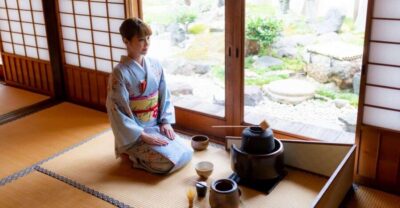
World Heritage Kyoto & Nara Uji Authentic Matcha Experience
Read our review →

Arashiyama Bamboo Forest, Monkeys, Matcha & Temple Tour
Read our review →
Tea Museum Tickets and Matcha Grinding Experience
Read our review →Browse the lists this tour appears in