
Reviewed · KYOTO TEA CEREMONIES
Kyoto: Table-Style Tea Ceremony at a Kyo-Machiya
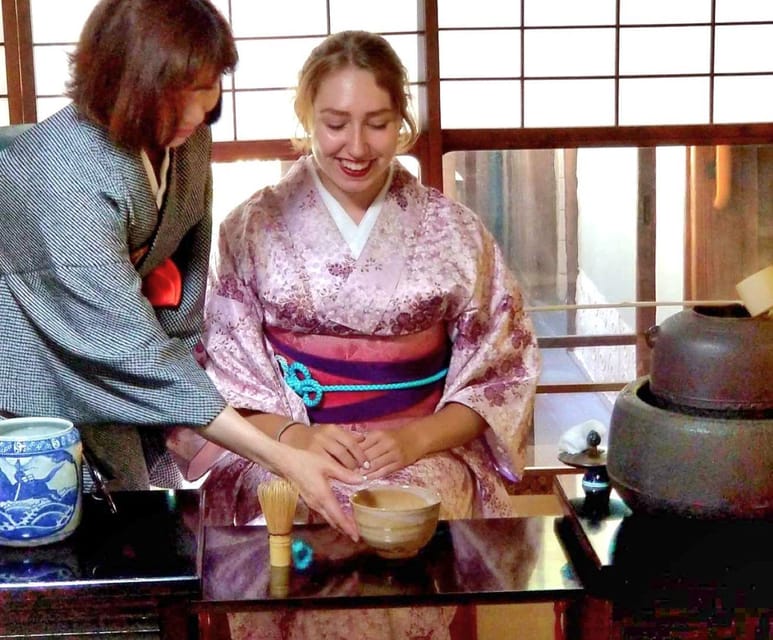
A Kyoto tea ceremony with chairs and tables makes room for people who want to learn the ritual without sitting on the floor. In a century-old townhouse, you’ll watch a tea service, make matcha with a bamboo whisk and try related arts such as calligraphy and flower arranging.
I like two things in particular: the hosts explain the customs in English, and the program gives you more to do than simply observe a bowl of tea being prepared. One consideration is the location: this is in southern Kyoto, not the central sightseeing district, so you’ll need to plan for the train ride and walk.
Key points to know
- Take part while seated: The ceremony uses tables and chairs rather than floor seating.
- Make your own matcha: Learn the basic whisking steps, then enjoy the tea with a traditional sweet.
- Explore a century-old townhouse: See its architecture, garden, antiques and old Buddhist and Shinto altars.
- Add several small cultural activities: Calligraphy and flower arranging are included, along with a welcome drink.
- Choose a kimono option: It adds a dress-up element and photo opportunities, but you must arrive 30 minutes early.
- Make a day of southern Kyoto: The sake district, Fushimi Inari and Uji are all potential companions to the visit, with train connections also serving Osaka and Nara.
A tea ceremony without floor sitting
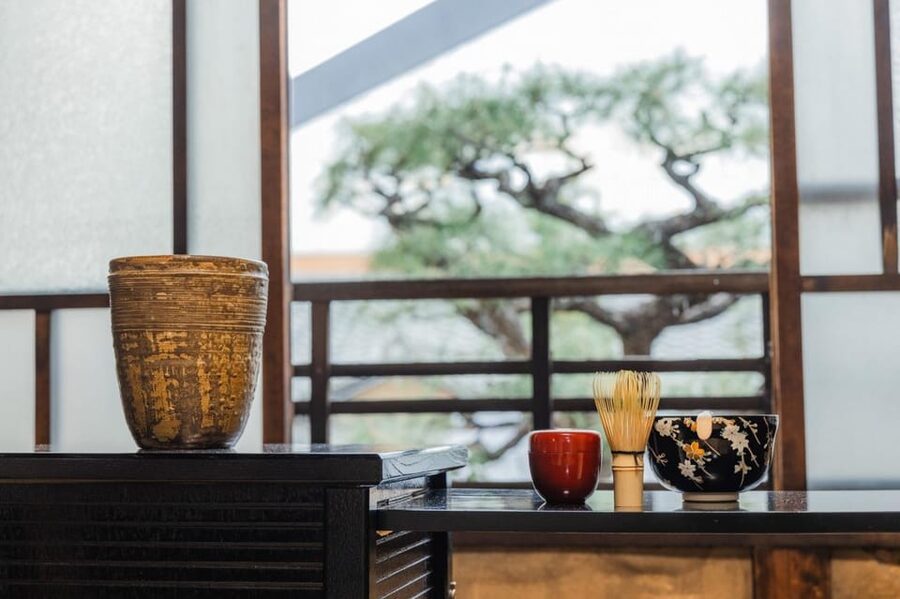
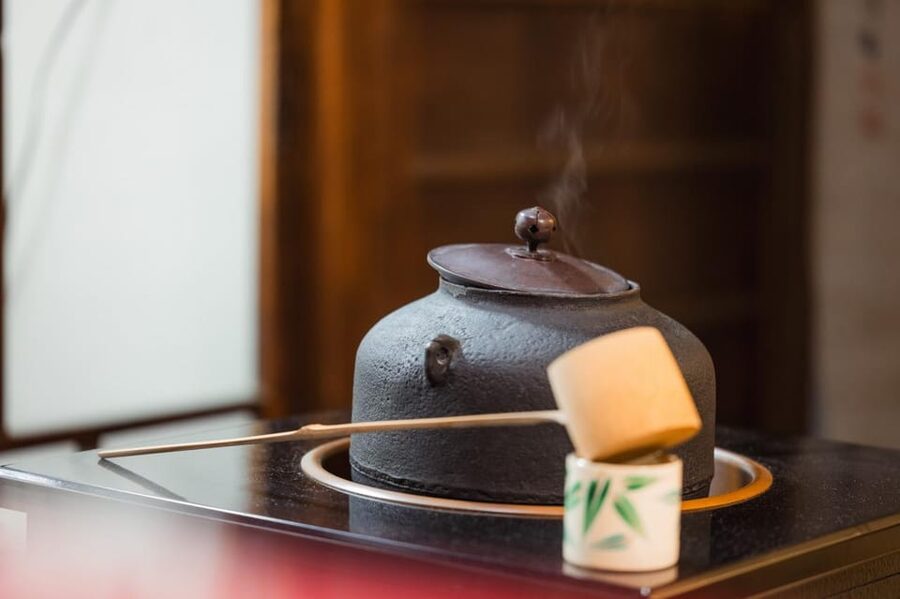
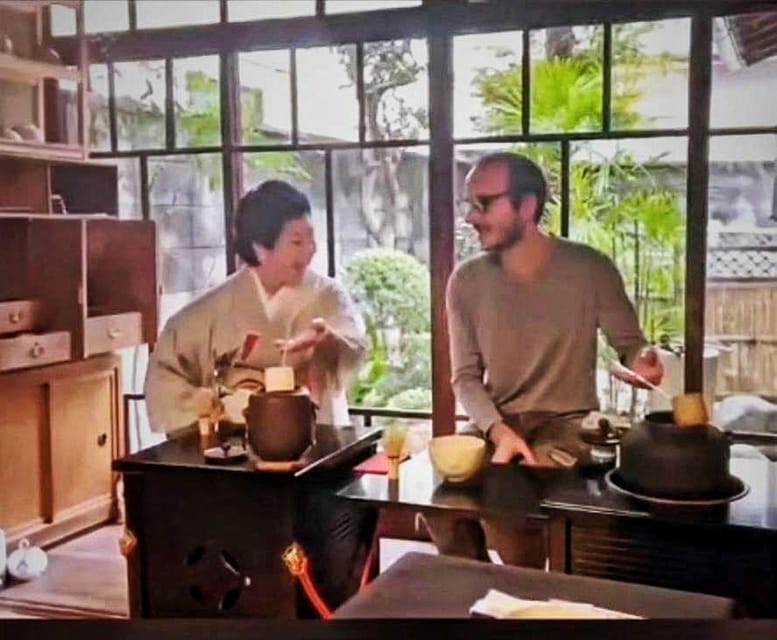
The ceremony takes place at tables, a practical difference if kneeling or sitting cross-legged is uncomfortable. You can focus on the host’s movements, the tea and the explanations rather than on how long you can manage on the floor.
That adaptation does not mean the ceremony is reduced to a quick demonstration. You’ll learn about Japanese tea customs and etiquette, watch the host prepare tea, and then try whisking your own matcha with a bamboo whisk. The session is designed as an introduction, so you don’t need prior knowledge or skill.
English instruction makes this a useful choice if you want context as well as photos. The hosts explain the ceremony and its development in Japan, and a presentation gives you a framework for the gestures and manners you’ll see. You can ask questions as the activities unfold.
More tea ceremonies in Kyoto:
- Kyoto: Tea Ceremony in a Traditional Tea House in Kiyomizu
★ 4.9 · 3,519 reviews - Kyoto: Tea Ceremony Ju-An at Jotokuji Temple
★ 4.9 · 3,207 reviews - Kyoto: 45-Minute Tea Ceremony Lesson Experience
★ 4.3 · 2,378 reviews
Inside the old Kyoto townhouse
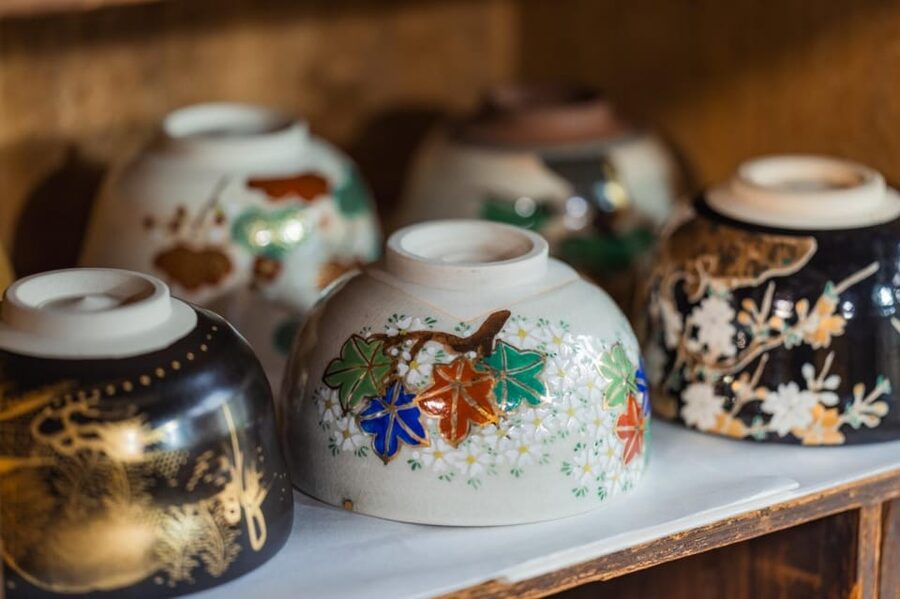
The setting is a more than 100-year-old traditional house in southern Kyoto. Its exterior may look modest, but the visit includes a chance to walk through the townhouse and take in its architecture, antiques, and old Buddhist and Shinto altars.
Before the tea portion, you’ll learn how to purify yourself at a stone basin in the garden, as you might at a shrine. This small ritual helps explain how deliberate actions and manners shape the ceremony. The garden also provides a setting for photos and video.
The house is part of the experience, not just a room rented for a class. You get a glimpse of an older domestic building and the atmosphere of everyday Kyoto life. The town itself has a long connection to Toyotomi Hideyoshi, and its present-day appeal includes sake shops and casual places to eat.
What happens during the 90 minutes
The session combines instruction and hands-on activities. Exact pacing may vary, but expect a welcome drink, an introduction to the house and customs, tea service, your own matcha-making, and time for calligraphy and flower arranging.
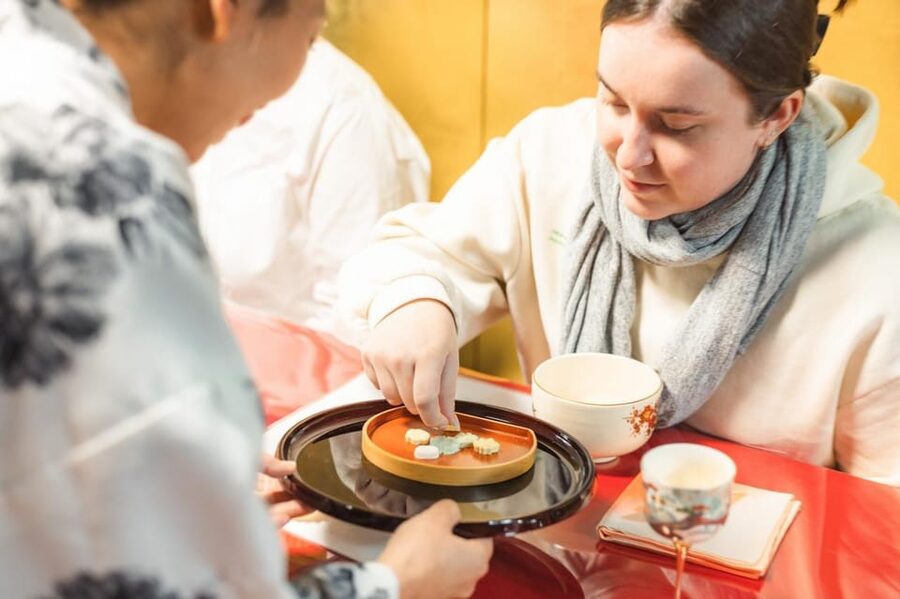
A welcome drink may be sake or juice. Tea and traditional sweets are part of the ceremony, while the broader experience includes a latte-art activity using thick tea. The different tastings and demonstrations give you several ways to engage with tea, rather than treating it as a single cup at the end.
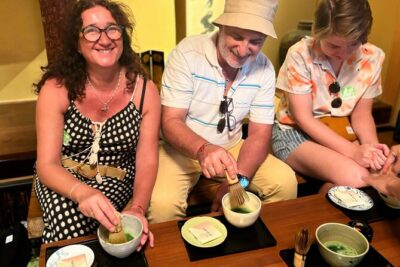
The central ceremony is both something to watch and something to try. First, the host demonstrates the careful preparation and service. Then you whisk matcha yourself. Making it gives you a tactile sense of the process, and the bamboo whisk is easy to understand even if you have never handled one before.
Calligraphy provides a change of pace. You can write your name in Japanese, with a hanging scroll or envelope featuring your name in kanji or hiragana. It is a personal keepsake, and an approachable way to get a feel for how Japanese writing can represent a name.
Flower arranging is another included activity. The experience introduces it as a short cultural practice, rather than a full course in ikebana. Taken together, these activities make the program varied, though people hoping for a long, quiet ceremony may find the pace more workshop-like than meditative.
Kimono, photos and a few useful details
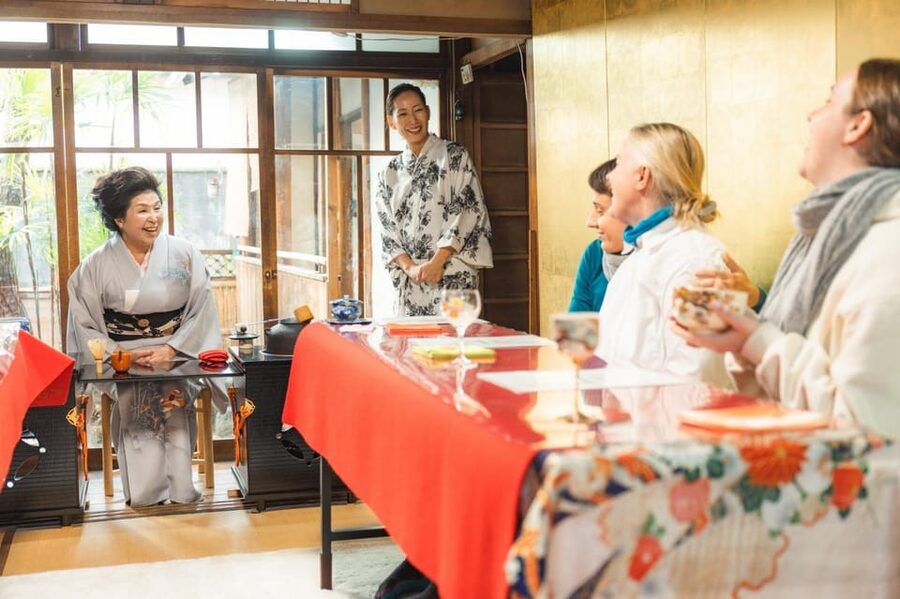
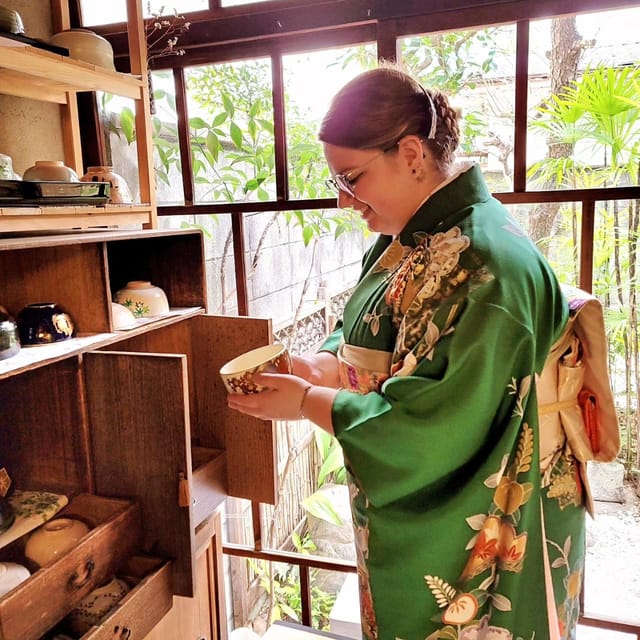
A kimono is an optional addition, not something included automatically in the $45 price. It can make the visit more memorable and gives you a chance to take photos in the garden and around the house. Hosts assist with dressing, and there are multiple kimono choices.
If you select the kimono option, arrive 30 minutes before the scheduled start. That time is needed for dressing, so arriving at the ordinary start time could leave you rushed. The provider asks pregnant participants not to wear a kimono, for health and safety reasons.
You can also take photos and videos using props such as umbrellas, folding fans and a katana-style sword. These are playful photo opportunities, distinct from the formal tea portion. If you prefer a quieter visit, you can focus on the ceremony and the house instead.
The hosts are repeatedly praised for being patient, attentive and warm, especially while helping people dress and explaining each step. The instruction is in English, which is valuable for understanding why the actions matter rather than simply copying them. No individual guide names are provided, so there is no particular instructor to request.
More Kyoto tours in Kyoto:
- PERFECT KYOTO 1-Day Bus Tour
★ 5.0 · 13,518 reviews - Kyoto: Fushimi Inari, Kinkakuji, Bamboo Grove 1 Day Bus Tour
★ 4.8 · 4,316 reviews - Kyoto Geisha Walking Tour: Gion District & Hidden Gems
★ 4.7 · 3,273 reviews - Kyoto: Gion Magical Night Walking Tour with Geisha Trivia
★ 4.9 · 2,393 reviews
Getting to southern Kyoto
The townhouse is outside central Kyoto, in a well-connected area known for sake and local shopping. From Kintetsu Kyoto Station, take an express train toward Kintetsu Momoyama-Goryo-mae Station; the ride is about 15 minutes. The full trip from Kyoto Station is described as roughly 25 minutes.
From Keihan Gion-Shijo Station, take the train to Fushimi-Momoyama Station. The trip is about 20 minutes. From either station, follow the directions toward Otesuji shopping arcade, then turn at the Mizuho Bank or Rakuten mobile shop. From Momoyama Station on the JR line, walk toward Gokogu Shrine, continue to the arcade and turn at the same landmarks. The old townhouse has a blue curtain.
The written directions use several landmarks, so keep the bank or mobile shop in mind as your turning point. There is no hotel pickup or drop-off. Allow extra time if you are unfamiliar with the station area, and check your route before setting off.
This part of Kyoto works well as a half-day plan. Fushimi Inari is about 15 minutes from Keihan Fushimi Inari Station, while Uji, known for tea, is about 20 minutes away by train. Osaka is about 40 minutes by express train, and Nara about 50 minutes. These are useful connections, but you’ll want to check the order of your stops and train routes rather than assume they all fit comfortably around the 90-minute activity.
Is $45 good value?
At $45 per person, the base experience includes much more than a brief tea tasting: a 90-minute session, tea ceremony, traditional sweet, welcome drink, matcha preparation, calligraphy and flower arranging. You also spend time in a historic townhouse and garden, with English instruction. For someone who wants an active introduction to Japanese customs, that is a solid amount for the price.
The kimono option changes the calculation, and its price is not specified here. Check the total before booking if dressing up is important to you. For many people, the clothing and photos are a major part of the appeal; others may find the core tea and cultural activities are enough.
The format is especially useful for first-time visitors, couples, families with older children or teenagers, and anyone curious about Japanese tea culture but unsure about a formal ceremony. The guided pace and hands-on tasks help keep the session accessible to beginners. It may be less suited to someone seeking a lengthy, highly formal tea practice or a quiet retreat.
There is one practical limitation: the activity is not suitable for wheelchair users. The townhouse involves moving through an older building, and one participant noted needing help on the stairs. If stairs or mobility are a concern, contact the provider before booking to clarify what access is possible.
Should you book it?
I’d book this if you want a friendly, participatory introduction to tea and everyday Japanese customs, especially if sitting on the floor is a barrier. The old house, English explanations, matcha-making and calligraphy make the time feel full without requiring specialist knowledge.
Choose the kimono option if dressing up and taking photos are part of the fun for you, and plan to arrive 30 minutes early. If your Kyoto schedule is packed with central sights, factor in the journey south. But if you’re also visiting Fushimi Inari, Uji or the sake district, this ceremony can fit neatly into a day in the area.
FAQ
How long does the tea ceremony experience last?
The activity lasts 90 minutes.
Is the tea ceremony performed while sitting on the floor?
No. The experience uses tables and chairs, so you do not need to sit on the floor.
What activities are included?
The experience includes the tea ceremony, a traditional sweet, a welcome drink, matcha-making, calligraphy and a flower arranging activity.
Is the instruction in English?
Yes. English is listed as the language of instruction.
Is kimono rental included in the $45 price?
Kimono rental is included only if you select that option. The price of the option is not specified here, so check the total when booking.
How early should I arrive if I choose the kimono option?
Arrive 30 minutes before the experience begins.
Where does the experience take place?
It takes place in a more than 100-year-old traditional townhouse in southern Kyoto, near the Otesuji shopping arcade.
Is transportation included?
No. Hotel pickup and drop-off are not included. You travel to the meeting point by train and on foot.
Can I visit Fushimi Inari or Uji on the same day?
Both are practical additions to a southern Kyoto visit. Fushimi Inari is about 15 minutes from Keihan Fushimi Inari Station, and Uji is about 20 minutes away by train.
Is the experience suitable for wheelchair users?
No. It is listed as not suitable for wheelchair users.
Newly added in Kyoto
- Uji: Private immersion into Kyoto’s tea and reglious culture★ 5.0 · 17 reviews
- Whisk Your Own Matcha: A Zen Matcha Experience at Temple★ 3.6 · 7 reviews
- Kyoto tea town for matcha lovers★ 5.0 · 16 reviews
- Treasures of Kyoto: Gion & historical Walking Tour★ 5.0 · 6 reviews
- Kyoto Matcha Green Tea Tour★ 4.5 · 23 reviews
- Uji and Wazuka Matcha Farm Half Day Private Guided Tour★ 5.0 · 21 reviews
- Uji Tea Ceremony and UNESCO Heritage Walking Tour★ 5.0 · 20 reviews
- Utilising upcycled Matcha! Creating matcha incense (Uji, Kyoto)★ 5.0 · 6 reviews
Kyoto Tea Ceremonies, compared.

Tea Ceremony in a Traditional Tea House in Kiyomizu
Read our review →

World Heritage Kyoto & Nara Uji Authentic Matcha Experience
Read our review →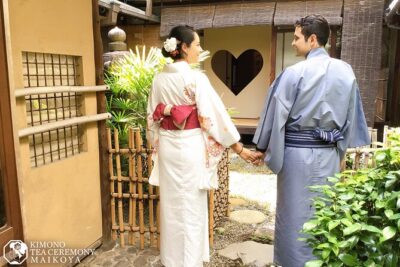

Arashiyama Bamboo Forest, Monkeys, Matcha & Temple Tour
Read our review →
Tea Museum Tickets and Matcha Grinding Experience
Read our review →
Browse the lists this tour appears in