
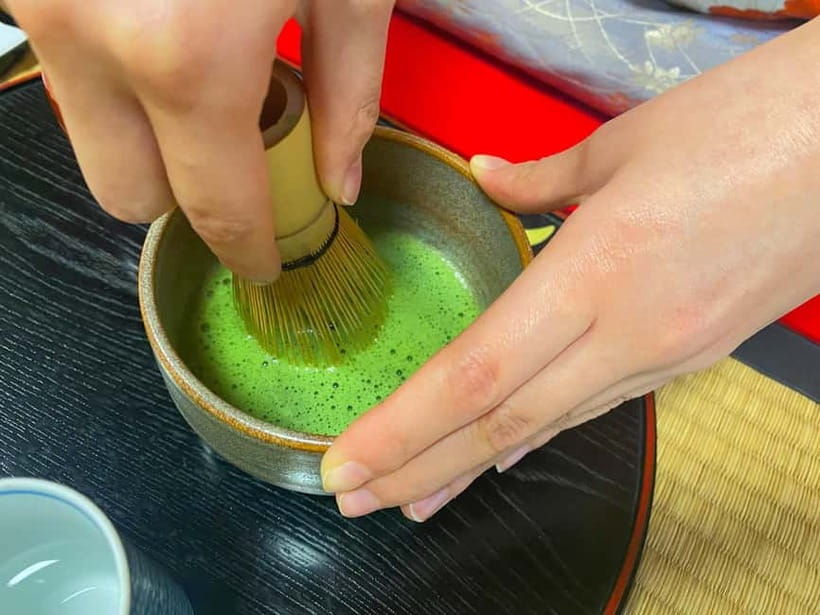
Reviewed · KIYOMIZU-DERA TOURS
Kyoto: Tea Ceremony in a Traditional Tea House in Kiyomizu
The appeal here is the contrast: Sannenzaka is one of Kyoto’s busiest sightseeing streets, yet this tea house opens onto a tranquil garden. In 45 minutes, you watch a tea master prepare matcha, hear about the ceremony’s history, and try making a bowl yourself.
I like two things in particular: the garden gives the ceremony a quiet setting, and you do more than watch, since you also prepare matcha and taste a traditional sweet. The English-language introduction helps explain why the gestures matter, not just what to do.
One consideration is the short format. At $49 per person, this is a focused cultural activity, not a long lesson, and kimono rental is not included. If you want a deep course in tea practice, you may find it brief; if you want a well-paced introduction between visits, it fits neatly into a Kyoto day.
- A quiet garden just off Sannenzaka: The tea house feels removed from the busy approach to Kiyomizu-Dera.
- A demonstration, then your turn: Watch the tea master before learning to prepare your own matcha.
- Two cups and a Japanese sweet: The price includes the ceremony, two cups of matcha, a customary sweet, and a group photo.
- An English-language introduction: Hear about the ceremony’s 500-year history and the meaning behind its practice.
- A 45-minute stop: This is easy to pair with nearby sights, though it is not an extended tea course.
- Find the correct entrance: Look for the large gate on the right as you walk down Sanneizaka, then follow the directions to Sakaguchian.
A Garden Pause on Sannenzaka
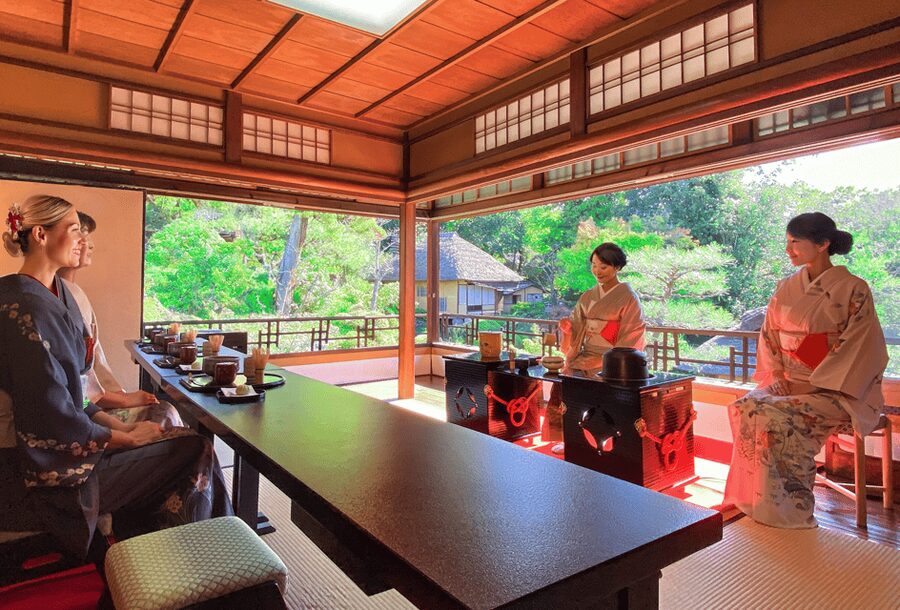
The location is a big part of the experience. Sannenzaka leads toward Kiyomizu-Dera and draws plenty of foot traffic, but the tea house sits behind a gate, with a garden designed by the celebrated landscape artist Ogawa Jihei VII. The change from sightseeing street to garden setting gives the ceremony a clear sense of occasion.
That contrast matters. Kyoto can ask you to move quickly from temple to temple, and a short seated activity offers a welcome change of pace. Here, the garden is not simply a backdrop for the photo at the end. It gives you something calm to look at while you listen, watch the tea preparation, and take your time with the matcha.
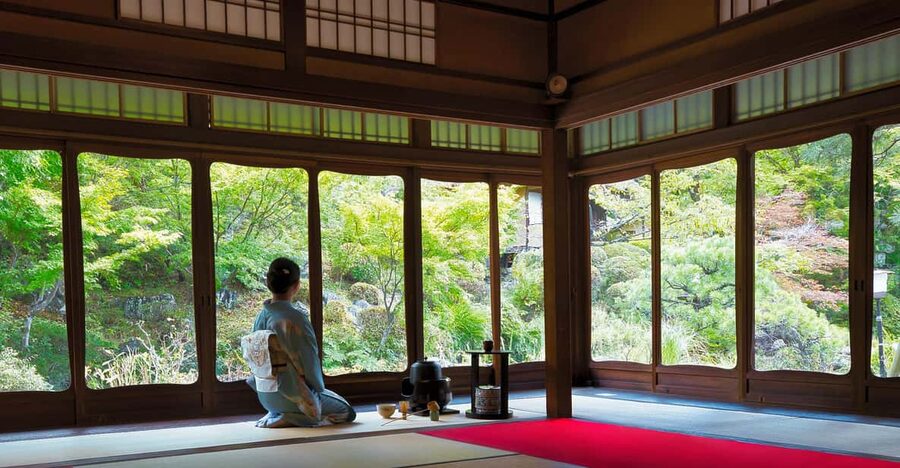
The garden is described as established, and its design is credited to Ogawa Jihei VII. That detail adds context to the setting without asking you to be a garden expert. You can simply notice how the room frames the view and how the quiet atmosphere changes the mood of a street-side visit.
The entrance takes a little attention. Walk down Sanneizaka near Kiyomizu-Dera for about 50 meters, then enter the large gate on the right. Once through it, go straight for 10 meters and use the white gate on your left to reach Sakaguchian. The tea house is set back from the street, so keep an eye out for the gate rather than expecting a doorway directly on the main path.
If you arrive by taxi, the directions say to ask for the Kodaiji Temple area and get out at the intersection of Sanneizaka and Ishin-no-michi. The Japanese address is Kyoto-shi Higashiyama-ku Kiyomizu 3-334. The location makes this a natural addition to a day around Kiyomizu-Dera, but do allow time to find the entrance rather than rushing in at the last moment.
The Welcome and a Short History
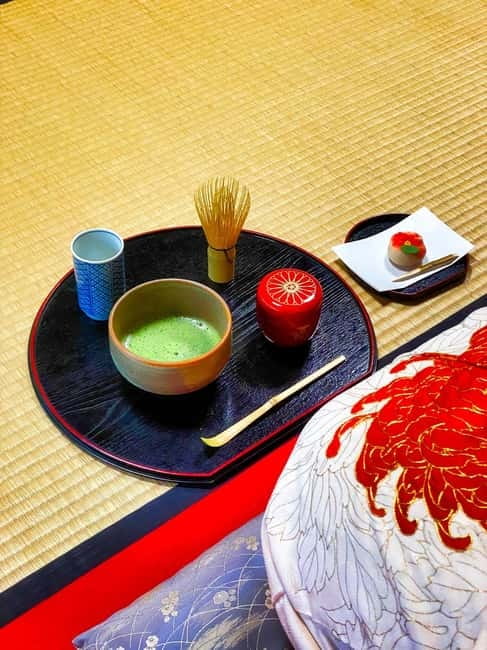
The session begins with a welcome from the instructor and an introduction to the garden and tea house. English is the listed language, which matters because the experience is more than a visual performance. You hear a brief explanation of the ceremony and its 500-year history before the tea master begins.
The introduction is deliberately concise. It gives you enough context to understand that the ceremony is a practiced tradition, rather than a set of decorative motions, while leaving most of the time for watching and participating. If you enjoy historical detail, you may wish the talk went further. One participant, for example, would have liked a little more history. Still, the format suits a 45-minute visit and keeps the activity moving.
The welcome can shape how comfortable you feel asking questions. In one account, a host named May helped make the English explanations clear and easy to follow. Staff names and individual instructors can vary, so do not count on meeting a particular person. What you can expect is an English-language session built around explanation, demonstration, and participation.
The group size is not fixed in the information provided. Some sessions have been described as small, including groups of about eight or ten, which can make it easier to follow the tea master and ask questions. But you should not assume a particular number of people at your session.
More Kiyomizu-dera tours in Kyoto:
- Kyoto: Nijo Castle, Kiyomizu & Fushimi Inari Guided Tour
★ 4.7 · 700 reviews - Kyoto: Nijo, Kinkaku-ji, Arashiyama, Kiyomizu & Fushimi Inari
★ 5.0 · 699 reviews - Kyoto: Private Rickshaw Tour of Gion and Higashiyama Area
★ 5.0 · 144 reviews
Watching the Tea Master at Work
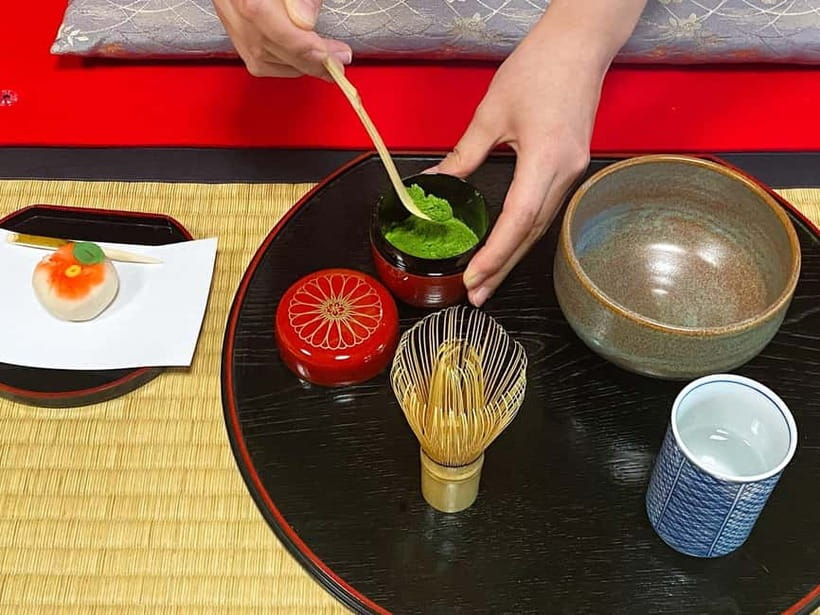
The demonstration is the heart of the activity. You watch an experienced tea master prepare matcha with controlled, deliberate movements, then learn how to make your own. The ceremony’s careful pace is part of the point: the preparation asks you to pay attention to each step rather than treat tea as a quick drink.
You do not need to know tea etiquette beforehand. The instructor explains what is happening, and the tea master’s demonstration gives you a clear example before you try it yourself. That combination makes the activity approachable for first-time visitors, including people who are curious about Japanese tradition but do not know where to start.
There is a difference between observing a practiced tea master and making tea as a beginner. The demonstration shows the precision and grace that come with long practice; your own turn is a chance to learn the basics. Do not expect to master the ceremony in one sitting. The reward is a first-hand sense of its rhythm and a better understanding of how matcha is prepared.
The pace also encourages quiet attention. It is not a show built around spectacle or a long lecture. You are there to watch closely, listen, and take part. That makes respectful behavior important. Keep your attention on the ceremony while it is underway, and avoid walking around during the demonstration.
Making Matcha and Tasting a Sweet
After watching, you learn how to brew your own matcha. This hands-on part is a practical bonus: you leave with more than a memory of someone else preparing tea. The experience includes two cups of matcha, so you can taste tea prepared by the tea master and enjoy the cup you make yourself.
Matcha can taste intense or bitter if you are used to sweetened tea drinks. Here, it is served as part of a traditional ceremony, with a customary Japanese sweet alongside it. The sweet is a small but useful pairing, balancing the tea and giving you a taste of how the two are enjoyed together.
The tea itself has won over some people who were not keen on matcha before arriving. That is not a promise that every palate will change, but trying it in this setting may give you a different point of comparison than a café drink. If you already enjoy matcha, you will appreciate the chance to see how the tea is prepared and to make a bowl yourself.
The instructions are intended for beginners, not tea practitioners. You learn the basics of preparing matcha and get to drink what you make. That is enough to make the experience active without turning the session into a technical class. If your main goal is to learn advanced tea skills, the short duration and introductory approach may not be enough.
What the $49 Price Includes
At $49 per person, this is not the cheapest way to drink matcha in Kyoto. You are paying for a 45-minute cultural activity in a traditional tea house, an English-language introduction, a tea master’s demonstration, your own chance to prepare tea, two cups of matcha, a Japanese sweet, and a photo. The garden setting is part of the value, too.
The price makes the most sense if you want a guided experience rather than a quick drink. The explanation gives the ceremony context, while the demonstration and your own turn make the visit more engaging than simply looking into a tea room. For a short cultural stop in a very popular area, those pieces add up to a compact, well-defined activity.
There is a fair counterpoint: the session lasts only 45 minutes, and kimono rental is not included. If dressing in a kimono is central to your idea of a tea ceremony, you would need to arrange that separately. If you care more about learning, seeing the practice up close, and tasting matcha in a quiet setting, the included experience is more relevant than the clothing.
A photo is included, with the garden as a backdrop. It is a small keepsake rather than the main event, but it is a thoughtful finish to a session you may want to remember. The overall value depends on what you want from Kyoto: a quick taste of a tradition, not an all-afternoon course.
More tea ceremonies in Kyoto:
- Kyoto: Tea Ceremony Ju-An at Jotokuji Temple
★ 4.9 · 3,207 reviews - Kyoto: 45-Minute Tea Ceremony Lesson Experience
★ 4.3 · 2,378 reviews - World Heritage Kyoto & Nara Uji Authentic Matcha Experience
★ 5.0 · 1,573 reviews - Kyoto: Table-Style Tea Ceremony at a Kyo-Machiya
★ 4.9 · 1,211 reviews
Fitting the Ceremony into Your Kyoto Day
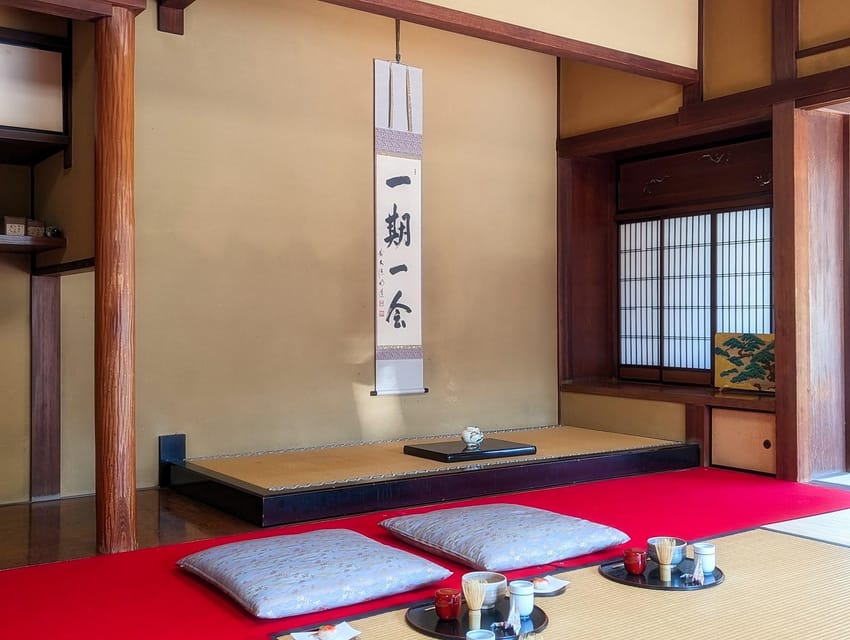
Because the activity lasts 45 minutes, it pairs easily with a visit to Kiyomizu-Dera and the streets around Sannenzaka. You can use it as a pause during a day of sightseeing, especially if you want one activity that is calm and participatory rather than another stop where you mainly look around.
The location is convenient for that plan, but the approach can be busy and the entrance is set back. Use the gate directions, and leave a little breathing room to find Sakaguchian. The session takes place rain or shine, so weather does not cancel the basic plan, though the garden may feel different on a wet day.
Children under seven are not suited to this activity. Older children may enjoy the demonstration and the chance to make tea, but the ceremony asks for attention and respectful behavior. Families with children aged nine and thirteen have found the format manageable, though every child is different. If you are bringing children, explain that they should stay attentive while the tea master is performing.
Large bags and luggage are not allowed. Pack light and plan to leave bulky items elsewhere before you arrive. The experience is also a better fit for couples, solo visitors, and small groups who want a calm shared activity and are willing to listen as well as participate.
Booking terms offer some flexibility: you can reserve now and pay later, and cancel up to 24 hours in advance for a full refund. Check the available start times when planning your day. Since the session is short, it is tempting to pack the schedule tightly, but the directions and the busy streets nearby make a little extra time sensible.
Is This Tea Ceremony Right for You?
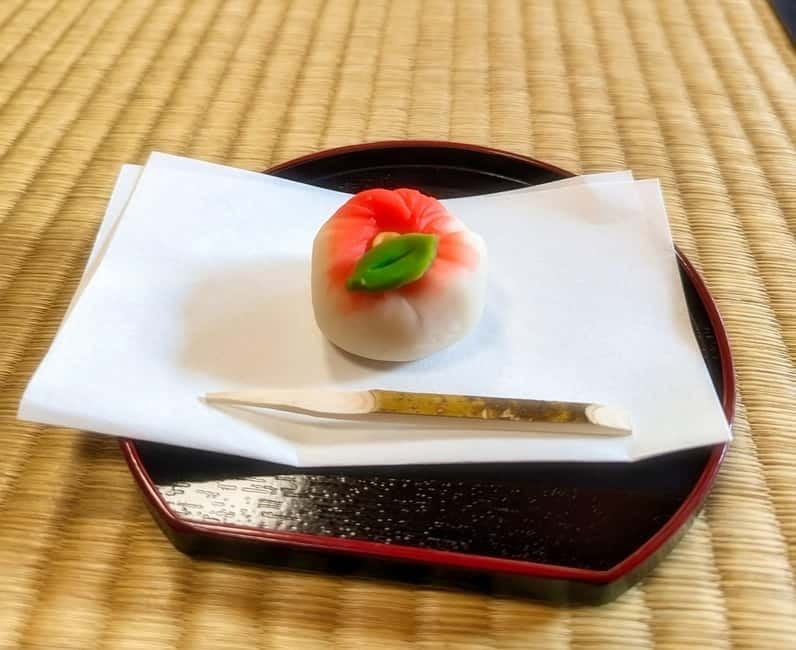
I would choose this if you want a clear, beginner-friendly introduction to matcha and Japanese tea practice in a memorable setting. The best parts are the tea master’s demonstration, the chance to make your own tea, and the calm garden just beyond one of Kyoto’s most visited streets.
It is less suitable if you want an in-depth course, a long discussion of tea history, or a kimono experience included in the price. But if you want a thoughtful 45-minute pause near Kiyomizu-Dera, with a sweet, two cups of matcha, and a photo to take home, $49 is a reasonable price for more than a cup of tea.
FAQ
How long does the tea ceremony last?
The activity lasts 45 minutes.
How much does it cost?
The listed price is $49 per person.
Where does the experience take place?
It takes place at Sakaguchian, a tea house on Sannenzaka near Kiyomizu-Dera Temple in Kyoto.
What is included in the price?
The experience includes the tea ceremony, two cups of matcha, a traditional Japanese sweet, and a photo.
Is the session conducted in English?
Yes. English is the listed language for the instructor.
Do I get to make matcha myself?
Yes. After watching the tea master’s demonstration, you learn how to prepare your own matcha.
Is kimono rental included?
No. Kimono rental is not included.
Are children allowed?
The activity is not suitable for children under seven.
Can I bring luggage or a large bag?
No. Luggage and large bags are not allowed.
What happens if it rains?
The tour takes place rain or shine.
Newly added in Kyoto
- Uji: Private immersion into Kyoto’s tea and reglious culture★ 5.0 · 17 reviews
- Whisk Your Own Matcha: A Zen Matcha Experience at Temple★ 3.6 · 7 reviews
- Kyoto tea town for matcha lovers★ 5.0 · 16 reviews
- Treasures of Kyoto: Gion & historical Walking Tour★ 5.0 · 6 reviews
- Kyoto Matcha Green Tea Tour★ 4.5 · 23 reviews
- Uji and Wazuka Matcha Farm Half Day Private Guided Tour★ 5.0 · 21 reviews
- Uji Tea Ceremony and UNESCO Heritage Walking Tour★ 5.0 · 20 reviews
- Utilising upcycled Matcha! Creating matcha incense (Uji, Kyoto)★ 5.0 · 6 reviews
Kiyomizu-dera Tours, compared.
Nijo Castle, Kiyomizu & Fushimi Inari Guided Tour
Read our review →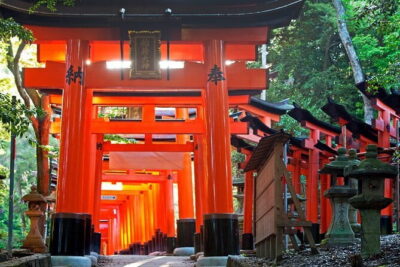
Nijo, Kinkaku-ji, Arashiyama, Kiyomizu & Fushimi Inari
Read our review →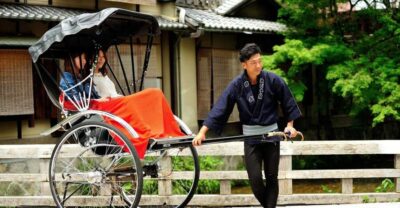
Private Rickshaw Tour of Gion and Higashiyama Area
Read our review →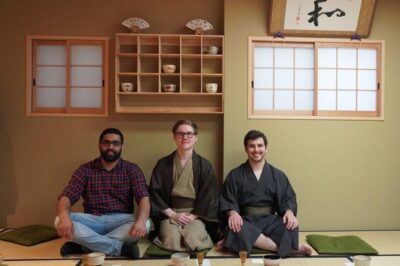
Kyoto Tea Ceremony & Kiyomizu-dera Temple Walking Tour
Read our review →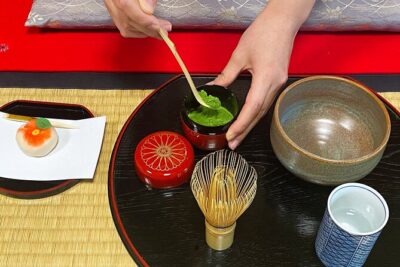
Kyoto Kiyomizu Tea Ceremony with Scenic Garden Views
Read our review →
Kimono/Yukata Rental 5 Minute from Kiyomizu-dera
Read our review →
Kyoto Gion Kiyomizudera Kimono Yukata Hairstyle | Photoshoot
Read our review →
Kiyomizu Temple and Backstreets of Gion, Half Day Group Tour
Read our review →Browse the lists this tour appears in