
Reviewed · KYOTO BIKE TOURS
Discover Kyoto by Bike Full Day Tour
Kyoto’s best surprises often sit between its headline sights: a temple courtyard, a quiet canal path, a narrow lane in an old geisha district. This private, full-day e-bike tour links those places by bicycle, taking you across the city and into corners a bus tour cannot easily reach.
I like two things in particular: the route mixes well-known stops such as Ginkakuji and Gion with quieter places like Honen-in, and the e-bike makes a long day of riding more manageable. Guide Jaime also leads the tour at a relaxed pace, with time for stops and photos.
The main consideration is the distance. You’ll ride about 32 kilometers over 7 to 8 hours, and you need to be comfortable steering on narrow paths. An e-bike helps, but this is still a full day of active sightseeing, not a short spin around town.
What makes this Kyoto ride worthwhile
- A full-city route: From Toji in southern Kyoto to Ginkakuji and Gion, you cover a broad slice of the city in one day.
- E-bike included: You get an electric-assist bicycle, useful over a long route with many stops.
- Private group: Only your party joins the tour, so the ride is not shared with unrelated groups.
- Quiet stretches between famous sights: The route uses backstreets, the Kamo River, and canal-side paths, not just the busiest temple approaches.
- A cultural mix: You’ll see temples, a university campus, a local park, historic districts, and an engineering museum.
- Lunch is on you: The price is $128.48 per person, but lunch is not included.
A 32-kilometer route through more than temples
This tour is best understood as a long, linked ride through Kyoto rather than a series of isolated temple visits. You start at 9:00 a.m. near Kyoto Station, at the 7-Eleven at 44-1 Higashikujō Kamitonodachō, and return to the same meeting point at the end. The total duration is about 7 to 8 hours.
The e-bike is included, but you still need to ride safely and manage the bike on narrow paths. The route’s mix of city streets, riverside stretches, and temple areas calls for attention as well as stamina. If you cycle regularly and can comfortably handle a full day in the saddle, the distance should feel like a practical way to connect far-flung sights. If you rarely ride, or feel uneasy in city traffic, think carefully before booking.
The private format suits couples, families, or friends who want to explore together without joining a larger group. It also gives Jaime the chance to guide just your party. That can make a full day feel more personal, though the pace and conversation naturally depend on your group.
More bike tours in Kyoto:
- Bike Tour Exploring North Kyoto plus Lunch
★ 5.0 · 1,087 reviews - Arashiyama Bamboo Forest & Hidden Gems Bike Tour (Early Bird)
★ 5.0 · 613 reviews - 5 Top Highlights of Kyoto Full Day Bike Tour (E-bike option)
★ 5.0 · 511 reviews
Toji, Umekoji Park, and Nishi Honganji
The first stop is Toji, a UNESCO World Heritage Site known for its five-story pagoda, the tallest wooden tower in Japan. You’ll have about 15 minutes to walk around the temple grounds. That is enough for a look and a few photos, but not a deep visit to a large religious complex. Treat it as an introduction to Kyoto’s Buddhist architecture rather than a long temple tour.
From there, the route passes through Umekoji Park, where the city gives way to broad green space, trees, seasonal flowers, and a pond. The park offers a change of pace early in the day, and a glimpse of a place locals use for a break from urban streets. The length of this stop is not specified, so expect it to be part of the ride rather than a scheduled, extended visit.
You’ll then pass through Ryukoku University’s Omiya Campus, founded by the Nishi Hongwanji Buddhist sect. It’s a brief look at modern Kyoto and the way religious traditions have shaped its institutions. The campus stop is about 10 minutes, so there’s time to notice the setting, not to explore the university in depth.
At Nishi Honganji, plan on around 30 minutes. This major Jodo Shinshu temple is recognized as a UNESCO site, and its large courtyard and wooden buildings give you a sense of the scale of religious life in Kyoto. The guide explains the temple’s influence, adding context that can be hard to get from a quick look at architecture alone.
Along the Kamo River and into Miyagawacho
The route next follows the Kamo River, a much-loved stretch where people jog, relax, and enjoy the water and open air. It’s a welcome break from temple grounds, and a good reminder that Kyoto is a lived-in city, not just a chain of historic monuments. Riverside paths can be popular, so ride with care and be ready to slow down around other people.
Miyagawacho brings a different kind of history. This lesser-known geisha district is explored by bicycle through its narrow lanes, where traditional streets still carry the feel of old Kyoto. The tour also visits Gion later in the day, so you can compare two historic districts rather than seeing only the best-known one.
These lanes are a reason to choose a bike tour, but they also call for careful riding. The tour description specifically asks you to be fit enough to maneuver safely on narrow paths. Keep your speed modest, follow Jaime’s lead, and treat the route as a chance to observe the district, not race through it.
Heian Shrine, the canal museum, and Nanzenji
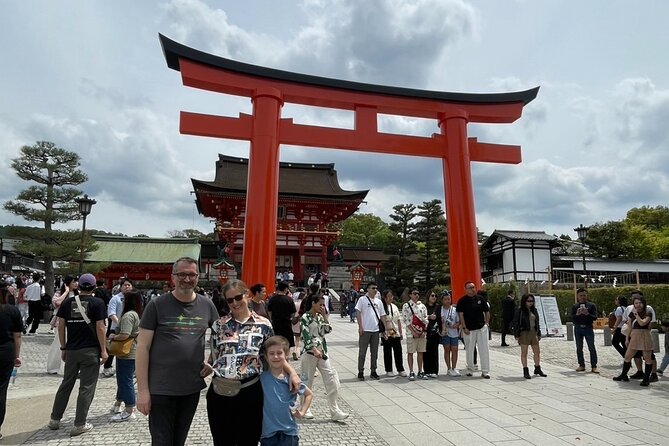
Heian Shrine was built in 1895 to mark Kyoto’s 1,100th anniversary. Its bright vermilion gate and buildings take their design from the ancient Imperial Palace, and the route includes a 10-minute stop. The large torii nearby is another striking sight, though the visit here is brief. You’ll get an introduction and a chance to look around, not a long stay.
The next stop is the Biwa Aqueduct Museum, a small museum about the Lake Biwa Canal. Built in the 1890s, the canal brought water and electricity to Kyoto and helped renew the city after the capital moved to Tokyo. The museum stop lasts about 10 minutes. It adds a useful engineering chapter to a day otherwise weighted toward temples and traditional districts.
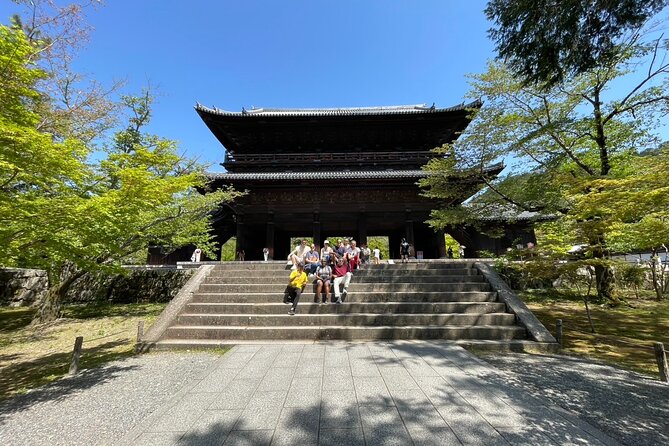
Nanzenji gives you more time, about 25 minutes. Founded in the 13th century, this important Zen temple is known for its large Sanmon gate, Zen gardens, and a red-brick aqueduct that runs through the grounds. The aqueduct is an especially memorable contrast: an industrial-era structure set within a temple precinct. The stop is still limited, so you’ll need to choose what to focus on rather than linger over every corner.
More full-day trips in Kyoto:
- Full Day Biking Tour Exploring the Best of Kyoto
★ 5.0 · 498 reviews - Full Day Guided Tour to Kyoto and Nara from Osaka by Van
★ 5.0 · 420 reviews - Nara Park, Osaka & Kobe from Kyoto Full Day tour
★ 5.0 · 207 reviews - Kyoto Private Car Tour – Full Day with Local Guide & Nara Option
★ 5.0 · 169 reviews
The Philosopher’s Path, Honen-in, and Ginkakuji
The Philosopher’s Path follows a canal lined with cherry trees. Its name comes from Kyoto University professor Nishida Kitaro, who walked here while thinking through his ideas. In spring, the cherry trees are a major draw, but the route can feel different across the year. The path links the city’s quieter northern sights and gives you a chance to cycle at a slower pace beside the water.
Honen-in is a particularly calm stop in the hills. Founded in the 1600s in honor of the Buddhist priest Honen, it is known for its moss-covered gate and white sand patterns. You have about 20 minutes here. That is a good amount of time for a compact visit, though you may wish you could stay longer if quiet temple settings are your priority.
At Ginkakuji, also called the Silver Pavilion, the tour spends about 25 minutes. The pavilion was built in the late 1400s by shogun Ashikaga Yoshimasa. Despite its name, it was never covered in silver. That small correction is worth remembering: the garden and the temple’s history matter more than any supposed metallic finish. Admission is included here, according to the tour details.
This northern stretch is one of the day’s strongest combinations: a canal path, a small temple in a hillside setting, and a major temple visit. It also comes late in a long ride. If your energy dips, the e-bike helps, but it does not remove the need to stay alert and keep pedaling.
Finishing in Gion
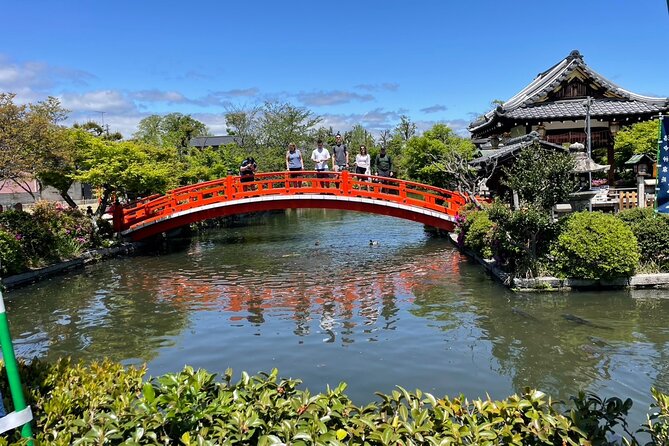
The final stop is Gion, Kyoto’s best-known geisha district. You’ll ride through lanes lined with traditional wooden machiya houses and learn about geiko and maiko culture. The planned stop is about 15 minutes, enough for a short look and some explanation, rather than a lengthy walk through the district.
Ending here brings the route back to one of Kyoto’s most familiar images, but the day’s earlier visit to Miyagawacho helps put Gion in context. You’ve seen two districts, not just the famous one. Since the tour finishes back at the original meeting point, expect to cycle back as part of the day rather than arrange a separate endpoint.
What the price includes, and what it does not
At $128.48 per person, the tour costs more than a self-guided ride, but it includes an e-bike and a private guide for 7 to 8 hours. The value comes from covering a long distance, getting help linking the sights, and having Jaime explain the places along the way. If you planned to rent a bicycle and visit only a few temples, this would be a more expensive option. If you want to see several distant districts and understand how they fit together, the price is easier to justify.
Lunch is not included. One rider described lunch as great, but the tour details do not say that a meal is part of the price, so budget for your own food. Ask Jaime about the day’s lunch arrangements before you set out if you want to plan around a particular meal or dietary need.
The tour is often booked about 27 days in advance. That gives you a useful sense of demand, but it is not a guarantee that a particular date will be available. The tour has a 5 out of 5 rating from 24 reviews, with 100 percent recommending it. The clearest practical praise is for the route: it reaches major sights while spending much of the ride in less busy areas. One rider also singled out Jaime as friendly and well informed, and described the day as enjoyable but tiring. Plan for a full day, then leave the evening free to rest.
You can cancel for a full refund up to 24 hours before the start time. Poor weather or failure to meet the minimum number of travelers may lead to a different date or a full refund. The tour is listed as private, with only your group taking part, but it also has a minimum number of travelers requirement. Confirm the details for your date when booking.
Who should choose this ride?
I’d recommend this tour if you’re comfortable cycling, want to see more than Kyoto’s central sights, and enjoy learning as you move between places. It suits visitors who value local streets and river paths as much as famous temples, and who are happy to trade long museum visits for a broad view of the city.
It is less suitable if you want a slow day with long stays at each temple, dislike cycling on narrow paths, or are not prepared for 32 kilometers of riding. The e-bike is a helpful feature, not a reason to ignore the fitness requirement. You’ll also need to plan for lunch and pace yourself through a full day.
Book it if you want a guided, active overview of Kyoto and can handle the distance. Skip it if you would rather spend most of the day on foot at a few sites. For the right rider, this is a practical way to connect Kyoto’s temples, neighborhoods, waterways, and everyday city life in one memorable day.
FAQ
How long is the Discover Kyoto by Bike Full Day Tour?
The tour lasts approximately 7 to 8 hours.
What time does the tour start?
The start time is 9:00 a.m.
Where does the tour begin and end?
It begins at the 7-Eleven at 44-1 Higashikujō Kamitonodachō in Kyoto and ends back at the same meeting point.
Is an e-bike included?
Yes. Use of an e-bike is included.
How far do you ride?
The tour information says you need to be fit enough to ride 32 kilometers and maneuver safely on narrow paths.
Is this a private tour?
Yes. Only your group participates.
Is lunch included in the price?
No. Lunch is not included.
How much does the tour cost?
The listed price is $128.48 per person.
Can I cancel for a refund?
You can cancel at least 24 hours before the start time for a full refund. Cancellations made less than 24 hours before the start time are not refunded.
Newly added in Kyoto
- Whisk Your Own Matcha: A Zen Matcha Experience at Temple★ 3.6 · 7 reviews
- Uji: Private immersion into Kyoto’s tea and reglious culture★ 5.0 · 17 reviews
- Kyoto tea town for matcha lovers★ 5.0 · 16 reviews
- Treasures of Kyoto: Gion & historical Walking Tour★ 5.0 · 6 reviews
- Kyoto Matcha Green Tea Tour★ 4.5 · 23 reviews
- Uji and Wazuka Matcha Farm Half Day Private Guided Tour★ 5.0 · 21 reviews
- Uji Tea Ceremony and UNESCO Heritage Walking Tour★ 5.0 · 20 reviews
- Utilising upcycled Matcha! Creating matcha incense (Uji, Kyoto)★ 5.0 · 6 reviews
Kyoto Bike Tours, compared.
Arashiyama Bamboo Forest & Hidden Gems Bike Tour (Early Bird)
Read our review →
5 Top Highlights of Kyoto Full Day Bike Tour (E-bike option)
Read our review →
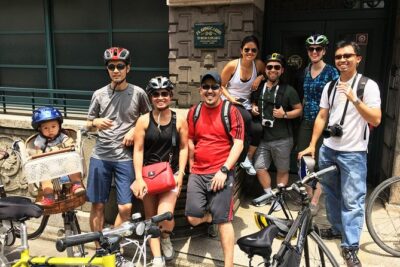
South Kyoto in a Nutshell: Gentle Backstreet Bike Tour!
Read our review →
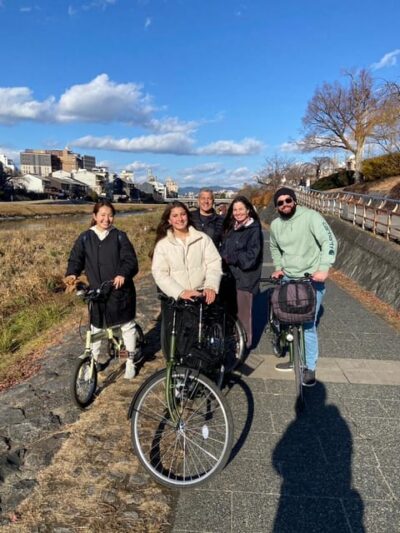
Hidden Gems E-Bike Tour with Local Japanese Guide
Read our review →
Pedal Adventure Kyoto’s iconic landmarks on an e-bike tour
Read our review →Browse the lists this tour appears in