
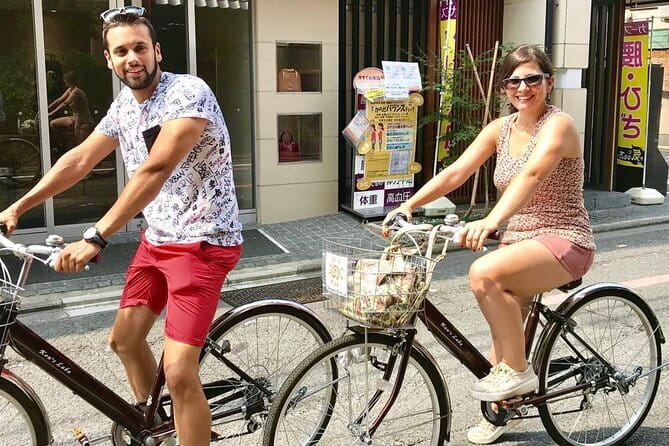
Reviewed · KYOTO BIKE TOURS
KIYOTO’s Kyoto Private E-Cycling Tour: Highlights & Hidden Gems
Kyoto spreads its sights across a broad area, and this private e-bike tour gives you a practical way to link its temples, canals, and old streets in one outing. You can ride from Fushimi Inari’s red gates toward Gion, Nanzen-ji, the Philosopher’s Path, and the Kamo River without spending the whole day walking between neighborhoods.
I like two things in particular: the private format lets you shape the pace and stops, and guides such as Yonnie, Yuhei, and Kento have made local customs and everyday life part of the ride, not just temple history. The included e-bike also makes a long sightseeing circuit more manageable.
The main consideration is the $198.15 per-person price. It can be good value if you want a guide and several hours of private transport between sights, but it is a substantial spend, and paid temple admission and food are extra. You also need to be able to ride a bicycle and feel comfortable cycling through city streets.
- Fushimi Inari and Tofuku-ji bring major southern Kyoto sights into the same trip.
- Gion’s lanes and Shirakawa Canal offer a slower, more intimate change of scene.
- Nanzen-ji and the Philosopher’s Path pair temple architecture with a leafy canal-side route.
- A private guide can adjust the pace and choose locations that suit your interests.
- E-bikes are included, with standard bicycles available; children’s bikes and seats are limited and must be requested.
Why an e-bike makes sense in Kyoto
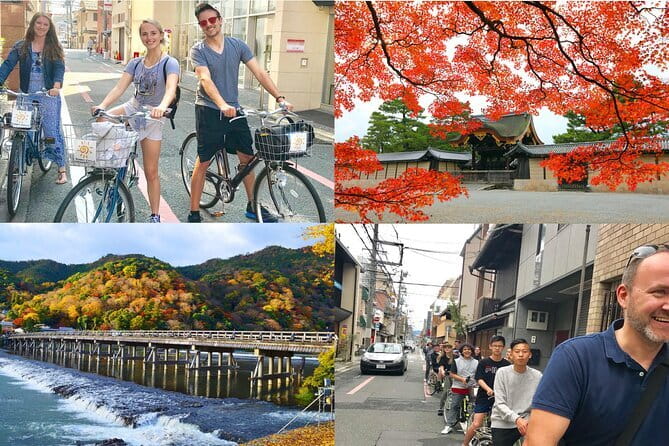
Kyoto’s famous sights are not all around one corner. Fushimi Inari sits in the south, while the Philosopher’s Path and Shimogamo Shrine lie farther north. On foot, connecting them takes serious time. A bicycle helps you cover more ground, and an electric assist can make a long ride less tiring than a standard cycle.
The tour lasts about four to eight hours, so it can be a substantial part of your day. The exact pace and route are tailored to your group, a real advantage when you want to spend longer at a shrine, skip a stop you have already seen, or focus on a particular neighborhood. Tell your guide what matters to you before setting off.
The tour is private, so you ride with your own group rather than joining strangers. The price is $198.15 per person, with group discounts available. The cost buys more than a bike rental: it includes a guide, route planning, and local context across a spread-out city. It makes the most sense if you value that help and intend to see several districts in one day. If you prefer to linger for hours at one temple or explore independently, a bike rental or a smaller walking tour may suit you better.
From Higashi Hongan-ji to Fushimi Inari
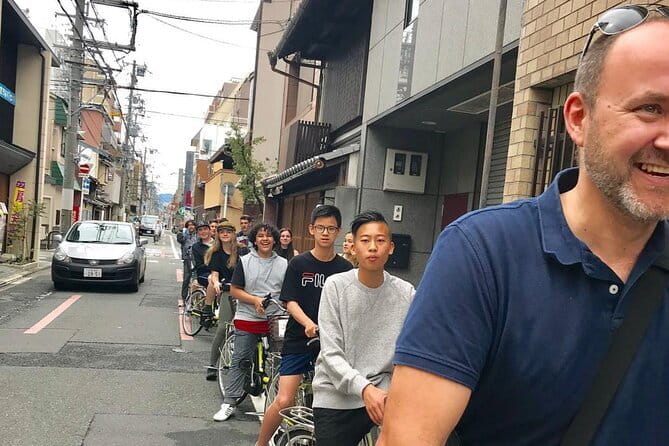
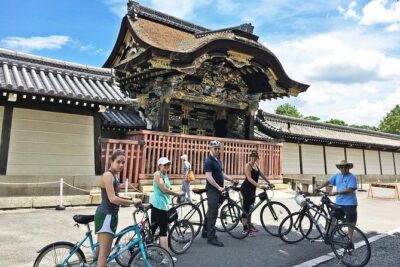
The route starts at Sunny CycleJapan in central Kyoto and includes Higashi Hongan-ji, a major Jodo Shinshu Buddhist temple founded in 1602. Its large grounds and Goeido main hall make a striking first stop. This is a useful place to begin with a sense of Kyoto’s religious life before pedaling toward the southern part of the city.
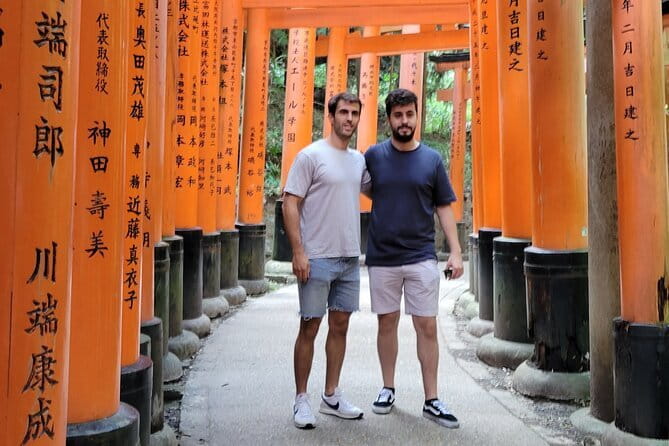
Fushimi Inari-taisha is the circuit’s signature sight. As the head shrine of more than 30,000 Inari shrines in Japan, it is known for rows of vermilion torii gates climbing the mountain trails. The tour allows about 40 minutes here. That is enough to see the main shrine area and walk into the famous gates, but not enough to hike the full mountain route. If a longer visit matters to you, ask how the guide can adjust the day.
Komyo-in, a sub-temple of Tofuku-ji, offers a quieter counterpoint. Its garden is known for moss and autumn color, and the stop is about 20 minutes. Admission is not included, so budget for a possible extra charge. Tofuku-ji follows, with about 10 minutes at the temple. Its Tsutenkyo Bridge is especially associated with autumn foliage, though this is a short visit rather than a long temple tour.
More bike tours in Kyoto:
- Bike Tour Exploring North Kyoto plus Lunch
★ 5.0 · 1,087 reviews - Arashiyama Bamboo Forest & Hidden Gems Bike Tour (Early Bird)
★ 5.0 · 613 reviews - 5 Top Highlights of Kyoto Full Day Bike Tour (E-bike option)
★ 5.0 · 511 reviews
Pagoda views and Gion’s old lanes
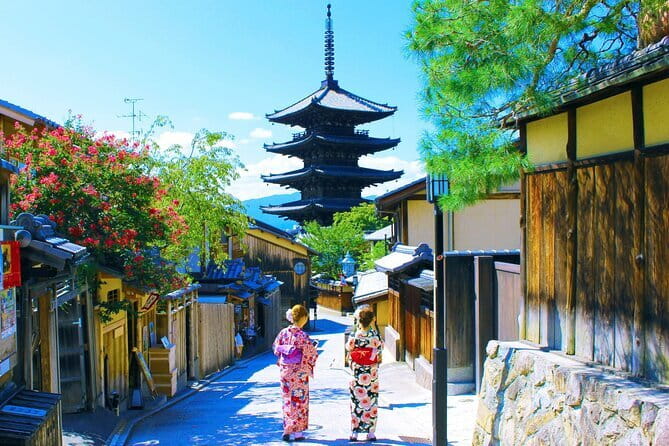
Hōkan-ji’s Yasaka Pagoda is one of the defining views of Higashiyama. The pagoda rises above the surrounding historic district, making this a good stop for photos and a quick look at the old streets around it. The planned visit is about 20 minutes, so expect a brief pause rather than an extended exploration.
At Yasui-Konpiragu, the focus shifts to a shrine associated with breaking unwanted ties and forming better ones. Visitors can pass through a hole in a stone monument as part of the shrine’s ritual. You have about 10 minutes here, enough for a short visit and a look at this distinctive custom.
Hanamikoji Street leads into Gion, where traditional tea houses and restaurants line the street. The area is closely linked with geisha culture, though a glimpse of a geisha is never something to count on. This is a short, 10-minute stop, so think of it as a chance to take in the setting rather than shop or settle in for a meal.
The route then reaches Tatsumi Bridge and the Shirakawa Canal. The small wooden bridge, willow-lined waterway, and traditional machiya houses give this part of Gion a quieter feel. The tour allows about 10 minutes at the bridge and 15 along the canal. A further 15 minutes at the riverside terrace lets you pause beside the flowing water. These short stops suit a photo-and-look pace; if you want time to sit or wander, ask whether the itinerary can be adapted.
Heian Shrine, Nanzen-ji, and the canal path
The Great Torii of Heian Shrine is a huge vermilion gate, about 24 meters tall, built in 1929. It marks the approach to the shrine grounds and offers a dramatic change of scale after Gion’s narrow lanes. The planned stop is 15 minutes, enough to admire the gate and take a few photographs.
Nanzen-ji is a major Rinzai Zen temple founded in 1291. Its broad grounds and historic buildings make it one of the day’s most substantial temple areas, though the listed stop is only 15 minutes. Nearby, Nanzen-ji Aqueduct adds an unexpected industrial note: the brick structure was completed in 1888 to carry water from Lake Biwa. You get about 10 minutes there, enough to see how a modern engineering project sits within a temple setting.
The Philosopher’s Path follows the Biwa Canal for about two kilometers. The tour allows 30 minutes, giving you time to experience a section of the route, not necessarily walk its full length. It is especially known for seasonal beauty, including cherry blossoms, but its appeal is not limited to blossom season. The canal and path offer a welcome stretch away from busy streets.
Honen-in, a peaceful temple set among trees, is a quieter stop after the canal walk. Its grounds have a calm, nature-filled atmosphere and the visit lasts about 15 minutes. Keep in mind that short stops throughout the day add up to a broad overview, not an in-depth visit to every temple.
Northern Kyoto and the return through town
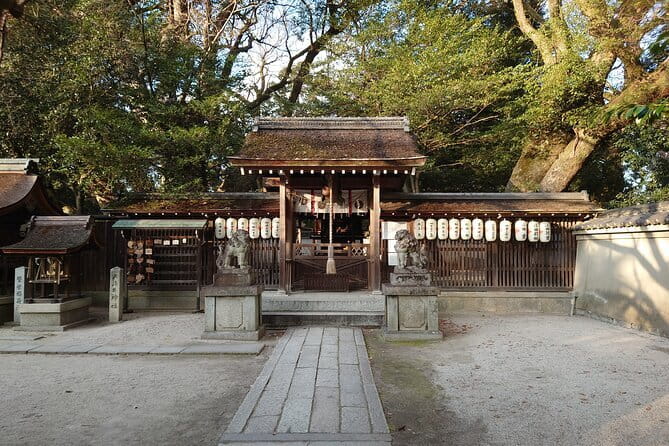
Shimogamo Jinja, also called Kamomioya Shrine, is among Kyoto’s oldest Shinto shrines, with roots reaching back to ancient times. Its location in the northern part of the route gives you a different setting from the compact lanes of Gion. The planned visit is 30 minutes, making it one of the longer stops and a good place to ask your guide about shrine customs.
At the Kamogawa Delta, the Kamo and Takano rivers meet. Stepping stones shaped like animals cross the water, and locals use the area as a place to pause and enjoy the river. The stop is about 15 minutes. It is a simple, everyday Kyoto scene rather than a formal monument, and that contrast is part of the appeal.
The route also includes Kyoto Gyoen, the broad park surrounding the former Imperial Palace, and the stepping stones at Kojin, where you can hop across the Ebisugawa tributary. Teramachi-dori adds a look at central Kyoto’s shops, cafes, and traditional goods. Sanjo Street, lined with restaurants, cafes, and historic buildings, is another central-city stop. The exact time at these unnumbered points is not specified, so discuss your priorities with the guide rather than assuming every stop gets a long visit.
More private tours in Kyoto:
- Fushimi Inari Hidden Hiking Tour (Private Option Available)
★ 5.0 · 1,750 reviews - Private Kyoto Tour with a Local, Highlights & Hidden Gems, Personalised
★ 5.0 · 1,543 reviews - Kyoto 6hr Private Tour with Government-Licensed Guide
★ 5.0 · 1,369 reviews - 10 Must-see Spots in Kyoto One Day Private Tour (up to 7 people)
★ 5.0 · 1,108 reviews
The guide shapes the day
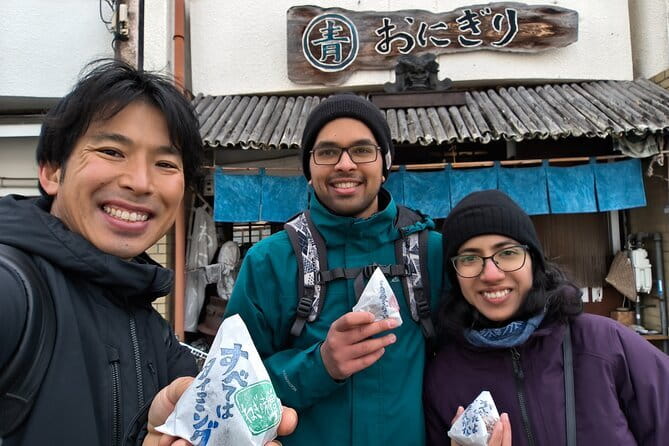
The strongest reason to book this as a private tour is the human element. Guides including Yonnie, Yuhei, Yuichi, Kento, Mana, Takuma, and Polina have led these rides. Their style, as described by the tour team, centers on local history, culture, customs, and life in Japan, with a friendly approach and help taking photos.
That matters because the route can otherwise feel like a string of famous places. A good guide can connect a shrine’s role in daily life with the streets and neighborhoods around it, and help you notice quieter places between headline sights. Several past groups have also adjusted the route to focus on places they had not yet seen, or on areas close to their neighborhood.
Families have found the ride workable, with guides adapting to children and keeping the day enjoyable. Still, children’s bikes are non-electric and limited in number. Child seats are also limited, so request either option when booking. The tour asks for moderate physical fitness, and every participant must be able to ride a bicycle, unless using an available child seat.
Price, pace, and practical details
At $198.15 per person, this is not a budget way to get around Kyoto. The price is easier to justify if you make use of the private guide, e-bike, flexible route, and several hours of sightseeing. Group discounts may help, but no discount amount is specified. A standard bicycle is available too, which may suit you if you do not need electric assistance.
Most listed stops have no admission charge, but paid temple and shrine entries are not included. Komyo-in is specifically marked as an extra-cost stop. Food and drinks are also on you, so plan around the length of the ride. The tour starts and ends at Sunny CycleJapan in Kyoto’s Shimogyo Ward, near public transportation.
The stated duration ranges widely, from four to eight hours. That flexibility can be useful, but it also makes it worth agreeing on the day’s priorities in advance. A shorter outing cannot give every stop equal time. In the busier parts of Kyoto, cycling also calls for attention and confidence; a guide can help navigate city streets, but this is still an active outing, not a seated sightseeing tour.
Should you book this Kyoto ride?
Book it if you want to cover several Kyoto neighborhoods in a single day, enjoy cycling, and value a guide who can adapt the route and explain what you are seeing. It is particularly appealing if you have already picked out a few must-see temples but also want a sense of local streets and everyday life.
Think twice if your budget is tight, you cannot ride a bicycle, or you would rather spend a long time inside a small number of temples. You may also want to ask about the planned route and timing before booking, especially if Fushimi Inari’s mountain trails or a long Philosopher’s Path walk are priorities. For the right group, this is an efficient and personal way to see Kyoto beyond one district.
FAQ
How long does the tour last?
The tour lasts approximately four to eight hours. The pace and route can be tailored to your group.
What is the price?
The listed price is $198.15 per person. Group discounts are available, but the discount amount is not specified.
Is the tour private?
Yes. Only your group participates.
Is an e-bike included?
Yes. An electric bike is included, and a standard bicycle is also available.
Do I need to know how to ride a bicycle?
Yes. Participants must be able to ride a bicycle. The tour also recommends a moderate level of physical fitness.
Are children’s bikes or seats available?
Children’s bikes are non-electric and available in limited numbers. Child seats are also limited. Request either option when booking.
Are temple admission fees included?
No. Paid temple and shrine admission is not included. Komyo-in is specifically listed as an extra-cost stop.
Are food and drinks included?
No. Food and drinks are not included.
Where does the tour start and end?
The meeting point is Sunny CycleJapan at 477 Ohori-cho, Shimogyo Ward, Kyoto. The tour ends back at the meeting point.
Can I cancel for a refund?
You can cancel at least 24 hours before the start time for a full refund. Cancellations or changes made less than 24 hours before the start time are not accepted for a refund or change.
Newly added in Kyoto
- Uji: Private immersion into Kyoto’s tea and reglious culture★ 5.0 · 17 reviews
- Whisk Your Own Matcha: A Zen Matcha Experience at Temple★ 3.6 · 7 reviews
- Kyoto tea town for matcha lovers★ 5.0 · 16 reviews
- Treasures of Kyoto: Gion & historical Walking Tour★ 5.0 · 6 reviews
- Kyoto Matcha Green Tea Tour★ 4.5 · 23 reviews
- Uji and Wazuka Matcha Farm Half Day Private Guided Tour★ 5.0 · 21 reviews
- Uji Tea Ceremony and UNESCO Heritage Walking Tour★ 5.0 · 20 reviews
- Utilising upcycled Matcha! Creating matcha incense (Uji, Kyoto)★ 5.0 · 6 reviews
Kyoto Bike Tours, compared.

Arashiyama Bamboo Forest & Hidden Gems Bike Tour (Early Bird)
Read our review →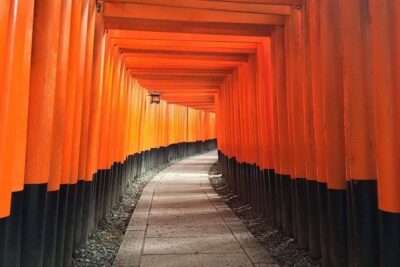
5 Top Highlights of Kyoto Full Day Bike Tour (E-bike option)
Read our review →
South Kyoto in a Nutshell: Gentle Backstreet Bike Tour!
Read our review →
Hidden Gems E-Bike Tour with Local Japanese Guide
Read our review →
Pedal Adventure Kyoto’s iconic landmarks on an e-bike tour
Read our review →Browse the lists this tour appears in