
Reviewed · KYOTO GEISHA TOURS
Kyoto Gion Geisha District Walking Tour – The Stories of Geisha
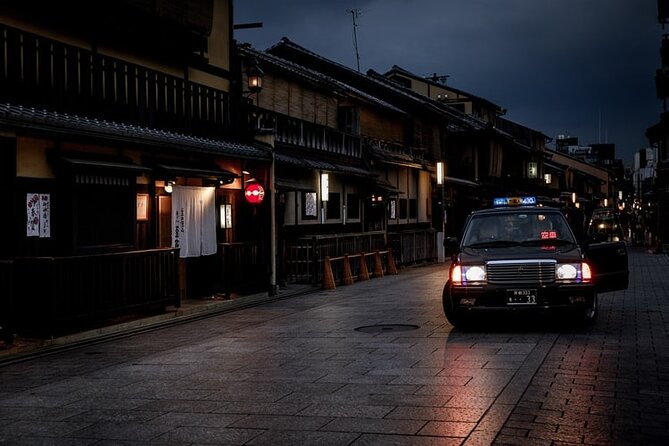
Gion’s lantern-lit lanes make more sense when someone explains what you’re looking at. On this two-hour evening walk, a guide connects theaters, teahouse streets and small details in the neighborhood to the work and history of geisha and maiko. You may see them heading to appointments, but the tour cannot promise a sighting.
I like the small group of no more than 15, which should make it easier to hear the guide and ask questions. I also like the after-dark timing: Gion is heavily visited during the day, while evening brings a different mood to its traditional streets.
One consideration: this is a walking introduction, not a performance or a visit inside a teahouse. You’ll get context and local history, but the route may feel brief if you want a fuller cultural program.
- The route starts near Shijo and ends at Yasaka Shrine, crossing several parts of Gion.
- The tour lasts about two hours, with several stops listed at roughly 10 minutes each.
- Geisha and maiko are part of the subject, not a guaranteed sighting.
- The $25 price covers fees and taxes, but bottled water is not included.
- Guides such as Ben, Shin, Deborah, Nami and Kenji have led tours, with explanations ranging from geisha culture to Kyoto’s broader history.
- The evening setting has a practical trade-off: it can be cold, so bring a warm layer.
Why Gion makes more sense after dark
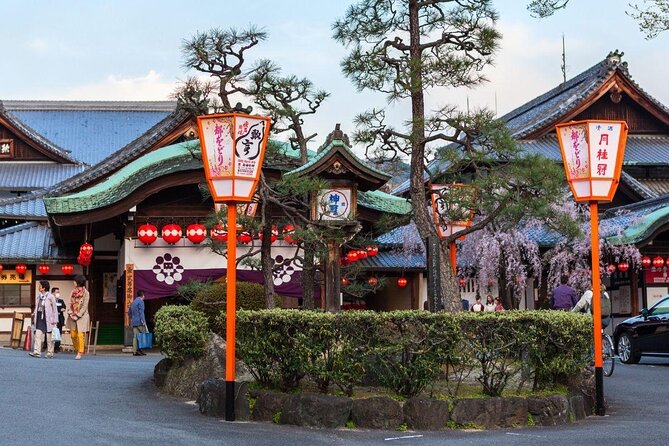
Gion is not simply a picturesque row of old buildings. It is a working entertainment district, and understanding that changes how you read its streets. This tour is designed to explain the world of geisha and maiko, the neighborhood’s historic role, and the signs of that culture that can be easy to miss when you walk through on your own.
After dark, lanterns and lit shopfronts give the traditional streets a quieter, more intimate feel. The tour’s timing also helps you avoid the biggest daytime crowds. That does not mean you’ll have Gion to yourself, but the evening setting can make it easier to focus on your guide’s stories and on the details around you.
The tour is led by a guide, and the strongest part of the experience is the interpretation. Guides named in past tours include Shin, Deborah, Ben, Melanie, Nami, Kenji, Joy and others. The specific guide for your date is not stated, so treat those names as examples, not a booking guarantee. The accounts describe guides who explain the history and present-day practices of geisha and maiko, answer questions, and add context about Kyoto beyond the narrow topic.
That context matters. Without it, a traditional façade may look like a charming backdrop and nothing more. A guide can explain why an unassuming building or a particular street matters to the area’s entertainment culture. If you’re curious about Kyoto’s social history, that is likely to be more useful than a tour devoted only to photo stops.
From the Izumo-no-Okuni statue to Minamiza
The walk begins at Ben’s Cookies Kyoto Shijo, near the Shijo area, and the first named stop is the statue of Izumo-no-Okuni. The bronze figure honors Okuni, a legendary performer associated with the founding of Kabuki theater. It is a fitting starting point for a tour about entertainment traditions: the story begins not only with geisha culture, but with Kyoto’s wider history of performance.
The stop is listed at about 10 minutes. That gives your guide time to set the scene, though it is not a long visit. Think of it as a short introduction rather than a detailed lesson in Kabuki.
Minamiza, the historic Kabuki theater, is also included in the route. Kabuki is known for dramatic storytelling and elaborate costumes, and the theater offers another point of connection between Kyoto’s performance traditions and the district’s past. The tour information does not specify an interior visit or a ticket to a show, so plan on seeing it as part of a walking tour rather than expecting a performance.
That distinction is worth keeping clear when you book. If you want to watch Kabuki, you will need to arrange that separately. If you want an overview of the district and its cultural setting, passing the theater with a guide can help you understand why it belongs in this story.
More geisha and maiko experiences in Kyoto:
- Kyoto Geisha Walking Tour: Gion District & Hidden Gems
★ 4.7 · 3,273 reviews - Kyoto: Gion Magical Night Walking Tour with Geisha Trivia
★ 4.9 · 2,393 reviews - Kyoto: Gion Geisha District Walking Tour – Stories of Geisha
★ 4.7 · 2,187 reviews
Tatsumi Bridge and Gion’s smaller streets
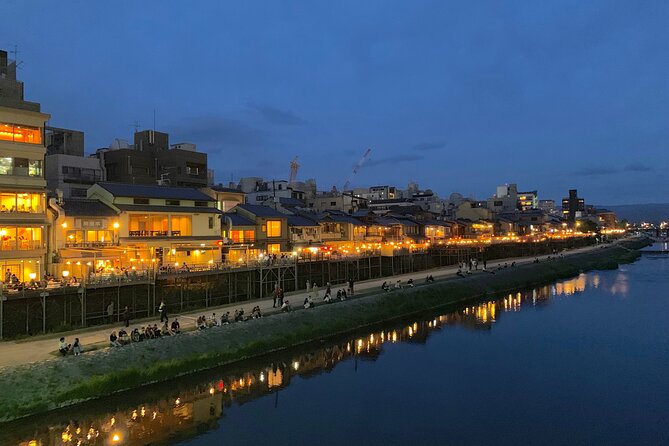
Tatsumi Bridge sits in the Gion Shinbashi area, known for traditional streets and teahouses. The bridge and its surroundings are among the tour’s most atmospheric stops, especially in the evening. The listed stop is around 10 minutes, enough for a short explanation and a look around, rather than a long pause.
This is where a guide’s local context can be especially valuable. The district’s appeal is not limited to its best-known street. Smaller lanes and less obvious buildings can hold clues to the area’s past and present. One guide has been described as pointing out modest-looking buildings and explaining their significance to geisha culture. That kind of detail is difficult to get from a quick independent stroll.
Still, keep expectations grounded. This is a group walk, and the maximum group size is 15, not a private tour. You can ask questions, but the pace needs to work for everyone. The route is a good fit if you enjoy hearing stories as you walk; it is less ideal if you want to linger at every corner or take photographs without interruption.
Hanamikoji Street, Gion Corner and the geisha tradition
Hanamikoji Street is one of Gion’s best-known thoroughfares, lined with traditional machiya houses, teahouses and restaurants. It is an obvious place to discuss the district’s image and its working life. With a guide, you can hear more than a list of architectural details: the focus is on how Gion became associated with geisha and how the tradition continues today.
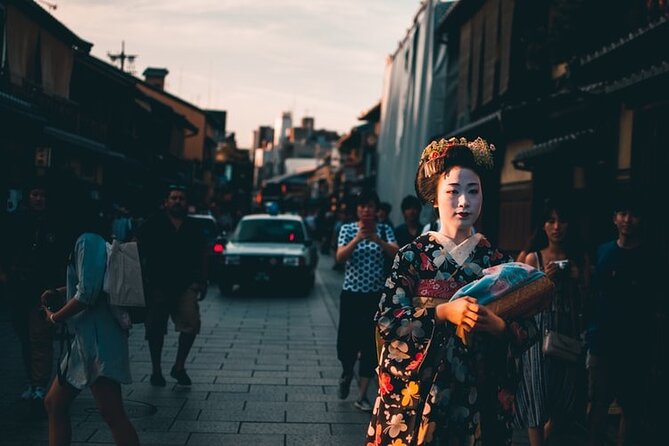
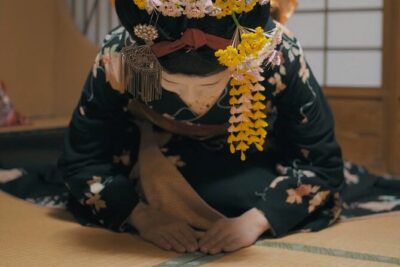
The tour’s central subject is geisha, called geiko in Kyoto, and their apprentices, maiko. Guides have explained the evolution of these roles and the customs of the entertainment districts. One of the most useful aspects is the chance to ask about present-day practices, not just historical dress or popular misconceptions. The guide may also explain what you are seeing in the neighborhood without turning the people who live and work there into a spectacle.
You might see a geiko or maiko making her way to an appointment, since the tour runs in the evening. But a sighting is not guaranteed, and it should not be the reason you book. The more dependable value is learning how to understand the district and its traditions. If you do happen to see someone, give her space and follow your guide’s directions.
Gion Corner is included as another cultural point on the route. It is a performance venue that presents a range of traditional Japanese arts. The tour description does not include a show, so think of this as a place your guide can discuss, rather than a performance stop. If seeing a cultural program is important to you, you may want to arrange a separate visit.
Ending at Yasaka Shrine
The walk ends at Yasaka Shrine, also known as Yasaka Jinja or Gion Shrine. This prominent Shinto shrine is closely tied to the district and is known for its festivals. Its position at the end of the route gives the walk a natural close: you move from the entertainment streets to one of Gion’s major religious landmarks.
The stop is listed at around 10 minutes. That may be enough for a brief introduction and a look around, but it is not a dedicated shrine tour. If you want time to explore the grounds at your own pace, consider staying after the guided walk ends. The tour’s endpoint is useful, too: you finish in the Gion area rather than needing to retrace your steps to the starting point.
The listed route includes several named stops, but not every stop has a published duration. The overall tour is approximately two hours. Expect to walk between locations, with brief pauses for explanations. A past participant noted that the walk felt long in very cold weather, a useful reminder that an evening stroll can be chilly even when the distance seems modest.
More Gion tours in Kyoto:
- Best of Kyoto: Gion, Geisha, Pagodas & Cobblestones
★ 4.9 · 2,058 reviews - Night Walk in Gion: Kyoto’s Geisha District
★ 4.5 · 2,003 reviews - Kyoto Night Foodie Tour in Gion (9+ dishes + 6 Sake tastings)
★ 5.0 · 1,762 reviews - Kyoto Gion: 2-Hour Geisha Culture & History Walking Tour
★ 5.0 · 1,186 reviews
Is $25 good value for this walk?
At $25 per person, the price is reasonable for a two-hour guided introduction to Gion, especially if you are new to Kyoto. Fees and taxes are included, and the group is capped at 15. The main value is not admission to a paid attraction; it is the guide’s explanations and the chance to connect the streets, theaters and shrine into a coherent story.
The price is less compelling if you expect a geisha encounter, a Kabuki performance or entry to a cultural show. None of those is promised as part of the walk. You are paying for a guided evening route and cultural background, not a staged experience.
I would consider booking it early in your Kyoto stay. A guide can help you recognize the area’s landmarks and give you a better framework for later walks. It also works for families with older children and teenagers who are interested in history: the tour has suited multigenerational groups, and the small size makes it easier to stay engaged than a large bus outing.
The walk is mobile-ticketed, and confirmation is provided at booking. Service animals are allowed, the route is near public transportation, and most people can participate. Bottled water is not included, so bring your own if you want it. In cold months, take a warm coat; the tour is outdoors and the evening air can make a two-hour walk feel longer.
Free cancellation is available up to 24 hours before the start for a full refund. Cancellations inside that window are not refundable, and poor weather may lead to a different date or a full refund.
Should you book the Gion walk?
Book this tour if you want a compact, guided introduction to geisha culture and Gion’s streets, and you value a good explanation more than a formal performance. It is particularly useful on a first visit, when the history behind the buildings and customs can turn a pleasant evening walk into a more meaningful one.
Skip it if you want guaranteed geisha sightings, a Kabuki show, or a long, unhurried visit inside cultural venues. At $25, the tour offers solid value for a focused two-hour walk, provided you arrive expecting stories, street-level context and an evening in Gion, not a staged glimpse behind closed doors.
FAQ
How long is the tour?
It lasts approximately two hours.
How much does it cost?
The listed price is $25 per person. All fees and taxes are included.
Where does the tour start and end?
It starts at Ben’s Cookies Kyoto Shijo, at 89 Shinchō, Shimogyo Ward, and ends at Yasaka Shrine, at 625 Gionmachi Kitagawa, Higashiyama Ward.
Is the tour limited to a small group?
Yes. The maximum group size is 15 people.
Does the tour include a geisha or maiko sighting?
No sighting is guaranteed. The evening walk explores geisha culture, and geiko or maiko may be making their way to appointments.
Is bottled water included?
No. Bottled water is not included. Fees and taxes are included.
Can I cancel for a refund?
You can cancel at least 24 hours before the start time for a full refund. Cancellations made less than 24 hours before the start are not refundable.
More walking tours in Kyoto
- Nishiki Market Brunch Walking Tour (7 Tastings + Brunch)
★ 5.0 · 1,355 reviews - Kyoto Arashiyama Walking Tour: Bamboo, Monkeys, Gardens & Secrets
★ 5.0 · 1,216 reviews - Nara Half Day Trip Walking Tour (Private Option Available)
★ 5.0 · 937 reviews - Kyoto: Izakaya Bars Guided Walking Tour
★ 4.9 · 815 reviews
Newly added in Kyoto
- Uji: Private immersion into Kyoto’s tea and reglious culture★ 5.0 · 17 reviews
- Whisk Your Own Matcha: A Zen Matcha Experience at Temple★ 3.6 · 7 reviews
- Kyoto tea town for matcha lovers★ 5.0 · 16 reviews
- Treasures of Kyoto: Gion & historical Walking Tour★ 5.0 · 6 reviews
- Kyoto Matcha Green Tea Tour★ 4.5 · 23 reviews
- Uji and Wazuka Matcha Farm Half Day Private Guided Tour★ 5.0 · 21 reviews
- Uji Tea Ceremony and UNESCO Heritage Walking Tour★ 5.0 · 20 reviews
- Utilising upcycled Matcha! Creating matcha incense (Uji, Kyoto)★ 5.0 · 6 reviews
Kyoto Geisha Tours, compared.
Kyoto Geisha Walking Tour: Gion District & Hidden Gems
Read our review →
Gion Magical Night Walking Tour with Geisha Trivia
Read our review →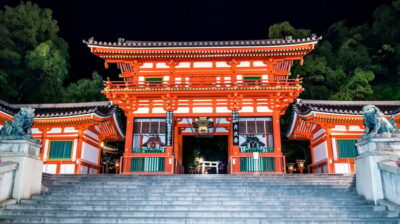
Gion Geisha District Walking Tour – Stories of Geisha
Read our review →
Best of Kyoto: Gion, Geisha, Pagodas & Cobblestones
Read our review →

Kyoto Gion Cultural Walk & Geisha Show with Dining Options
Read our review →
Browse the lists this tour appears in