
Reviewed · KYOTO GEISHA TOURS
Kyoto Gion Night Tour: Discover Geisha District and Hidden Gems
Gion after dark is about more than hoping to spot a geisha. Lantern-lit lanes, wooden machiya houses and familiar Kyoto landmarks give you a compact look at the city’s traditional side, with a local guide to explain what you’re seeing. A sighting of a geisha or maiko can happen, but it is luck, not the tour’s main guarantee.
I like the range of stops packed into 90 minutes, from the old streets of Gion to Yasaka Pagoda and Yasaka Shrine. I also like that the English-speaking guide, listed admission fees and professional photos are included for $26.06. One consideration: this is a walking tour, and arriving late means you cannot join or get a refund.
- A 6:30 pm start: See Gion and nearby sights in the evening, when traditional lanterns help set the scene.
- Six stops in 90 minutes: The route includes Hanamikoji Street, Gion, Yasui Konpiragu, Yasaka Pagoda, Ninenzaka and Yasaka Shrine.
- A guide for cultural context: Ikki is named as a guide who is easy to talk with and can help explain Japanese culture.
- Geisha sightings are possible: Treat one as a lucky moment, not a certainty.
- Photos and listed admission fees are included: Food, drinks and personal expenses are not.
- A small-group walk: The tour has a maximum of 20 people and returns to its starting point.
Gion After Dark: What This Walk Offers
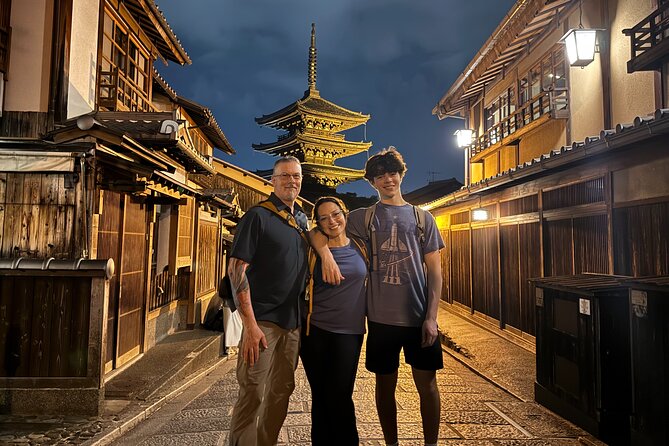
This tour links several of Kyoto’s best-known sights in one evening walk. You start near the statue of Izumo-no-Okuni in Higashiyama, head through Gion and nearby historic streets, then finish back at the meeting point. At about an hour and a half, it is a manageable introduction to the area rather than a long, detailed visit to any one temple or shrine.
The route’s appeal is its variety. You get traditional streets, a shrine associated with ending unwanted relationships, the striking Yasaka Pagoda, stone-paved lanes and a major shrine. A guide can add useful context between these landmarks, especially if you are new to Kyoto or want to ask questions as you go.
The tour runs at 6:30 pm, and the evening setting is part of the draw. Traditional lanterns and wooden buildings can look quite different after dark than they do in daylight. Still, night conditions may make it harder to study architectural details or take clear photos on your own, so think of this as a guided evening walk, not a substitute for a daytime visit to every stop.
Hanamikoji Street: A Chance Encounter, Not a Promise
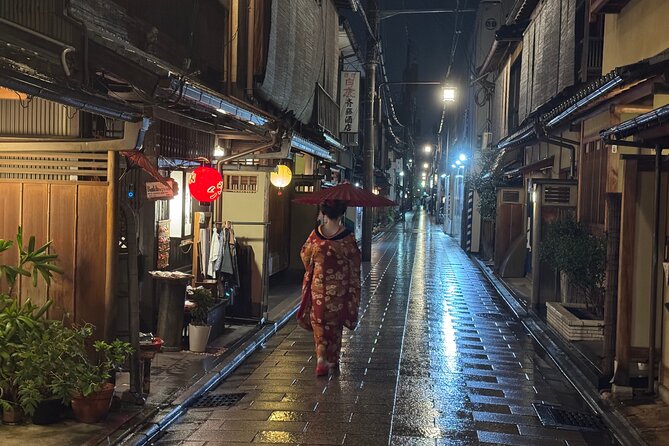
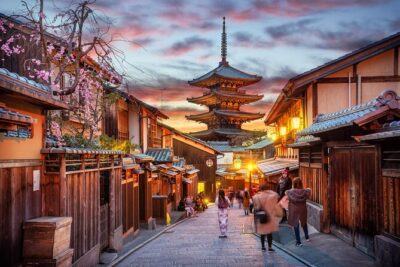
Hanamikoji is one of Gion’s best-known streets, with traditional teahouses and wooden machiya buildings. The tour spends about 10 minutes here. That is enough to get a feel for the street and hear some context from your guide, but not enough for a slow look at every building.
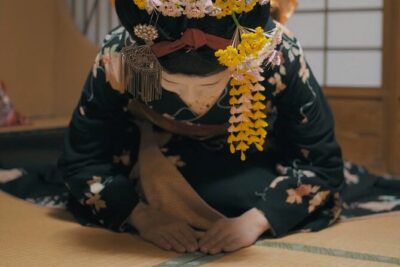
Gion is associated with geisha and maiko, and a sighting is possible. One person on the tour was lucky enough to see two geishas, an unusual treat that shows why the evening can feel special. But there is no way to promise that you will see one. Go to notice the district’s architecture and working culture first; regard any encounter as a bonus.
If you do see a geisha or maiko, keep the moment respectful. The tour does not promise an arranged meeting, and the supplied details do not suggest that participants will interact with performers. A quiet look from a considerate distance is a better fit for the setting than treating someone at work as a photo opportunity.
More geisha and maiko experiences in Kyoto:
- Kyoto Geisha Walking Tour: Gion District & Hidden Gems
★ 4.7 · 3,273 reviews - Kyoto: Gion Magical Night Walking Tour with Geisha Trivia
★ 4.9 · 2,393 reviews - Kyoto: Gion Geisha District Walking Tour – Stories of Geisha
★ 4.7 · 2,187 reviews
Gion’s Machiya Streets: Old Kyoto in a Short Walk
The next stop gives you about 20 minutes in Gion itself. The district is known for its wooden machiya houses, teahouses and preserved streets. Walking through it with a guide helps turn a pleasant stroll into a more informed one: you can ask what you are looking at instead of simply passing a row of old façades.
The most praised part of the guide experience is the chance to talk openly about Japanese culture. Ikki is described as easy to talk with, which matters on a short tour. A friendly guide can make a tight route feel more personal, particularly when you have questions that a sign or a quick online search cannot answer.
Keep your expectations in proportion to the time. Twenty minutes is a useful introduction, not a deep exploration of the district. If Gion is a particular interest, you may want to return on your own afterward and spend longer walking its streets.
Yasui Konpiragu: A Shrine for Cutting Ties
The tour gives Yasui Konpiragu about 10 minutes. The shrine is known for prayers to end negative relationships and make room for more positive connections. That focus gives this stop a different character from a conventional visit centered on prosperity or protection.
Even if the shrine’s particular purpose does not speak to you, it offers a brief look at how people may bring personal concerns to a place of worship. Your guide can help put the site in context, though the tour’s short schedule means this is a quick visit rather than an extended ritual or lesson.
Admission fees for the temples and shrines are included in the tour price. The stop list also identifies this shrine as free to enter, so the inclusion is best understood as part of the package rather than a reason to expect a separate ticket at every location.
Yasaka Pagoda: Kyoto’s Recognizable Silhouette
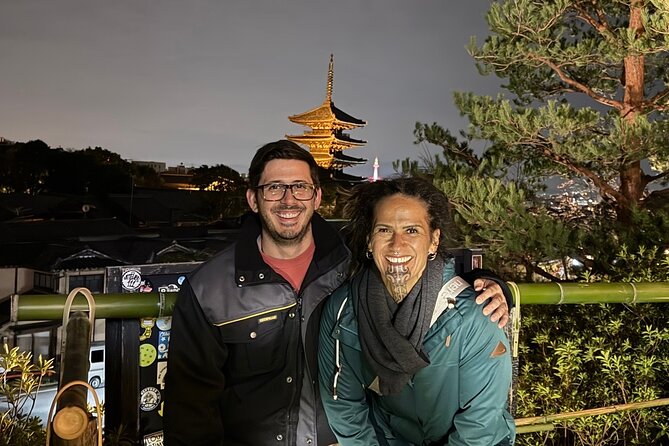
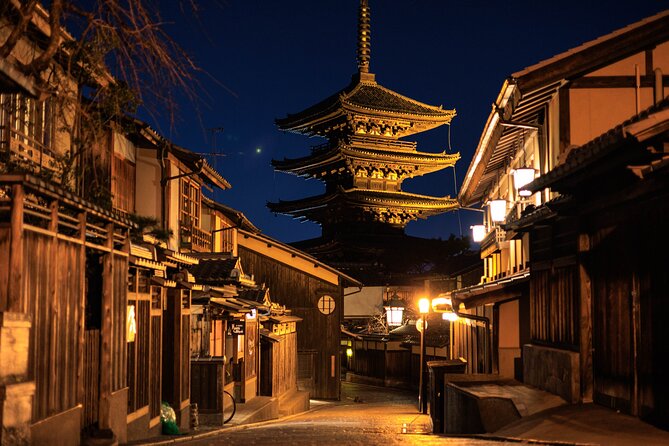
Yasaka Pagoda, also called Hokanji Temple, gets about 15 minutes. Its scale and distinctive shape make it one of the route’s most recognizable sights. The pagoda is described as one of Japan’s oldest wooden structures and a Kyoto symbol; its construction is also associated with the claim that it was built without nails.
This is a good place to pause and take in the building from outside. The allotted time is short, so do not expect a lengthy interior visit or a detailed architectural tour. The guide’s explanations and the evening view are likely to be the main value here.
For anyone trying to fit a handful of Kyoto landmarks into one evening, this stop is efficient. If architecture is your main interest, however, 15 minutes may feel brief. The tour is designed to connect several places, not linger at the pagoda.
More Gion tours in Kyoto:
- Best of Kyoto: Gion, Geisha, Pagodas & Cobblestones
★ 4.9 · 2,058 reviews - Night Walk in Gion: Kyoto’s Geisha District
★ 4.5 · 2,003 reviews - Kyoto Night Foodie Tour in Gion (9+ dishes + 6 Sake tastings)
★ 5.0 · 1,762 reviews - Kyoto Gion Geisha District Walking Tour – The Stories of Geisha
★ 5.0 · 1,441 reviews
Ninenzaka and Sannenzaka: Stone Lanes and Old Shopfronts
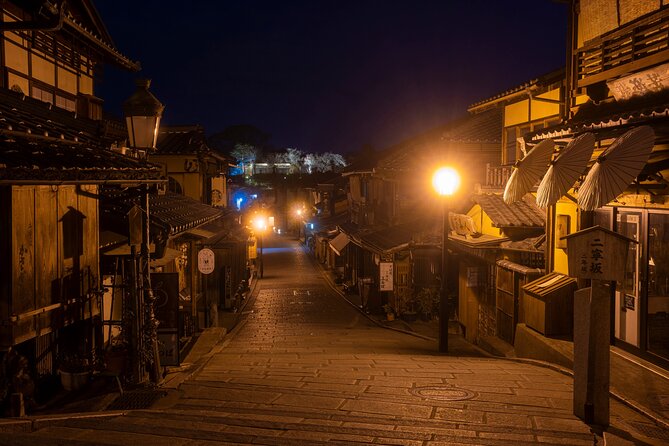
The route allows about 20 minutes for the Ninenzaka and Sannenzaka area. These traditional stone-paved paths are lined with souvenir shops and restaurants in historic wooden buildings. The old streets make a natural contrast with the shrine stops, and they give you time to notice the small scale and close-set buildings of this part of Kyoto.
This is also the section where the walking format matters most. You are moving on foot through traditional lanes, so comfortable shoes are a practical choice. The supplied details do not specify the route’s walking distance or surface conditions beyond describing the stone paving, so plan for a proper walk rather than a seated sightseeing tour.
The short visit may not leave much room for shopping or a meal. Food and drinks are not included, and the tour continues to Yasaka Shrine. If you want to browse at length or sit down for dinner, plan to do so before or after the walk rather than counting on this stop for a break.
Yasaka Shrine: A Fitting Finish
Yasaka Shrine is the final sightseeing stop, with about 15 minutes set aside. It is described as the headquarters of 2,300 related shrines across Japan and is dedicated to gods associated with prosperity and protection. That makes it a fitting end to a route that has moved between Kyoto’s streets, buildings and places of worship.
The tour then returns to the original meeting point. This is useful if you want a guided loop rather than needing to find your way back from a different neighborhood. The precise route between stops and the total distance are not specified, so it is wise to be ready for steady walking throughout the 90 minutes.
Is $26.06 Good Value?
At $26.06 per person, the price is reasonable for a 90-minute guided walk, particularly if you value having an English-speaking local guide. Listed admission fees for temples and shrines and professional photos are included. That gives the price more substance than a simple walk with no guide or extras, though the tour is short and should not be mistaken for a full evening of sightseeing.
The biggest value is likely to be the explanations along the way. You visit six different places in quick succession, and a guide can help connect them rather than leaving you to work out their significance on your own. If you already know Gion well and prefer to explore at your own pace, you may get more from walking the district independently.
Food, drinks and personal expenses are extra. There is no need to budget for a meal as part of the tour itself, but you should plan separately if dinner is part of your evening. The tour has a maximum group size of 20, which gives it a defined limit without guaranteeing a very small or private group.
Before You Set Out
The meeting point is the Statue of Izumo-no-Okuni in Kawabatacho, Higashiyama Ward, and the start time is 6:30 pm. The tour ends back at that point. The location is near public transportation, but the exact transit route is not specified, so check your own route and allow time to arrive before the start.
Do not cut it close. The tour’s terms say that anyone arriving late cannot join and will not receive a refund. You can cancel for a full refund if you do so at least 24 hours before the start time; cancellations within 24 hours are not refundable, and changes inside that window are not accepted.
This is a walking experience with plenty of time on foot. Most people can participate, and service animals are allowed. The activity is limited to 20 people, and confirmation is provided at booking.
Who Should Book This Gion Walk?
I would choose this tour if you have one evening free, want a guided introduction to Gion and nearby landmarks, and enjoy walking through historic streets after dark. It is also a practical fit if you want to ask cultural questions in English. The positive impression of Ikki’s friendly, easy-to-talk-with approach adds a personal element, and the possibility of seeing geisha or maiko gives the route an extra spark without being its only appeal.
I would skip it if you want a slow, in-depth visit to each shrine, extended time for shopping, or a guaranteed geisha encounter. The pace is brisk by design, with six stops in 90 minutes. For many first-time visitors, that is a helpful overview; for someone who already knows the area, a self-guided walk may offer more freedom.
If the route, walking pace and evening timing suit you, the price is fair for a local guide, photos and the listed admission fees. Book it for the streets, landmarks and context. Let any geisha sighting be a lucky extra.
FAQ
How long is the Gion Night Tour?
The tour lasts approximately 1 hour and 30 minutes.
What time does the tour start?
It starts at 6:30 pm.
Where is the meeting point?
Meet at the Statue of Izumo-no-Okuni in Kawabatacho, Higashiyama Ward, Kyoto.
Where does the tour end?
It ends back at the meeting point.
What is included in the price?
An English-speaking local guide, admission fees for all temples and shrines, and professional photos taken during the tour are included.
Are food and drinks included?
No. Food, drinks and personal expenses are not included.
How large can the group be?
The tour has a maximum of 20 participants.
Can I cancel for a refund?
Yes. You can receive a full refund if you cancel at least 24 hours before the start time. Cancellations made less than 24 hours before the start are not refundable.
More night tours in Kyoto
- Kyoto Gion Night Walk & Geisha District Guided Tour
★ 5.0 · 786 reviews - Kyoto Ghost Tour: Dark Tales, Urban Legends, Bamboo Forest Night
★ 5.0 · 625 reviews - Kyoto Bar Hopping Night Tour
★ 5.0 · 613 reviews - Kyoto Night All-Inclusive Eats and Streets, Gion and Beyond
★ 4.7 · 601 reviews
Newly added in Kyoto
- Uji: Private immersion into Kyoto’s tea and reglious culture★ 5.0 · 17 reviews
- Whisk Your Own Matcha: A Zen Matcha Experience at Temple★ 3.6 · 7 reviews
- Kyoto tea town for matcha lovers★ 5.0 · 16 reviews
- Treasures of Kyoto: Gion & historical Walking Tour★ 5.0 · 6 reviews
- Kyoto Matcha Green Tea Tour★ 4.5 · 23 reviews
- Uji and Wazuka Matcha Farm Half Day Private Guided Tour★ 5.0 · 21 reviews
- Uji Tea Ceremony and UNESCO Heritage Walking Tour★ 5.0 · 20 reviews
- Utilising upcycled Matcha! Creating matcha incense (Uji, Kyoto)★ 5.0 · 6 reviews
Kyoto Geisha Tours, compared.
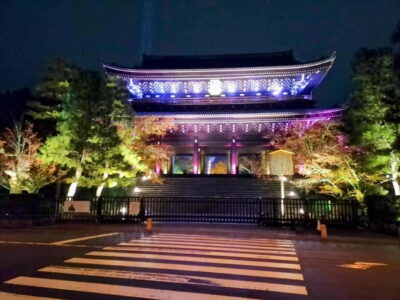
Kyoto Geisha Walking Tour: Gion District & Hidden Gems
Read our review →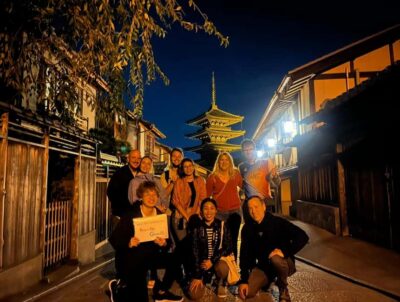
Gion Magical Night Walking Tour with Geisha Trivia
Read our review →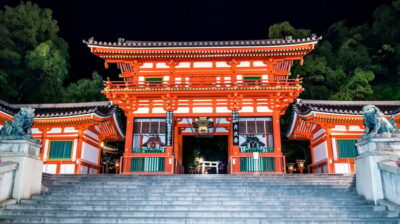
Gion Geisha District Walking Tour – Stories of Geisha
Read our review →
Best of Kyoto: Gion, Geisha, Pagodas & Cobblestones
Read our review →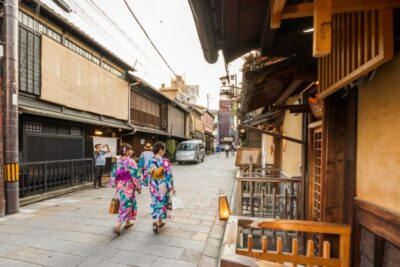
Kyoto Gion Cultural Walk & Geisha Show with Dining Options
Read our review →
Browse the lists this tour appears in