
Reviewed · KYOTO BIKE TOURS
Discover Kyoto by Bike: Authentic Half Day Tour
Kyoto makes more sense at bicycle speed: fast enough to cover several corners of the city, slow enough to notice the side streets between its famous sights. I like that this private ride pairs major temples with everyday cycling routes, and that guides such as Alex, Nobumasa, and Miya share context as you go rather than leaving you to connect the dots alone.
One consideration: the bike is a standard model, not an electric one. The route is described as mostly flat with a few gentle slopes, but four hours in the saddle may still feel like a lot if you rarely ride.
Key points before you book
- A six-stop route: From Gion to the Kyoto Imperial Palace, the tour links temples, a shrine, a canal-side path, and historic streets.
- Private for your group: You will not be paired with strangers, so the guide’s attention stays with your party.
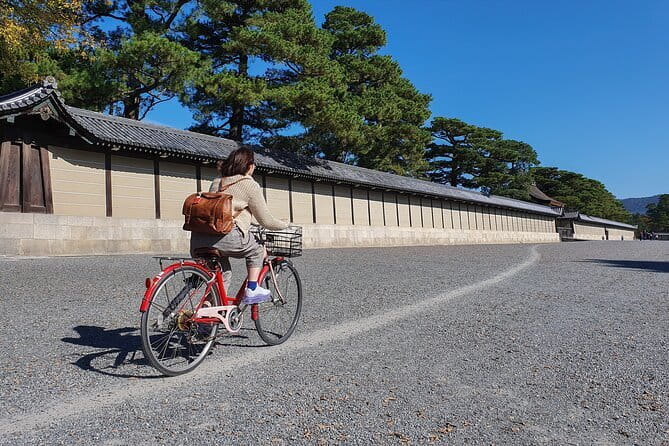
- A regular bike, not an e-bike: The Mamachari has three gears, and a helmet is included.
- Nanzenji’s entrance fee is covered: Meals, drinks, and personal expenses are not.
- Four hours includes riding and visits: The stops have their own time allowances, with travel between them filling out the half day.
- Start and finish at Gojō Station: Hotel pickup and drop-off are not included.
A Kyoto route that works best by bicycle
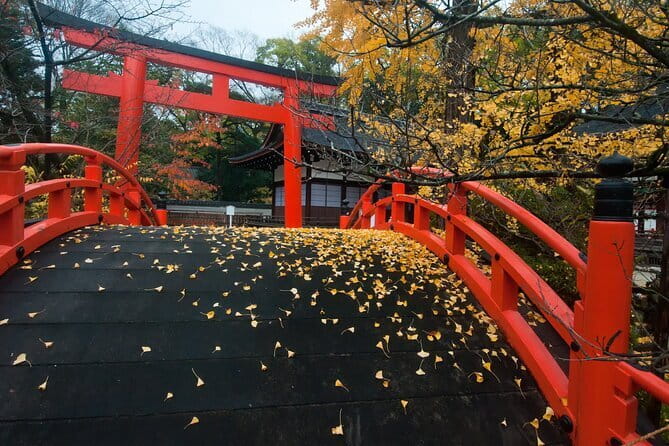
At $85 per person, this tour is a way to see several parts of Kyoto without spending the half day walking between them or arranging each stop yourself. The guide leads the way through streets and paths, and the route includes both celebrated sights and quieter stretches, including the Philosopher’s Path and wooded grounds at Shimogamo Shrine.
The value depends on what you want from your time. If you like having a guide explain the places as you go, and want a practical overview of several central Kyoto sights, the price covers the bicycle, helmet, insurance, English-speaking guide, and Nanzenji entrance fee. It is less compelling if you want to linger for a long time at each temple or prefer to explore at your own pace.
This is listed as a private activity, so only your group takes part. That can make a difference on a bike tour: you are not trying to keep pace with an unrelated group, and your guide can focus on your party. Group discounts are also offered, though the discount details are not specified.
The route is described as mostly flat, with a few gentle slopes. That sounds approachable for most people, and the tour notes that most participants can take part, but this is still an active outing. The bicycle has three gears and is not electric, so consider your comfort with ordinary city cycling before booking.
More bike tours in Kyoto:
- Bike Tour Exploring North Kyoto plus Lunch
★ 5.0 · 1,087 reviews - Arashiyama Bamboo Forest & Hidden Gems Bike Tour (Early Bird)
★ 5.0 · 613 reviews - 5 Top Highlights of Kyoto Full Day Bike Tour (E-bike option)
★ 5.0 · 511 reviews
Starting among Gion’s historic streets
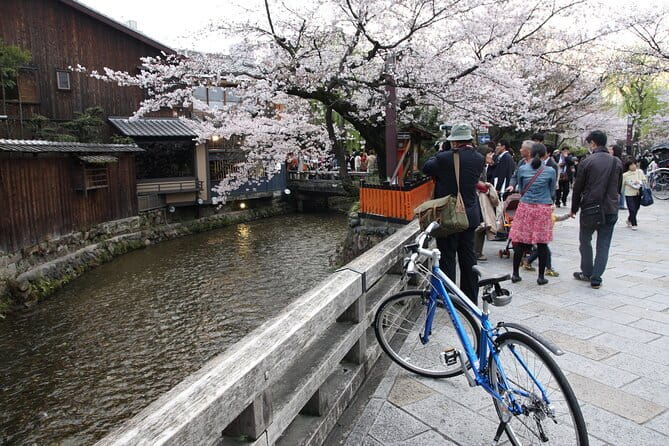
Gion is the opening stop, with about 20 minutes set aside. Kyoto’s streets are part of daily life for local cyclists, and beginning here gives you a feel for how a bike can fit into the city rather than simply carrying you from one famous gate to another.
A guide is especially useful on this first stretch. One rider described needing help with the street and pavement layout, and praised the guide’s ability to steer through it. That is a practical advantage, not just a matter of having someone point out landmarks: a local guide can help you follow the route while you focus on riding and looking around.
The tour presents Gion as a place to get your bearings and begin seeing Kyoto at street level. Do not expect an extended visit here; 20 minutes is a brief introduction before the ride continues. If you want a long, unhurried exploration of Gion’s lanes, you may want to return on your own.
Nanzenji’s temple grounds
Nanzenji is the next stop, with 30 minutes for a visit. The temple is a Zen site, and the tour includes its entrance fee, which is a useful detail when comparing the total cost with a self-guided ride.
Half an hour gives you a chance to take in the setting and hear some background from your guide, but it is not a deep, lengthy temple visit. The guide’s explanations are one of the tour’s strongest features: riders have praised the history and insider context they received at stops along the way. Names associated with guiding this route include Alex, Nobumasa, and Miya.
Nanzenji also shifts the tone from city streets to a more contemplative stop. That contrast is part of the route’s appeal: you move between Kyoto’s everyday rhythms and places where the city’s religious and cultural heritage is on display.
The canal-side Philosopher’s Path
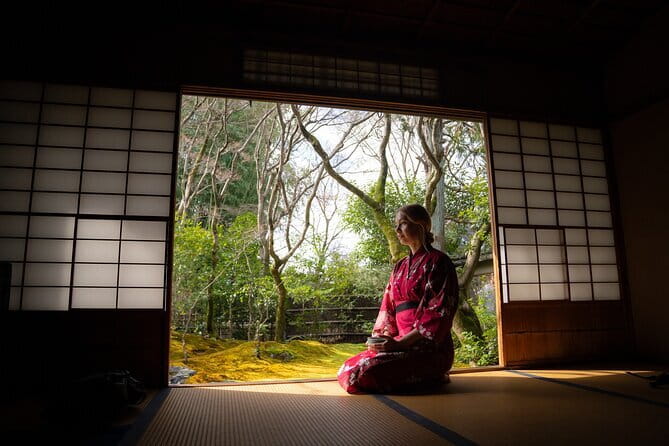
Next comes the Philosopher’s Path, a scenic canal-side route, with about 20 minutes allotted. It offers a different kind of stop from a temple visit. Instead of spending the time inside a site, you ride beside the water and take in the path’s natural setting.
This is one of the places where a bicycle makes practical sense. The tour combines riding with short visits, and the canal route gives you time to enjoy the journey itself rather than treating every stretch as mere transportation. The path is marked as not including an admission ticket; the tour information does not specify a separate cost.
Twenty minutes is a short window, so think of this as a taste of the path rather than a long walk or a chance to stop repeatedly. If this is the part of Kyoto you most want to explore, you might plan to come back on foot and give it more time.
More Kyoto tours in Kyoto:
- PERFECT KYOTO 1-Day Bus Tour
★ 5.0 · 13,518 reviews - Kyoto: Fushimi Inari, Kinkakuji, Bamboo Grove 1 Day Bus Tour
★ 4.8 · 4,316 reviews - Kyoto: Tea Ceremony in a Traditional Tea House in Kiyomizu
★ 4.9 · 3,519 reviews - Kyoto Geisha Walking Tour: Gion District & Hidden Gems
★ 4.7 · 3,273 reviews
Ginkakuji and its peaceful gardens
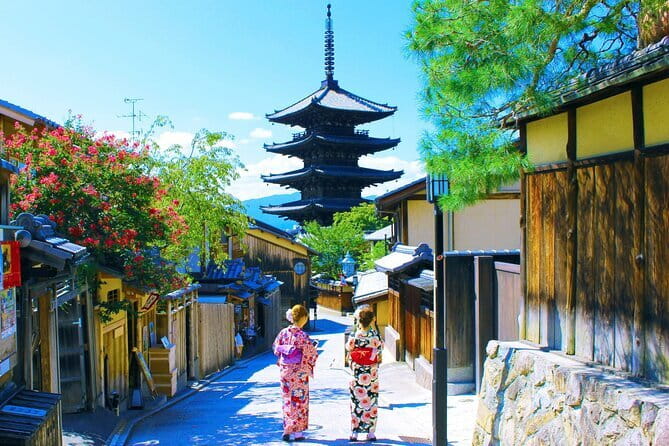
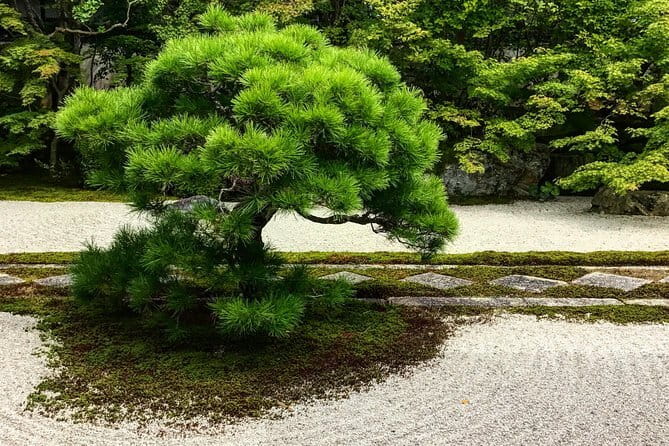
Ginkakuji, known as the Silver Pavilion, follows, with around 20 minutes for the visit. The tour description highlights its Zen temple setting and peaceful gardens, giving you another change of pace after the canal-side ride.
The stop is brief, which makes the guide’s commentary valuable. A little context can help you make sense of a place even when you do not have hours to wander. Still, if you like studying gardens or taking your time at temples, this schedule may feel brisk.
The supplied details identify the Nanzenji entrance fee as included, but do not clearly state how Ginkakuji admission is handled. Check the current booking details if you want to know whether you should budget separately for entry.
Shimogamo Shrine’s wooded grounds
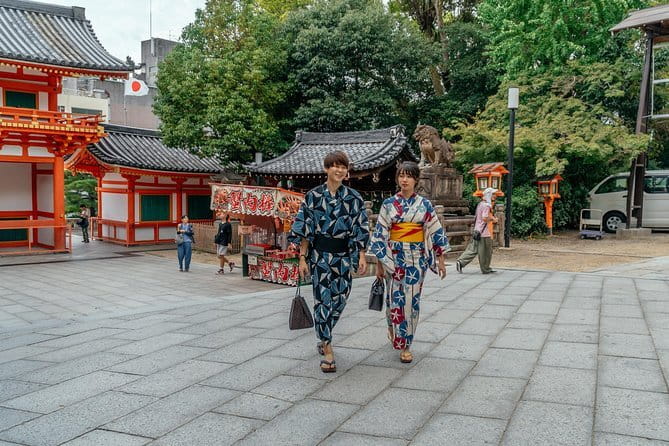
Shimogamo Shrine gets the longest visit, at one hour. It is described as one of Kyoto’s oldest Shinto shrines, set among quiet, wooded grounds. That generous stop gives you more room to look around than the shorter temple visits allow.
The longer pause matters because the tour has a lot of ground to cover. An hour here can help balance the riding with time off the bike, and the shrine offers a different religious setting from the Zen temples earlier in the route. It is a good chance to hear how Shinto places fit into Kyoto’s spiritual life.
The grounds are described as serene, but you should not mistake this for an hour of guided explanation alone. The exact mix of guide commentary and independent looking is not specified. If you particularly want to spend time at Shimogamo, this schedule gives it a notable share of the half day.
The Kyoto Imperial Palace as the final stop
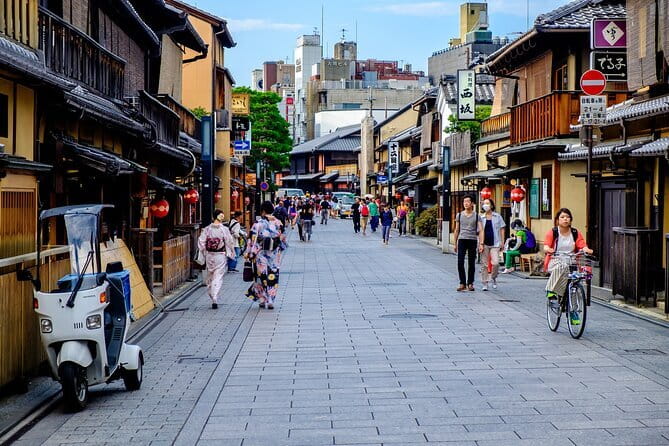
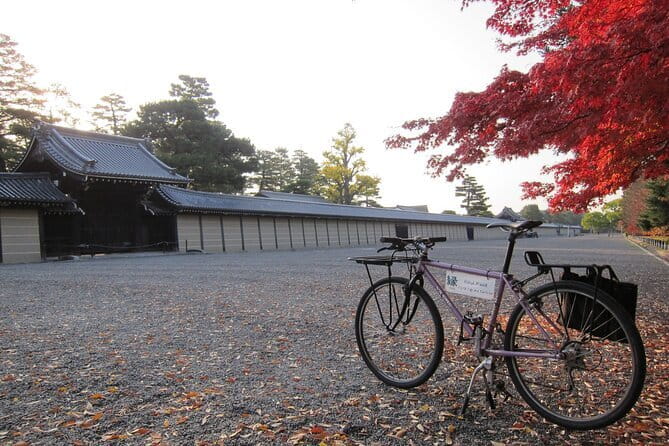
The Kyoto Imperial Palace is the last listed stop, with 30 minutes to take in its expansive grounds. It was the former residence of Japan’s imperial family, adding a courtly and political dimension to a route otherwise centered on temples, a shrine, and local streets.
As a finale, the Palace gives the ride a broad sense of Kyoto’s past. You will have visited places tied to different parts of the city’s cultural and spiritual life, rather than spending the entire tour inside one kind of site. Thirty minutes is enough for a brief look, not a leisurely, detailed exploration of the grounds.
After this stop, the activity returns to the meeting point at Gojō Station. There is no hotel pickup or drop-off, so you will need to make your own way there and plan your onward journey from the same area.
What the four-hour schedule means in practice
The listed visit times add up to about three hours: 20 minutes in Gion, 30 at Nanzenji, 20 on the Philosopher’s Path, 20 at Ginkakuji, one hour at Shimogamo Shrine, and 30 at the Palace. The remaining time in the approximate four-hour duration allows for cycling between stops and the movement of the tour as a whole.
That balance is the point. You are not simply being driven from one sight to another, and the ride itself is part of the experience. One guide has taken riders along the river and the Philosopher’s Path, as well as through short routes that would not work as well by bus or on foot. The exact streets can vary, but expect the guide to lead you through a mix of notable sights and connecting routes.
A few riders have singled out the pace as thoughtful and relaxed. That is encouraging if you want a guided overview rather than a race to tick off landmarks. Even so, six stops in four hours means each visit is necessarily selective. If you want to spend half a day at one major temple, this is not the right format.
Guide, bike, and practical details
The tour includes an English-speaking guide, a standard B-type Mamachari bicycle with three gear shifts, a helmet, insurance, and Nanzenji’s entrance fee. You will need to cover meals, other drinks, and personal expenses yourself.
The guide is a central part of the experience. Alex, Nobumasa, and Miya are among the guides associated with this route. Participants have valued guides who explain history, offer local context, help with the route, and are patient about taking photos. Those qualities matter on a tour with several short stops: clear explanations can make a quick visit feel more worthwhile.
The bike is a practical city model, but the tour does not promise electric assistance. If you are confident on a regular bicycle and comfortable with gentle slopes, the route sounds manageable. If you are unsure about cycling in city streets, tell yourself honestly before booking; a guide can lead the way, but you still need to ride.
The starting point is Gojō Station in Kyoto’s Shimogyo Ward, and the activity ends back there. The tour is near public transportation, but transport to and from the meeting point is your responsibility. Confirmation is received at booking, and free cancellation is available until 24 hours before the start time. Changes made inside that 24-hour window are not accepted, and cancellations then are not refunded.
Is this Kyoto bike tour worth booking?
I would choose this tour if you want a guided first look at Kyoto, enjoy cycling, and would rather connect several sights by bike than tackle them one by one. Its strongest combination is the route variety, the private format, and guides who can explain the city while helping you navigate it. The long stop at Shimogamo Shrine and the canal-side ride also keep the outing from becoming a string of quick temple visits.
I would look elsewhere if you need an e-bike, want hotel pickup, or prefer long, independent visits at each site. At $85, the tour offers a useful package of guide, bicycle, helmet, insurance, and Nanzenji entry, but its value rests on enjoying the ride as much as the destinations. For an active, well-paced overview of several sides of Kyoto, it is a sensible way to spend four hours.
FAQ
How long is the tour?
It lasts approximately four hours, including cycling between the stops and time at the sights.
Where does the tour start and end?
It starts at Gojō Station in Kyoto and ends back at the same meeting point.
Is the tour private?
Yes. Only your group takes part in the activity.
What kind of bicycle is included?
The tour provides a standard, non-electric B-type Mamachari bicycle with three gear shifts. A helmet is also included.
Is an entrance fee included?
The Nanzenji Temple entrance fee is included. The tour details do not clearly specify whether entry fees at other stops are included.
What is not included in the price?
Hotel pickup and drop-off, meals, other drinks, and personal expenses are not included.
Newly added in Kyoto
- Uji: Private immersion into Kyoto’s tea and reglious culture★ 5.0 · 17 reviews
- Whisk Your Own Matcha: A Zen Matcha Experience at Temple★ 3.6 · 7 reviews
- Treasures of Kyoto: Gion & historical Walking Tour★ 5.0 · 6 reviews
- Kyoto tea town for matcha lovers★ 5.0 · 16 reviews
- Kyoto Matcha Green Tea Tour★ 4.5 · 23 reviews
- Uji and Wazuka Matcha Farm Half Day Private Guided Tour★ 5.0 · 21 reviews
- Uji Tea Ceremony and UNESCO Heritage Walking Tour★ 5.0 · 20 reviews
- Utilising upcycled Matcha! Creating matcha incense (Uji, Kyoto)★ 5.0 · 6 reviews
Kyoto Bike Tours, compared.
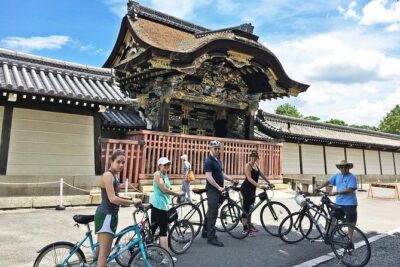

Arashiyama Bamboo Forest & Hidden Gems Bike Tour (Early Bird)
Read our review →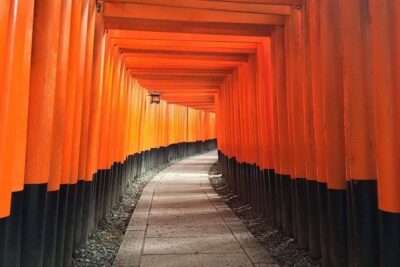
5 Top Highlights of Kyoto Full Day Bike Tour (E-bike option)
Read our review →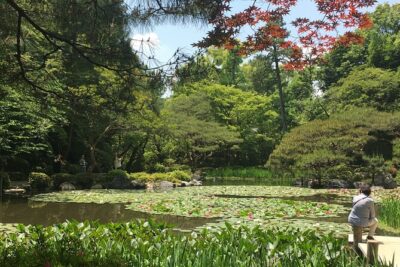
South Kyoto in a Nutshell: Gentle Backstreet Bike Tour!
Read our review →
Hidden Gems E-Bike Tour with Local Japanese Guide
Read our review →
Pedal Adventure Kyoto’s iconic landmarks on an e-bike tour
Read our review →Browse the lists this tour appears in