
Reviewed · KYOTO EARLY MORNING TOURS
Kyoto Early Morning Tour with English-Speaking Guide
At Fushimi Inari, the famous red gates are more than a photo backdrop: arriving early gives you a better chance to walk through them before the paths fill up. This five-to-six-hour Kyoto tour links the shrine with Arashiyama’s bamboo grove and Kinkaku-ji, three far-flung sights that can be tricky to stitch together on your own.
I like two things in particular: the small group, capped at eight, leaves room to ask questions, and the guide helps you use local trains and buses, so the route doubles as a practical introduction to getting around Kyoto. Guides named in past experiences include Haruki, Aya, Genki and Arisa, though you cannot count on a particular person being assigned.
One consideration: this is a full morning of walking and transit, and the advertised price does not cover public transportation or the Kinkaku-ji entrance fee. You will need to budget for both, and come ready to keep moving.
What to know before you book
- Three major sights in one morning: Visit Fushimi Inari, Arashiyama’s bamboo grove and Kinkaku-ji.
- An early start pays off: Fushimi Inari can feel much quieter before the crowds arrive later in the morning.
- Small group by design: The maximum group size is eight, which makes it easier to hear the guide and ask questions.
- Local transit is part of the day: Your guide helps you navigate public transportation, but fares are extra.
- Budget beyond the ticket price: The tour costs $68.98 per person; transport is about ¥1,240, and Kinkaku-ji admission is ¥500.
- Expect a substantial outing: It lasts about five to six hours, with travel time included, and calls for moderate physical fitness.
An early start for Kyoto’s headline sights
Kyoto’s best-known places are no secret, and the crowds can change the mood of a visit. This tour’s main advantage is timing: you begin early, when the paths and temple grounds may be calmer and photographs are less likely to be blocked by a stream of people. One person who returned to Fushimi Inari later in the morning found the difference striking. That is a useful reason to put the shrine near the beginning of your Kyoto stay.
The route also solves a practical problem. Fushimi Inari, Arashiyama and Kinkaku-ji sit in different parts of the city, and getting between them takes planning. Here, a guide leads the way by public transit, giving you the chance to learn the basic rhythm of Kyoto’s trains and buses as you go. If you have limited time, or simply do not want to spend your first morning studying transit maps, that help has real value.
This is not a private car tour or a leisurely stroll through one neighborhood. It is a small-group sightseeing day, with travel and walking built into the schedule. The reward is variety: a major shrine, a distinctive natural setting and one of Kyoto’s celebrated temples in a single outing.
More early morning tours in Kyoto:
- Kyoto: Early Morning Tour with English-Speaking Guide
★ 4.9 · 1,128 reviews - Nara Early Morning Tour (Kyoto or Osaka Departure Available)
★ 5.0 · 676 reviews - Arashiyama Bamboo Forest & Hidden Gems Bike Tour (Early Bird)
★ 5.0 · 613 reviews
Fushimi Inari before the paths fill
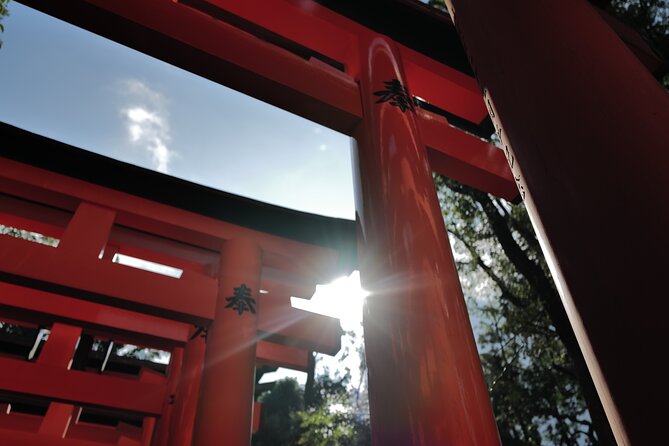
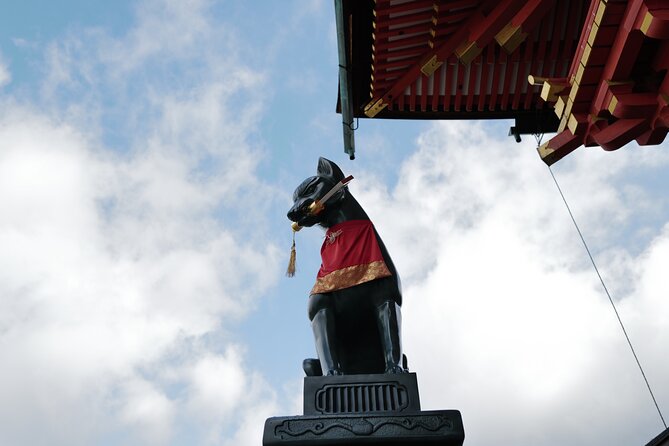
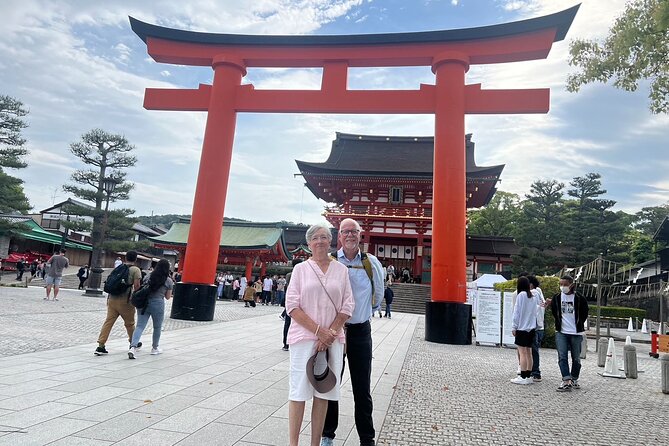
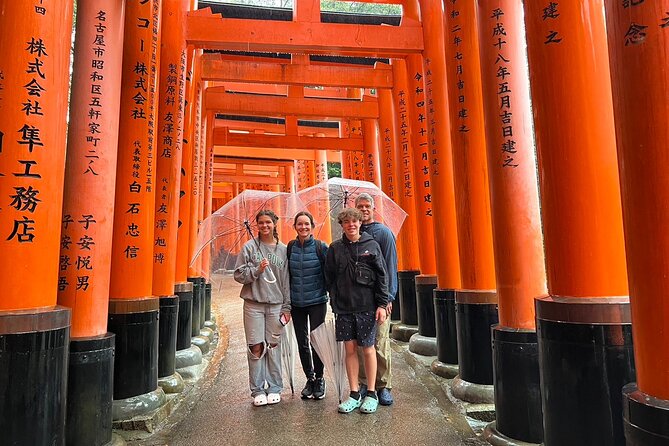
Fushimi Inari-taisha is famous for its long rows of red torii gates, which form striking corridors on the shrine grounds. The gates make an immediate visual impression, but the place is also an active shrine, not just a scenic route. A guide can explain some of the customs and meaning behind what you are seeing, giving the visit more substance than a quick photo stop.
The planned visit here is about an hour. That gives you time to look around, take photographs and listen to the guide, though it is not enough to explore every path or spend a long stretch climbing the shrine’s hillside routes. If a full, unhurried hike is your priority, you may want to return independently on another day.
The early timing is especially useful at this stop. Fewer people on the paths can make the gates easier to photograph and give the walk a calmer feel. Still, early does not mean empty, and the experience depends on the day and the pace of the group. Bring comfortable shoes, and take advantage of the quieter stretch rather than rushing from one photo to the next.
Arashiyama’s bamboo grove and a little breathing room
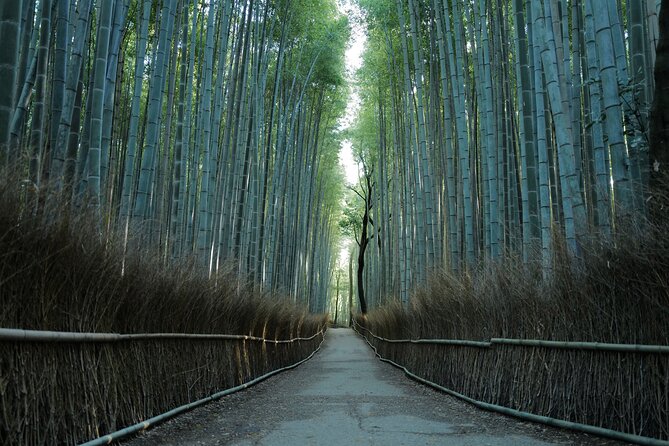
The next featured stop is Arashiyama, known for its bamboo grove. Tall bamboo rises around the walking route, creating a very different mood from the shrine: green, quiet-looking and enclosed. It is a popular place, so an early visit can help, though you should not expect to have the grove entirely to yourself.
The schedule allows about an hour at this stop. Some people have found there is free time after visiting the bamboo forest, and one guide was praised for sharing local snack recommendations nearby. Those details can make this portion feel less like a checklist, but the exact amount of free time and what you do with it may depend on the pace of the day.
The grove is a scenic walk rather than a long wilderness outing. Keep your expectations in proportion: the appeal is the atmosphere and the contrast with Kyoto’s temples, not hours of hiking through a forest. If you want to take photographs, pause to enjoy the setting as well. A guide may also know useful photo spots, a practical bonus when the path is busy.
Kinkaku-ji, the Golden Pavilion
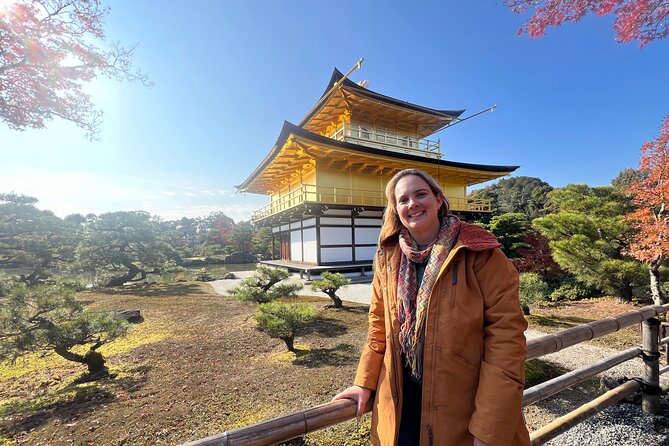
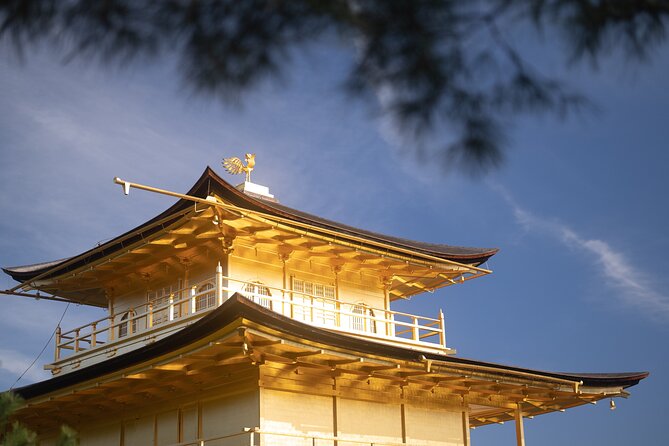
Kinkaku-ji, commonly called the Golden Temple or Golden Pavilion, is the tour’s third major sight. Its gold-covered exterior makes it one of Kyoto’s most recognizable temple buildings, and its reflection in the surrounding pond is a classic view. The visual impact is immediate, which is why this stop tends to leave a strong impression even on a tightly scheduled visit.
Plan for a separate ¥500 entrance fee per person. It is not included in the $68.98 tour price, so bring a way to pay for the admission charge as well as your transit fares. The tour allows about an hour at the temple, enough for a visit and photographs, but not an extended stay.
Kinkaku-ji is a popular stop, and the tour’s early schedule helps you reach the main sights before the day gets busier. Even so, this is not a private visit or a chance to wander without other people around. Your guide can add context about the site and help keep the visit focused, while you get the benefit of seeing one of Kyoto’s signature landmarks without arranging the journey yourself.
More guided departures in Kyoto:
- Kyoto 6hr Private Tour with Government-Licensed Guide
★ 5.0 · 1,369 reviews - Kyoto: Nijo-jo Castle and Ninomaru Palace Guided Tour
★ 4.7 · 1,020 reviews - Kyoto: Izakaya Bars Guided Walking Tour
★ 4.9 · 815 reviews - Kyoto Gion Night Walk & Geisha District Guided Tour
★ 5.0 · 786 reviews
Public transit makes the route more useful
Public transportation is not just a way to get from one stop to the next. It is part of the experience, and a helpful orientation to moving around Kyoto. The guide leads the group through the transit connections, giving you a chance to see how local travel works in practice. Several people have found this reassuring, especially when unfamiliar with the city.
The fare is about ¥1,240 and is not included. That sum is worth factoring into the real cost, along with Kinkaku-ji’s ¥500 admission. Food and drinks are also extra, so bring some money for anything you want to buy during the morning.
The tour takes five to six hours, including travel time. That means it is more than a short guided walk, but it also leaves much of the afternoon and evening open for your own plans. If you are in Kyoto briefly, you can cover three important areas before lunch. If you have several days, the tour can serve as an orientation, with the guide’s local tips helping you plan later visits.
What the small group and guide add
With a maximum of eight people, this is a more personal format than a large coach tour. A small group can make it easier to hear explanations, ask questions and keep a steady pace. It also means the day still involves coordinating with other people, so you will not have the freedom to linger as long as you like at every stop.
The guide is the human link between the sites. Visitors have praised guides including Haruki, Aya, Akari, Arisa, Genki, Ramu, Kanami and Karin for clear explanations, local history, help with transit and care for the group’s pace. Some have also appreciated guides who were good with children or shared photo tips and suggestions for the rest of a Kyoto stay. These names are examples of guides who have led the experience, not a guarantee of who will lead your departure.
That guidance matters most when the day is moving quickly. Rather than treating each stop as a picture-taking task, you can ask about Japanese customs, temples and local history. Several people have found the tour relaxed despite its wide itinerary, though the amount of walking means it is wise to pace yourself and wear comfortable footwear.
Is $68.98 a fair price?
At $68.98 per person, the tour is best judged as a guided, organized morning rather than as a ticket bundle. It includes an English-speaking guide and a route covering three major sights, but it does not include transit, meals or Kinkaku-ji admission. Add roughly ¥1,240 for public transportation and ¥500 for the temple entrance, then allow extra for food or drinks.
You could visit these places independently and avoid the guide fee. The trade-off is that you would need to plan the route, manage the transfers and find your own explanations at each stop. If the transport connections feel intimidating, or you value local context and a calm start, the fee buys convenience as well as company. If you are comfortable navigating Kyoto and prefer to set your own pace, independent visits may suit you better.
Group discounts are listed as a feature, though the amount depends on the booking details. The maximum group size of eight is another point in the tour’s favor: it keeps the outing from feeling like a large bus excursion. The value is strongest for a first visit, a short stay or a morning when you want to see the highlights without organizing every connection yourself.
Who should take this tour?
I would consider booking it if you are new to Kyoto, have only a few days in the city, or want a guide to make the transport and cultural context easier to follow. It also suits families and mixed-age groups if everyone is comfortable with a fairly active morning; guides have been praised for adapting to adults and children and keeping the pace comfortable.
It may be less suitable if you want long, unstructured time at each sight, dislike early starts, or have difficulty with a moderate amount of walking. The group visits three different areas, so there is a timetable to keep. The advertised physical fitness level is moderate, and travel time is part of the five-to-six-hour duration.
Weather is another factor. The experience requires good weather; if poor conditions lead to cancellation, you are offered another date or a full refund. Rain has not necessarily stopped every outing, but the tour’s weather policy gives you a choice if the operator cancels.
Should you book the Kyoto morning tour?
Book it if you want a guided introduction to three of Kyoto’s most famous sights and would rather follow a local through the transport connections than plan them yourself. The early start is the clearest advantage, especially at Fushimi Inari, and the small group leaves room for questions and personal tips.
Skip it if your ideal temple visit means lingering for hours or exploring at your own pace. For everyone else, this is a practical way to see a lot of Kyoto before the afternoon, with the important caveat that transit and Kinkaku-ji admission cost extra. Leave some energy for the walking, and you can finish the morning with a better sense of both the city’s landmarks and how to move around it.
FAQ
How long is the Kyoto Early Morning Tour?
The tour lasts approximately five to six hours. Travel time is included in that duration.
Which places does the tour visit?
The planned stops are Fushimi Inari-taisha Shrine, Arashiyama’s bamboo grove and Kinkaku-ji.
What is the maximum group size?
The tour has a maximum of eight travelers.
Is an English-speaking guide included?
Yes. An English-speaking guide is included.
How much does the tour cost?
The listed price is $68.98 per person. Group discounts are available.
Are public transportation fares included?
No. Public transportation is not included and costs about ¥1,240.
Is Kinkaku-ji admission included?
No. The entrance fee is ¥500 per person.
Are food and drinks included?
No. Food and drinks are not included.
What level of physical fitness is recommended?
A moderate level of physical fitness is recommended.
Can I cancel for a full refund?
You can cancel for a full refund if you do so at least 24 hours before the experience’s start time. If poor weather causes the experience to be canceled, you are offered a different date or a full refund.
Newly added in Kyoto
- Uji: Private immersion into Kyoto’s tea and reglious culture★ 5.0 · 17 reviews
- Whisk Your Own Matcha: A Zen Matcha Experience at Temple★ 3.6 · 7 reviews
- Kyoto tea town for matcha lovers★ 5.0 · 16 reviews
- Treasures of Kyoto: Gion & historical Walking Tour★ 5.0 · 6 reviews
- Kyoto Matcha Green Tea Tour★ 4.5 · 23 reviews
- Uji and Wazuka Matcha Farm Half Day Private Guided Tour★ 5.0 · 21 reviews
- Uji Tea Ceremony and UNESCO Heritage Walking Tour★ 5.0 · 20 reviews
- Utilising upcycled Matcha! Creating matcha incense (Uji, Kyoto)★ 5.0 · 6 reviews
Kyoto Early Morning Tours, compared.
Early Morning Tour with English-Speaking Guide
Read our review →
Nara Early Morning Tour (Kyoto or Osaka Departure Available)
Read our review →
Arashiyama Bamboo Forest & Hidden Gems Bike Tour (Early Bird)
Read our review →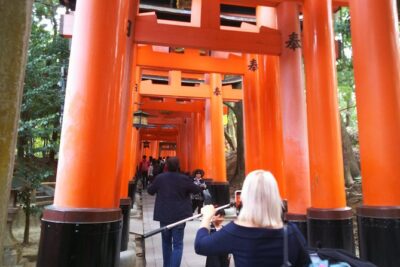
Kyoto Early Bird English Tour: Fushimi-Inari and Arashiyama
Read our review →
Browse the lists this tour appears in