
Reviewed · KYOTO COOKING CLASSES
Ramen Gyoza Onigiri Japanese Cooking Class in Kyoto
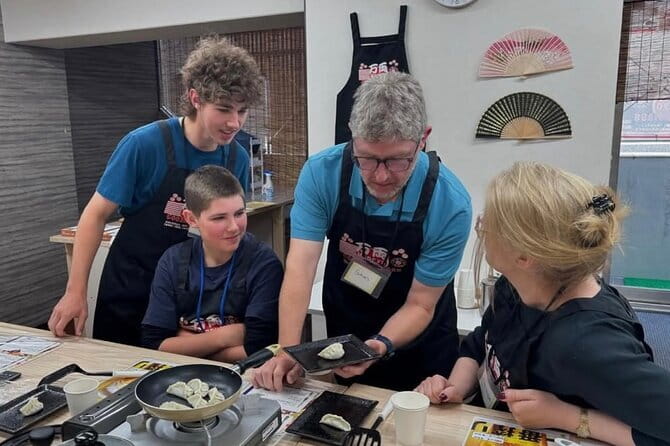
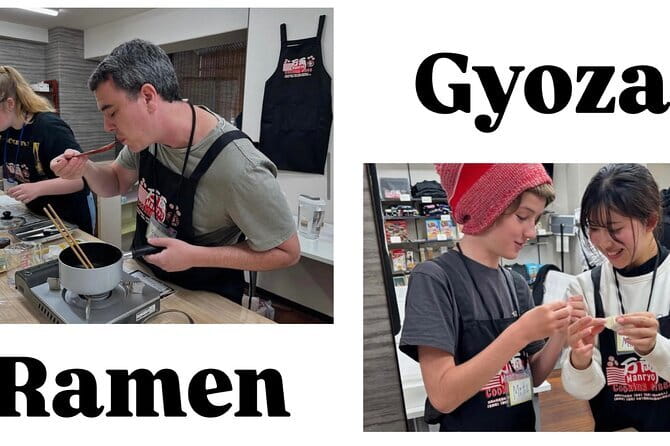
In one 90-minute class, you make three Japanese staples: ramen, gyoza, and onigiri. I like that the lesson focuses on the part of ramen that is harder to recreate at home, the broth, and that Nori and his team keep the instructions clear and hands-on.
I also like the small group cap of eight, which gives you a better chance to follow along and ask questions. The main catch is the menu: vegetarian means pork is replaced with tofu, but the class cannot accommodate vegan, pescatarian, gluten-free, halal, kosher, or other special diets.
At a glance
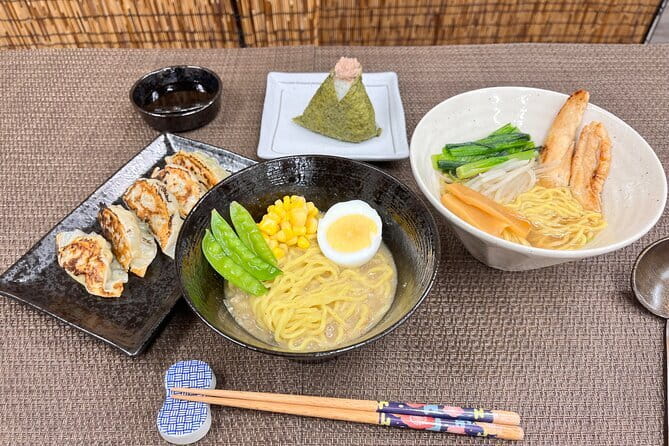
- Three dishes in one session: Make ramen broth, gyoza, and onigiri, then eat what you prepare.
- Broth, not noodles: You will not make ramen noodles. The class teaches a soup base using ingredients and seasonings you can find at home.
- Two menu choices: Book the regular menu or the vegetarian option, which replaces pork with tofu while leaving other ingredients unchanged.
- Small group format: The class has a maximum of eight participants, with English-speaking instructors.
- Recipes for home cooking: You leave with recipes and practice wrapping gyoza and shaping onigiri.
- Come hungry: The food you make becomes lunch, and the portions can add up to a generous meal.
Three Kyoto favorites in 90 minutes
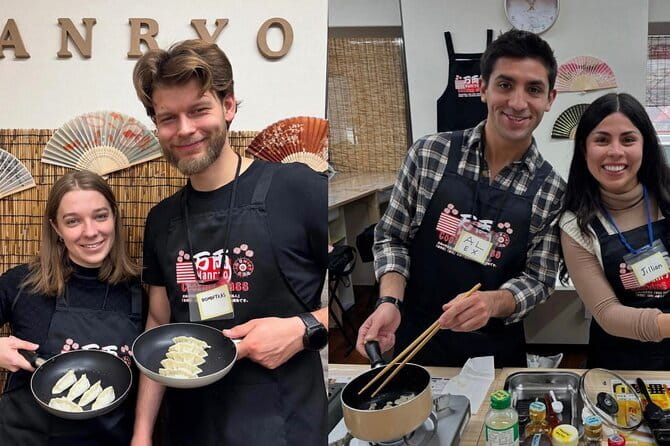
This class is designed for people who would rather learn several dishes than spend a short session on just one. In about an hour and a half, you work on ramen, gyoza, and onigiri, three familiar parts of Japanese home cooking that call for different skills.
The most useful lesson may be the ramen broth. You can often find noodles near home, but a good soup base is less straightforward. Here, the focus is on building a flavorful broth with accessible ingredients and seasonings, rather than making noodles from scratch.
That distinction matters if you want to repeat the meal after your trip. You are learning a practical method, not just watching a chef prepare something that depends on specialist equipment or hard-to-find ingredients. The class is built around techniques you can take back to your own kitchen.
The other two dishes make the session more varied. Gyoza involves learning to fill and wrap dumplings, while onigiri asks you to shape rice into portable Japanese rice balls. The work is tactile and easy to follow, even if your first dumpling looks more like a folded envelope than a neat crescent.
More cooking classes in Kyoto:
- Ramen Cooking Class at Ramen Factory in Kyoto
★ 5.0 · 1,937 reviews - Sushi Making in Kyoto! Same-day bookings welcome!
★ 5.0 · 713 reviews - Kyoto: Ramen Cooking Class at a Ramen Factory with Souvenir
★ 4.9 · 532 reviews
The cooking, step by step
Expect the instructors to guide you through the preparation rather than leave you to puzzle out a recipe alone. The class is taught in English, and its small size, capped at eight, helps keep the demonstrations within reach. That is useful in a fast-moving session where you are switching between dishes.
Ramen broth gets particular attention. You learn how to prepare the soup with ingredients and seasonings that are easy to source at home. You do not make the noodles, so think of this as a broth lesson paired with a ramen meal, not a full noodle-making workshop.
Some class sessions have included two ramen styles. The exact details of those broths are not specified, so I would not book expecting a particular pair. Still, the chance to work through more than one broth approach helps explain why the class can cover a good range of cooking in 90 minutes.
Next comes gyoza, with an emphasis on wrapping technique. The folding takes practice, but the point is not to produce identical restaurant dumplings. You are learning a repeatable way to make them at home, and the hands-on part makes the meal more satisfying later.
Onigiri rounds out the menu. These rice balls are simple in concept, but shaping them well is a skill of its own. The class gives you a chance to try the technique with instruction close by, then enjoy the result as part of the meal.
The pace is brisk by design. If you want a slow, deep study of ramen alone, this is not that class. If you want a compact introduction to several useful dishes, the variety is a strength.
From lesson to lunch
After the cooking, you sit down to eat what you have made. That is more than a convenient finish: it gives the class a clear payoff, and you can taste how the broth, dumplings, and rice balls come together as a meal.
Plan to arrive hungry. The amount of food can be substantial, especially if you are making several dishes. This is a cooking class that doubles as lunch, so you may not need to plan another meal immediately afterward.
The shared meal also gives you a chance to compare results and ask final questions. The class is social without needing to be a performance. You are there to cook, eat, and leave with methods you can use again.
The instructors and atmosphere
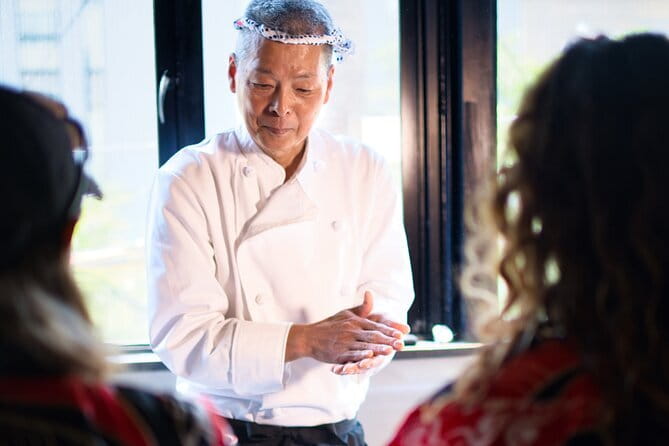
Nori is the instructor most often named, and the teaching team may also include Minori or Ryho. The class is described as friendly and patient, with clear directions and a relaxed tone. Nori has also shared a short history of ramen before cooking begins, adding context without turning the session into a lecture.
The team’s sense of humor is part of the atmosphere, but the practical instruction remains central. That balance can help a mixed group feel at ease, especially if some people are confident cooks and others have never wrapped a dumpling.
The preparation is organized, which matters when you are making multiple dishes in a short window. The class is described as well paced, with clean surroundings and tools. That kind of order helps you spend more time learning and less time wondering what to do next.
More food tours in Kyoto:
- Kyoto Night Foodie Tour in Gion (9+ dishes + 6 Sake tastings)
★ 5.0 · 1,762 reviews - Kyoto: Izakaya Bars Guided Walking Tour
★ 4.9 · 815 reviews - Kyoto: Insider Sake Brewery Tour with Sake and Food Pairing
★ 5.0 · 704 reviews - Kyoto: Ramen, Gyoza, and Onigiri Cooking Class
★ 5.0 · 445 reviews
Vegetarian, with important limits
There are only two menu options: regular or vegetarian. For the vegetarian menu, pork is replaced with tofu. Other ingredients remain the same, so do not assume the class can adjust every dish or remove other ingredients on request.
The class cannot accommodate vegan, pescatarian, gluten-free, halal, kosher, or other special diets. It also does not accept children under 13. If anyone in your party has a dietary restriction, read the provider’s post-booking email carefully and confirm that the available menu is suitable before you go.
This limitation is worth taking seriously. The vegetarian option is a specific substitution, not a custom menu. If you need a fully plant-based meal or must avoid particular ingredients, this is not the right class.
What $92.47 buys you
At $92.47 per person, this is not a bargain meal, but the price covers more than lunch. You get instruction across three dishes, practice with several techniques, the ingredients and cooking session, and the meal you make at the end. Recipes also give you a way to repeat the dishes after you leave Kyoto.
The value depends on what you want from a food activity. If you only want a cheap bowl of ramen, you can find one elsewhere for less. If you want a small-group lesson that teaches you how to make broth, wrap gyoza, and shape onigiri, the price is easier to justify.
The format also makes good use of limited time. In 90 minutes, you get a broad introduction to home-style Japanese cooking without committing half a day. The trade-off is that no single dish gets an extended masterclass.
Getting to the class
The meeting point is Manryo Japanese Cooking Class, at 841 Life Building B1, Chōshōji Monzenchō, Sakyo Ward, Kyoto 606-8366. It is near public transportation, but transportation to the venue is not included. The activity ends back at the meeting point.
The ticket is mobile, and confirmation is provided when you book. Keep an eye on the provider’s email after booking, especially for menu details and any instructions you need before class.
Free cancellation is available up to 24 hours before the start time. Cancellations made less than 24 hours ahead are not refunded, and changes inside that same window are not accepted. The cutoff uses local time in Kyoto.
Who should book this class?
I would choose this class if you are curious about Japanese home cooking and want more than a demonstration. You get to handle the food yourself, learn several techniques, and eat the results. It also suits couples, friends, and families with children aged 13 or older who are comfortable with the fixed menu.
It is a particularly practical choice if you want to bring a cooking skill home. The broth lesson addresses a common gap between buying ramen noodles and making a satisfying bowl, while the gyoza and onigiri techniques are useful beyond the class itself.
Skip it if you need dietary flexibility, want to make noodles from scratch, or prefer a long, detailed lesson focused on one dish. And do not arrive full. The food is part of the experience, not an optional extra.
Should you book it?
Book this class if you want an active, compact cooking experience with a proper meal at the end. The appeal is the combination: broth, dumpling wrapping, and rice-ball shaping, taught in English by a small team led by Nori.
Before paying, check that the regular or tofu-substitution menu works for everyone in your party. If it does, and you are happy to learn broth rather than noodles, this is a useful and enjoyable way to spend 90 minutes in Kyoto.
FAQ
How long is the cooking class?
It lasts about 1 hour and 30 minutes.
What dishes will I make?
You will learn to make ramen, gyoza, and onigiri. The class focuses on ramen broth and does not include making noodles.
Do I get to eat the food I make?
Yes. The food you prepare is served as lunch after the cooking.
Is there a vegetarian menu?
Yes. The vegetarian menu replaces pork with tofu. Other ingredients remain the same.
Can the class accommodate vegan or gluten-free diets?
No. The class cannot accommodate vegan, pescatarian, gluten-free, halal, kosher, or other special diets.
What is the maximum group size?
The class has a maximum of eight participants.
Is the class taught in English?
Yes. English-speaking instructors lead the class.
Where does the class meet?
It meets at Manryo Japanese Cooking Class, 841 Life Building B1, Chōshōji Monzenchō, Sakyo Ward, Kyoto 606-8366. The activity ends at the same meeting point.
Can I cancel for a refund?
You can cancel for a full refund if you do so at least 24 hours before the start time. Cancellations and changes made less than 24 hours before the activity are not accepted for a refund or change.
Newly added in Kyoto
- Uji: Private immersion into Kyoto’s tea and reglious culture★ 5.0 · 17 reviews
- Whisk Your Own Matcha: A Zen Matcha Experience at Temple★ 3.6 · 7 reviews
- Kyoto tea town for matcha lovers★ 5.0 · 16 reviews
- Treasures of Kyoto: Gion & historical Walking Tour★ 5.0 · 6 reviews
- Kyoto Matcha Green Tea Tour★ 4.5 · 23 reviews
- Uji and Wazuka Matcha Farm Half Day Private Guided Tour★ 5.0 · 21 reviews
- Uji Tea Ceremony and UNESCO Heritage Walking Tour★ 5.0 · 20 reviews
- Utilising upcycled Matcha! Creating matcha incense (Uji, Kyoto)★ 5.0 · 6 reviews
Kyoto Cooking Classes, compared.

Ramen Cooking Class at Ramen Factory in Kyoto
Read our review →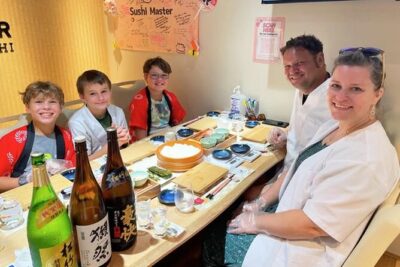
Sushi Making in Kyoto! Same-day bookings welcome!
Read our review →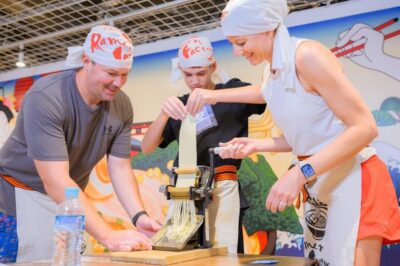
Ramen Cooking Class at a Ramen Factory with Souvenir
Read our review →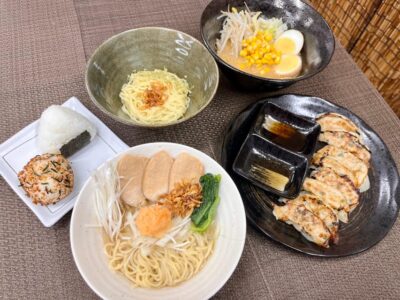
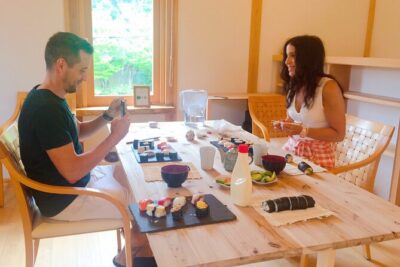
The Original Small-Group Sushi Making Class in Kyoto
Read our review →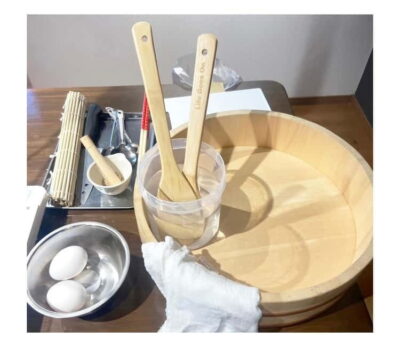
Japanese Washoku Bento Small Group Cooking Class
Read our review →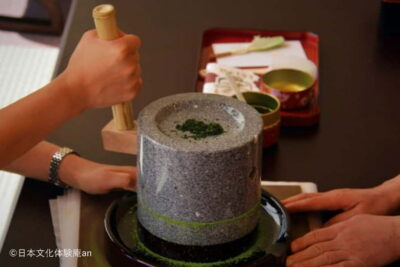
Japanese Traditional Sweets Making and Tea Ceremony
Read our review →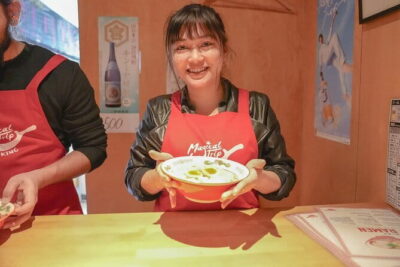
Kyoto Ramen and Gyoza Cooking Class with Professional Chefs
Read our review →Browse the lists this tour appears in