
Reviewed · NARA TOURS
Kyoto, Nara and Osaka private up to 9 pax picked up from Kyoto
Fushimi Inari’s thousands of red gates are only the opening act here. This private Kyoto tour pairs the famous shrine with quieter temples and local sweets, and I like that contrast: you get a landmark everyone knows, then places you might not find on your own.
I also like the personal scale. Your group can have up to nine people, and guide Takashi has driven families between peaceful shrines and temples, shared cultural context, and even helped visitors discover pickle samples at a local stand. One drawback: the description mixes a seven-hour Kyoto route with a 12-hour, three-city option, so you’ll want to confirm the route before paying.
At a glance
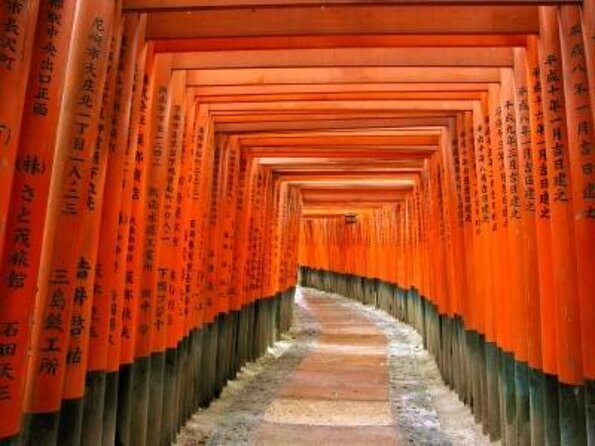
- Fushimi Inari opens the day: Allow two hours for the shrine’s gates, mountain grounds and trails.
- The route favors quieter Kyoto: Rengeji, Myomanji, Koetsuji and other temple stops offer a calmer counterpoint to the city’s headline sights.
- Local food is part of the outing: Nakamuraken serves Kyoto-style sweets, and a review recalls pickle samples at a stand.
- It’s a private group experience: Pickup is offered, and the group limit is nine.
- Check the city list and length: The detailed route totals seven hours in Kyoto, while a separate description outlines a 12-hour visit to Kyoto, Nara and Osaka.
A Kyoto day with a route to verify
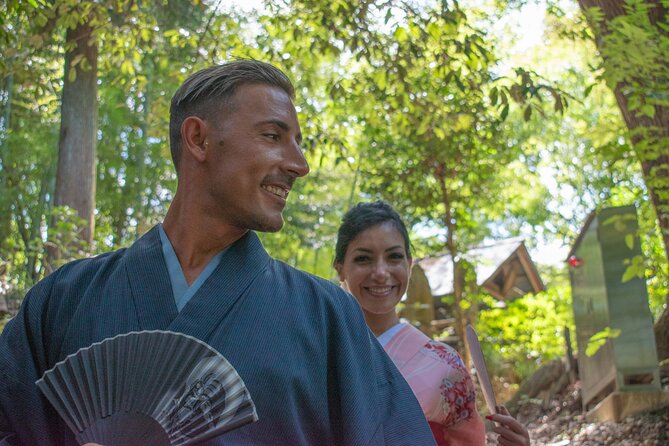
This experience has a useful idea at its heart: combine a major shrine with temples that are less convenient to reach independently. Rather than spending the whole day in the busiest central sights, you can let a local guide handle the driving and give you a route through several corners of Kyoto.
The supplied eight-stop route adds up to about seven hours. It begins at Fushimi Inari-taisha, then visits Rengeji, Myomanji, Koryu-ji, Kinkakuji, Koetsuji, Nakamuraken and Matsuo Shrine. That’s a full day of stops, with little time described for a long meal or an unplanned detour.
There’s a significant wrinkle. The tour’s title and overview also describe a Kyoto, Nara and Osaka outing, with Todaiji and Nara Park, Dotonbori and Abeno Harukas. That version is described as 12 hours, not seven, and those places are absent from the detailed eight-stop route. Treat these as potentially different options, not a promise that you’ll see all three cities on the seven-hour schedule. Confirm the exact route and duration for your chosen booking.
More Nara trips in Kyoto:
- World Heritage Kyoto & Nara Uji Authentic Matcha Experience
★ 5.0 · 1,573 reviews - Kyoto/Osaka: Nara, Fushimi Inari Taisha, Arashiyama Bus Tour
★ 4.7 · 1,275 reviews - Nara Half Day Trip Walking Tour (Private Option Available)
★ 5.0 · 937 reviews
Fushimi Inari’s gates and mountain grounds
The day starts at Fushimi Inari-taisha, with two hours set aside. The shrine is famous for long rows of red torii gates, but its grounds cover an entire mountain, giving you more than a quick photo stop. The route description also points to a bamboo forest trail and the sound of birds, details that may help you find a quieter side of the grounds.
Two hours gives you time to look around rather than rush through the first gate-lined section. Still, the shrine is large, and the exact walking route is not specified. If you have mobility limits or want to hike a particular distance, ask Takashi what the stop involves before booking. The tour’s general information says most people can participate, but it doesn’t describe a specific accessible route.
Rengeji’s moss garden and tatami room
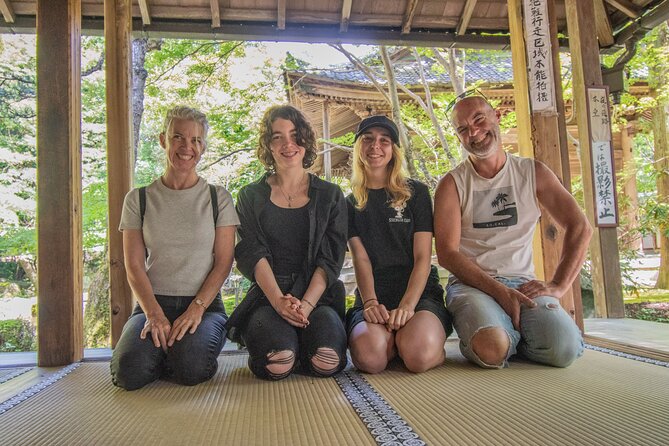
Rengeji is presented as a secluded temple with a striking moss garden. Its distant, inconvenient location helps explain why it may feel more peaceful than Kyoto’s best-known temples, and the one-hour stop gives you time to sit and take in the setting.
The description mentions a wide tatami-mat floor as you enter. That offers a different kind of temple visit from a quick walk around an outdoor garden: you can pause indoors and look out at the grounds. Details such as what rooms are open or whether you’ll receive a guided explanation aren’t specified, so keep expectations to the garden and temple visit itself.
Myomanji and Koryu-ji’s distinct stories
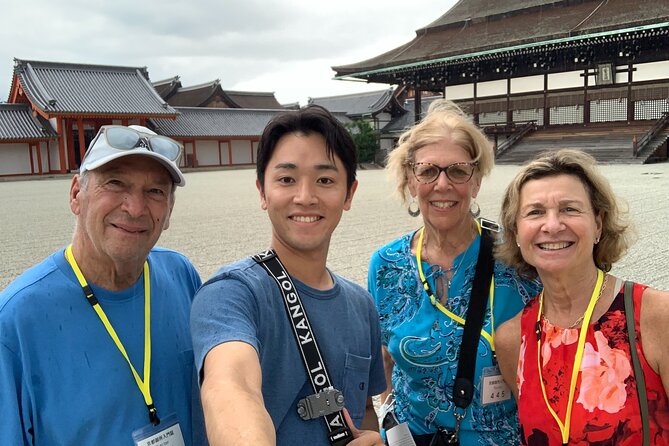
At Myomanji, the focus is a large temple garden made from millions of carefully arranged small rocks. The temple is also tied to a major Buddhist schism in Japan, a historical thread that can give a guide-led visit more meaning than simply admiring the grounds. The stop is scheduled for an hour.
Koryu-ji gets 30 minutes. It was founded by the Hata group, described as a Korean-rooted ethnic group active in the fifth and sixth centuries. The temple burned in the eighth century and was later rebuilt. That background makes it one of the route’s more historically specific stops, though half an hour is brief if you want to linger.
Together, these two temples show the route’s range. Myomanji offers a garden and Buddhist context; Koryu-ji brings an early history of cultural connections to Japan. The schedule gives you time to see each, but not necessarily to explore every detail at leisure.
More Osaka trips in Kyoto:
- Osaka/Kyoto:Kinkakuji,Arashiyama,FushimiInariShrine,NaraPark
★ 4.1 · 1,596 reviews - One-Day Tour of Kyoto’s Highlights from Osaka/Kyoto
★ 4.5 · 1,092 reviews - Osaka/Kyoto: Arashiyama, Nara & Fushimi Inari Shrine w/Lunch
★ 4.4 · 754 reviews - Nara Early Morning Tour (Kyoto or Osaka Departure Available)
★ 5.0 · 676 reviews
Kinkakuji’s gold-leaf pavilion
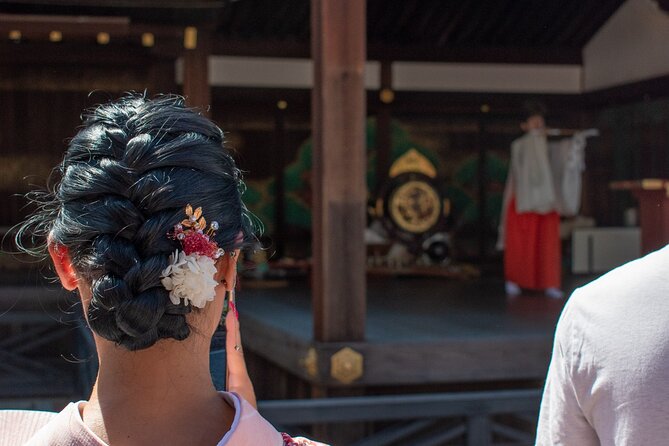
Kinkakuji, the Golden Pavilion, is the most instantly recognizable temple on the route. It began as a villa belonging to Shogun Yoshimitsu Ashikaga, who lived from 1358 to 1408, and became a temple after his death. The top two floors are covered in gold leaf.
An hour is allotted, which is generous compared with the half-hour stops. It gives you a chance to view the pavilion and grounds without treating the visit as a dash in and out. The route lists admission as free, but it does not explain which costs are included in the per-person price. Confirm admission arrangements and any other expenses directly before booking.
Koetsuji, tea arts and a sweet stop
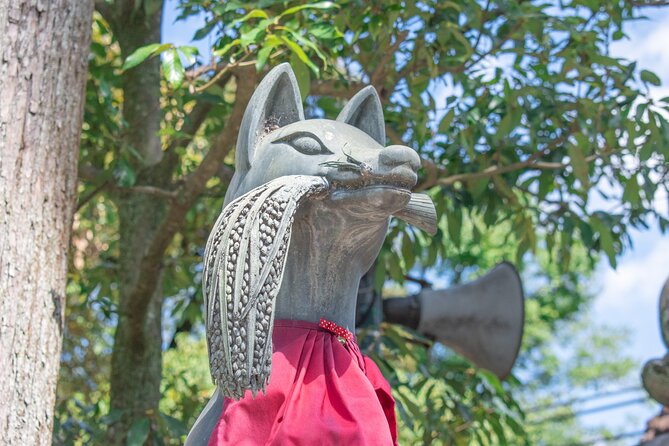
Koetsuji is linked to an artist skilled in several disciplines, including tea ceremony and calligraphy. Its garden includes varied trees and tea-related objects, according to the tour description. With 30 minutes here, expect a compact visit rather than a long lesson in the arts.
The next stop, Nakamuraken, is a local dessert shop. You might find Kyoto-style sweets such as mochifu, a pounded rice cake with a texture described as different from ordinary mochi, or shaved ice flavored with yuzu or matcha. The stop lasts 30 minutes. It’s a pleasant chance to taste something local, though the specific menu and purchase costs aren’t provided.
Food details add a welcome human scale to a day otherwise centered on shrines and temples. One family particularly enjoyed pickle samples from a stand and bought quite a few. That doesn’t establish that pickles are a regular stop on this route, but it’s a useful reminder to stay open to small local food discoveries if they come up.
Matsuo Shrine and the limits of the route
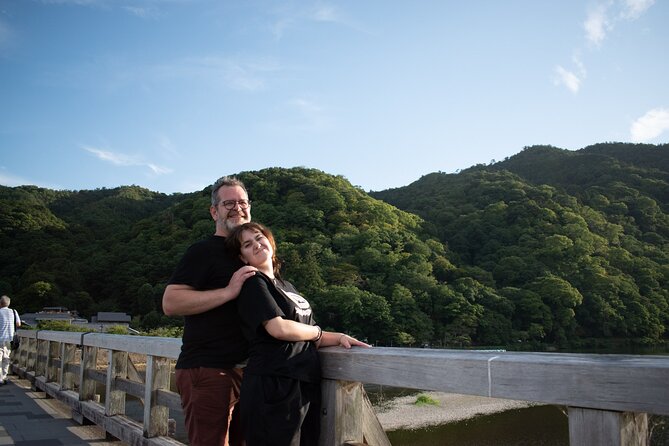
Matsuo Shrine closes the detailed Kyoto itinerary with a 30-minute visit. It is described as a major shrine established by the Hata family and valued by local households. There’s a large koi pond, and visitors are allowed to feed the fish.
That’s a simple, memorable finish, especially if you’re traveling with children or enjoy the calmer rituals of a shrine visit. The description doesn’t say whether fish food is provided or sold, so don’t count on a particular setup. It also doesn’t explain how the day ends or where you’ll be dropped off, though the overview says you can choose a drop-off location.
Private transport and the value of the price

At $329.02 per person, this is not a bargain-priced group bus tour. The value comes from having a private outing for your party, pickup offered in Kyoto, and a guide to connect several sites that may be awkward to combine on your own. The group limit is nine, and group discounts are listed, but the discount terms are not specified.
The per-person price matters. For a couple, the total is a substantial outlay; for a larger group splitting the cost, the private format may make more sense. The tour description does not provide vehicle details, exact pickup hours or a full list of inclusions, so compare the final cost with what you would spend arranging transport and visits independently.
The detailed itinerary marks admission as free at each stop. That is useful, but the price information doesn’t spell out whether food, drinks, or any other costs are covered. Plan to pay separately for sweets or other purchases unless the operator confirms otherwise.
The six available ratings are all five stars, and the praise centers on personal guiding, clear English communication, cultural explanations, photography and access to quieter places. Those are meaningful strengths for a private tour: a guide who can explain what you’re seeing and adjust the feel of the day can make a temple visit more rewarding. Still, a small number of ratings is not enough to guarantee the same experience for every group.
The tour is booked, on average, 113 days ahead. That suggests it can be worth planning early if you have a fixed date, but it doesn’t mean you must book that far in advance. Free cancellation is available up to 24 hours before the start time. Changes or cancellations inside that window are not accepted, and the amount paid is not refunded.
Who should choose this tour?
I’d consider this outing if you want a private day focused on Kyoto’s religious sites, especially if you value quieter temples alongside Fushimi Inari and Kinkakuji. It suits families and small groups who prefer a guide and private transport to stitching together several stops by themselves. The local sweets and the chance to feed koi add lighter moments between temple visits.
It may be the wrong choice if your main goal is to see Nara and Osaka in one day, unless you confirm that you are booking the separate 12-hour version. The detailed seven-hour itinerary stays in Kyoto. Don’t assume the title alone settles the question: ask for the specific stops, start and finish times, pickup details and total price for your group.
FAQ
How long is the tour?
The detailed Kyoto itinerary is approximately seven hours. A separate three-city option is described as a 12-hour tour, so confirm which duration applies to your booking.
Does the seven-hour route include Nara and Osaka?
The eight-stop route provided is entirely in Kyoto. The description also mentions a separate Kyoto, Nara and Osaka option, but its schedule differs.
How many people can join the private tour?
The tour is private and allows up to nine people in your group.
Is pickup available in Kyoto?
Yes. Pickup is offered, and the overview says hotel pickup is available for people staying in Kyoto.
Who is the guide?
Takashi is named in the tour’s feedback and responses. Confirm with the operator that he will lead your date.
Which places are included in the detailed Kyoto route?
The route lists Fushimi Inari-taisha, Rengeji Temple, Myomanji Temple, Koryu-ji Temple, Kinkakuji Temple, Koetsuji Temple, Nakamuraken and Matsuo Shrine.
What can I eat or try during the tour?
The route includes a stop at Nakamuraken, which offers Kyoto-style sweets such as mochifu and shaved ice flavored with yuzu or matcha. A pickle sample is also mentioned as a past local discovery, but it is not specified as a regular stop.
Is admission included in the price?
Each stop in the detailed itinerary is marked as having a free admission ticket. The tour information does not give a broader breakdown of included costs, so confirm any questions about expenses with the operator.
How far in advance is the tour usually booked?
It is booked, on average, 113 days in advance. This is an average, not a stated booking deadline.
What is the cancellation policy?
You can cancel at least 24 hours before the start time for a full refund. Cancellations and changes made less than 24 hours before the experience are not accepted, and cancellations in that period are not refunded.
Newly added in Kyoto
- Uji: Private immersion into Kyoto’s tea and reglious culture★ 5.0 · 17 reviews
- Whisk Your Own Matcha: A Zen Matcha Experience at Temple★ 3.6 · 7 reviews
- Kyoto tea town for matcha lovers★ 5.0 · 16 reviews
- Treasures of Kyoto: Gion & historical Walking Tour★ 5.0 · 6 reviews
- Kyoto Matcha Green Tea Tour★ 4.5 · 23 reviews
- Uji and Wazuka Matcha Farm Half Day Private Guided Tour★ 5.0 · 21 reviews
- Uji Tea Ceremony and UNESCO Heritage Walking Tour★ 5.0 · 20 reviews
- Utilising upcycled Matcha! Creating matcha incense (Uji, Kyoto)★ 5.0 · 6 reviews
Nara Tours, compared.
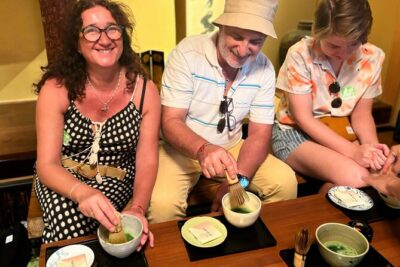
World Heritage Kyoto & Nara Uji Authentic Matcha Experience
Read our review →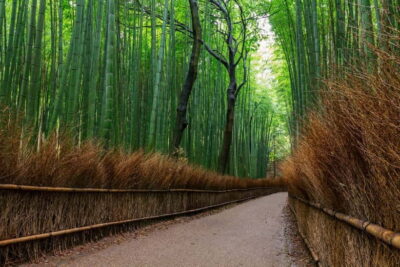
Nara, Fushimi Inari Taisha, Arashiyama Bus Tour
Read our review →
Nara Half Day Trip Walking Tour (Private Option Available)
Read our review →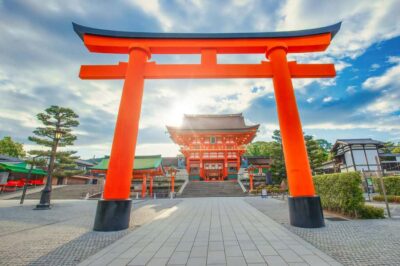
Arashiyama, Nara & Fushimi Inari Shrine w/Lunch
Read our review →
Nara Early Morning Tour (Kyoto or Osaka Departure Available)
Read our review →
Full Day Guided Tour to Kyoto and Nara from Osaka by Van
Read our review →
Browse the lists this tour appears in