
Reviewed · KYOTO COOKING CLASSES
Kyoto: Afternoon Japanese Izakaya Cooking Class
Izakaya cooking is about more than one signature dish: it’s the casual, shared-table side of Japanese food, with several savory plates arriving over the course of an evening. In this three-hour class, you cook in two rounds with your instructor, eating between them rather than waiting for one big meal at the end.
I like the hands-on format, which gives you time to cook and taste several dishes, and the practical instruction: the recipes are designed to be manageable, and many sessions send you home with written directions to try again. One consideration: fitting several dishes into an afternoon can make the class feel brisk, so it may not suit you if you want a slow, highly specialized lesson on just one recipe.
At a glance
- Two rounds of cooking: Prepare two or three dishes, eat, then return to the kitchen for another two or three.
- A taste of izakaya food: The focus is on familiar home and local-restaurant dishes, not just sushi.
- English instruction: You can ask questions as you cook, and conversation is part of the experience.
- A meal you make yourself: Eat the dishes as the class progresses, with the chance to sample a varied menu.
- Recipes for later: Recipe sheets are provided in many sessions, making it easier to recreate dishes at home.
- A central Kyoto address: Meet at Cooking Sun, Funayacho, Shimogyo Ward.
A cooking class built around the izakaya table
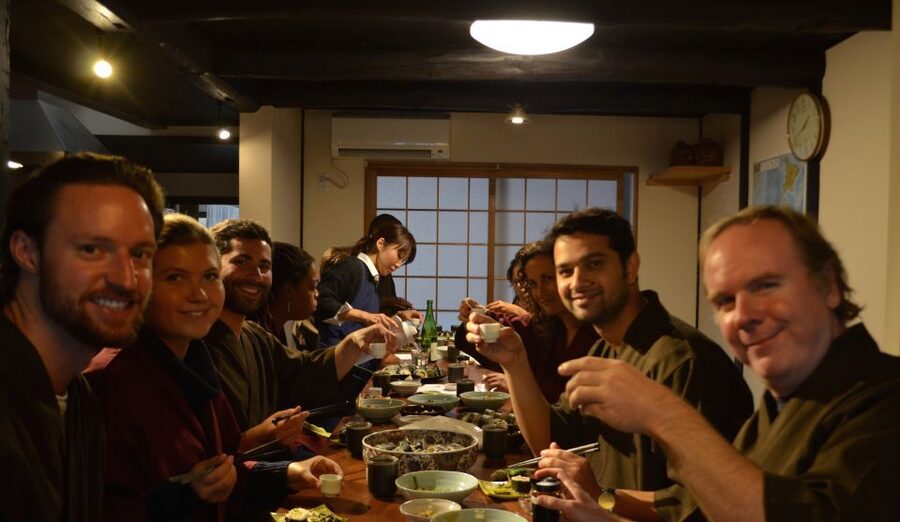
An izakaya is a casual Japanese restaurant where people gather over drinks and a succession of small dishes. This class brings some of that easy, social rhythm into the kitchen. You prepare food together, eat, and keep talking, rather than standing through a formal demonstration and then leaving with only a taste.
The class lasts three hours and is divided into two cooking-and-eating rounds. The planned format is to make two or three dishes with the chef, sit down to enjoy them, then return to the kitchen for another two or three. The exact menu can vary: some class participants have made six dishes, including a dessert, while others describe a spread of several savory plates.
That variety is part of the appeal. You get more than one recipe to focus on, and you can see how different dishes fit together as a meal. The trade-off is pace. With several items to prepare in three hours, the instructor needs to keep things moving. If you’d rather spend an afternoon perfecting a single technique, this is not that kind of class.
More cooking classes in Kyoto:
- Ramen Cooking Class at Ramen Factory in Kyoto
★ 5.0 · 1,937 reviews - Sushi Making in Kyoto! Same-day bookings welcome!
★ 5.0 · 713 reviews - Kyoto: Ramen Cooking Class at a Ramen Factory with Souvenir
★ 4.9 · 532 reviews
Cooking, tasting, then cooking again
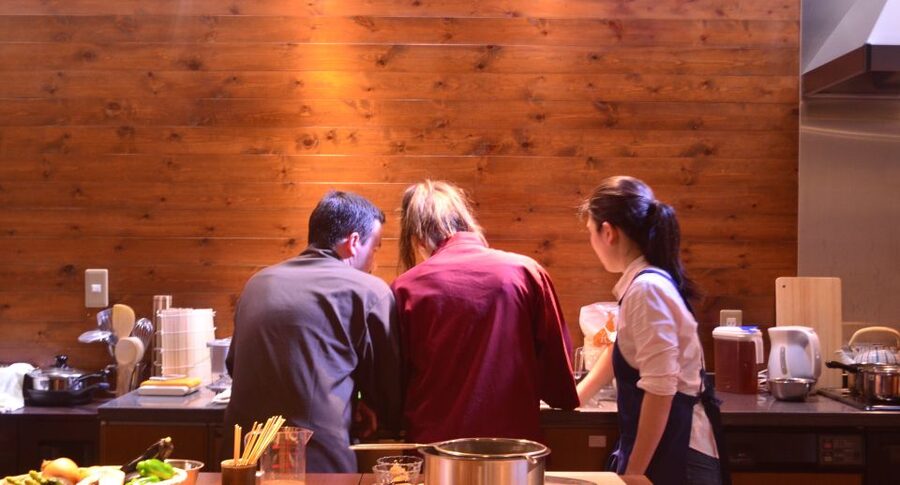
The first part begins with cooking alongside the instructor. You’ll work with the supplied ingredients, apron, and utensils, following demonstrations and directions as you prepare the first dishes. The class is designed to be accessible to people with different levels of cooking experience. You don’t need to arrive as an accomplished home cook to take part.
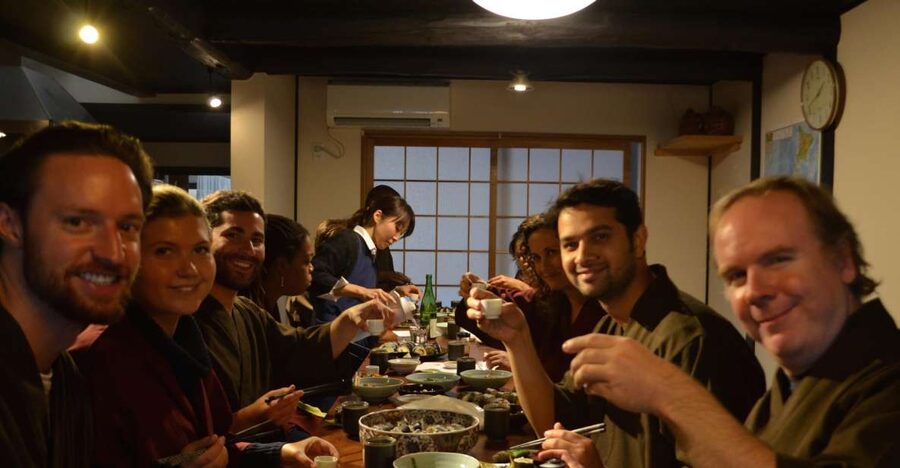
Then comes the best practical lesson: you eat what you have made. Tasting the dishes while they’re fresh gives you a better sense of how the ingredients and methods work together than simply watching someone else cook. It also offers a natural pause to ask questions and talk about Japanese food.
After eating, you return to the kitchen for the second round. Again, you cook with the instructor and then enjoy the results. The split format makes a full afternoon feel less like a long block of instruction, and more like the shared meal the class is meant to evoke.
Some people find the pace brisk, especially when the menu includes many dishes. That pace also lets you learn a wider range of recipes in one visit. If you’re unsure how you’ll feel about it, think of the class as an active introduction rather than an unhurried masterclass.
Why this is more than a sushi lesson
Japanese food classes often center on sushi. Here, the emphasis is on izakaya-style cooking and dishes commonly eaten at home or in local restaurants. That gives you a useful view of everyday Japanese food beyond the dishes most familiar to visitors.
The menu can include recipes that are less obvious choices for a first-time class. One participant particularly praised learning to make okonomiyaki, while another appreciated exploring less familiar kinds of Japanese food. The precise dishes aren’t guaranteed, so book for the format and subject rather than expecting a particular recipe.
The class also introduces basic cooking ideas and ingredients. Participants have described learning about dashi, a foundational broth, and getting explanations of Japanese techniques and ingredients. That sort of context helps you make sense of the food as you cook, not just follow a list of steps.
I’d especially recommend this approach if you like eating Japanese food but have never tried preparing it. The lessons are meant to be approachable, and the recipes are described as simple enough to repeat at home. If you already cook professionally, the class may still interest you for its ingredients and methods, but it is not presented as advanced training.
English-speaking instructors and a social kitchen
Instruction is in English, an important point when a class involves several tasks and unfamiliar ingredients. Clear steps make it easier to follow along, ask for help, and take part even if you’re new to Japanese cooking.
The atmosphere is meant to be conversational. The instructor cooks and eats with you, and you’re encouraged to talk while preparing the food. This is a good fit if you enjoy meeting people through a shared activity. It is less suited to someone who wants a quiet, private lesson, though the available information does not specify group size or whether private sessions are offered.
Instructors vary by session. Yumi and Yumiko are among the names associated with classes, and participants have praised the warm, patient teaching style. Don’t book expecting a particular instructor unless the supplier confirms who will be leading your date.
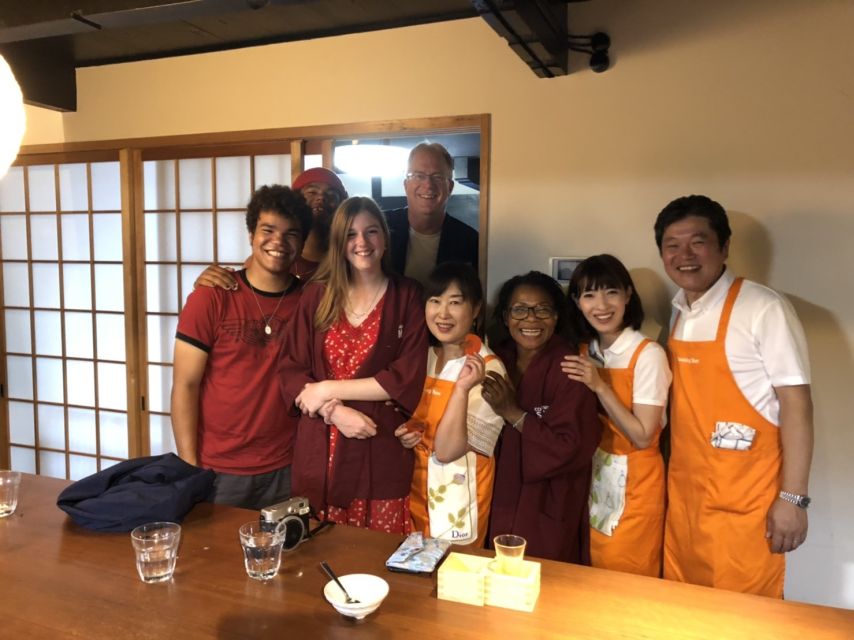
Families and mixed-skill groups may find the class especially useful. It has worked for people who cook regularly and those who rarely cook, and families with teenagers have enjoyed it together. The format gives each person a practical role, rather than requiring everyone to have the same level of experience.
More food tours in Kyoto:
- Kyoto Night Foodie Tour in Gion (9+ dishes + 6 Sake tastings)
★ 5.0 · 1,762 reviews - Kyoto: Izakaya Bars Guided Walking Tour
★ 4.9 · 815 reviews - Kyoto: Insider Sake Brewery Tour with Sake and Food Pairing
★ 5.0 · 704 reviews - Kyoto: Ramen, Gyoza, and Onigiri Cooking Class
★ 5.0 · 445 reviews
Recipes that make the class useful after Kyoto
A cooking class is a better value when you can use what you learn once the trip is over. Recipe sheets are provided in many sessions, and the dishes are often described as straightforward to make again at home. That changes the experience from a pleasant meal into something you can carry into your own kitchen.
The recipes can also help you recall techniques that are hard to absorb in a single afternoon. If a dish uses an ingredient you don’t recognize, make a note of its name and ask how it functions in the recipe. Participants have come away wanting to stock ingredients such as mirin and dashi, so the class may give you a practical shopping list for cooking Japanese food later.
There is one useful caveat: the inclusion details list the class, ingredients, apron, utensils, and two to three dishes, while the class format describes two rounds of two or three dishes. The number and selection can vary. Some sessions have included as many as six dishes, but you should not assume that exact menu for your date.
Is $67 good value?
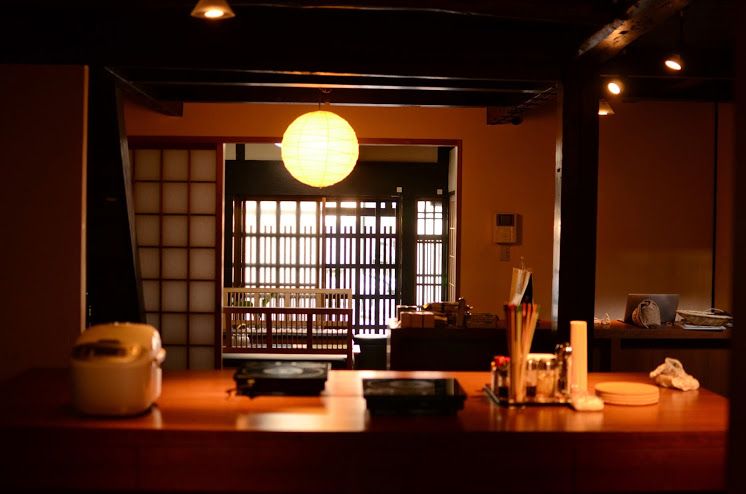
At $67 per person for three hours, this is a mid-length food activity that includes instruction, ingredients, utensils, and the dishes you prepare. You’re also getting a full meal or substantial tasting of your own cooking, rather than paying only to watch a demonstration.
The clearest value is in the combination of hands-on practice and recipes you can reuse. If you’re curious about Japanese cooking and would otherwise spend that afternoon eating at a restaurant, this gives you a meal plus a practical introduction to the food behind it. It is also a welcome indoor activity if you want a break from Kyoto’s temples and streets.
Value depends on what you want from a class. If your priority is an in-depth lesson on one dish, a three-hour session covering several plates may feel too broad. If you want to cook, eat, learn a little about food culture, and bring home ideas you can actually use, the price is easier to justify.
Getting there and planning your afternoon
The meeting point is Cooking Sun, Funayacho, Shimogyo Ward, Kyoto, Kyoto 600-8466. Check your route to the address before setting out, and allow time to arrive for the selected start time. The class lasts three hours; available start times depend on the date.
The activity is listed as wheelchair accessible. If you have dietary requirements, tell the local supplier when booking so they can respond before class. This is particularly important for a cooking activity, where ingredients and preparation choices shape what you can eat.
Booking offers some flexibility: you can reserve without paying immediately, and cancellations made at least 24 hours in advance qualify for a full refund. Check the current availability and terms for your chosen date before you confirm.
Who should book this class?
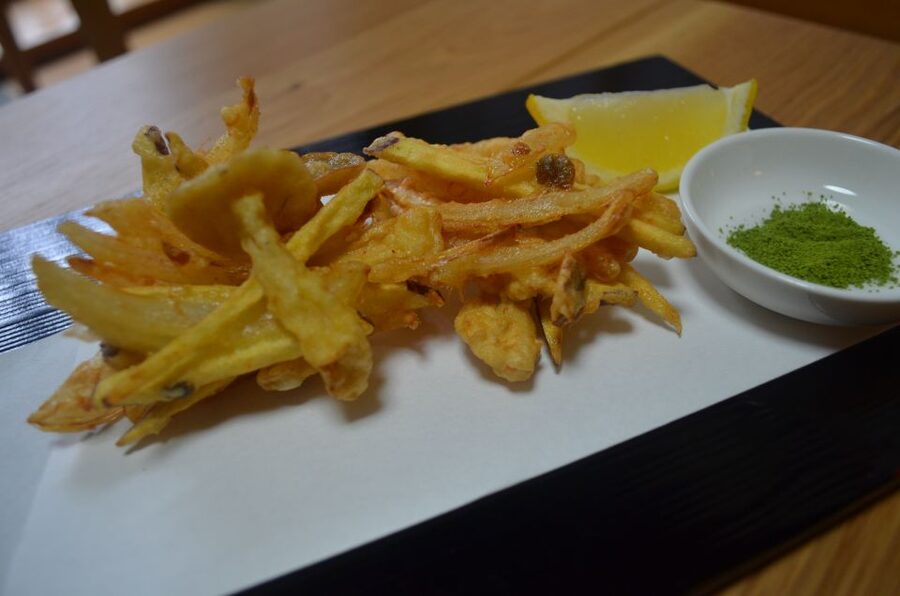
I’d choose this class if you want an activity that mixes food, conversation, and practical learning. It suits curious eaters, beginners in the kitchen, and home cooks who want to try Japanese recipes beyond the usual restaurant menu. It can also work well for families or friends with different cooking abilities.
You may want to skip it if you’re looking for a slow, highly focused lesson, or if you need to know the exact menu before booking. The pace can be brisk, and the dishes can vary. Those are reasonable compromises for a class that aims to cover several recipes in one afternoon.
Book it if you want to cook and eat a range of Japanese dishes with English-language guidance, then try the recipes again at home. If you’re booking mainly for one specific dish or instructor, ask Cooking Sun what is planned for your date first.
FAQ
How long is the Kyoto izakaya cooking class?
The class lasts three hours.
What will I cook?
You’ll prepare Japanese home-style and izakaya dishes in two rounds. The planned format is two or three dishes in each round, though the exact menu can vary.
Is the class taught in English?
Yes. The instructor teaches in English.
Are ingredients and cooking equipment included?
Yes. Ingredients, an apron, and utensils are included, along with the cooking class.
Where is the meeting point?
Meet at Cooking Sun, Funayacho, Shimogyo Ward, Kyoto, Kyoto 600-8466.
Can I tell the supplier about dietary requirements?
Yes. Let the local supplier know when booking if you have dietary requirements.
Is the activity wheelchair accessible?
Yes. The activity is listed as wheelchair accessible.
Newly added in Kyoto
- Uji: Private immersion into Kyoto’s tea and reglious culture★ 5.0 · 17 reviews
- Whisk Your Own Matcha: A Zen Matcha Experience at Temple★ 3.6 · 7 reviews
- Kyoto tea town for matcha lovers★ 5.0 · 16 reviews
- Treasures of Kyoto: Gion & historical Walking Tour★ 5.0 · 6 reviews
- Kyoto Matcha Green Tea Tour★ 4.5 · 23 reviews
- Uji and Wazuka Matcha Farm Half Day Private Guided Tour★ 5.0 · 21 reviews
- Uji Tea Ceremony and UNESCO Heritage Walking Tour★ 5.0 · 20 reviews
- Utilising upcycled Matcha! Creating matcha incense (Uji, Kyoto)★ 5.0 · 6 reviews
Kyoto Cooking Classes, compared.

Ramen Cooking Class at Ramen Factory in Kyoto
Read our review →
Sushi Making in Kyoto! Same-day bookings welcome!
Read our review →
Ramen Cooking Class at a Ramen Factory with Souvenir
Read our review →
The Original Small-Group Sushi Making Class in Kyoto
Read our review →
Japanese Washoku Bento Small Group Cooking Class
Read our review →
Japanese Traditional Sweets Making and Tea Ceremony
Read our review →
Kyoto Ramen and Gyoza Cooking Class with Professional Chefs
Read our review →Browse the lists this tour appears in