
Reviewed · NISHIKI MARKET TOURS
Nishiki Market, Private Sushi class & Sake Tasting in Townhouse
Nishiki Market is more than a row of food stalls: it is where Kyoto’s everyday ingredients and cooking traditions come into view. This private experience pairs a guided market walk and a stop at Nishiki Shrine with a cooking session in a traditional townhouse, where you make rolled sushi, miso soup and seasonal side dishes.
I like the combination of market tastings and hands-on cooking, and the private setting gives your group room to ask questions and work at its own pace. One consideration: the tour is short for everything it covers, so the market visit is a guided introduction, not a long browse or a full meal on its own.
- Nishiki Market’s five-block food street: Explore shops selling seafood, vegetables, pickles and other staples, with a guide explaining their place in Kyoto cooking.
- A visit to Nishiki Shrine: Step away from the market stalls to see a shrine tucked behind the alleyways.
- A private Kyomachiya cooking session: Prepare rolled sushi, miso soup with dashi and seasonal Japanese side dishes in a traditional townhouse.
- Sake tasting and dessert: Sample sake, then finish the meal with a simple Japanese-style sweet.
- Dietary options with advance notice: Vegetarian and vegan versions are available if you arrange them ahead of time.
- A recipe booklet to take home: Use the included recipes to try the dishes again after your visit.
Start with Kyoto’s food corridor
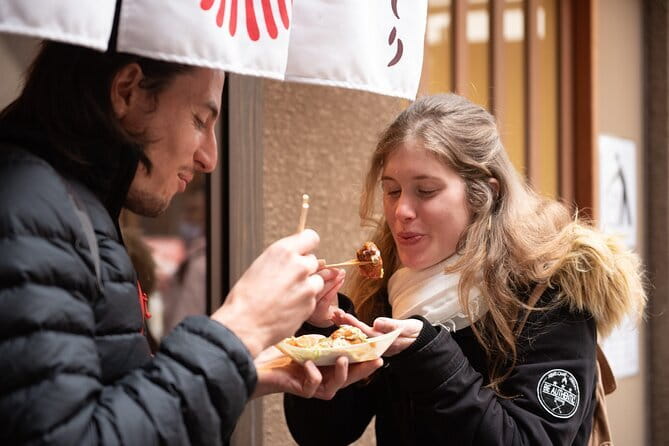
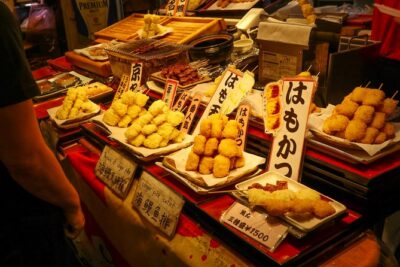
Nishiki Market is often called Kyoto’s Kitchen, and the name makes sense once you see how many everyday ingredients are gathered along its five-block shopping street. More than 100 shops and restaurants line the route, selling fresh seafood, seasonal vegetables, pickles, dried foods and other staples of Japanese cooking.
The one-hour guided walk helps you read the market rather than simply pass through it. Your guide explains its role in Kyoto’s food culture and points out ingredients that may be unfamiliar if you are new to Japanese cooking. Tastings bring the explanations down to earth: instead of hearing only what an ingredient is called, you get to sample traditional delicacies along the way.
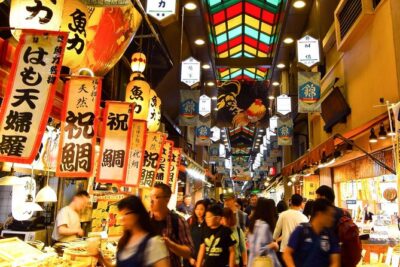
Expect a lively shopping street, not a quiet museum. The stalls are part of a working market, and shoppers are there to buy their food. That makes the visit feel grounded in daily life, though it also means you should follow your guide and keep moving when the route is busy. This is not a stop for leisurely browsing every shop or filling up on snacks before lunch.
The tour description does not promise a fixed tasting menu. What you try may depend on seasonal offerings and what is available, so treat the samples as a guided introduction rather than a guaranteed list of particular foods. If you have a strong interest in a certain ingredient, ask your guide while you are there.
A quieter pause at Nishiki Shrine
Nishiki Shrine offers a change of pace from the market’s dense row of stalls. It sits behind the lantern-lit alleyways, so the visit gives you a chance to step aside from the shopping street and notice another part of the neighborhood.
The shrine stop is brief within a tour that lasts about two to three hours overall. Think of it as a useful local detail, not a full temple or shrine visit with a long explanation or extended time on site. Its value is in seeing how a place of worship sits close to a busy food district, woven into the same streets people use for shopping and meals.
More Nishiki Market tours in Kyoto:
- Nishiki Market Brunch Walking Tour (7 Tastings + Brunch)
★ 5.0 · 1,355 reviews - Kimono Tea Ceremony at Kyoto Maikoya, NISHIKI
★ 5.0 · 911 reviews - Kyoto Nishiki Market Food and Culture Walking Tour
★ 5.0 · 412 reviews
Make a meal inside a Kyomachiya
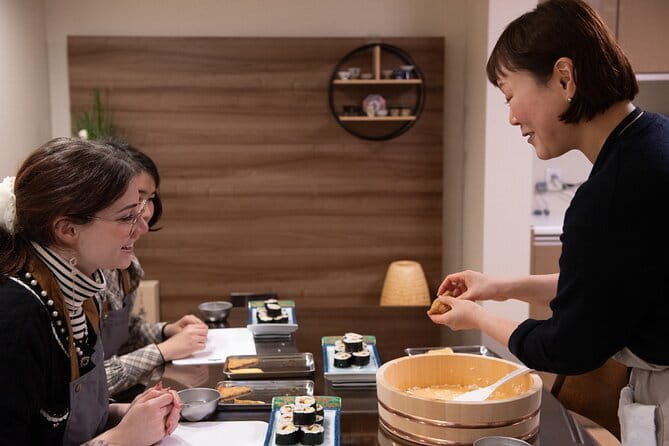
After the market, your group heads to a restored Kyomachiya, a traditional Kyoto townhouse reserved exclusively for this private activity. The change of setting matters. You leave the public market behind and move into a more intimate space where the focus turns from looking at food to preparing it.
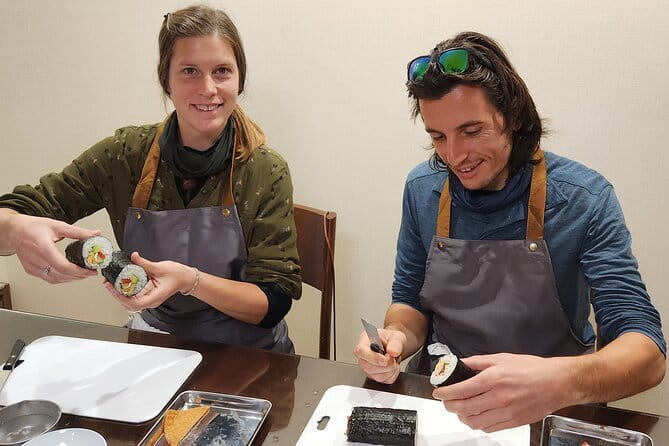
The cooking session is listed at two hours, making it the longer part of the experience. A local instructor leads you through rolled sushi and explains the cultural background of the dishes as you work. You also prepare miso soup from scratch, using dashi, along with seasonal Japanese side dishes. A simple Japanese-style dessert rounds out the meal.
This is an active class, not a demonstration where you watch someone else do all the work. You make the dishes step by step, which makes the experience useful even if you do not cook much. One participant described the process as a rare chance to cook along at each stage; that is a good way to think about the class. You are there to try the techniques yourself, not to leave with restaurant-level knife skills after one afternoon.
The meal also gives the market walk a practical payoff. You have just seen ingredients associated with Kyoto cooking, and now you use some of that culinary context to make a meal. That link between shopping and cooking is one of the strongest reasons to choose this tour over a cooking class alone.
Sushi is the headline, but not the whole meal
Rolled sushi is the activity’s most recognizable dish, but the class includes more than sushi-making. Miso soup with dashi, seasonal sides and dessert broaden the experience, and they give you a better sense of how a Japanese meal can bring several dishes together.
The menu is seasonal, so the side dishes may vary. The information provided does not specify the exact fillings for the rolls or name each side dish. If you are comparing classes based on a particular recipe, ask the provider before booking rather than assuming a specific menu.
You do not need to be a confident cook to take part. The instruction is guided and step by step, and the private format means your group can ask for help without competing with a large class. A guest who had never made sushi rolls before was able to try the process independently, but you should not feel that you need to manage without assistance. The point is to learn by doing, with an instructor there to guide you.
A recipe booklet is included, which adds value after the class. It gives you a way to revisit the food at home instead of leaving with only a full stomach and a few photos. The booklet cannot reproduce the market or the townhouse, of course, but it can help you remember what went into the dishes.
Sake adds a cultural note
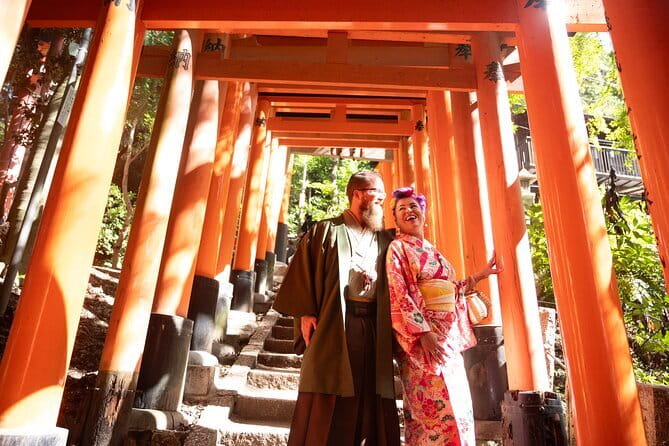
A mini sake tasting takes place at the townhouse, introducing Japan’s sake culture alongside the cooking. Alcoholic beverages are included in the tour price, so the tasting is part of the planned experience rather than an extra charge listed separately.
The tasting is described as mini, so do not expect a long sake seminar or a broad flight designed for serious enthusiasts. It is best understood as a short introduction that complements the meal and the food-focused theme. If sake is a key reason for booking, ask the provider what the tasting includes before you commit.
Because alcohol is part of the experience, consider whether it suits everyone in your group. The supplied details do not specify a nonalcoholic replacement for the tasting. The meal itself, however, is the larger focus, with the market walk, cooking and dishes taking up most of the visit.
More food tours in Kyoto:
- Ramen Cooking Class at Ramen Factory in Kyoto
★ 5.0 · 1,937 reviews - Kyoto Night Foodie Tour in Gion (9+ dishes + 6 Sake tastings)
★ 5.0 · 1,762 reviews - Kyoto: Izakaya Bars Guided Walking Tour
★ 4.9 · 815 reviews - Sushi Making in Kyoto! Same-day bookings welcome!
★ 5.0 · 713 reviews
What the private format means for you
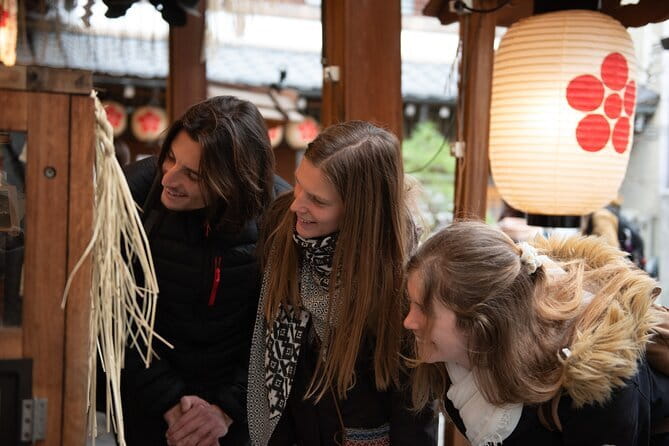
This is a private tour, so only your group participates. That is a meaningful advantage if you are travelling with family or friends and want the instructor’s attention during the cooking portion. It can also make the experience more comfortable for anyone who feels self-conscious learning a new skill in front of strangers.
The private format is not the same as a fully custom itinerary. The route and core activities are set: Nishiki Market, Nishiki Shrine, sake tasting and townhouse cooking. But the small, exclusive group arrangement gives you more room to ask about ingredients, techniques or local food customs as they come up.
The provider’s team includes a staff member named Sunny, mentioned in connection with the experience. Your assigned guide may be someone else, so do not book on the assumption that Sunny will lead your tour. The activity is offered in English, which makes the market explanations and cooking instructions accessible to visitors who do not speak Japanese.
Is $121.84 a fair price?
At $121.84 per person, this is not a bargain-basement market walk. The price covers a private, guided experience that combines market tastings, a shrine stop, a sake tasting, a hands-on cooking lesson, lunch and a recipe booklet. You are paying for several activities and a private instructor, not only for the ingredients in the meal.
The value is strongest if you want context as well as food. A self-guided stroll through Nishiki Market costs nothing, but it will not include a guide to explain ingredients, the townhouse class or the meal you prepare. On the other hand, if you mainly want to shop and snack at your own pace, you may get more from spending the same time and money independently around the market.
Group discounts are available, and the experience is booked an average of 98 days in advance. That average suggests it is sensible to plan ahead, especially if you have fixed dates. Mobile tickets are offered, and free cancellation is available until 24 hours before the start time. Changes made inside that 24-hour window are not accepted, and cancellations during that period are not refundable.
Timing, meeting point and food needs
Plan for approximately two to three hours. The listed schedule gives one hour to the market and two hours to the townhouse, so allow close to three hours if you want a comfortable buffer. The stated duration is approximate, and the supplied details do not set out exact transition times between stops.
The meeting point is 79 Nishiuoyachō in Kyoto’s Shimogyo Ward. The tour ends at 96-13 Asazumachō, also in Shimogyo Ward. The endpoint is a five-minute walk from Gojo Subway Station, and the provider can help arrange a taxi or other transportation if needed.
Vegetarian and vegan options are available with advance notice. Contact the provider before the tour if you need one, rather than waiting until you arrive. The details do not specify other dietary accommodations, so ask directly about allergies or restrictions before booking.
Who should book this Kyoto food experience?
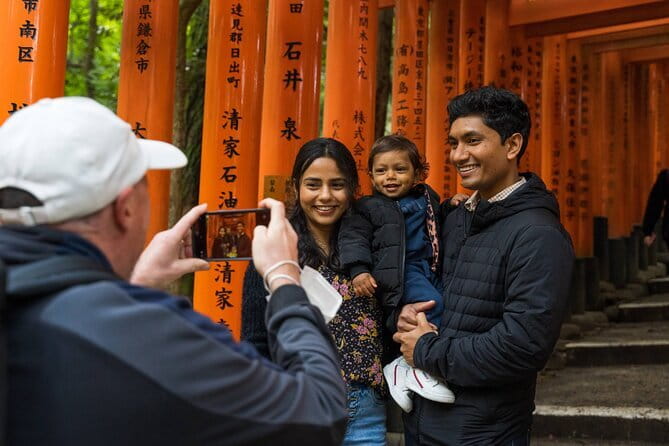
I would choose this tour if you want to understand Kyoto through its food and prefer to learn by doing. It suits couples, families and small groups who like guided explanations but also want an active role in the meal. It is especially useful for visitors who are curious about Japanese ingredients but do not know where to begin.
It can also work for people who have visited Nishiki Market before. A local guide can add context about the market’s history and food culture, while the shrine and townhouse give the outing more range than a repeat walk through the stalls. A local resident who joined the activity found that the guide helped reveal details they had missed on earlier visits.
I would pass if you want an unstructured food crawl, a long market-shopping session or a specialist sake course. The tour moves through several activities in a short time, and the sake tasting is only a small part of it. But if you want to see the market, make a meal in a traditional townhouse and leave with recipes to try at home, the mix is thoughtful and practical.
FAQ
How long does the experience last?
It lasts approximately two to three hours. The market walk is listed as one hour, and the townhouse cooking session as two hours.
Is this a private tour?
Yes. Only your group participates in the activity.
What food will I prepare?
You will make rolled sushi, miso soup with dashi and seasonal Japanese side dishes. A simple Japanese-style dessert is included. The exact seasonal dishes are not specified.
Are vegetarian or vegan options available?
Yes. Vegetarian and vegan options are available with advance notice. Contact the provider before the experience to request them.
Is sake included in the price?
Yes. Alcoholic beverages are included, and the experience includes a mini sake tasting.
Where does the tour end?
It ends at 96-13 Asazumachō in Kyoto’s Shimogyo Ward. Gojo Subway Station is a five-minute walk away, and the provider can assist with arranging a taxi or other transportation.
More sake tastings in Kyoto
- 3-Hour Kyoto Insider Sake Brewery Tour with Tastings & Pairings
★ 5.0 · 917 reviews - Arashiyama Bamboo, Temple, Monkeys, or Secret Sake Brewery
★ 4.8 · 886 reviews - Kyoto: Insider Sake Brewery Tour with Sake and Food Pairing
★ 5.0 · 704 reviews - Kyoto Sake Brewery & Tasting Walking Tour
★ 5.0 · 623 reviews
Newly added in Kyoto
- Uji: Private immersion into Kyoto’s tea and reglious culture★ 5.0 · 17 reviews
- Whisk Your Own Matcha: A Zen Matcha Experience at Temple★ 3.6 · 7 reviews
- Kyoto tea town for matcha lovers★ 5.0 · 16 reviews
- Treasures of Kyoto: Gion & historical Walking Tour★ 5.0 · 6 reviews
- Kyoto Matcha Green Tea Tour★ 4.5 · 23 reviews
- Uji and Wazuka Matcha Farm Half Day Private Guided Tour★ 5.0 · 21 reviews
- Uji Tea Ceremony and UNESCO Heritage Walking Tour★ 5.0 · 20 reviews
- Utilising upcycled Matcha! Creating matcha incense (Uji, Kyoto)★ 5.0 · 6 reviews
Nishiki Market Tours, compared.
Nishiki Market Brunch Walking Tour (7 Tastings + Brunch)
Read our review →
Kyoto Nishiki Market Food and Culture Walking Tour
Read our review →
Nishiki Market Tea Ceremony with Koto Performance
Read our review →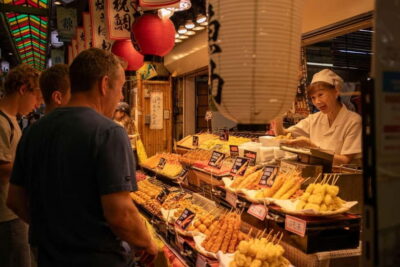
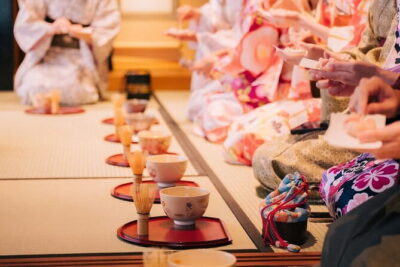
Kimono Tea Ceremony Experience at Kyoto Oritzuruya, Nishiki
Read our review →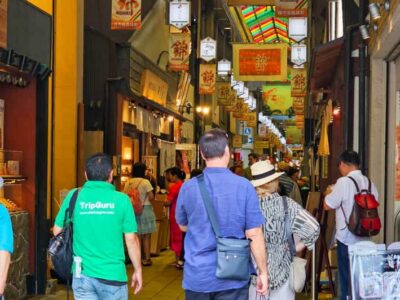
Nishiki Market and Depachika Food Tour with a Local
Read our review →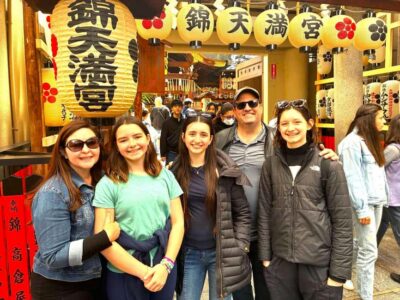
Nishiki Market Tour with a Local Foodie & Tastings
Read our review →Browse the lists this tour appears in