Reviewed · AMANOHASHIDATE TOURS
All-Inclusive Kyoto Day Tour: Amanohashidate, Miyama or Ohara
A sandbar stretching across a bay, a village of boathouses at the water’s edge, or thatched farmhouses beneath the mountains: this private day trip swaps Kyoto’s city streets for the countryside. You choose among three routes, and a guide and private car make the longer distances easier to manage.
I like the choice between three very different sides of Kyoto Prefecture and the personal scale of a private tour. I also like that the Amanohashidate option combines viewpoints with a boat ride and time in Ine, rather than making the day only a succession of photo stops.
The main consideration is the $520.25 per-person price, plus the fact that lunch and personal spending are extra. Also, the published stop list covers more than one route, so confirm which places your chosen eight-hour day will actually include before you book.
At a glance
- Three distinct routes: Pick Miyama and Takao, Amanohashidate and Ine, or Ohara and Lake Biwa.
- Private transport: Your group travels by private car, with gasoline, parking, and highway fees included.
- Amanohashidate’s big view: The route includes a chairlift fee and time at the viewpoint, plus a boat fee for the area.
- A village with working-waterfront character: Ine’s funaya, or boathouses, are built along the water’s edge.
- Temple time in the mountains: The Miyama and Takao option includes Jingoji and Kozanji, as well as a walk through a thatched-roof village.
- Lunch is on you: Bottled water is supplied, but the meal and personal expenses are not included.
Choose the countryside that suits you
This is not one fixed circuit. The tour offers three possible routes, each with a different character, so the first decision is less about which stop sounds famous and more about what kind of day you want.
Choose Miyama and Takao for mountain temples, cedar-lined grounds, and traditional farmhouses with thatched roofs. The listed stops include Jingoji Temple, Kozanji Temple, Miyama Kayabuki no Sato, and Hiyoshi Dam. It is the strongest fit if you want a day of rural architecture and temple visits rather than a coastal excursion.
Choose Amanohashidate and Ine for a classic scenic outing: a celebrated sandbar, a high viewpoint, a boat ride, and a fishing village known for its funaya. The listed stops include Chionji Temple, Motoise Konojinja Shrine, Amanohashidate Kasamatsu Park, and Ine. This route has the clearest mix of different ways to see the area, with time on foot, by car, and by boat.
Choose Ohara and Biwako for rural villages and time by Lake Biwa. The tour description does not name specific stops on this route, so ask which villages and lakeside locations are planned before you reserve. That matters if you are comparing it with the more clearly described temple and seaside itineraries.
There is a practical wrinkle: the supplied stop list includes places from both the Miyama and Takao route and the Amanohashidate and Ine route. It should not be read as a promise that every named stop is part of one eight-hour outing. Confirm your selected route and its exact stops with KyotoNusa Tours.
More Amanohashidate and Ine trips in Kyoto:
- Kyoto: Amanohashidate Ine Funaya Tour
★ 4.4 · 19 reviews - Amanohashidate & Miyama 1-Day Bus Tour: From Osaka/Kyoto w/ Lunch
★ 4.5 · 18 reviews - Amanohashidate Sand bar & culture e-bike tour
★ 5.0 · 7 reviews
The mountain temples of Takao
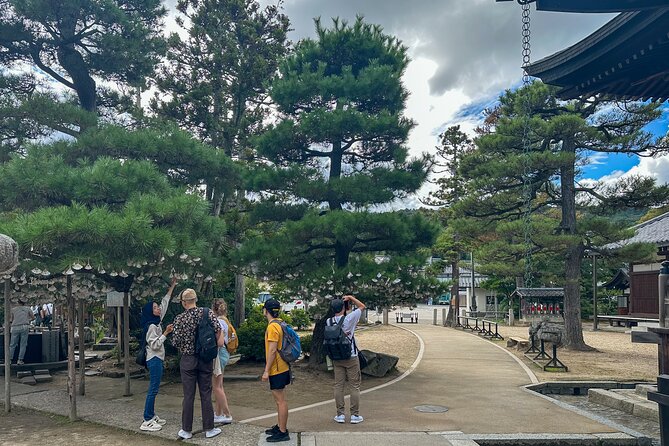
On the Miyama and Takao route, Jingoji is allotted an hour and a half. Its grounds feature ancient cedar trees, historic pagodas, gardens, and main halls. That time allowance gives you more room to explore than a quick roadside pause, though temple visits involve walking and the day’s pace will depend on how long you linger.
Kozanji, also written as Kōsan-ji, follows with an hour. It is described as a UNESCO World Heritage site in a mountain setting, with halls and gardens for your guide to explain. If temple architecture and quiet surroundings are high on your list, these stops give the route substance beyond its countryside drive.
The trade-off is that two temple visits can feel repetitive if your main aim is village life or broad views. The tour’s Miyama stop helps balance that, but the overall route still leans toward cultural sites and rural scenery rather than a single landmark spectacle.
Miyama’s thatched-roof village
Kayabuki-no-sato Kitamura, also called Miyama Kayabuki no Sato, is the route’s most distinctive village stop. You get an hour for a leisurely walk among traditional thatched-roof farmhouses, with your guide sharing context about the area. The appeal is in seeing a settlement with a strong visual link to older rural building traditions, not in ticking off a list of attractions.
A walk through a village is also a gentler change of pace after the temple grounds. You can take in the setting on foot and see how the buildings sit within the countryside. The tour information does not specify which interiors, if any, are visited, so treat this as a village stroll rather than a promise of farmhouse entry.
Hiyoshi Dam is scheduled for 30 minutes. It adds a different kind of stop, an engineering landmark tied to flood control and water management, set among natural surroundings. If you enjoy seeing how infrastructure fits into a region, it is a useful contrast; if you prefer temples and village streets, it may be the least compelling part of this route.
Amanohashidate from above and by boat
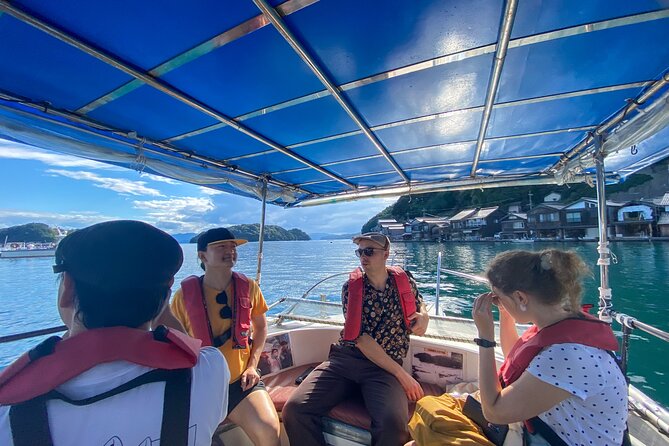
The Amanohashidate route centers on the long sandbar crossing the bay. At Amanohashidate Kasamatsu Park, the schedule allows an hour and a half for the observation deck and panoramic views. The chairlift fee is included, and the route description also mentions a chairlift ride as part of reaching the viewpoint.
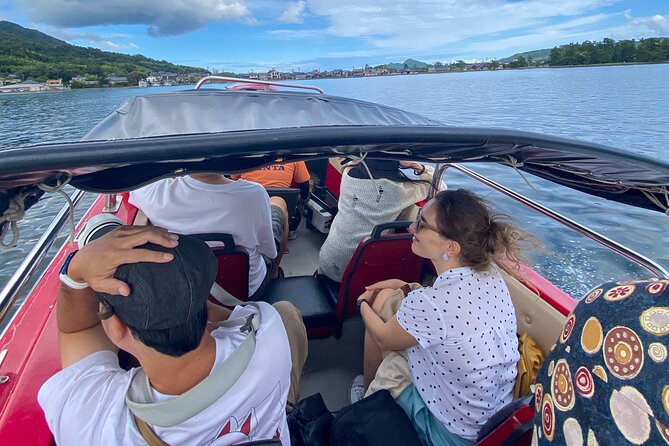
A boat fee for Amanohashidate is included too, so the day is not limited to looking down at the scenery from one perch. The exact boat details and how the ride fits into the schedule are not specified. Ask the operator what is planned, especially if the boat experience is a deciding factor for you.
Chionji Temple is listed for 20 minutes, while Motoise Konojinja Shrine gets 15. These are brief visits compared with the viewpoint and village, so see them as short cultural stops rather than lengthy temple explorations. Chionji is linked with the history of Amanohashidate, and the shrine is presented as an old Shinto site with traditional architecture.
The schedule suggests a day with variety, but also a fairly full one. A scenic viewpoint, short temple and shrine stops, a boat, and Ine all require transitions. A private car helps make those transitions more straightforward, though the tour remains an eight-hour day, not a slow overnight stay in the region.
More Kyoto tours in Kyoto:
- PERFECT KYOTO 1-Day Bus Tour
★ 5.0 · 13,518 reviews - Kyoto: Fushimi Inari, Kinkakuji, Bamboo Grove 1 Day Bus Tour
★ 4.8 · 4,316 reviews - Kyoto: Tea Ceremony in a Traditional Tea House in Kiyomizu
★ 4.9 · 3,519 reviews - Kyoto Geisha Walking Tour: Gion District & Hidden Gems
★ 4.7 · 3,273 reviews
Ine’s waterfront boathouses
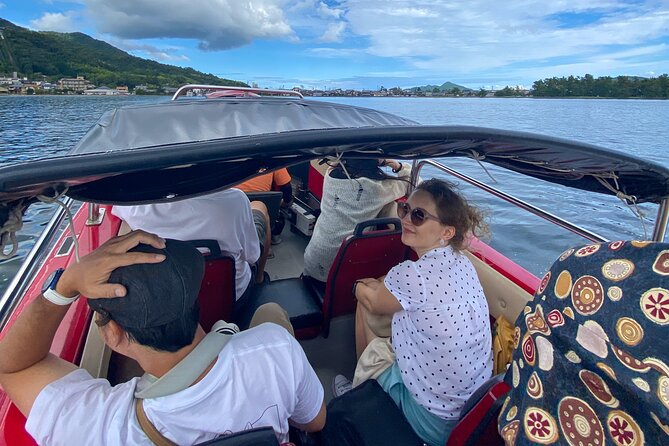
Ine is the route’s most intimate stop. The village is known for funaya, distinctive boathouses built right along the water. You have an hour and a half to walk the narrow streets and take in the unusual relationship between homes and the waterfront.
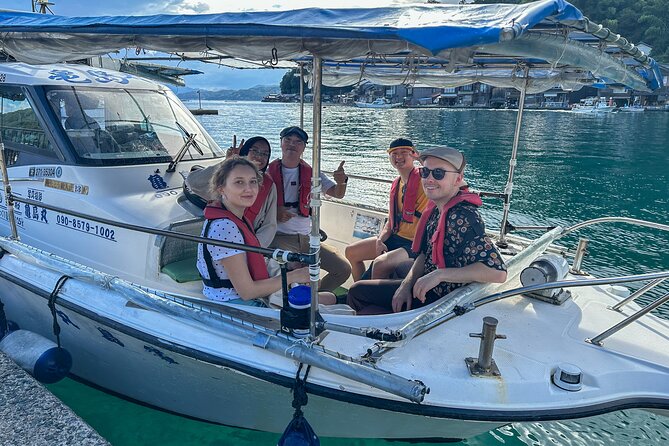
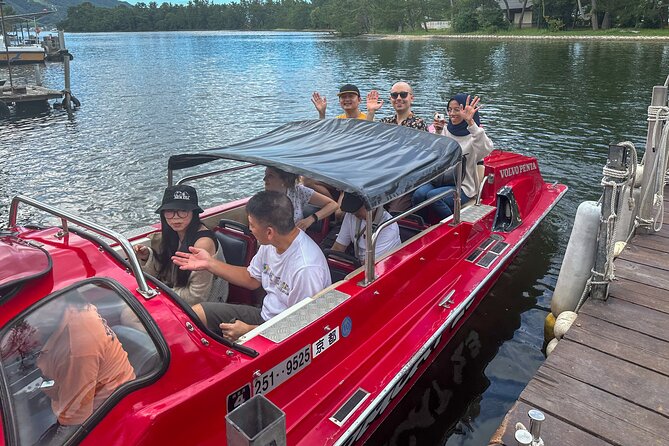
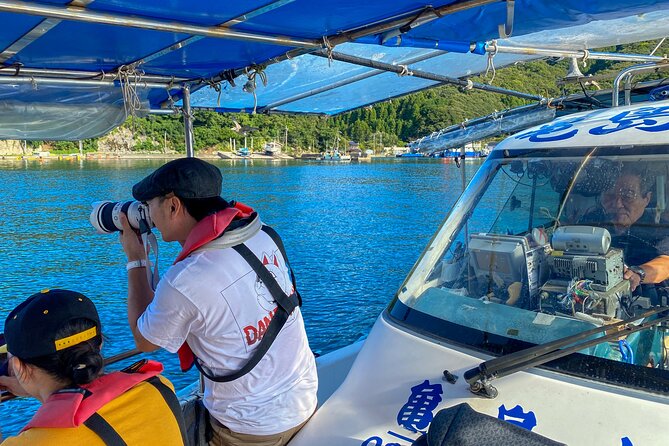
A boat fee in Ine is included, giving you a different angle on the village from the water. The supplied details do not specify the boat’s route or duration, so confirm those points if you want to know how much time will be spent afloat versus walking. The combination of a village stroll and boat viewing is a strong reason to choose this route over a day focused only on temples.
Ine is not simply a viewpoint stop. Its character comes from the working village setting and the way the boathouses meet the water. Keep expectations grounded: the tour description promises a walk through the village and a boat fee, not entry into private homes or a particular meal or activity.
Ohara and Lake Biwa: ask for the exact plan
The Ohara and Biwako option is described as a walk through rural villages followed by time near Lake Biwa. That pairing could suit you if you want a countryside outing without committing to the specific Miyama temple sequence or the farther north-coast itinerary.
But details are thinner here. No named villages, temples, viewpoints, or time allocations are provided for this route. Before booking, ask which sites are included, how much time you will have at the lake, and whether any admission or transport fees apply beyond those listed for the other routes. That is not a reason to rule it out, but it makes a little advance clarification especially valuable.
What the private car and guide add
The tour starts at 9:00 am and lasts about eight hours. A private car is included, as are gasoline, parking, and highway fees. For a day that reaches rural and coastal destinations outside central Kyoto, having transport arranged can save you the work of coordinating multiple public-transport connections and keep the day within a manageable schedule.
The tour is private, so only your group participates. That gives you more room to set the pace than a large group excursion, though the route and allotted hours still set limits. An English-speaking guide is included to explain the places you visit and help connect the stops to local history and culture. No guide names are provided, so you cannot request a particular person based on the available information.
Bottled water is included. Lunch is not, and neither are tips for the guide or personal expenses. Plan for a meal and any purchases separately, and ask how lunch fits into your selected route if you want to avoid sacrificing time at a stop.
Is $520.25 per person worth it?
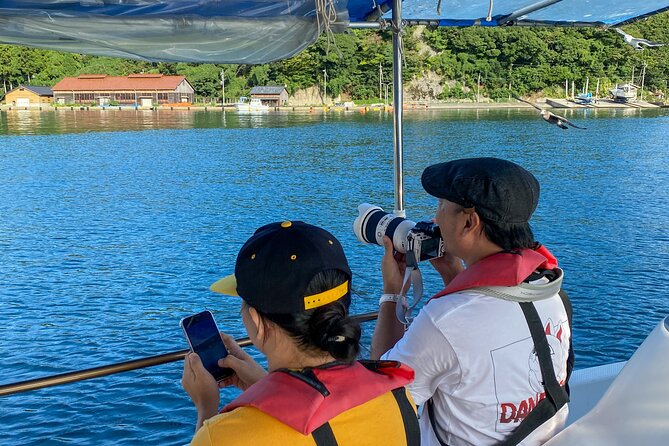
At $520.25 per person, this is a high-cost day trip. Its value depends on how much you prize private transport, an English-speaking guide, and a tailored outing over making your own way by train or bus. The car’s fuel, parking, and highway fees are covered, and the Amanohashidate route includes listed boat and chairlift fees. Those inclusions make the price easier to assess, but they do not make the outing all-inclusive in the ordinary sense: lunch and personal expenses remain extra.
A private tour may make particular sense if your group wants to travel together and avoid managing transfers across several distant stops. If you are travelling alone or are comfortable planning public transport, the per-person price may be hard to justify. Group discounts are offered, but the amount and conditions are not given, so ask the operator rather than assuming a particular saving.
The tour has a displayed overall rating of 5 with four reviews. That is encouraging, but it is a small sample. The favorable comments focus on smooth organization, a comfortable ride, a pleasant guide, and the variety of seeing places by foot, boat, and car. One person who had visited Amanohashidate and Ine before still found unfamiliar spots, which hints at the value a local guide can add. No guide names or specific hidden stops are provided, so do not book expecting a named guide or guaranteed secret locations.
Who should book this day out?
I would consider this tour if you have already seen central Kyoto and want to spend a day in the prefecture’s rural or coastal areas without arranging every transfer yourself. It is a particularly good fit for a small group that values comfort, wants an English-speaking guide, and can agree on one route.
The Amanohashidate and Ine option is best for a day built around broad views and a distinctive waterfront village. Miyama and Takao suits you if temples and traditional farmhouses matter more. Ohara and Biwako may be a good match for quieter rural stops, but ask for a precise plan first because the named sites are not supplied.
Book it if the private car and guided structure are worth the premium to your group. Skip it, or compare independent transport, if you are price-sensitive, want a slow unstructured day, or need a firm list of stops before committing. In all cases, confirm the selected route, lunch plan, boat arrangements, and exact included fees.
FAQ
How long is the tour?
The tour lasts approximately eight hours and starts at 9:00 am.
Is this a private tour?
Yes. Only your group participates.
Which routes can I choose?
You can choose Miyama and Takao, Amanohashidate and Ine, or Ohara and Biwako.
Is transportation included?
Yes. A private car is included, along with gasoline, parking, and highway fees.
Is lunch included?
No. Lunch is not included.
Are boat and chairlift fees included?
The included items specify boat fees in Ine and Amanohashidate, and a chairlift fee in Amanohashidate Viewland. Confirm the exact arrangements for your chosen route with the operator.
Can I cancel for a full refund?
Yes, if you cancel at least 24 hours before the experience’s start time. Cancellations made less than 24 hours beforehand are not refundable.
Newly added in Kyoto
- Uji: Private immersion into Kyoto’s tea and reglious culture★ 5.0 · 17 reviews
- Whisk Your Own Matcha: A Zen Matcha Experience at Temple★ 3.6 · 7 reviews
- Kyoto tea town for matcha lovers★ 5.0 · 16 reviews
- Treasures of Kyoto: Gion & historical Walking Tour★ 5.0 · 6 reviews
- Kyoto Matcha Green Tea Tour★ 4.5 · 23 reviews
- Uji and Wazuka Matcha Farm Half Day Private Guided Tour★ 5.0 · 21 reviews
- Uji Tea Ceremony and UNESCO Heritage Walking Tour★ 5.0 · 20 reviews
- Utilising upcycled Matcha! Creating matcha incense (Uji, Kyoto)★ 5.0 · 6 reviews
Amanohashidate Tours, compared.
Amanohashidate & Miyama 1-Day Bus Tour: From Osaka/Kyoto w/ Lunch
Read our review →