
Reviewed · KYOTO WALKING TOURS
Kyoto TeamLab Biovortex & Kyoto Walking Tour
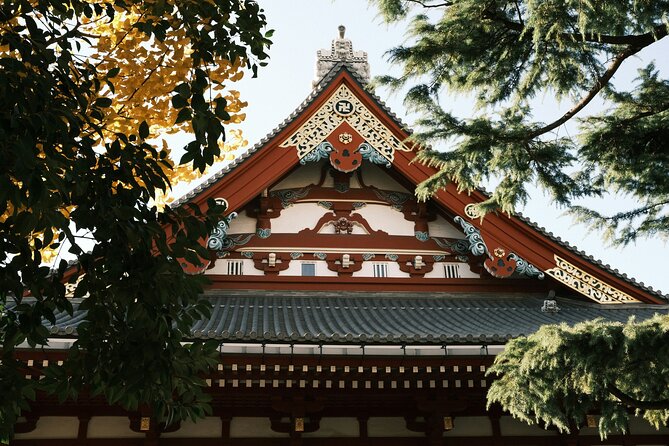
Kyoto’s appeal often comes from the contrast between old and new, and this half-day tour puts both in the same frame: the wooden halls and gardens of Nishi Honganji, the luminous staircase at Kyoto Station, then the sensory art of teamLab Biovortex. I like that the route gives you a guided introduction to a major temple before switching gears to contemporary art.
I also like the two hours reserved for teamLab, rather than treating it as a quick photo stop. One consideration: the three stops fit into three to four hours, so you’ll need to keep to the group’s pace. Food and drinks are not included, and the tour is non-refundable.
Key points to know

- Nishi Honganji opens the tour: Expect about 50 minutes at the temple, including time to explore and take photos.
- Kyoto Station adds a modern contrast: The Daikaidan light show runs about 15 minutes and turns the central staircase into a screen.
- TeamLab gets the most time: You’ll have about two hours for art inspired by nature, the human body, and traditional Japanese art.
- Transportation is included: The tour connects the three stops, starting at Amida-do-mon Gate and ending at teamLab Biovortex.
- The guide speaks Spanish and English: The group is capped at 25, which helps keep the walking portion manageable.
- Admission to teamLab is included: The $72 price also covers transportation and a bilingual guide, but not food or drinks.
From Nishi Honganji’s gate to Kyoto’s digital art
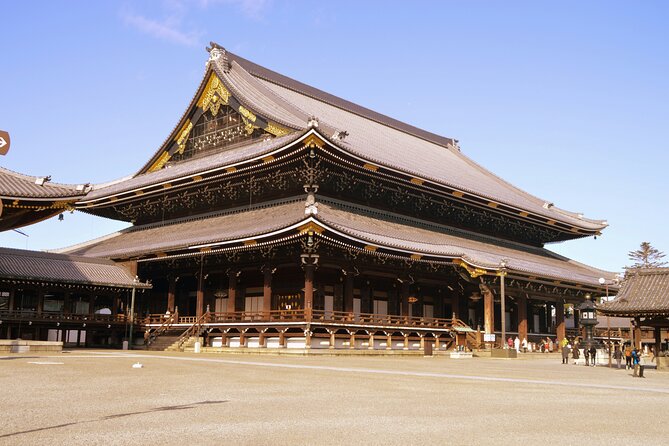
This tour works because it gives you three different ways to read Kyoto in one outing. Nishi Honganji offers a look at religious architecture and traditional grounds; Kyoto Station brings the city’s contemporary design into view; teamLab shifts the focus to art made with light, space, and interaction.
The route is not a full temple tour, a broad city walk, or a long visit to teamLab. It is a sampler, with a guide to connect the stops and transportation included between them. If you want a compact outing that mixes culture with a modern attraction, that combination has clear value.
The guide leads in Spanish and English, making this a useful option if you prefer explanations in either language. No individual guide name is provided, so you cannot request a specific person. A small but helpful detail: the group can include up to 25 people, large enough to have a social feel but still limited compared with a big coach excursion.
More walking tours in Kyoto:
- Kyoto Geisha Walking Tour: Gion District & Hidden Gems
★ 4.7 · 3,273 reviews - Kyoto: Gion Magical Night Walking Tour with Geisha Trivia
★ 4.9 · 2,393 reviews - Kyoto: Gion Geisha District Walking Tour – Stories of Geisha
★ 4.7 · 2,187 reviews
Nishi Honganji: a strong start in old Kyoto
The meeting point is Amida-do-mon Gate at Nishi Honganji. Beginning at an impressive entrance gives the temple visit a sense of occasion before you reach the main grounds. You have around 50 minutes here, with time to see the halls, older structures, and traditional gardens.
The value of a guide is especially apparent at a site like this. The buildings may be striking on their own, but a guide can help you connect what you see to the temple’s place in Kyoto’s religious and cultural life. The experience is described as a guided exploration, not simply a drop-off for photos, and the guide’s friendly, informative approach is one of the tour’s strongest qualities.
You also get some free time to walk and take pictures. That matters because temple grounds reward a slower look: notice the scale of the structures, the details of the entrances, and the shift from built spaces to garden areas. Fifty minutes is enough for an introduction, but not for an unhurried study of every hall and corner. If Nishi Honganji is a central interest for you, plan to return independently for a longer visit.
Admission to the temple is free, so this stop is not where the ticket value lies. Its contribution is the setting, the context, and the chance to begin the day with Kyoto’s historic side before the tour moves into a very different mood.
Kyoto Station’s Daikaidan: a short burst of light
The next stop is Kyoto Station, a major contemporary landmark. The Daikaidan, or Great Staircase, is the setting for a light show that turns the central stairs into a luminous screen celebrating Japanese culture. The visit lasts about 15 minutes, so think of it as a brief spectacle and a change of scene, not a long station tour.
That quick stop helps the tour’s structure. After the temple’s quieter atmosphere, the show brings you into a modern public space where architecture and digital display meet. It also gives you a taste of Kyoto beyond its historic sites. The city is not only shrines and old streets; it is also a place where present-day design and public art are part of the everyday view.
The trade-off is obvious: 15 minutes leaves little time to explore the station beyond the staircase. If you want to browse shops, find a meal, or take a longer look at the architecture, you will need to do that separately. Here, the Daikaidan is a visual interlude between the temple and teamLab, and it does that job neatly.
Two hours inside teamLab Biovortex Kyoto
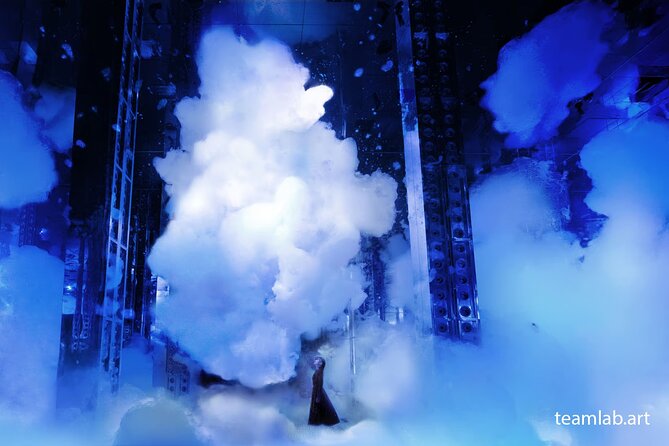
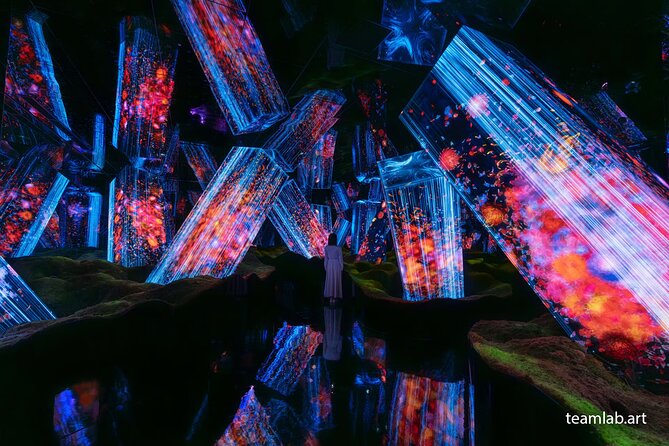
The final stop gets the biggest share of the schedule: about two hours at teamLab Biovortex Kyoto. The art draws on nature, the human body, and traditional Japanese art, using technology and sensory experiences to invite interaction. This is not a conventional gallery visit where you move from framed work to framed work. Expect an environment designed to be experienced through space and movement.
The two-hour allowance is a meaningful part of the tour’s value. teamLab is the main ticketed attraction, and a rushed visit would undercut the point of going. You have time to explore the works at your own pace within the group’s overall schedule, though the tour still ends at the venue, so you should not assume that your ticket includes unlimited time beyond the allotted visit.
The art’s subject matter also makes this a useful counterpoint to Nishi Honganji. The temple offers physical structures shaped by long-standing traditions; teamLab uses digital tools to reinterpret ideas connected with nature and Japanese art. That pairing gives the day more texture than a visit to either place alone.
One practical caution: the tour ends at teamLab, not at the original meeting point. That can be convenient if you want to continue your day near the attraction, but you should plan your onward route from the end location. The provided details do not specify what happens if you want to leave the group early, so ask the operator before booking if that matters to you.
More Kyoto tours in Kyoto:
- PERFECT KYOTO 1-Day Bus Tour
★ 5.0 · 13,518 reviews - Kyoto: Fushimi Inari, Kinkakuji, Bamboo Grove 1 Day Bus Tour
★ 4.8 · 4,316 reviews - Kyoto: Tea Ceremony in a Traditional Tea House in Kiyomizu
★ 4.9 · 3,519 reviews - Kyoto: Tea Ceremony Ju-An at Jotokuji Temple
★ 4.9 · 3,207 reviews
What $72 covers, and what it does not

At $72 per person, the price includes transportation, a guide who speaks Spanish and English, and admission to teamLab Biovortex. The temple and Kyoto Station stops have no admission charge. The cost is easiest to justify if you want the teamLab ticket and a guide-led route connecting three different sides of Kyoto without arranging the transfers yourself.
You are paying for more than the two-hour art visit. The guided temple stop adds context, while the station show provides a quick modern counterpoint. Transportation matters here because the itinerary links separate sites and the tour is designed to move from one to the next within a three-to-four-hour window.
Food and drinks are not included, so eat beforehand or plan a meal after the tour. The schedule is compact, and there is no listed meal stop. Also note the firm cancellation terms: the experience is non-refundable and cannot be changed. That makes it a poor choice if your plans are uncertain.
Timing, group size, and who will enjoy this route
The listed duration is approximately three to four hours. The scheduled visits account for about three hours in total: 50 minutes at Nishi Honganji, 15 minutes at Kyoto Station, and two hours at teamLab. The remaining time allows for transportation between stops and the flow of the group.
A maximum of 25 people is a reasonable size for a walking tour. You will not have the intimacy of a private guide, but the cap avoids the feel of a very large group. The tour is near public transportation, and most people can participate, according to the activity details. Specific accessibility features are not provided, so contact the operator if you have mobility needs or want to confirm walking conditions.
This tour suits you best if you want a guided overview rather than a full day devoted to one place. It is a good fit for visitors curious about both Kyoto’s temples and contemporary digital art, and for anyone who appreciates having transportation and teamLab admission bundled together. The English and Spanish options are another practical advantage.
It may be less suitable if you prefer to linger at temples, want a long independent visit to Kyoto Station, or need a flexible schedule. The day moves through distinct settings, but the temple and station portions are brief. For a deeper temple visit, return to Nishi Honganji on your own; for this tour, treat it as the opening chapter.
Should you book the Kyoto tour?
Book it if the combination is the draw: a historic temple, a short public light show, and a substantial teamLab visit, all connected by transportation and a bilingual guide. The price makes more sense when you value the included teamLab admission and the convenience of a guided route, not just the free temple and station stops.
Skip it if you want to spend half a day at Nishi Honganji or prefer to choose your own pace at every stop. The strongest reason to go is the contrast, and the best practical advice is simple: arrive ready for a brisk schedule, eat before you start, and leave room in your plans after the tour ends at teamLab.
FAQ

How long does the tour take?
The tour lasts approximately three to four hours. The scheduled visits are about 50 minutes at Nishi Honganji, 15 minutes at Kyoto Station, and two hours at teamLab.
What is the price per person?
The listed price is $72 per person.
What is included in the price?
Transportation, a bilingual guide in Spanish and English, and admission to teamLab Biovortex are included.
Are food and drinks included?
No. Food and drinks are not included.
Where does the tour start and end?
It starts at Amida-do-mon Gate at Nishi Honganji and ends at teamLab Biovortex Kyoto.
How large can the group be?
The maximum group size is 25 people.
Can I cancel or change my booking?
No. The experience is non-refundable and cannot be changed. If you cancel or request an amendment, the amount paid will not be refunded.
Newly added in Kyoto
- Uji: Private immersion into Kyoto’s tea and reglious culture★ 5.0 · 17 reviews
- Whisk Your Own Matcha: A Zen Matcha Experience at Temple★ 3.6 · 7 reviews
- Kyoto tea town for matcha lovers★ 5.0 · 16 reviews
- Treasures of Kyoto: Gion & historical Walking Tour★ 5.0 · 6 reviews
- Kyoto Matcha Green Tea Tour★ 4.5 · 23 reviews
- Uji and Wazuka Matcha Farm Half Day Private Guided Tour★ 5.0 · 21 reviews
- Uji Tea Ceremony and UNESCO Heritage Walking Tour★ 5.0 · 20 reviews
- Utilising upcycled Matcha! Creating matcha incense (Uji, Kyoto)★ 5.0 · 6 reviews
Kyoto Walking Tours, compared.
Kyoto Geisha Walking Tour: Gion District & Hidden Gems
Read our review →
Gion Magical Night Walking Tour with Geisha Trivia
Read our review →
Gion Geisha District Walking Tour – Stories of Geisha
Read our review →

Nishiki Market Brunch Walking Tour (7 Tastings + Brunch)
Read our review →
Kyoto Arashiyama Walking Tour: Bamboo, Monkeys, Gardens & Secrets
Read our review →
Nara Half Day Trip Walking Tour (Private Option Available)
Read our review →Browse the lists this tour appears in