
Reviewed · KYOTO COOKING CLASSES
Kyoto: Cooking class, learning how to make authentic sushi
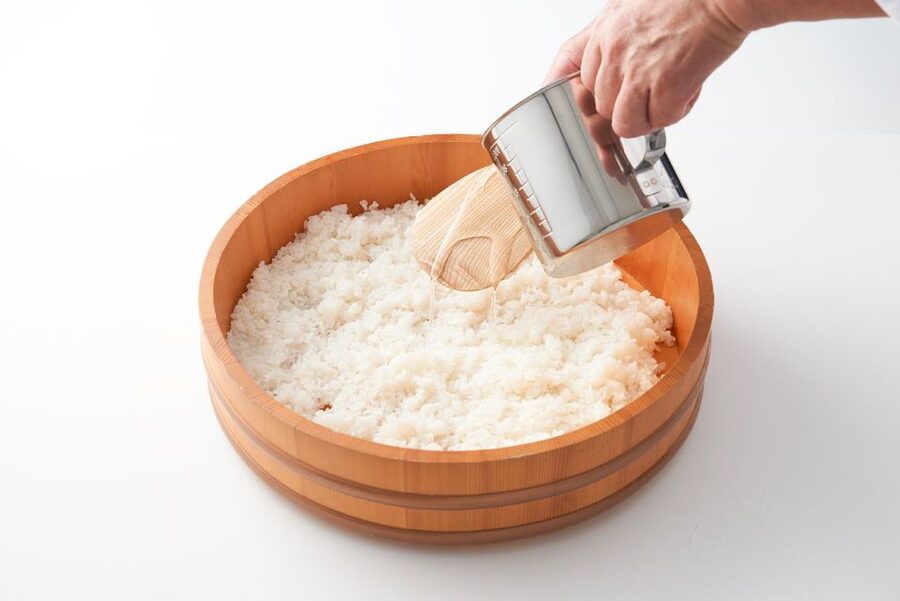
Making sushi starts with rice, not fish. In this 90-minute Kyoto class, you learn to season freshly cooked rice with a specially blended vinegar, then shape sushi with prepared ingredients. It is a hands-on introduction, with an English-speaking instructor and eight pieces to eat at the end.
I like two things here: you can wear a happi, a traditional Japanese coat, and choose from toppings such as green onion and ginger. I also like that beginners are welcome, while anyone curious about fish preparation can ask about learning to cut it.
The main caution is that the lesson may feel basic if you expect a long, technical course or lots of different sushi styles. At $113 per person, the value depends on whether you want a friendly, compact cultural activity as much as a cooking lesson.
At a glance
- Start with sushi rice: Learn to mix freshly cooked rice with a vinegar blend made for sushi.
- Make eight pieces: Prepared ingredients keep the class approachable for beginners, though the exact toppings can change with the season.
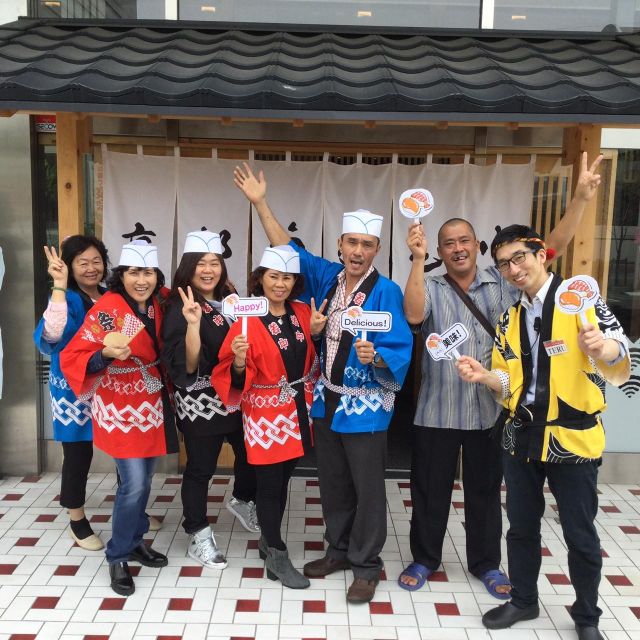
- Wear a happi coat: Choose from the available traditional garments and take part in a brief cultural experience alongside the cooking.
- Ask about fish cutting: The core class uses ingredients already cut, but you can ask if you would like to learn more.
- Plan for a simple lesson: The class lasts 90 minutes and may suit curious first-timers better than sushi enthusiasts seeking advanced technique.
- Check your food needs in advance: Vegetarian, vegan, Muslim-friendly, allergy, gluten-free, and non-raw options are available.
Start with the rice, the heart of the lesson
Sushi rice, known as shari or sumeshi, is the first skill on the agenda. You mix freshly cooked rice with a vinegar blend made for sushi, and the instructor shows you how to combine them properly. That step matters: sushi depends on seasoned rice, not just a slice of fish placed on top.
The class calls attention to a trick in mixing, which gives the lesson a useful focus. You are not only assembling ready-made ingredients; you begin with a basic preparation that helps explain what makes sushi taste and hold together as it should.
Still, keep your expectations in proportion. This is a short introductory class, not a full course in rice science or sushi craft. If you already make sushi at home, you may find the rice lesson familiar. If this is your first time, it gives you a practical place to start.
More cooking classes in Kyoto:
- Ramen Cooking Class at Ramen Factory in Kyoto
★ 5.0 · 1,937 reviews - Sushi Making in Kyoto! Same-day bookings welcome!
★ 5.0 · 713 reviews - Kyoto: Ramen Cooking Class at a Ramen Factory with Souvenir
★ 4.9 · 532 reviews
Make sushi with prepared ingredients
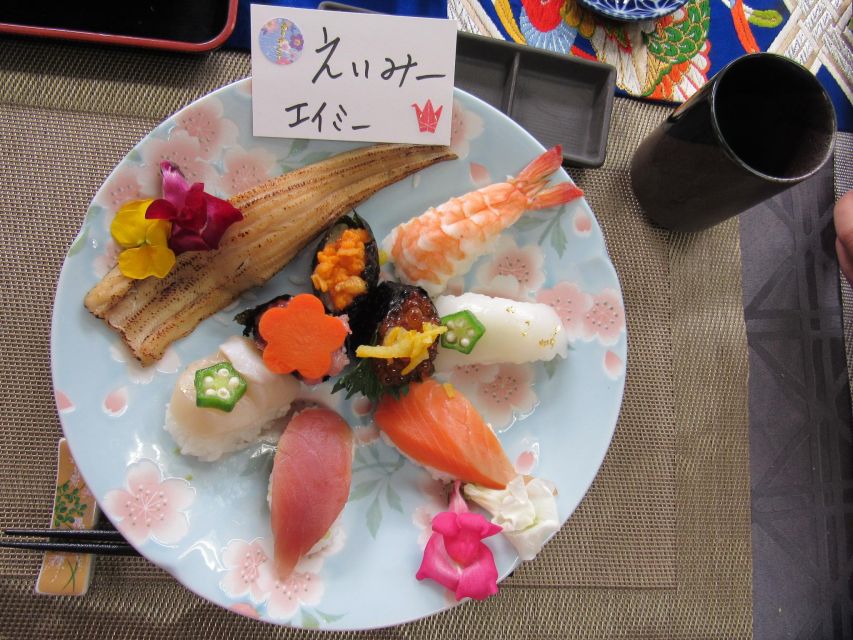
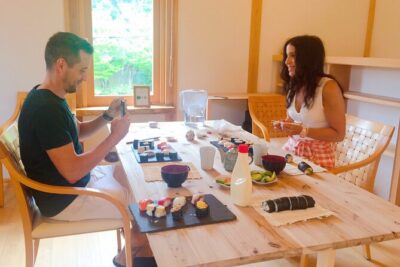
Once the rice is ready, you use ingredients that have already been cut. That makes the class accessible to beginners and leaves more time for mixing, shaping, and assembling than for knife work. The experience includes eight pieces of sushi, with toppings such as green onion and ginger available to choose from.
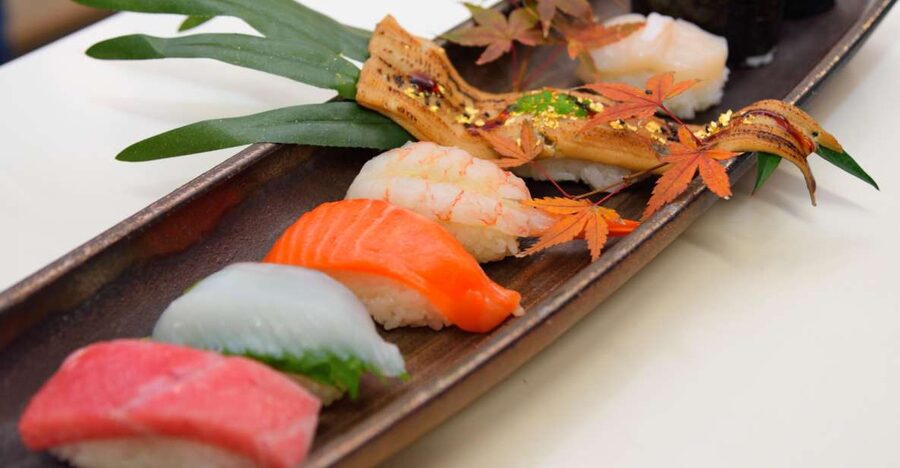
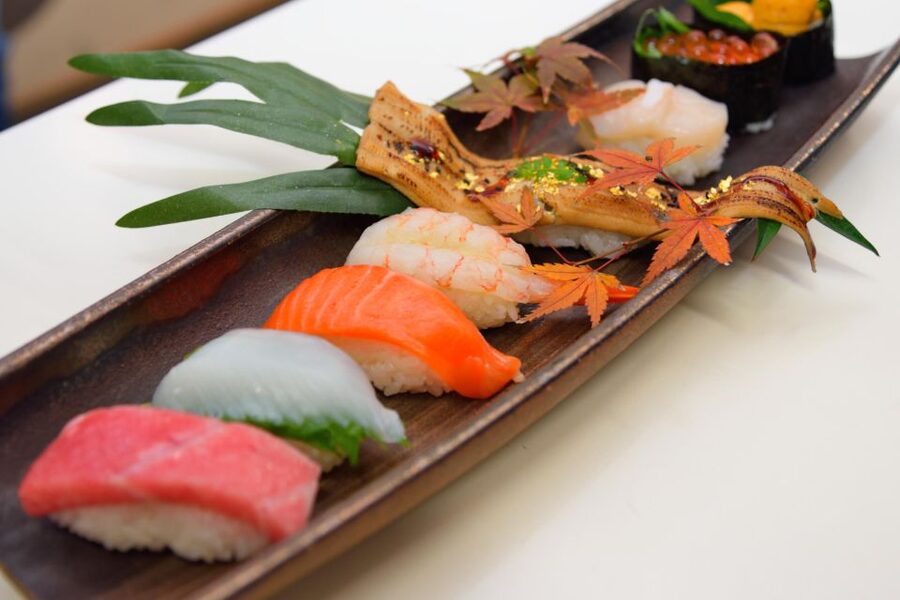
The ingredients can vary by season, so do not book expecting a fixed menu. The class may use special items such as extra-fatty tuna or fresh red shrimp, described as sweet and creamy, but those are possibilities rather than a guarantee. If tasting particular fish is important to you, ask about the day’s ingredients before you book.
There is room to ask about fish cutting, but it is not presented as a standard part of the lesson. The main format is beginner-friendly preparation with ready-cut ingredients. That is a sensible arrangement for a 90-minute class, though it also means you should not expect a full lesson in handling and cutting fish.
Wear a happi and take part in the ceremony
A happi coat adds a visible Japanese touch to the class. Several garments are available to choose from, and wearing one gives the cooking session a more ceremonial feel than a plain kitchen demonstration. It is a small detail, but one that can make the activity feel like a cultural outing as well as a meal.
The experience also includes an introduction to Japanese spirits. The description does not specify a drink or a particular ceremony, so it is best understood as a cultural element of the class rather than a promise of an alcoholic beverage. Drinks are not included.
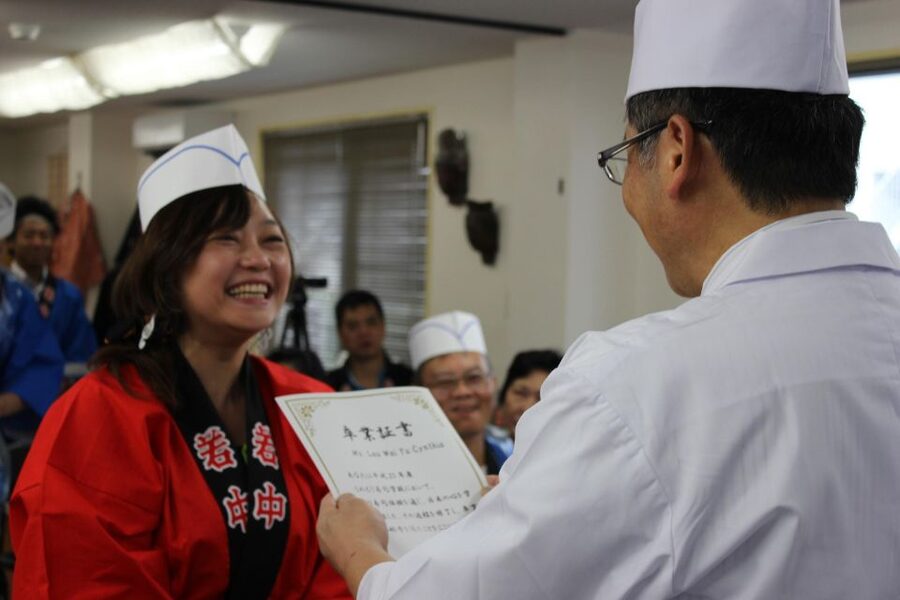
At the end, you receive a completion certificate and take part in a graduation ceremony. The title of sushi master is playful, of course; after 90 minutes, you will have learned a few basic steps, not mastered a craft that takes years. But a certificate and a shared finish can make the class a fun choice for a couple, family, or small group wanting a clear souvenir of the activity.
How much cooking should you expect?
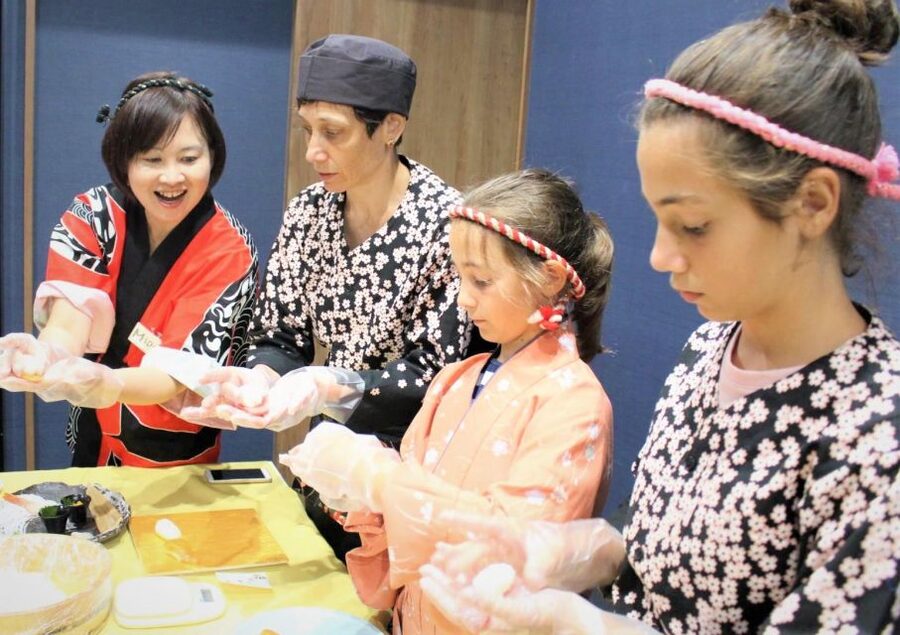
The advertised lesson includes eight pieces of sushi, but the amount of variety may be modest. The class has been described as producing eight nigiri and one simple roll, which suggests that the focus is on learning the basics rather than making a large assortment of styles. The precise format may vary, so treat that as a useful guide, not a fixed promise.
That distinction matters when judging the $113 price. You are paying for a short, guided activity that includes instruction, a traditional garment, ingredients, the meal, a certificate, and a souvenir photo. If you measure value only by how much food you get or how many techniques you learn, the price may feel steep.
If you value a structured activity with an instructor, a taste of Japanese cooking, and a chance to make your own lunch or snack, the cost may make more sense. The experience’s strongest appeal is its combination of cooking and cultural touches, not a deep technical syllabus. For a serious sushi student, a longer class with more knife work would likely be a better match.
More food tours in Kyoto:
- Kyoto Night Foodie Tour in Gion (9+ dishes + 6 Sake tastings)
★ 5.0 · 1,762 reviews - Kyoto: Izakaya Bars Guided Walking Tour
★ 4.9 · 815 reviews - Kyoto: Insider Sake Brewery Tour with Sake and Food Pairing
★ 5.0 · 704 reviews - Kyoto: Ramen, Gyoza, and Onigiri Cooking Class
★ 5.0 · 445 reviews
Food choices and dietary needs
The school says it can offer menus friendly to vegetarians, vegans, and Muslims. It also accommodates allergies, gluten-free requests, and non-raw preferences. These options make the class more flexible than a fish-only sushi session, but you should communicate your needs before the activity so the team can plan accordingly.
Toppings can include green onion and ginger, and you can choose favorites from the available selection. The ingredients change with the season, so a specific topping is not guaranteed. If you have a strict dietary requirement, be clear about what you can and cannot eat rather than relying on a broad label such as vegetarian or gluten-free.
There are no special infant meals, and children under three are not suitable for the activity. That is worth considering if you are arranging a family outing. The class may work better for older children who can take part in a short, supervised cooking activity, though no minimum age beyond the under-three restriction is specified.
Getting to the class near Takeda Station
The meeting point is near public transportation, but the final leg takes a little attention. Get off at the west entrance of Takeda Station, served by the Kintetsu or subway line, then take a city bus to the stop in front of Puls Plaza. Walk down the street, turn right at the first corner, then left at the next first corner; the school should be on your right.
Allow time to follow those directions, especially if you are unfamiliar with the area or do not read Japanese signs easily. The activity takes place in any weather, so rain will not cancel the class. It lasts 90 minutes, and available starting times depend on the date you choose.
The venue is described as wheelchair accessible, but there is no elevator. Staff can help older or disabled participants up the stairs. If stairs could be difficult for you, contact the school before booking to confirm what assistance is practical for your needs.
What the price includes, and what it does not
The $113 fee covers the sushi-making lecture, an English- or Japanese-speaking instructor, a happi coat rental, eight pieces of sushi, available toppings, the graduation certificate, and a souvenir photograph. It also includes the cultural element described as Japanese spirits. Those inclusions make the price easier to assess than a cooking class where you pay separately for ingredients or a meal.
Drinks are not included. Warm udon is an optional menu item, as are other Japanese foods such as tempura, tofu, and pork shabu-shabu. These extras are not part of the base experience, so ask about their price and availability if you want to turn the class into a larger meal.
For a short activity, the key question is what you want to take home. If you want a relaxed introduction, a meal you helped prepare, and a few memorable photos in a happi, the package has several appealing parts. If you want extensive instruction, many dishes, or a low-cost lunch, it may not be the best use of your budget.
Who will enjoy this class most?
I would consider this class if you are curious about sushi but have never tried making it, or if you want a short, participatory activity during a Kyoto visit. The ready-cut ingredients lower the barrier to entry, while the rice lesson gives you something practical to remember. An English-speaking instructor also makes it easier to follow if Japanese is not your language.
It could suit families with children over three, couples, and friends who enjoy making and eating food together. The happi, certificate, and souvenir photo add a lighthearted element that can make the session feel more like an outing than a formal cooking course.
Experienced home cooks and sushi enthusiasts should weigh the limited time against the price. You can ask about fish cutting, but it is not guaranteed as part of the standard lesson, and the core class appears to focus on a small number of straightforward preparations. For those seeking a serious study of technique, the class may be too introductory.
Should you book it?
Book this class if you want to make sushi yourself, learn how sushi rice is seasoned, and enjoy a simple cultural activity with a meal at the end. The warm, welcoming approach and the chance to wear a happi are good reasons to choose it over a more technical class, especially if you are a beginner.
Think twice if you expect a broad menu, advanced knife skills, or exceptional value based on food quantity alone. At $113, you are paying for the whole experience, not just eight pieces of sushi. If that balance suits your plans, it is a friendly way to spend 90 minutes; if your priority is depth, look for a longer workshop.
FAQ
How long is the sushi-making class?
The class lasts 90 minutes.
How much does the experience cost?
The listed price is $113 per person.
How many pieces of sushi are included?
The class includes eight pieces of sushi.
Is the class suitable for beginners?
Yes. Ingredients are prepared and cut in advance, and the class welcomes beginners.
Can I learn to cut fish?
You can ask about learning fish cuts, but fish cutting is not specified as a standard part of the class.
Are vegetarian or vegan options available?
Yes. The school can offer menus friendly to vegetarians and vegans.
Can the school accommodate allergies or other dietary needs?
Allergy, non-raw, gluten-free, and other options are available. Contact the school about your needs.
Are drinks included?
No. Drinks are not included in the price.
Where is the meeting point?
The meeting point is near Takeda Station. Take a city bus from the station to the stop in front of Puls Plaza, then follow the directions to the school.
Is the venue wheelchair accessible?
The venue is described as wheelchair accessible, but there is no elevator. Staff can help people up the stairs.
Newly added in Kyoto
- Uji: Private immersion into Kyoto’s tea and reglious culture★ 5.0 · 17 reviews
- Whisk Your Own Matcha: A Zen Matcha Experience at Temple★ 3.6 · 7 reviews
- Kyoto tea town for matcha lovers★ 5.0 · 16 reviews
- Treasures of Kyoto: Gion & historical Walking Tour★ 5.0 · 6 reviews
- Kyoto Matcha Green Tea Tour★ 4.5 · 23 reviews
- Uji and Wazuka Matcha Farm Half Day Private Guided Tour★ 5.0 · 21 reviews
- Uji Tea Ceremony and UNESCO Heritage Walking Tour★ 5.0 · 20 reviews
- Utilising upcycled Matcha! Creating matcha incense (Uji, Kyoto)★ 5.0 · 6 reviews
Kyoto Cooking Classes, compared.

Ramen Cooking Class at Ramen Factory in Kyoto
Read our review →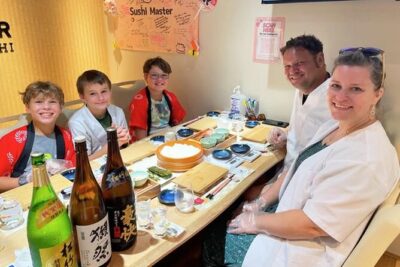
Sushi Making in Kyoto! Same-day bookings welcome!
Read our review →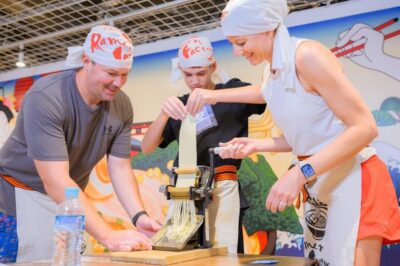
Ramen Cooking Class at a Ramen Factory with Souvenir
Read our review →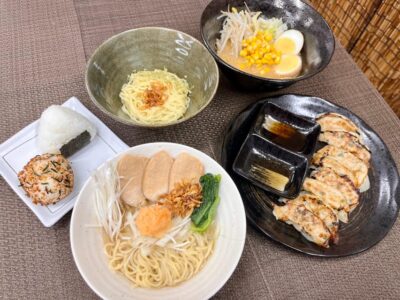
The Original Small-Group Sushi Making Class in Kyoto
Read our review →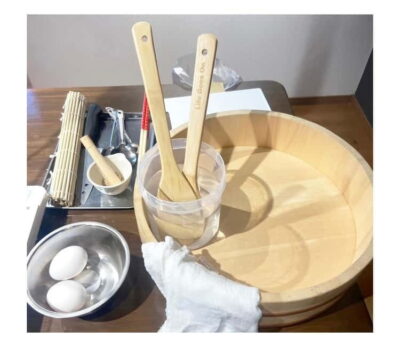
Japanese Washoku Bento Small Group Cooking Class
Read our review →
Japanese Traditional Sweets Making and Tea Ceremony
Read our review →
Kyoto Ramen and Gyoza Cooking Class with Professional Chefs
Read our review →Browse the lists this tour appears in