
Reviewed · FUSHIMI INARI TOURS
Kyoto: Fushimi Inari Taisha Night Tour with Guide
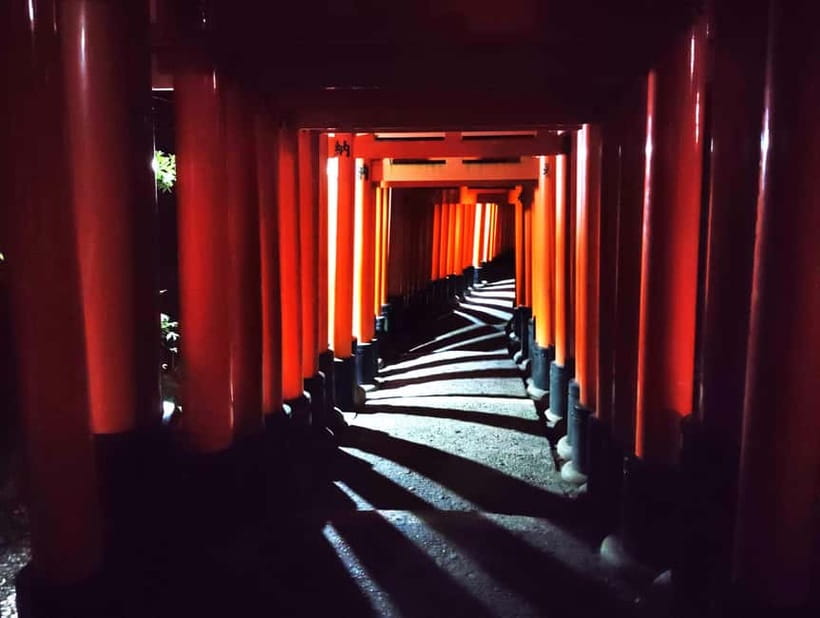
Fushimi Inari changes character after sunset. On this two-hour private walk, you follow its vermilion torii gates into quieter forest paths, where darkness and stillness make the shrine feel less like a famous photo stop and more like a place of worship.
I like two things in particular: the calmer nighttime setting, which gives you room to notice the gates and stone fox guardians, and the guide’s explanations of the shrine’s history and significance. The route also includes a view toward Kyoto’s lights from the mountain.
One consideration: the paths can be uneven, and this tour is not suitable for people with mobility impairments. Bring comfortable shoes, warm or weather-appropriate clothing, and a flashlight, and remember that flash photography is not allowed.
At a glance
- After-dark torii walk: See the familiar rows of vermilion gates in a quieter setting.
- Private group: The walk is arranged for your group, with a guide speaking English or Japanese.
- Shrine context: Your guide explains Fushimi Inari’s history and significance as you walk.
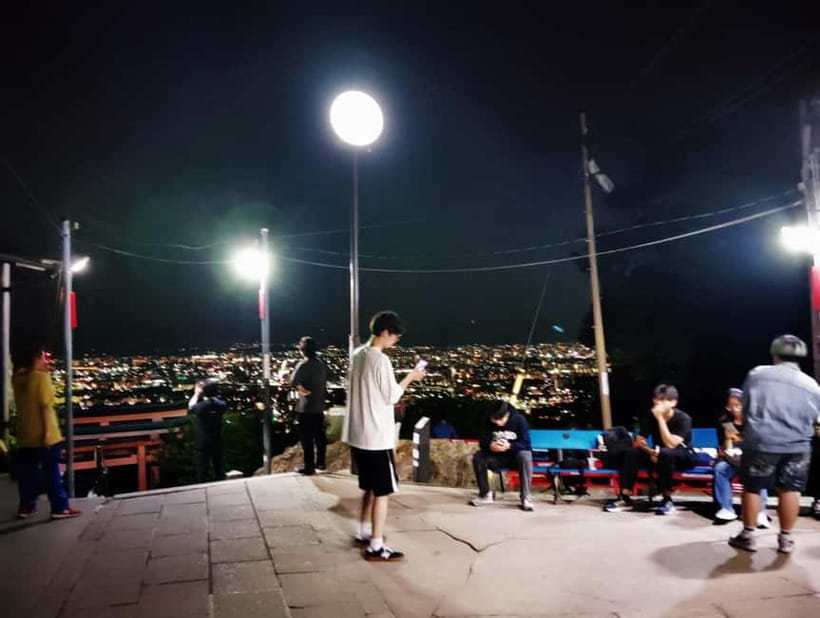
- A mountain view: The tour description includes Kyoto’s distant lights from the mountain.
- Simple route: Meet at Daily Yamazaki Fushimi Inari Taisha-mae Store and finish at Inari Station.
- Plan for rough footing: Comfortable shoes and a flashlight are useful; flash photography is off limits.
Fushimi Inari after dark
Fushimi Inari Taisha is one of Kyoto’s most visited and photographed sites. Its torii gates, fox guardians, and wooded paths are familiar sights in daylight, but the night walk offers a different pace and atmosphere. With fewer people on the paths, you can take in the long lines of gates without the same daytime flow of foot traffic.
The change is not just visual. The forest grows quiet, the gates cast long shadows, and the experience feels more reflective than a quick daytime visit. The shrine remains a sacred place, not a nighttime attraction built just for photos, so the gentle pace and respectful behavior matter.
Your guide leads the walk and adds context about the shrine’s history and significance. That context helps make sense of the setting around you. Instead of simply passing through repeated gates, you can consider why the site matters and how its religious character shapes the visit.
The tour description includes a view of Kyoto’s lights from the mountain. It gives the walk a change of scene: from close, shaded paths to a wider view over the city. The precise route and how far you walk are not specified, so don’t assume the two hours include reaching the mountain’s summit.
More Fushimi Inari tours in Kyoto:
- Kyoto: Fushimi Inari, Kinkakuji, Bamboo Grove 1 Day Bus Tour
★ 4.8 · 4,316 reviews - Fushimi Inari Hidden Hiking Tour (Private Option Available)
★ 5.0 · 1,750 reviews - Kyoto/Osaka: Nara, Fushimi Inari Taisha, Arashiyama Bus Tour
★ 4.7 · 1,275 reviews
From the convenience store to the shrine
The meeting point is in front of Daily Yamazaki Fushimi Inari Taisha-mae Store. Look for a guide holding a yellow sign panel marked DeepExperience. It is worth checking the map and recognizing the store before you set out, especially since the tour begins at night.
The store is a practical landmark, but transportation to and from the shrine is not included. You need to arrange your own way to the meeting point and plan how you’ll continue after the tour ends at Inari Station. Meals and drinks are also not part of the price, so take care of those separately.
At the start, you meet your guide and set off on a two-hour walk through the shrine. The experience is offered as a private group, rather than a shared public group. That setup can make it easier to ask questions or request a more measured pace, though the route still involves walking on uneven paths.
Guides speak English or Japanese. Two names associated with the experience are Judah and Juraj. One account praises a guide for being patient with a tired group and accommodating their requests, as well as for sharing useful information and chatting about a range of topics. The names may not indicate who leads your particular tour, so book for the experience and language rather than expecting a specific guide.
Walking beneath the torii gates
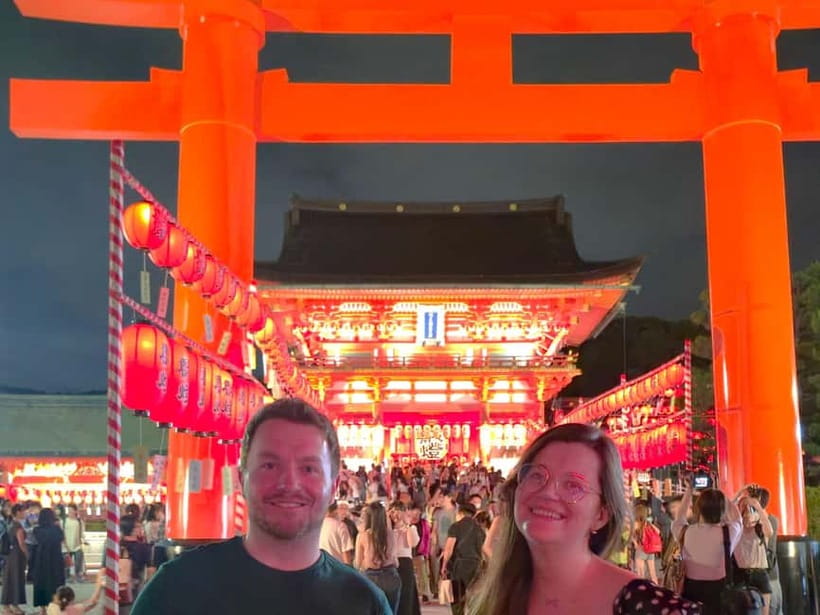
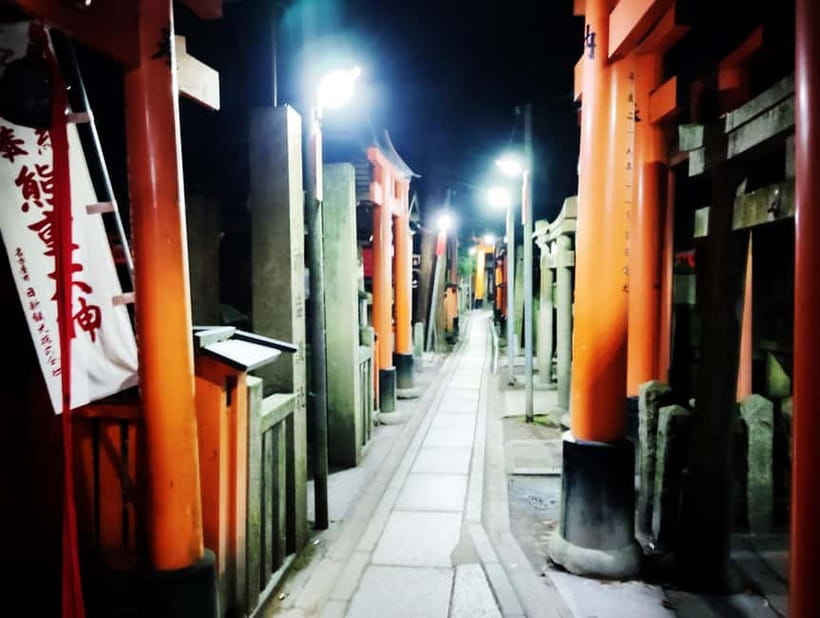
The torii are the visual heart of the walk. By day, they draw a steady stream of people and cameras. At night, the reduced crowds can make it easier to appreciate their repetition and color, and to notice how the gates frame the forest path ahead.
That quieter feel is a real reason to choose this tour over a daytime visit. You are not simply trying to get a clear photograph or keep pace with a line of people. You can pause, listen to your guide, and pay attention to the way the path shifts between the gates and the surrounding trees.
Still, night changes what you can see. The atmosphere may be memorable, but details in the woods and around the shrine are naturally less visible than in daylight. Bring a flashlight, as recommended, and use it thoughtfully so you can watch your footing without disturbing the calm. Do not use flash photography; it is specifically prohibited to preserve the shrine’s tranquility.
The paths can be uneven, so sturdy, comfortable shoes are more useful than shoes chosen for photos. Dress for the weather, and bring a warm layer if the evening is cool. The tour runs at night, and the forest setting can feel colder than a city street.
Fox guardians, forest paths, and shrine meaning
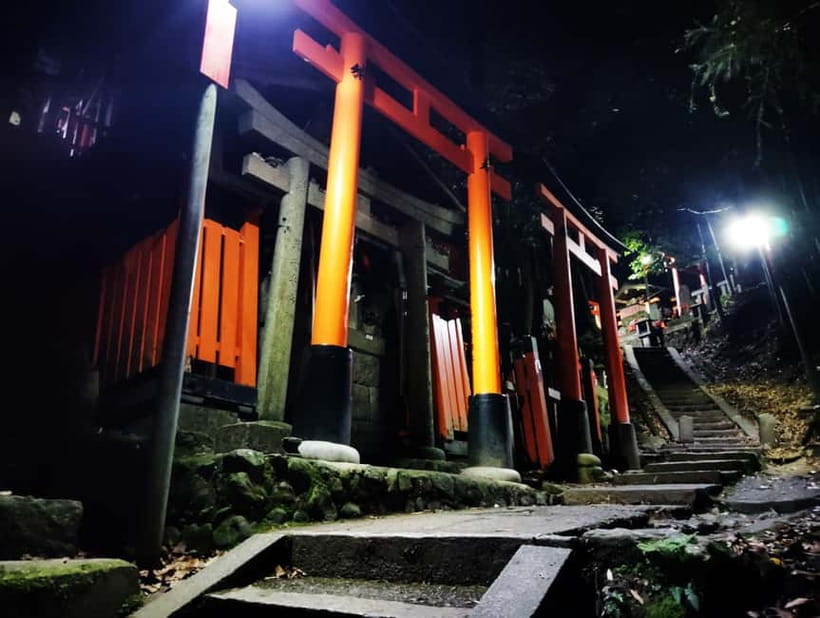
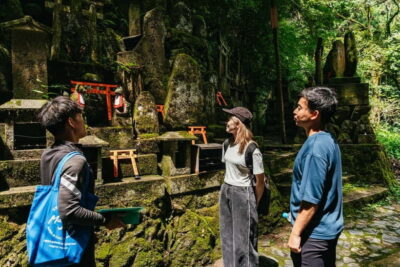
Fushimi Inari is known for its stone fox guardians as well as its torii gates. The night setting can make these details feel more striking, but it is the guide’s explanations that help connect what you see with the shrine’s significance. If you have questions about the gates, fox figures, or the site’s history, this is a good moment to ask.
The supplied tour information does not specify a fixed sequence of named stops or a detailed lecture topic list. Expect a guided walk and general explanation of the shrine, rather than a set of guaranteed talks about particular objects. That distinction matters if you are looking for a specialist religious or architectural tour.
The forest paths are part of the experience, not just the route between photo spots. Their quiet gives you time to notice the atmosphere and adjust to the slower pace. The tour’s description evokes cedar-scented air and deep silence, but weather, season, and the amount of light can shape what you actually sense on a given evening.
More night tours in Kyoto:
- Kyoto: Gion Magical Night Walking Tour with Geisha Trivia
★ 4.9 · 2,393 reviews - Night Walk in Gion: Kyoto’s Geisha District
★ 4.5 · 2,003 reviews - Kyoto Night Foodie Tour in Gion (9+ dishes + 6 Sake tastings)
★ 5.0 · 1,762 reviews - Kyoto Gion Night Walk & Geisha District Guided Tour
★ 5.0 · 786 reviews
A view over Kyoto, then Inari Station
The mountain view is a welcome counterpoint to the enclosed paths. From above, Kyoto’s distant lights appear below, giving you a broad sense of the city after spending much of the walk among trees and gates. It is one of the tour’s most distinctive promised moments, though exact timing and the route to the viewpoint are not stated.
The finish is at Inari Station. That clear endpoint helps you plan the rest of your evening, but remember that transportation is not included. Check your onward plans before you start, particularly if you need to connect to another part of Kyoto.
Two hours is enough time for a focused nighttime visit, but it is not a full-day exploration of Fushimi Inari. The tour is best understood as an evening walk with a guide, not as a substitute for every possible route through the shrine grounds. If you want to explore at your own pace for longer, you may prefer to add a separate visit.
Is $49 a fair price?
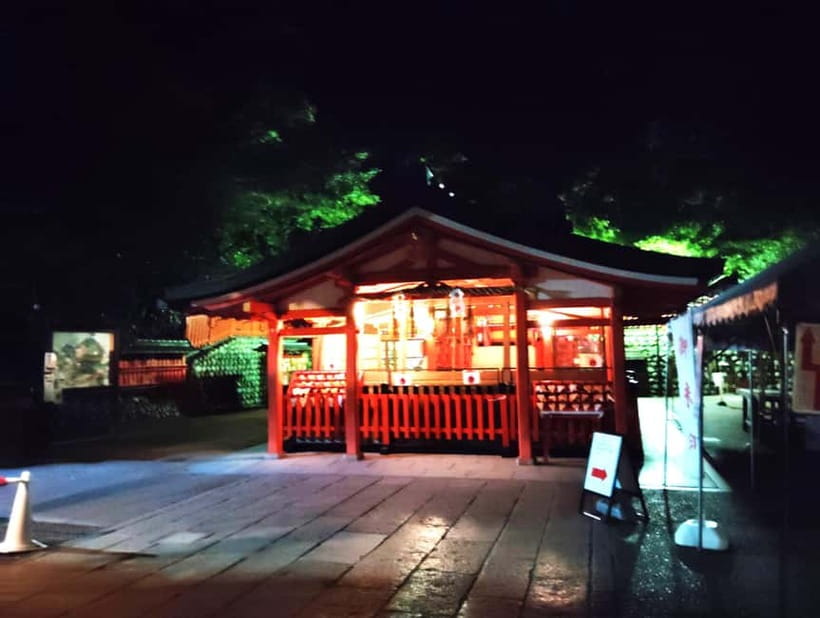
At $49 per person, the value depends on what you want from the visit. You are paying for a private, two-hour guided walk in English or Japanese, plus the benefit of visiting when the paths are described as quieter. Transportation, meals, and drinks are extra, so include those in your evening budget.
The strongest value is the combination of timing and guidance. Fushimi Inari is easy to recognize from photographs, but a guide can give the walk context and help you make more of the setting than a quick pass through the gates. A private group can also be useful if your party wants to ask questions or needs a patient pace.
The price may feel less worthwhile if your main goal is simply to see the torii gates. The shrine is also a place you can visit without this guided activity, and the tour does not include transport or refreshments. Think of the fee as paying for a guided nighttime experience, not for a bundle of extras.
The available rating is 4.2 from four reviews, a small sample that is too limited to promise a particular experience. The strongest praise centers on guides who are enthusiastic, informative, patient, and accommodating. One group was tired and could not walk far, and their guide adjusted patiently. That is encouraging, but it is not a guarantee that every guide or tour will follow the same pace.
Who will enjoy this walk
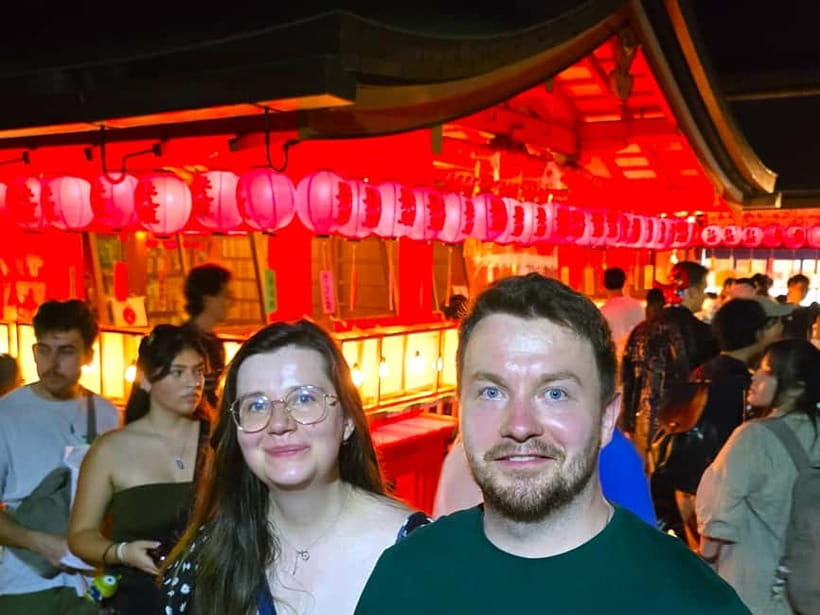
This tour suits you if you want to see Fushimi Inari in a quieter mood, value having a guide explain the site, and are comfortable walking at night on uneven paths. It is also a good fit if you prefer a private group and want to ask questions without feeling you are holding up a larger party.
It may not suit you if you have mobility impairments, dislike walking in low light, or want a leisurely visit with no fixed two-hour structure. If detailed photography is your priority, remember that flash is not allowed and the nighttime setting limits visibility. For many people, that tradeoff is the point: the walk is about atmosphere and context as much as pictures.
Book it if the night setting and guided explanation matter to you. Skip it if you only want a quick look at the gates or need a fully accessible route. Before you go, check the meeting point, bring a flashlight and comfortable shoes, and dress for the evening weather.
FAQ
How long is the Fushimi Inari night tour?
The guided walk lasts two hours.
Where is the meeting point?
Meet in front of Daily Yamazaki Fushimi Inari Taisha-mae Store. Your guide will be holding a yellow DeepExperience sign panel.
Where does the tour finish?
The tour finishes at Inari Station.
What languages are available?
The guide speaks English or Japanese.
Is this a private tour?
Yes. The tour is offered for a private group.
What should I bring?
Bring comfortable shoes, a camera, weather-appropriate clothing, and a flashlight.
Is flash photography allowed?
No. Flash photography is not allowed, to preserve the tranquility of the shrine.
Newly added in Kyoto
- Uji: Private immersion into Kyoto’s tea and reglious culture★ 5.0 · 17 reviews
- Whisk Your Own Matcha: A Zen Matcha Experience at Temple★ 3.6 · 7 reviews
- Kyoto tea town for matcha lovers★ 5.0 · 16 reviews
- Treasures of Kyoto: Gion & historical Walking Tour★ 5.0 · 6 reviews
- Kyoto Matcha Green Tea Tour★ 4.5 · 23 reviews
- Uji and Wazuka Matcha Farm Half Day Private Guided Tour★ 5.0 · 21 reviews
- Uji Tea Ceremony and UNESCO Heritage Walking Tour★ 5.0 · 20 reviews
- Utilising upcycled Matcha! Creating matcha incense (Uji, Kyoto)★ 5.0 · 6 reviews
Fushimi Inari Tours, compared.

Fushimi Inari, Kinkakuji, Bamboo Grove 1 Day Bus Tour
Read our review →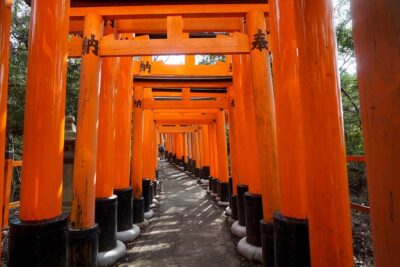
Fushimi Inari Hidden Hiking Tour (Private Option Available)
Read our review →
Nara, Fushimi Inari Taisha, Arashiyama Bus Tour
Read our review →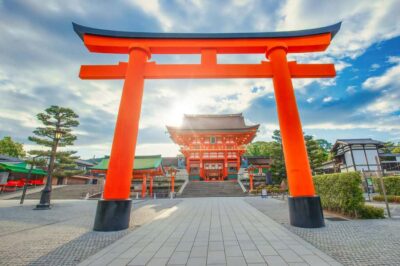
Arashiyama, Nara & Fushimi Inari Shrine w/Lunch
Read our review →
Nijo Castle, Kiyomizu & Fushimi Inari Guided Tour
Read our review →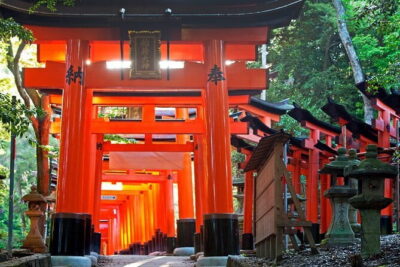
Nijo, Kinkaku-ji, Arashiyama, Kiyomizu & Fushimi Inari
Read our review →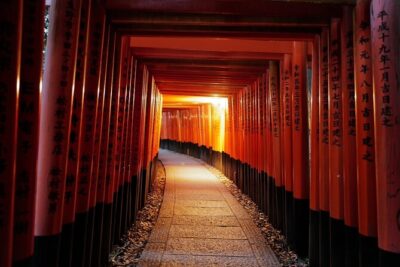
Browse the lists this tour appears in