
Reviewed · GION TOURS
Cycle Kyoto’s Hidden Gems & Gion Stroll
Kyoto’s quieter side is easier to find on two wheels. This tour follows riverside paths and residential streets to shrines, the Imperial Palace and Shimogamo Shrine, then trades the saddle for a walk through Gion or Pontocho.
I like the mix of open-air cycling and a short cultural walk, and the stop at a traditional snack shop for Japanese tea and sweets. Guides including Go, Ko, Benjamin and Claire have led rides, with the pace and explanations earning particular praise. One consideration: you need to be at least nine and comfortable riding a bike, and the route can change with the weather.
- Riverside start: Ride a peaceful stretch of river road and stop at a small shrine where you can try natural spring water.
- Big-name sights, quieter links: The route can include the Imperial Palace and a Zen temple, connected by university grounds and residential streets.
- A forested shrine visit: Shimogamo Shrine offers historic buildings and the unusual atmosphere of its primitive forest.
- A sweet-and-tea break: Japanese tea and traditional sweets are served at a traditional snack shop.
- Gion or Pontocho on foot: End with a 30-minute stroll and an introduction to the geisha districts and their customs.
- Flexible route: The tour runs rain or shine, and the destinations are examples rather than a guaranteed fixed route.
Kyoto by bike, then on foot
This experience makes a useful contrast: first, a ride through parts of Kyoto that are easier to pass by than to discover on foot; then, a guided walk through one of the city’s best-known entertainment districts. The cycling portion is about three and a half hours, followed by a 30-minute stroll. Allow roughly four hours for the full outing.
That structure suits anyone who wants more than a quick look at a few famous landmarks. You get movement, green spaces, shrine visits and some local context, without spending the whole tour inside temples or museums. The bike also helps link places that may feel scattered when you are navigating the city on your own.
The route is not presented as a fixed checklist. The described stops are examples, and the tour runs in rain or shine, so the exact plan may change. That flexibility can be useful, but if one particular site is a must for you, ask about the day’s route rather than assuming it is guaranteed.
Starting beside Sanjo Ohashi
The meeting point is the kneeling-man statue at the southeast corner of the Sanjo Ohashi intersection. From the east end of Sanjo Ohashi Bridge, cross the street and look for the statue. If you are arriving by subway, the directions suggest coming up to street level first, then finding the meeting place.
It is worth arriving with enough time to locate the statue calmly. The tour ends back at the same point, which makes the start and finish simple to plan around. Keep your belongings light: luggage and large bags are not allowed, and a bike is much easier to manage without extra weight.
Comfortable shoes, water, a camera and clothing suited to the weather are the recommended essentials. The ride is outdoors, so your comfort will depend in part on dressing for the conditions. The tour is in English.
More Gion tours in Kyoto:
- Kyoto Geisha Walking Tour: Gion District & Hidden Gems
★ 4.7 · 3,273 reviews - Kyoto: Gion Magical Night Walking Tour with Geisha Trivia
★ 4.9 · 2,393 reviews - Kyoto: Gion Geisha District Walking Tour – Stories of Geisha
★ 4.7 · 2,187 reviews
Following the river to a small shrine
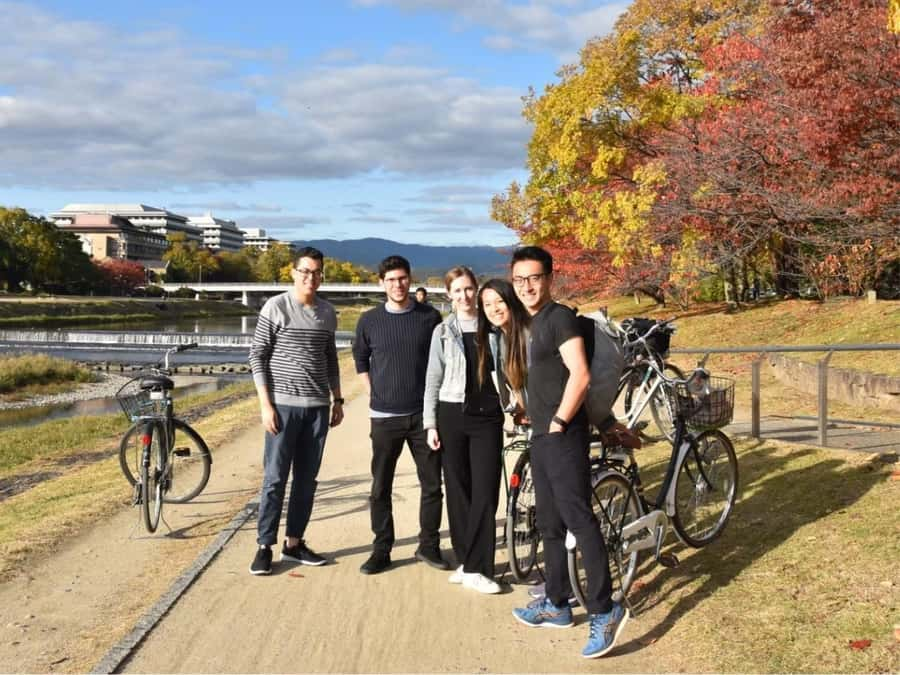
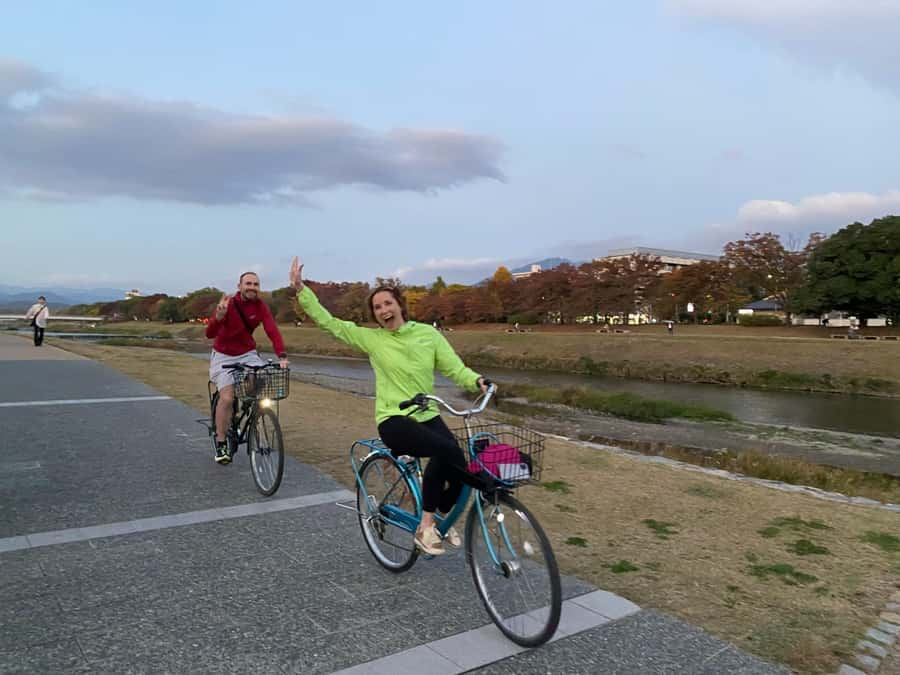
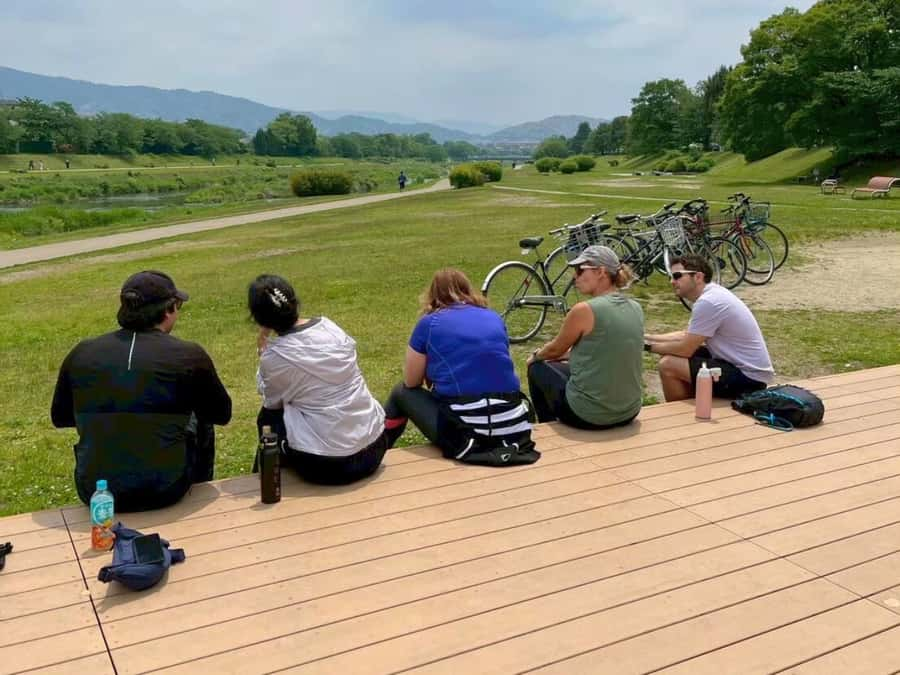
The ride begins on a peaceful riverside road. This is a gentler way to get moving than plunging straight into a sequence of busy streets, and it gives you a chance to settle into the bike and see the city from a different height. The tour description emphasizes open sky, fresh air and natural surroundings, a welcome change from Kyoto’s crowded headline sights.
One early stop is a small shrine where you can try natural spring water. It is a modest detail, but that is part of the appeal: the day is not only about ticking off major monuments. A brief pause at a local sacred place can make the ride feel rooted in everyday Kyoto rather than designed solely around postcard views.
The bike is included in the $73 price. An electric bike is available for an extra 1,000 yen, paid on the spot if requested. That option may be worth considering if you would prefer assistance on the ride, though the information does not specify the route’s hills, distance or availability of electric bikes.
The Imperial Palace and a Zen temple
The route may continue to the Imperial Palace, a large and significant site that gives the ride a grander scale after the smaller riverside stop. The tour is not described as an interior palace visit, so think of this as a cycling tour that includes the grounds or area, not a promise of a guided tour inside palace buildings.
A famous Zen temple is another planned example. Its exact name is not specified, so it is best not to build your day around a particular temple. The value here lies partly in having a guide connect the stops and explain what you are seeing, rather than simply riding past an impressive gate without context.
Between major sights, the ride passes university campuses and quiet residential areas. These stretches are not filler. They show a less monumental side of Kyoto and break up the sightseeing with calmer streets. The pace includes regular stops, and one rider described the spacing as just right. That balance matters: too many stops can make a bike tour feel like a series of starts and stops, while too few leave little room to look around.
Shimogamo Shrine and its primitive forest
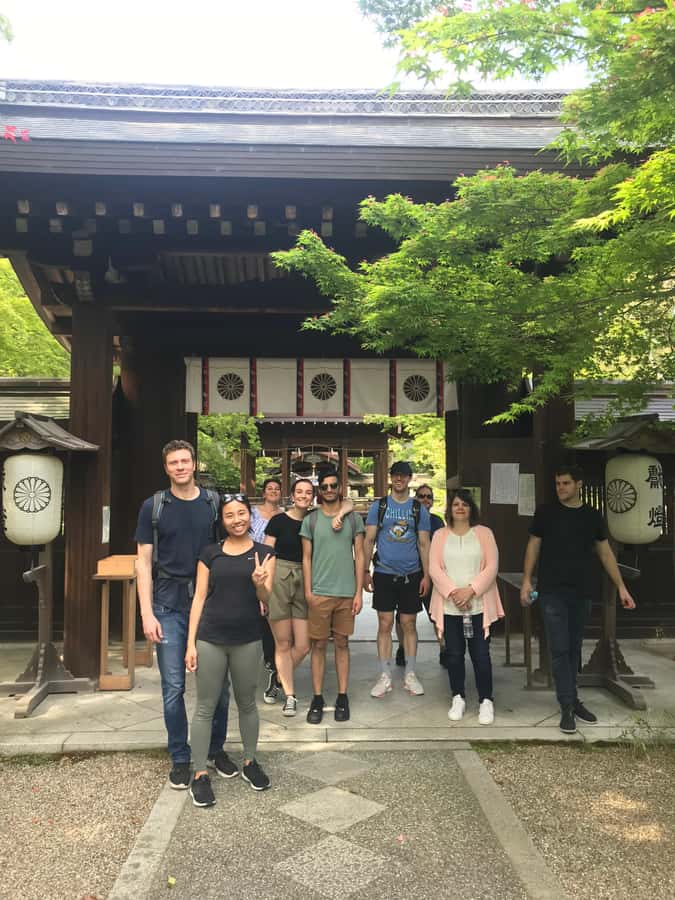
Shimogamo Shrine, also called Shimo-gamo Shrine in the tour description, is a UNESCO World Heritage site and one of the route’s main cultural stops. The visit includes the shrine’s buildings and its primitive forest, a rare patch of older woodland within the city. After riding through built-up areas, the change in atmosphere can be striking.
The forest is a reason to slow down and take in the setting, not just photograph the shrine structures. The ride makes this stop easier to combine with other parts of northern Kyoto in one outing. If you are planning your own route, a guided visit also gives you someone to explain the place and point out details you might otherwise miss.
There is a limit to what can be promised: Shimogamo is one example of the route, and the destinations may change. The listing specifies that entrance fees for temples or shrines visited as an alternative plan on a rainy day are included. It does not say that every possible admission or special exhibit is part of the standard route, so ask the guide if a fee matters to your plans.
More Kyoto tours in Kyoto:
- PERFECT KYOTO 1-Day Bus Tour
★ 5.0 · 13,518 reviews - Kyoto: Fushimi Inari, Kinkakuji, Bamboo Grove 1 Day Bus Tour
★ 4.8 · 4,316 reviews - Kyoto: Tea Ceremony in a Traditional Tea House in Kiyomizu
★ 4.9 · 3,519 reviews - Kyoto: Tea Ceremony Ju-An at Jotokuji Temple
★ 4.9 · 3,207 reviews
Tea, sweets and a breather
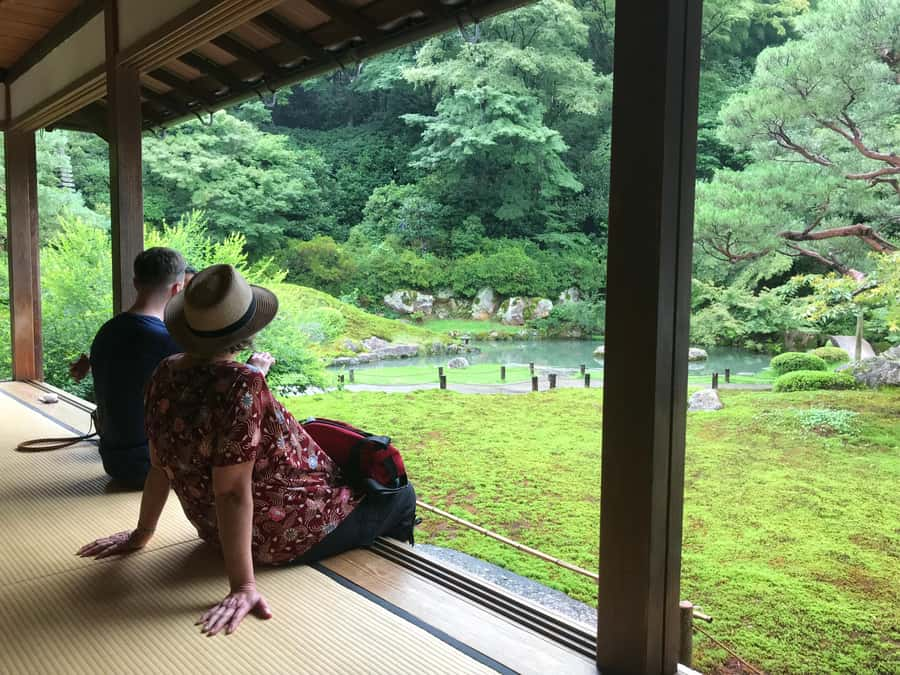
The included refreshment stop is a traditional snack shop, where you receive Japanese tea and a sweet. It adds a welcome pause to a ride that lasts several hours, and offers a taste of local hospitality without requiring you to choose a restaurant or order from a menu.
This is a small part of the outing, not a full meal. If you need a substantial lunch or have a particular dietary requirement, plan accordingly and ask the operator what options are available. No dietary accommodations are specified.
The guide can also recommend restaurants and bars during the walking portion based on your requests. That is practical help at the right moment: you can ask for ideas while already near Gion or Pontocho, rather than trying to make a decision later with a long list of possibilities.
A river junction and the ride back
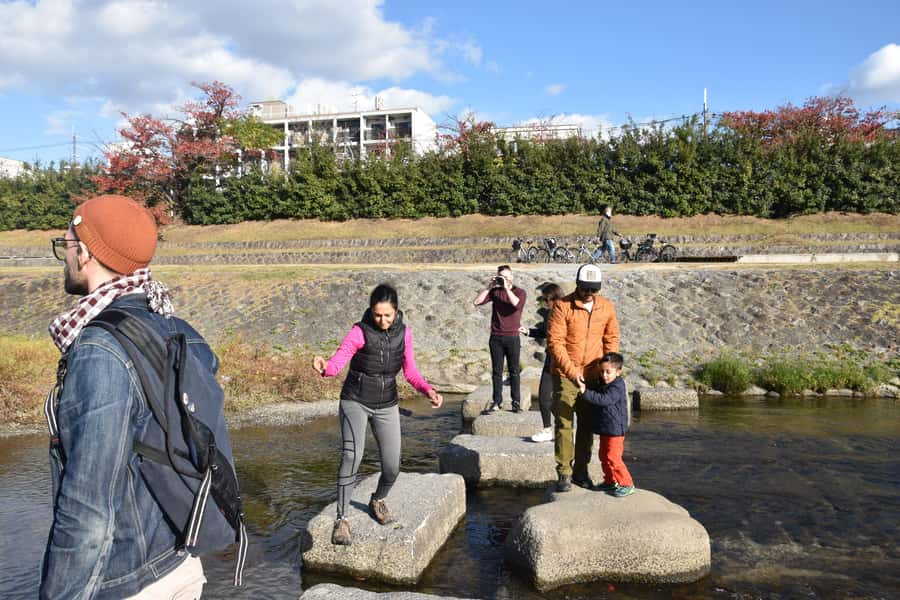
The route also includes a distinctive river junction, followed by a riverside ride back. The water and open views provide another quieter stretch before the cycling portion ends. The route description refers to a lighted-up riverside, but does not give a time of day, so do not assume the ride takes place after dark.
The return leads back to the meeting point, where you leave the bikes before the walking portion. This back-to-start arrangement is convenient for planning the rest of your day, though the full outing takes a solid block of time. If you have a timed reservation or train to catch, leave a buffer rather than scheduling it tightly after the tour.
Gion or Pontocho, one short walk
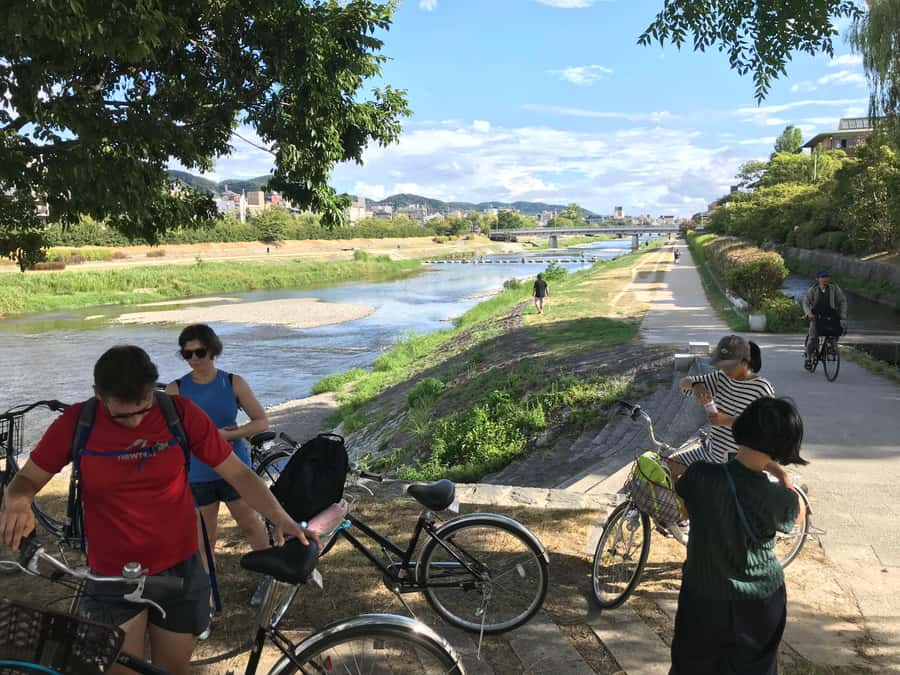
After cycling, the tour continues with a 30-minute stroll through Gion or Pontocho. These are entertainment areas associated with geisha culture, and the guide explains the distinctive customs and system behind the geisha districts. The walk is short, so expect an introduction rather than an exhaustive history.
The streets are known for their photogenic character, but the point is not only to take pictures. A guide can help you understand what the area represents and how to behave respectfully. You might spot a geisha, but it is presented as a possibility, not a promise. Keep your expectations focused on the walk and the cultural explanation, not on a guaranteed encounter.
The route may use Gion or Pontocho, so you should not count on visiting both. If you have a preference, ask which area is planned. The stroll is a useful counterpoint to the bike ride: after a morning or afternoon spent covering ground, you finish at walking pace and can take in the streets more carefully.
What the price includes, and who gets the most from it
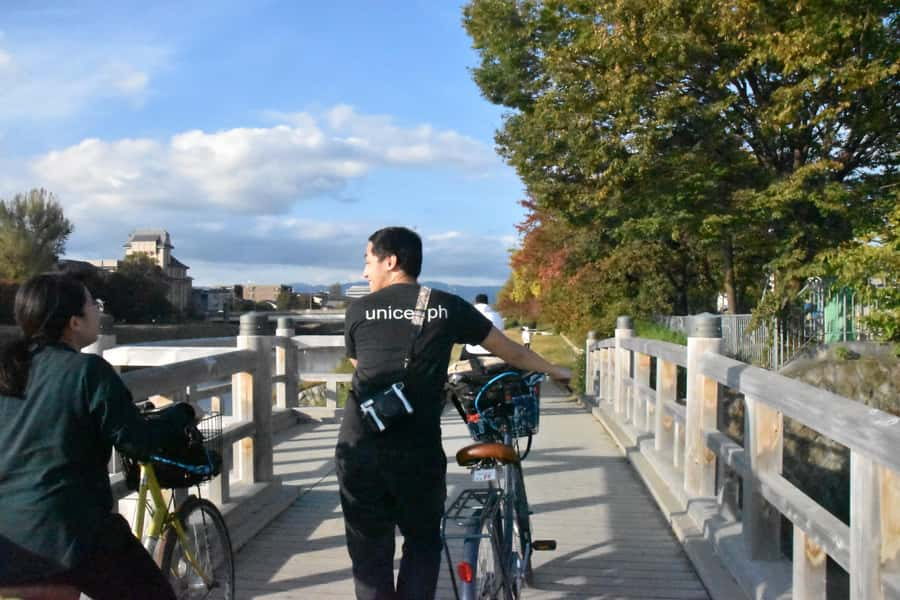
At $73 per person, the tour includes a rental bike, Japanese tea and sweets, and an English-speaking guide. The value comes from combining transport, several stops and local explanation in one outing. You are not paying simply to rent a bike; you are paying for a route that connects quieter places with major landmarks, plus a guided introduction to Gion or Pontocho.
The electric-bike upgrade costs an additional 1,000 yen and is paid on site. The information does not specify group size, bike models or whether the upgrade must be requested in advance, so check those points if they will affect your decision.
This is a strong fit for families with children aged nine and older who can ride a bike. One family brought children aged nine and ten, and the guide was described as kind and patient. It can also suit solo visitors and couples who want a guide to take them beyond the best-known sights. Guides named by riders include Go, Ko, Benjamin and Claire, with kindness, clear explanations and helpful restaurant suggestions recurring strengths.
It is not suitable for children under nine or for anyone who cannot ride a bike. Pets, smoking and large bags are not allowed. The experience runs rain or shine, so be prepared for the weather and understand that the stops may shift if conditions call for an alternative plan.
Should you book this Kyoto ride?
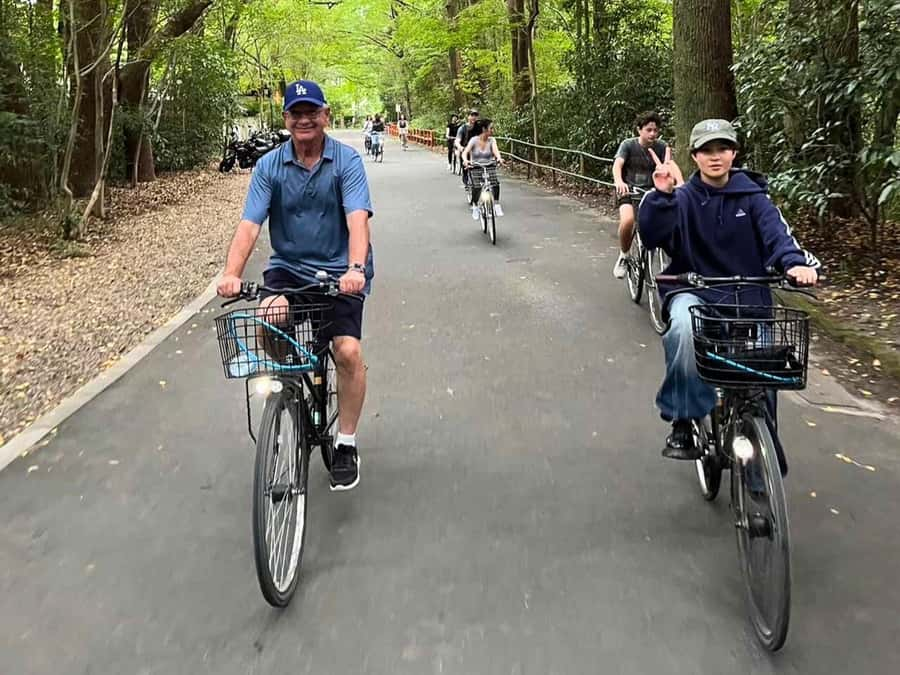
Book this tour if you enjoy cycling, want to see a mix of major sights and quieter corners, and like having a guide explain what connects them. The tea-and-sweets break, riverside stretches and short geisha-district walk give the outing more variety than a simple city bike loop.
Skip it if you cannot ride comfortably, want a guaranteed visit to one named temple, or prefer a slow, indoor-focused day. The itinerary can change, and the exact Zen temple is not specified. For an active half-day with a local guide and a taste of Kyoto beyond the busiest streets, the $73 fare offers a useful, well-rounded way to explore.
FAQ
How long does the tour last?
The bike ride is about three and a half hours, followed by a 30-minute walk. Allow roughly four hours in total.
Where does the tour start?
Meet at the kneeling-man statue at the southeast corner of the Sanjo Ohashi intersection. From the east end of Sanjo Ohashi Bridge, cross the street to find it.
Where does the tour end?
The activity ends back at the meeting point.
Is a bike included in the price?
Yes. A rental bike is included.
Can I use an electric bike?
An electric bike is available for an extra 1,000 yen, payable on the spot if requested.
Is the tour suitable for children?
It is not suitable for children under nine. Children must be able to ride a bike.
What language is the tour in?
The tour is in English.
Does the route always visit the same places?
No. The listed destinations are examples, and the route may change. The experience runs rain or shine.
Are tea and sweets included?
Yes. Japanese tea and a Japanese sweet at a traditional snack shop are included.
What should I bring?
Bring comfortable shoes, a camera, water and clothing suited to the weather. Pets, smoking, luggage and large bags are not allowed.
Newly added in Kyoto
- Uji: Private immersion into Kyoto’s tea and reglious culture★ 5.0 · 17 reviews
- Whisk Your Own Matcha: A Zen Matcha Experience at Temple★ 3.6 · 7 reviews
- Kyoto tea town for matcha lovers★ 5.0 · 16 reviews
- Treasures of Kyoto: Gion & historical Walking Tour★ 5.0 · 6 reviews
- Kyoto Matcha Green Tea Tour★ 4.5 · 23 reviews
- Uji and Wazuka Matcha Farm Half Day Private Guided Tour★ 5.0 · 21 reviews
- Uji Tea Ceremony and UNESCO Heritage Walking Tour★ 5.0 · 20 reviews
- Utilising upcycled Matcha! Creating matcha incense (Uji, Kyoto)★ 5.0 · 6 reviews
Gion Tours, compared.
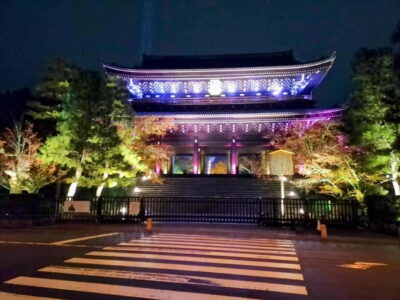
Kyoto Geisha Walking Tour: Gion District & Hidden Gems
Read our review →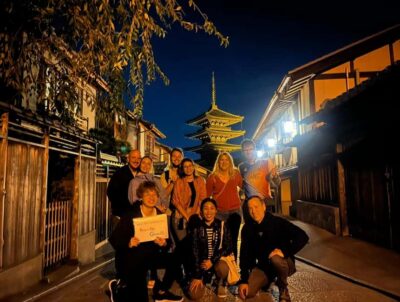
Gion Magical Night Walking Tour with Geisha Trivia
Read our review →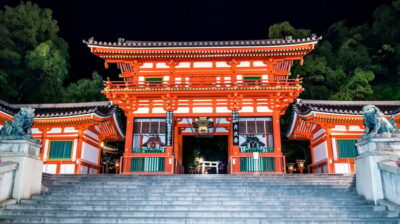
Gion Geisha District Walking Tour – Stories of Geisha
Read our review →
Best of Kyoto: Gion, Geisha, Pagodas & Cobblestones
Read our review →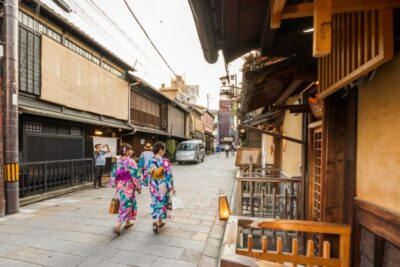
Kyoto Night Foodie Tour in Gion (9+ dishes + 6 Sake tastings)
Read our review →

Chopsticks Making Workshop in Gion with Engraving Option
Read our review →Browse the lists this tour appears in