
Reviewed · KYOTO GEISHA TOURS
Dance and Game with Maiko
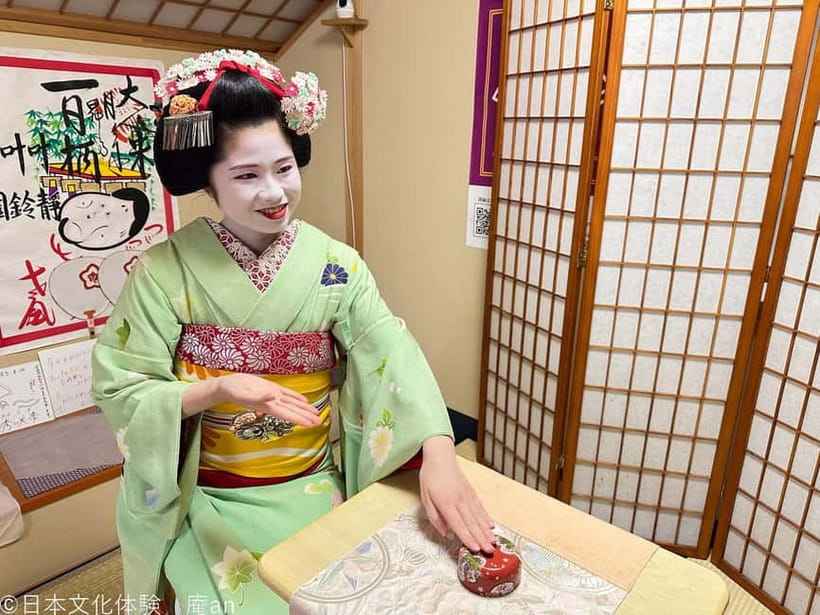
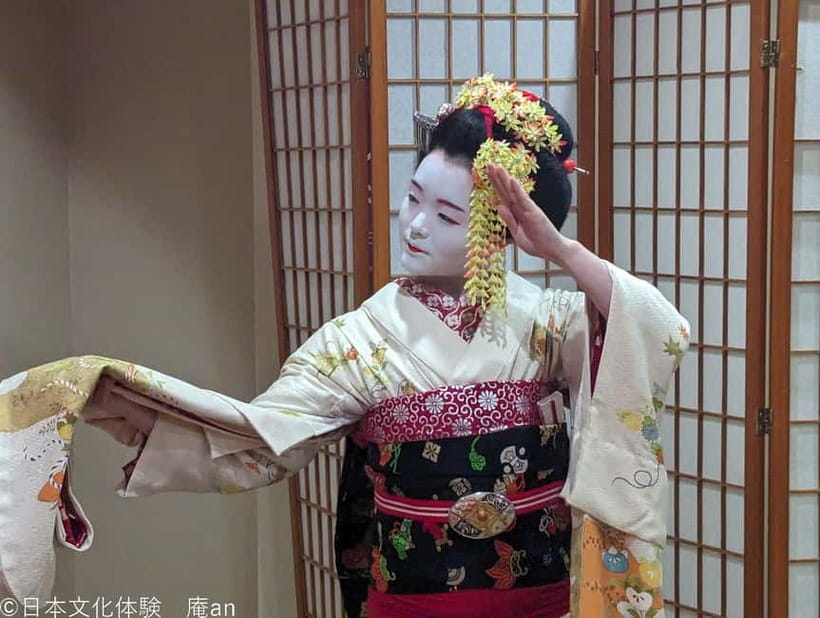
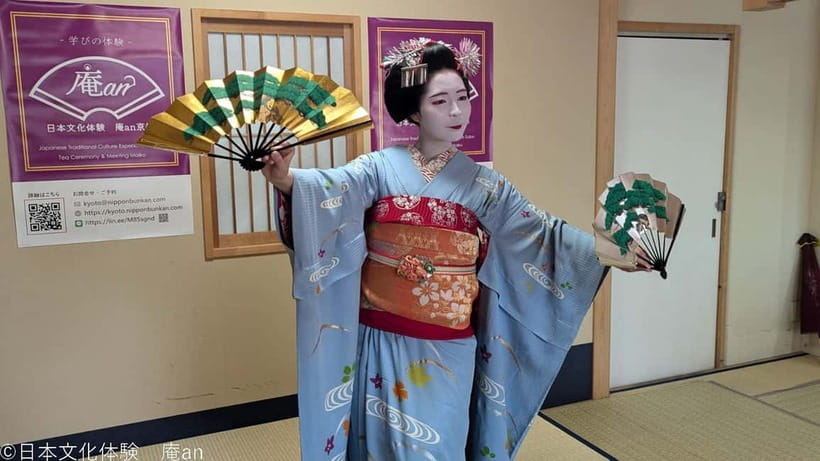
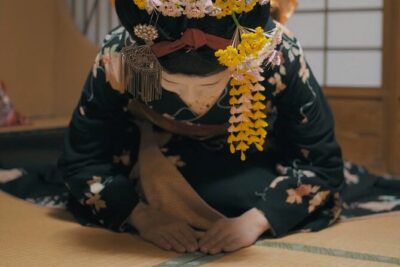
A maiko’s dance is the heart of this short Kyoto experience: graceful movements, expressive gestures, and music that brings scenes of the seasons, love, and daily life to the room. You also get a close-up photo with the performer and a small Senjafuda charm to take home.
I like two things in particular: you see two dances without committing half a day, and the traditional game gives you a chance to join in rather than only watch. The photo and charm add a personal keepsake to a program that is otherwise brief.
The main consideration is the clock. The full visit is listed as 45 minutes, but the performance and game take about 30 minutes, followed by photos and chatting; the actual time can feel shorter than expected. The performer may be a geiko instead of a maiko.
At a glance
- Two maiko dances offer a close look at graceful, story-led performance.
- A traditional game invites volunteers to play, while everyone else can clap and cheer.
- A photo beside the performer gives you a chance to remember the encounter up close.
- A Senjafuda charm is included as a small take-home keepsake.
- The program is short: expect about 30 minutes for the main activities and up to 45 minutes in total.
- Gojo Station is close by: the venue is a one-minute walk from Exit 1, but you must use the stairs.
Two dances in a compact Kyoto visit
Meeting a maiko is a memorable way to connect with Kyoto’s performing arts, especially if your schedule is tight. This program gives you a focused introduction rather than a long evening out: two dances, a game, a photo, and a brief chance to chat. At $28 per person, the price is modest for a live cultural performance and a personal photo opportunity, though the short length means you should book it for the encounter, not for a full lesson in maiko culture.
The dances are described as graceful and expressive, with movements that portray Japan’s seasons, love stories, and everyday life through music. You can watch closely and take photos during the performance. No specific songs, dance names, or explanations are promised, so think of this as an introduction through observation rather than a detailed lecture.
That distinction matters. You will see the art form in person, but the program does not claim to explain every gesture, costume detail, or custom. If you want a more guided cultural experience, the provider also offers separate tea ceremony programs with a maiko. This one keeps the focus on performance, play, and a brief personal encounter.
More geisha and maiko experiences in Kyoto:
- Kyoto Geisha Walking Tour: Gion District & Hidden Gems
★ 4.7 · 3,273 reviews - Kyoto: Gion Magical Night Walking Tour with Geisha Trivia
★ 4.9 · 2,393 reviews - Kyoto: Gion Geisha District Walking Tour – Stories of Geisha
★ 4.7 · 2,187 reviews
A traditional game that asks you to join in
After the dance, the maiko plays a traditional game with the audience. Volunteers are invited to take part, and the rest of the room can clap and cheer. The activity adds a social note to the program: instead of watching from start to finish, you share a little moment of play with the performer and the people around you.
You do not have to volunteer to enjoy it. Watching is part of the fun, and the invitation is not a requirement. Still, if you are comfortable joining in, this is your chance to take part rather than stay in your seat. The game is described as simple but exciting, though its exact rules are not specified in advance.
If you are visiting with children, consider their comfort with performing in front of a room. The game relies on audience participation, and some children may feel shy if they are asked to play in front of others. You can still enjoy the activity together from your seats, but do not count on a one-on-one turn for each child.
Photos, a Senjafuda, and a little extra time
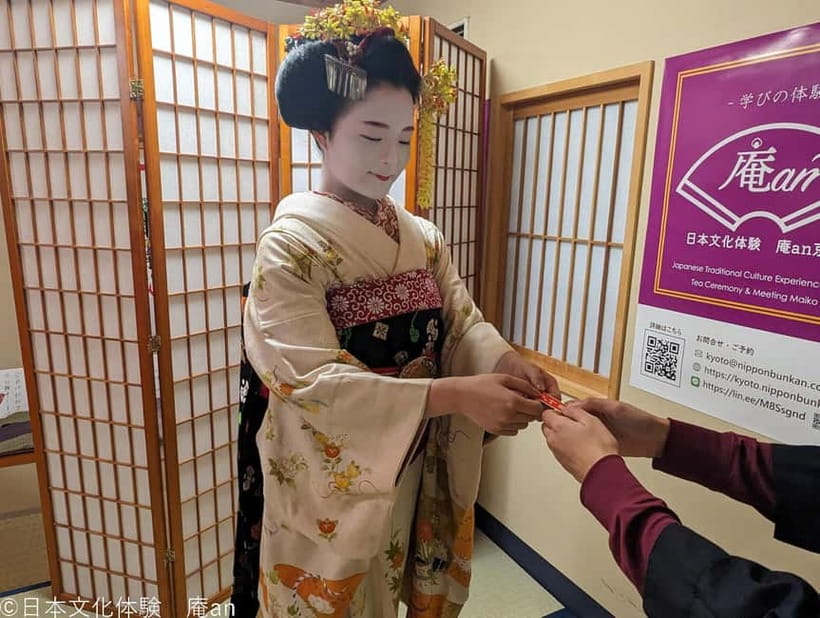
The program’s final personal touch is a commemorative photo beside the maiko. This is a chance to stand close to the performer and leave with a picture from the encounter. A small lucky charm called a Senjafuda is also presented as a keepsake from your Kyoto visit.
The advertised total duration is 45 minutes, but the schedule separates the main event from the finish. The dance and game take around 30 minutes; the photo, charm, the performer’s departure, and a short period for chatting follow. The activity may therefore feel closer to half an hour if the end moves quickly. One person found the program shorter than expected, so plan with some flexibility rather than treating 45 minutes as 45 minutes of continuous performance.
The photo is a practical advantage if you want a memory of the encounter without arranging a separate photo session. The charm is small, but it gives the experience a tangible ending. Neither should be mistaken for a long private meeting: this is a shared program, and the time for conversation is brief.
What the setting is, and what it is not
Do not picture an old tea house or a traditional Japanese home. The venue is in a building, and the organizers are clear that it is not an ochaya. The atmosphere is described as relaxed, with friendly staff, but the setting is more straightforward than a historic house or a formal entertainment venue.
That can be a useful trade-off. The program is designed to make a maiko encounter accessible without special preparation, so you can fit it into a day of sightseeing. If the architecture and setting are a major part of what you want, this may not be the right choice. If your priority is seeing a performance and meeting the artist in a relaxed environment, the building itself may matter less.
The event may also take place in a room with people who are having lunch or dinner. That means the atmosphere and level of privacy can depend on the situation. It is best to think of this as a hosted cultural activity in a working venue, not a private appointment in a quiet traditional house.
More Kyoto tours in Kyoto:
- PERFECT KYOTO 1-Day Bus Tour
★ 5.0 · 13,518 reviews - Kyoto: Fushimi Inari, Kinkakuji, Bamboo Grove 1 Day Bus Tour
★ 4.8 · 4,316 reviews - Kyoto: Tea Ceremony in a Traditional Tea House in Kiyomizu
★ 4.9 · 3,519 reviews - Kyoto: Tea Ceremony Ju-An at Jotokuji Temple
★ 4.9 · 3,207 reviews
Planning the 45 minutes
The listed duration is 45 minutes, with the program beginning with the maiko’s dance, followed by the game. At about the 30-minute mark, the main program ends. Photos and the Senjafuda presentation follow, then the maiko leaves and there is time to chat before you depart.
This order is easy to follow and keeps the most important parts up front. If you have a tight sightseeing schedule, the short format is convenient, but arrive on time. The organizers say they cannot hold the event for delayed arrivals. Leave enough time to reach the venue, especially if you are coordinating it with a train or another timed booking.
Starting times vary, so you need to check availability for the date you want. Operating hours are 10:00 to 17:00. Reservations received after 17:00 are processed the next day, which is worth remembering if you are trying to arrange a last-minute visit.
Getting to Gojo Station and the venue
The venue is a one-minute walk from Exit 1 of Gojo Station on the Subway Karasuma Line. Its entrance faces Gojo-dori, the main street, so you have a simple landmark when approaching. The location makes this a practical stop during a Kyoto day, particularly if you are already using the subway.
There is no elevator in the building, and you need to use stairs to reach the venue. Factor that in if stairs are a concern for anyone in your party. The available details do not specify how many flights there are, so contact the provider if you need more precise access information.
The activity is presented in Japanese. English translation can be provided as much as possible if you contact the organizers to request it. Do that ahead of time rather than assuming full English interpretation will be available on arrival. The instructor is listed as Japanese, and no individual performer or guide name is provided.
How the $28 price compares with the experience
At $28 per person, you are paying for a short live performance, a participatory game, a photo opportunity, and a small keepsake. That is reasonable if you value seeing a maiko up close and want a compact cultural activity that fits between other plans. The photo and Senjafuda make the visit feel more complete than a performance alone.
The value is less compelling if you expect a long program or detailed instruction. The dances and game account for about 30 minutes, and the rest of the time is set aside for the photo, gift, and chatting. Some people may find that brief, especially if they booked expecting a full 45 minutes of performance.
Children under two can attend free if they sit on a parent’s lap. If a seat or meal is needed for a child under two, the same fee as one person applies. Those who are not participating in the experience cannot enter, so plan for everyone in your group to have a booking unless they qualify for the stated under-two arrangement.
Who will get the most from it
I would choose this for a first-time visitor who wants a direct introduction to maiko performance but has limited time. It also suits anyone who enjoys live arts and does not mind being in a shared room. The game gives you an option to participate, while the photo makes the meeting feel personal without requiring a long appointment.
Families can make it work, but the participation element is worth discussing with children first. They can watch rather than volunteer, yet a child who is uncomfortable in a group may find the game less appealing. The short duration helps keep the commitment manageable.
If you are specifically hoping to meet a maiko, be aware that a geiko may be invited instead, depending on the situation. The program still centers on a traditional performer, but the identity of the artist is not guaranteed. Likewise, if you want a tea ceremony, choose one of the provider’s separate tea ceremony programs rather than expecting one here.
Cancellation is free up to eight days in advance for a full refund. The stated terms also warn that fees can apply after the cancellation period, and a fee may apply if you change the date or time after a cancellation fee has been incurred. The organizer does not compensate for travel expenses if the event is cancelled.
Should you book Dance and Game with Maiko?
Book it if you want two dances, a playful audience activity, and a close-up photo in a compact Kyoto stop. At $28, the combination is appealing, especially if you value a personal encounter and a small keepsake more than a long explanation or a traditional-house setting.
Skip it if you want a private meeting, a detailed cultural class, or a guaranteed 45 minutes of performance. The main program is about 30 minutes, and the performer may be a geiko rather than a maiko. Go in knowing those limits, arrive on time, and ask for English translation in advance if you need it.
FAQ
How long does the experience last?
The listed duration is 45 minutes. The dance and game portion takes about 30 minutes, followed by the photo, Senjafuda presentation, and chatting time.
What happens during the program?
You watch two maiko dances, see a traditional game with volunteers from the audience, and have a chance to take a photo beside the performer. A Senjafuda lucky charm is also included.
Is the performer always a maiko?
No. Depending on the situation, a geiko may be invited instead of a maiko.
Where is the meeting point?
The venue is a one-minute walk from Exit 1 of Gojo Station on the Subway Karasuma Line. The entrance faces Gojo-dori.
Is the venue a traditional Japanese house?
No. The venue is in a building and is not an ochaya or traditional Japanese house.
Is English translation available?
English translation can be provided as much as possible if you contact the organizers to request it.
Can children under two attend for free?
Children under two can attend free if they sit on a parent’s lap. If a seat or meal is needed, the same fee as one person applies.
Newly added in Kyoto
- Uji: Private immersion into Kyoto’s tea and reglious culture★ 5.0 · 17 reviews
- Whisk Your Own Matcha: A Zen Matcha Experience at Temple★ 3.6 · 7 reviews
- Kyoto tea town for matcha lovers★ 5.0 · 16 reviews
- Treasures of Kyoto: Gion & historical Walking Tour★ 5.0 · 6 reviews
- Kyoto Matcha Green Tea Tour★ 4.5 · 23 reviews
- Uji and Wazuka Matcha Farm Half Day Private Guided Tour★ 5.0 · 21 reviews
- Uji Tea Ceremony and UNESCO Heritage Walking Tour★ 5.0 · 20 reviews
- Utilising upcycled Matcha! Creating matcha incense (Uji, Kyoto)★ 5.0 · 6 reviews
Kyoto Geisha Tours, compared.
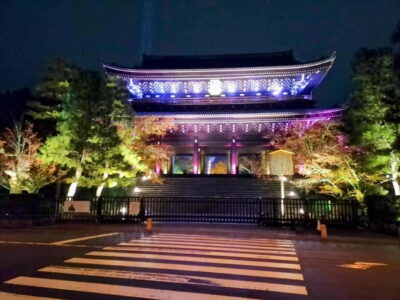
Kyoto Geisha Walking Tour: Gion District & Hidden Gems
Read our review →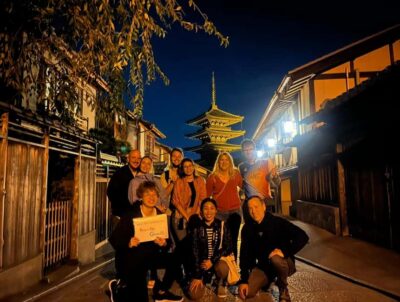
Gion Magical Night Walking Tour with Geisha Trivia
Read our review →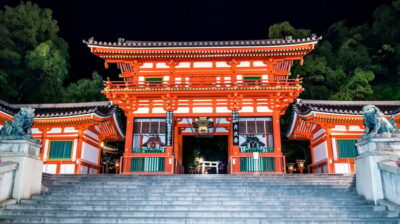
Gion Geisha District Walking Tour – Stories of Geisha
Read our review →
Best of Kyoto: Gion, Geisha, Pagodas & Cobblestones
Read our review →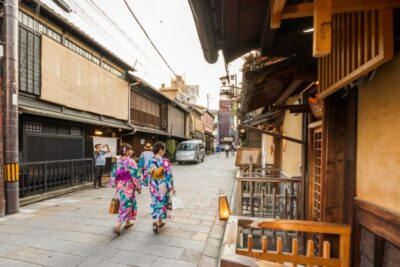

Kyoto Gion Cultural Walk & Geisha Show with Dining Options
Read our review →
Browse the lists this tour appears in