
Reviewed · NIJO CASTLE TOURS
Kyoto: Nijo Castle and Kyoto Imperial Palace Guided Tour
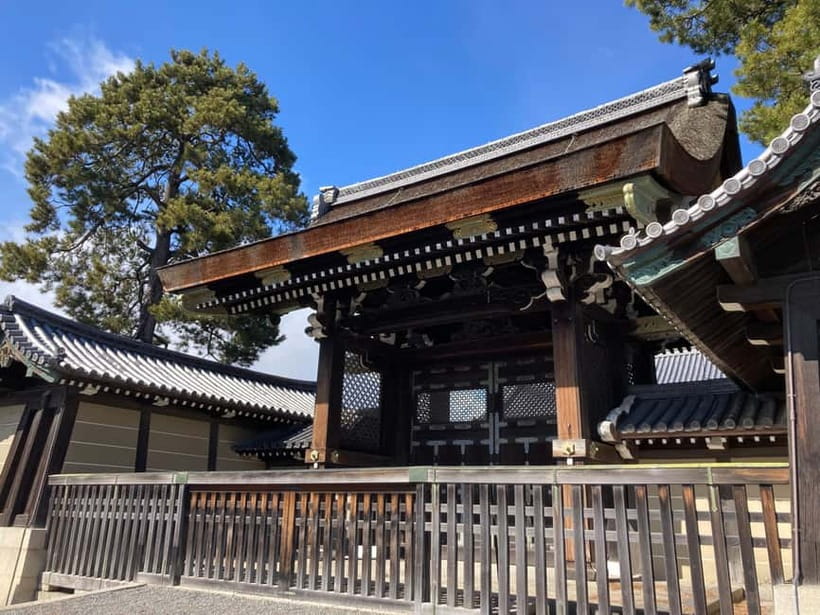
The contrast is the point: Nijo Castle tells the story of shogun authority, while Kyoto Imperial Palace brings you closer to the traditions of the imperial court. Together, they make a compact, useful introduction to the political forces that shaped Japan’s former capital.
I like two things in particular: the small group size, which leaves room for questions, and the chance to connect the buildings with the politics behind them. Guides including Kayo, Nene, Taku, and Goku have been praised for lively explanations, cultural context, and practical local tips.
The main consideration is that this is a three-hour walking tour, and the palace buildings may be seen from the outside rather than entered. Wear suitable clothing, since shorts are not allowed, and be ready to spend much of the visit outdoors.
- Two sites, two kinds of power: Compare the shogun’s castle with the former imperial residence.
- A small group: The tour is limited to nine participants, making it easier to ask questions.
- A guide-led walk: Learn about architecture, politics, and Japanese culture as you move between sites.
- Seasonal gardens: The Imperial Palace grounds offer a changing display through the year, with cherry blossoms among the seasonal draws.
- Castle admission included: The price covers Nijo Castle, Ninomaru Palace, and the Art Gallery.
- Three hours, $63: A focused half-day option for visitors who want context as well as landmark views.
Two Kyoto landmarks, two kinds of authority
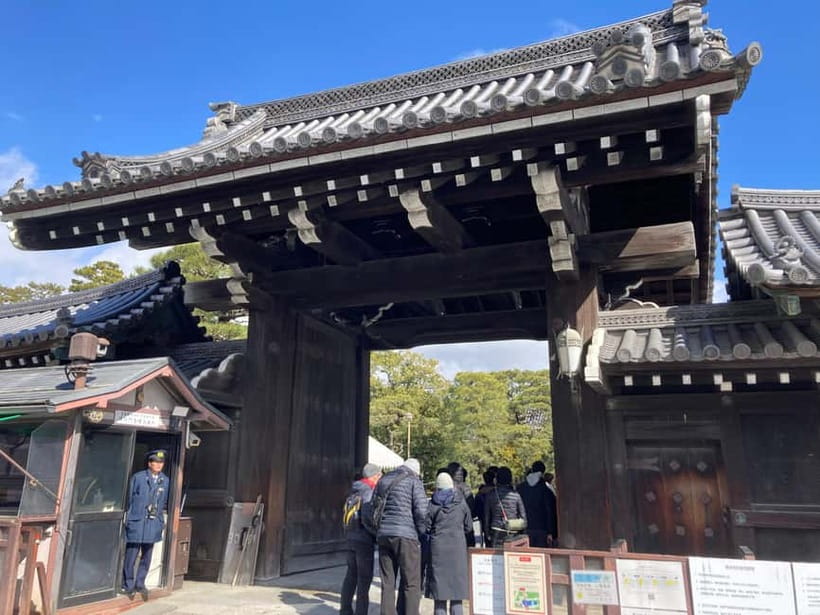
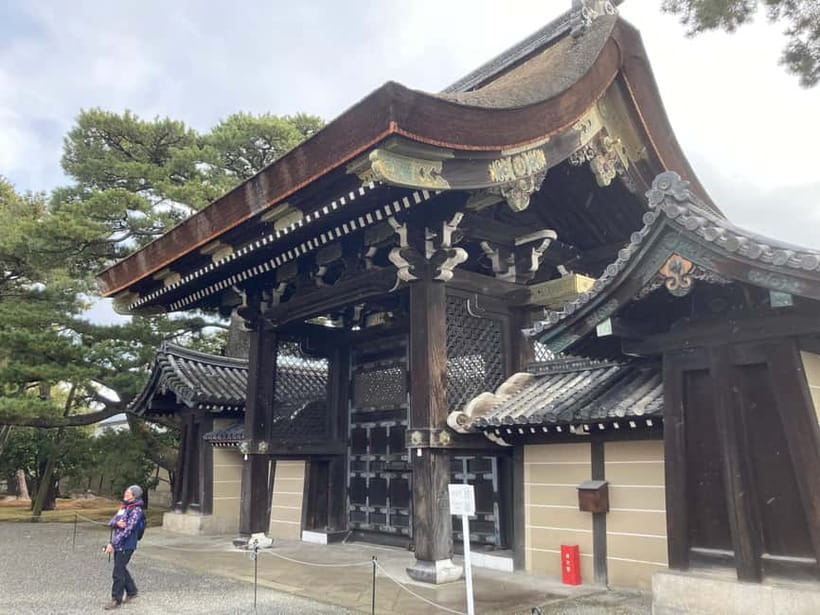
Kyoto’s past is easier to follow when you see its centers of power side by side. Nijo Castle is tied to Tokugawa Ieyasu and the authority of the shogunate. Kyoto Imperial Palace was the residence of Japan’s emperors. This tour places both in one outing, giving you a clear comparison between military government and the court.
That contrast makes the visit more useful than a simple checklist of famous buildings. At the castle, you can look for lavish interiors and intricate details associated with the shogun’s power. At the palace, the emphasis shifts toward formal architecture, cultural tradition, and gardens designed to show the seasons.
The tour lasts three hours and is limited to nine people. That is a sensible format for a pair of large historic sites: you get a guide to explain what you are seeing without joining a big crowd that can be hard to hear or keep together.
Starting at Kyoto Imperial Palace
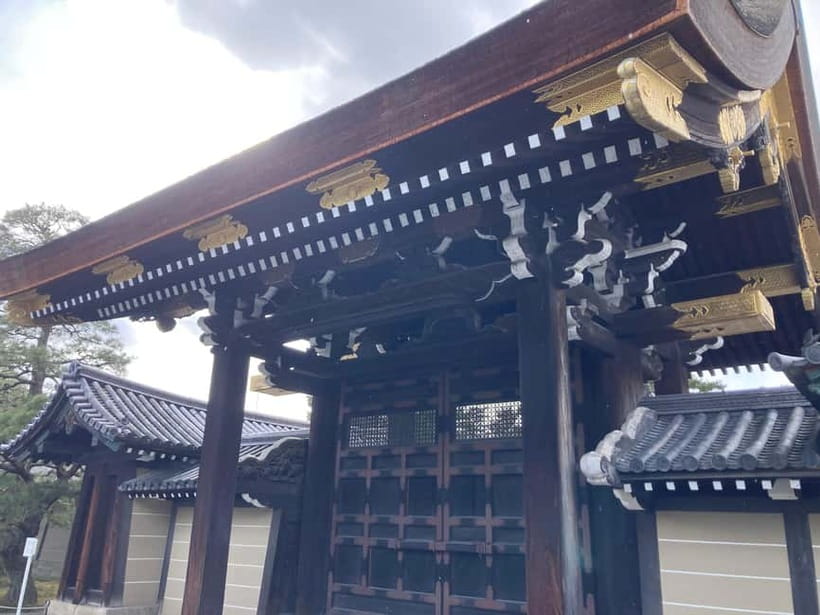
The meeting point is Nakadachiuri Gate of the Kyoto Imperial Palace. You are asked to look out for advance information about your guide’s appearance and clothing, a practical help when several people may be meeting near a large site.
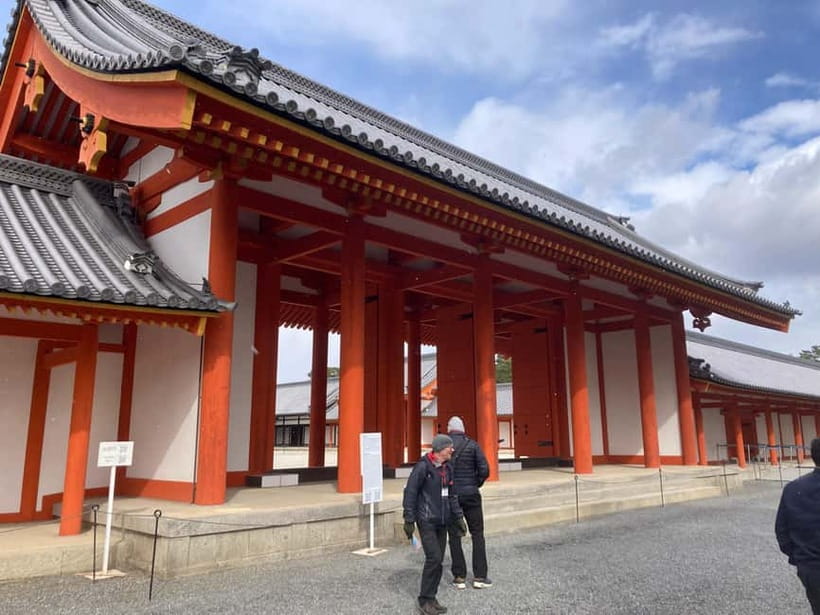
The palace grounds are a chance to see the setting of Japan’s imperial court and its restrained aesthetic. The gardens are planned to showcase seasonal beauty, so the scenery changes with the time of year. Cherry blossoms are a particular draw in spring, though the gardens are not only for that brief season.
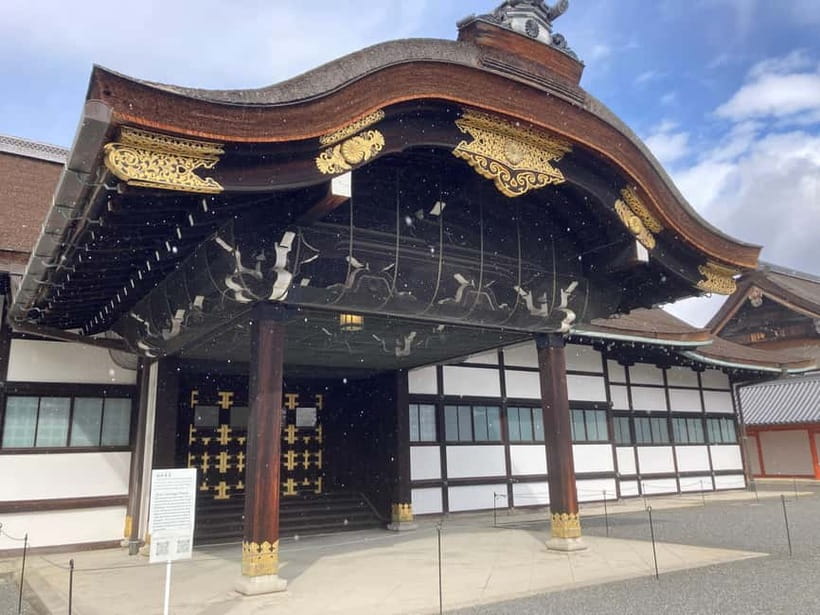
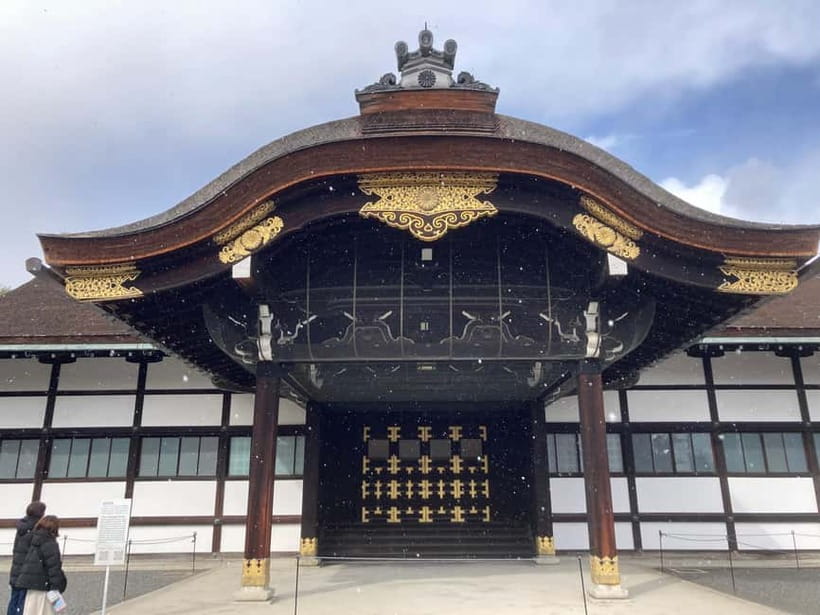
Keep your expectations clear about the buildings themselves. A visitor has noted that the palace portion may involve seeing the exteriors rather than entering the buildings. The experience is still valuable for the grounds, architecture, and context, but if interior access is your main reason for booking, this tour may not deliver that.
A guide can help you read the palace grounds as more than a pleasant walk. Look at how the buildings relate to their surroundings and how the garden design reflects a refined court culture. The point is not just to take a photo, but to understand how the imperial residence expressed a different kind of authority from the castle.
More Nijo Castle tours in Kyoto:
- Kyoto: Nijo-jo Castle and Ninomaru Palace Guided Tour
★ 4.7 · 1,020 reviews - Kyoto: Nijo Castle, Kiyomizu & Fushimi Inari Guided Tour
★ 4.7 · 700 reviews - Kyoto: Nijo, Kinkaku-ji, Arashiyama, Kiyomizu & Fushimi Inari
★ 5.0 · 699 reviews
The walk between palace and castle
The route includes a walk from the Imperial Palace toward Nijo Castle. One account puts that stretch at about 20 minutes, with the guide using the time for discussion of Japanese and Western culture. That makes the transfer part of the tour rather than simply dead time between ticketed attractions.
The walk also gives you a view of Kyoto beyond its major monuments. Traditional townhouses and a spot known for cherry blossoms are among the sights mentioned along the way. These details help break up the formal architecture and offer a glimpse of the city’s everyday character.
This is still a walking tour, so plan for time on your feet. The overall duration is three hours, but the pace, amount of time at each stop, and weather can affect how comfortable it feels. Wear shoes you can walk in and bring a camera if you like taking photos. Cash is also listed as something to bring.
Nijo Castle and the shogun’s message
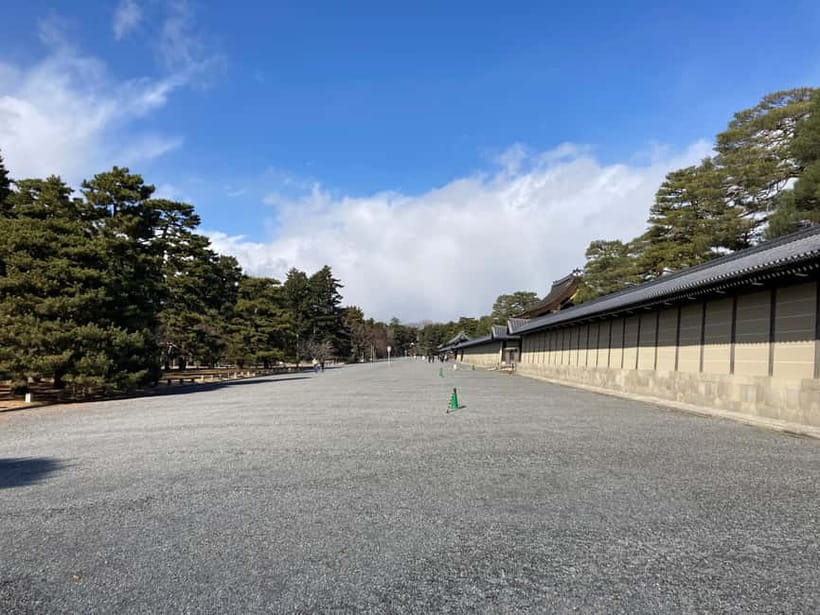
Built by Tokugawa Ieyasu, Nijo Castle is the tour’s clearest expression of shogun power. Its lavish interiors and fine details were meant to make authority visible. A guide can connect those features to the political climate of the period, helping you see the castle as more than an ornate historic building.
Admission tickets are included for Nijo Castle, Ninomaru Palace, and the Art Gallery. That gives you access to the castle complex’s key listed components, while your guide supplies the story that ties them together. Without that context, architectural details can be easy to admire and just as easy to forget.
The castle visit is especially worthwhile if you are curious about the relationship between the shoguns and the emperors. The itinerary’s two sites make that contrast the backbone of the tour: the palace represents the imperial institution, while Nijo Castle reflects the political force of the shogunate.
Nijo Castle is also a strong stop for visitors who like historical explanation more than simply moving from one photo point to another. Guides have been praised for discussing politics, architecture, art, and Japanese culture, as well as for taking time with questions. One guide, Taku, helped a solo visitor with photos, while another, Goku, tailored the visit to a group that wanted a stronger focus on shogun and emperor history.
The guide makes the difference
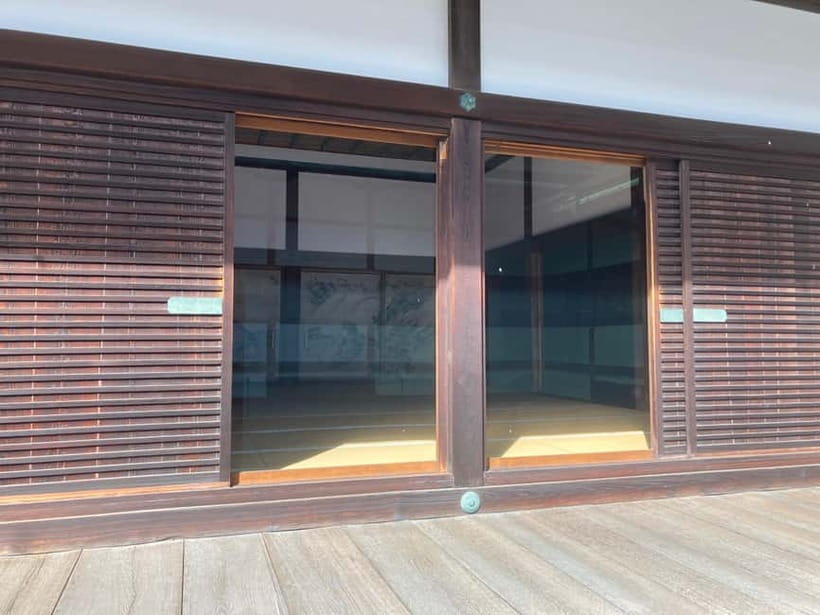
This experience depends heavily on the person leading it. Kayo, Nene, Taku, and Goku are among the guides who have led tours, and the most consistently praised qualities are clear explanations, warmth, humor, and patience. The tour is offered in English, French, Spanish, Japanese, Portuguese, and Russian, though you should check the available language and start time for your chosen date.
A good guide can make complicated history feel manageable. Several visitors have valued the way guides moved between Japanese history, architecture, art, and wider cultural questions. That flexibility matters if your group includes both history fans and people who mainly want time to look around and take photographs.
The small group limit of nine supports that kind of conversation. You are not guaranteed a private discussion, but a group this size is more conducive to asking follow-up questions than a large coach tour. If you have a particular interest, such as the shogunate or palace gardens, it is worth bringing it up during the walk.
Guides have also offered local suggestions after the tour. That is a useful bonus, especially early in a Kyoto stay, when a tip about where to eat or what to see next can help you plan the rest of the day. Still, treat this as a history-focused outing first, not a food tour or a broad survey of Kyoto.
More temple and shrine tours in Kyoto:
- Kyoto: Tea Ceremony Ju-An at Jotokuji Temple
★ 4.9 · 3,207 reviews - World Heritage Kyoto & Nara Uji Authentic Matcha Experience
★ 5.0 · 1,573 reviews - Arashiyama Bamboo, Temple, Monkeys, or Secret Sake Brewery
★ 4.8 · 886 reviews - Kyoto: Arashiyama Bamboo Forest, Monkeys, Matcha & Temple Tour
★ 5.0 · 759 reviews
Is $63 a fair price?
At $63 per person for three hours, the tour is not the cheapest way to see the two sites. Its value rests on the guide, the small group, and the included tickets for Nijo Castle, Ninomaru Palace, and the Art Gallery. If you would otherwise walk through the sites without much historical context, the guided explanations may be the part that makes the fee worthwhile.
The price is easier to justify if you enjoy asking questions and want a clear account of how the imperial court and shogunate fit into Kyoto’s past. It may be less appealing if you prefer to explore at your own pace, linger for as long as you like, or focus mainly on entering palace buildings. The palace experience can be more about the grounds and exterior views.
You can reserve without paying immediately and cancel up to 24 hours in advance for a full refund. That flexibility is helpful when planning a trip, but the bigger decision is whether you want a guided, three-hour overview or a slower independent visit.
Practical details before you go
Meet at Nakadachiuri Gate of the Kyoto Imperial Palace. The tour lasts three hours, and starting times depend on availability. The guide’s appearance and clothing will be shared in advance so you can identify them.
Bring a camera and cash. Shorts are not allowed, so choose other clothing. The activity is listed as not suitable for pregnant women, an important point to consider before booking.
Because much of the experience takes place outdoors, the gardens and walking route are part of the appeal, but they also mean the weather can shape your day. The seasonal garden views will differ through the year. Spring brings the possibility of cherry blossoms, but the tour’s value does not depend on catching them.
Who should book this Kyoto walk?
I would choose this tour if you want a compact, guided introduction to the difference between imperial and shogun power, and you prefer explanation to reading signs on your own. It is a particularly good fit for history-minded visitors, first-time Kyoto visitors, and small groups who want time to ask a guide questions.
It also suits solo visitors who would appreciate company and the possibility of help with photos. The small group size and reported attention to individual interests are useful advantages, though the guide and group on your date will shape the feel of the experience.
Think twice if you want extensive interior access at the Imperial Palace, dislike walking, or would rather spend a half-day at one site than divide your time between two. The palace buildings may be viewed from the outside, and the route includes a walk between landmarks.
Should you book it?
Book if you want the story behind two important Kyoto sites, especially the contrast between imperial tradition and shogun authority. At $63, the guide and included Nijo Castle admissions are the main reasons to pay for the organized visit. If you are content with exterior palace views and a steady three-hour walk, it is a practical way to make the history legible. If palace interiors or unhurried solo exploration are your priority, plan a different visit.
FAQ
How long is the tour?
The tour lasts three hours.
Where is the meeting point?
Meet at Nakadachiuri Gate of the Kyoto Imperial Palace. The guide’s appearance and clothing will be shared in advance.
Which languages are available?
The tour is offered in English, French, Spanish, Japanese, Portuguese, and Russian. Check availability for your chosen date.
How many people are in the group?
The tour is limited to nine participants.
What admissions are included?
Admission tickets are included for Nijo Castle, Ninomaru Palace, and the Art Gallery.
What should I bring, and what clothing is not allowed?
Bring a camera and cash. Shorts are not allowed.
Newly added in Kyoto
- Uji: Private immersion into Kyoto’s tea and reglious culture★ 5.0 · 17 reviews
- Whisk Your Own Matcha: A Zen Matcha Experience at Temple★ 3.6 · 7 reviews
- Kyoto tea town for matcha lovers★ 5.0 · 16 reviews
- Treasures of Kyoto: Gion & historical Walking Tour★ 5.0 · 6 reviews
- Uji and Wazuka Matcha Farm Half Day Private Guided Tour★ 5.0 · 21 reviews
- Kyoto Matcha Green Tea Tour★ 4.5 · 23 reviews
- Uji Tea Ceremony and UNESCO Heritage Walking Tour★ 5.0 · 20 reviews
- Utilising upcycled Matcha! Creating matcha incense (Uji, Kyoto)★ 5.0 · 6 reviews
Nijo Castle Tours, compared.
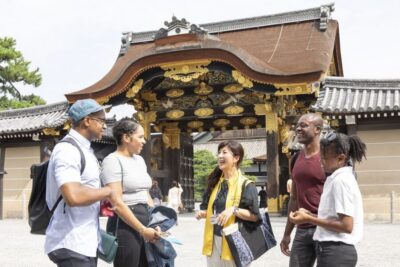
Nijo-jo Castle and Ninomaru Palace Guided Tour
Read our review →
Nijo Castle, Kiyomizu & Fushimi Inari Guided Tour
Read our review →
Nijo, Kinkaku-ji, Arashiyama, Kiyomizu & Fushimi Inari
Read our review →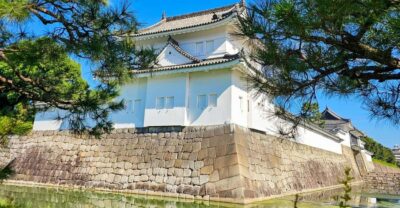
Imperial Palace & Nijo Castle Guided Walking Tour
Read our review →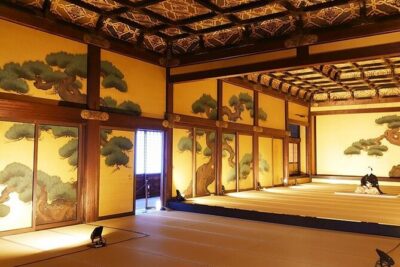
Nijo Castle World Heritage Guided Tour with Admission
Read our review →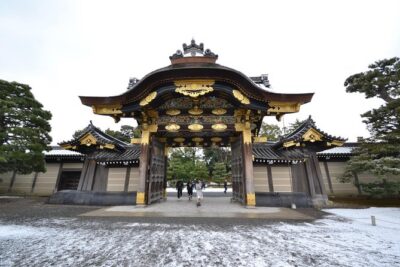
Nijo Castle and Imperial Palace Visit with Guide
Read our review →
Golden Pavilion, Nijo Castle, & Nishiki Market Half day tour
Read our review →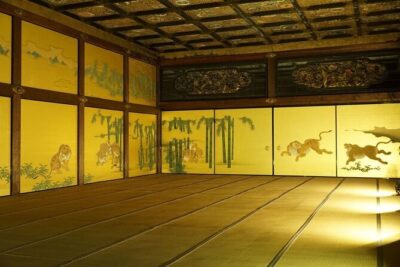
Nijo Castle Samurai Inside Story — Top-Rated Guide (Max 8)
Read our review →Browse the lists this tour appears in