
Reviewed · KYOTO TEMPLE & SHRINE TOURS
Best of Kyoto: Ginkakuji & Path of Philosophy E-Bike Tour
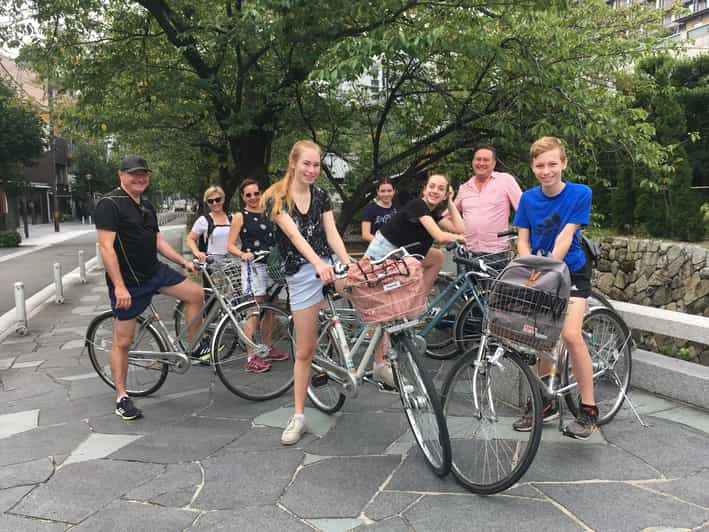
Ginkakuji’s gardens, quiet temple grounds, and the Philosopher’s Path give this ride a fine introduction to Kyoto’s eastern side. With an e-bike and a local guide, you can cover more ground than you could on foot, while still slowing down at the places that deserve a closer look.
I like two things in particular: the route pairs famous sites with lanes and less obvious corners, and guides such as Philippe, Kevin, and Salomé are praised for sharing cultural context without turning the ride into a nonstop lecture. One consideration: you need to be a confident cyclist, and the advertised 210 minutes is a brisk half-day, not a leisurely full-day temple visit.
At a glance
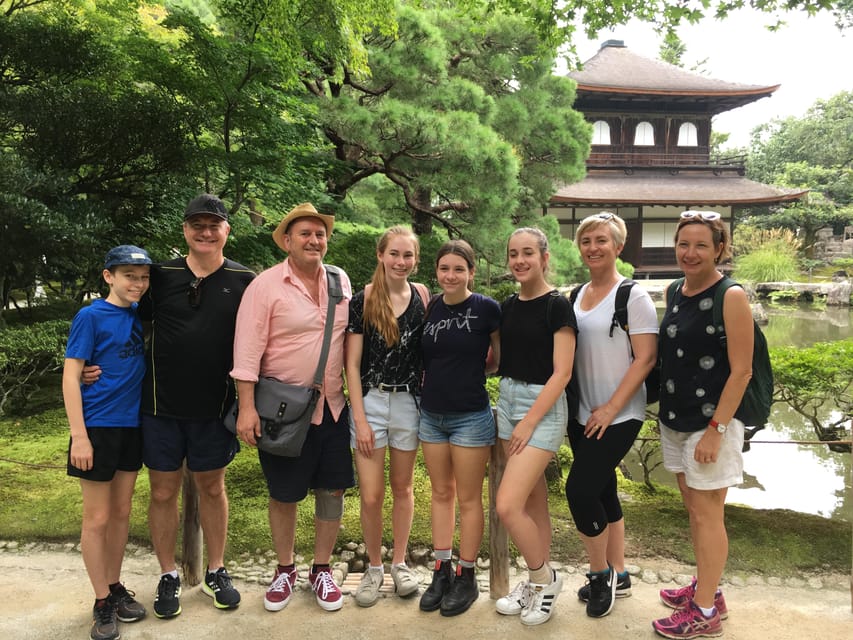
- Ginkakuji and its gardens: Spend about 45 minutes at the Silver Pavilion, a Kyoto landmark known for its carefully composed grounds.
- The Philosopher’s Path: Ride beside this well-known route for around 30 minutes. One rider wished for more time here, so take in the scenery as you go.
- Nanzenji and Heian Shrine: The tour adds a temple visit and a guided stop at the shrine, giving the ride a mix of Buddhist and Shinto sites.
- Electric assistance: E-bikes are included, and riders have described the route as relaxed, with gentle hills made easier by the motor.
- A guide who adapts: Guides including Philippe, Kevin, and Salomé are repeatedly praised for clear explanations, friendly pacing, and flexibility.
- Two different routes: The east-side ride is about four hours in the activity description; a separate west-side option takes six hours and visits Arashiyama, Kinkakuji, and Ryoanji.
Kyoto by bike, not by checklist
Kyoto’s temples and shrines are spread across a city that rewards exploring beyond one famous gate. A bike helps you connect the stops, and an e-bike makes the hills less of a worry. You get the pleasure of moving through the city under your own power, with a guide to help make sense of what you see.
This eastern route is centered on Ginkakuji, the Philosopher’s Path, Nanzenji, and Heian Shrine. It is not the same as the longer west-side ride to the Arashiyama Bamboo Forest, Kinkakuji, and Ryoanji. The tour description presents those as separate course choices, so check that you are booking the route you want.
The scheduled experience lasts 210 minutes, or three and a half hours. The east-side course is also described as a four-hour ride, so leave a little room in your day rather than planning a tight connection immediately afterward. The timed visits listed for its main stops add up to about two and a half hours, with the remaining time allowing for cycling and transitions.
More bike tours in Kyoto:
- Bike Tour Exploring North Kyoto plus Lunch
★ 5.0 · 1,087 reviews - Arashiyama Bamboo Forest & Hidden Gems Bike Tour (Early Bird)
★ 5.0 · 613 reviews - 5 Top Highlights of Kyoto Full Day Bike Tour (E-bike option)
★ 5.0 · 511 reviews
Starting with Ginkakuji’s gardens
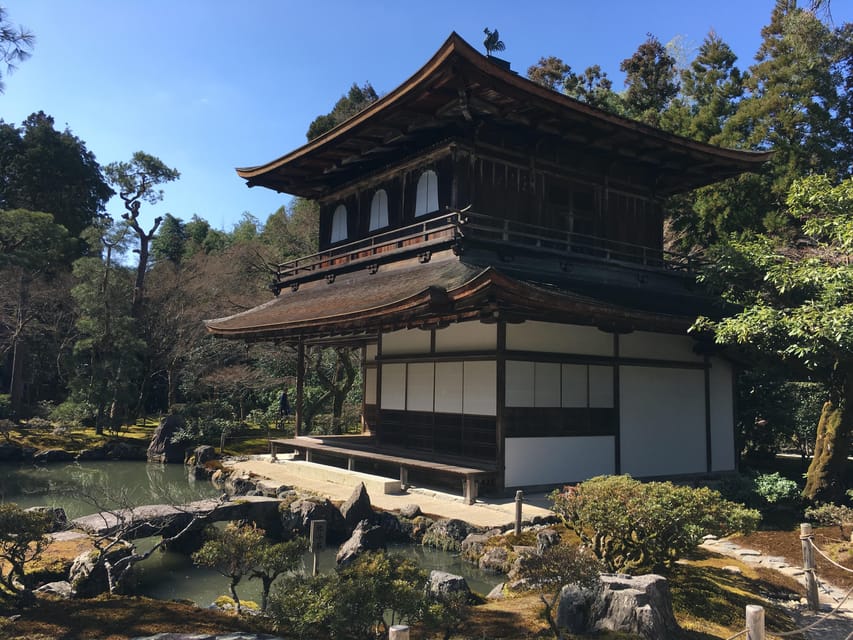
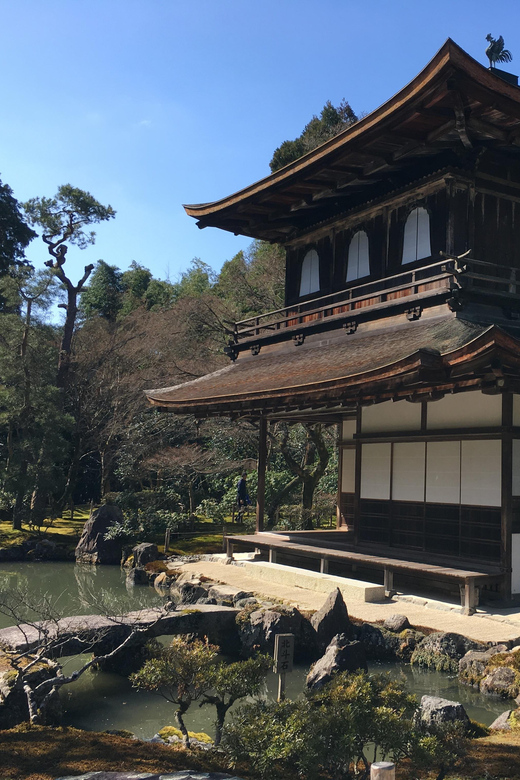
Ginkakuji, also called the Silver Pavilion, is the eastern route’s main temple stop. The guided visit lasts about 45 minutes, enough to see the gardens and hear how the site fits into Kyoto’s religious and cultural story. The emphasis here is on the grounds as much as the building: this is a place to look closely, notice the garden design, and take a brief pause from the city streets.
Garden entry fees are included, which makes the stop simpler to budget for. Still, 45 minutes is a set visit, not an invitation to linger for as long as you like. If you tend to spend a long time photographing gardens or reading every sign, keep that limit in mind.
A guide can also help explain the difference between the Buddhist temple setting and the Shinto shrine you will visit later. That context is useful in Kyoto, where religious sites may sit close together but serve different traditions. Guides have been singled out for sharing these ideas in a clear, conversational way.
Following the Philosopher’s Path
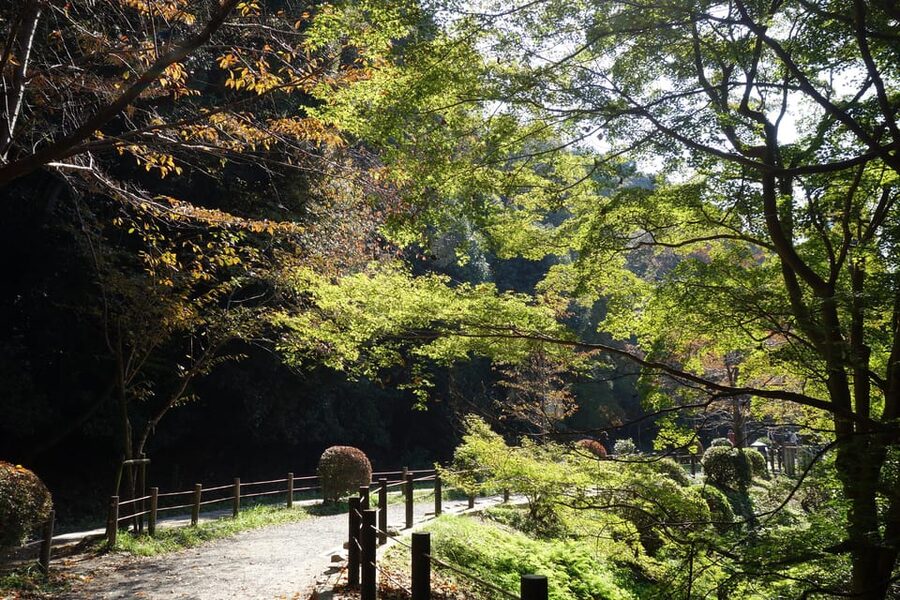
The ride continues to the Philosopher’s Path, with about 30 minutes allocated for cycling along it. The route is a pleasant change of pace from temple grounds: you move through a well-known stretch of eastern Kyoto rather than simply arriving at another gate and leaving again.
The time allowance is the main trade-off. One rider wanted more time to enjoy the path, a fair point if you hope to stop often or walk beside the canal. Think of this as a guided pass through the area, not a long, unhurried stroll. You can still take in the setting, but the ride has other scheduled visits to fit in.
Cycling also changes how you experience the city between landmarks. Instead of spending the whole morning moving from one entrance to another on foot, you get a broader sense of how Kyoto’s neighborhoods connect. Riders have described the route as easy to navigate, and one reported covering about nine miles at a comfortable pace. That distance is one person’s experience, not a fixed promise for every group.
Nanzenji’s temple grounds
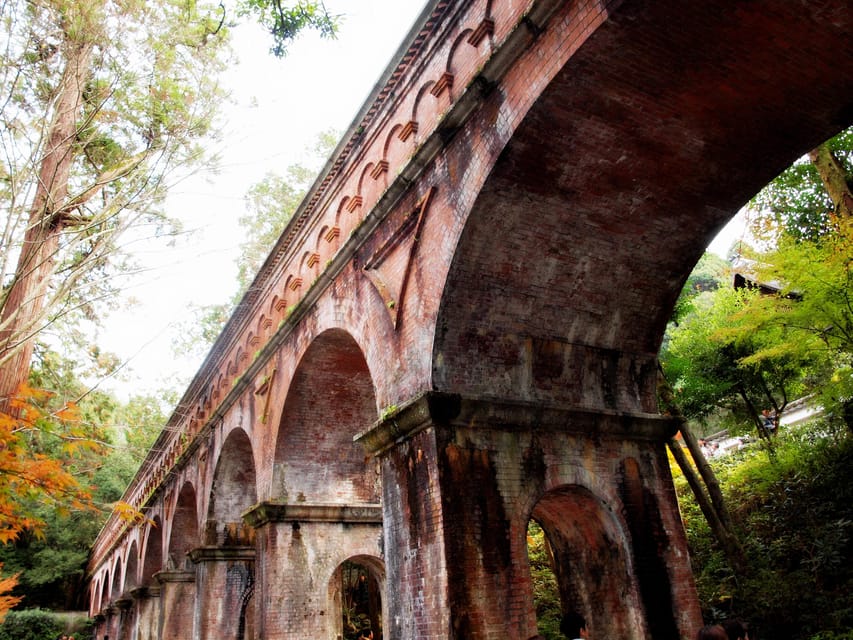
Nanzenji adds a 30-minute stop to the itinerary. The visit gives you another chance to see a major Buddhist site and compare its atmosphere with Ginkakuji’s garden setting. The tour information does not specify which parts of the grounds are included, so expect a guided visit rather than assuming you will have time to explore every corner.
This is a useful stop for anyone who wants more than a quick look at one famous temple. But, as with the other scheduled visits, the group’s pace and the guide’s route determine how much time you have to wander. If you are drawn to temple architecture or want a slow, contemplative visit, a self-guided return may suit you better than trying to fit everything into this half-day ride.
More temple and shrine tours in Kyoto:
- Kyoto: Tea Ceremony Ju-An at Jotokuji Temple
★ 4.9 · 3,207 reviews - World Heritage Kyoto & Nara Uji Authentic Matcha Experience
★ 5.0 · 1,573 reviews - Arashiyama Bamboo, Temple, Monkeys, or Secret Sake Brewery
★ 4.8 · 886 reviews - Kyoto: Arashiyama Bamboo Forest, Monkeys, Matcha & Temple Tour
★ 5.0 · 759 reviews
Heian Shrine and Kyoto’s Shinto tradition
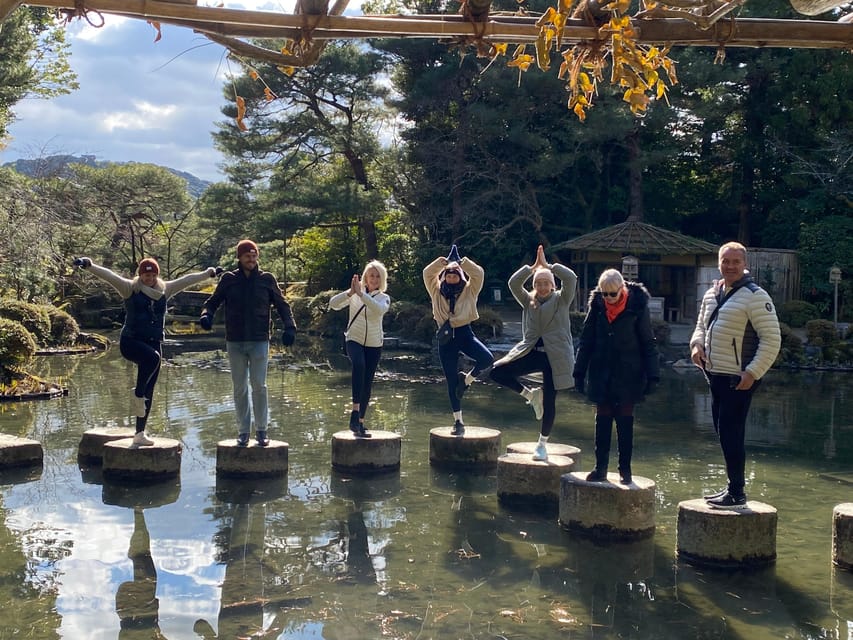
The final listed stop is Heian Shrine, with a 45-minute guided visit. It brings a Shinto site into a route that also includes Buddhist temples, giving your guide a natural opportunity to explain the distinction between the traditions. The listed inclusion of garden entry fees applies to the tour’s gardens, though the activity details do not identify each included garden by name.
The guided format matters here. The buildings and grounds are impressive to see, but a little explanation can help you understand what makes a shrine different from a temple and how each fits into local religious life. The tour’s guides have been praised for tailoring their explanations to what you have already seen in Japan, rather than delivering a fixed lecture from start to finish.
A guide can make the ride
The strongest part of this experience is its guiding. Philippe, also named Philip in one account, is praised for his knowledge of Kyoto and Japanese culture, along with a calm, kind manner. Kevin is described as friendly, funny, helpful, and flexible with the route. Salomé was credited with making a morning ride both informative and enjoyable.
These details matter because you are spending several hours with a guide while sharing streets and paths with a group. A good guide sets a comfortable pace, answers questions, and knows when to let you simply look around. Some riders appreciated that their guide shared the most relevant details without talking continuously. Others valued flexibility, including adjustments to suit the group’s interests.
The tour is offered in English and French, with private or small-group options available. If you have a strong preference for a particular language or a more personal pace, check the option details before booking. A private tour may also make it easier to ask questions or adjust the day, though the exact degree of flexibility depends on the guide and conditions.
E-bike comfort and cycling confidence
The e-bike rental and helmet are included in the $69 price. Electric assistance is especially handy on Kyoto’s gentle hills, letting you save energy for the stops. A rider described the route as almost entirely flat, while another found the ride manageable even on a hot day. Conditions and group pace vary, but the e-bike helps keep the cycling from becoming the main challenge.
That assistance does not replace basic cycling confidence. The operator reserves the right to end the tour if a guide is concerned about someone’s safety, and the booking information specifically asks that everyone in your party be a confident cyclist. If you are nervous on a bike, have not cycled in years, or are unsure about riding with a group, this may not be the best way to see Kyoto.
Helmets are included. Hotel pickup and drop-off are not, and lunch is also excluded. The meeting point can vary by option, though Kyoto Bike Rentals at 222 Koyamachō is listed as a starting location. Check the meeting details for your chosen course before setting out.
How the $69 price adds up
At $69 per person, this is a solid-value way to join several eastern Kyoto sights in one guided outing. The fee includes the e-bike, helmet, guide, and entry fees to gardens. You are paying not just for transport but for a route that links key sites and gives you cultural interpretation along the way.
It is not an all-inclusive day out. You will need to arrange your own transport to and from the meeting point, and lunch is not provided. The east-side ride is also a sampler: its scheduled stops give you a useful introduction, but not the long, independent temple visit that some travelers prefer.
For value, consider what you would otherwise spend in time and effort connecting these places on your own. If you enjoy cycling and want a guide to explain Kyoto’s religious traditions as you go, the price makes sense. If your priority is spending hours in one garden or shrine, you may get more from visiting independently.
Choosing between east and west
The east-side course described here visits Ginkakuji, the Philosopher’s Path, Nanzenji, and Heian Shrine, and takes about four hours according to the course description. The activity’s listed duration is 210 minutes. Confirm the duration and meeting details for the specific option you select, as the information gives both figures.
The separate west-side course is longer, at six hours. It visits the Arashiyama Bamboo Forest, Kinkakuji, also known as the Golden Pavilion, and Ryoanji’s rock garden. Do not book the eastern route expecting to see those western sights. They are on a different course and require more time.
This distinction is especially important if you have only one day in Kyoto and are choosing between the city’s best-known areas. The eastern ride offers a compact mix of gardens, a temple, a shrine, and a cycling path. The western ride puts its time toward a different set of major attractions.
Weather, timing, and who should go
In light rain, you may be able to reschedule, switch to a walking tour, or continue by bike in a poncho. Heavy rain can lead the provider to cancel with a full refund. Kyoto’s weather can affect the feel of a cycling tour, so keep some flexibility in your schedule if the forecast looks poor.
This ride suits confident cyclists who want to see several sites without spending the whole morning walking between them. It is also a good fit if you like asking questions and want help understanding Zen and Shinto traditions. Families can enjoy it too, provided everyone in the group is comfortable cycling; one family reported that the ride worked well for the whole group.
It may not suit you if you want a slow temple visit, dislike cycling in a group, or are uncertain about bike handling. And while an e-bike reduces the effort, it does not remove the need to ride safely and follow the guide’s instructions.
Should you book this Kyoto e-bike tour?
Book it if you are a confident cyclist and want a guided introduction to eastern Kyoto’s temples, gardens, and streets. Its best qualities are the combination of cultural context, manageable e-bike riding, and guides who are often praised for being warm, adaptable, and clear.
Skip it if you are hoping to see Arashiyama or the Golden Pavilion on this particular route, or if you want hours to explore each stop at your own pace. Check the selected course, duration, meeting point, and language before paying. If those details match your plans, this is an efficient and enjoyable way to cover more of Kyoto without reducing the day to a string of taxi rides.
FAQ
How long does the east-side tour last?
The activity details give a duration of 210 minutes. The east-side course is also described as four hours, so confirm the timing for the option you book.
What places does the east-side route visit?
The listed stops are Ginkakuji Temple, the Philosopher’s Path, Nanzenji Temple, and Heian Shrine.
Does this tour visit the Arashiyama Bamboo Forest?
Not on the east-side route. Arashiyama is included in a separate west-side course described as a six-hour tour.
Is the e-bike included in the price?
Yes. The e-bike rental and helmet are included.
Are garden entry fees included?
Yes, entry fees to gardens are included.
What languages are available?
The tour is offered in English and French.
Is this a private tour?
Private or small-group options are available. Check the option you select for the group format.
Where does the tour start?
The meeting point may vary by option. Kyoto Bike Rentals at 222 Koyamachō is listed as a starting location, so check your selected option’s meeting details.
Is lunch included?
No. Lunch is not included, and hotel pickup and drop-off are also excluded.
What happens if it rains?
In light rain, you may be able to reschedule, switch to a walking tour, or ride in a poncho. If rain is heavy, the provider may cancel the activity and issue a full refund.
Newly added in Kyoto
- Uji: Private immersion into Kyoto’s tea and reglious culture★ 5.0 · 17 reviews
- Whisk Your Own Matcha: A Zen Matcha Experience at Temple★ 3.6 · 7 reviews
- Kyoto tea town for matcha lovers★ 5.0 · 16 reviews
- Treasures of Kyoto: Gion & historical Walking Tour★ 5.0 · 6 reviews
- Uji and Wazuka Matcha Farm Half Day Private Guided Tour★ 5.0 · 21 reviews
- Kyoto Matcha Green Tea Tour★ 4.5 · 23 reviews
- Uji Tea Ceremony and UNESCO Heritage Walking Tour★ 5.0 · 20 reviews
- Utilising upcycled Matcha! Creating matcha incense (Uji, Kyoto)★ 5.0 · 6 reviews
Kyoto Temple & Shrine Tours, compared.


World Heritage Kyoto & Nara Uji Authentic Matcha Experience
Read our review →
Arashiyama Bamboo, Temple, Monkeys, or Secret Sake Brewery
Read our review →
Arashiyama Bamboo Forest, Monkeys, Matcha & Temple Tour
Read our review →
Arashiyama, Nara & Fushimi Inari Shrine w/Lunch
Read our review →
Imperial Palace & Nijo Castle Guided Walking Tour
Read our review →
Kyoto Zen Meditation & Garden Tour at a Zen Temple with Lunch
Read our review →
Browse the lists this tour appears in