
Reviewed · KYOTO WALKING TOURS
One-Day Walking Tour of Amazing 8th Century Capital Nara
Nara’s appeal is wonderfully direct: one moment you’re among old merchant houses, the next you’re walking past deer in the park toward Todai-ji, home to a huge bronze Buddha inside one of the world’s largest wooden buildings. A private guide helps you connect these sights to the city’s time as Japan’s ancient capital.
I like two things in particular: the route pairs Naramachi’s lived-in streets with major religious sites, and a private guide can explain the history while handling the navigation. Guides such as Satomi, Tomoko, Fumiko, Noriko and Fuji have also shown flexibility, including helping with an unplanned museum visit or adjusting the pace for a guest with a bad knee.
The main consideration is the length and extra cost. It’s an eight-hour day, and the listed price of $137.17 per person does not include public transport or entrance fees. The description gives you a clear set of main stops, but the tour is private, not necessarily a fully customized itinerary.
At a glance
- Naramachi’s merchant houses bring you into a former temple town that became a center of commerce.
- Kasuga Grand Shrine connects the city to the Fujiwara clan, one of Japan’s most powerful aristocratic families.
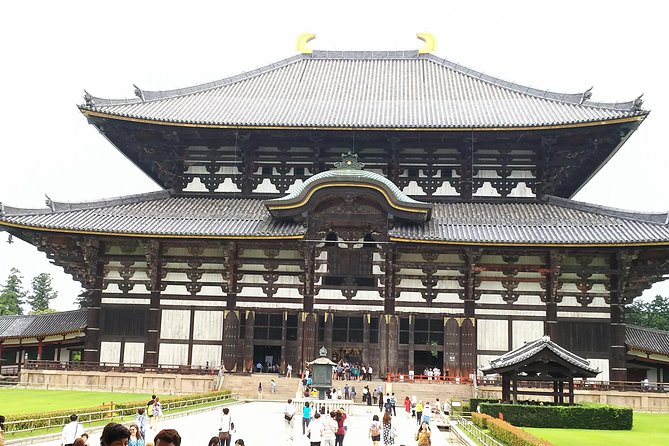
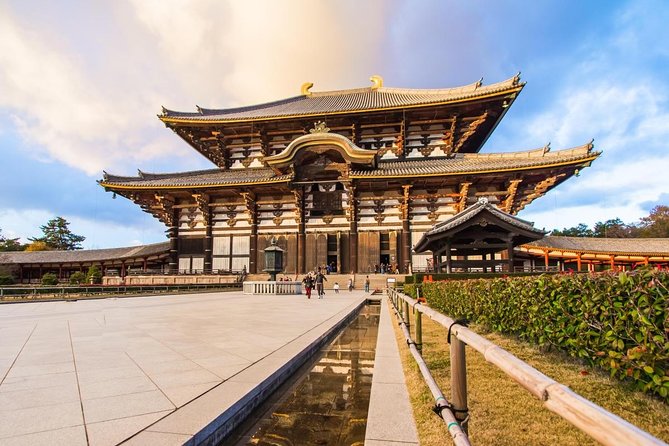
- Todai-ji’s giant Buddha is the day’s major architectural and religious landmark, and a UNESCO World Heritage Site.
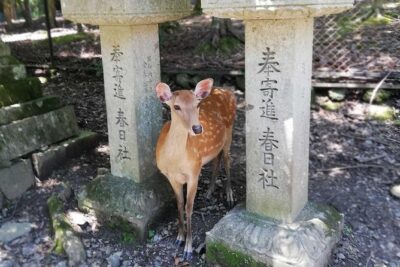
- Nara Park’s deer roam freely, adding an unusual wildlife encounter to a day centered on history.
- A private guide means only your group joins the activity, with a guide leading the route and answering questions.
- Budget beyond the tour price: allow ¥2,000 per person for public transport and ¥1,500 per person for the listed entrance fees.
Nara’s old capital, seen on foot
Nara offers a different mood from the big-city rush of Kyoto or Osaka. Its former role as Japan’s capital left it with major temples and shrines, while its older commercial district gives you a sense of how people lived and worked beyond the religious compounds. This tour brings those threads together in one long day.
The private format is valuable here. Nara’s sights are spread across different areas, and a guide takes care of navigating between them. You can concentrate on what you’re seeing and ask questions as they come to mind, rather than spending the day working out the route yourself.
There’s also a personal quality to the experience. The entire group is yours, not a larger mixed party. That can make it easier to ask questions, adjust the pace, or explain what interests you. Past guides have included Satomi, Tomoko, Fumiko, Noriko and Fuji, though you should not assume you’ll be assigned a particular person.
The tour begins at 8:30 a.m. and lasts about eight hours. Three named stops account for about three and a half hours of scheduled visiting time, so the rest of the day allows for moving between sites and other parts of the route. The exact start location is not specified here, and the activity ends somewhere different from where it starts.
More Nara trips in Kyoto:
- World Heritage Kyoto & Nara Uji Authentic Matcha Experience
★ 5.0 · 1,573 reviews - Kyoto/Osaka: Nara, Fushimi Inari Taisha, Arashiyama Bus Tour
★ 4.7 · 1,275 reviews - Nara Half Day Trip Walking Tour (Private Option Available)
★ 5.0 · 937 reviews
Naramachi: merchant life behind the lattices
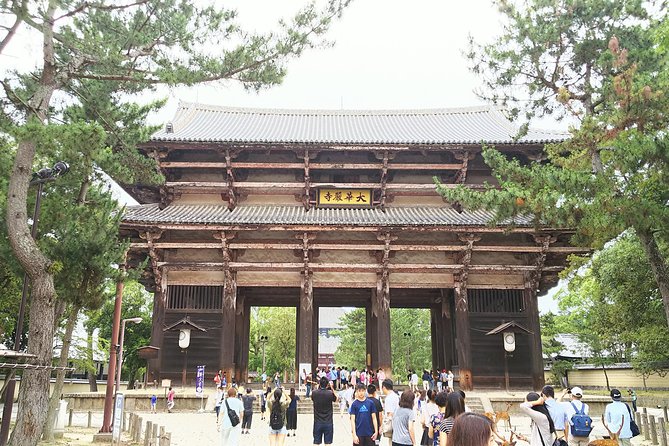
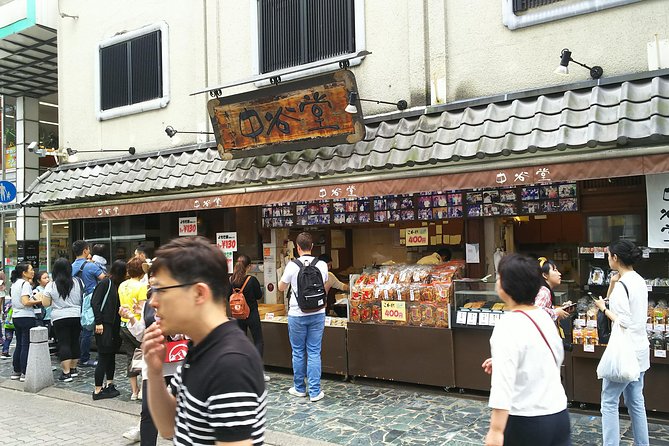
The first stop is Naramachi, an area founded as a temple town in the eighth century that later became a merchant district. Its traditional houses, some more than a hundred years old, have distinctive latticework fronts. These streets offer a quieter opening than beginning with a monumental temple: you first get a feel for the city as a place where people lived and did business.
Your guide can help explain the shift from temple town to commercial neighborhood and point out what makes the old houses worth noticing. The stop lasts about an hour and a half, giving you time to explore rather than simply pass through. Admission is listed as free.
Naramachi is a useful reminder that a historic city is more than its headline monuments. The district adds domestic and commercial scale to a day that later includes large religious complexes. If you mainly want famous sights, this may feel less dramatic than Todai-ji. But it provides welcome context and variety, and a guide can help you see details that are easy to miss when walking alone.
Kasuga Grand Shrine and the Fujiwara legacy
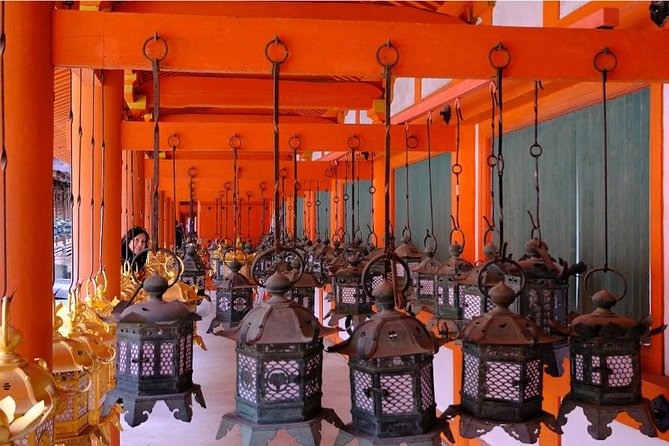
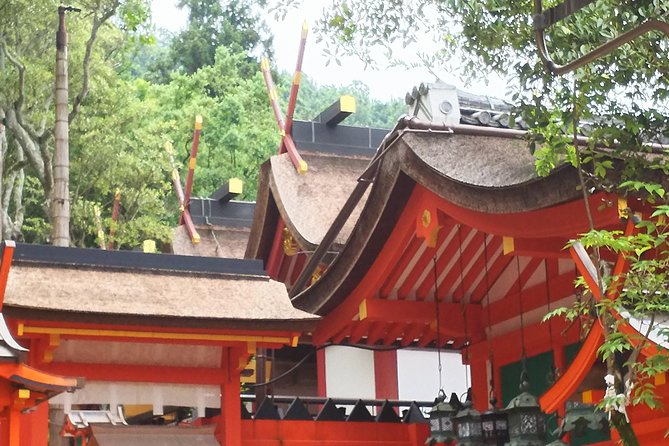
Kasuga Grand Shrine was founded in the eighth century by the Fujiwara clan, once the most powerful aristocratic family in Japanese history. The shrine remains connected to that lineage: its head priest is a descendant of the family. That detail gives the visit a direct link between Nara’s early political history and a living religious institution.
You have about an hour at the shrine. The admission fee is not included, and the listed entrance fees for Kasuga Taisha Shrine and Todai-ji together total ¥1,500 per person. Check the exact payment arrangements when booking, since the supplied price is for the two sites combined.
This stop is more than a pause between Naramachi and Todai-ji. It helps explain how powerful families shaped the religious life and institutions of the old capital. A guide is especially useful if you want more than a quick look at the grounds, since the meaning of the shrine is tied to its history and its relationship with the Fujiwara.
Todai-ji: a giant Buddha beneath a huge roof
Todai-ji is the day’s centerpiece for many people. Founded by Emperor Shomu more than 1,300 years ago, it is designated a UNESCO World Heritage Site. The temple precinct includes multiple historical buildings beneath Mount Wakakusa, and its main draw is the enormous Buddha housed inside a vast wooden structure.
The visit is scheduled for about an hour. That gives you time to see the main temple and take in the scale of the building and statue, though you may wish you had longer if you like to linger over architecture or explore more of the grounds. The entrance fee is extra.
The scale is part of the experience. After the streets of Naramachi and the historical setting of Kasuga, Todai-ji makes the resources and ambition of the ancient capital tangible. You’re not just hearing that Nara was important; you’re standing inside a structure built to make that importance visible.
For many, the huge Buddha is the most memorable sight of the day. It is also a strong reason to choose a guide rather than simply arrive, take a photograph and leave. You can ask about the temple’s founding and place it within the wider story of Nara, while still having time to appreciate the building itself.
More walking tours in Kyoto:
- Kyoto Geisha Walking Tour: Gion District & Hidden Gems
★ 4.7 · 3,273 reviews - Kyoto: Gion Magical Night Walking Tour with Geisha Trivia
★ 4.9 · 2,393 reviews - Kyoto: Gion Geisha District Walking Tour – Stories of Geisha
★ 4.7 · 2,187 reviews - Night Walk in Gion: Kyoto’s Geisha District
★ 4.5 · 2,003 reviews
Deer in Nara Park: a lively change of pace
Nara Park’s freely roaming deer bring a very different kind of encounter to the itinerary. They share the park with the city’s major historic sites, so you may see them while moving between landmarks. Their presence gives the day a light, sometimes comical note after the formality of shrines and temples.
You should expect a chance to see the deer, not a guaranteed close encounter or a specific activity with them. One past guide-led visit included feeding deer, but that should not be treated as a promised part of every tour. The clearest expectation is that the animals roam freely around Nara Park.
The deer also help make the route feel less like a sequence of buildings. They give you a reason to pause, look around and take in the park setting. If you’re traveling with children or simply enjoy seeing wildlife, this may be one of the day’s most distinctive moments. Just remember that the historic sites remain the main focus of the tour.
What the private format adds
A private tour is not the same thing as a fully custom tour. The main route is built around Naramachi, Kasuga Grand Shrine and Todai-ji. Still, the private setup gives your guide room to respond to your interests and needs.
That flexibility has been useful in practice. Satomi helped a guest who changed plans to visit the Nara National Museum, despite not having prepared for that stop, and also suggested a dinner spot afterward. Fuji adapted a day around a guest’s interests and helped make time for lunch. Tomoko accommodated a guest whose husband had a bad knee. These examples show the kind of personal attention a private guide can offer, but they do not guarantee that every detour or request will be possible.
The experience is still a walking tour, and the day lasts about eight hours. If you have mobility concerns, raise them before booking and ask what pace or route adjustments are possible. One guide was able to accommodate a guest with a bad knee, but that does not establish that every part of the route is suitable for every mobility level.
What the price covers, and what it does not
The listed price is $137.17 per person, with group discounts available. It includes a professional guide, and the activity is private for your group. For a full day, the value comes from having someone handle navigation and provide historical context across three different kinds of places: an old merchant district, a major shrine and one of Japan’s best-known temples.
Plan for extra costs. Public transport is listed at ¥2,000 per person, and entrance fees for Todai-ji and Kasuga Taisha are listed at ¥1,500 per person. Neither is included in the tour price. Lunch is not listed among the inclusions, so budget separately rather than assuming it is covered.
The private format is most worthwhile if you value conversation, want help making sense of the sites, or prefer not to manage the route yourself. If you are comfortable navigating independently and mainly want to see the monuments, you may find a self-guided day less expensive. The trade-off is that you’ll need to plan your own transport and do your own research.
The experience is booked an average of 26 days in advance, so leave time to reserve if your dates are fixed. The tour has a 5.0 rating from 15 reviews, and all reviewers recommend it. That is a positive record, though the number of ratings is still fairly small.
Is this Nara day worth booking?
Book this tour if you want a full introduction to Nara without piecing together its sights and transport on your own. It suits first-time visitors, history-minded travelers, and small groups who value the ability to ask questions and keep the day at a manageable pace. It also makes sense if the deer, Naramachi, Kasuga and Todai-ji all appeal to you, rather than just one headline stop.
Think twice if you want a highly personalized route guaranteed in advance, need a short or low-walking day, or are trying to keep costs to the tour price alone. The route is private, but the basic schedule centers on three set stops, and transport and entry fees add to the bill.
If you can set aside most of a day and are comfortable with the extra costs, this is a practical way to understand why Nara mattered as a capital, while enjoying the contrast between its old streets, sacred sites and freely roaming deer.
FAQ
How long is the tour?
It lasts about eight hours. The listed stops include about three and a half hours of visiting time in total.
What time does the tour start?
The start time is 8:30 a.m.
Is this a private tour?
Yes. Only your group participates.
Which places are included in the route?
The named stops are Naramachi, Kasuga Grand Shrine and Todai-ji Temple. The tour also includes a chance to see Nara Park’s freely roaming deer.
Are entrance fees included?
No. Entrance fees to Todai-ji and Kasuga Taisha are listed as ¥1,500 per person.
Is public transport included?
No. Public transport is listed at ¥2,000 per person.
Who provides the tour?
KAMNAVI Tours provides the experience, and a professional guide is included.
Can I cancel for a refund?
You can cancel at least 24 hours before the start time for a full refund. Cancellations made less than 24 hours before the start time are not refunded.
What happens if bad weather cancels the tour?
If the experience is canceled because of poor weather, you will be offered a different date or a full refund.
Newly added in Kyoto
- Uji: Private immersion into Kyoto’s tea and reglious culture★ 5.0 · 17 reviews
- Whisk Your Own Matcha: A Zen Matcha Experience at Temple★ 3.6 · 7 reviews
- Kyoto tea town for matcha lovers★ 5.0 · 16 reviews
- Treasures of Kyoto: Gion & historical Walking Tour★ 5.0 · 6 reviews
- Kyoto Matcha Green Tea Tour★ 4.5 · 23 reviews
- Uji and Wazuka Matcha Farm Half Day Private Guided Tour★ 5.0 · 21 reviews
- Uji Tea Ceremony and UNESCO Heritage Walking Tour★ 5.0 · 20 reviews
- Utilising upcycled Matcha! Creating matcha incense (Uji, Kyoto)★ 5.0 · 6 reviews
Kyoto Walking Tours, compared.
Kyoto Geisha Walking Tour: Gion District & Hidden Gems
Read our review →
Gion Magical Night Walking Tour with Geisha Trivia
Read our review →
Gion Geisha District Walking Tour – Stories of Geisha
Read our review →

Nishiki Market Brunch Walking Tour (7 Tastings + Brunch)
Read our review →
Kyoto Arashiyama Walking Tour: Bamboo, Monkeys, Gardens & Secrets
Read our review →
Nara Half Day Trip Walking Tour (Private Option Available)
Read our review →Browse the lists this tour appears in