
Reviewed · KYOTO WALKING TOURS
Half Day Kyoto Sagano Bamboo Grove & Arashiyama Walking Tour
Arashiyama’s bamboo grove is the headline, but the best part of this half-day outing is how it links the forest paths to the temples and river scenery around them. You travel from Kyoto by train, then explore on foot with a licensed English-speaking guide.
I like that temple admission and transportation are included, so you can focus on the walk rather than sorting out each fare and entrance. I also like the freedom to stay in Arashiyama at the end, which lets you add lunch or the monkey park instead of simply following the group back.
The trade-off is that this is a guided route through a very popular district, not a private retreat. The group can reach 25 people, and crowded paths, stairs, or a busy train may make the pace feel less peaceful than the bamboo scenery suggests.
The tour in five useful details
- The walk covers about 3 km: Wear comfortable shoes, and be ready for stairs at the temples.
- The train ride is part of the outing: Seats are not reserved, so you may need to stand during busy periods.
- Two temples give the walk context: Jojakko-ji and Tenryu-ji offer different settings, from a wooded hillside to a celebrated garden.
- The route includes a river-and-bridge finish: Togetsukyo Bridge is a scenic end point, with a yakatabune boat view listed as part of the experience.
- Summer changes the plan: From July through September 22, the tour starts earlier and visits Okochi Sanso Villa Garden instead of Jojakko-ji.
- You can stay on after the tour: The tour ends at Kyoto Station, but some participants have chosen to remain in Arashiyama and explore independently.
Leaving Kyoto by train for Sagano
The tour begins at the JTB Sunrise Tours desk in the basement of Kyoto Avanti, near Kyoto Station. From there, you travel by local train to Saga-Arashiyama Station. The included public transport keeps the outing simple, but the ride uses non-reserved seats. At busy times, you may have to stand, so do not count on a quiet seat as part of the experience.
The trip lasts about four hours, with roughly 3 km of walking. That is manageable for many people with moderate fitness, but the distance does not tell the whole story. Temple paths include stairs, and the group moves through public streets and popular sightseeing spots. Comfortable walking shoes matter more than dressing up for the temple visit.
The route order can shift with congestion and local conditions. One version starts at Jojakko-ji, then walks through the bamboo grove toward Tenryu-ji; the broader tour description places the grove first. Think of the day as a connected walk through the district, rather than a tightly fixed sequence.
More Arashiyama tours in Kyoto:
- Kyoto: Fushimi Inari, Kinkakuji, Bamboo Grove 1 Day Bus Tour
★ 4.8 · 4,316 reviews - Osaka/Kyoto:Kinkakuji,Arashiyama,FushimiInariShrine,NaraPark
★ 4.1 · 1,596 reviews - Kyoto/Osaka: Nara, Fushimi Inari Taisha, Arashiyama Bus Tour
★ 4.7 · 1,275 reviews
Jojakko-ji, a hillside temple above Sagano
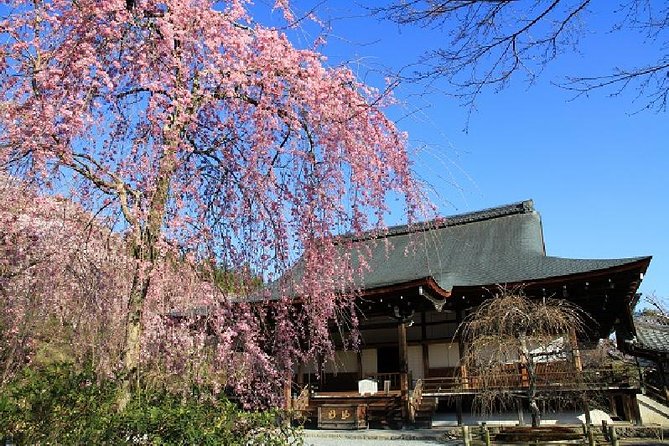
Jojakko-ji sits on the wooded slope of Mount Ogura and offers broad views over Sagano and Kyoto. Its hillside setting makes it feel distinct from the more central temple grounds: the approach involves uphill walking and stairs, but the elevation is part of the appeal. Look for the Jizo statue and pagoda among the trees.
The temple’s connection to The Tale of the Heike adds a literary thread to the visit. The site is associated with Empress Dowager Kenrei-mon-in, a figure linked to the story. That context can help the stop feel more than a quick photo pause, especially if your guide explains the story as you walk.
The scheduled visit is about 30 minutes, which is enough for a look around but not an unhurried wander. Autumn is a particularly striking time here, when the hillside’s maple leaves turn color. In summer, the standard itinerary changes: from July through September 22, the tour visits Okochi Sanso Villa Garden instead. Jojakko-ji admission is not included during July and September, so check the seasonal plan before booking if this temple is a priority.
The bamboo grove: beautiful, and often busy
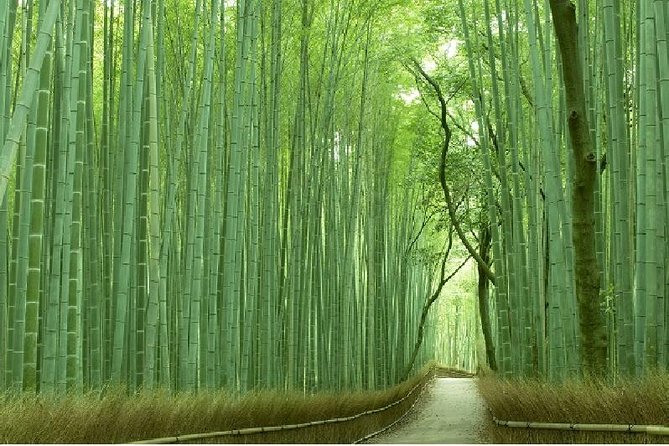
The Sagano bamboo grove is a striking place to walk, with tall stalks rising on either side of the path and the surrounding hills in view. It is easy to understand why it draws so many people. The grove is a short, memorable stretch, but it is not an isolated forest walk. The route is a popular sightseeing area, and crowds can take some of the hush out of the setting.
The tour description refers to a 2-mile, or 3-km, stroll through the grove, while the practical walking estimate for the full tour is also about 3 km. Since the route passes several sights, use the 3-km total as your guide for the day rather than expecting a long, secluded trek through bamboo.
A guide is useful here not because the path is hard to find, but because the visit can gain meaning from its setting and the broader Arashiyama area. Several guide names associated with past tours include Sachiko, Donna, June, and Michiharu, but you cannot choose or count on a particular person. The most praised part of the guiding is the mix of clear explanations, personal insight, and practical help. One guide helped a group member find directions to the monkey park and suggested lunch options; another offered ideas matched to a participant’s interests.
The bamboo walk is also where expectations matter. If your main goal is to spend a long time alone among the stalks, a group route may feel too brief and too crowded. You can return on your own or stay in the district after the guided portion to explore at your own pace.
Tenryu-ji and its garden
Tenryu-ji was founded in 1339 by Takauji of the Ashikaga Shogunate and is one of Kyoto’s major Rinzai Zen temples. It is also a World Heritage site. The garden is the main draw on this tour, with its design framed by the hills of Arashiyama.
The garden is particularly valuable because its original design survives. Rather than treating the stop as a checklist item, take time to notice how the water, plantings, and distant hills work together. The garden offers a quieter counterpoint to the bamboo path and the busy streets nearby.
Expect about 30 minutes here. The tour focuses on the garden, not a detailed visit through every temple building. That distinction matters if you are hoping for an in-depth temple tour. You will get a guided introduction and a look at the grounds, but the schedule does not leave room to linger for a long time at each feature.
This stop is one reason I see the tour as more than a simple walk to the bamboo grove. The grove is instantly recognizable, while Tenryu-ji gives you a chance to see how a carefully designed garden relates to the natural setting around it.
More walking tours in Kyoto:
- Kyoto Geisha Walking Tour: Gion District & Hidden Gems
★ 4.7 · 3,273 reviews - Kyoto: Gion Magical Night Walking Tour with Geisha Trivia
★ 4.9 · 2,393 reviews - Kyoto: Gion Geisha District Walking Tour – Stories of Geisha
★ 4.7 · 2,187 reviews - Night Walk in Gion: Kyoto’s Geisha District
★ 4.5 · 2,003 reviews
Togetsukyo Bridge and the river
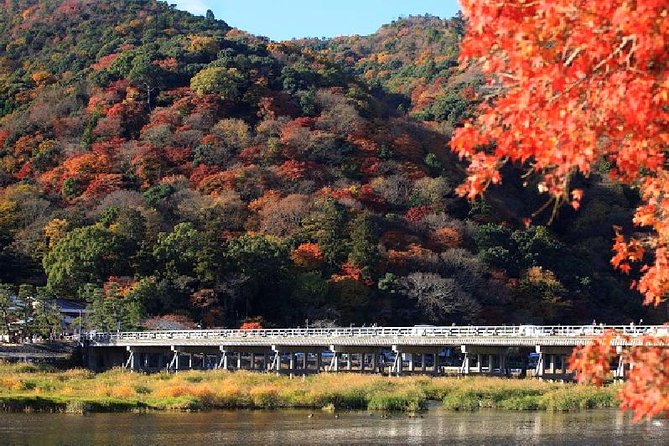
Togetsukyo, or Crossing Moon Bridge, stretches about 250 meters across the Hozu River. The present bridge was rebuilt in 1934, replacing an earlier structure. From the bridge, you can look toward the river and the forested hills that make Arashiyama such a popular escape from central Kyoto.
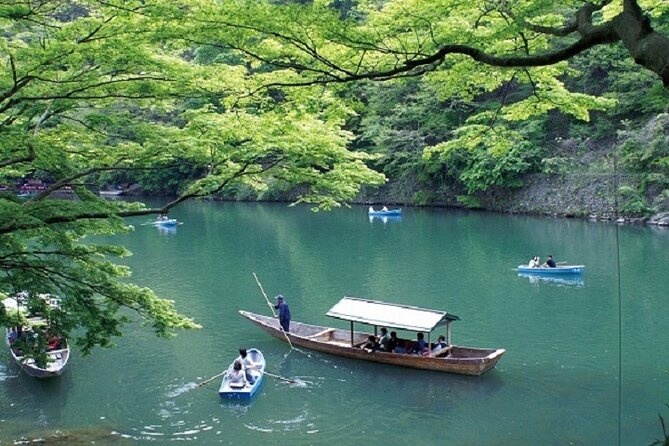
The itinerary sets aside about 30 minutes at the bridge and includes a view of the area aboard a yakatabune, a traditional-style Japanese boat. That change of perspective is welcome after walking: you can sit back and take in the river scenery rather than moving from one temple path to another. The exact order and timing may vary, so treat the boat portion as part of the planned experience, not a promise of a long cruise.
The bridge is also a busy public spot, especially during cherry blossom and autumn foliage seasons. Those seasons can make the views especially appealing, but they also bring more people to the area. If you want a calmer visit, the tour still gives you a useful overview, but it cannot make a popular landmark private.
What the guide adds, and where the tour may feel crowded
The guide’s value is strongest in the transitions: getting the group onto the train, moving between sights, and connecting the temples to the district’s history. Past guides have been praised for being friendly, easy to understand, and willing to offer local suggestions without filling every moment with commentary. Some people prefer more explanation and less free time, while others value being given room to look around independently.
Group size is capped at 25, but that is large enough to affect the feel of a walking tour. A group that size can be harder to keep together on narrow or crowded paths. Some outings may be much smaller, but you should not book assuming that you will have a private or intimate group.
There is a practical upside to having a guide even if you could make the trip yourself. Arashiyama is reachable by train, and independent visitors can see the same major sights. The tour handles the transport and route, adds interpretation, and gives you a structured half-day. If you are comfortable navigating Kyoto and would rather spend as long as you like at each stop, going independently may suit you better.
Is $79.26 good value?
At $79.26 per person, the price includes an English-speaking National Government Licensed Guide Interpreter, admission fees, and transportation costs listed for the tour. That makes the cost easier to assess than a bare guiding fee: you are paying for a planned half-day that covers the train ride, two temple visits, the bamboo area, and the bridge.
The strongest value is convenience and context, not access to sights you could not reach alone. Arashiyama is straightforward to visit independently, and the tour’s schedule is short. But if you have limited time in Kyoto, the guide can take the guesswork out of getting there and help you make sense of the stops. For someone new to the area, that can be worth more than the cost of a few separate admissions and train fares.
The tour is booked on average about 35 days ahead, so it is sensible to plan in advance if you want a particular date. Confirmation is subject to availability. At least two adults must be booked for the tour to run; if the minimum is not met four days before departure, the date may be canceled.
Who will enjoy this walk most?
I would choose this tour if you want a guided introduction to Arashiyama and Sagano without giving up a full day. It suits visitors who value an English-language explanation, want transport and admission handled, and are comfortable walking through a popular district with a group.
It is also a practical fit if you want a half-day plan that leaves room for more. The tour ends at Kyoto Station, but you can arrange to remain in Arashiyama rather than return with the group. That gives you time to eat, browse the town, or visit the monkey park, though you will need to plan your own onward transport and activities.
I would think twice if your priority is solitude, a long temple visit, or a slow, self-directed day. The path can be crowded, the scheduled temple visits are brief, and the group may include as many as 25 people. The walking itself is not extreme, but stairs and busy conditions are part of the deal.
Should you book it?
Book this tour if you want an efficient, guided look at the bamboo grove, Tenryu-ji, Jojakko-ji or its seasonal replacement, and the riverfront. The included transport and admissions, along with a guide who can add local context, make it a useful first visit to the area.
Skip it if you would rather set your own pace or spend a long time in one place. You can reach Arashiyama independently, and the tour’s greatest strength is its structure and interpretation, not exclusive access. If you do book, wear good walking shoes, check the summer itinerary, and consider staying behind afterward to enjoy the district beyond the group’s four-hour schedule.
FAQ
How long does the tour take?
The tour lasts about four hours. The order of stops and arrival times can change with congestion and local conditions.
How much walking is involved?
The approximate total walking distance is 3 km. Wear shoes and clothing suitable for walking, and be prepared for stairs at the temples.
Where does the tour start and end?
It starts at the JTB Sunrise Tours desk in the basement of Kyoto Avanti, near Kyoto Station. It ends at Kyoto Station, where you continue to your next destination independently.
Is train transportation included?
Yes. Transportation costs are included, and the group travels by public transport between Kyoto Station and Saga-Arashiyama Station. Seats are not reserved, so you may need to stand during busy periods.
Are temple admission fees included?
Admission fees are included for the listed stops. During July and September, Jojakko-ji is not included because the summer itinerary replaces that visit with Okochi Sanso Villa Garden.
What changes during the summer itinerary?
From July through September 22, the tour starts earlier to avoid peak heat and visits Okochi Sanso Villa Garden instead of Jojakko-ji.
How large is the tour group?
The maximum group size is 25 travelers. The tour also requires at least two adult participants to operate on a scheduled date.
Can I stay in Arashiyama after the guided tour?
The tour ends at Kyoto Station, but you may choose to stay in Arashiyama after the guided portion and make your own way onward. Some participants use the extra time to visit the monkey park or find lunch.
What is the cancellation policy?
You can cancel for a full refund up to 24 hours before the experience’s start time. Changes or cancellations made less than 24 hours before the start time are not accepted for a refund.
Newly added in Kyoto
- Uji: Private immersion into Kyoto’s tea and reglious culture★ 5.0 · 17 reviews
- Whisk Your Own Matcha: A Zen Matcha Experience at Temple★ 3.6 · 7 reviews
- Kyoto tea town for matcha lovers★ 5.0 · 16 reviews
- Treasures of Kyoto: Gion & historical Walking Tour★ 5.0 · 6 reviews
- Kyoto Matcha Green Tea Tour★ 4.5 · 23 reviews
- Uji and Wazuka Matcha Farm Half Day Private Guided Tour★ 5.0 · 21 reviews
- Uji Tea Ceremony and UNESCO Heritage Walking Tour★ 5.0 · 20 reviews
- Utilising upcycled Matcha! Creating matcha incense (Uji, Kyoto)★ 5.0 · 6 reviews
Kyoto Walking Tours, compared.
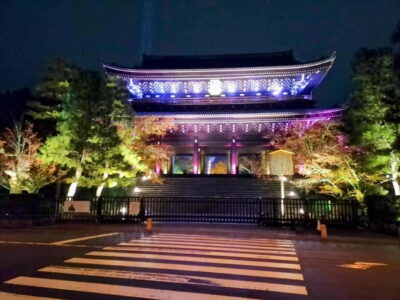
Kyoto Geisha Walking Tour: Gion District & Hidden Gems
Read our review →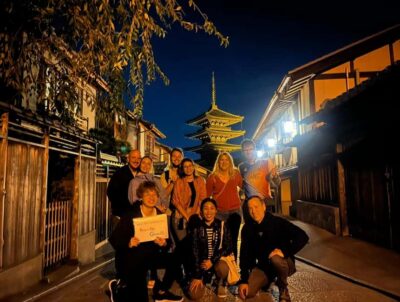
Gion Magical Night Walking Tour with Geisha Trivia
Read our review →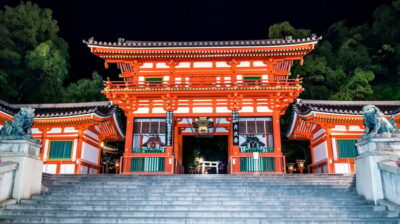
Gion Geisha District Walking Tour – Stories of Geisha
Read our review →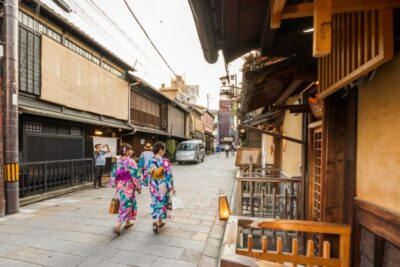
Nishiki Market Brunch Walking Tour (7 Tastings + Brunch)
Read our review →
Kyoto Arashiyama Walking Tour: Bamboo, Monkeys, Gardens & Secrets
Read our review →
Nara Half Day Trip Walking Tour (Private Option Available)
Read our review →Browse the lists this tour appears in