
Reviewed · KYOTO COOKING CLASSES
Izakaya Style Cooking Class
Kyoto’s izakaya cooking class takes you past the familiar sushi-and-teriyaki menu and into the small dishes people order with drinks or make at home. In about three hours, you learn the basics of dashi, prepare several dishes with an English-speaking instructor, then eat the meal you have made.
I like two things in particular: you get practical instruction in Japanese seasoning and stock, not just a demonstration, and the recipes give the class a life beyond the afternoon. The group is limited to eight, so there is room to ask questions and get help at the counter.
One consideration: the menu changes with seasonal ingredients, so you cannot count on a particular dish. Drinks are not necessarily included with dinner, either. If you want sake, check the price before accepting a glass.
At a glance
- Make several dishes, not just one: Past menus have included sesame spinach, teriyaki yellowtail, mushroom tempura and rice with vegetables.
- Learn dashi from the start: Japanese soup stock is a building block for many dishes, and this class teaches you how to prepare it.
- Eat what you cook: Dinner is included, so the lesson ends around a shared meal rather than a plate of samples.
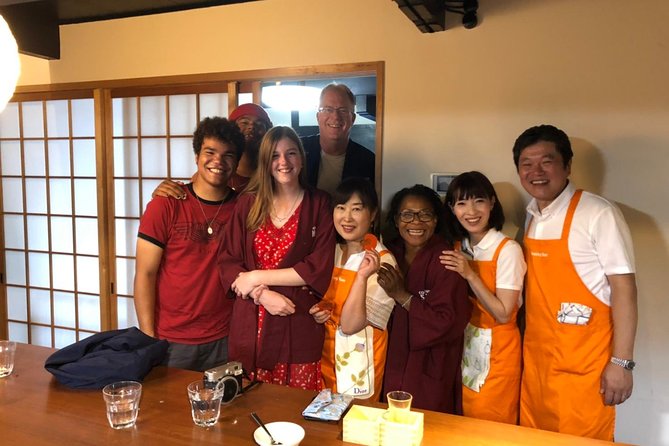
- Work in a traditional wooden house: The class takes place at Cooking Sun, at 679 Funayacho in Kyoto’s Shimogyo Ward.
- Bring home recipes and techniques: The aim is to make the food repeatable in your own kitchen, not just enjoyable on the day.
- Plan for a changing menu: Seasonal ingredients shape the dishes, and a past class has included a pasta dish, too.
What izakaya means beyond the menu
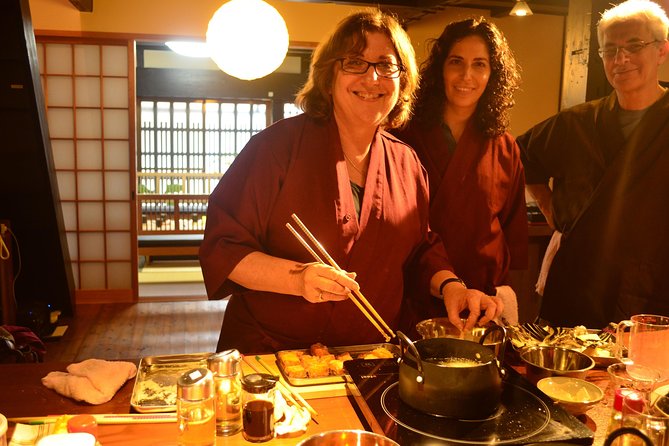
Izakaya is often compared with tapas: a way of ordering several smaller dishes to share, commonly alongside drinks. It is not one fixed set of recipes. The food can range from vegetable sides and soups to fish, fried dishes and rice, which makes the format a useful window into everyday Japanese cooking.
The class begins with a short introduction to this food culture. One account of izakaya’s origins traces it to sake shops in the Edo era. Shops that had sold sake began serving food as well, giving customers a reason to stay and drink there. Today, izakaya are casual places for people of different ages to gather over food at a reasonable cost.
That background helps put the cooking in context. You are not learning a formal banquet menu or a restaurant’s showpiece dish. You are working with the kind of food that makes a relaxed meal: a few flavors, different textures, and dishes that can be shared.
More cooking classes in Kyoto:
- Ramen Cooking Class at Ramen Factory in Kyoto
★ 5.0 · 1,937 reviews - Sushi Making in Kyoto! Same-day bookings welcome!
★ 5.0 · 713 reviews - Kyoto: Ramen Cooking Class at a Ramen Factory with Souvenir
★ 4.9 · 532 reviews
Starting at Cooking Sun at 2pm
The class meets at Cooking Sun, 679 Funayacho, Shimogyo Ward, Kyoto. The session starts at 2pm and lasts about three hours, ending back at the meeting point. The studio is described as a traditional wooden house, a setting that feels more personal than a large demonstration kitchen.
The location is near public transportation, but hotel pickup and drop-off are not included. Give yourself time to reach the address and find the entrance before the start time. The studio’s location is provided at booking, so check the details you receive rather than relying on a broad map pin.
The maximum group size is eight. That cap matters in a hands-on lesson: you need space to follow the chef’s demonstration, handle ingredients and ask for help. It is still a group class, not a private lesson, but the small format gives the instructor a chance to check in with each cook.
Learning dashi and Japanese seasoning
The instruction starts with ingredients and technique, including dashi, the soup stock used in many Japanese dishes. If you have mostly encountered Japanese food in restaurants, this is a useful place to begin. Learning what goes into the stock and how it is prepared gives you a base for understanding the flavors in the dishes that follow.
Seasoning is another practical focus. The instructors explain how sauces and condiments differ, and how they shape a dish. This is the sort of knowledge you can use later when a recipe calls for an ingredient you have not cooked with before. Instead of merely copying a sequence of steps, you gain a better sense of why a dish tastes the way it does.
The class is led in English, and the approach is meant to suit different levels of cooking experience. You do not need to arrive as a confident cook. The food preparation is described as manageable, and the instructors demonstrate techniques before you try them. More experienced cooks can still ask questions and pay attention to new flavor combinations or utensils.
Preparing a seasonal spread
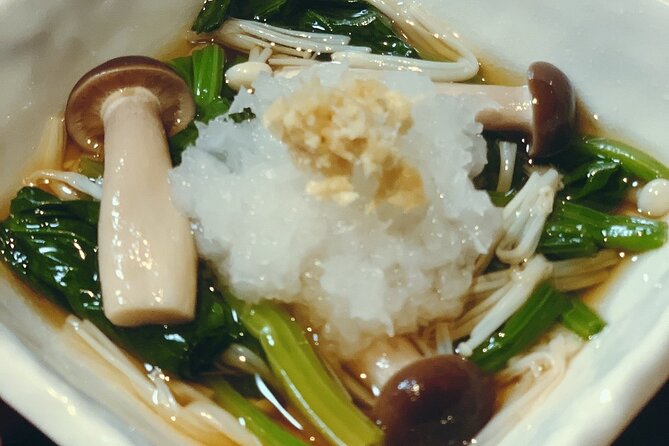
After the introduction, you move on to making several izakaya-style dishes. Possible menu items include spinach with sesame sauce, teriyaki yellowtail, vegetable chowder, mushroom tempura and rice with vegetables. A previous class made six dishes, but that is not a promise of the exact number or menu for your session.
Seasonality is the reason to keep your expectations flexible. Ingredients change with availability, so the class may substitute dishes. Past menus have included a pasta dish and mochi dessert, as well as soup and cucumber salad. If you are specifically hoping to make noodles, yellowtail or another particular dish, ask before booking rather than assuming it will be served.
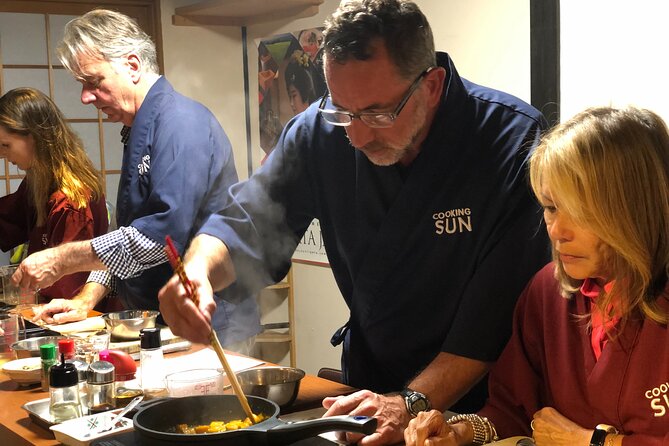
The kitchen is organized to keep the class moving. Ingredients may be prepared in advance, leaving you more time to cook, learn and make several dishes. That means the lesson may not involve every bit of chopping from scratch. For some people, the trade-off is a good one: more variety and less time spent on basic prep. If you want a class built around extensive knife practice, this may not be the right fit.
Expect to work alongside other participants, with instructors moving around to assist. The support matters if you are unfamiliar with Japanese ingredients or tools. It also helps families and mixed-skill groups take part together, rather than leaving one person to do all the cooking.
More food tours in Kyoto:
- Kyoto Night Foodie Tour in Gion (9+ dishes + 6 Sake tastings)
★ 5.0 · 1,762 reviews - Kyoto: Izakaya Bars Guided Walking Tour
★ 4.9 · 815 reviews - Kyoto: Insider Sake Brewery Tour with Sake and Food Pairing
★ 5.0 · 704 reviews - Kyoto: Ramen, Gyoza, and Onigiri Cooking Class
★ 5.0 · 445 reviews
Sitting down to dinner
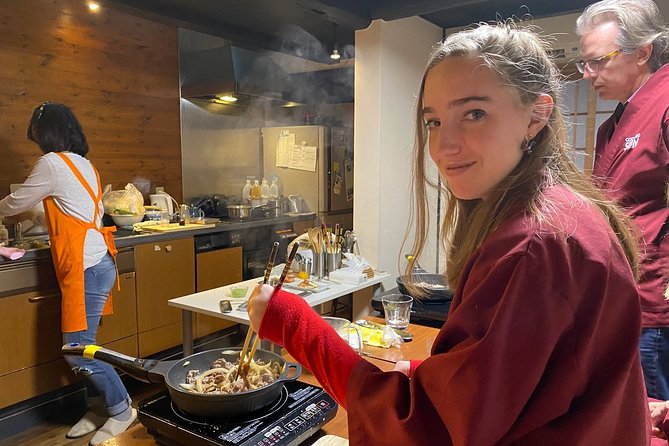
Once the cooking is done, you sit down with the group and eat the dishes you have prepared. Dinner is included, as are the cooking ingredients and an apron. You are not just watching a chef plate food or tasting a single sample; the meal is the payoff for the work you have done during the session.
Come hungry. A class that prepares several dishes can turn into a substantial meal, particularly if the menu includes rice, soup and multiple sides. The shared dinner also gives you time to talk with the instructor and other participants, and to ask questions that did not come up while your hands were busy.
Do not assume beverages are part of the price. Food and drinks are not included unless specified, and one participant was charged 600 yen for a glass of sake after assuming it was covered. That does not mean sake is offered in every session, but it is a good reason to ask the cost before ordering any drink.
Recipes that travel home with you
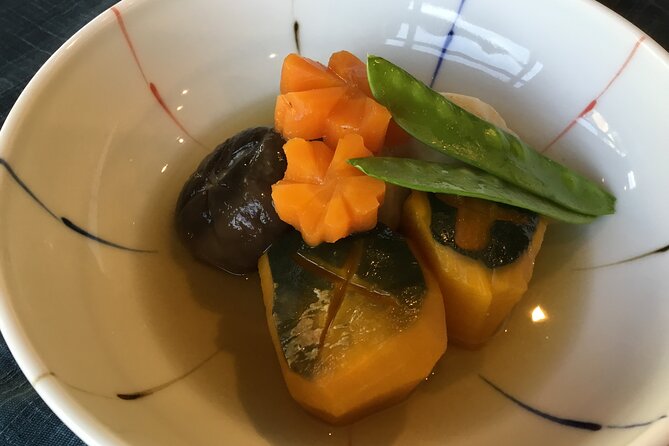
You receive recipes to use after the class. That is a meaningful part of the value: the goal is to help you recreate the dishes for friends and family, rather than leave you with only a pleasant meal and a few photos.
The most useful takeaways may be broader than the individual recipes. Learning to prepare dashi, handle common seasonings and understand how ingredients work together can help you adapt other Japanese dishes later. Still, your ability to reproduce the food will depend on finding the ingredients at home. If you already cook Japanese food, the class can offer new combinations or techniques; if you are a beginner, it gives you a structured first set of dishes to practice.
The instructors are described as patient and attentive, and the class is set up to explain ingredients as well as cooking steps. That makes it easier to ask the questions that matter in your own kitchen: what can be substituted, how a sauce differs from another, or which part of a process needs the most care. You will need to ask those questions during the session, since the menu and ingredients may not match what you can buy at home.
Is $71.63 good value?
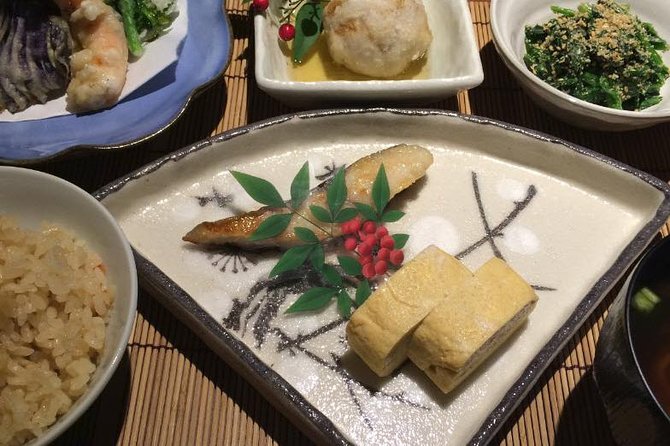
At $71.63 per person, this is more than a meal out, but you are paying for about three hours of instruction, ingredients, an apron, dinner and recipes. The value is strongest if you want an activity that teaches you something useful and gives you a substantial meal at the end. A group discount is available, though the amount depends on the booking details.
It is less compelling if your main goal is simply to try izakaya food. You can enjoy Japanese dishes in a restaurant without spending an afternoon in a kitchen. The class makes sense when you want to understand how the food is prepared, ask questions and take techniques home.
The group size, hands-on format and English instruction are important parts of the price. You are not paying for a private chef, but the maximum of eight participants keeps the session from becoming a large, impersonal demonstration. Dinner is included, while drinks may cost extra, so factor that into your budget.
Who will enjoy this class most?
This suits curious eaters, beginner cooks and people who already cook but want a closer look at Japanese ingredients and methods. It is also a good shared activity for families: children have taken part, and the format gives different skill levels a way to join in. If you have allergies or other dietary requirements, advise the provider when booking. Past classes have accommodated food allergies and vegetarian needs, but you should confirm your own requirements in advance rather than assume every menu can be adapted.
The class is a particularly good fit if you like learning by doing. You will be following instructions, handling ingredients and eating with the group. It is not the best match if you want a private session, a fixed menu, a meal without cooking, or a class focused on one specific dish.
Should you book the izakaya class?
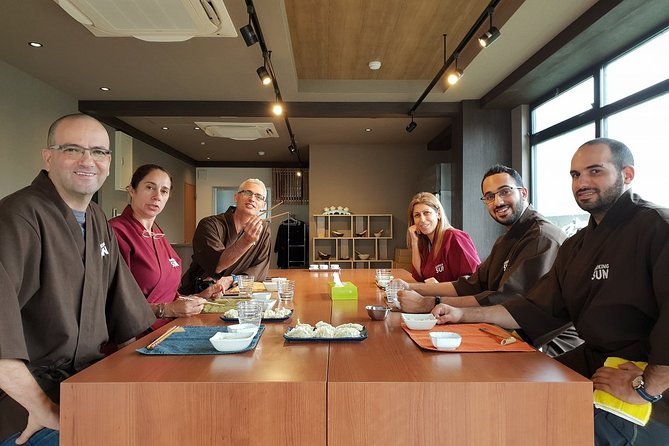
Book it if you want to spend an afternoon learning everyday Japanese cooking, with dashi and seasoning as well as several dishes, then eat the results. The small group and take-home recipes make the $71.63 price easier to justify for anyone who will use what they learn.
Before booking, check whether the seasonal menu suits your interests, state any dietary needs, and ask about drinks if you want sake. If those details work for you, this is a practical, sociable way to add more than another restaurant dinner to your Kyoto stay.
FAQ
How long is the cooking class?
The class lasts about three hours. It starts at 2pm and ends back at the meeting point.
Where does the class meet?
It meets at Cooking Sun, 679 Funayacho, Shimogyo Ward, Kyoto, 600-8466, Japan. The studio is near public transportation.
What is included in the price?
The class includes dinner, cooking ingredients, an English-speaking instructor and an apron. Drinks are not included unless specified.
What dishes will I cook?
The menu varies with seasonal ingredient availability. Possible dishes include spinach with sesame sauce, teriyaki yellowtail, vegetable chowder, mushroom tempura and rice with vegetables.
Is the class suitable for beginners?
Yes. The instructor demonstrates the techniques, and the class is intended for a range of cooking experience. You can ask for help as you work.
Can I tell the provider about dietary requirements?
Yes. You should advise the provider of specific dietary requirements when booking. Do this in advance so the team can respond to your needs.
How many people are in the class?
The activity has a maximum of eight participants. The maximum for a booking is also eight people.
What is the cancellation policy?
You can cancel at least 24 hours before the start time for a full refund. Cancellations or changes made less than 24 hours before the start time are not accepted, and the payment is not refunded.
Newly added in Kyoto
- Uji: Private immersion into Kyoto’s tea and reglious culture★ 5.0 · 17 reviews
- Whisk Your Own Matcha: A Zen Matcha Experience at Temple★ 3.6 · 7 reviews
- Kyoto tea town for matcha lovers★ 5.0 · 16 reviews
- Treasures of Kyoto: Gion & historical Walking Tour★ 5.0 · 6 reviews
- Kyoto Matcha Green Tea Tour★ 4.5 · 23 reviews
- Uji and Wazuka Matcha Farm Half Day Private Guided Tour★ 5.0 · 21 reviews
- Uji Tea Ceremony and UNESCO Heritage Walking Tour★ 5.0 · 20 reviews
- Utilising upcycled Matcha! Creating matcha incense (Uji, Kyoto)★ 5.0 · 6 reviews
Kyoto Cooking Classes, compared.

Ramen Cooking Class at Ramen Factory in Kyoto
Read our review →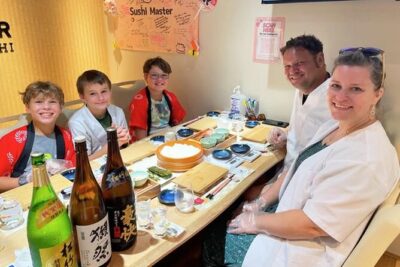
Sushi Making in Kyoto! Same-day bookings welcome!
Read our review →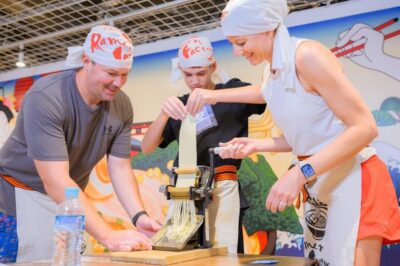
Ramen Cooking Class at a Ramen Factory with Souvenir
Read our review →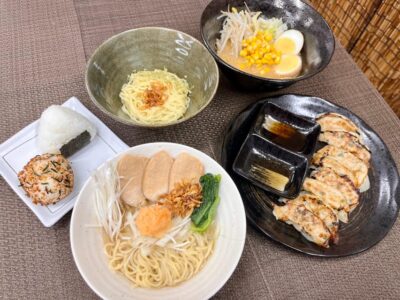
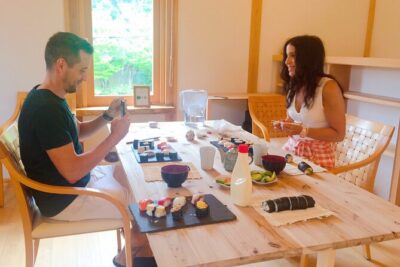
The Original Small-Group Sushi Making Class in Kyoto
Read our review →
Japanese Washoku Bento Small Group Cooking Class
Read our review →
Japanese Traditional Sweets Making and Tea Ceremony
Read our review →
Kyoto Ramen and Gyoza Cooking Class with Professional Chefs
Read our review →Browse the lists this tour appears in