
Reviewed · KYOTO PRIVATE TOURS
Kyoto 4hr Private Tour with Government-Licensed Guide
Kyoto’s famous sights make more sense when someone can explain what you’re seeing, and this private tour gives you four hours with a nationally licensed English-speaking guide to do just that. Rather than race through the city’s long menu of temples and districts, you choose two or three places and build a visit around your interests.
I like two things in particular: you set the focus, and a local guide can make Kyoto’s buses, trains, and temple grounds easier to navigate. Guides including Yuri, Tomy, Yuka, Akira, and Nabet have been praised for adapting plans, sharing cultural context, and offering practical suggestions.
The main limitation is time. Four hours is enough for a focused introduction, not a grand tour of Kyoto, and admission and transport costs are extra. Some routes also mean plenty of walking, including hills, so choose your stops with care.
Key points
- Choose two or three sights from a broad range of Kyoto landmarks and neighborhoods.
- Meet your guide on foot within a designated area of Kyoto; pickup is not a private-car service.
- Use public transport or taxis with your guide, or pay extra to arrange a private vehicle.
- Expect added costs for transport, entrance tickets, meals, and personal expenses.
- Plan around your pace: temple visits, steep paths, crowds, and family breaks all affect how much fits.
- Strong overall feedback: the tour is rated 4.9 out of 5, with 97% recommending it.
Four Hours, Two or Three Stops
The key to enjoying this tour is to treat it as a tailored introduction, not a checklist. The selection of possible sights is extensive, from Fushimi Inari Shrine and Gion to Arashiyama and the northern mountain towns. But the tour includes only your choice of two or three sites.
That limit is a strength, not a flaw. Kyoto’s sights are spread across the city, and crossing town takes time. A sensible route might focus on eastern Kyoto, pairing Fushimi Inari with quieter nearby temples, or join a central-city walk with Gion and Nishiki Market. Trying to combine distant places such as Arashiyama and Fushimi Inari in four hours could leave you spending too much of the visit in transit.
Your guide can help shape the plan before or at the start of the tour. Several guides, including Akira, Nabet, and Masa, have been praised for asking about preferences and making practical choices around crowds and travel time. If you already know what matters most, tell the guide. If not, ask for a route that balances one major sight with a quieter stop or a walk through a historic district.
More private and custom tours in Kyoto:
- Kyoto 6hr Private Tour with Government-Licensed Guide
★ 5.0 · 1,369 reviews - 10 Must-see Spots in Kyoto One Day Private Tour (up to 7 people)
★ 5.0 · 1,108 reviews - Kyoto: Private Tour with Local Licensed Guide
★ 4.8 · 463 reviews
Fushimi Inari’s Gates and the Stories Beyond Them
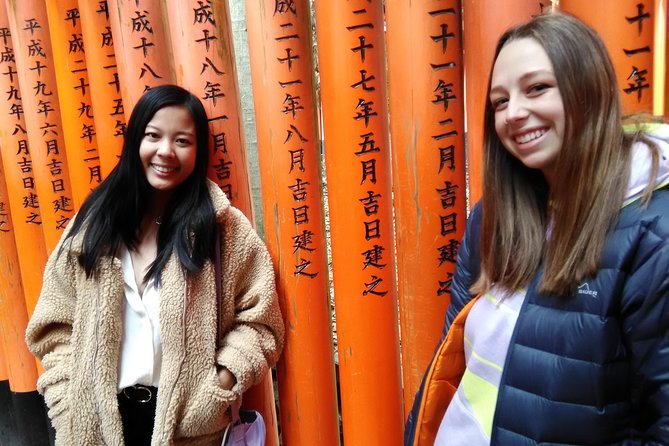
Fushimi Inari-taisha is one of Kyoto’s best-known sights, famous for its long corridors of vermilion torii gates. The shrine is devoted to Inari, associated with rice and prosperity, and its paths climb into wooded Mount Inari. A guide can add context to the shrine’s traditions and help you decide how far to walk.
Crowds are a practical consideration, especially around the most photographed gates. One useful approach is to start early, then move away from the busiest stretches toward less crowded parts of the grounds. Nabet has been praised for taking visitors beyond the familiar photo spots to quieter places. The shrine’s hills and stairs can make this a more strenuous choice than a quick stop suggests, so be honest about your energy and footwear.
Gion, Nishiki Market, and Everyday Kyoto
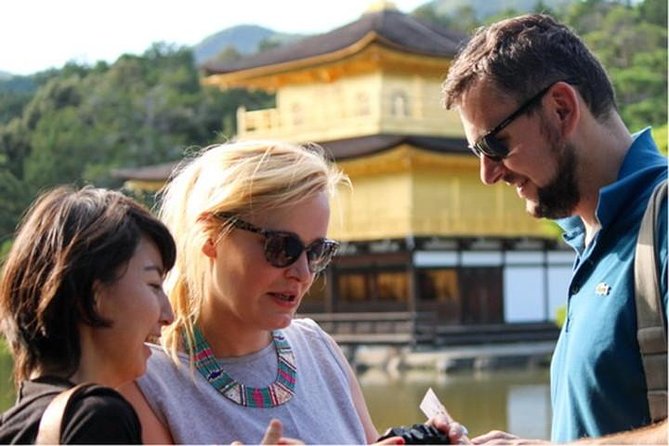
Gion is a historic entertainment district of narrow streets, traditional buildings, and teahouses. It can be hard to know where to wander, and a guide can explain the area’s cultural setting while helping you find your way through its lanes. Keep expectations respectful: Gion is a living neighborhood, not a stage set.
Nishiki Market offers a different kind of Kyoto experience. Its narrow, five-block shopping street is lined with more than one hundred shops and restaurants, with food at the center of its appeal. It can be lively and crowded, and the walk is a good chance to learn about local ingredients and food customs. It is not a meal included in the tour, so budget separately if you want to sample something.
Pontocho, another possible stop, is a narrow dining alley west of the Kamo River. It is most atmospheric around meal times, but the tour does not include dinner or other food costs. These central neighborhoods can make a compact route, especially if you want street life and local context rather than spending all four hours inside temple grounds.
Temples, Castles, and the Art of Choosing
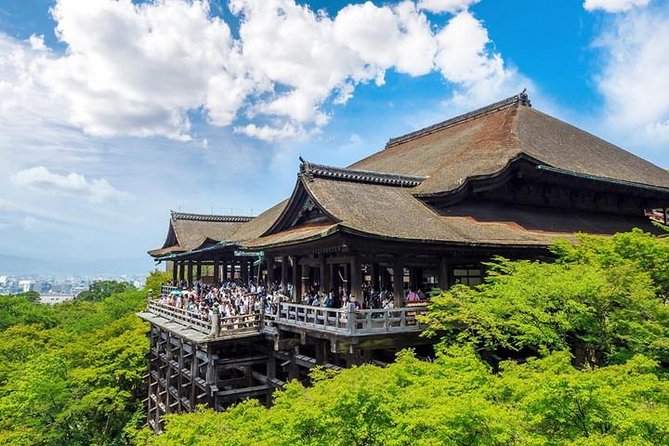
Kyoto’s historic sites each offer a different angle on the city. Nijo Castle, built in 1603 as the Kyoto residence of Tokugawa Ieyasu, introduces the power and politics of the shogunate. Kiyomizu-dera, set on the eastern hills, is a major temple with expansive grounds and views across the city. Both charge admission, which is not included.
Kinkakuji, the Golden Pavilion, is a visually striking Zen temple whose top two floors are covered in gold leaf. It is a natural choice if you want one famous landmark, though its popularity can mean crowds. Ginkakuji, the Silver Pavilion, offers a quieter contrast in the eastern foothills, with a history tied to shogun Ashikaga Yoshimasa and a garden setting.
For a different mood, Nanzenji is a major Zen temple complex with broad grounds at the foot of the Higashiyama mountains. Tofukuji is also a large Zen temple, particularly known for autumn colors. Ryoanji draws visitors to its celebrated rock garden. Each can reward a slower visit, but there is no time to linger at every temple on the menu. Choose the one that best matches your interests, and ask your guide how much walking or travel it requires.
The Kyoto Imperial Palace offers a look at the former residence of Japan’s imperial family, while Katsura and Shugakuin Imperial Villas are noted for architecture and garden design. These villas are managed by the Imperial Household Agency, and admission is not included. Confirm the arrangements and access requirements with the tour provider before making one the centerpiece of your plan.
More private tours in Kyoto:
- Fushimi Inari Hidden Hiking Tour (Private Option Available)
★ 5.0 · 1,750 reviews - Private Kyoto Tour with a Local, Highlights & Hidden Gems, Personalised
★ 5.0 · 1,543 reviews - Nara Half Day Trip Walking Tour (Private Option Available)
★ 5.0 · 937 reviews - Private Kyoto Tour with Licensed Guide & Vehicle (Max 15 persons)
★ 5.0 · 417 reviews
Arashiyama and the Northern Mountains
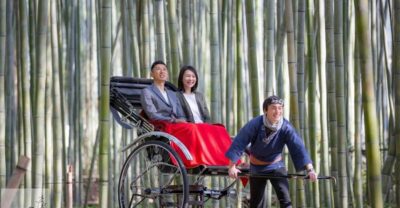
Arashiyama lies on Kyoto’s western edge and is known for its bamboo groves, Togetsukyo Bridge, and temples such as Tenryuji. The bamboo paths are attractive for a walk, but the area is popular and lies a substantial distance from many central and eastern sights. It works best as the focus of a four-hour tour, rather than one stop added to a citywide itinerary.
You can also choose smaller temples in the area, including Okochi Sanso Garden, Jojakkoji, Gioji, and Otagi Nenbutsuji. Their appeal varies: some are known for garden views, moss, or stone figures. Each additional stop takes time, and several have entrance fees.
Kibune and Kurama offer a more rural setting in the northern mountains. Kibune grew around Kifune Shrine, while Kurama is known for Kurama-dera and its hot spring. These places may suit you if you want mountain scenery and are willing to devote the tour to a longer outing. The itinerary notes extra travel time for Byodoin Temple in Uji, another out-of-central-Kyoto option. In four hours, distance matters as much as the number of sights.
Getting Around With a Local Guide
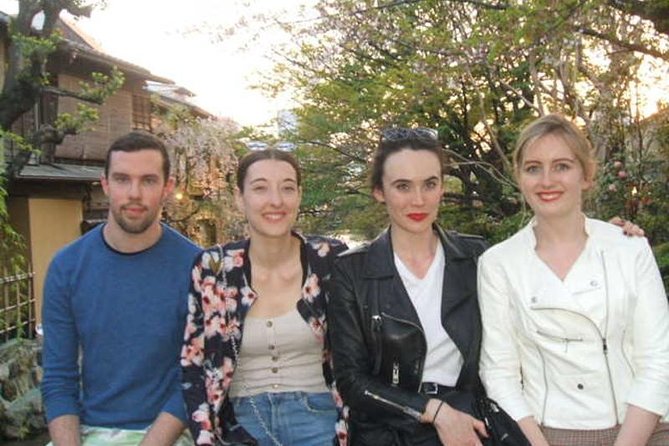
This is a walking tour, with your guide meeting you on foot in a designated area of Kyoto. You can travel between sights by public transportation or taxi. The guide can help you navigate the city’s transit system, an advantage several people have appreciated, especially when a tight schedule makes missed connections costly.
Do not mistake the included pickup for a chauffeured ride. A private vehicle is not part of the base price, though you can arrange one for an additional cost. Fares for public transport or taxis are also extra, as are entrance fees. If you want to limit walking, discuss that beforehand and ask whether taxis or a vehicle can fit your route and budget.
Walking can still add up, and some temples sit on hills or have stairs. One family-oriented guide, Ken, adjusted the pace for children, allowed time for lunch, and incorporated a kimono rental into the day. That sort of flexibility is one of the benefits of a private tour, but it is worth stating your needs early rather than assuming every route will be easy.
What the Price Buys, and What It Does Not
At $109.43 per person, the price buys a four-hour private tour with a licensed local English-speaking guide and a route tailored to your group. The value is strongest if you want more than directions: guides can explain history and religious practices, help you make sense of unfamiliar sites, and recommend places to visit or eat afterward.
The cost is per person, and admission, transport, lunch, and personal expenses are not included. Those additions can change the total, particularly if your plan includes several ticketed temples or taxis. Ask about guide admission fees too: the guide’s entry is covered only for sights listed as eligible under the tour’s What to Expect details.
The tour’s 4.9 rating from 629 reviews and 97% recommendation figure suggest a strong track record, but the experience still depends on the match between your interests, the route, and your guide. One lower-rated account raised concerns about historical explanations and a language barrier. That is a useful reminder to be specific about what you hope to learn, and to confirm the guide’s language and interests when arranging the tour.
Choosing Your Guide and Setting the Pace
Many people value the guide as much as the sights. Yuka, Yuri, Tomy, Akira, Nabet, and other named guides have been praised for clear explanations, friendly communication, and adapting the route. Some have helped families manage heat or fatigue, while others have made transit easier or suggested restaurants for after the tour. These are examples, not a promise that you will be assigned a particular guide.
Before the day, share your priorities. Say whether you care most about religion, Japanese history, food, photography, or a relaxed walk. If you are traveling with children, have limited time, or prefer fewer stairs, spell that out. A guide can tailor a private tour, but four hours remains four hours.
The tour is suitable for most people, and service animals are allowed. Wear comfortable shoes, bring water in hot weather, and leave room in your schedule for walking between sites. The tour has free cancellation up to 24 hours before its start time; changes or cancellations inside that window are not accepted.
Should You Book This Kyoto Tour?
Book it if you want a personal introduction to Kyoto and would rather spend four focused hours with a guide than puzzle through transit and temple context alone. It is especially useful for a first visit, a short stay, or a family that wants an itinerary adjusted to its pace.
Skip it if you expect a private car, included entrance tickets, or a full sweep of Kyoto’s major sights. The best version of this tour is selective: choose two or three places that matter to you, keep the route geographically sensible, and ask the guide to help with the rest.
FAQ
How long is the tour?
The tour lasts approximately four hours.
Is the tour private?
Yes. It is a private activity for your group, and you cannot combine multiple tour groups.
How many sights can I visit?
The tour includes a customizable selection of two or three sites from the stated options.
Is hotel pickup included?
The guide meets you on foot within a designated area of Kyoto. The tour information describes hotel pickup on foot, so confirm the exact meeting point when arranging your tour.
Is a private car included?
No. A private vehicle is not included, but you can arrange one at an additional cost.
Are transport fares included?
No. Transportation fees are excluded. You can travel by public transport or taxi, with your guide.
Are temple and castle admission fees included?
No. Entrance fees are not included in the tour price.
Is lunch included?
No. Lunch and other personal expenses are not included.
Is the tour conducted in English?
The included guide is a licensed local English-speaking guide.
What is the cancellation policy?
You can cancel at least 24 hours before the experience’s start time for a full refund. Cancellations or changes made less than 24 hours before the start time are not accepted.
Newly added in Kyoto
- Uji: Private immersion into Kyoto’s tea and reglious culture★ 5.0 · 17 reviews
- Whisk Your Own Matcha: A Zen Matcha Experience at Temple★ 3.6 · 7 reviews
- Kyoto tea town for matcha lovers★ 5.0 · 16 reviews
- Treasures of Kyoto: Gion & historical Walking Tour★ 5.0 · 6 reviews
- Kyoto Matcha Green Tea Tour★ 4.5 · 23 reviews
- Uji and Wazuka Matcha Farm Half Day Private Guided Tour★ 5.0 · 21 reviews
- Uji Tea Ceremony and UNESCO Heritage Walking Tour★ 5.0 · 20 reviews
- Utilising upcycled Matcha! Creating matcha incense (Uji, Kyoto)★ 5.0 · 6 reviews
Kyoto Private Tours, compared.
Kyoto 6hr Private Tour with Government-Licensed Guide
Read our review →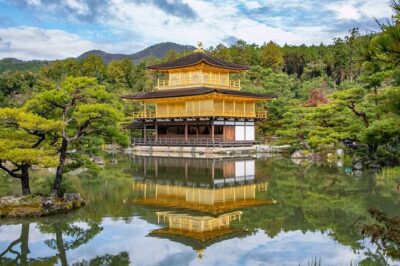
10 Must-see Spots in Kyoto One Day Private Tour (up to 7 people)
Read our review →
Arashiyama Customized Rickshaw Tour & Bamboo Forest
Read our review →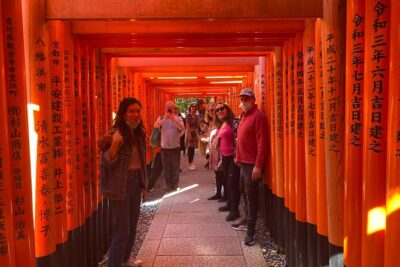
Private Kyoto Tour with Licensed Guide & Vehicle (Max 15 persons)
Read our review →
Private Customized Walking Tour with a Local Insider
Read our review →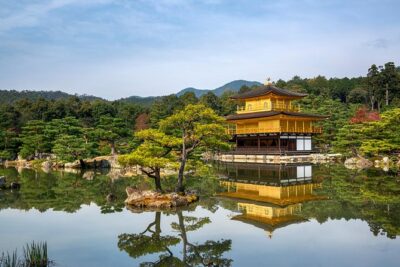
Kyoto Customized Private Tour: See Top Attractions in 1 Day
Read our review →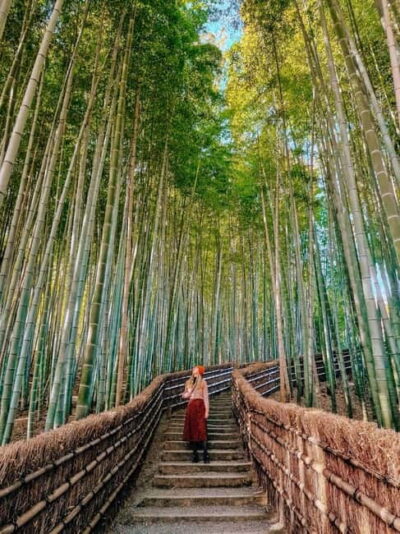
Browse the lists this tour appears in