
Reviewed · NISHIKI MARKET TOURS
Kyoto: Enjoy Sushi & Market Tour! Best for Family & Couple!
A Kyoto sushi class with a stop at Nishiki Market gives you more than a meal: you see fish preparation up close, then use what you have learned to make sushi yourself. In two hours, you also get an introduction to dashi and miso soup, with a local expert on hand to talk about seasonal sightseeing.
I like two things in particular: you make three styles of sushi, not just one, and the market visit adds a useful look at how fresh fish is handled. The dashi tasting and comparison is another thoughtful touch, because it connects the soup in your bowl to a basic ingredient in Japanese cooking.
The main consideration is the price: at $77 per person, this is a hands-on class, not a full market food tour. The experience depends in part on the instructor’s engagement, too. One attendee wanted more interaction, so if close guidance is your priority, it is worth keeping that in mind.
At a glance
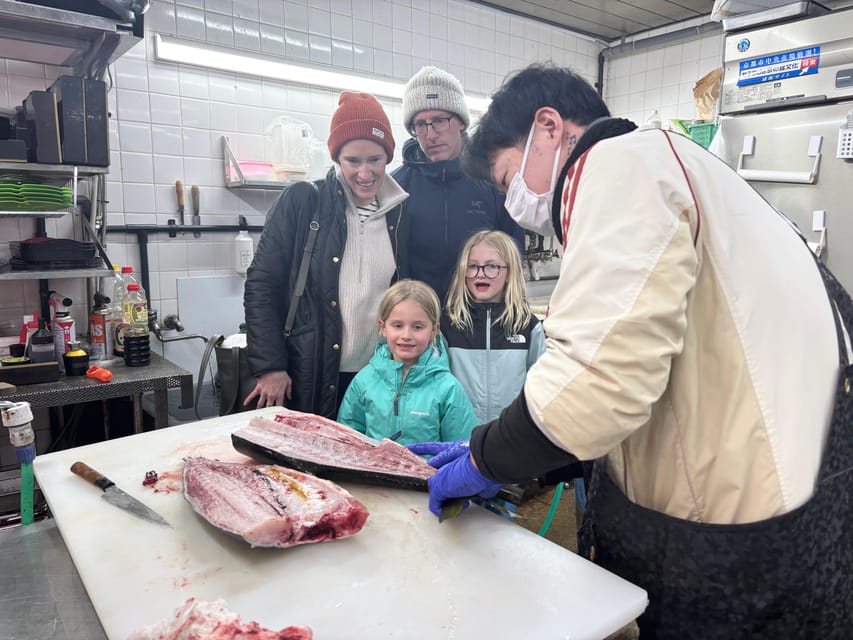
- Market first: Visit Nishiki Market and watch a fish vendor cut fish.
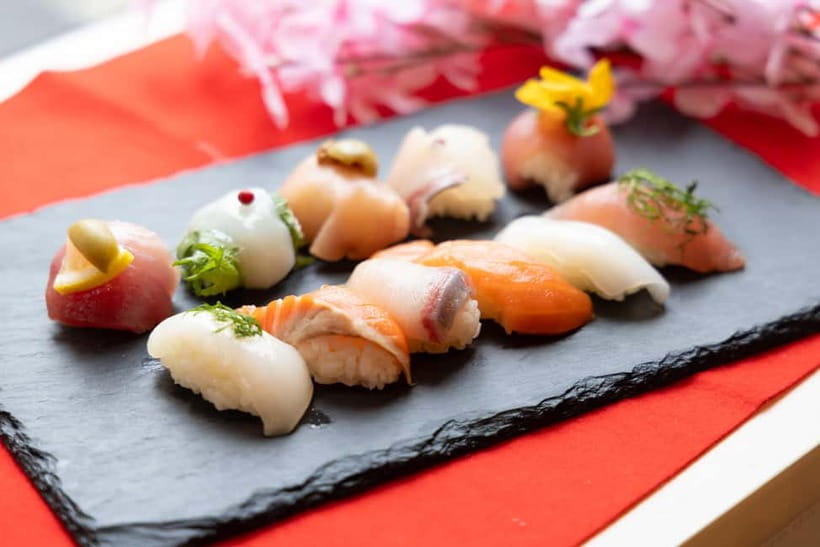
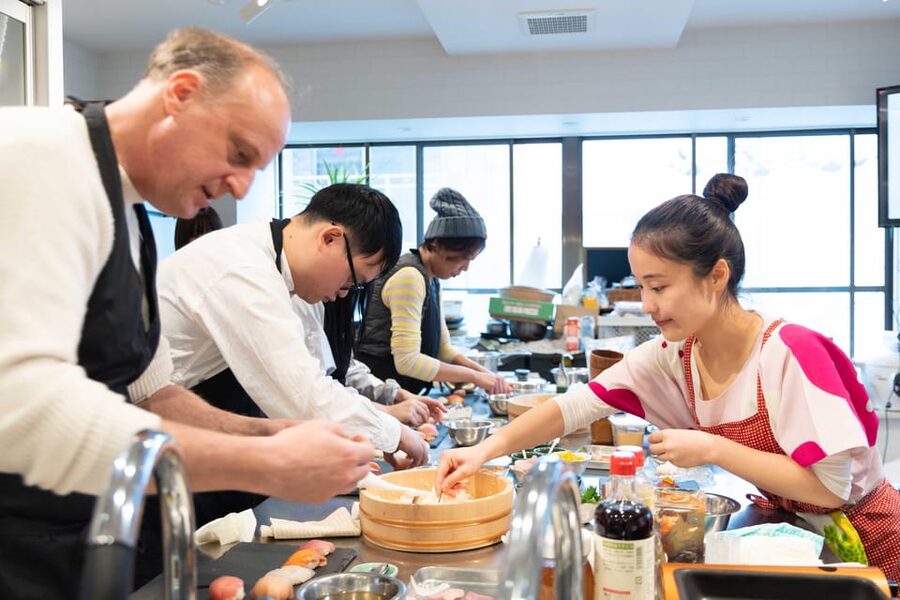
- Three sushi styles: Make nigiri, temari, and temaki, along with vinegar rice.
- Soup with a lesson: Learn about dashi, compare its taste, and make miso soup.
- Small group: The class is limited to 10 people, with instruction in English or Japanese.
- A local planning bonus: A Kyoto tourism expert shares seasonal sightseeing suggestions.
Start at Nishiki Market, not just the cutting board
The tour begins with a meeting in central Kyoto, in front of the building with Salon Roll hair salon on the first floor. The location is described as about 10 minutes from Kyoto Station and five minutes from Shijo Station, and near Gion and Kiyomizu-dera. Those landmarks make the class a practical fit alongside other sightseeing, though you should check your route to the precise meeting spot before setting out.
From there, you visit Nishiki Market with your guide. The point is not simply to walk past stalls: you get to see fish being cut by a skilled vendor and learn about choosing fresh fish for sushi. One attendee specifically recalled watching salmon being cut, a vivid detail that helps bring the market visit to life.
This stop gives the cooking lesson some context. Sushi can feel like a finished restaurant dish when it arrives at the table; watching fish being prepared helps you see the craft and care behind it. The visit also gives you a chance to ask questions before you begin working with the ingredients yourself.
Keep expectations measured. The tour includes a market visit and fish-cutting demonstration, but the supplied details do not promise a long food crawl, tastings at multiple stalls, or time to shop independently. Think of Nishiki as the opening lesson in the food, rather than a separate market tour.
More Nishiki Market tours in Kyoto:
- Nishiki Market Brunch Walking Tour (7 Tastings + Brunch)
★ 5.0 · 1,355 reviews - Kimono Tea Ceremony at Kyoto Maikoya, NISHIKI
★ 5.0 · 911 reviews - Kyoto Nishiki Market Food and Culture Walking Tour
★ 5.0 · 412 reviews
Make vinegar rice and three kinds of sushi
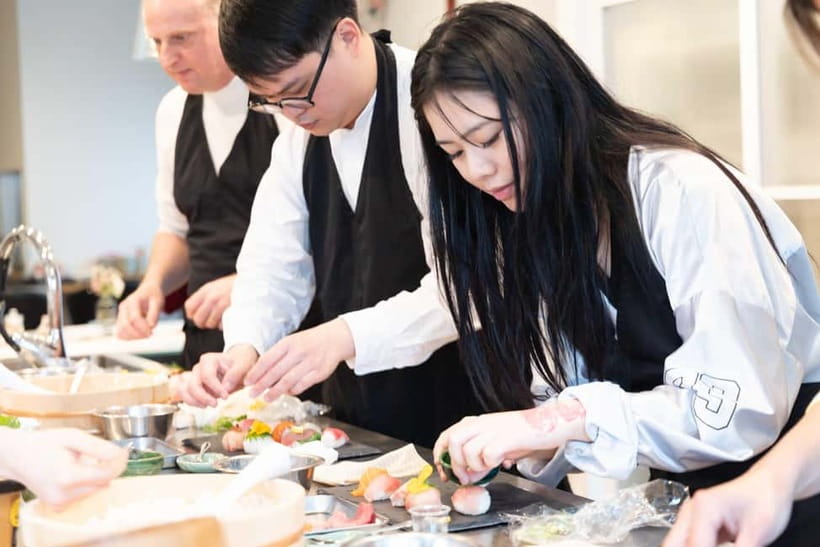
After the market, you learn to make vinegar rice and prepare three types of sushi: nigiri, temari, and temaki. Each gives you a different way to shape and present the same basic idea. Nigiri is formed by hand around a piece of topping, temari is rounded, and temaki is rolled into a hand-held cone.
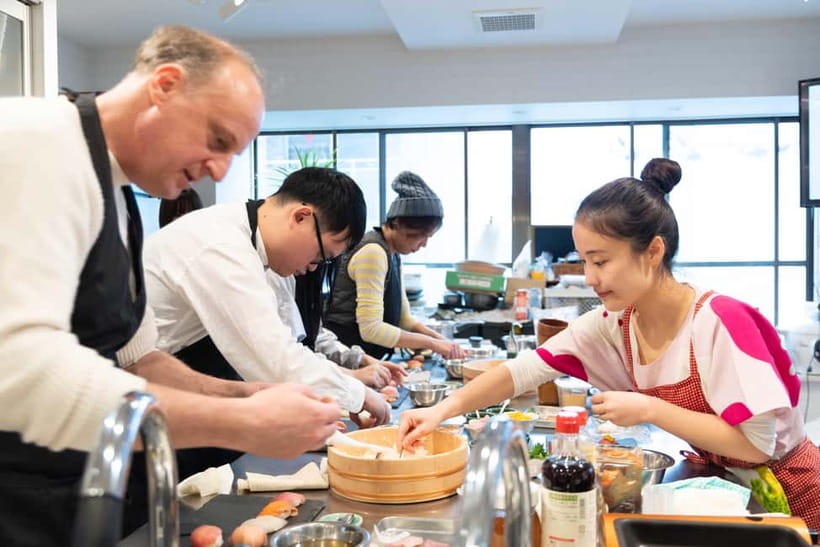
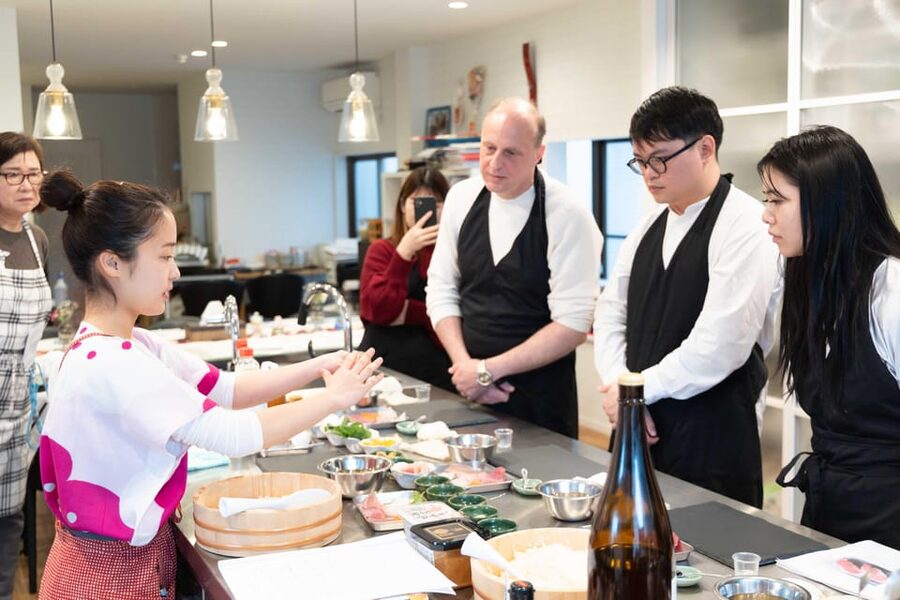
The class emphasizes both technique and creativity. You are encouraged to make sushi that looks appealing and tastes good, with enough flexibility to explore your own flavors while learning the fundamentals. That balance is useful for beginners: you get a structure to follow, but the goal is not to copy a perfect restaurant plate.
The practical payoff is easy to understand. You leave having practiced a meal you could try again at home, rather than only watching an instructor demonstrate it. A couple who had long wanted to make good sushi described gaining the skills to do so, while another participant found the workshop accessible and quick to pick up. Those comments point to a class aimed at participation, not a technical course for aspiring sushi chefs.
Still, hands-on does not always mean equal attention every minute. With a group of up to 10, the instructor has to divide time among participants. One person felt the teaching was less interactive than expected. If you want constant one-to-one coaching, a private class may suit you better, though no private option is specified here.
Learn what dashi adds to miso soup
The soup lesson rounds out the sushi work. You learn how to make dashi, taste and compare it, and then make miso soup. Dashi is a foundational Japanese stock, so tasting it directly helps explain why it matters beyond this single bowl.
This is a smart inclusion in a short class. You are not only assembling sushi; you also get a look at the flavor base behind a familiar Japanese dish. The comparison makes the lesson more concrete than a quick recipe handout, and preparing the soup gives you another skill to take home.
The ingredients and exact sequence of the tasting are not specified, so do not expect a detailed food-science seminar. The focus is a practical introduction: learn the role of dashi, sample it, and use what you have learned in miso soup.
Sit down to eat what you have made
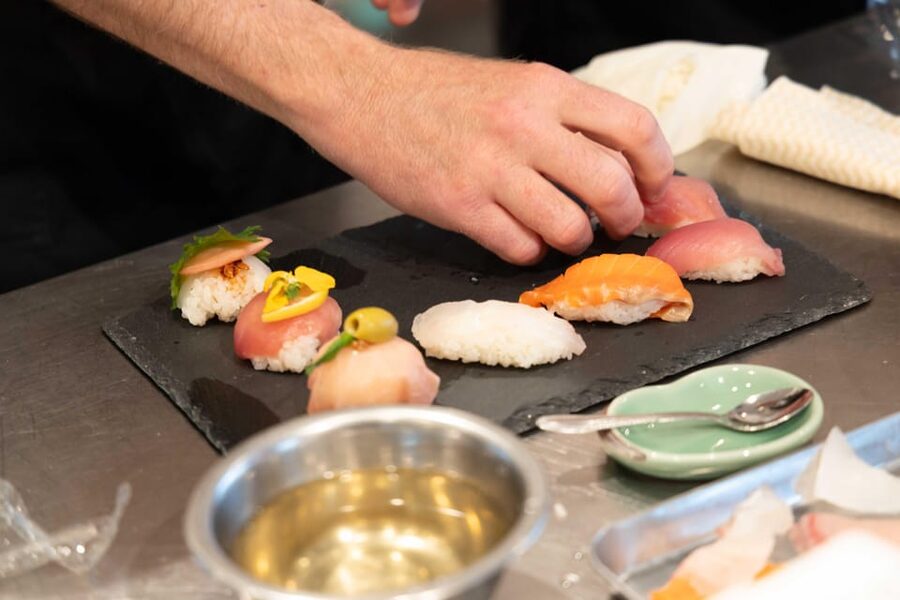
Once the cooking is done, you eat your sushi and miso soup, followed by dessert and coffee. That meal is an important part of the value. You get to see how your work turns out, enjoy it while it is fresh, and share the table with the rest of the group.
There is time for conversation among participants, too. For families and couples, that can make the class feel more like a shared outing than a demonstration with a meal tacked on. One family described it as a highlight of its Kyoto trip, and another family-focused comment called it good entertainment. It is an appealing option if you want an activity that gives everyone something to do together.
Some extras may depend on what is offered on the day. Sake and beer are available for an additional charge. One family’s meal included sake, green tea, and a matcha dessert, but the standard inclusions specify dessert and coffee, so treat those other items as a particular experience rather than a guaranteed menu.
More food tours in Kyoto:
- Ramen Cooking Class at Ramen Factory in Kyoto
★ 5.0 · 1,937 reviews - Kyoto Night Foodie Tour in Gion (9+ dishes + 6 Sake tastings)
★ 5.0 · 1,762 reviews - Kyoto: Izakaya Bars Guided Walking Tour
★ 4.9 · 815 reviews - Sushi Making in Kyoto! Same-day bookings welcome!
★ 5.0 · 713 reviews
Get seasonal Kyoto advice while you eat
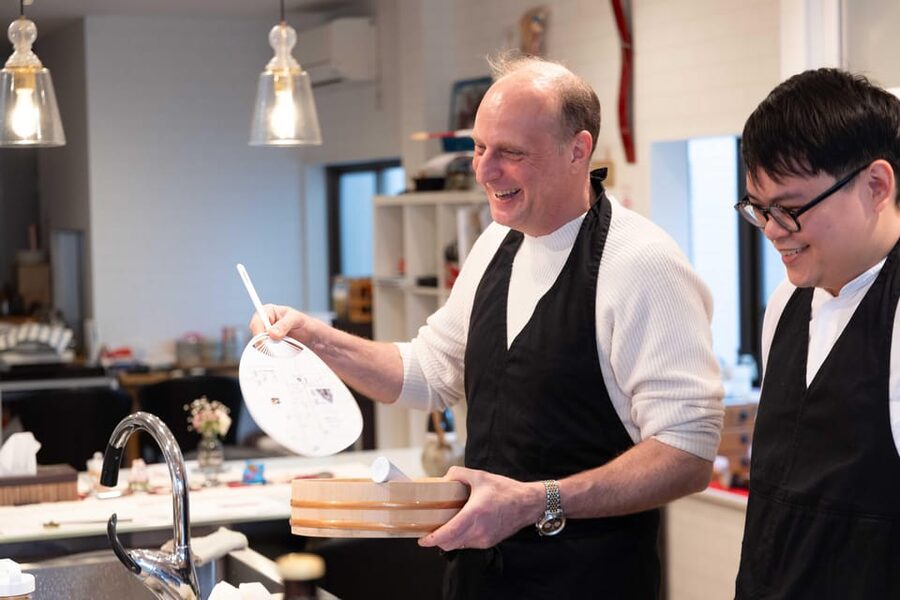
The guide is also described as a Kyoto tourism expert who shares seasonal sightseeing recommendations. This is a welcome bonus in a city where the best plan can depend on the time of year. A short conversation may help you think about what to see next, or how to shape the rest of your day.
Do not book the class as a substitute for a full itinerary consultation. The sightseeing advice is part of the experience, not a separate planning service with a promised length or personalized route. But if you have questions about what is in season, this is a useful chance to ask someone who knows the city.
The combination of food instruction and local tips is especially handy early in a Kyoto stay. You can enjoy a meal, learn a few techniques, and pick up ideas for later sightseeing in one compact block of time.
Is $77 a fair price?
At $77 per person for two hours, the class is not the cheapest way to eat sushi in Kyoto. You are paying for more than the meal, though: a guided Nishiki Market visit, fish preparation to watch, instruction in three sushi styles, a dashi tasting, miso soup, dessert, coffee, and seasonal sightseeing tips.
The value is strongest if you want to participate and learn. If your main goal is simply to sample a variety of market foods, you may get better value by exploring Nishiki Market on your own. If you want to make sushi with guidance and enjoy a meal afterward, the price is easier to justify.
The short duration is both an advantage and a limit. Two hours can fit neatly between sightseeing plans, but it also means the market visit and cooking lesson have to share a compact schedule. You should not expect a slow, extended class or an in-depth tour of every market stall.
Who will enjoy this class most?
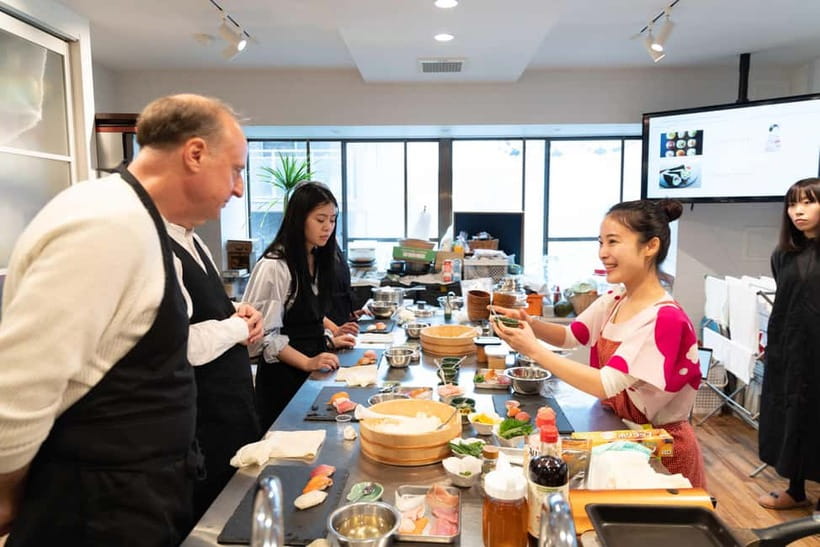
Families and couples are a natural fit. The activity gives you a shared task, and the food is the reward at the end. It can also suit solo visitors who enjoy small-group activities and want a social meal, although the strongest family feedback suggests this is particularly good for a shared outing.
It is also well suited to curious beginners. You do not need to arrive with sushi-making experience, and the class teaches basic techniques that you can repeat at home. If you already make sushi often, the market visit and dashi lesson may still interest you, but the class is not presented as advanced training.
The group is capped at 10, which keeps the class smaller than a large tour group, though not necessarily intimate in every session. Instruction is offered in English and Japanese, and the activity is wheelchair accessible. Smoking indoors is not allowed.
Booking is flexible: you can reserve without paying immediately, and cancellation is free up to 24 hours in advance. Check available start times when planning, since the exact schedule is not specified here.
Should you book it?
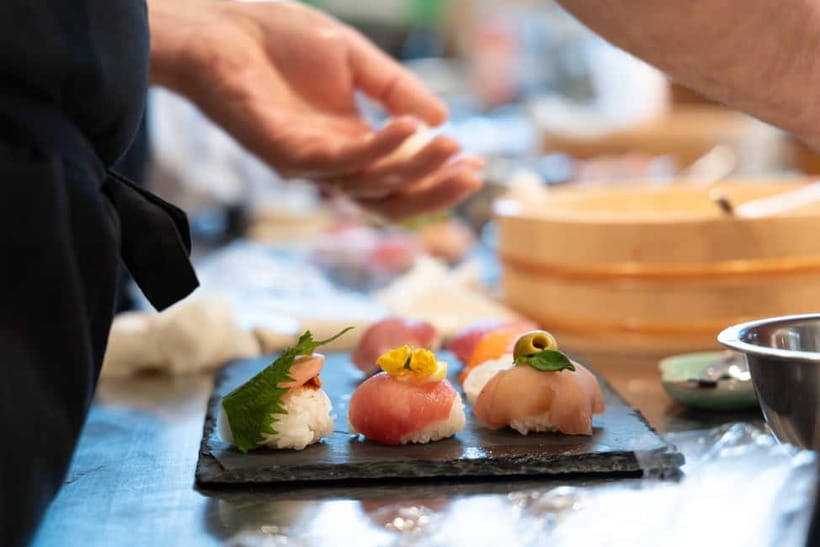
Book this class if you want a practical, food-focused break from Kyoto’s temples and streets, and like the idea of making your own lunch or dinner rather than only watching a demonstration. The combination of Nishiki Market, three sushi styles, miso soup, and local seasonal tips makes good use of two hours.
Skip it if you want an extensive market crawl, a long advanced cooking lesson, or the lowest-cost meal in town. For families, couples, and beginners who value a hands-on activity, it is a solid way to bring a taste of Kyoto home.
FAQ
How long is the sushi and market tour?
The activity lasts two hours. Check the available start times when booking.
How much does it cost?
The listed price is $77 per person.
What kinds of sushi will I make?
You will learn to make nigiri, temari, and temaki, as well as vinegar rice.
Is the Nishiki Market visit included?
Yes. You visit Nishiki Market with the guide and watch fish being cut.
What food and drink are included?
The class includes miso soup, dessert, and coffee, along with the sushi you prepare. Sake and beer are available for an additional charge.
What languages are used, and how large is the group?
Instruction is offered in English and Japanese. The group is limited to 10 participants.
Is the activity wheelchair accessible?
Yes. The activity is listed as wheelchair accessible.
Newly added in Kyoto
- Uji: Private immersion into Kyoto’s tea and reglious culture★ 5.0 · 17 reviews
- Whisk Your Own Matcha: A Zen Matcha Experience at Temple★ 3.6 · 7 reviews
- Kyoto tea town for matcha lovers★ 5.0 · 16 reviews
- Treasures of Kyoto: Gion & historical Walking Tour★ 5.0 · 6 reviews
- Kyoto Matcha Green Tea Tour★ 4.5 · 23 reviews
- Uji and Wazuka Matcha Farm Half Day Private Guided Tour★ 5.0 · 21 reviews
- Uji Tea Ceremony and UNESCO Heritage Walking Tour★ 5.0 · 20 reviews
- Utilising upcycled Matcha! Creating matcha incense (Uji, Kyoto)★ 5.0 · 6 reviews
Nishiki Market Tours, compared.
Nishiki Market Brunch Walking Tour (7 Tastings + Brunch)
Read our review →
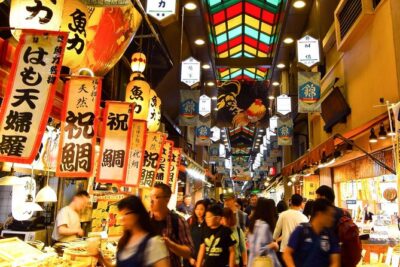
Kyoto Nishiki Market Food and Culture Walking Tour
Read our review →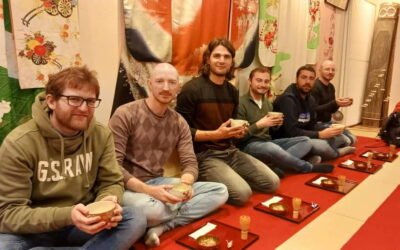
Nishiki Market Tea Ceremony with Koto Performance
Read our review →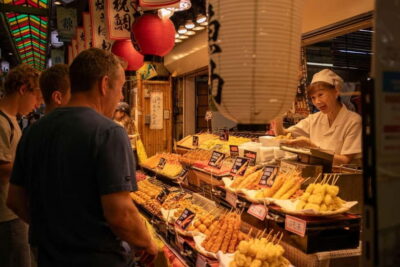
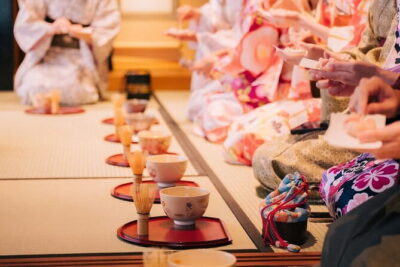
Kimono Tea Ceremony Experience at Kyoto Oritzuruya, Nishiki
Read our review →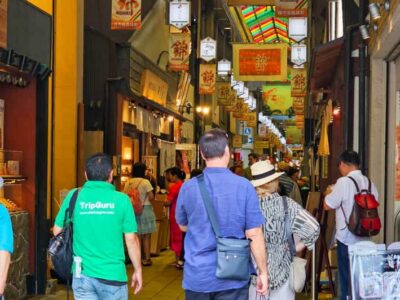
Nishiki Market and Depachika Food Tour with a Local
Read our review →
Nishiki Market Tour with a Local Foodie & Tastings
Read our review →Browse the lists this tour appears in