
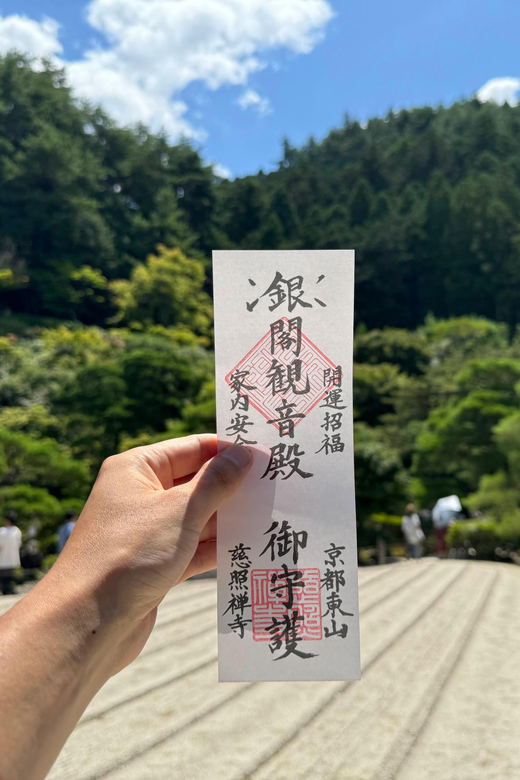
Reviewed · KYOTO TEMPLE & SHRINE TOURS
Kyoto: Ginkakuji, Silver Pavilion Guided Tour in 1 Hour
Ginkakuji’s appeal is in its restraint: a graceful Zen-style hall, carefully shaped sand garden and green paths share a compact temple setting. This one-hour private tour gives you a guide to explain what you’re seeing, then leaves you at the Philosopher’s Path for a slower wander on your own.
I like two things in particular: the focused hour makes sense if you want context without giving the temple a whole morning, and the finish at the Philosopher’s Path turns the visit into a useful starting point for further exploring. Guides Hiro, Yoshi and Teppei have led tours here, with visitors especially appreciating clear explanations and friendly answers to questions.
The main consideration is the short duration. One hour is enough for a guided look at the grounds, not a leisurely visit to every corner followed by a long walk along the canal. At $51 per person, you’re paying for a private guide and temple entry, so the value depends on how much explanation matters to you.
At a glance
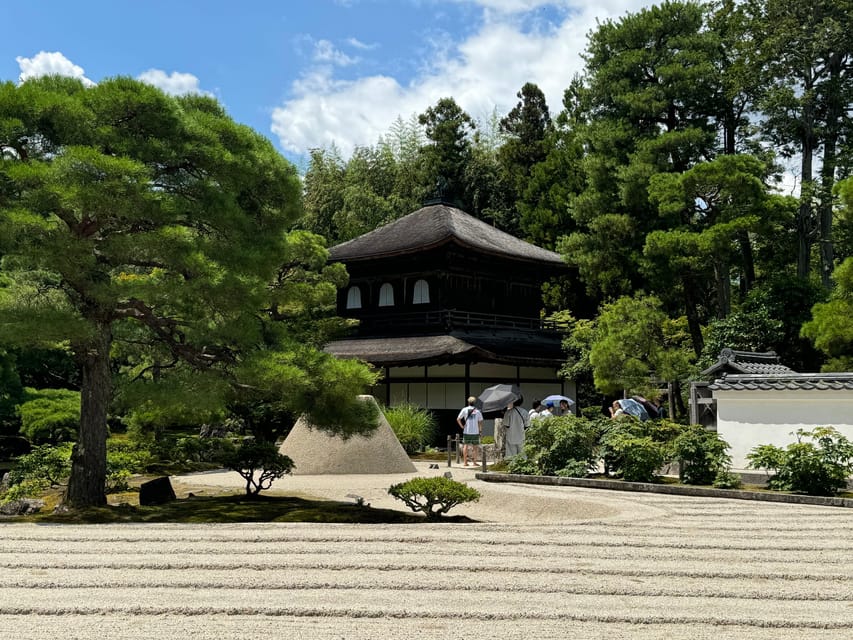
- The Kannon-den hall is a key stop, with Zen architecture that rewards a closer look.
- The sand garden offers a calm example of traditional Japanese garden design.
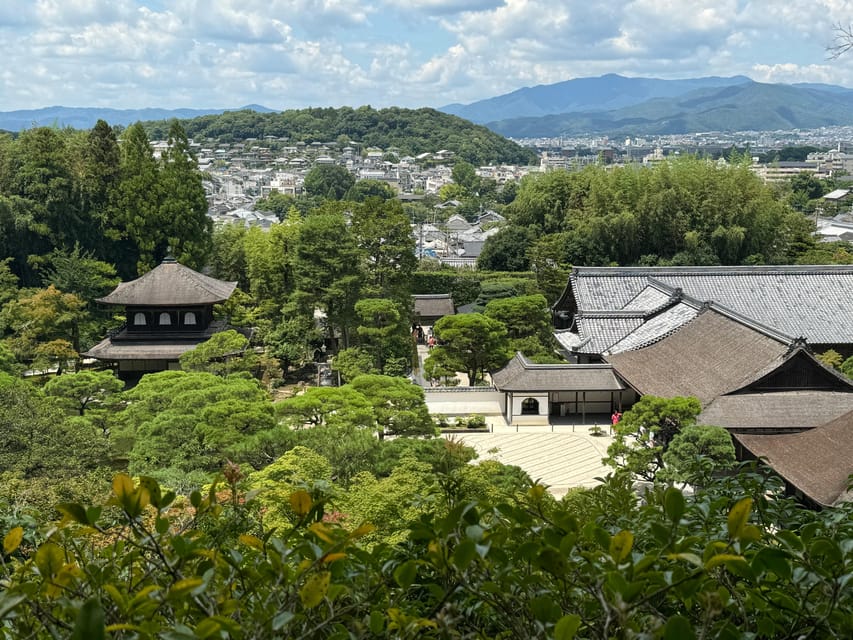
- The temple terrace provides scenic views from above the grounds.
- The private guide speaks Japanese or English, and can answer questions as you walk.
- The hour ends at the Philosopher’s Path, where you can continue at your own pace.
- Entry is included, and you meet in front of the temple gate, where your guide holds a yellow DeepExperience sign.
Starting at Ginkakuji’s main gate
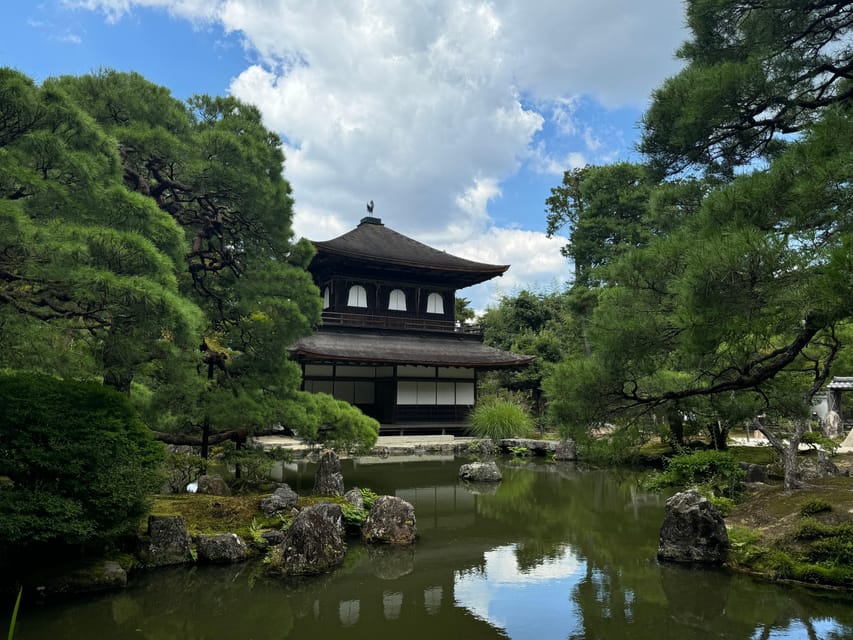
Meet your guide in front of the gate, identified by a yellow sign with the DeepExperience logo. The meeting point is straightforward, but give yourself enough time to find it before your chosen start time. The tour begins at the gate and spends its guided hour inside Ginkakuji Temple.
This is a private-group tour, which can make a short visit feel more personal than following a large group. You can ask questions as you go, and the guide can adjust explanations to your interests. The tour is offered in Japanese and English, so check that the language you want is available when choosing a start time.
One hour is a brisk format, but it has a clear advantage: Ginkakuji is the focus, rather than one stop in a longer day of sightseeing. You can get an introduction to the hall, gardens and views, then decide how much time you want to spend exploring further. The trade-off is that you should not expect the guided portion to include a long, unhurried stroll beyond the temple grounds.
More temple and shrine tours in Kyoto:
- Kyoto: Tea Ceremony Ju-An at Jotokuji Temple
★ 4.9 · 3,207 reviews - World Heritage Kyoto & Nara Uji Authentic Matcha Experience
★ 5.0 · 1,573 reviews - Arashiyama Bamboo, Temple, Monkeys, or Secret Sake Brewery
★ 4.8 · 886 reviews
Looking closely at the Kannon-den hall
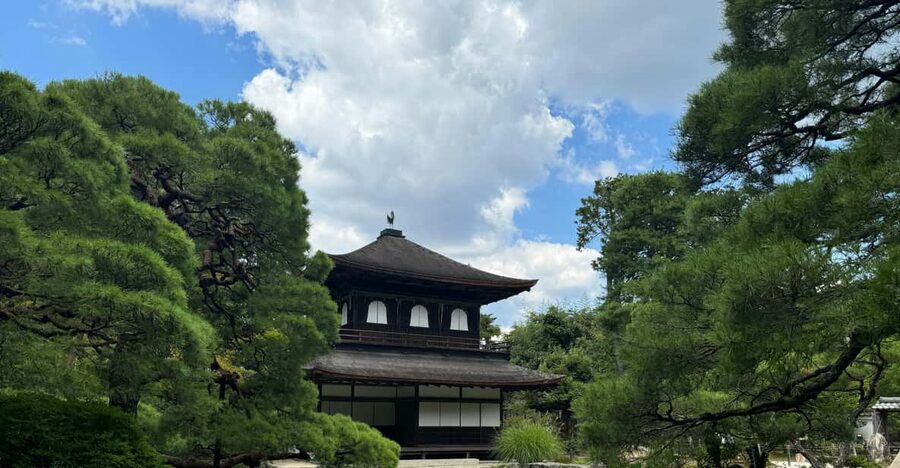
The Kannon-den hall is one of the visit’s architectural highlights. Its elegant Zen design offers a quieter kind of visual interest than a grand, heavily decorated building. Look for the hall as part of the whole setting: the proportions, the surrounding greenery and the way the structure sits within the gardens all contribute to its effect.
A guide helps make this kind of visit more than a sequence of pretty views. You can ask what to notice in the architecture or how the hall relates to the temple’s design. The tour description does not promise a particular lecture or historical focus, so think of the guide as a resource for questions rather than a fixed, detailed class.
Past guides include Hiro, Yoshi and Teppei. The best feedback has centered on guides who explain things clearly, respond to questions and make the hour feel welcoming. Yoshi has also linked Ginkakuji and Kinkakuji in his explanations for someone visiting both in one day. If you have that plan, it may be worth asking your guide to connect the two visits, though the assigned guide can vary.
Reading the sand garden
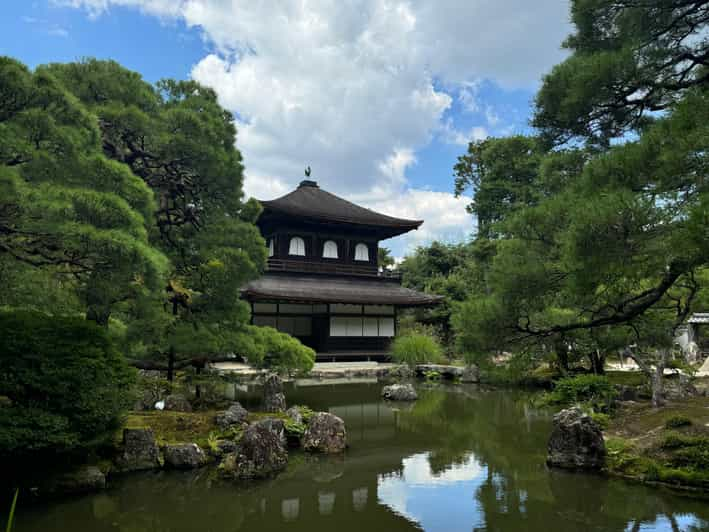
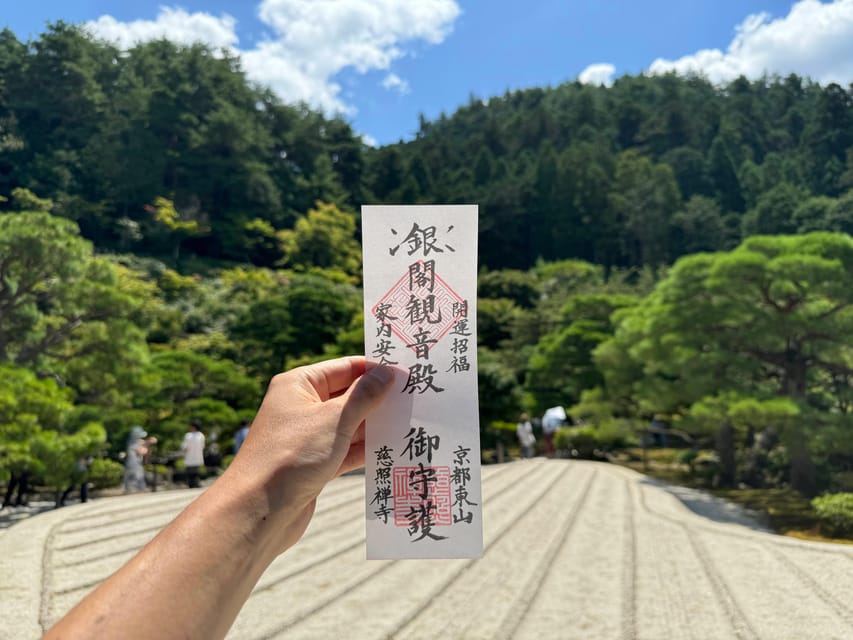
The sand garden is another reason to take your time. Its deliberate forms and careful arrangement invite you to pause and look, rather than hurry straight to the next landmark. If garden design is new to you, a guide can help you notice the choices that might otherwise seem simple at first glance.
I like that this stop offers a different kind of interest from the hall. The architecture gives you a structure to study; the sand garden asks you to take in a composed pattern within the grounds. Together, they make the visit feel varied despite its short length.
The garden is also a good place to set expectations. This is not a tour built around a series of dramatic, fast-changing sights. Much of Ginkakuji’s appeal comes from quiet details and the overall balance of the grounds. If you prefer constant activity, the calm pace may feel slow. If you enjoy looking carefully, it is a welcome change of speed.
Taking in the temple grounds and terrace views
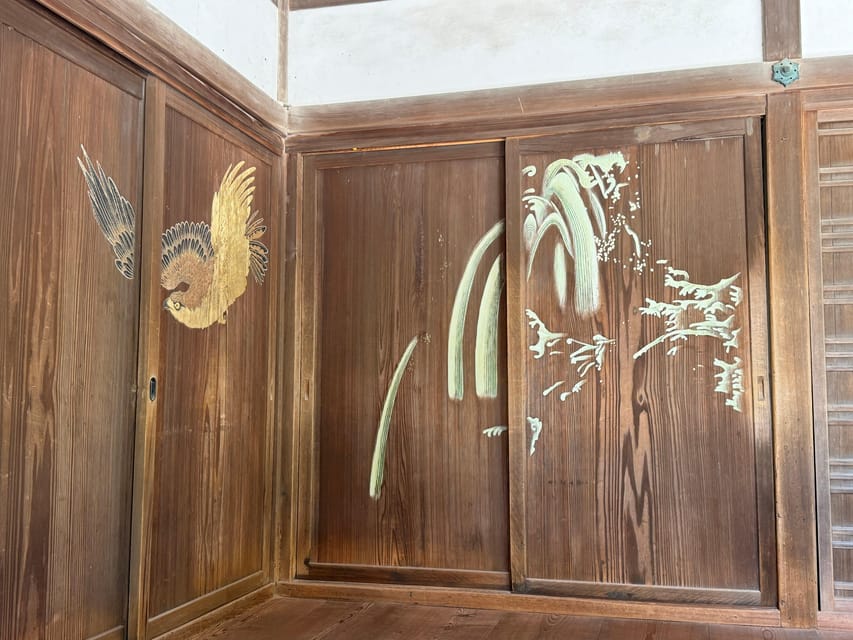
The temple grounds bring the hall and garden into a larger setting of lush, carefully maintained paths and plantings. Their appeal lies in the way the greenery frames the architecture and gives the visit a sense of calm. As you walk, look beyond the main features and notice how the gardens guide your attention from one part of the grounds to another.
A scenic view from the temple’s elevated terrace adds a change of perspective. It gives you a chance to look out across the setting rather than only at details close at hand. The terrace is part of the experience’s appeal, but the tour is still only an hour, so keep moving at a comfortable pace and take the view in while you can.
The grounds are the kind of place where an explanation can help you slow down. You may be tempted to take a quick photo and move on. Instead, ask your guide what they would point out, or which part of the garden best shows its traditional design. There is no need to arrive with specialist knowledge; the pleasure is in noticing more than you might on a quick solo walk.
A few more Kyoto experiences worth booking
- Ninja 1-hour Hands-on Lesson by Japanese master in Kyoto -Entry
★ 5.0 · 489 reviews - 1 Hour Geisha Show in Kyoto
★ 5.0 · 452 reviews - One Hour Geisha Show in Kyoto
★ 5.0 · 64 reviews - One Hour Geisha Show in Gion Kyoto
★ 5.0 · 59 reviews
Finishing at the Philosopher’s Path
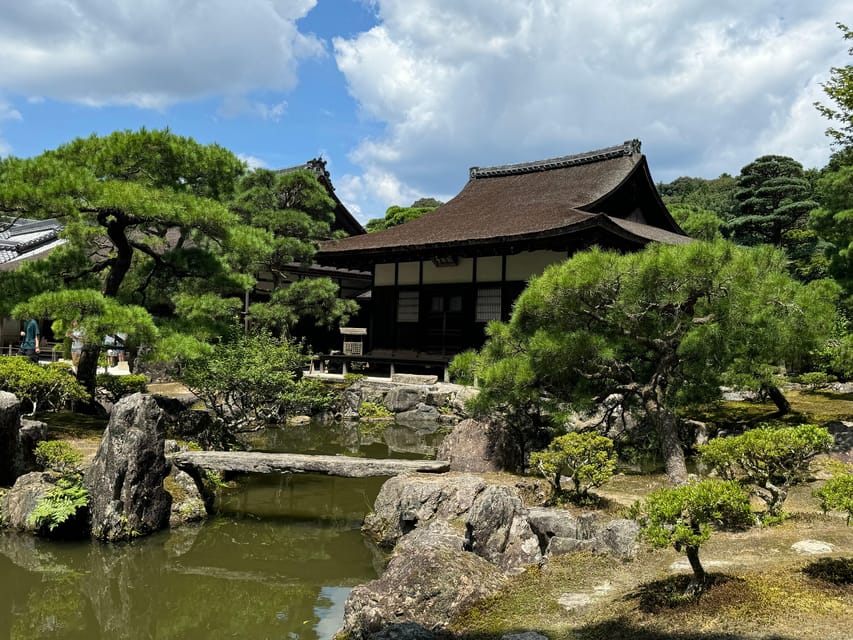
The guided portion finishes at Tetsugaku No Michi, better known as the Philosopher’s Path. This is a practical ending, not just a convenient final pin on a route. You can carry on walking after the guide departs, at your own pace and without watching the clock for the rest of the visit.
That flexibility is especially useful after a focused temple tour. You might want to stroll, pause for a closer look at the surroundings or simply take a break before deciding what comes next. The guided hour does not include a continued walk along the path, so treat that part as your own time rather than an extension of the tour.
If you are planning a day around Ginkakuji, the path makes it easy to add an unstructured stretch to a visit that otherwise has a set start and finish. I like this combination: the guide gives you context at the temple, then you get room to explore independently. Just remember that your time on the path is not included in the stated one-hour duration.
What $51 buys you
At $51 per person, this is not the cheapest way to see Ginkakuji. You can visit without a guide, but this tour includes temple entry and a private Japanese- or English-speaking guide. The extra cost is most worthwhile if you want explanations, enjoy asking questions or would rather have someone shape the visit than work it out on your own.
The private-group format matters to the value calculation. A guide can focus on your group, which may make a single hour more useful than a large-group tour with less opportunity to ask questions. But the price is still per person, and the experience is short. If you mainly want to walk around and take in the gardens at your own pace, you may prefer to visit independently.
The strongest case for booking is the combination of a focused temple visit and a knowledgeable guide. Past guides have been praised for clear explanations, friendliness and answering questions. That personal touch can help you get more from a place where the details are subtle. The less compelling case is if you expect a lengthy history lesson or extensive time on the Philosopher’s Path; neither is promised as part of the hour.
Who will get the most from this visit
This tour suits you if you have limited time in Kyoto and want a guided introduction to Ginkakuji without committing to a longer excursion. It also works well if you enjoy garden design and architecture but prefer to have someone point out what to look for. The private format is a plus if you value the freedom to ask questions.
It may be less suitable if you want to linger for a long time at each feature or spend the entire visit walking the Philosopher’s Path. The tour has a fixed one-hour duration, and the path is where it finishes. You can stay on after the guide leaves, but that extra time is your own.
If you are visiting both Ginkakuji and Kinkakuji in one day, mention that to your guide. Yoshi has made connections between the two visits before, which may help you think about them as part of one day’s sightseeing. Guides vary, so treat that as a useful question to ask rather than a guaranteed feature.
Should you book the Ginkakuji tour?
Book this tour if you want a compact, private introduction to Ginkakuji and value having a guide explain the Kannon-den hall, sand garden and temple grounds. The included entry, English or Japanese guiding and finish at the Philosopher’s Path make it an easy way to combine structure with time to explore on your own.
Skip it if you are comfortable visiting independently, or if an hour feels too rushed for your preferred pace. At $51 per person, the guide is the main reason to pay extra. If you will use that hour to ask questions and notice details you might otherwise miss, the price can make sense. If you simply want to stroll through the grounds, save the money and take your time without a guide.
FAQ
How long is the tour?
The guided tour lasts one hour.
What is the price?
The tour is listed at $51 per person.
Which languages are available?
The live tour guide speaks Japanese or English.
Is this a private tour?
Yes. The tour is for a private group.
Where do I meet the guide?
Meet in front of the temple gate. The guide will hold a yellow sign with the DeepExperience logo.
Is temple entry included?
Yes. Entry to Ginkakuji Temple and the guide are included.
Can I cancel for a refund?
Yes. You can cancel up to 24 hours in advance for a full refund.
Newly added in Kyoto
- Uji: Private immersion into Kyoto’s tea and reglious culture★ 5.0 · 17 reviews
- Whisk Your Own Matcha: A Zen Matcha Experience at Temple★ 3.6 · 7 reviews
- Kyoto tea town for matcha lovers★ 5.0 · 16 reviews
- Treasures of Kyoto: Gion & historical Walking Tour★ 5.0 · 6 reviews
- Kyoto Matcha Green Tea Tour★ 4.5 · 23 reviews
- Uji and Wazuka Matcha Farm Half Day Private Guided Tour★ 5.0 · 21 reviews
- Uji Tea Ceremony and UNESCO Heritage Walking Tour★ 5.0 · 20 reviews
- Utilising upcycled Matcha! Creating matcha incense (Uji, Kyoto)★ 5.0 · 6 reviews
Kyoto Temple & Shrine Tours, compared.
World Heritage Kyoto & Nara Uji Authentic Matcha Experience
Read our review →
Arashiyama Bamboo, Temple, Monkeys, or Secret Sake Brewery
Read our review →
Arashiyama Bamboo Forest, Monkeys, Matcha & Temple Tour
Read our review →
Arashiyama, Nara & Fushimi Inari Shrine w/Lunch
Read our review →
Imperial Palace & Nijo Castle Guided Walking Tour
Read our review →
Kyoto Zen Meditation & Garden Tour at a Zen Temple with Lunch
Read our review →
Browse the lists this tour appears in