
Reviewed · KYOTO WALKING TOURS
Kyoto Gion Historical Walking Tour
Kyoto’s old streets are lovely on their own, but they become much more than a string of photo stops when a guide explains how temples, theater, geisha culture, and imperial history fit together. This walk follows that story from Gion toward Higashiyama, finishing at Kiyomizu-dera.
I like two things in particular: the route moves through several distinct parts of Kyoto, and the guides bring history down to human scale, with stories, humor, and time for questions. One consideration: three hours on foot includes hills and stairs, and the route can feel demanding if you have mobility limits or little interest in temples.
At a glance
- From Gion to Kiyomizu-dera: The walk links Tatsumi Bridge, Chion-in, Maruyama Park, Nene-no-Michi, Yasaka Pagoda, and the historic slopes.
- History with a local guide: Expect discussion of Kyoto’s culture and religion, as well as the Meiji Restoration, samurai, monks, emperors, theater, and geisha.
- A small group: The maximum is 12 people, leaving more room for questions than a large coach tour.
- Three hours on foot: Wear walking shoes, bring water, and be ready for stairs and uneven, sloping paths.
- About $40 per person: The price covers the walking tour. Lunch, gratuities, and admission fees are not included.
- A useful first look: The walk gives you context and route ideas for deciding where to spend more time later.
From Gion’s Tatsumi Bridge into old Kyoto
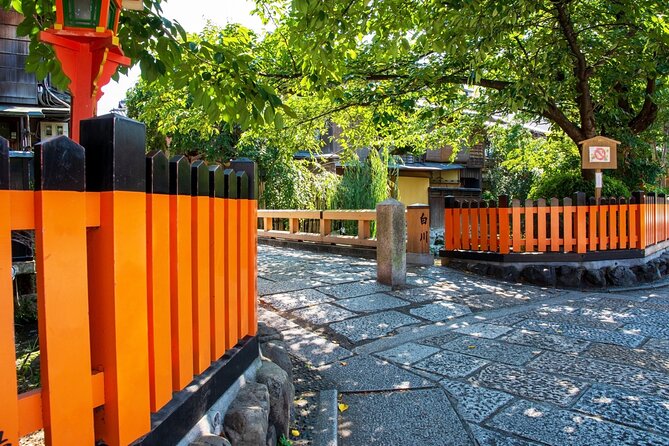
The tour starts outside Ben’s Cookies at 89 Shinchō, in Kyoto’s Shijo area. From there, the walk heads toward Tatsumi Bridge and Gion Shimbashi, a scenic stretch of traditional lanes beside the water. The 15-minute stop is short, but it sets the tone: this is a tour of streets and neighborhoods as much as famous religious sites.
Gion is often reduced to a search for geisha, which can leave visitors watching the street rather than understanding the place. A guide can offer a broader view, connecting the district’s culture and history to the city around it. Guides on this tour have been praised for explaining theater and geisha culture alongside temples and Japanese history, so you get more than a succession of picturesque façades.
The route also passes the Statue of Izumo-no-Okuni, named in the tour overview as one of its highlights. The supplied stop list does not give a separate visit duration or description for the statue, so treat it as part of the walk rather than a long stop. Its place in a tour that covers theater helps underline how Kyoto’s cultural story extends beyond shrines and temples.
More Gion tours in Kyoto:
- Kyoto Geisha Walking Tour: Gion District & Hidden Gems
★ 4.7 · 3,273 reviews - Kyoto: Gion Magical Night Walking Tour with Geisha Trivia
★ 4.9 · 2,393 reviews - Kyoto: Gion Geisha District Walking Tour – Stories of Geisha
★ 4.7 · 2,187 reviews
Chion-in’s monumental gate and temple grounds
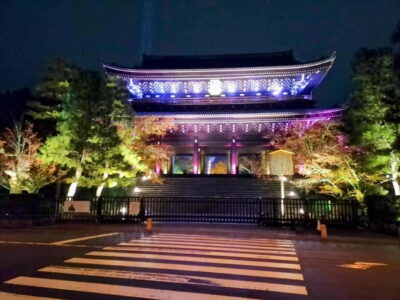
The next named stop is Chion-in’s Sanmon gate, with about 10 minutes set aside. Its scale is the first thing to notice: the gate is described as one of Japan’s largest wooden temple gates. Even a brief pause gives you time to take in the structure and hear why it matters to the temple.
The tour then allows around 20 minutes at Chion-in itself. Founded in the 13th century, it is one of Kyoto’s major Buddhist temples. The guide can help you read the site in context, rather than leaving you to puzzle over its buildings and religious significance alone.
Do not assume that a timed stop means a full, independent visit to every part of a large temple complex. The tour is built to keep moving, with a set route and several more places ahead. If Chion-in is a particular interest, ask your guide what you should return to see after the walk.
Maruyama Park and the path of Nene
From Chion-in, the group visits Maruyama Park for about 10 minutes. The park offers a change of pace from temple architecture, with trees and open space in the middle of the city. It is a compact stop, not a long break, so enjoy the setting while the guide provides context.
Next comes Nene-no-Michi, or the Path of Nene, a historic stone-paved lane named for Nene, the wife of Toyotomi Hideyoshi. This is one of the walk’s appealing transitions: the route itself becomes part of the lesson. The path winds through a district known for preserved old streets and traditional buildings, linking the grand temple grounds with the smaller-scale lanes of Higashiyama.
The schedule does not specify a time for Nene-no-Michi, so expect to pass through as part of the larger walk rather than plan on a set-length stop. The area can attract plenty of other people, especially around its well-known lanes. Your guide’s local knowledge and route choices may help you notice details you would otherwise hurry past.
Yasaka Pagoda and the old stone slopes
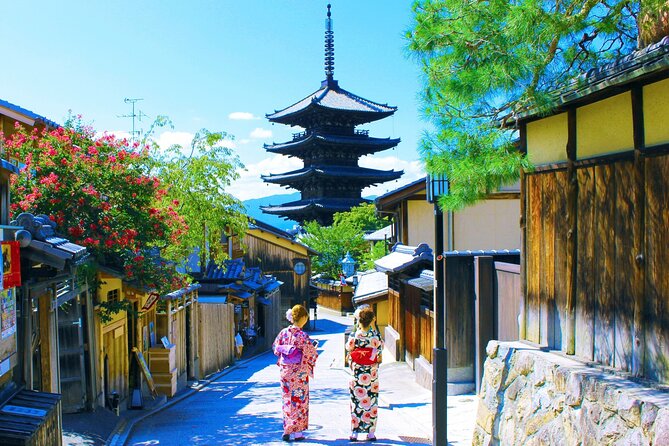
Hōkan-ji Temple, better known for its Yasaka Pagoda, is one of the route’s most recognizable sights. The five-story pagoda rises above the Higashiyama district and gives the walk a striking visual landmark. The listed stop is about 10 minutes, enough for a look and some explanation, but not a full temple visit.
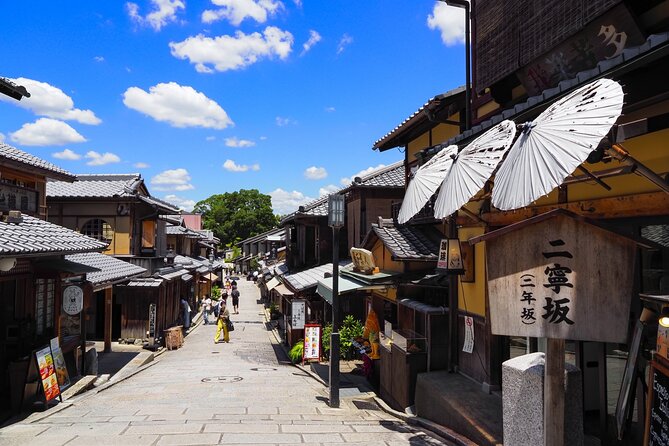
From there, the tour continues along Ninen-zaka and Sannen-zaka, two historic pedestrian slopes lined with traditional buildings, tea houses, and shops. Ninen-zaka means Two-Year Slope; Sannen-zaka means Three-Year Slope. The names are easy to remember, and the cobbled paths are part of what makes this stretch feel so different from modern Kyoto.
They are also working streets, not quiet museum corridors. Expect other people and a fair amount of foot traffic. The slopes and stairs call for steady footing, and the route may be tiring if you have knee, balance, or mobility concerns. One participant specifically noted that stair climbing was more substantial than the general phrase walking tour might suggest. Take that seriously when deciding if this is the right outing for you.
More walking tours in Kyoto:
- Night Walk in Gion: Kyoto’s Geisha District
★ 4.5 · 2,003 reviews - Kyoto Gion Geisha District Walking Tour – The Stories of Geisha
★ 5.0 · 1,441 reviews - Nishiki Market Brunch Walking Tour (7 Tastings + Brunch)
★ 5.0 · 1,355 reviews - Kyoto Arashiyama Walking Tour: Bamboo, Monkeys, Gardens & Secrets
★ 5.0 · 1,216 reviews
Finishing at Kiyomizu-dera

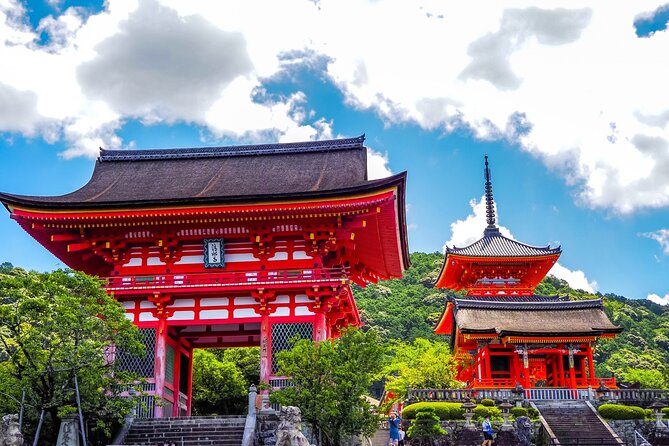
The final stop is Kiyomizu-dera, a major temple with a history dating to the 8th century and UNESCO World Heritage status. Set on a hillside above Kyoto, it is known for its views over the city. The planned stop is about 10 minutes, and the tour ends in front of the temple entrance.
There is an important cost distinction here: the walk itself includes the guide and route, but admission fees are excluded. The information for Kiyomizu-dera specifically says admission is not included. If you want to go inside, allow for the separate admission charge and consider whether you would rather stay with the group or return on your own.
Because the tour ends at the temple, it also works well as a way to reach this part of Higashiyama with a clearer sense of what you are seeing. If you have a fixed reservation soon after, remember that the walk can run longer than planned. One guide has been described as giving advance notice when the group was going overtime, but it is still wise not to schedule a tight connection.
What the guides add to the walk
The strongest reason to book is the guide’s interpretation. The tour is in English, and guides named Jay, Ayumi, Ben, Tommy, and Michel have led outings. Names and guides can vary by date, but the pattern of praise is consistent: clear English, strong command of Japanese history, a lively delivery, and a willingness to answer questions.
Jay has been singled out for linking Kyoto to broader Japanese history and folklore. Ayumi has been praised for her energy and for explaining geisha and samurai culture. Ben has shared memorable stories and suggestions for places to revisit, while Tommy has brought humor to the walk. Michel has offered recommendations for the following day. Those personal touches matter: a guide who knows the city can help turn a half-day overview into a better plan for the rest of your stay.
The subject matter is fairly dense. You may hear about the Meiji Restoration, the relationships among emperors, monks, and samurai, and the ways theater and geisha culture belong to Kyoto’s past and present. That depth is a strength if you like learning as you walk. It may be too much for a young child who has already had enough temples, or for anyone hoping mainly for unstructured photo time.
The group limit of 12 helps keep the experience conversational. Some dates may have fewer participants, and a small turnout can make it easier to ask questions. Still, this is a guided group walk, not a private tour you can count on having to yourself.
Is $40 a fair price?
At $40 per person, this is a reasonable buy if you value history and want a guided introduction to Gion and Higashiyama. You are paying for three hours of walking and a guide who can connect the sights, not for meals, transport, or temple admission. Since the route includes several major places in one direction, it can also help you decide which ones deserve a longer return visit.
The value depends on your style. If you usually enjoy reading signs and wandering at your own pace, you may prefer to explore these neighborhoods independently. If you want context, a clear route, and someone to answer questions, the fee buys more than directions between landmarks.
Keep a little extra time and money in mind for the finish. Lunch and gratuities are not included, and Kiyomizu-dera admission is separate. The tour description also notes that there are not many stops beyond bathroom breaks, so eat beforehand and bring water or a snack.
How to prepare for three hours on foot
Wear comfortable walking shoes. The tour covers a half day on foot, and the route includes sloped, cobbled paths and stairs. A moderate level of physical fitness is recommended, so this is not the best choice if uneven ground or climbing is difficult for you.
Bring water, and have something to eat before the start. The walk is information-heavy and has limited opportunities to stop for food. You may also want to bring a small notebook or save recommendations on your phone, since guides can suggest temples, gardens, and shops to visit later.
The meeting point is Ben’s Cookies Kyoto Shijo, at 89 Shinchō, Shimogyo Ward. The tour ends in front of Kiyomizu-dera, at 1-chōme-294 Kiyomizu, Higashiyama Ward. That point-to-point route is useful, but plan your next move from the temple rather than assuming the tour returns to Gion.
The experience uses a mobile ticket, and confirmation is received at booking. Service animals are allowed, and the meeting point is near public transportation. The tour requires good weather and a minimum number of participants. If poor weather or low enrollment cancels it, you are offered another date or a refund. You can cancel for a full refund up to 24 hours before the start.
Who should book the Kyoto Gion Historical Walking Tour?
Book this walk if you want a lively, English-language introduction to Gion and eastern Kyoto, and you like learning the story behind the streets as you go. It is especially useful early in a Kyoto visit, when the guide’s context and suggestions can shape what you explore next.
Skip it if three hours of walking and stairs sound uncomfortable, if you need a long meal break, or if you want to spend extended time inside each temple. For most history-minded adults with steady walking shoes, the route offers a satisfying mix of scenery, culture, and practical orientation for about $40.
FAQ
How long is the Kyoto Gion Historical Walking Tour?
The tour lasts approximately three hours.
Where does the tour start and end?
It starts in front of Ben’s Cookies Kyoto Shijo at 89 Shinchō, Shimogyo Ward. It ends in front of the entrance to Kiyomizu-dera at 1-chōme-294 Kiyomizu, Higashiyama Ward.
How many people can join the tour?
The maximum group size is 12 travelers.
Is the tour conducted in English?
Yes. The tour is led by an English-speaking guide.
Are temple admission fees included?
No. Admission fees are not included. Admission to Kiyomizu-dera is specifically listed as not included.
How much walking is involved?
The walk lasts about three hours and calls for a moderate level of physical fitness. Wear walking shoes, and be prepared for stairs and slopes.
What happens if the tour is canceled because of bad weather?
If bad weather cancels the tour, you are offered a different date or a full refund.
Newly added in Kyoto
- Uji: Private immersion into Kyoto’s tea and reglious culture★ 5.0 · 17 reviews
- Whisk Your Own Matcha: A Zen Matcha Experience at Temple★ 3.6 · 7 reviews
- Kyoto tea town for matcha lovers★ 5.0 · 16 reviews
- Treasures of Kyoto: Gion & historical Walking Tour★ 5.0 · 6 reviews
- Kyoto Matcha Green Tea Tour★ 4.5 · 23 reviews
- Uji and Wazuka Matcha Farm Half Day Private Guided Tour★ 5.0 · 21 reviews
- Uji Tea Ceremony and UNESCO Heritage Walking Tour★ 5.0 · 20 reviews
- Utilising upcycled Matcha! Creating matcha incense (Uji, Kyoto)★ 5.0 · 6 reviews
Kyoto Walking Tours, compared.
Kyoto Geisha Walking Tour: Gion District & Hidden Gems
Read our review →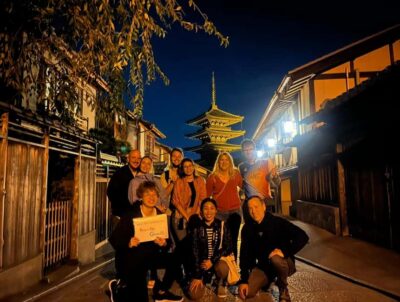
Gion Magical Night Walking Tour with Geisha Trivia
Read our review →
Gion Geisha District Walking Tour – Stories of Geisha
Read our review →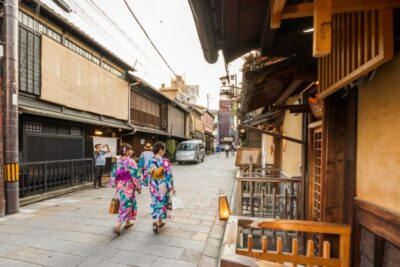

Nishiki Market Brunch Walking Tour (7 Tastings + Brunch)
Read our review →
Kyoto Arashiyama Walking Tour: Bamboo, Monkeys, Gardens & Secrets
Read our review →
Nara Half Day Trip Walking Tour (Private Option Available)
Read our review →Browse the lists this tour appears in