
Reviewed · KYOTO FOOD TOURS
Kyoto: Gion Local Food Tour (Taste 15 Dishes)
The best reason to book this evening is simple: you can try a broad range of Kyoto food without having to decipher menus or order in Japanese. The plan moves from an izakaya-style first stop to tonkatsu, then sushi and tempura, with a local guide to handle the practical details.
I like two things in particular: the mix of familiar dishes and local food customs, and the chance to hear cultural context while walking through Gion. One caveat: the first stop can lean heavily on chicken skewers, and some evenings have had hiccups with meeting details or a restaurant confirmation.
At a glance
- Three food stops: The planned route runs from Kawaramachidori to Gion and Gion Shirakawa.
- Fifteen dishes and two drinks: Tastings are included, so you can sample without ordering every dish yourself.
- A guide handles language: Guides including Misaki, Ryu, Jay, and Yu have led tours in English and helped with ordering.
- Food with cultural context: The evening can include stories about Kyoto food traditions and, on some walks, a stop by Yasaka Shrine.
- Small group, capped at 15: A smaller party can make it easier to hear your guide and ask questions.
- A hearty, everyday-food approach: Expect popular casual dishes, not a luxury tasting menu.
A Kyoto food sampler with a practical purpose

A food tour is most useful when it does more than feed you. Here, the guide helps you move between small eateries, place orders, and understand what is on the table. That support is especially handy if you are new to Japanese menus or prefer not to guess your way through a restaurant visit.
The tour promises 15 local dishes and two drinks over about three hours. That number suggests a generous spread, but it does not mean 15 full-size restaurant meals. Think of it as a guided tasting across several stops, with the amount and variety at each venue depending on the evening.
The food is everyday Japanese fare: yakitori and other izakaya dishes, tonkatsu, sushi, and tempura. That is part of the appeal. You are not paying for a parade of rare or elaborate specialties; you are getting a guided introduction to familiar foods that people in Japan eat in casual settings.
The distinction matters when you judge the $94 price. If your priority is a high-end dinner, this is not the right format. If you value a guide, several venues, a range of dishes, and help navigating local food customs, the cost buys more than the food alone.
More Gion tours in Kyoto:
- Kyoto Geisha Walking Tour: Gion District & Hidden Gems
★ 4.7 · 3,273 reviews - Kyoto: Gion Magical Night Walking Tour with Geisha Trivia
★ 4.9 · 2,393 reviews - Kyoto: Gion Geisha District Walking Tour – Stories of Geisha
★ 4.7 · 2,187 reviews
First stop: skewers and izakaya dishes
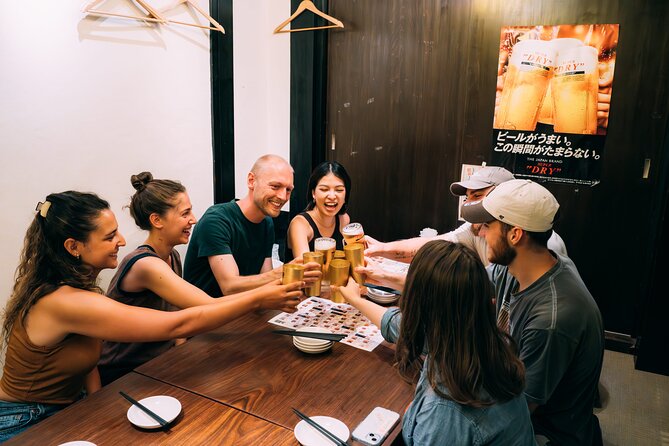
The evening begins near Kawaramachidori, at the tour’s meeting point beside Doutor Coffee. The first food stop is an izakaya, a casual place associated with drinks and shared plates. The planned menu includes yakitori, or grilled chicken skewers, along with other classic izakaya-style dishes.
This is a useful place to start because the format introduces you to the kind of relaxed meal that is easy to miss if you stick to restaurants aimed at international diners. The guide can explain what you are eating and manage the ordering, so you can focus on tasting rather than working out every menu item.
There is a trade-off. A highly positive evening may bring a generous selection of dishes, while one guest described the first stop as heavy on chicken skewers and felt the variety fell short. That is worth knowing if you do not eat chicken or hope for 15 completely different types of food. The advertised count is 15 dishes overall, not a promise that every dish will be a different headline specialty.
I would think of this first stop as an introduction to casual Japanese dining, not the culinary high point of the evening. If you already eat yakitori often, it may feel familiar. If you are new to izakaya food, the guide’s explanations and the shared setting can make even well-known dishes more interesting.
Walking through Gion between bites
The tour moves on from the first venue toward Gion. The walking is not just a way to get from one restaurant to another. A guide can use the route to give you a feel for the neighborhood and put the food in a wider cultural setting.
Some evenings have included a walk to Yasaka Shrine while waiting for the next snack. One guide, Ryu, explained Shinto customs and the meaning of writing on the shrine lanterns. That sort of pause is valuable: it gives you a little context for the place you are in, rather than turning the night into a chain of meals with no connection between them.
Do not assume every tour will follow that exact shrine stop or include the same explanation. The route’s named food areas are Kawaramachidori, Gion, and Gion Shirakawa, and the timing and details can vary. The broader point is that the guide may connect the dining stops with Kyoto’s streets and traditions as you walk.
The group size is capped at 15. That is small enough to feel more personal than a large bus outing, though it is still a group tour. Guides such as Misaki have been praised for being warm and clear in both Japanese and English, while other named guides, including Jay, Yu, Leo, Liu, Lemonie, and Yo, have also led evenings. The specific guide is not guaranteed, but a local host is included.
Second stop: crispy tonkatsu
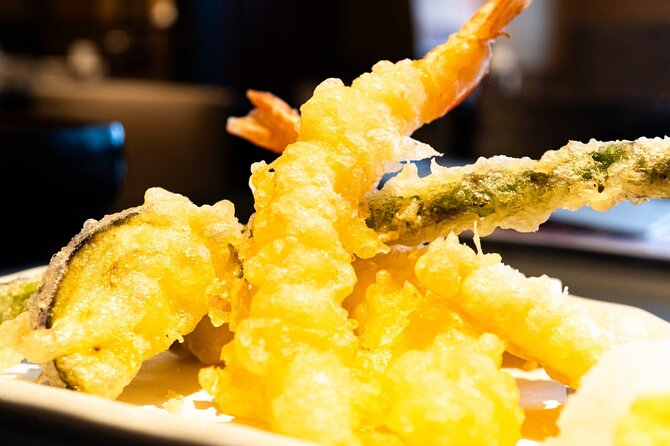
The second planned stop specializes in tonkatsu, a pork cutlet coated and deep-fried until crisp. It provides a change of texture and flavor after the skewers: a more substantial, savory dish that many people will recognize, even if they have not tried it in Japan.
One account describes pork cutlets served on skewers as the next snack after the shrine walk. That is a good reminder that the tour is about tasting portions and local presentation, not necessarily sitting down to a formal course meal at every venue. The stop is meant to give you another angle on casual Japanese food.
Tonkatsu is not unique to Kyoto, and the tour does not present itself as a specialist regional-food lecture. Its value is the sequence: several familiar dishes served in local settings, with someone on hand to explain and order. If you are looking for a deep focus on Kyoto’s most specific regional cooking, this may feel broad rather than narrow.
That broad approach suits a first evening in the city. You can use the tour to find dishes you want to seek out again, then return to a restaurant later with a better sense of what to order.
More food tours in Kyoto:
- Ramen Cooking Class at Ramen Factory in Kyoto
★ 5.0 · 1,937 reviews - Kyoto Night Foodie Tour in Gion (9+ dishes + 6 Sake tastings)
★ 5.0 · 1,762 reviews - Kyoto: Izakaya Bars Guided Walking Tour
★ 4.9 · 815 reviews - Sushi Making in Kyoto! Same-day bookings welcome!
★ 5.0 · 713 reviews
Final stop: sushi and tempura in Gion Shirakawa
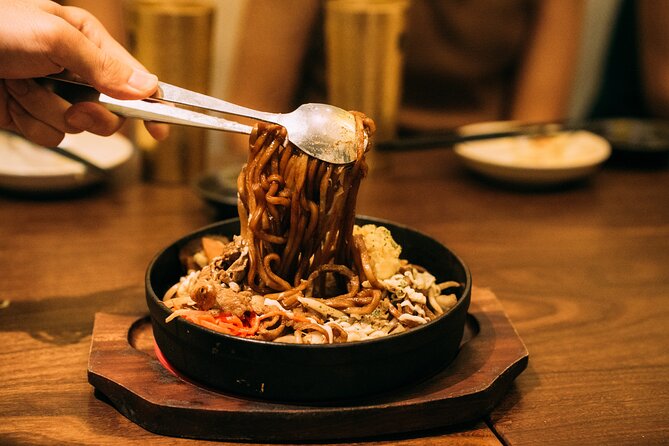
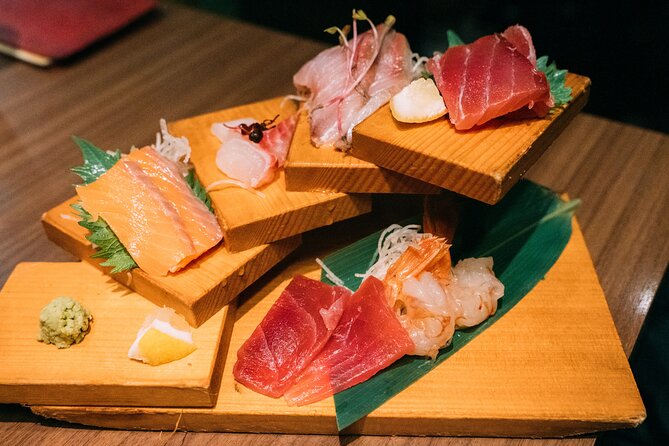
The last planned stop is in Gion Shirakawa and brings together sushi and tempura. Putting these two classics at the end gives the evening a clear finish: fresh seafood and rice on one side, battered and fried food on the other.
This final venue is also where the advertised variety becomes most apparent. After skewers and pork cutlet, sushi and tempura help balance the menu. You may find the meal adds up quickly, especially with two included drinks, so pace yourself rather than treating each stop as a separate dinner.
The tour includes two drinks, but the available information does not specify which drinks are served or whether you can choose from a menu. If you have dietary restrictions or particular food preferences, ask the operator before booking rather than assuming substitutions are available. The stated dishes include meat, seafood, and fried foods, so this is not a clearly described vegetarian or allergy-focused tour.
The final stop is scheduled for about an hour, as are the first two. In practice, restaurant timing can change. One evening had a first stop that did not take place because of a confirmation problem, leaving the guide to adapt the plan. That appears to be an exception, but it is a reason to pay attention to messages before the tour.
What the $94 price gets you
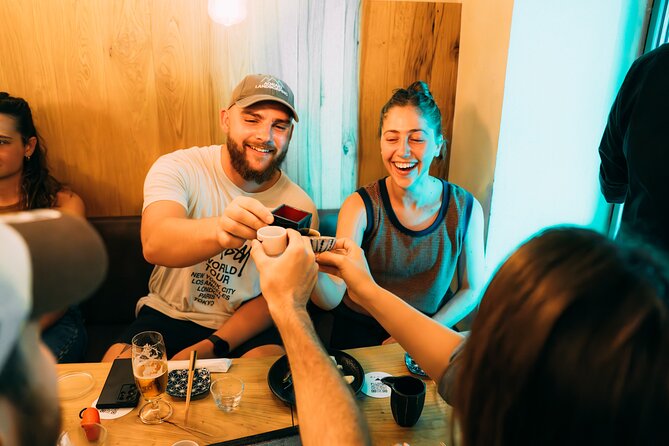
At $94 per person, this is a meaningful addition to a Kyoto budget. The price includes a local guide, 15 dishes, and two drinks, plus the convenience of visiting several eateries without arranging each stop yourself. For someone who wants a guided food introduction, that combination can be worthwhile.
The value depends on what you expect from the food. You are paying for access and explanation as much as for expensive ingredients. Casual skewers and tonkatsu are everyday foods, not luxury dining, and at least one person found the first stop too repetitive for the price. Another found the dishes standard but tasty, and appreciated having a guide to explain them. Both reactions make sense: the food is accessible and plentiful, but not designed as a fine-dining showcase.
The strongest value may be for your first night in Kyoto, when you want dinner and a practical orientation at once. The guide can help you understand local dining habits, and the different stops give you a set of ideas for meals later in your stay. If you already know Japanese food well and are comfortable ordering independently, you may get less from the guiding and translation.
Timing, meeting point, and group size
The tour starts at 6:30 pm and lasts about three hours. It begins at Doutor CoffeeJapan, at 391 Komeyacho, Kawaramachi New Tokyo Building, first floor, in Nakagyo Ward. It ends back at the same meeting point.
Because some participants have had confusion over the meeting place or a changed start time, check the latest confirmation and messages before setting out. The operator may communicate through WhatsApp, according to one account, but you should rely on the contact details provided for your own booking. Arriving at the named point with the current start time in hand is a sensible way to avoid beginning the evening flustered.
The activity uses a mobile ticket and is listed as suitable for most people. The group can include up to 15 participants. The information does not specify walking distance, accessibility details, or dietary substitutions, so ask the operator directly if any of those points could affect your plans.
Free cancellation is available up to 24 hours before the start time. Cancellations or changes made later than that are not accepted for a refund, and the tour may be canceled if its minimum group size is not reached.
Who will enjoy this evening most
I would choose this tour if you want to try several Japanese dishes in one outing and would welcome help with menus, ordering, and cultural context. It is especially useful early in a Kyoto stay, when you can turn the guide’s suggestions into ideas for the rest of your trip.
It also suits anyone who likes a social evening. The capped group size keeps it from becoming a huge procession, and the food stops give people an easy reason to talk. Guides have been praised for making the group feel included and for sharing suggestions beyond the tour itself.
You may want to skip it if you have strict dietary needs that have not been confirmed, dislike chicken or pork, or expect every dish to be unusual and region-specific. It is also less attractive if you simply want to spend $94 on one carefully chosen dinner. This is a sampler, and the pleasure is in the variety, guidance, and neighborhood walk as much as in any single plate.
Should you book the Gion food tour?
Book it if you want a guided, social introduction to casual Japanese food and like the idea of moving between three venues in one evening. The combination of 15 dishes, two drinks, and a local host makes the price easier to justify when you value explanation and ease as well as the meal.
Pass if you are seeking luxury dining, guaranteed novelty in every dish, or a menu tailored to dietary restrictions that have not been confirmed. Before booking, check the meeting details and ask about any food needs. If the first-stop skewers sound fine and you are open to everyday Japanese dishes, this is a practical way to eat your way through Gion without having to plan each order yourself.
FAQ
How long is the Kyoto Gion food tour?
It lasts about three hours.
What time does the tour start?
The stated start time is 6:30 pm.
Where does the tour meet?
It meets at Doutor CoffeeJapan, 391 Komeyacho, Kawaramachi New Tokyo Building, first floor, Nakagyo Ward, Kyoto.
Where does the tour end?
It ends back at the meeting point.
How many dishes are included?
The tour includes 15 local dishes.
Are drinks included?
Yes. Two drinks are included.
What foods are part of the planned route?
The stops feature yakitori and other izakaya-style dishes, tonkatsu, sushi, and tempura.
Is a guide included?
Yes. A local guide is included and handles ordering and translation.
How large can the group be?
The maximum group size is 15 participants.
Can I cancel for a refund?
You can cancel at least 24 hours before the start time for a full refund. Cancellations or changes made less than 24 hours in advance are not accepted for a refund.
Newly added in Kyoto
- Uji: Private immersion into Kyoto’s tea and reglious culture★ 5.0 · 17 reviews
- Whisk Your Own Matcha: A Zen Matcha Experience at Temple★ 3.6 · 7 reviews
- Kyoto tea town for matcha lovers★ 5.0 · 16 reviews
- Treasures of Kyoto: Gion & historical Walking Tour★ 5.0 · 6 reviews
- Kyoto Matcha Green Tea Tour★ 4.5 · 23 reviews
- Uji and Wazuka Matcha Farm Half Day Private Guided Tour★ 5.0 · 21 reviews
- Uji Tea Ceremony and UNESCO Heritage Walking Tour★ 5.0 · 20 reviews
- Utilising upcycled Matcha! Creating matcha incense (Uji, Kyoto)★ 5.0 · 6 reviews
Kyoto Food Tours, compared.

Ramen Cooking Class at Ramen Factory in Kyoto
Read our review →
Kyoto Night Foodie Tour in Gion (9+ dishes + 6 Sake tastings)
Read our review →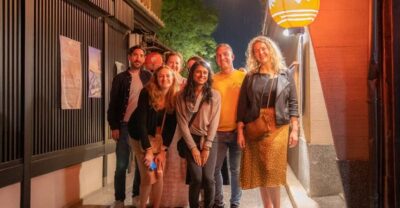
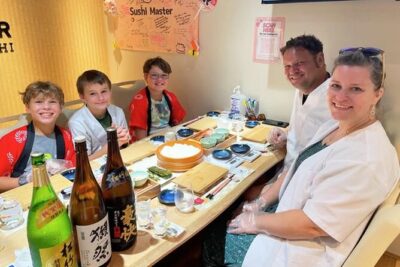
Sushi Making in Kyoto! Same-day bookings welcome!
Read our review →
Insider Sake Brewery Tour with Sake and Food Pairing
Read our review →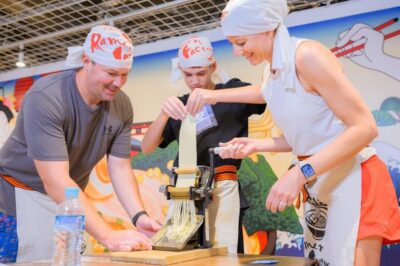
Ramen Cooking Class at a Ramen Factory with Souvenir
Read our review →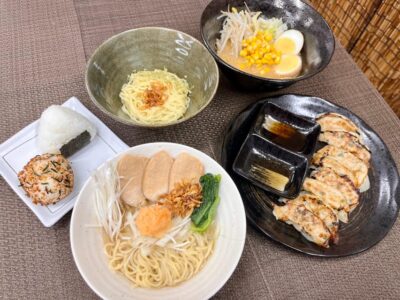
The Original Small-Group Sushi Making Class in Kyoto
Read our review →Browse the lists this tour appears in