
Reviewed · KYOTO NIGHT TOURS
Kyoto: Gion Magical Night Walking Tour
Gion is at its most atmospheric when the day’s crowds thin and lantern light settles over its old streets. This roughly 100-minute walk pairs the district’s famous lanes with shrines and quieter corners, while a guide explains how geiko and maiko fit into Kyoto life.
I like two things in particular: the small group, which makes it easier to ask questions without turning a residential neighborhood into a parade, and the mix of landmarks and less obvious stops, including a garden and a large Kannon statue. The main trade-off is physical: hills and stairs are part of the route, so comfortable shoes matter.
At a glance
- Gion after dark: See familiar streets in a quieter, lantern-lit mood.
- Geiko and maiko context: Learn about their history, culture, and local etiquette.
- Small-group format: The tour is described as intimate, with group limits stated as eight in one place and ten in another.
- More than Gion’s main lanes: The route includes Yasui-Konpiragu, Sannenzaka and Ninenzaka, Yasaka Shrine, and additional sites.
- About 1 hour 40 minutes: Plan for a steady walk, including slopes and stairs.
- $29.60 per person: A reasonable price if you value local explanation and a guided route over simply finding the streets yourself.
Gion is quieter, but still very much alive
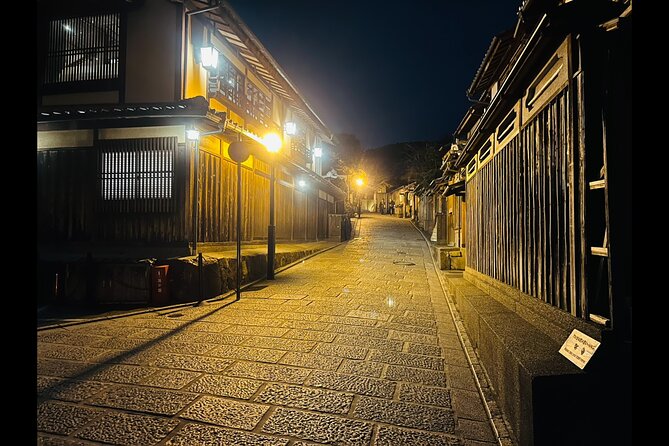
Gion is not a stage set built for sightseeing. It is a historic district where people live and work, and its best-known streets can feel crowded during the day. An evening walk changes the pace. The streets grow quieter, lanterns and shrine lights become more noticeable, and you have more room to look closely at the wooden façades and narrow lanes.
The tour starts at Minamiza Theater, on the east side of the Kamo River, and finishes in Gionmachi Kitagawa. It is designed to bring the district to life through stories, not just a sequence of photo stops. You see landmarks, but you also get context about the customs and people behind the scenery.
The title promises a night walk, while the overview emphasizes getting there before the big crowds arrive. In practice, the shared point is timing: this is meant to show you Gion when it is less crowded than the daytime peak. Exact start times can vary, so check your booking details.
More Gion tours in Kyoto:
- Kyoto Geisha Walking Tour: Gion District & Hidden Gems
★ 4.7 · 3,273 reviews - Kyoto: Gion Magical Night Walking Tour with Geisha Trivia
★ 4.9 · 2,393 reviews - Kyoto: Gion Geisha District Walking Tour – Stories of Geisha
★ 4.7 · 2,187 reviews
Geiko and maiko are part of the story
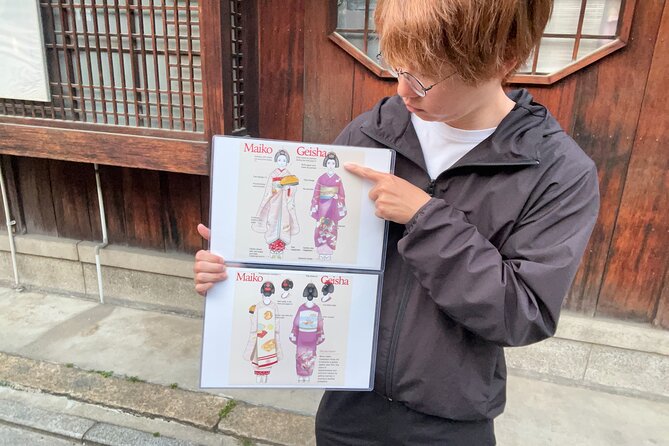
The guide discusses geiko and maiko, the Kyoto terms for accomplished geisha and their apprentices. That background helps you see Gion as more than pretty streets. You learn about the work, traditions, and social role associated with these performers, as well as how the district’s culture has changed over time.
Guides named in accounts of the tour include Karen, Ricky, May, Sho, Hina, and Pam. The particular guide you get will vary. The strongest experiences appear to depend on a guide who can explain local customs clearly, answer questions, and bring personal or family connections to the subject. One guide, for example, shared a family link to geiko life; another was praised for explaining the relationship between geiko and Kyoto society, past and present.
You may see a maiko or geiko on the street, but there is no guarantee. If you do, the advice is simple: greet her politely with a smile and a Konnichiwa. Keep the moment respectful. The point of the walk is to learn about Gion, not to treat people going about their work as a photo opportunity.
From Minamiza to Gionmachi Minamigawa
The meeting point is Minamiza Theater, a prominent traditional theater near Shijo Bridge. From there, the route heads into Gion and includes Gionmachi Minamigawa, one of Kyoto’s best-known streets. The guide may explain why the area is associated with geiko culture and point out details you could easily pass without knowing what they mean.
This first stop is brief, about ten minutes. That is enough to get oriented and hear the basics, but not enough for a long visit or a deep look at every lane. The value is in having someone set the scene before you continue through the neighborhood.
Gion’s appeal is not limited to the chance of seeing a performer. The streets themselves reveal how much of the district’s identity rests on its architecture and its continuing cultural life. A guide can help you distinguish between the famous view and the quieter corners that make the area feel like a place, not merely a backdrop.
Yasui-Konpiragu and the meaning of a shrine visit
Next comes Yasui-Konpiragu, a shrine known for helping people form good relationships and break away from harmful ones. Its message is not just about romance. The shrine’s traditions include strengthening a bond for married couples and partners, which gives the visit a personal, everyday dimension.
You have about ten minutes here. That is a short stop, but the guide can explain the shrine’s purpose and the beliefs behind it. For a visitor unfamiliar with Japanese religious customs, that explanation can make a quick look feel more meaningful than a photograph alone.
The shrine is one of the route’s more distinctive stops because its role is specific and easy to remember. It also offers a contrast with Gion’s entertainment heritage: this is a place people visit with hopes and worries of their own.
More night tours in Kyoto:
- Night Walk in Gion: Kyoto’s Geisha District
★ 4.5 · 2,003 reviews - Kyoto Night Foodie Tour in Gion (9+ dishes + 6 Sake tastings)
★ 5.0 · 1,762 reviews - Kyoto Gion Night Walk & Geisha District Guided Tour
★ 5.0 · 786 reviews - Kyoto Ghost Tour: Dark Tales, Urban Legends, Bamboo Forest Night
★ 5.0 · 625 reviews
Sannenzaka and Ninenzaka under evening lights
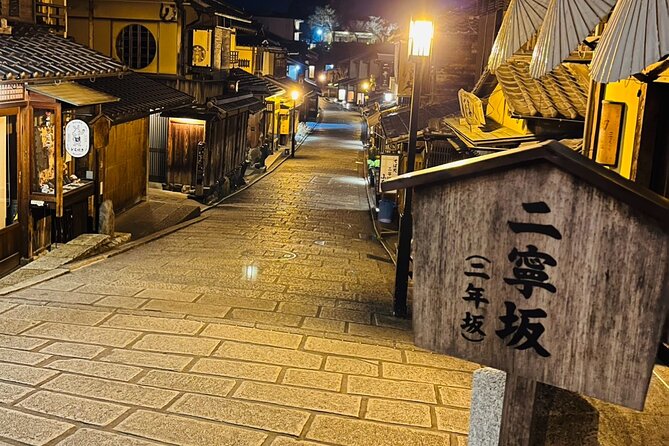
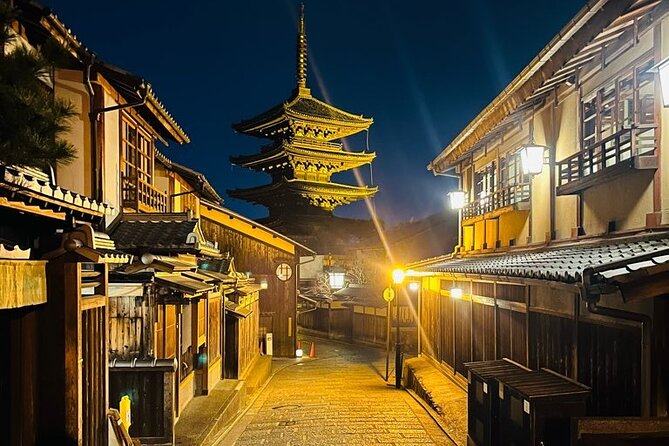
The walk continues toward Sannenzaka and Ninenzaka, sloping streets leading toward Kiyomizu-dera Temple. The route description allows about 20 minutes here, and names Yasaka Pagoda as a popular sight. This is the part of the walk where Kyoto’s traditional townscape comes into sharp focus.
The lanes are scenic, but they are also hilly and can involve stairs. That is why the physical note deserves attention: this is not a flat stroll. Wear comfortable shoes, take your time, and be ready for a few uphill stretches. If slopes are uncomfortable for you, this may not be the right tour.
At night, the atmosphere can be especially lovely. Lanterns and streetlights pick out the buildings and pagoda, while fewer people can mean better opportunities to stop for a photo without jostling for space. The trade-off is that a quiet evening is not guaranteed, and the tour’s pace still needs to keep moving.
A Kannon statue, a garden, and an old tea house
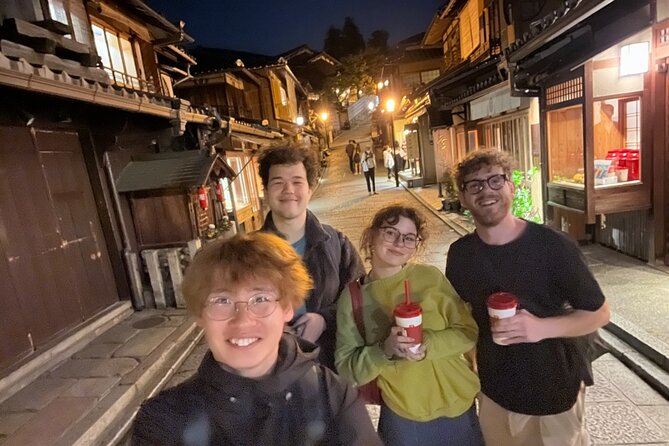
The route also includes a site built in 1955 to honor the souls of people killed in World War II. A very large statue of Kannon, the Buddhist figure associated with compassion, is its focal point. The stop adds a solemn note to an evening otherwise known for picturesque streets and shrine visits.
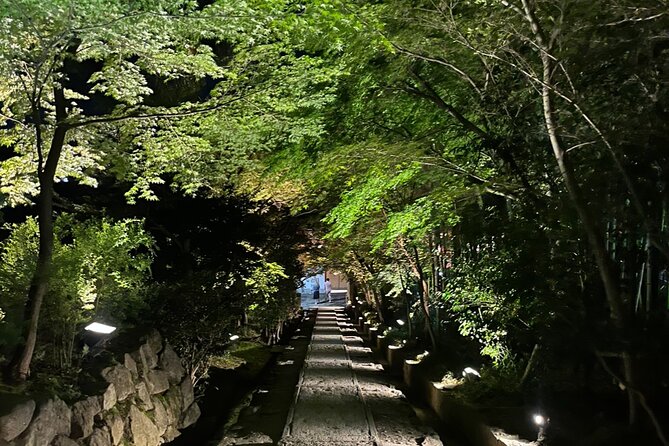
Another stop is a temple site established about 400 years ago by a shogun’s wife in memory of her husband. Its garden, old tea ceremony house, and bamboo grove offer a different kind of beauty from Gion’s streets. These details can be especially rewarding if you like seeing how Japanese memorial practice, garden design, and tea culture overlap.
The names of these two stops are not specified in the route details provided, so confirm the exact places if a particular memorial or temple is important to you. Their inclusion does, however, show that this walk reaches beyond the standard Gion photo circuit.
Yasaka Shrine closes the route
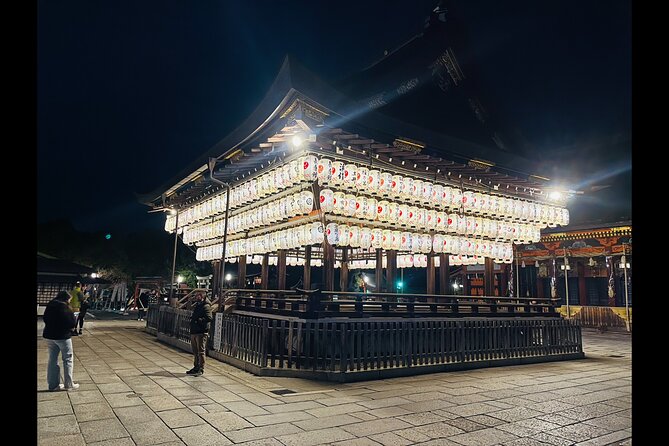
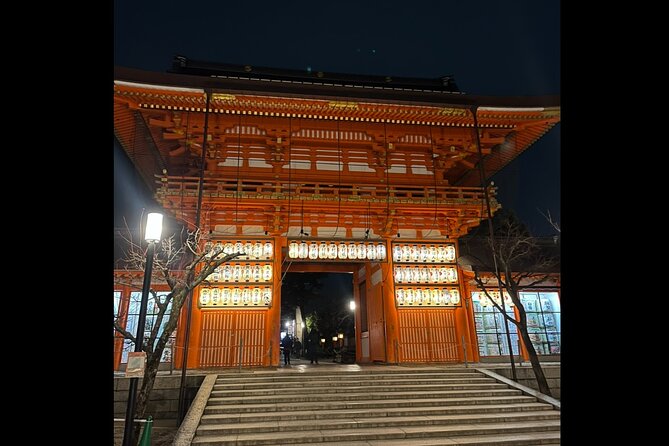
Yasaka Shrine is the final named stop, with about ten minutes set aside for a visit. It is the head shrine for roughly 2,300 related shrines across Japan and is also known locally as Gion-san. Its blessings are associated with warding off bad luck, bringing good fortune, and beauty.
The shrine’s lanterns and evening setting give the end of the walk a calm feel. You get a sense of how Gion’s identity joins religious life with its well-known arts and entertainment traditions. The tour ends in Gionmachi Kitagawa, close to the district you have been exploring.
Because the tour is compact, the shrine visit is an introduction rather than a full exploration. If you want to spend longer there, you can return on your own after the walk.
What the price buys you
At $29.60 per person, this tour is priced for an accessible introduction rather than an elaborate, all-evening experience. You are paying for a guide, a planned walking route, and explanations that help connect the streets, shrines, and geiko culture. The stops are free to enter, so the value lies in interpretation and the convenience of moving between them with someone who knows the area.
That matters most if this is your first time in Gion. You can walk the main streets alone, but it is harder to understand what you are seeing or find quieter corners with confidence. The guide’s stories and answers are the difference between a pleasant stroll and a more informed one.
The tour is not a substitute for a full visit to Kiyomizu-dera, a formal tea ceremony, or an in-depth study of geiko culture. It is a short orientation, and many people will find that useful early in a Kyoto stay. At roughly 100 minutes, it also fits more easily into an evening than a longer excursion.
Practical details before you book
The meeting point is Minamiza Theater in Higashiyama, near Shijo Bridge. The end point is in Gionmachi Kitagawa. The tour duration is listed as approximately 1 hour 40 minutes, although some descriptions of the experience put it closer to 90 minutes. Allow around 100 minutes, with a little flexibility.
The group is described as small, but the stated cap differs: one section says a maximum of eight, while another says ten. If the precise group size matters to you, check with the operator before booking. Small groups are a real advantage on narrow streets, where a large crowd can get in the way of local life.
Most people can take part, and service animals are allowed. Still, the route has slopes and stairs and is not recommended if you are uncomfortable walking. Bring shoes suited to uneven or hilly streets, and consider an umbrella if rain is forecast. The tour may be canceled in poor weather or if the minimum number of participants is not met; in those cases, you are offered another date or a refund. You can cancel for a full refund up to 24 hours before the start time.
Should you book the Gion night walk?
Book this tour if you want a practical introduction to Gion, enjoy hearing the stories behind shrines and streets, and are comfortable walking uphill. It is especially useful if you want to learn about geiko and maiko culture without trying to piece together the district on your own. The small-group approach and the quieter evening mood are its strongest assets.
Skip it if you need a flat route, want a guaranteed geiko sighting, or prefer to explore at your own pace. For most first-time visitors who can manage the hills, the price is fair for a guided introduction to one of Kyoto’s most storied neighborhoods.
FAQ
How long is the tour?
It is listed as approximately 1 hour 40 minutes. Some descriptions put it closer to 90 minutes, so allow about 100 minutes.
What is the price?
The listed price is $29.60 per person.
Where does the tour start and end?
It starts at Minamiza Theater in Kyoto’s Higashiyama Ward and ends at 625 Gionmachi Kitagawa.
Will I see a geiko or maiko?
You might, but sightings are not guaranteed. If you do see one, the suggested greeting is a smile and Konnichiwa.
How large is the group?
The tour is described as a small-group experience. The stated maximum is eight in one section and ten in another, so confirm the cap if it matters to you.
Is the walk physically demanding?
The route includes slopes and stairs. It is not recommended if you are uncomfortable walking.
Are the stops included in the price?
The listed stops have no admission charge. The tour price is $29.60 per person.
What happens if the weather is poor or the tour is canceled?
If poor weather or an unmet minimum number of participants causes cancellation, you are offered a different date or a full refund. You can also cancel for a full refund at least 24 hours before the start time.
More walking tours in Kyoto
- Kyoto Gion Geisha District Walking Tour – The Stories of Geisha
★ 5.0 · 1,441 reviews - Nishiki Market Brunch Walking Tour (7 Tastings + Brunch)
★ 5.0 · 1,355 reviews - Kyoto Arashiyama Walking Tour: Bamboo, Monkeys, Gardens & Secrets
★ 5.0 · 1,216 reviews - Kyoto Gion: 2-Hour Geisha Culture & History Walking Tour
★ 5.0 · 1,186 reviews
Newly added in Kyoto
- Uji: Private immersion into Kyoto’s tea and reglious culture★ 5.0 · 17 reviews
- Whisk Your Own Matcha: A Zen Matcha Experience at Temple★ 3.6 · 7 reviews
- Kyoto tea town for matcha lovers★ 5.0 · 16 reviews
- Treasures of Kyoto: Gion & historical Walking Tour★ 5.0 · 6 reviews
- Uji and Wazuka Matcha Farm Half Day Private Guided Tour★ 5.0 · 21 reviews
- Kyoto Matcha Green Tea Tour★ 4.5 · 23 reviews
- Uji Tea Ceremony and UNESCO Heritage Walking Tour★ 5.0 · 20 reviews
- Utilising upcycled Matcha! Creating matcha incense (Uji, Kyoto)★ 5.0 · 6 reviews
Kyoto Night Tours, compared.
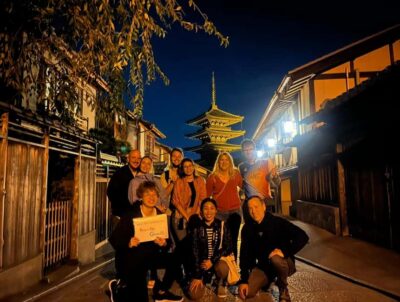
Gion Magical Night Walking Tour with Geisha Trivia
Read our review →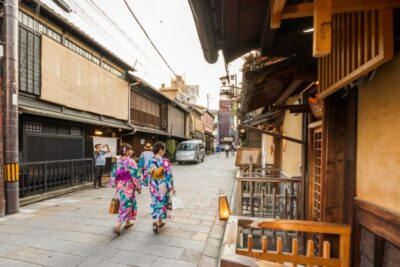

Kyoto Night Foodie Tour in Gion (9+ dishes + 6 Sake tastings)
Read our review →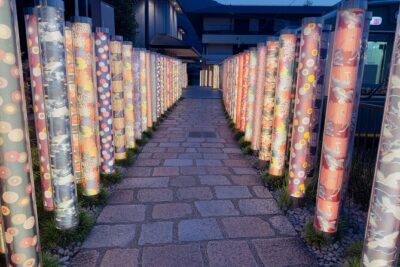
Kyoto Ghost Tour: Dark Tales, Urban Legends, Bamboo Forest Night
Read our review →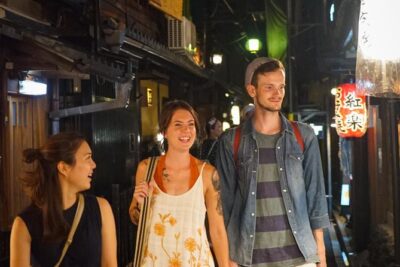
Kyoto Night All-Inclusive Eats and Streets, Gion and Beyond
Read our review →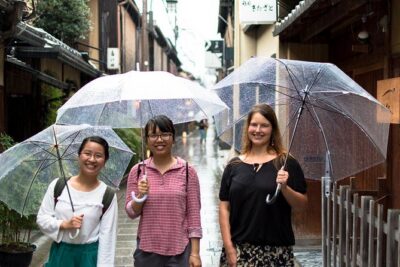
Browse the lists this tour appears in