
Reviewed · KYOTO WALKING TOURS
Kyoto: Gion Walking Tour
Gion is more than a famous geisha district. This two-hour walk links three of Kyoto’s five traditional entertainment districts with riverfront streets, historic bridges and Yasaka Shrine, giving you a better sense of how the city’s past remains part of everyday life. I like the small group size, capped at six, and the chance to ask about anything that catches your eye, from wooden townhouses to the routines of maiko and geiko.
I also like that guides Jose and Saskia bring in personal experience of living in Japan, alongside stories and visual aids that help explain how Kyoto has changed. One important limit: Hanamikoji-dori is not on the route, and no one can promise you will see a maiko or geiko. Book this for context and conversation, not as a guaranteed sighting tour.
At a glance
- Three hanamachi in two hours: Walk through Pontocho, Gion-Kobu and Gion-Higashi, three of Kyoto’s five traditional geiko districts.
- A compact route with plenty to notice: Expect about 3.3 kilometers, or two miles, on foot, with frequent stops for stories and details.
- Questions are part of the experience: The small group format makes it easier to ask about Japanese culture, Kyoto history and daily life.
- Yasaka Shrine connects the place to the past: The shrine was formerly called Gion Shrine, and the district takes its name from it.
- Plan for the tour you are booking: Hanamikoji-dori is excluded, and a geiko or maiko sighting is not guaranteed.
- Practical comforts are yours to bring: Wear comfortable shoes and carry water, sun protection and an umbrella if needed.
Three old districts, not just one famous street
Gion’s name is familiar, but a stroll through its best-known lanes can leave you with more atmosphere than understanding. This walk spreads its attention across Pontocho, Gion-Kobu and Gion-Higashi, three of Kyoto’s five hanamachi, or traditional geiko districts. The added context matters: you learn to see each area as a neighborhood with a history and working traditions, not simply as a backdrop for photographs.
The route is about 3.3 kilometers, roughly two miles, and lasts two hours. That makes it a manageable introduction for most visitors who are comfortable walking, though it is not a sit-down history talk. The walk moves through streets and alleys, and you should expect to be on your feet throughout.
The group limit of six is a real advantage here. Small lanes and busy public spaces are easier to navigate when you are not trying to keep a large crowd together, and it is simpler to hear the guide and ask follow-up questions. If only a few people book, the outing may feel especially personal, but the advertised limit is six, not a private-tour guarantee.
More Gion tours in Kyoto:
- Kyoto Geisha Walking Tour: Gion District & Hidden Gems
★ 4.7 · 3,273 reviews - Kyoto: Gion Magical Night Walking Tour with Geisha Trivia
★ 4.9 · 2,393 reviews - Kyoto: Gion Geisha District Walking Tour – Stories of Geisha
★ 4.7 · 2,187 reviews
Pontocho, the river and the city’s older routes
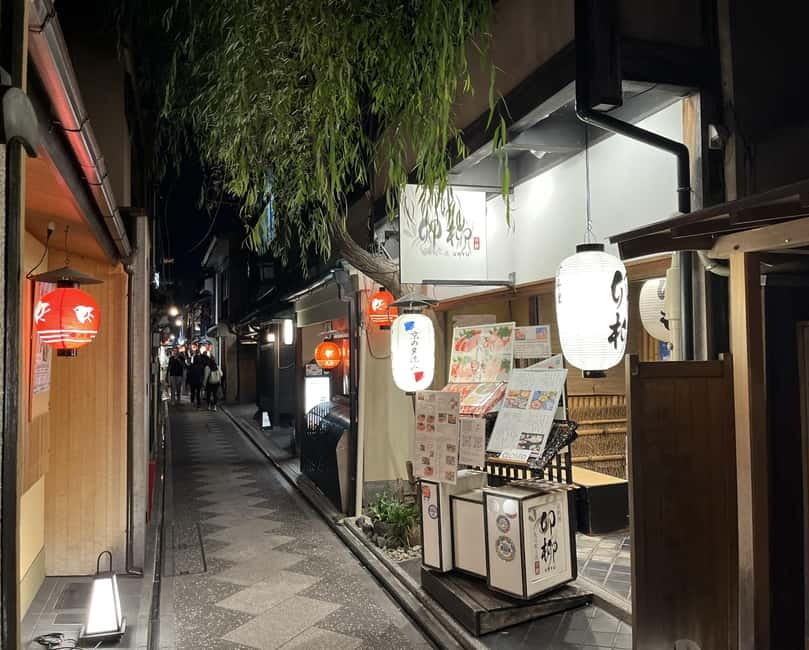
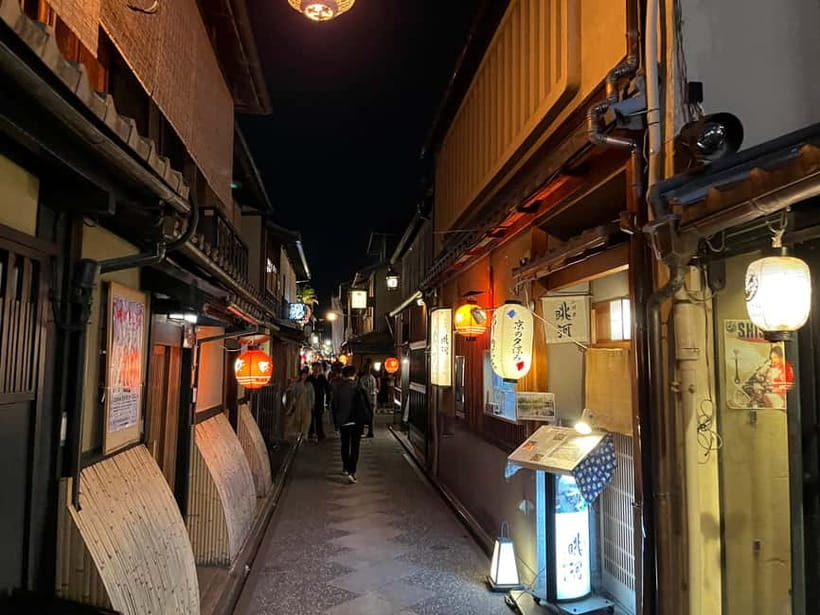
The walk begins with Pontocho Alley, one of the city’s traditional entertainment districts. The narrow street is a good place to start because it sets up the tour’s central idea: Gion is not a single enclave, but part of a larger network of historic neighborhoods and customs. Your guide can explain how the area fits into Kyoto’s broader story.
The route also includes Pontocho Kaburenjo, a theater associated with the district’s traditional arts. Rather than treating the building as a quick photo stop, use it as a prompt to ask how performance, training and district life connect. The tour’s focus includes the practices and routines of maiko and geiko, so this is a natural moment to bring up questions.
From there, the walk takes in the Kamogawa River and the Yagi-san and Kita-san statues. The river gives you a change of pace from the lanes, while the statues offer specific points to discuss rather than another vague sweep of scenery. Guides have used photographs, maps and other visual material to show how places and streets have changed over time, a useful tool when the present-day view does not tell the whole story.
Sanjo Ohashi, a bridge over the river, and Yamato Dori continue the route through the city’s historic fabric. A bridge is easy to cross without a second thought; with a guide, it becomes a chance to connect routes, neighborhoods and Kyoto’s past. These stops are part of what makes the tour useful even if you have already walked around the area on your own.
Gion-Kobu and Shirakawa’s preserved streets
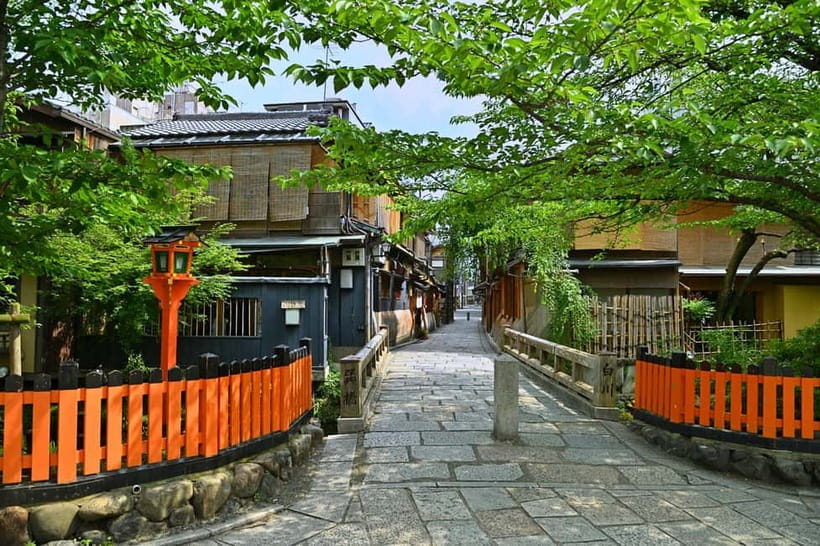
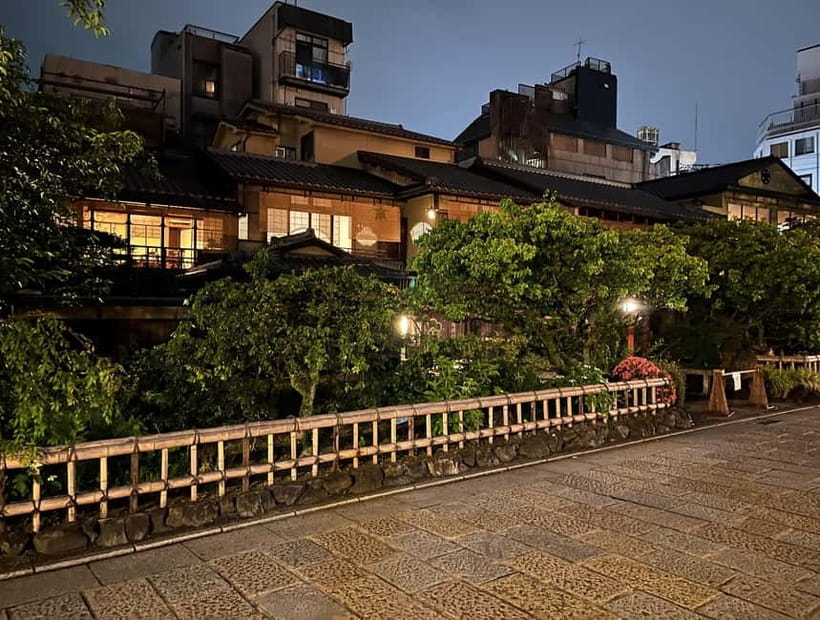
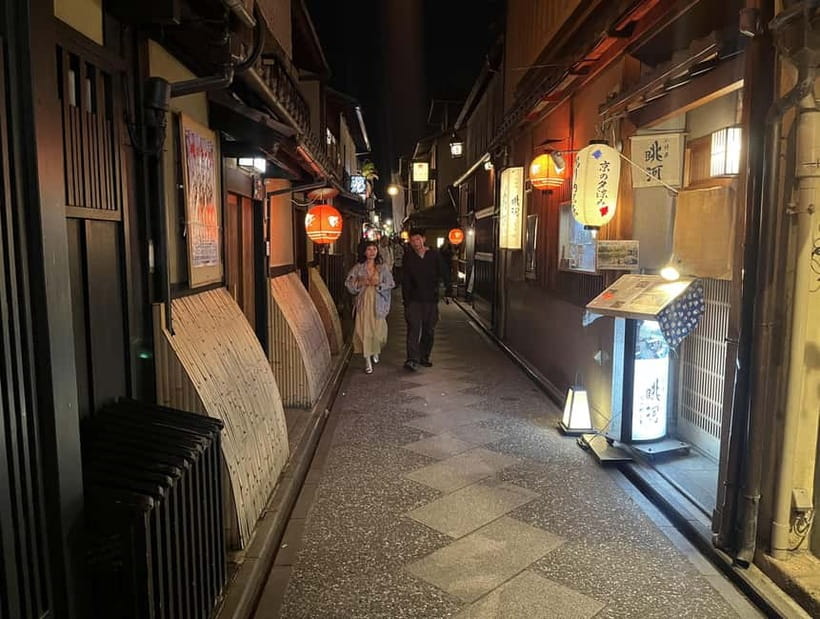
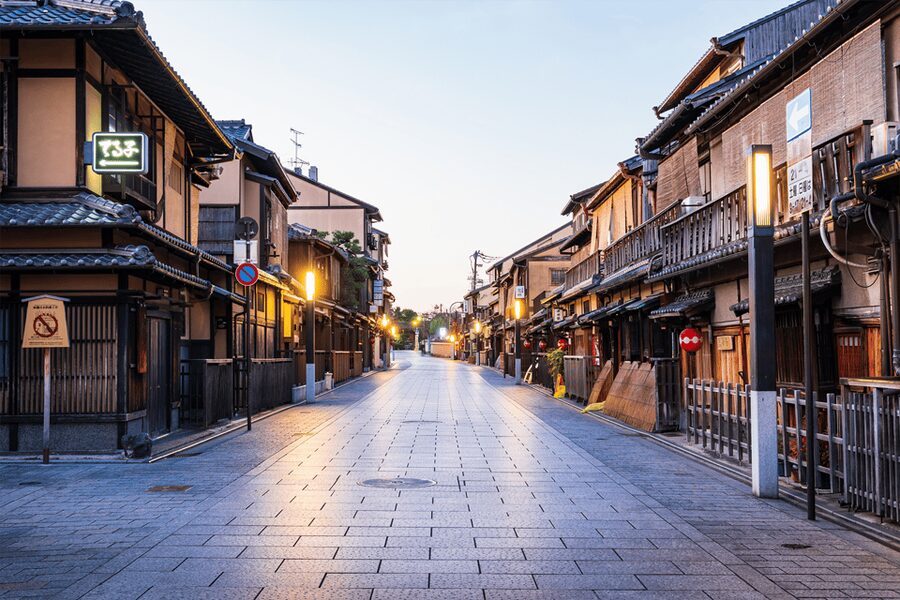
Gion-Kobu is one of the main reasons to take a guided walk rather than simply follow a map. The route includes Gion-Shinbashi-dori and Gion Shirakawa, streets in a nationally preserved historic neighborhood where wooden machiya houses give the area its distinctive look. A guide can point out features you might pass without noticing and explain how the district’s built environment relates to its history.
This is also where the discussion of geiko and maiko can become more than a quick definition. The tour covers their lifestyles, activities, practices and routines, and explains the difference between the two terms. You can ask how the district functions today and how tradition shapes daily life. The aim is not simply to spot a performer, but to understand the setting and culture that surround the profession.
The distinction matters because a sighting is uncertain. A geiko or maiko may appear during the walk, but the guide cannot guarantee it, and the route should not be judged by whether you happen to see one. The more reliable value is learning how to understand the area, including the small details that are easy to miss when you are walking alone.
One useful expectation to set: Hanamikoji-dori is not included. It is often associated with Gion, so you may want to visit it separately if it is on your list. This tour deliberately covers other streets and neighborhoods, which helps it offer a broader picture rather than focusing only on the most recognizable lane.
Bridges, shrines and Gion-Higashi
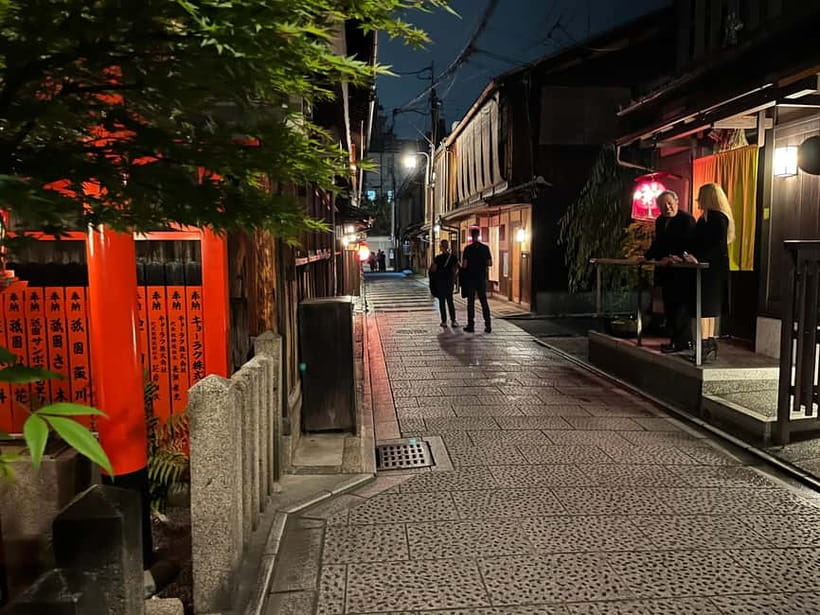
Tatsumi Shrine and Tatsumi Bridge add another layer to the walk through Gion-Kobu. The route’s regular stops create room for short explanations and questions, rather than leaving you to absorb a long speech while walking. That conversational rhythm is a strength if you enjoy asking about details as they come up.
The walk then visits Gion-Higashi, the third hanamachi on the route. Seeing it alongside Pontocho and Gion-Kobu helps you understand that Kyoto’s traditional entertainment districts are distinct areas, not interchangeable names for one neighborhood. If a particular street or custom interests you, ask the guide to explain it while you are there.
The final major stop is Yasaka Shrine, once known as Gion Shrine. The Gion district takes its name from the shrine, whose origins, along with those of the Gion Festival, go back more than 1,100 years. The festival is one of Japan’s three most famous and important festivals, and the guide may explain its connection to the area if time allows.
This shrine stop gives the walk a satisfying historical link: the district’s name, its religious center and its festival are connected. It is also a place where the tour can broaden from neighborhood history to Kyoto and Japanese history. If the guide mentions the festival, ask how its long past relates to the district you have just walked through.
More walking tours in Kyoto:
- Night Walk in Gion: Kyoto’s Geisha District
★ 4.5 · 2,003 reviews - Kyoto Gion Geisha District Walking Tour – The Stories of Geisha
★ 5.0 · 1,441 reviews - Nishiki Market Brunch Walking Tour (7 Tastings + Brunch)
★ 5.0 · 1,355 reviews - Kyoto Arashiyama Walking Tour: Bamboo, Monkeys, Gardens & Secrets
★ 5.0 · 1,216 reviews
Guides who make room for your questions
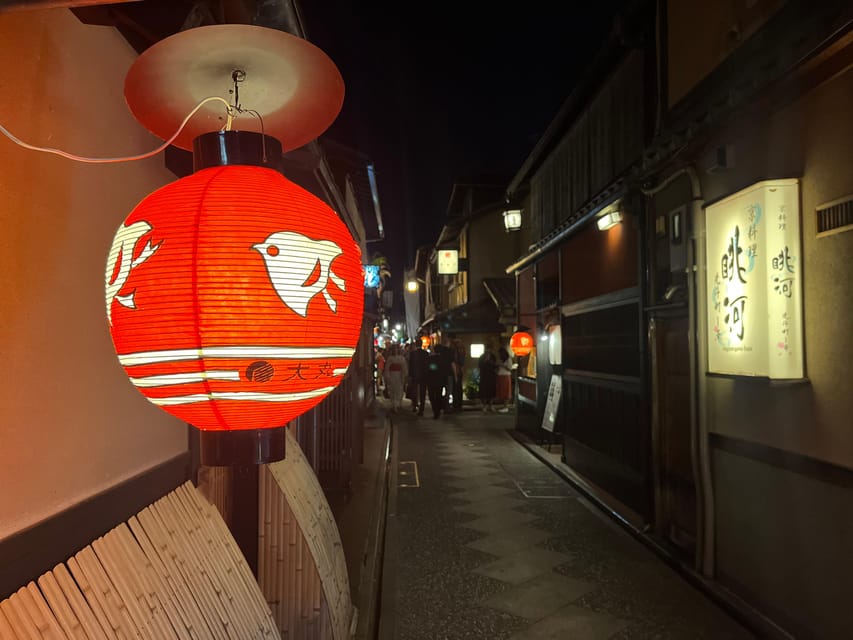
A major strength of this experience is the emphasis on conversation. Guides such as Jose and Saskia are praised for adapting explanations to people’s interests, using anecdotes and answering questions about both the places on the route and life in Japan. The tour is offered in English, Spanish, Dutch and French, so you can choose a language that makes it easier to follow the stories and join in.
The guides’ personal experience in Japan is part of the appeal. Visitors have especially valued hearing about daily life from people who live there, as well as getting recommendations for food and other places to visit. Those extras are not a formal promise, but the tour is designed to leave time for questions rather than rush through a fixed script.
Several guides use an iPad to show photographs, maps or other visual material. That can help you picture how a street has changed or understand a detail that is hard to explain from the pavement alone. The tour is still a walking experience, not a multimedia presentation, but a few well-chosen images can make the city’s history easier to grasp.
Timing, weather and seasonal changes
The tour lasts two hours, with starting times depending on availability. The 9:45 and 12:30 departures can include a free visit to the Gion Gallery if you want to extend the outing. Check the available start time when booking, and treat the gallery visit as an optional extra rather than part of every tour.
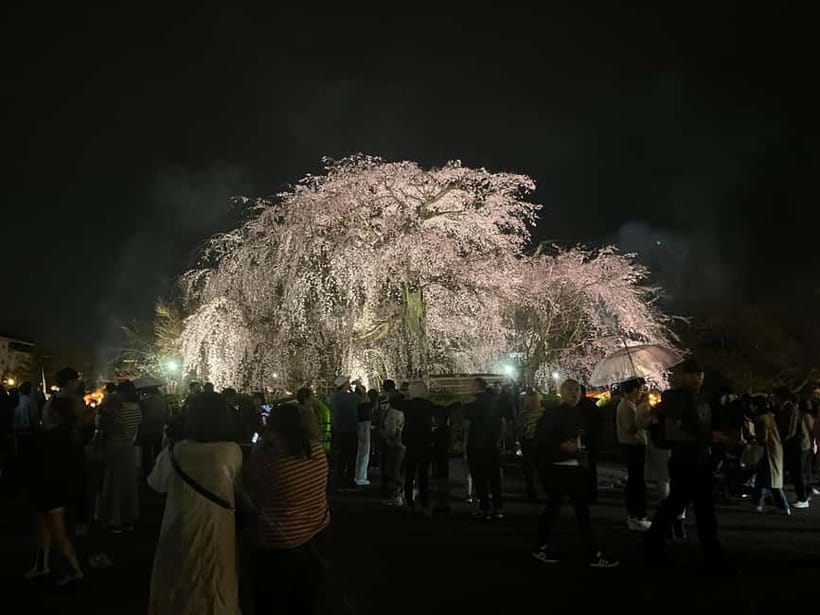
During cherry blossom season, roughly late March to early April, the route may change to show blossoms around Gion. This is a seasonal adjustment, not a fixed promise about bloom conditions. If you are visiting then, ask what route is planned and allow for the fact that flowering dates vary.
The walk has no amenities provided. Bring water, comfortable shoes, a hat, sunscreen and an umbrella according to the forecast. Kyoto can be tiring on foot, and shade or a place to sit should not be assumed along the way.
What $35 buys you
At $35 per person, this tour offers a focused, guided introduction to a historic part of Kyoto. You are paying for two hours of interpretation, a route through three hanamachi, and the chance to ask questions in a group capped at six. The value is strongest if you want to understand what you are seeing, rather than just collect a list of streets and shrine stops.
A self-guided walk costs less, but it cannot point out details as you go or adapt to your questions. The guide’s personal stories and explanations can also help you connect architecture, local custom and national history in a way that is hard to get from scenery alone. If you already know Gion well and prefer to explore at your own pace, the guided format may feel less essential.
The tour does not include amenities, and it does not promise entry to every place or a geiko sighting. Its value rests on the small-group guidance and the quality of the conversation. For a first visit to Kyoto, or for anyone who has walked through Gion without knowing what to look for, that is a fair exchange.
Who should book this walk
I would choose this tour if you like history explained in plain language, enjoy asking questions and want more than a quick look at traditional streets. It is also a strong fit if you are curious about maiko and geiko but understand that the district’s culture is more than an opportunity to see someone in traditional dress. Families can take part, and the small group can make it easier to keep a shared conversation going.
It may be less suitable if you want a guaranteed geiko or maiko encounter, specifically want to walk Hanamikoji-dori, or would rather cover the area silently at your own speed. The two-hour duration and 3.3-kilometer route are straightforward, but you should be comfortable walking and standing.
My booking advice: go for the explanations, the three-district route and the chance to ask your own Japan questions. Treat any sighting as luck, and plan a separate visit to Hanamikoji-dori if that street is a priority.
FAQ
How long is the Kyoto Gion Walking Tour?
The tour lasts two hours and covers about 3.3 kilometers, or two miles.
Which neighborhoods does the route visit?
It visits Pontocho, Gion-Kobu and Gion-Higashi, three of Kyoto’s five hanamachi, or traditional geiko districts.
Is Hanamikoji-dori included?
No. Hanamikoji-dori is not part of the route.
Can I expect to see a maiko or geiko?
No sighting is guaranteed. The tour discusses maiko and geiko life, but whether you see one depends on chance.
What languages are available?
The tour is offered in English, Spanish, Dutch and French.
How large is the group?
The group is limited to six participants.
Where is the meeting point?
Meet in front of the Disney Store at Kyoto Shijo-Kawaramachi. The guide waits there with an iPad showing the Get Your Guide image and the tour name.
What should I bring?
Wear comfortable shoes and bring water, a sun hat, sunscreen and an umbrella.
Is the Gion Gallery visit included?
The 9:45 and 12:30 tours can include a free visit to the Gion Gallery if you want to extend the tour time.
Newly added in Kyoto
- Uji: Private immersion into Kyoto’s tea and reglious culture★ 5.0 · 17 reviews
- Whisk Your Own Matcha: A Zen Matcha Experience at Temple★ 3.6 · 7 reviews
- Kyoto tea town for matcha lovers★ 5.0 · 16 reviews
- Treasures of Kyoto: Gion & historical Walking Tour★ 5.0 · 6 reviews
- Kyoto Matcha Green Tea Tour★ 4.5 · 23 reviews
- Uji and Wazuka Matcha Farm Half Day Private Guided Tour★ 5.0 · 21 reviews
- Uji Tea Ceremony and UNESCO Heritage Walking Tour★ 5.0 · 20 reviews
- Utilising upcycled Matcha! Creating matcha incense (Uji, Kyoto)★ 5.0 · 6 reviews
Kyoto Walking Tours, compared.
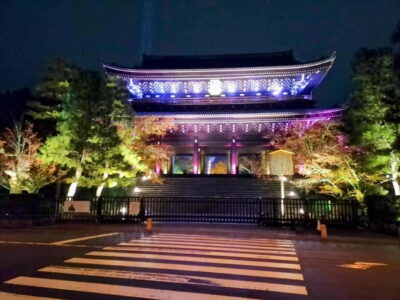
Kyoto Geisha Walking Tour: Gion District & Hidden Gems
Read our review →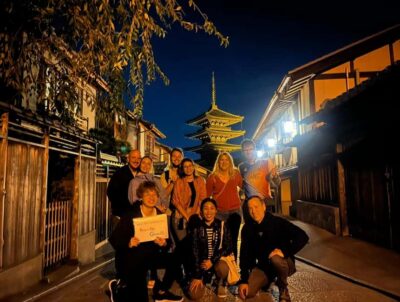
Gion Magical Night Walking Tour with Geisha Trivia
Read our review →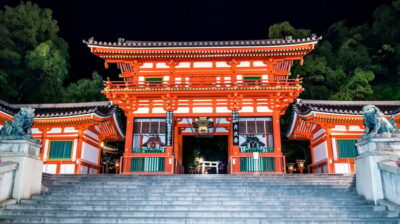
Gion Geisha District Walking Tour – Stories of Geisha
Read our review →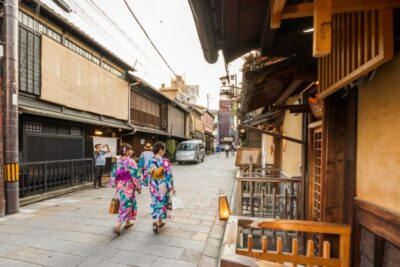
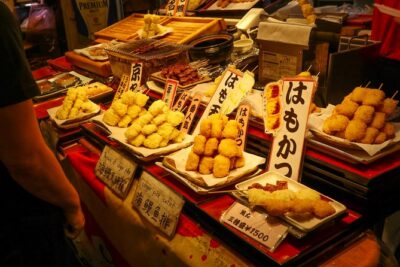
Nishiki Market Brunch Walking Tour (7 Tastings + Brunch)
Read our review →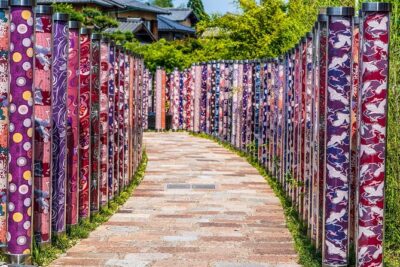
Kyoto Arashiyama Walking Tour: Bamboo, Monkeys, Gardens & Secrets
Read our review →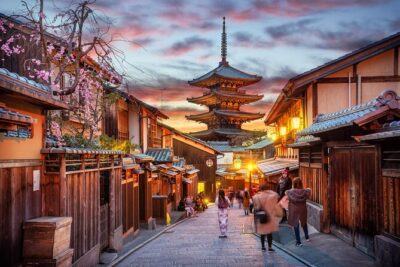
Nara Half Day Trip Walking Tour (Private Option Available)
Read our review →Browse the lists this tour appears in