
Reviewed · NIJO CASTLE TOURS
Kyoto Imperial Palace and Nijo Castle Walking Tour
Kyoto’s Imperial Palace and Nijo Castle tell two very different stories about who held power in Japan: the emperor’s court and the shogun’s military government. This private, seven-hour walking tour brings those stories together, with stops at a major Buddhist temple and Nishiki Market along the way.
I like that you get a guide’s context at both the Palace and the Castle, where the contrast matters as much as the buildings themselves. I also like the small-group format: it is a private tour for your party, and guides such as Naoko, Chie and Fuji have been praised for clear explanations, efficient routing and useful food suggestions.
The trade-off is the pace. There is quite a bit of walking, and the listed stops account for only part of the seven-hour day, so you should ask how the remaining time is used if the exact route matters to you.
The useful details at a glance
- The Castle and Palace make a strong historical pair: Nijo Castle was built for the shogun’s visits to Kyoto, while the Imperial Palace served as the emperor’s residence until the capital moved to Tokyo in 1868.
- Nishiki Market gets a short visit: The tour allows 30 minutes in Kyoto’s well-known food district, with a guide who can point you toward local specialties.
- The tour is private: Only your own group participates, which makes it easier to ask questions and set the pace within the day’s schedule.
- Guides can make the day more useful: Naoko, Chie and Fuji are among the guides named by people who have taken the tour. English-speaking guides have been praised for making history accessible, including for children.
- Budget for extras: The price is $111.03 per person. Admission is listed at ¥1,300 per person and local transport at ¥1,000 per person, both in addition to the tour price.
- Plan for a full day on your feet: The tour begins at 9:00 am at Hotel Granvia Kyoto and ends back at the meeting point. Moderate fitness is recommended.
A full day built around Kyoto’s contrasts
This tour is designed to connect several sides of Kyoto in one day: Buddhist life, food, the shogun’s residence and the emperor’s former home. That combination gives you more context than visiting the Castle or Palace alone, especially if you have limited time in the city.
The format is private, so the guide is there for your group rather than a larger mixed party. That can make a real difference at sites where a short explanation helps you understand what you are seeing. You can ask questions as you go, and the guide can help you navigate between stops.
The day starts at 9:00 am at Hotel Granvia Kyoto, beside Kyoto Station’s central entrance, and returns to the same meeting point. The total duration is about seven hours. The four named stops have scheduled visits totaling three hours and 15 minutes, with the rest of the day allowing for movement between sites and other parts of the route. The exact timing of those in-between portions is not specified.
The overview also mentions a stroll through a geisha street, but that stop is not named in the timed itinerary. If seeing that area is important to you, ask KAMNAVI Tours to confirm whether it is included on your date and how much time is set aside for it.
More Nijo Castle tours in Kyoto:
- Kyoto: Nijo-jo Castle and Ninomaru Palace Guided Tour
★ 4.7 · 1,020 reviews - Kyoto: Nijo Castle, Kiyomizu & Fushimi Inari Guided Tour
★ 4.7 · 700 reviews - Kyoto: Nijo, Kinkaku-ji, Arashiyama, Kiyomizu & Fushimi Inari
★ 5.0 · 699 reviews
Higashi Hongan-ji: a first look at Buddhist life
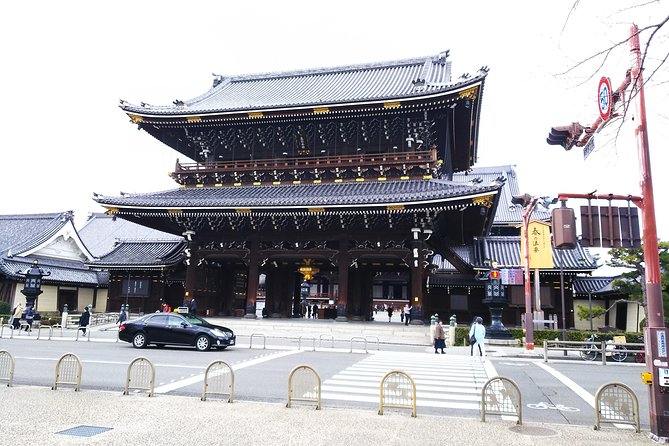
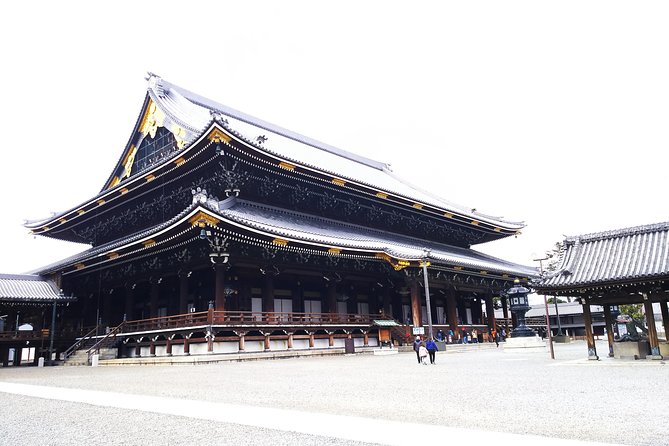
The first stop is Higashi Hongan-ji Temple, with about 30 minutes on site. The tour frames the visit around Buddhism and the role of ordinary people in Japanese religious life. That everyday focus is useful: a temple visit becomes more than a quick look at a large building when you understand how religion shaped people’s beliefs and routines.
Thirty minutes is enough for an introduction, but it is not a long, unhurried temple visit. If you are especially interested in Buddhist history or architecture, use your time with the guide to ask what to notice and which details matter most. A private format is well suited to those questions.
The tour information does not give a detailed description of the temple route or name particular buildings and features you will see. Treat this as a guided overview rather than a deep study of the temple. Its value is in setting up the day’s broader discussion of Kyoto’s people and institutions.
Nishiki Market: a quick taste of Kyoto
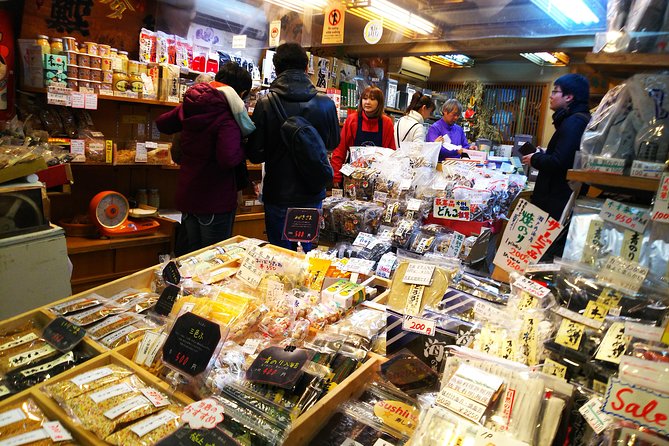
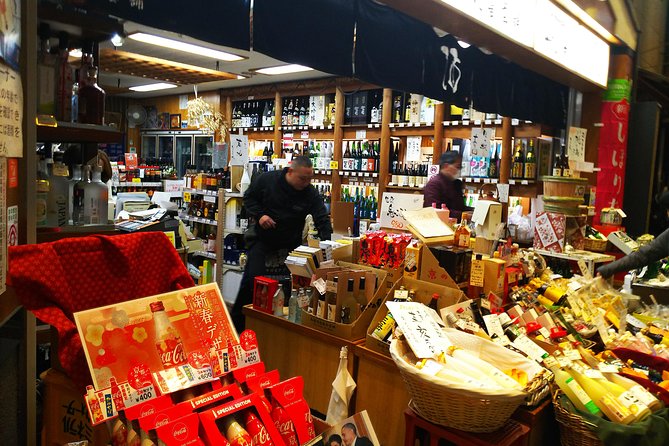
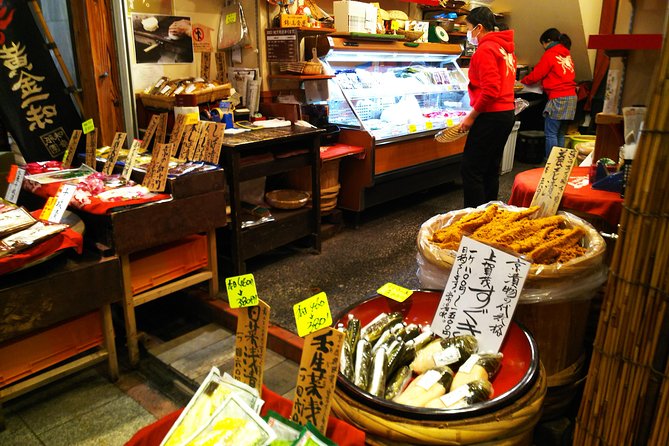
Next comes Nishiki Market, often called Kyoto’s kitchen. You have about 30 minutes here, so think of it as a guided introduction, not a leisurely food crawl. The market is known for Kyoto ingredients and food, and the guide can help you make better use of a short visit.
This is one place where a guide’s local suggestions can pay off. Fuji, for example, has been singled out for useful food recommendations at Nishiki. If you want to try something, ask early about what is worth tasting and how much time you will have. The tour does not state that food or refreshments are included, so plan to pay for anything you buy.
The market’s fame can also mean a lot to take in during a brief stop. You may need to choose between browsing, asking questions and sampling food rather than doing all three at a leisurely pace. For many people, that short visit is still worthwhile: it adds a taste of daily food culture to a day otherwise focused on grand political sites.
Nijo Castle: the shogun’s Kyoto residence
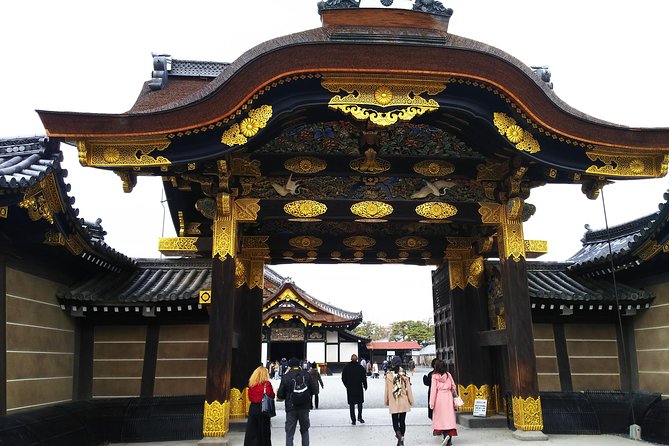
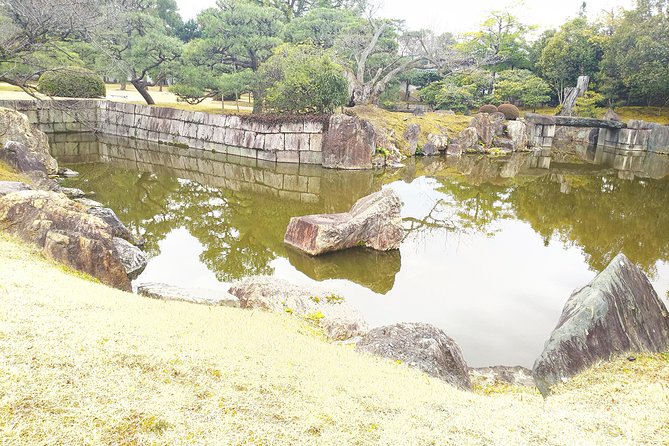
At Nijo Castle, the tour allows about one hour. Built in 1603, it served as a place for the shogun to stay when visiting Kyoto after the shogunate had shifted its base to Edo, now Tokyo. The setting helps explain the split between the emperor’s court in Kyoto and the military authority of the shogun.
Inside, the tour description points to more than 1,000 decorative paintings. The scale and decoration make this a very different experience from the Imperial Palace, and one guide has described that contrast as a highlight. If you have time to ask questions, focus on how the Castle’s role and interiors differ from the emperor’s residence you will see later.
One practical point: Nijo Castle admission is not included. The tour lists an admission fee of ¥1,300 per person, but does not specify in the fee note exactly which admission it covers. Confirm the charge with the operator before you go, and budget for it separately from the $111.03 tour price. A separate ¥1,000 per person is listed for public transport.
An hour gives you a worthwhile introduction, but the day is moving on a schedule. If the Castle is your main interest, ask the guide how the visit is timed and what you should prioritize inside.
More walking tours in Kyoto:
- Kyoto Geisha Walking Tour: Gion District & Hidden Gems
★ 4.7 · 3,273 reviews - Kyoto: Gion Magical Night Walking Tour with Geisha Trivia
★ 4.9 · 2,393 reviews - Kyoto: Gion Geisha District Walking Tour – Stories of Geisha
★ 4.7 · 2,187 reviews - Night Walk in Gion: Kyoto’s Geisha District
★ 4.5 · 2,003 reviews
Kyoto Imperial Palace: a quieter kind of royal residence
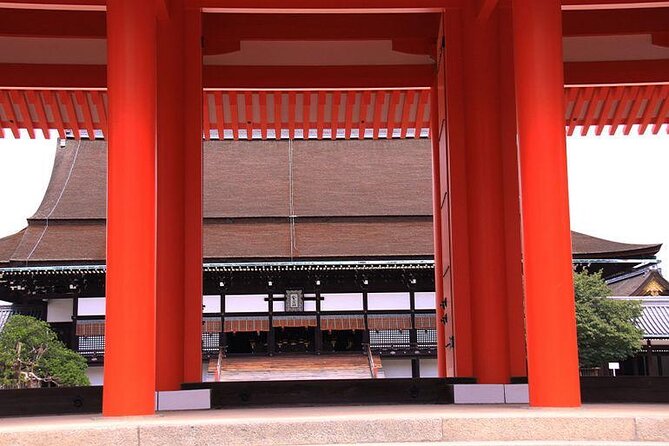
The Kyoto Imperial Palace occupies an extensive area in central Kyoto. It served as the emperor’s home until the capital moved to Tokyo in 1868, and it remains connected to the imperial family’s use of the city. The guided visit lasts about one hour and 15 minutes.
It helps to arrive with the right expectations. Do not expect a European-style palace filled with gold and lavish furniture. The Palace offers a different sense of imperial life, and the contrast with Nijo Castle is part of what makes the paired visit valuable. The Castle was tied to the shogun’s power; the Palace represents the emperor’s court and residence.
The visit is also a chance to put the day’s political history together. Rather than seeing two old buildings as similar attractions, you can compare the roles each played in Kyoto. Guides have been praised for explaining that distinction in an engaging way, and for answering questions or finding an answer when they do not know one on the spot.
Admission to the Palace is listed as free. The visit is longer than the market stop, giving you more time to listen and look around, though the tour remains a scheduled group activity. If architecture and imperial history are your main reasons for booking, this is likely to be one of the day’s most rewarding stops.
What the guide adds to the day
The guide is the tour’s central value. The sites are accessible on your own, but a good guide can connect them, explain what you are looking at and keep the day moving without leaving you to work out every transfer. Chie has been praised for helping the group make efficient use of time, while Naoko has been noted for making the subject interesting for children. Fuji has helped with food choices at Nishiki and with answering questions about history and culture.
Those names show the sort of guiding experience the tour has offered, but they are not a promise that a particular guide will lead your outing. If you have a strong preference or are traveling with children, ask the operator who is assigned and whether the guide can accommodate your interests.
The private format is especially helpful for families or anyone who likes to ask questions. It does not remove the walking or make the day leisurely by default, but it gives your party a more direct line to the guide than a large group tour would.
Price, walking and what to budget
At $111.03 per person, the tour is best judged as a guided full-day experience, not as a bundle of admissions and transport. The guide’s fare is included. The listed extras are ¥1,300 per person for admission and ¥1,000 per person for public transportation. Food purchases are not listed as included.
That extra cost is worth factoring in before you compare the tour with a self-guided day. The price buys a private guide and a planned route through several important parts of Kyoto. For a short stay, that can be good value if you want historical context and help getting around, rather than spending time arranging each stop yourself.
There is a fair amount of walking, and the tour recommends a moderate level of physical fitness. Wear comfortable shoes and be ready for a full day of movement. The information does not specify walking distances, meal arrangements or the exact transport used, so ask the operator if any of those details will affect your plans.
The tour is commonly booked about 56 days ahead. It offers free cancellation up to 24 hours before the start time. Poor weather may lead to a different date or a full refund. Those terms offer some flexibility, but the activity does require good weather.
Who should book this Kyoto walking tour?
I would consider this tour if you have one day to connect Kyoto’s political history with a temple and a food market, and you prefer having a guide explain what you are seeing. It is also a good fit for families who want a guide able to adapt explanations for children, or for visitors who value practical help with routing and questions.
It may not suit you if you want long, unstructured time at each site, a slow market visit or a day with little walking. The market stop is only 30 minutes, and the named stops do not spell out every part of the seven-hour schedule. Ask about the route, the geisha street mentioned in the overview, meal time and the admission charge before booking.
Book it if you want a guided introduction to Kyoto’s major historical contrasts in a single day. Skip it if you would rather explore at your own pace or spend most of the day at one site. The strongest reason to go is the combination of the Castle and Palace, made clearer by a guide who can explain why these two residences represent different kinds of power.
FAQ
How long is the Kyoto Imperial Palace and Nijo Castle Walking Tour?
The tour lasts about seven hours. It starts at 9:00 am and ends back at the meeting point.
Where does the tour start and end?
It starts at Hotel Granvia Kyoto, near Kyoto Station’s central entrance. It ends back at the same meeting point.
Is this a private tour?
Yes. Only your group participates.
What is included in the price?
The guide’s fare is included. Admission and public transportation are listed as extra costs.
How much should I budget for admission and public transportation?
The listed costs are ¥1,300 per person for admission and ¥1,000 per person for public transportation. The fee details do not specify exactly which admission the ¥1,300 covers, so confirm this with the operator.
How much walking is involved?
The tour involves quite a bit of walking and recommends a moderate level of physical fitness.
Can I cancel for a refund?
You can cancel for a full refund at least 24 hours before the experience’s start time. Cancellation inside that period is not refundable.
More temple and shrine tours in Kyoto
- Kyoto: Tea Ceremony Ju-An at Jotokuji Temple
★ 4.9 · 3,207 reviews - World Heritage Kyoto & Nara Uji Authentic Matcha Experience
★ 5.0 · 1,573 reviews - Arashiyama Bamboo, Temple, Monkeys, or Secret Sake Brewery
★ 4.8 · 886 reviews - Kyoto: Arashiyama Bamboo Forest, Monkeys, Matcha & Temple Tour
★ 5.0 · 759 reviews
Newly added in Kyoto
- Uji: Private immersion into Kyoto’s tea and reglious culture★ 5.0 · 17 reviews
- Whisk Your Own Matcha: A Zen Matcha Experience at Temple★ 3.6 · 7 reviews
- Kyoto tea town for matcha lovers★ 5.0 · 16 reviews
- Treasures of Kyoto: Gion & historical Walking Tour★ 5.0 · 6 reviews
- Uji and Wazuka Matcha Farm Half Day Private Guided Tour★ 5.0 · 21 reviews
- Kyoto Matcha Green Tea Tour★ 4.5 · 23 reviews
- Uji Tea Ceremony and UNESCO Heritage Walking Tour★ 5.0 · 20 reviews
- Utilising upcycled Matcha! Creating matcha incense (Uji, Kyoto)★ 5.0 · 6 reviews
Nijo Castle Tours, compared.
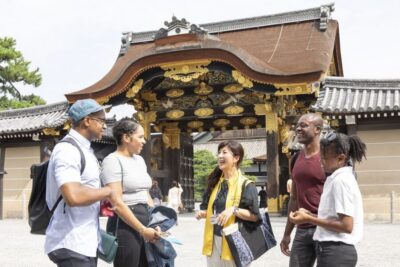
Nijo-jo Castle and Ninomaru Palace Guided Tour
Read our review →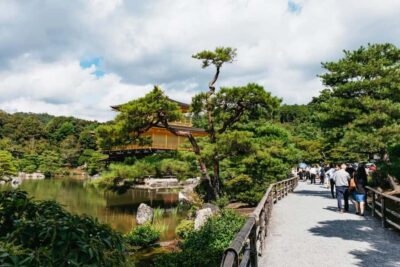
Nijo Castle, Kiyomizu & Fushimi Inari Guided Tour
Read our review →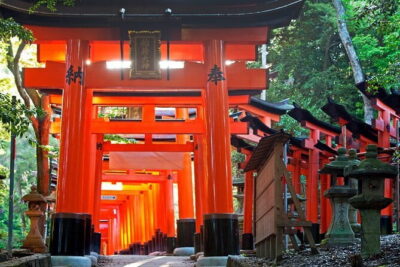
Nijo, Kinkaku-ji, Arashiyama, Kiyomizu & Fushimi Inari
Read our review →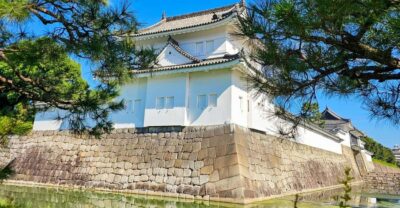
Imperial Palace & Nijo Castle Guided Walking Tour
Read our review →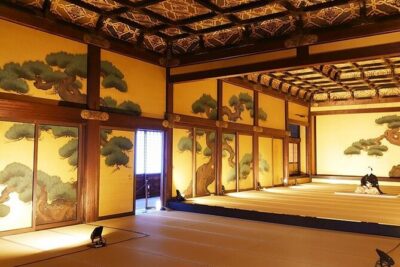
Nijo Castle World Heritage Guided Tour with Admission
Read our review →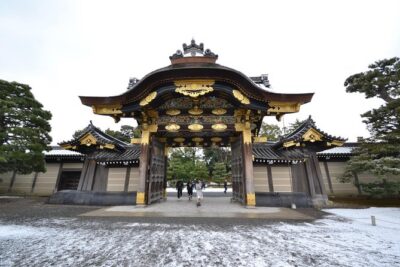
Nijo Castle and Imperial Palace Visit with Guide
Read our review →
Golden Pavilion, Nijo Castle, & Nishiki Market Half day tour
Read our review →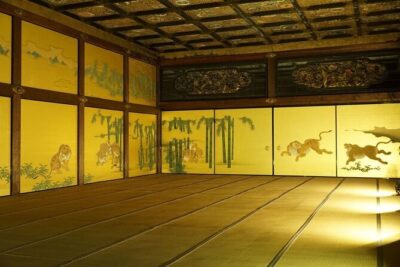
Nijo Castle Samurai Inside Story — Top-Rated Guide (Max 8)
Read our review →Browse the lists this tour appears in