
Reviewed · KINKAKU-JI TOURS
Kyoto: Kinkaku-ji Temple & Serene Garden Guided Tour with Tickets
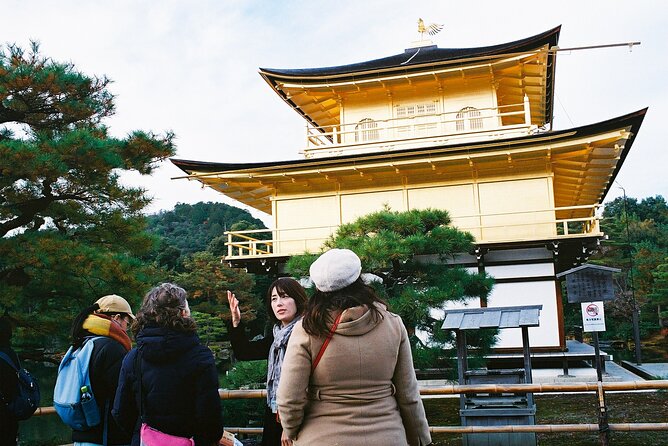
At Kinkaku-ji, the Golden Pavilion seems to float above its pond, but the most rewarding part of this tour is what comes next: a visit to Ninna-ji, where you may enter a normally closed hall for a monk-led chant and conversation. It is an unusual pairing, one temple built to display a shogun’s power, the other closely tied to the imperial court and Buddhist practice.
I like two things in particular: the small group, capped at seven, gives a guide room to explain details that are easy to miss on your own; and the Ninna-ji visit offers more than a look at temple buildings, with a monk, a sutra ritual and time in the Imperial Residence. The main consideration is that the schedule inside Ninna-ji can change with the temple’s needs, so special access is not guaranteed in exactly the same form each time.
Key points
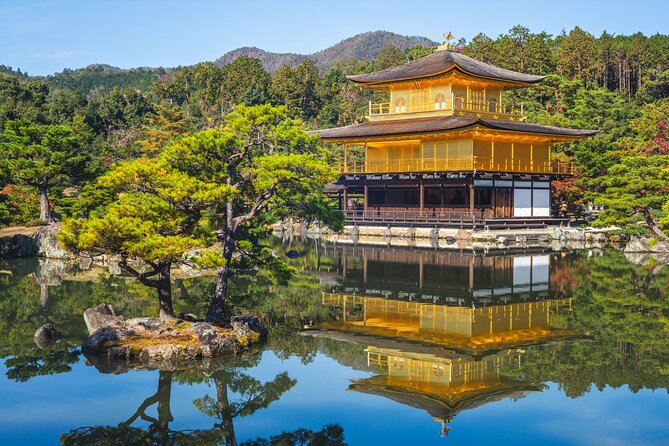
- Kinkaku-ji’s gold-leaf pavilion is seen in context with its pond and garden, not just as a quick photo stop.
- Ninna-ji’s monk-led session may include chanting, questions and a look inside a hall not usually open to the public.
- A group of no more than seven keeps the tour intimate and makes it easier to ask questions.
- Temple admission is included in the $48.86 per-person price.
- The three-hour route ends at Ninna-ji, making this a useful way to see two UNESCO World Heritage temples in one outing.
- The Ninna-ji program can change according to temple circumstances, so keep an open mind about the exact order and access.
Two temples, two kinds of authority
Kinkaku-ji and Ninna-ji are both Buddhist temples and UNESCO World Heritage sites, but they tell different stories. Kinkaku-ji began as a retirement villa for the shogun Ashikaga Yoshimitsu, a military ruler whose wealth and status were made visible in the pavilion’s gold-leaf exterior. Ninna-ji was founded in 888 by Emperor Uda and is closely connected with imperial life and the Omuro school of Shingon Buddhism.
That contrast gives the tour a useful shape. At the Golden Pavilion, you see how power could be expressed through refined architecture and carefully arranged scenery. At Ninna-ji, the focus shifts toward religious practice, imperial tradition and a quieter kind of grandeur.
The guide helps connect those settings to Japanese history and Buddhist traditions. That context matters: Kinkaku-ji is one of Kyoto’s most photographed sights, and it is easy to take in the shine, snap a picture and move on without understanding why the site was built. A guide can turn that quick stop into a clearer story about status, belief and design.
More Golden Pavilion tours in Kyoto:
- Kyoto: Fushimi Inari, Kinkakuji, Bamboo Grove 1 Day Bus Tour
★ 4.8 · 4,316 reviews - Osaka/Kyoto:Kinkakuji,Arashiyama,FushimiInariShrine,NaraPark
★ 4.1 · 1,596 reviews - Kyoto: Nijo, Kinkaku-ji, Arashiyama, Kiyomizu & Fushimi Inari
★ 5.0 · 699 reviews
Kinkaku-ji: more than the famous reflection
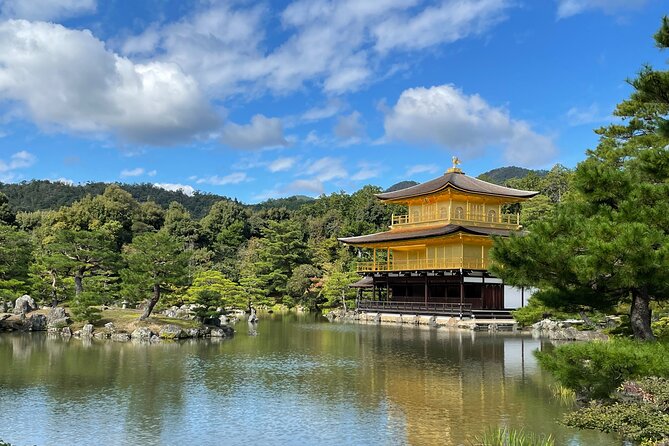
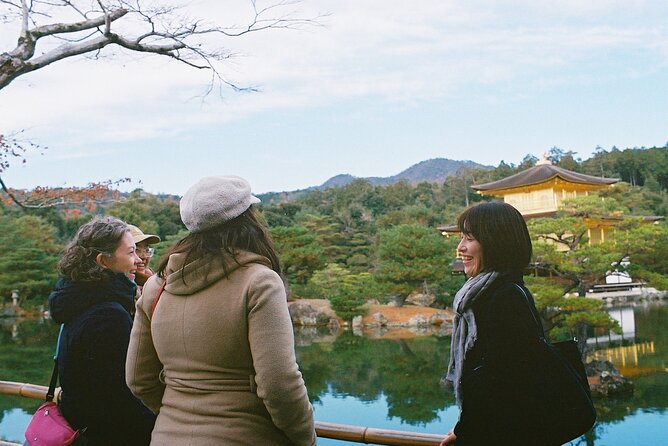
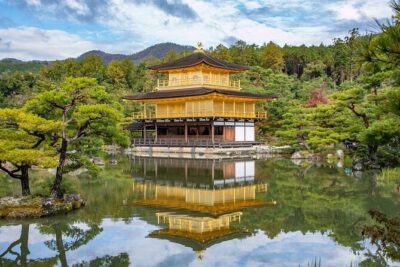
The first stop is Kinkaku-ji, also known as the Golden Pavilion. You’ll spend about an hour here, with admission included. Its upper floors are covered in gold leaf, and the building’s reflection in the pond is the image most people come to see. The setting is striking, but it is also a busy, well-known attraction. A guide helps you focus on more than the camera view.
The visit includes several features around the temple grounds: Shariden, Karamon Gate, Rikushu-no-taki, Anmintaku, Hakujanotsuka, Yukatei Teahouse and Fudo Hall. The names may be unfamiliar, but that is precisely where a guide earns a place on the route. Instead of treating the grounds as a procession of pretty stops, you can ask what each structure or feature contributes to the temple’s story.
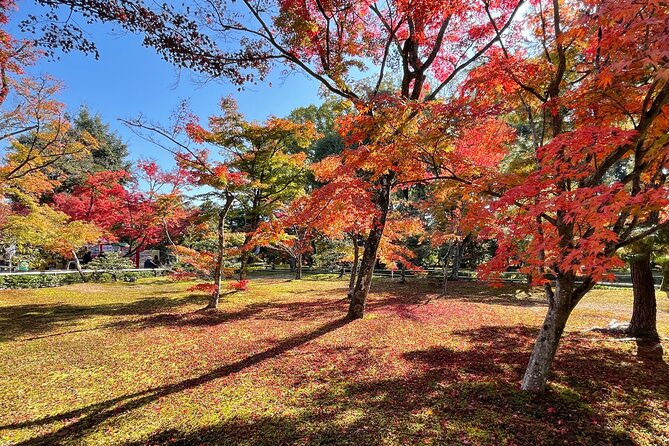
The garden is another reason to take your time. One visitor particularly appreciated its borrowed scenery, a garden approach in which distant surroundings form part of the view. That idea helps explain why the pavilion’s setting feels composed rather than merely decorative: the pond, garden and building work together. I like that the tour gives the garden room in the schedule, rather than making the golden exterior the whole event.
Still, set expectations. Kinkaku-ji is famous, and the pavilion is not a private discovery. You will be sharing a popular site with other people, and the tour’s one-hour allocation means this is a guided overview, not a long, unhurried garden visit. If you want to linger at every feature or explore at your own pace, a group tour may feel brisk.
Ninna-ji: imperial calm and Buddhist practice
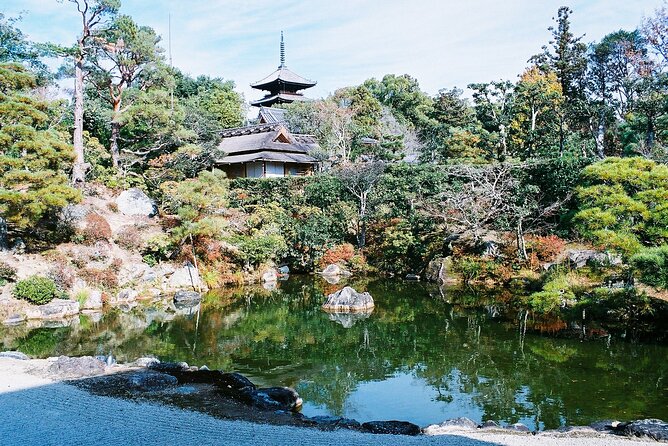
The second stop, Ninna-ji, gets about an hour and 45 minutes, making it the longer part of the outing. Founded by Emperor Uda in 888, it is the head temple of the Omuro school of Shingon Buddhism. The grounds are known for a five-story pagoda, gardens and Omuro cherry trees, while the temple’s imperial ties give the visit a different character from Kinkaku-ji.
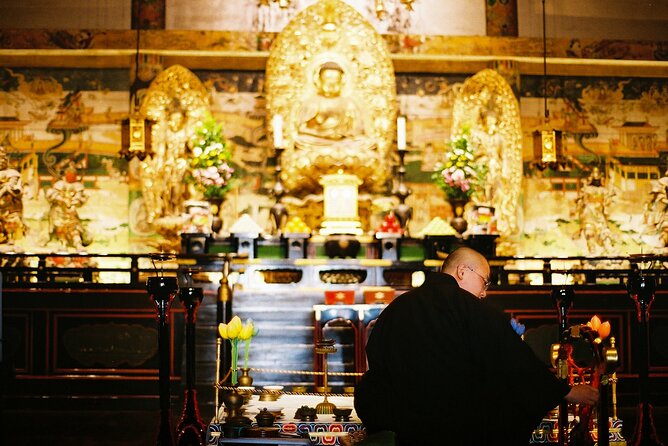
The standout element is the chance to enter the Main Hall, also referred to as the Kondo Hall, for a sacred chanting session led by a monk. The hall is rarely opened to the public, so this is the part that most clearly distinguishes the tour from a standard temple visit. You are not just looking at a building from outside; you have an opportunity to hear a Buddhist practice and ask the monk questions about its meaning.
The conversation is a valuable counterpoint to the visual beauty of the temples. A guide can explain the broad historical setting, while the monk’s participation brings the focus to religious tradition as it is practiced. The exact program is subject to the temple’s circumstances, though, so treat the chanting and access as planned features that may be adjusted rather than an absolute guarantee.
Another stop is the Sutra Hall, where you can see and interact with a rotating sutra shelf. The ritual has spiritual meaning, and your guide can help explain why it matters. This kind of detail rewards curiosity: you can ask what you are seeing instead of simply passing through a sacred space without context.
The tour also includes a visit to the elegant Imperial Residence. It is a fitting final chapter, bringing the temple’s courtly past into view after the Buddhist ritual. The grounds offer a calmer close than the famous pavilion, and the planned photo with the monk adds a personal memory of the visit. Take cues from your guide and the temple’s rules about where photography is appropriate.
What a small group changes
The maximum group size is seven. That is small enough for a guide to keep the group together and make conversation feel natural, particularly during the Q&A at Ninna-ji. It also gives you a better chance to ask about a detail that catches your eye, rather than relying only on a prepared speech.
Guides named Ellie, Eriko and Eri have led the experience. The available feedback repeatedly singles out guides for clear English, enthusiasm and engaging explanations. Your guide may be someone else, but the tour’s format is built around having a guide interpret the temples, not simply escort you between ticket gates.
There is a practical point between the sites. The tour begins at Yamazaki-an in Kyoto’s Kita Ward and ends at Ninna-ji in Ukyo Ward. A taxi has been used for the transfer from Kinkaku-ji to Ninna-ji, which can make the connection more comfortable and direct than figuring out the route yourself. Confirm the current transport arrangement before booking if the transfer is important to your plans, since it is not specified as an included feature in the tour details.
More temple and shrine tours in Kyoto:
- Kyoto: Tea Ceremony Ju-An at Jotokuji Temple
★ 4.9 · 3,207 reviews - World Heritage Kyoto & Nara Uji Authentic Matcha Experience
★ 5.0 · 1,573 reviews - Arashiyama Bamboo, Temple, Monkeys, or Secret Sake Brewery
★ 4.8 · 886 reviews - Kyoto: Arashiyama Bamboo Forest, Monkeys, Matcha & Temple Tour
★ 5.0 · 759 reviews
Is $48.86 good value?
At the stated price of $48.86 per person, admission to both temples is included. The value is not only in the tickets. You are also paying for a guide’s explanations at two sites with distinct histories, a small group, and the possibility of a rare interior visit and direct conversation with a monk.
For a self-guided visit, you could see Kinkaku-ji and Ninna-ji on your own, but you would need to arrange your own connection and make sense of the religious and historical details without this tour’s interpretation. The strongest added value is at Ninna-ji, where the monk-led session, Sutra Hall and Imperial Residence make the temple visit more involved than a walk around the grounds.
The trade-off is flexibility. Three hours is enough for a focused introduction, not a full day at either temple. The schedule may also shift to suit the temple, especially at Ninna-ji. If your priority is wandering without a timetable, independent visits may suit you better. If you value context and access, the price is reasonable for a small-group outing with both admissions included.
The tour is booked, on average, about 60 days ahead. That is a planning clue rather than a rule, but it suggests you should not assume a last-minute place will be available, particularly if you are visiting on fixed dates. A mobile ticket is provided, and confirmation arrives at booking.
Who should book this tour?
I’d choose this tour if you want to understand why these two temples matter, not simply collect photographs of their most famous features. It suits first-time visitors to Kyoto, anyone curious about Buddhist practice, and people who appreciate having a guide connect architecture with history. The monk session and Sutra Hall visit make it especially worthwhile for travelers interested in religion and local cultural traditions.
It is less suited to someone who wants to set their own pace, spend a long time in the gardens or avoid group schedules. Kinkaku-ji can be busy, and the Ninna-ji program may change. If you can accept those limits, this is a compact, thoughtfully balanced way to see two very different sides of Kyoto’s temple heritage.
FAQ
How long is the tour?
The tour lasts about three hours. The Kinkaku-ji visit is scheduled for one hour, followed by about one hour and 45 minutes at Ninna-ji.
What is included in the price?
Admission tickets for Kinkaku-ji and Ninna-ji are included. The stated price is $48.86 per person.
Where does the tour start and end?
It starts at Yamazaki-an, 25 Kinugasa Babachō, Kita Ward, Kyoto, and ends at Ninna-ji Temple, 33 Omuroōuchi, Ukyo Ward, Kyoto.
How large is the group?
The tour has a maximum of seven travelers.
Will I definitely enter Ninna-ji’s Main Hall and meet a monk?
The tour is designed to include entry to the Main Hall for a monk-led chanting session and Q&A. However, the Ninna-ji itinerary may change according to the temple’s circumstances.
Is the tour ticket mobile?
Yes. The experience offers a mobile ticket.
What is the cancellation policy?
You can cancel at least 24 hours before the experience’s start time for a full refund. Cancellations or changes made less than 24 hours before the start time are not accepted, and the amount paid is not refunded.
Newly added in Kyoto
- Uji: Private immersion into Kyoto’s tea and reglious culture★ 5.0 · 17 reviews
- Whisk Your Own Matcha: A Zen Matcha Experience at Temple★ 3.6 · 7 reviews
- Kyoto tea town for matcha lovers★ 5.0 · 16 reviews
- Treasures of Kyoto: Gion & historical Walking Tour★ 5.0 · 6 reviews
- Kyoto Matcha Green Tea Tour★ 4.5 · 23 reviews
- Uji and Wazuka Matcha Farm Half Day Private Guided Tour★ 5.0 · 21 reviews
- Slow Cycling Tour at Uji’s Matcha Green Tea Fields and Heritage★ 5.0 · 25 reviews
- Uji Tea Ceremony and UNESCO Heritage Walking Tour★ 5.0 · 20 reviews
Kinkaku-ji Tours, compared.
Fushimi Inari, Kinkakuji, Bamboo Grove 1 Day Bus Tour
Read our review →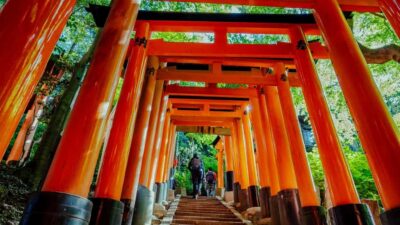
Kinkakuji,Arashiyama,FushimiInariShrine,NaraPark
Read our review →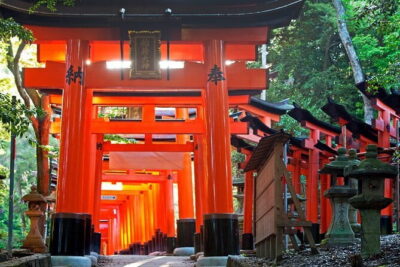
Nijo, Kinkaku-ji, Arashiyama, Kiyomizu & Fushimi Inari
Read our review →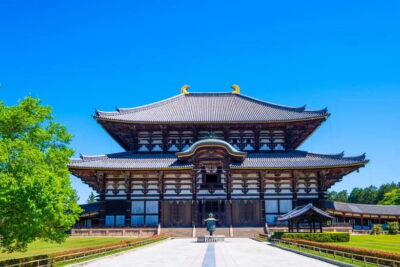
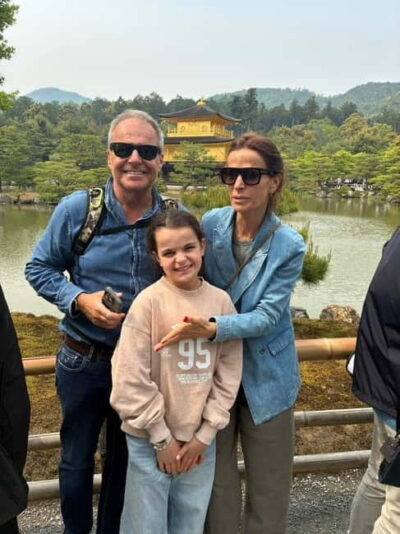
Kyoto top must-see Golden pavilion and Bamboo forest half-day Private tour
Read our review →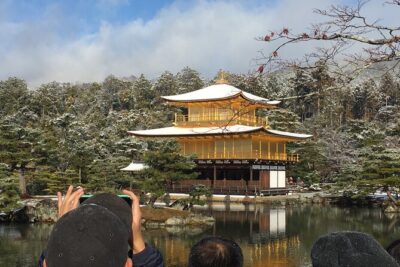
Kyoto Bamboo Forest & Golden Pavilion E-Bike Tour
Read our review →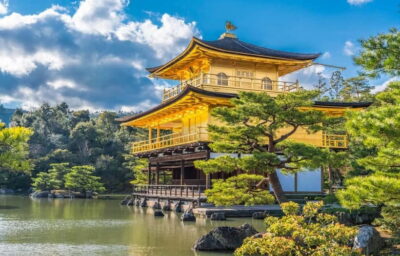
Browse the lists this tour appears in