
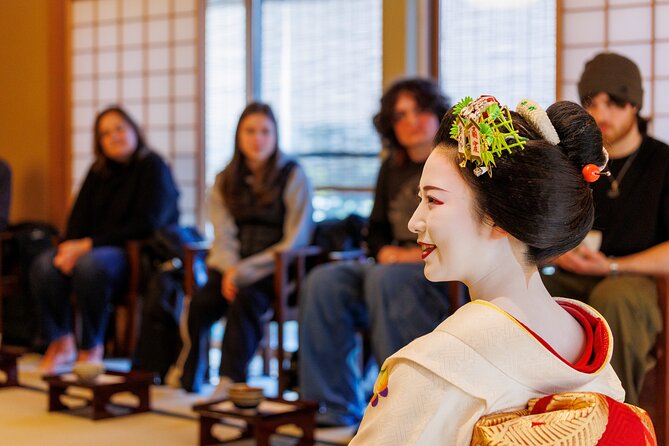
Reviewed · KYOTO GEISHA TOURS
Kyoto: Meet the Geisha Maiko with Gion Walking Tour
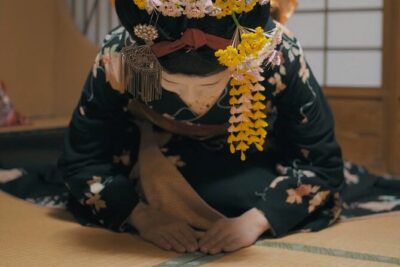
A visit to a private ochaya, where a maiko performs and talks with you, is the heart of this three-hour Gion tour. Instead of hoping to glimpse a maiko on a busy street, you get a planned introduction to her art and life, with a guide translating the conversation.
I like two things in particular: the walk gives you context for Gion’s lanes and landmarks, and the performance is paired with time for questions. That combination makes the encounter more than a dance show. One consideration: the walking portion can feel repetitive if you want a broad tour of Kyoto, and the full experience may run longer than expected.
What Makes This Gion Tour Different
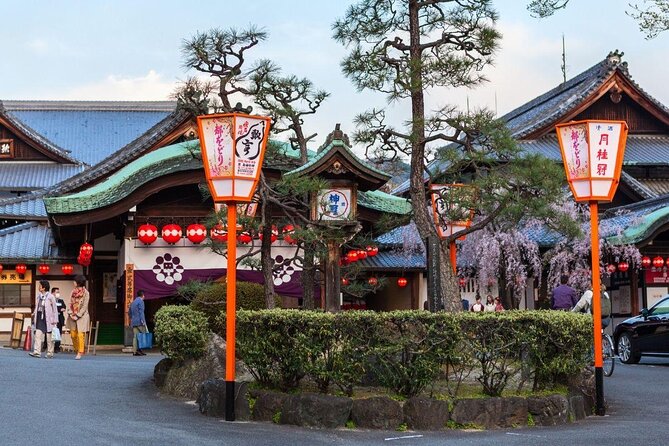
- A private ochaya visit: Step into a traditional entertainment house that is usually difficult for first-time visitors to enter.
- More than a performance: Meet a maiko and a retired geiko, watch a dance, and ask questions with your guide translating.
- Gion in context: Walk through Gion Shirakawa, past Tatsumi Daimyojin Shrine and Tatsumi Bridge, and along Hanamikoji Street.
- A 90-minute teahouse visit: The performance and conversation take up a substantial part of the roughly three-hour experience.
- Come prepared: Wear comfortable shoes and clean, dry socks. The venue is upstairs, reached by stairs.
- A small-group feel is not guaranteed: The tour has a maximum of 30 people, though some sessions may be more intimate.
The Ochaya Is the Main Event
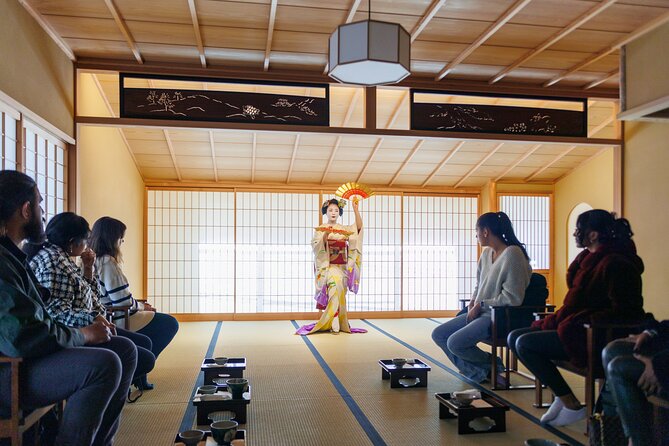
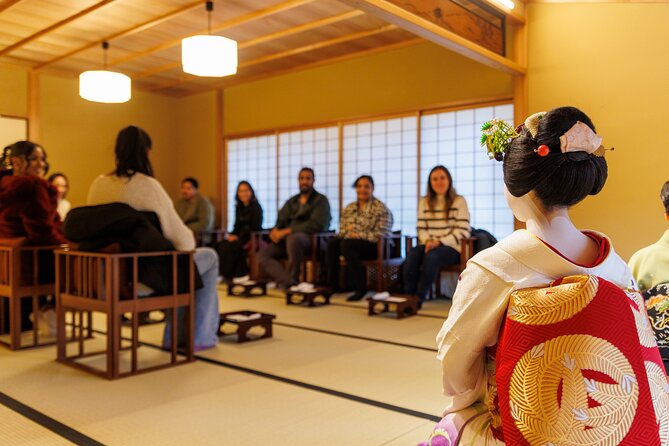
The most unusual part of this tour is not simply seeing a maiko dance. It is entering a private ochaya, where a maiko and a retired geiko share their art and answer questions. An ochaya is not a public café or a place for a standard tea ceremony. It is a traditional house where geiko and maiko entertain clients, and access is generally restricted.
That distinction matters when you decide what you are paying for. You are not booking a meal or a tea service. The value lies in being welcomed into a place that is normally hard for a visitor to access, and in meeting the artists in a setting where conversation is part of the experience.
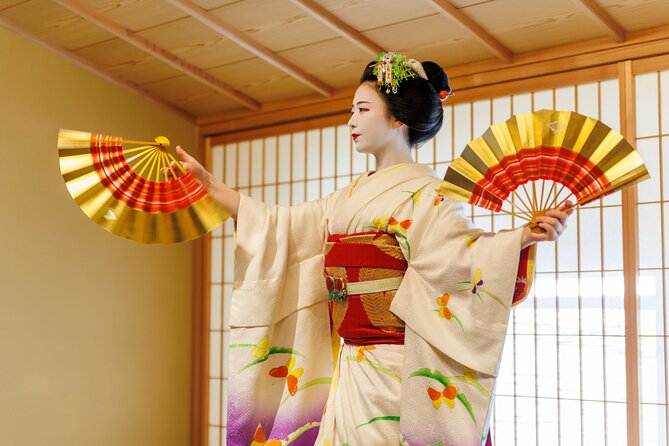
The performance is described as graceful and traditional. One account also describes the retired geiko, or the house’s okāsan, playing shamisen during the dance. The exact performance details may vary, but the central elements are a live performance, explanation, and a chance to ask questions.
Your guide translates, which is essential if you do not speak Japanese. The guide’s role is not just to lead the walk, but to make the exchange understandable and give the performance cultural context. Several named guides, including Haruki, Takuma, Miko, Ayako, Naomi, and Chiko, have been praised for clear explanations, friendly manner, and strong English. Guide assignments vary, so do not book expecting a specific person.
There is a practical trade-off to keep in mind. A group of up to 30 can be larger than the intimate encounter you may picture. Some sessions have felt small, but the maximum means the size can vary. If the room is full, you may need to listen closely during the translated conversation. One attendee found the guide’s voice difficult to hear, so choose a seat where you can follow along and ask the guide to speak up if needed.
More geisha and maiko experiences in Kyoto:
- Kyoto Geisha Walking Tour: Gion District & Hidden Gems
★ 4.7 · 3,273 reviews - Kyoto: Gion Magical Night Walking Tour with Geisha Trivia
★ 4.9 · 2,393 reviews - Kyoto: Gion Geisha District Walking Tour – Stories of Geisha
★ 4.7 · 2,187 reviews
Gion Shirakawa: Lanes, Water, and Local Context
The walk begins in Gion Shirakawa, a scenic section of the district where your guide introduces the lives and customs of maiko and geiko. The tour is focused on geisha culture, not a general survey of Kyoto, so expect the explanations to center on the working world behind the wooden facades.
This is useful groundwork. Without it, Gion can look like a collection of attractive old streets and teahouse fronts. With a guide, you get a clearer sense of how the district relates to the artists who live and work there. The walk can also help you understand why chasing maiko for photographs on public streets is not a respectful or reliable way to meet them. This tour offers a scheduled encounter instead.
The itinerary also includes Tatsumi Daimyojin Shrine, a small Shinto shrine associated with protection, good fortune, and safety. The stop is brief, about five minutes, so think of it as a point of local context rather than a full shrine visit.
Nearby, Tatsumi Bridge and the surrounding traditional houses make a picturesque corner of Gion. It is easy to see why the area feels familiar from films and photographs. Still, the walking stops are short, and the focus is explanation rather than a long pause for independent sightseeing.
Hanamikoji Street and the Temples Nearby
Hanamikoji Street is one of Gion’s best-known roads, lined with traditional wooden machiya, teahouses, shops, and restaurants. The stop is about ten minutes. That is enough to get a sense of the street and hear about its place in the district, but not enough for a leisurely browse or a full exploration of every lane.
The walk also passes Gion Corner, a venue known for presenting traditional arts. The tour does not include a performance there, so do not confuse it with the private ochaya visit later. Its place on the route gives your guide another opportunity to talk about Kyoto’s performing arts, but the main live performance happens at the final venue.
Another stop takes you through the grounds of Kyoto’s oldest Zen Buddhist temple, located next to Gion. You do not enter the temple buildings. Instead, you walk through the precincts, as locals do, and get a brief sense of the quieter religious setting beside the entertainment district.
Taken together, these stops make a useful introduction to Gion’s mix of streets, shrines, temples, and traditional entertainment. But they are not a deep architectural tour. If you have already spent a lot of time walking around Gion, you may find the route circles familiar territory. Some participants have felt that the walking portion could be shorter. The performance and conversation are the stronger draw, so consider the route an introduction rather than the main event.
Inside the Private House in Miyagawasuji
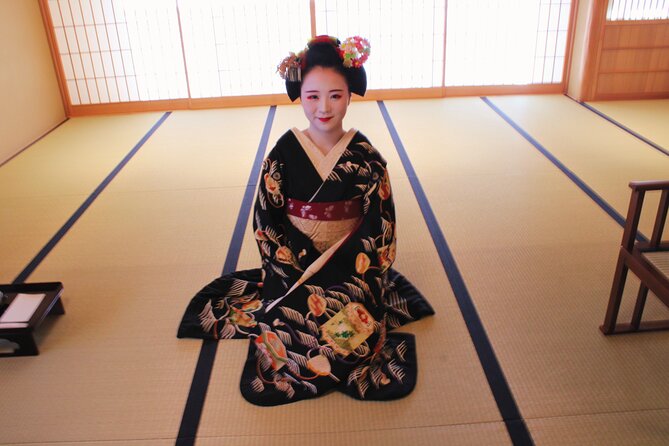
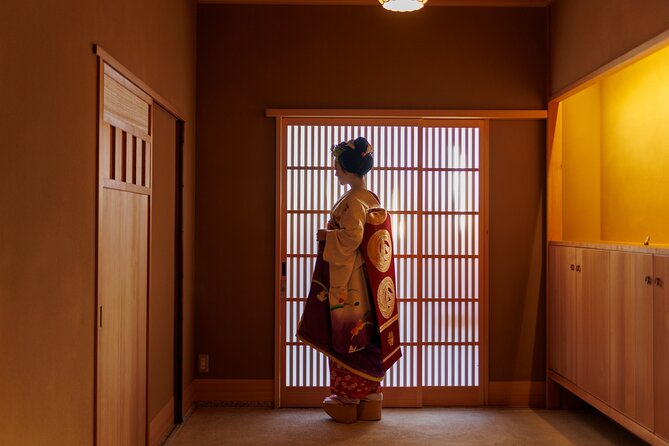
The tour’s final stop is in Miyagawasuji, another geisha district. Here you enter a private traditional house for the performance and conversation. The visit lasts about an hour and a half, making it the longest single part of the schedule.
A maiko is an apprentice geiko, while a geiko is a fully trained artist. Kyoto uses the term geiko for what many English speakers call a geisha. Meeting both a maiko and a retired geiko gives you more than one perspective on the tradition: you can see a young artist still training and hear from someone who has completed her working career.
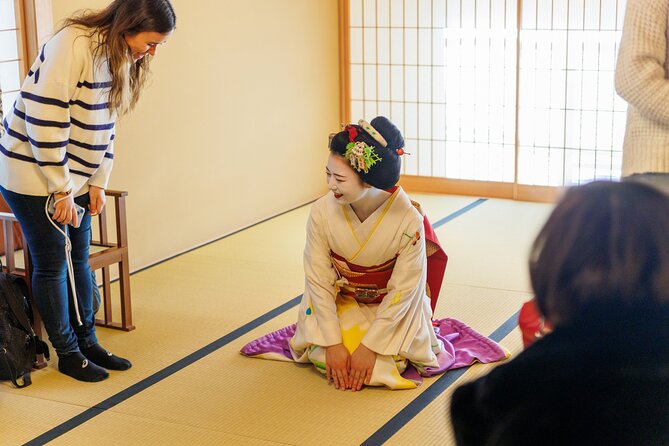
After the performance, you can ask questions. Your guide translates, so you can learn about the art and daily life directly from the people who know it. The conversation is a key part of the experience. Several accounts describe it as a memorable chance to speak with the maiko rather than simply watch from a distance.
There may also be a photo opportunity. Photography and video are allowed only during the performance and the designated photo session. If you want to post images on social media, ask the maiko directly for permission first. This is a working cultural setting, not a public stage, so follow the guide’s instructions and treat the artists with respect.
The venue is on the second floor, reached by stairs. You must wear socks, and on rainy days you cannot enter with wet clothes or socks. Bring an umbrella for the walk, and make sure you have a dry pair of socks or a way to keep your feet dry. This is a small detail that can save an awkward pause at the door.
More Gion tours in Kyoto:
- Best of Kyoto: Gion, Geisha, Pagodas & Cobblestones
★ 4.9 · 2,058 reviews - Night Walk in Gion: Kyoto’s Geisha District
★ 4.5 · 2,003 reviews - Kyoto Night Foodie Tour in Gion (9+ dishes + 6 Sake tastings)
★ 5.0 · 1,762 reviews - Kyoto Gion Geisha District Walking Tour – The Stories of Geisha
★ 5.0 · 1,441 reviews
Is $109.43 a Fair Price?
At $109.43 per person, this is not a bargain walking tour. It is also not priced like a simple neighborhood stroll. The main question is whether you value the private-house visit, live performance, translation, and chance to ask questions enough to justify the cost.
If you only want to see Gion’s streets, you can explore them on your own. The walking section alone is unlikely to make this price compelling, especially if you have already visited the district. But arranging your own access to an ochaya and meeting a maiko in a respectful, structured setting is a different matter. That rare access is what gives the tour its strongest value.
There is no food or drink included, and you cover your own transport to and from the meeting point. Hotel pickup, other personal expenses, and transportation are not included. Compare the price with the full experience, not with a basic walking tour or a meal. The tour has a 4.9 rating from 400 reviews, with 98 percent recommended, but your own enjoyment will depend on how much you value the cultural exchange and whether the walking portion suits you.
Timing, Group Size, and Who Will Enjoy It
Plan for about three hours, but leave room in your schedule. The tour may run longer depending on the day. That is worth noting if you have dinner reservations or another timed activity soon afterward.
The tour is a walking activity, and a moderate level of physical fitness is recommended. Comfortable walking shoes are the sensible choice. The route includes several short stops, followed by the longer visit at the private house.
Children under 10 are not allowed. The tour’s maximum group size is 30, so it is not guaranteed to be a very small gathering. If a quieter, more personal conversation is your priority, understand that the group size can affect how easy it is to hear and participate.
I would recommend this tour to you if you are curious about maiko and geiko, want more than a staged performance, and appreciate having a guide explain customs as you go. It is also a good fit if you are already visiting the Higashiyama area and want a guided cultural activity nearby. If you mainly want broad Kyoto history, extensive temple visits, food, or a short walk, this is probably not the best match.
The tour runs rain or shine. You can cancel for a full refund if you do so at least 24 hours before the start time. Cancellations made later are not refundable, and changes within 24 hours are not accepted.
Should You Book This Tour?
Book it if meeting a maiko and hearing her answer questions is a priority. The private ochaya visit, performance, and translation offer access that is difficult to arrange independently, and the walking route gives useful context before you arrive.
Skip it if you are mainly shopping for a long, varied walking tour or if $109.43 feels steep for an experience without food or drink. The route can feel repetitive, and the day’s group size and translation audibility may shape how personal the encounter feels. For a focused introduction to Gion’s geiko culture, though, this is a rare and worthwhile way to meet the people behind the tradition.
FAQ
How long does the tour last?
It lasts about three hours. The experience may run longer depending on the day.
Where does the tour start and finish?
It starts in Miyagawasuji in Kyoto’s Higashiyama Ward and ends at a special private house in the same area.
What is included in the experience?
The tour includes a guided walk through Gion and a visit to a private house for a maiko performance and conversation with a maiko and retired geiko. Your guide translates.
Is the performance held in an ochaya?
The experience describes the venue as a private ochaya, or traditional teahouse, used for entertainment by geiko and maiko. It is not a standard café or tea ceremony venue.
Can I take photos or videos?
Photography and video are allowed only during the performance and the photo session. Ask the maiko directly before posting any photos on social media.
Do I need to wear socks?
Yes. Socks are required at the performance venue. On rainy days, wet clothes and socks are not allowed inside.
Is the tour suitable for children?
Children under 10 are not allowed.
How many people can join the tour?
The maximum group size is 30 people.
Can I cancel for a refund?
You can receive a full refund if you cancel at least 24 hours before the tour start time. Cancellations made less than 24 hours in advance are not refundable.
More walking tours in Kyoto
- Nishiki Market Brunch Walking Tour (7 Tastings + Brunch)
★ 5.0 · 1,355 reviews - Kyoto Arashiyama Walking Tour: Bamboo, Monkeys, Gardens & Secrets
★ 5.0 · 1,216 reviews - Kyoto Gion: 2-Hour Geisha Culture & History Walking Tour
★ 5.0 · 1,186 reviews - Nara Half Day Trip Walking Tour (Private Option Available)
★ 5.0 · 937 reviews
Newly added in Kyoto
- Uji: Private immersion into Kyoto’s tea and reglious culture★ 5.0 · 17 reviews
- Whisk Your Own Matcha: A Zen Matcha Experience at Temple★ 3.6 · 7 reviews
- Kyoto tea town for matcha lovers★ 5.0 · 16 reviews
- Treasures of Kyoto: Gion & historical Walking Tour★ 5.0 · 6 reviews
- Kyoto Matcha Green Tea Tour★ 4.5 · 23 reviews
- Uji and Wazuka Matcha Farm Half Day Private Guided Tour★ 5.0 · 21 reviews
- Uji Tea Ceremony and UNESCO Heritage Walking Tour★ 5.0 · 20 reviews
- Utilising upcycled Matcha! Creating matcha incense (Uji, Kyoto)★ 5.0 · 6 reviews
Kyoto Geisha Tours, compared.
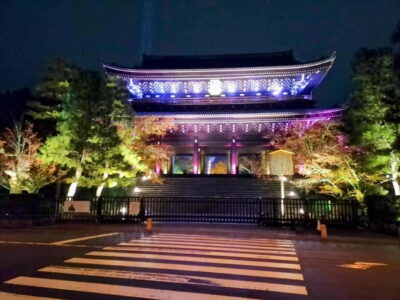
Kyoto Geisha Walking Tour: Gion District & Hidden Gems
Read our review →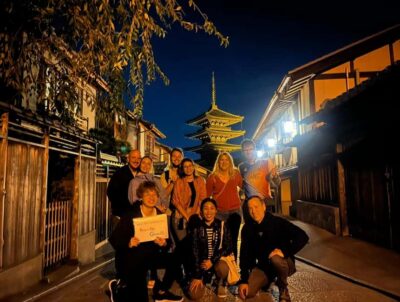
Gion Magical Night Walking Tour with Geisha Trivia
Read our review →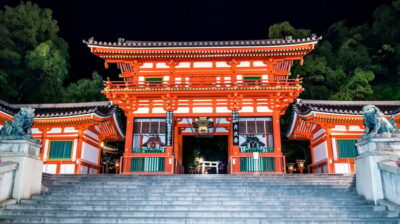
Gion Geisha District Walking Tour – Stories of Geisha
Read our review →
Best of Kyoto: Gion, Geisha, Pagodas & Cobblestones
Read our review →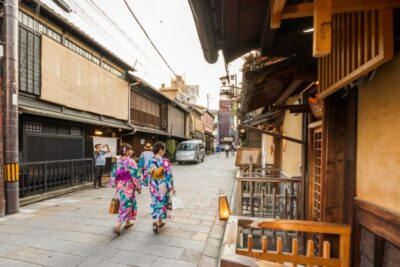

Kyoto Gion Cultural Walk & Geisha Show with Dining Options
Read our review →
Browse the lists this tour appears in