
Reviewed · KYOTO COOKING CLASSES
Kyoto Ramen Spoon Painting & Michelin Cooking Class
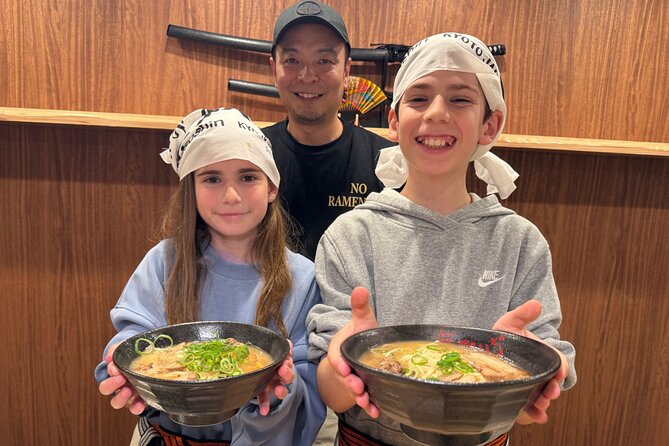
Ramen is the subject here from the first brushstroke to the last mouthful. In about 90 minutes at Musoshin Ramen Academy, you paint a ceramic spoon, learn how the restaurant builds its ramen, cook with its prepared ingredients, and sit down to eat the bowl you assembled.
I like the pairing of a hands-on cooking lesson and a keepsake craft, and the chance to learn from people connected to a working ramen restaurant. The main caveat: you do not make the noodles from scratch, and the painted spoon needs to be fired overnight, so it is not a ready-to-carry-home souvenir that day.
At a glance
- The class lasts about 90 minutes, a manageable activity to fit into a Kyoto day.
- You paint a ceramic ramen spoon, which is fired in a kiln overnight.
- You cook with ingredients prepared by Musoshin, including its handmade noodles, broth, soy sauce, and roast pork.
- You eat your ramen at the end, with vegetarian and vegan options described as available.
- The group is capped at 12, giving the class a more personal scale than a large demonstration.
- The listed temples are not clearly part of the class, so confirm before planning your day around them.
A ramen class built around the finished bowl
This is a compact, two-part experience. You begin with spoon painting, then move to the kitchen to prepare ramen using ingredients from Musoshin Ramen. The class is practical, but it is not a full lesson in making every element from the ground up. The restaurant does the long prep work; you learn how those parts come together.
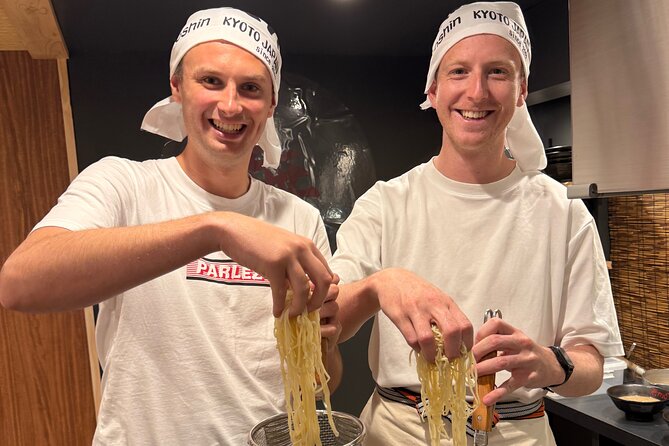
That distinction matters. Musoshin makes its noodles in the shop each morning, rests them overnight for the next day, simmers its soup for 12 hours, and makes its soy sauce and roast pork by hand. You get to handle and cook with these ingredients, rather than spend the class waiting for broth or learning noodle production.
The meal is part of the experience, not an optional extra. You finish by eating the ramen you have prepared, which makes the class a useful choice if you want an activity that also covers lunch or an early meal. Just check the start time when booking, since the listed duration is approximate and no meal schedule is specified.
More cooking classes in Kyoto:
- Ramen Cooking Class at Ramen Factory in Kyoto
★ 5.0 · 1,937 reviews - Sushi Making in Kyoto! Same-day bookings welcome!
★ 5.0 · 713 reviews - Kyoto: Ramen Cooking Class at a Ramen Factory with Souvenir
★ 4.9 · 532 reviews
Painting the spoon before cooking

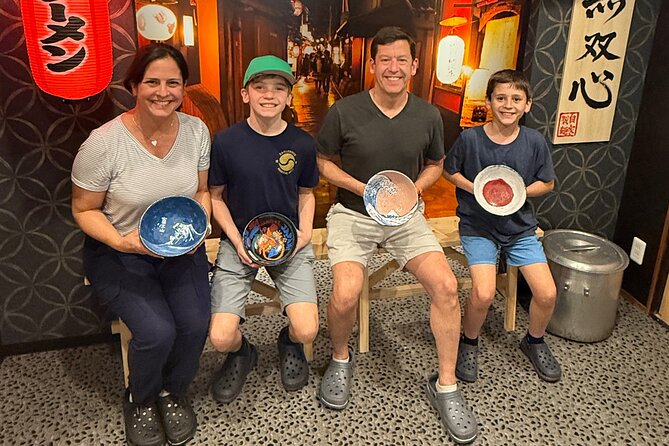
The craft portion gives the class a playful start and a tangible souvenir beyond photographs. You paint a ceramic ramen spoon, with the ramen theme tying the activity to the food lesson that follows. You do not need to be an artist to get something personal out of it; the point is to make a small object of your own.
There is one practical catch: the spoon is baked in a kiln overnight. You should not expect to leave with the finished, fired spoon at the end of the 90-minute class. The information provided does not explain when or how you collect it, so ask the operator about the finished piece before booking if you have a tight Kyoto itinerary or are leaving town soon.
The class setup has been described as having spoon painting upstairs and food preparation downstairs. That change of scene helps the session feel like two activities rather than one long kitchen demonstration. It also means you should be ready to move between the craft area and the cooking space.
What you learn in Musoshin’s kitchen
Musoshin Ramen began in Kyoto in 2022 and now has six restaurants in Kyoto and Toronto. Its Toronto restaurant has received Michelin nominations for three consecutive years, and the class uses the same recipe. That is a useful credential, but keep it in proportion: the claim is a nomination for the Toronto restaurant, not a Michelin star for the academy or a promise that your class is a restaurant service.
The most interesting lesson may be how much work sits behind an apparently simple bowl. The broth simmers for 12 hours, the noodles are made in-house and rested overnight, and the soy sauce and roast pork are also handmade. You will not reproduce all that within a short class, but learning how the parts are made gives you a better sense of why ramen shops build their recipes around careful preparation.
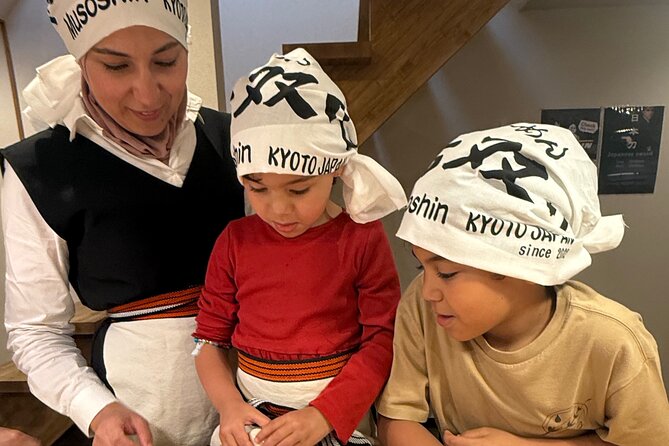
The instructors bring restaurant experience to a class that is meant to be hands-on. Shin is named as the chef and owner in class accounts, while Amiru is also associated with teaching. The exact instructor can vary, so do not book on the assumption that a particular person will lead your session. The teaching style described is energetic and patient, including with children.
Expect to cook with ingredients brought from the restaurant rather than start from raw basics. This is a sensible format for a 90-minute class: you get to handle the components and assemble the ramen without turning the lesson into an all-day production. If your main goal is learning to roll and cut noodles, this is not the class for that. One person specifically wished the noodles had been made during the session, and that is the clearest limitation for serious noodle-making enthusiasts.
The bowl you make, and the meal you eat
The meal gives the class a satisfying finish. You have worked with the ingredients and arranged the bowl yourself, so the result is more personal than simply watching a chef cook. The experience describes the ingredients as coming from Musoshin’s restaurant, including the restaurant’s handmade components.
Vegetarian and vegan options are described as available, and classes have accommodated vegetarian family members. Allergy needs have also been handled successfully in at least one case, but that is not a guarantee for every allergy or every session. Contact the operator in advance with your specific requirements rather than relying on an on-the-day adjustment.
The meal is one reason the $65.89 price can make sense. You are paying for a small-group cooking lesson, a craft activity, and a ramen meal, not just a bowl of noodles. The experience is especially good value if you are curious about ramen and would otherwise pay separately for a restaurant meal and another activity. It is less compelling if you only want an inexpensive lunch or expect a full technical course in noodle and broth production.
More food tours in Kyoto:
- Kyoto Night Foodie Tour in Gion (9+ dishes + 6 Sake tastings)
★ 5.0 · 1,762 reviews - Kyoto: Izakaya Bars Guided Walking Tour
★ 4.9 · 815 reviews - Kyoto: Insider Sake Brewery Tour with Sake and Food Pairing
★ 5.0 · 704 reviews - Kyoto: Ramen, Gyoza, and Onigiri Cooking Class
★ 5.0 · 445 reviews
A small class with room to ask questions
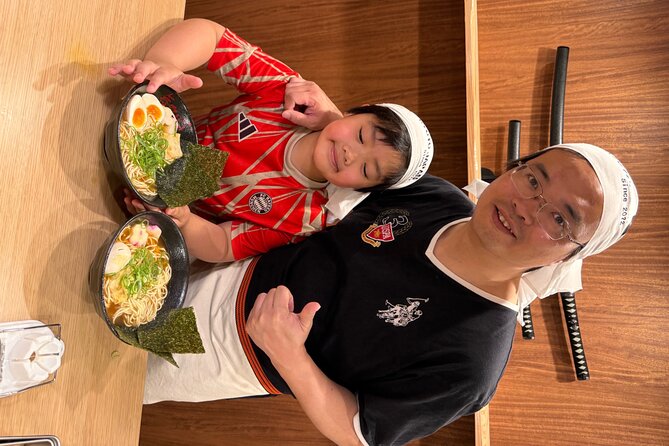
The maximum group size is 12. That cap matters in a kitchen activity, where too many people can turn hands-on cooking into a view-from-the-back exercise. A smaller group should make it easier to follow the steps and ask questions, though the class may still feel busy when everyone is working at once.
The activity’s high rating and strong recommendation figure are encouraging, but they cannot tell you whether the class is right for your interests. The most consistently praised elements are the welcoming instructors, the fun of painting the spoon, and the quality of the ramen. Families have found it suitable for adults and children, and the patient teaching approach is a plus if you are bringing a young cook.
The experience is near public transportation, and it starts and ends at 440-5 Nishigomonchō in Kyoto’s Higashiyama Ward. Allow time to find the entrance, especially if you are navigating the area for the first time. One class account describes the location as hard to find, so do not cut your arrival time close.
Don’t mistake the temple names for class stops
The itinerary lists Kiyomizu-dera Temple, Kennin-ji Temple, and Sanjusangendo Temple. But the class description centers on spoon painting and ramen preparation at Musoshin Ramen Academy, and it does not explain temple visits, transport between sites, or time spent at any of them.
Treat the temple names as an itinerary discrepancy, not as a promise that this is a sightseeing tour. The activity is listed as lasting about 90 minutes and beginning and ending at the same ramen academy address. If visiting any of those temples is important to your plans, arrange that separately or confirm directly with the operator before booking.
That distinction also helps you plan your day. This is best treated as a focused food-and-craft stop, not as a guided route through Higashiyama. Its location may fit neatly into a day of nearby sightseeing, but the class itself does not provide a temple visit based on the details available.
Who will get the most from it
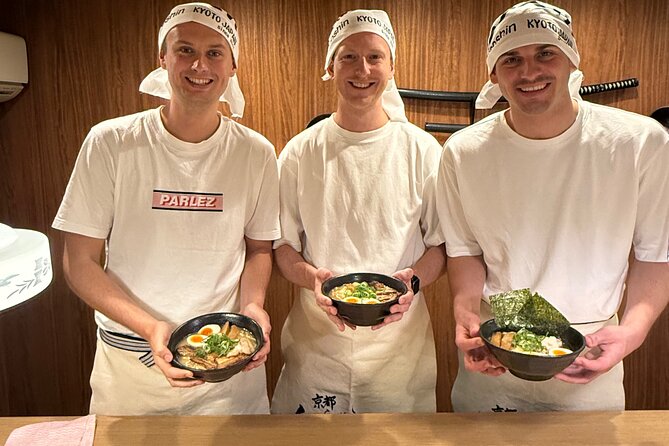
I would choose this class if you love ramen, enjoy making things, or want a Kyoto activity with more substance than a tasting alone. It is also a good family option if your children are comfortable following kitchen instructions and sitting through a short lesson. The meal gives everyone a clear reward at the end, and the spoon offers a lasting reminder once it has been kiln-fired.
It may not suit you if you want to make noodles from flour, learn a complete broth recipe from scratch, or leave immediately with your souvenir. The class shares how Musoshin prepares its components, but the long prep happens at the restaurant before your session. That approach makes the lesson accessible and time-efficient, but it limits how much of the production process you actually perform.
At $65.89, the best way to judge the price is as a bundled experience: cooking, instruction, a meal, and a handmade craft. With a maximum of 12 people and a duration of about an hour and a half, it is a relatively easy activity to add to a Kyoto itinerary. Just verify the spoon collection arrangements, disclose dietary needs early, and do not count on the listed temples being included.
FAQ
How long does the class last?
The experience lasts approximately 1 hour and 30 minutes.
What is the price?
The listed price is $65.89 per person.
How many people can join?
The class has a maximum group size of 12.
Do I make the noodles from scratch?
No. Musoshin makes its noodles in the shop, then brings ingredients for participants to cook with during the class.
Can I take the painted spoon home at the end?
The spoon is baked in a kiln overnight, so it is not ready at the end of the class. The collection or delivery arrangements are not specified.
Is there a vegetarian or vegan option?
Vegetarian and vegan options are described as available. Contact the operator about your specific dietary needs.
Where does the class start and end?
It starts at 440-5 Nishigomonchō, Higashiyama Ward, Kyoto, 605-0816, Japan, and ends back at the same meeting point.
Are Kiyomizu-dera, Kennin-ji, and Sanjusangendo included visits?
The itinerary names those temples, but the class details do not explain visits or transport to them. Confirm with the operator before treating them as part of the activity.
Can I cancel for a full refund?
You can cancel for a full refund if you do so at least 24 hours before the experience’s start time. Cancellations or changes made less than 24 hours ahead are not accepted for a refund or change.
Newly added in Kyoto
- Uji: Private immersion into Kyoto’s tea and reglious culture★ 5.0 · 17 reviews
- Whisk Your Own Matcha: A Zen Matcha Experience at Temple★ 3.6 · 7 reviews
- Kyoto tea town for matcha lovers★ 5.0 · 16 reviews
- Treasures of Kyoto: Gion & historical Walking Tour★ 5.0 · 6 reviews
- Kyoto Matcha Green Tea Tour★ 4.5 · 23 reviews
- Uji and Wazuka Matcha Farm Half Day Private Guided Tour★ 5.0 · 21 reviews
- Uji Tea Ceremony and UNESCO Heritage Walking Tour★ 5.0 · 20 reviews
- Utilising upcycled Matcha! Creating matcha incense (Uji, Kyoto)★ 5.0 · 6 reviews
Kyoto Cooking Classes, compared.

Ramen Cooking Class at Ramen Factory in Kyoto
Read our review →
Sushi Making in Kyoto! Same-day bookings welcome!
Read our review →
Ramen Cooking Class at a Ramen Factory with Souvenir
Read our review →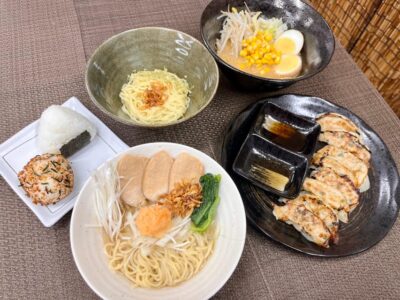
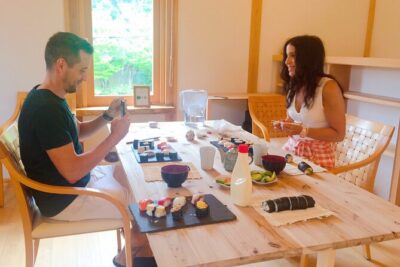
The Original Small-Group Sushi Making Class in Kyoto
Read our review →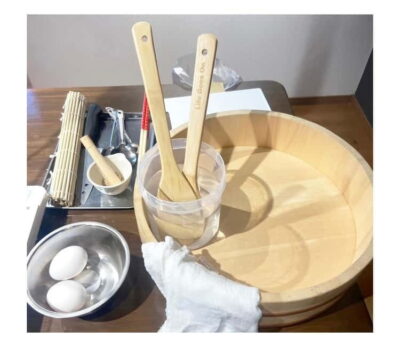
Japanese Washoku Bento Small Group Cooking Class
Read our review →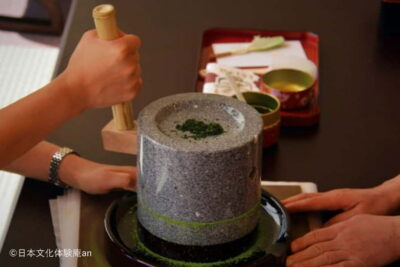
Japanese Traditional Sweets Making and Tea Ceremony
Read our review →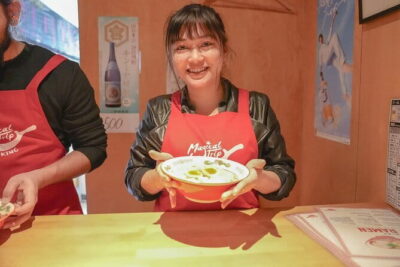
Kyoto Ramen and Gyoza Cooking Class with Professional Chefs
Read our review →Browse the lists this tour appears in