
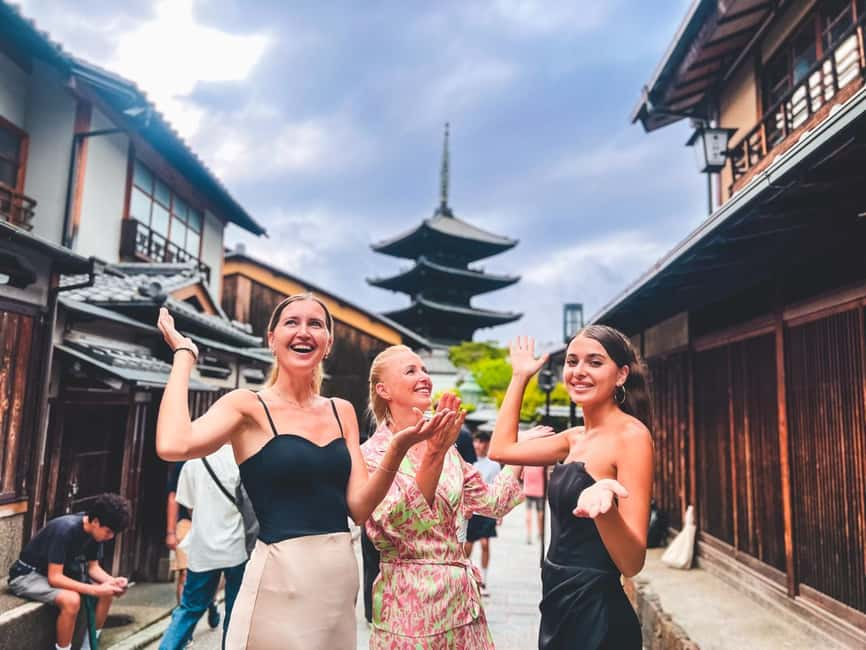
Reviewed · KYOTO GEISHA TOURS
Kyoto: Secrets of Gion – Geisha Culture Walking Tour
Gion’s appeal is not just its old wooden teahouses. It is the chance to understand the traditions behind them while walking the lanes where Kyoto’s geiko still work. This two-hour tour connects that private world with public landmarks, from Yasaka Shrine to Hanamikoji Street.
I like two things here: the route joins several memorable Higashiyama sights without leaving you to piece them together alone, and the guide’s stories give context to customs you might otherwise pass without understanding. The history and everyday life of maiko and geiko are the heart of the walk, not just a backdrop for photos.
One thing to keep in mind: spotting a maiko is possible, not promised. The route also includes stone-paved lanes and is not suitable for wheelchair users, so consider your mobility needs before booking.
- A full route in two hours: Visit Yasaka Shrine, Maruyama Park, Nene no Michi, Ninenzaka, Yasui Konpiragu Shrine and Hanamikoji Street.
- Culture beyond costumes: Learn about the history of Gion and the work and customs of geiko and maiko.
- A chance, not a guarantee: You might see a maiko heading to an engagement near Gion-Shijo, but the tour does not promise a sighting.
- Useful evening company: Some tours have run later, when the streets were quieter and traditional buildings easier to photograph.
- A modest price: At $25 per person, the guided context can make a short walk more rewarding than simply following a map.
A walking route from Yasaka Shrine to Gion
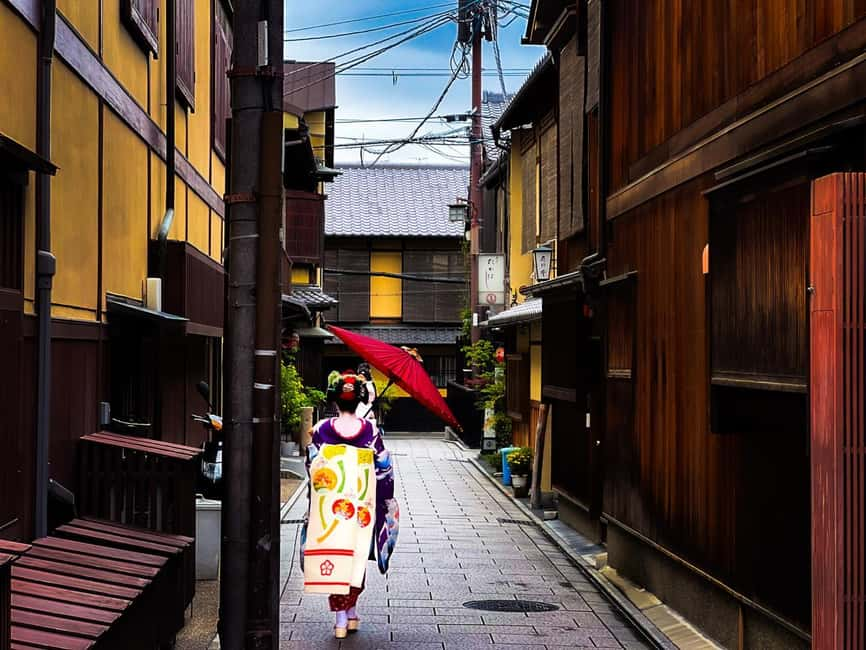
This tour starts and ends at the Starbucks Coffee by Kyoto Gion Hotel. Look for the guide holding a Traveling Kyoto ID. In two hours, the route takes in a string of well-known spots around Gion and Higashiyama, with commentary along the way.
That compact format suits a first visit. Kyoto’s historic lanes reward a slow look, but it can be hard to tell which shrine, street or custom deserves your attention when you are exploring alone. A guide gives you a thread to follow, linking the landmarks to the history of the district and the people who still work there.
The route is on foot, with photo stops and time to walk through the main locations. Yasaka Shrine is listed for about 20 minutes; the other stops are part of the same two-hour outing. That means you should expect an orientation walk rather than a long visit inside each place. If you want to linger over every shop or shrine, plan to return on your own.
Starting at Yasaka Shrine
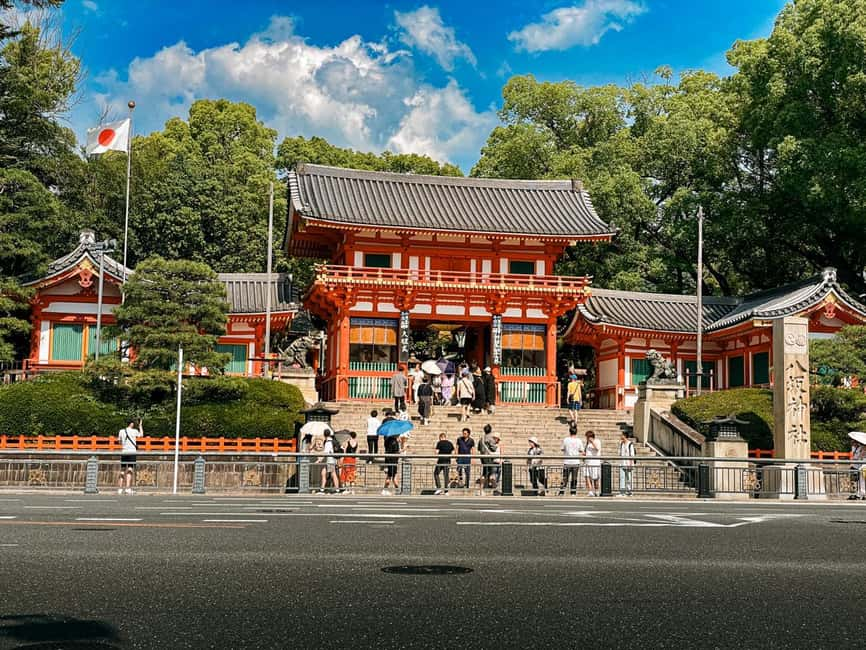
Yasaka Shrine is a strong place to begin because its story connects the spiritual life of Kyoto with the city’s festivals and Gion’s geisha culture. Your guide introduces those links here, giving you context for the neighborhood before you move into its smaller lanes.
There is also time for a photo stop and some shopping around the shrine. The short stop keeps the tour moving, so treat it as a first look rather than a chance to explore every corner. If the shrine interests you, you can revisit after the tour, when you are free to set your own pace.
More geisha and maiko experiences in Kyoto:
- Kyoto Geisha Walking Tour: Gion District & Hidden Gems
★ 4.7 · 3,273 reviews - Kyoto: Gion Magical Night Walking Tour with Geisha Trivia
★ 4.9 · 2,393 reviews - Kyoto: Gion Geisha District Walking Tour – Stories of Geisha
★ 4.7 · 2,187 reviews
A breather beneath Maruyama Park’s trees
From Yasaka Shrine, the walk continues through Maruyama Park, Kyoto’s oldest public park. It is known for seasonal beauty and its weeping cherry trees, and its green setting offers a quieter contrast to the surrounding streets.
The park’s appeal changes with the season. Cherry blossom time brings the trees into focus, while other visits offer shade and a pause among older trees. The tour includes a guided walk and sightseeing here, though no particular bloom or seasonal display can be guaranteed.
I like this stop because it gives the route a change of rhythm. After hearing about shrines and district customs, a walk through the park lets you take in the setting itself. Keep in mind that the park is one stop in a short itinerary, not a long nature walk.
Nene no Michi and the stories behind its name
Nene no Michi is a picturesque lane named for Nene, the wife of samurai warlord Toyotomi Hideyoshi. Its preserved traditional buildings, shops and teahouses offer a clear sense of the architecture associated with historic Higashiyama.
Here, the guide’s explanations can help you see more than a photogenic street. The name ties the lane to an important figure in Japanese history, while the buildings show how older forms remain part of Kyoto’s present-day streetscape. You will have scenic views along the way and time for photos.
This is also a place where the balance between looking and moving matters. Shops and teahouses make the lane appealing to browse, but the tour has a set two-hour duration. If something catches your eye, note it and return later rather than letting one stop crowd out the rest of the route.
Ninenzaka’s stone-paved climb
The walk continues along Ninenzaka, a stone-paved path bordered by historic wooden buildings and artisan shops. It is one of the route’s most visually distinctive stretches, with the slope and traditional architecture creating a strong sense of place.
For photographers, the lane offers plenty to frame: the paving, the wooden facades and the small shops. One person on a later tour valued the quieter streets for nighttime photographs with fewer people in the frame. That is a useful possibility, but conditions depend on the tour’s start time and the number of people out that evening.
The paving and slope are worth noting if walking is difficult for you. This tour is explicitly not suitable for wheelchair users. Even if you have no mobility concerns, comfortable walking shoes are sensible for a route that includes stone paths and several stops.
More Gion tours in Kyoto:
- Best of Kyoto: Gion, Geisha, Pagodas & Cobblestones
★ 4.9 · 2,058 reviews - Night Walk in Gion: Kyoto’s Geisha District
★ 4.5 · 2,003 reviews - Kyoto Night Foodie Tour in Gion (9+ dishes + 6 Sake tastings)
★ 5.0 · 1,762 reviews - Kyoto Gion Geisha District Walking Tour – The Stories of Geisha
★ 5.0 · 1,441 reviews
Yasui Konpiragu and its Power Stone
Yasui Konpiragu Shrine brings a more unusual local tradition into the walk. It is known for a Power Stone archway that people crawl through while praying for strong relationships or to break ties with the past. The ritual gives the stop a personal, symbolic dimension beyond its appearance.
Your guide explains the shrine and its customs. One tour group saw two women take part in the ritual in wet weather, a reminder that local traditions are not just old stories: people still come to act on their hopes and beliefs.
The shrine is described as peaceful, and it can feel like a striking change of scene after the shops and busier lanes. Still, the tour’s time is limited. You can learn what the ritual means here, then decide whether to return later and spend longer at the shrine.
Hanamikoji Street and the lives of geiko
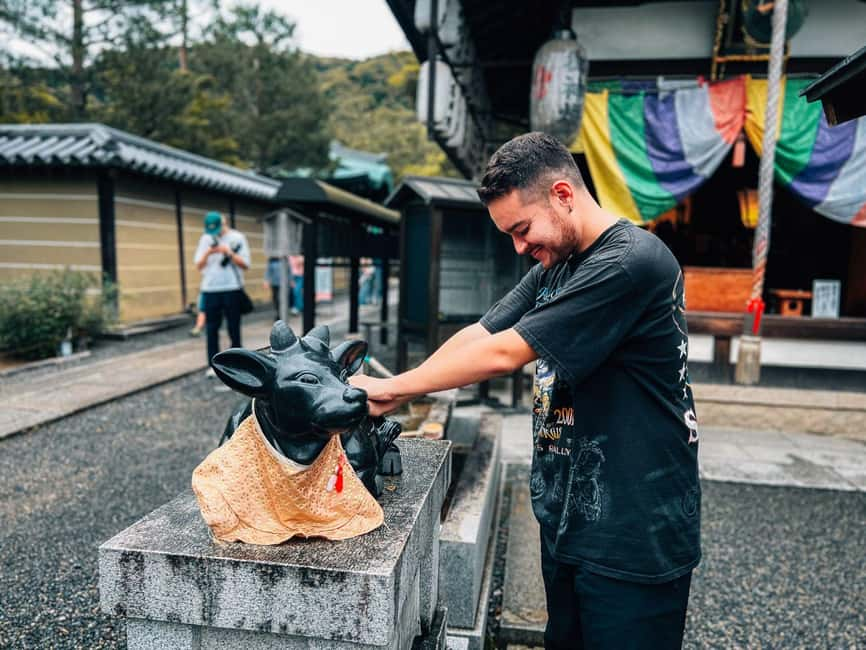
Hanamikoji Street is the clearest point of connection between Gion’s architecture and its working geiko culture. Preserved wooden teahouses line the street, and geiko still entertain there. Your guide explains the history, customs and daily lives of both geiko and maiko, helping you understand that the district is more than a display of old buildings.
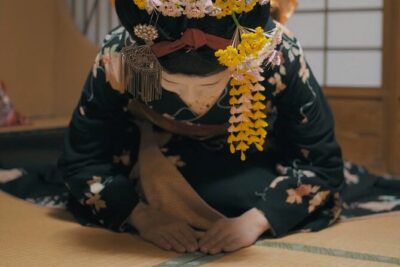
Kyoto uses the term geiko for the women often called geisha elsewhere. Maiko are associated with their training and development in this tradition. The tour’s focus is on explaining this world, including the places where maiko live and train and the stories attached to Gion’s backstreets.
That context matters. A traditional outfit may catch your eye, but the more useful takeaway is understanding the skill and work behind the public image. Gion’s teahouses are workplaces as well as historic buildings, and the tour offers a way to learn about that distinction while walking through the area.
The route also goes into narrower, less familiar alleys. These smaller streets can make the walk feel more personal than a simple pass along the main road, and guides have shared local stories passed down through generations. The precise alleys and stories may vary, so think of this as a guided introduction rather than a fixed list of secret addresses.
Will you see a maiko?
You might. The tour ends near the Gion-Shijo area, where a maiko may be seen heading to an engagement if the timing is right. But the chance depends on who is going about their work at that moment. No sighting is guaranteed, and the experience should still be worthwhile without one.
That distinction is important if you are considering the tour mainly for a photograph. The stronger reason to book is the guided explanation of Gion’s history, traditions and working life. A possible glimpse adds a memorable moment, but it is not the product.
The walk is best approached as a cultural introduction, not a hunt. You will come away with a better idea of what you are seeing and why the district matters, whether or not a maiko appears during your two hours.
What the guides add
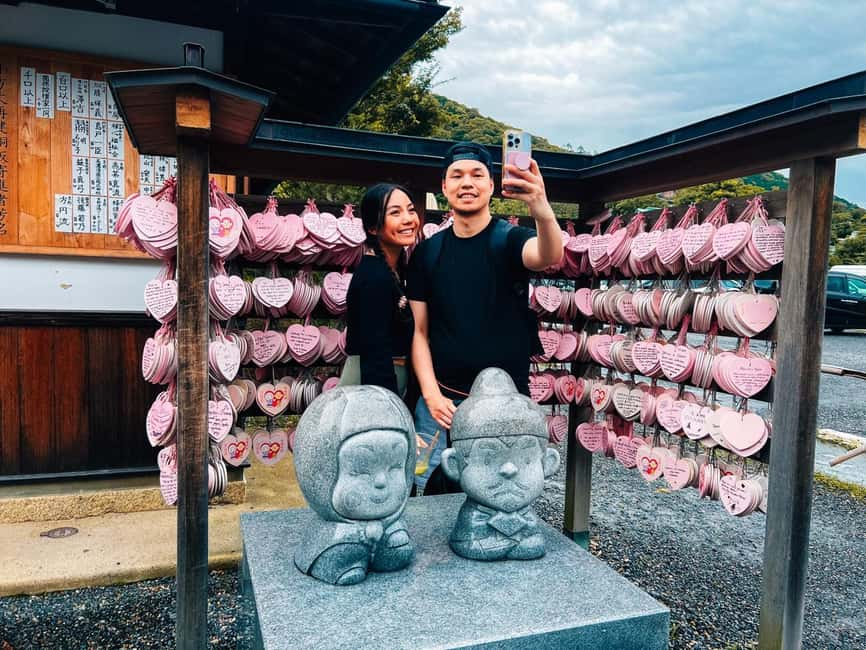
The tour is in English, and guides who have led it include Tim, Majo, Bell, Shin and Pedro. Their names come up in connection with lively explanations of Kyoto’s history, culture and traditions. One guide, Bell, also helped a solo visitor take photos, and the group setting made that evening walk feel comfortable for someone exploring alone.
The comments about different guides suggest that the experience depends in part on who leads your particular outing. Tim and Pedro have been praised for sharing a wide range of cultural and social context; Majo adapted to poor weather; Bell was noted for her enthusiasm and help with photos; and Shin was praised for clear explanations. You may not have one of these guides on your date, but the tour is designed around an English-speaking guide rather than a self-guided route.
Weather can affect the mood of an outdoor walk. Rain may make the streets less comfortable, though it does not prevent the guide from explaining the area. If you are visiting in unsettled weather, bring clothing suited to the forecast and remember that much of the experience is outside.
Is $25 a fair price?
At $25 per person, the tour offers a reasonably priced way to cover several historic places with a guide in just two hours. You are paying for the route and the explanations, especially the context around Gion’s customs and geiko culture. The price does not include a performance or guarantee a close encounter with a geiko or maiko.
The value is strongest if this is your first visit to Gion, or if you want help making sense of what you see. If you already know the district well and mainly want to wander at your own pace, you may prefer to explore independently. The tour can still point out places to revisit, but it will not give you unlimited time at each stop.
It also works well for solo visitors who would like company on an evening walk. One solo participant found the group reassuring and appreciated getting help with photos. That is not a promise of a particular group dynamic, but it shows how a guided walk can make an unfamiliar district easier to enjoy.
Who should book this Gion walk?
I would choose this tour if you want an efficient introduction to Gion, value historical explanation, and enjoy walking through traditional streets with a local guide. It is especially suited to first-time visitors, culture-minded photographers and solo visitors who would rather not explore the district alone in the evening.
It may not suit you if you need a wheelchair-accessible route, want a long visit at each landmark, or are booking solely to see a maiko. The walk is short, the stops are varied, and the sighting is uncertain. Go for the stories and the route; treat any glimpse of a maiko as a bonus.
The activity offers free cancellation up to 24 hours in advance and a reserve-now, pay-later option. Check the available start times when choosing a date, since the possibility of quieter streets and evening photography depends on timing.
FAQ
How long is the Gion walking tour?
The tour lasts two hours.
What is the price?
The listed price is $25 per person.
What language is the tour in?
The live guide speaks English.
Where does the tour start?
It starts at Starbucks Coffee by Kyoto Gion Hotel. The guide will be holding a Traveling Kyoto ID.
Where does the tour end?
It returns to Starbucks Coffee by Kyoto Gion Hotel.
Which places are included on the route?
The route includes Yasaka Shrine, Maruyama Park, Nene no Michi, Ninenzaka, Yasui Konpiragu Shrine and Hanamikoji Street.
Will I definitely see a maiko?
No. You may see one heading to an engagement near Gion-Shijo if the timing is right, but a sighting is not guaranteed.
Is the tour suitable for wheelchair users?
No. The tour is listed as not suitable for wheelchair users.
Can I cancel for a refund?
Yes. You can cancel up to 24 hours in advance for a full refund.
Can I reserve now and pay later?
Yes. The tour offers a reserve-now, pay-later option, so you can keep your plans flexible.
More walking tours in Kyoto
- Nishiki Market Brunch Walking Tour (7 Tastings + Brunch)
★ 5.0 · 1,355 reviews - Kyoto Arashiyama Walking Tour: Bamboo, Monkeys, Gardens & Secrets
★ 5.0 · 1,216 reviews - Kyoto Gion: 2-Hour Geisha Culture & History Walking Tour
★ 5.0 · 1,186 reviews - Nara Half Day Trip Walking Tour (Private Option Available)
★ 5.0 · 937 reviews
Newly added in Kyoto
- Uji: Private immersion into Kyoto’s tea and reglious culture★ 5.0 · 17 reviews
- Whisk Your Own Matcha: A Zen Matcha Experience at Temple★ 3.6 · 7 reviews
- Kyoto tea town for matcha lovers★ 5.0 · 16 reviews
- Treasures of Kyoto: Gion & historical Walking Tour★ 5.0 · 6 reviews
- Kyoto Matcha Green Tea Tour★ 4.5 · 23 reviews
- Uji and Wazuka Matcha Farm Half Day Private Guided Tour★ 5.0 · 21 reviews
- Uji Tea Ceremony and UNESCO Heritage Walking Tour★ 5.0 · 20 reviews
- Utilising upcycled Matcha! Creating matcha incense (Uji, Kyoto)★ 5.0 · 6 reviews
Kyoto Geisha Tours, compared.
Kyoto Geisha Walking Tour: Gion District & Hidden Gems
Read our review →
Gion Magical Night Walking Tour with Geisha Trivia
Read our review →
Gion Geisha District Walking Tour – Stories of Geisha
Read our review →
Best of Kyoto: Gion, Geisha, Pagodas & Cobblestones
Read our review →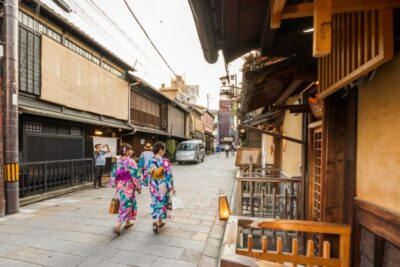

Kyoto Gion Cultural Walk & Geisha Show with Dining Options
Read our review →
Browse the lists this tour appears in