
Reviewed · KYOTO COOKING CLASSES
Private Guided Traditional Buddhist Cooking in Japan
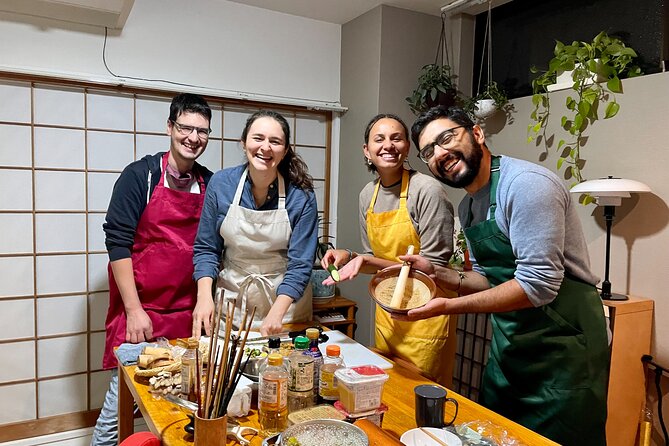
Kyoto’s Buddhist cooking turns vegetables, tofu, grains, seaweed, and fermented foods into a meal with real variety. In this hands-on class, you’ll learn from Yukari, prepare dishes such as miso-glazed eggplant and tofu salad, and sit down to a meal your group helped make.
I like two things in particular: you get a practical introduction to shojin-ryori, not just a plate of food, and you leave with recipes to try at home. The class is private for your group, too, which makes it easier to ask questions and cook at your own pace.
One point to check before you book: Enkoji Temple, Shisendo Temple, and Ginkakuji Temple are named in the itinerary, but the description focuses on cooking and does not explain whether you visit these places. If temple sightseeing is part of your plan, ask Yukari what those stops mean.
What to know before you book
- A meal built around Buddhist cooking: The dishes avoid animal products and make use of vegetables, tofu, grains, seaweed, and fermented foods.
- Hands-on, not just a demonstration: You put on an apron and help prepare a multi-dish meal.
- A Kyoto-specific angle: Yukari introduces local ingredients and products, with recipes inspired by traditional Buddhist cooking and modern touches.
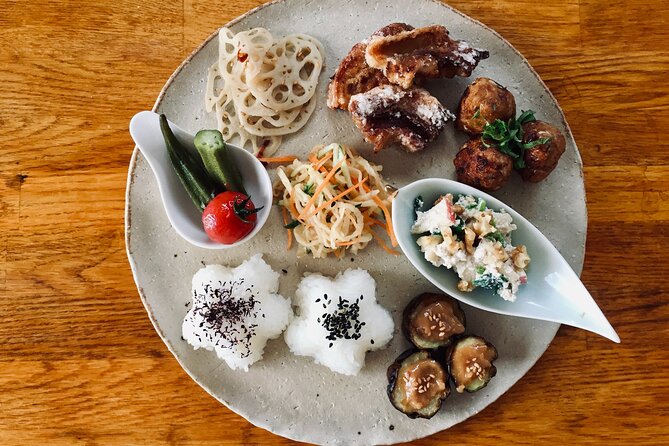
- A substantial lunch or dinner: The menu includes seasonal vegetables, lotus root, eggplant, tofu, wheat gluten, and two rice balls.
- A private experience: Only your group takes part, and the class lasts about two and a half hours.
- Gluten-free cooking can be arranged: Let the host know if you need it.
A Kyoto meal shaped by Buddhist practice
Shojin-ryori is a traditional style of Buddhist cooking made without animal products. In this class, the idea is more than simply leaving meat and fish off the menu. You’ll see how seasonal produce, soy products, grains, seaweed, and fermented ingredients can make a meal varied and satisfying.
That makes the class useful even if you already eat vegetarian or vegan food. You’ll learn about ingredients and preparation methods used in Japanese cooking, then put them to work in dishes that showcase the original taste of the produce rather than covering it up.
The menu is described as seven dishes, with two rice balls as part of the meal. The preparations include simmered seasonal vegetables, dried daikon salad, kinpira made with thinly sliced lotus root, nasu dengaku, or miso-glazed eggplant, and shiraae, a mashed tofu salad. You’ll also make spicy teriyaki balls and vegetarian fried chicken using wheat gluten.
That last dish is a good reminder that plant-based cooking can use familiar forms in a different way. Wheat gluten gives the vegetarian fried chicken its base, while tofu and miso add texture and flavor elsewhere. The class gives you a chance to ask how the dishes fit together, rather than just trying them at a restaurant and guessing at the ingredients.
More cooking classes in Kyoto:
- Ramen Cooking Class at Ramen Factory in Kyoto
★ 5.0 · 1,937 reviews - Sushi Making in Kyoto! Same-day bookings welcome!
★ 5.0 · 713 reviews - Kyoto: Ramen Cooking Class at a Ramen Factory with Souvenir
★ 4.9 · 532 reviews
Cooking with Yukari, then eating what you made
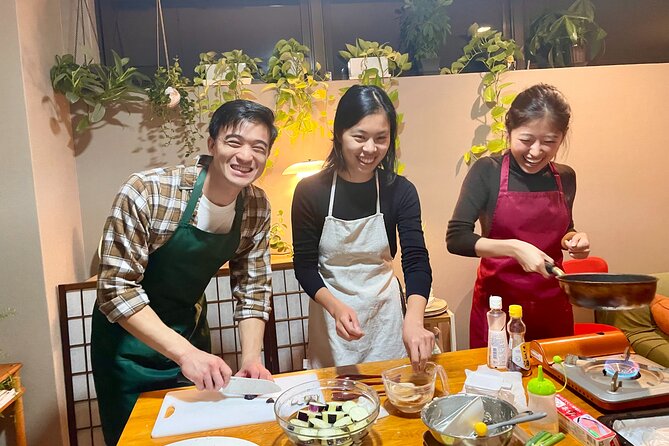
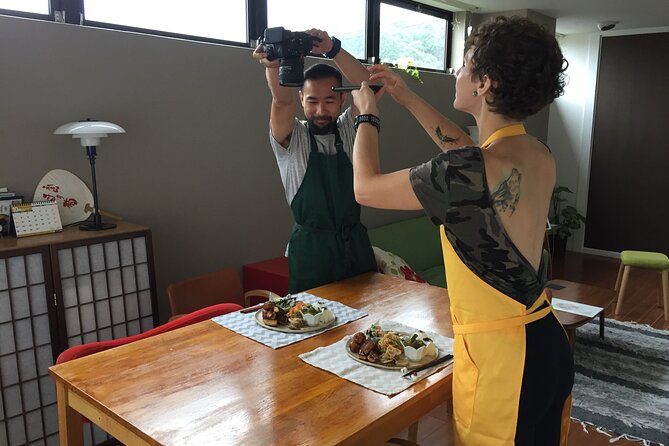
The session begins with an introduction to shojin-ryori and the local ingredients and products used in the cooking. Then you put on an apron and work through the recipes with Yukari’s guidance. The class is hands-on, so you should expect to take part in preparing the food rather than sit back and watch a full demonstration.
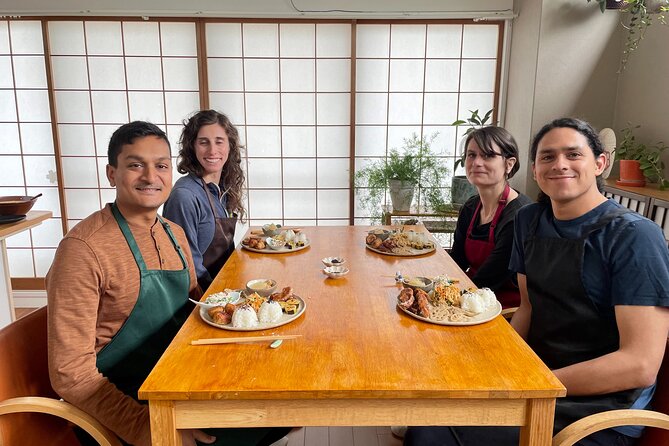
The experience ends around the table with a plate lunch or dinner, depending on how the class is arranged. Water or tea is included, along with the cooking ingredients, equipment, apron, facility and utility charges, and recipes. The written recipes matter: they give you a way to revisit the dishes after the trip, when the unfamiliar ingredients and techniques are no longer in front of you.
The comments about the class repeatedly point to Yukari’s patience and clear explanations. One family with an 11-year-old said the child stayed engaged, and other participants described learning about Japanese food culture as well as cooking. That doesn’t guarantee that every child will love a cooking class, but it suggests the format can work for families who want an activity with more to do than simply taste.
The provider is Yukari’s Japanese Home Cooking. The host’s name appears as both Yukari and Yuka in class correspondence, so if you have a name-specific question, confirm it when arranging the experience.
What the itinerary’s temple names do, and do not, tell you
The itinerary lists Enkoji Temple, Shisendo Temple, and Ginkakuji Temple. However, the experience description is centered on the cooking class, and it does not say that the group visits temple buildings, gardens, or grounds. Nor does it explain whether these names indicate nearby locations, route points, or something else.
That matters if you’re building a day around temple sightseeing. Don’t count on this class as a guided temple visit unless the host confirms that directly. Ask what the three listed stops involve and how they relate to the cooking session before you book.
There’s no need to treat that ambiguity as a reason to dismiss the class. The cooking experience has a clear structure of its own: an introduction, hands-on preparation, and a shared meal. But if you’re comparing it with a sightseeing tour, those are different plans, and the temple names alone don’t settle the question.
The price and the value of the meal
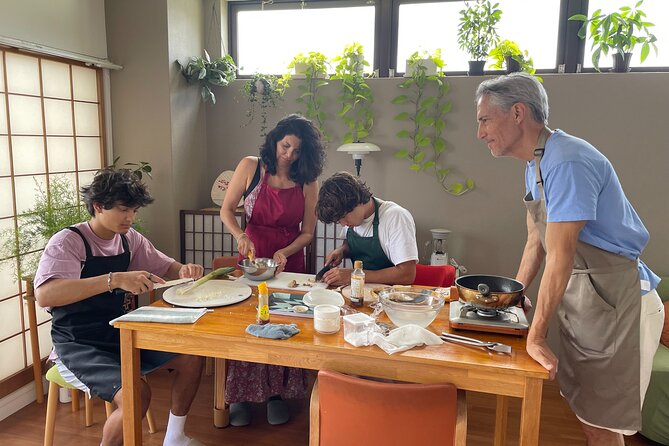
At $70.94 per person, this is a paid cooking class rather than a quick food tasting. The price covers ingredients, drinks, apron, equipment, recipes, and the prepared meal, as well as the host’s instruction over roughly two and a half hours. For someone who wants to understand how several Japanese dishes are made, that is a useful bundle.
The value is especially strong if you’ll use the recipes again. You are not only paying for lunch or dinner, but for time spent learning about shojin-ryori and practicing several preparations. If you mainly want a meal and have little interest in cooking, you may get less from the session than someone who likes to ask questions and work through the steps.
Private means the class is limited to your own group, not a larger mixed tour. That can make the price worthwhile for families or couples who want time with the host, though the per-person cost still deserves a look if you are traveling solo or comparing it with a less personal group class.
The activity is booked, on average, 51 days ahead. That is useful to know if your Kyoto dates are fixed: don’t leave it to the last minute if this is a priority. The supplied cancellation terms allow a full refund if you cancel at least 24 hours before the start time.
More private tours in Kyoto:
- Fushimi Inari Hidden Hiking Tour (Private Option Available)
★ 5.0 · 1,750 reviews - Private Kyoto Tour with a Local, Highlights & Hidden Gems, Personalised
★ 5.0 · 1,543 reviews - Kyoto 6hr Private Tour with Government-Licensed Guide
★ 5.0 · 1,369 reviews - 10 Must-see Spots in Kyoto One Day Private Tour (up to 7 people)
★ 5.0 · 1,108 reviews
Timing, meeting point, and practical details
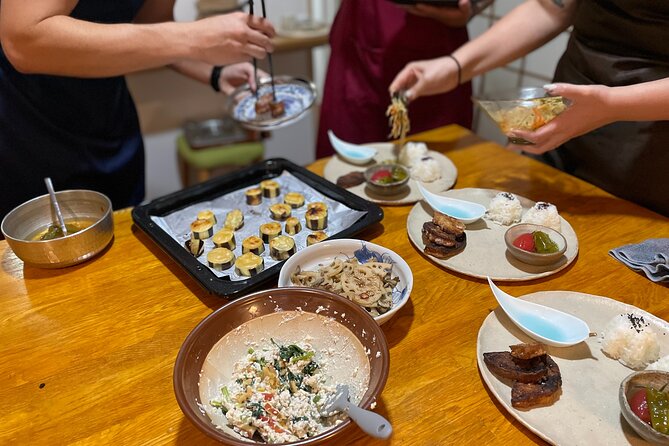
The class starts at 10:00 am and lasts about two hours and 30 minutes. It begins and ends at the same meeting point: Fairmont Building, 16 Ichijoji Nodacho, Sakyo Ward, Kyoto, 606-8165. The experience is near public transportation, but private transportation is not included.
That 10:00 start makes the class a good fit for a planned lunch. It also means you’ll want to allow time to reach the address before the start, especially if you’re coming from another part of Kyoto. Since the class ends back at the meeting point, you can make your next plan from there without arranging a separate return transfer.
A mobile ticket is provided, and confirmation is received at booking. Service animals are allowed. Gluten-free cooking is available if you let the host know, so mention that need in advance rather than waiting until you arrive.
Who will enjoy this class most
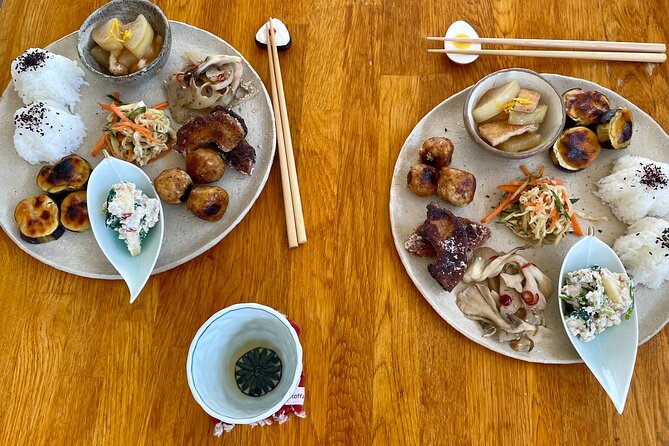
This is a strong choice if you want a meal that explains something about Japanese food culture while giving you practical skills. It suits vegetarians and vegans particularly well, but you don’t need to follow a plant-based diet to appreciate the dishes. The menu shows how much variety can come from vegetables, tofu, wheat gluten, and other non-animal ingredients.
It also works for curious cooks who like learning by doing. You’ll have several preparations to work on, and the recipes make the class more useful after the trip. Families may find it worthwhile too, though the class is still a cooking lesson, so it will suit children who are happy to participate better than those who want a purely sightseeing-based outing.
You may want to choose another activity if you’re looking for a guided temple tour, a quick meal, or transportation between Kyoto sights. The temple names need clarification, and the experience itself is clearly described as a cooking session. Keep those expectations straight, and you’ll know what you’re paying for.
Should you book Yukari’s cooking class?
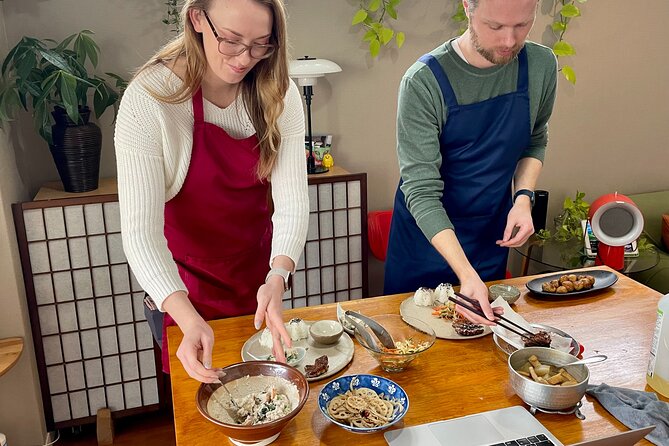
Book it if you want to cook a varied Japanese plant-based meal, learn the thinking behind shojin-ryori, and bring home recipes rather than just memories of lunch. The combination of hands-on cooking, local ingredients, and a private group gives the class a personal feel, while the included meal makes the time and cost easier to justify.
Before confirming, ask Yukari about the three temple names in the itinerary if you expect sightseeing, and tell her if you need gluten-free food. If those details fit your plans, this is a useful and delicious way to spend a Kyoto morning.
FAQ
How long does the cooking class last?
The experience lasts about two hours and 30 minutes.
What time does it start?
The listed start time is 10:00 am.
Where does the class meet?
It meets at Fairmont Building, 16 Ichijoji Nodacho, Sakyo Ward, Kyoto, 606-8165. The activity ends back at the same meeting point.
How much does the experience cost?
The listed price is $70.94 per person.
Is the food vegan?
The class teaches shojin-ryori, a traditional Buddhist style of cooking made without animal products. The dishes are described as vegan.
What dishes will I make?
The menu includes seasonal simmered vegetables, dried daikon salad, lotus root kinpira, miso-glazed eggplant, mashed tofu salad, spicy teriyaki balls, vegetarian fried chicken made with wheat gluten, and two rice balls.
Can the class accommodate gluten-free cooking?
Yes. Gluten-free cooking can be arranged if you let the host know.
Is the class private?
Yes. It is a private activity, and only your group participates.
What is included in the price?
Ingredients, water or tea, an apron, cooking equipment, utility charges, the facility fee, and recipes are included. Private transportation is not included.
Can I cancel for a refund?
You can receive a full refund if you cancel at least 24 hours before the experience’s start time. Changes made less than 24 hours before the start time are not accepted.
Newly added in Kyoto
- Uji: Private immersion into Kyoto’s tea and reglious culture★ 5.0 · 17 reviews
- Whisk Your Own Matcha: A Zen Matcha Experience at Temple★ 3.6 · 7 reviews
- Kyoto tea town for matcha lovers★ 5.0 · 16 reviews
- Treasures of Kyoto: Gion & historical Walking Tour★ 5.0 · 6 reviews
- Kyoto Matcha Green Tea Tour★ 4.5 · 23 reviews
- Uji and Wazuka Matcha Farm Half Day Private Guided Tour★ 5.0 · 21 reviews
- Uji Tea Ceremony and UNESCO Heritage Walking Tour★ 5.0 · 20 reviews
- Utilising upcycled Matcha! Creating matcha incense (Uji, Kyoto)★ 5.0 · 6 reviews
Kyoto Cooking Classes, compared.

Ramen Cooking Class at Ramen Factory in Kyoto
Read our review →
Sushi Making in Kyoto! Same-day bookings welcome!
Read our review →
Ramen Cooking Class at a Ramen Factory with Souvenir
Read our review →
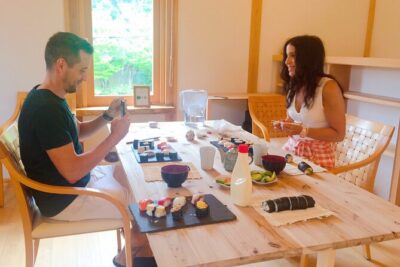
The Original Small-Group Sushi Making Class in Kyoto
Read our review →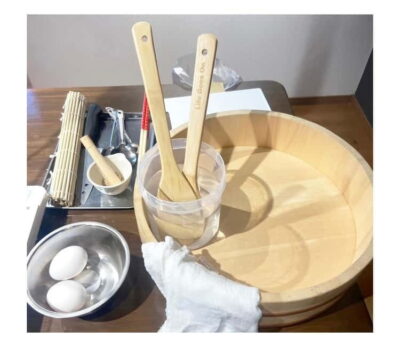
Japanese Washoku Bento Small Group Cooking Class
Read our review →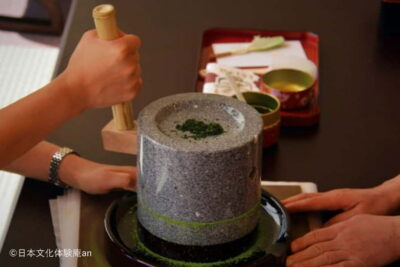
Japanese Traditional Sweets Making and Tea Ceremony
Read our review →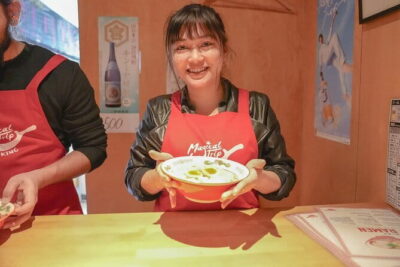
Kyoto Ramen and Gyoza Cooking Class with Professional Chefs
Read our review →Browse the lists this tour appears in