Reviewed · KYOTO TOURS
Strengthen the immunity!! Making miso in Japanese old house.
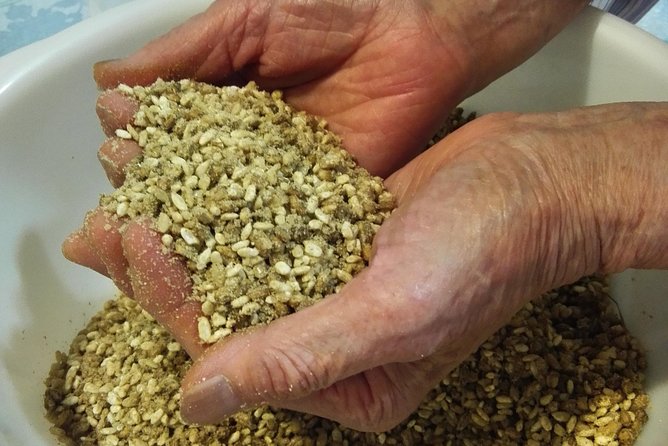
Okara, the soybean pulp often discarded during tofu-making, is the unusual starting point for this Kyoto cooking class. You’ll mix it with the other ingredients under Naomi’s direction, then take home about 500g of miso that needs more than three months to ferment.
I like two things here: the method makes miso-making quicker and more approachable than the traditional soybean process, and the class gives you time to taste miso dishes in a Japanese old house. One consideration: the experience lasts about an hour, but your finished miso won’t be ready to eat for months.
The class is small, with a maximum of six people, so you can follow the steps and ask questions as you work. Naomi is a massage therapist, Japanese tea instructor, and cooking instructor, and she brings a wellness focus to the session. The listed price is $46.15 per person.
What to know before you book
- You make miso with okara: This soybean byproduct is the base for a faster, simpler method than making miso from whole soybeans.
- You take home about 500g: Your batch still needs more than three months to ferment.
- The class includes tastings: Try miso soup, miso paste, and okara mochi during the session.
- Naomi leads the class: She explains the process and connects miso-making with wellness and gut health.
- The group is capped at six: A small class gives you room to mix your ingredients with guidance.
- Food options are considered: The dishes are gluten-free and MSG-free, with vegan options available.
Making miso from okara, not whole soybeans
Traditional miso-making begins with dried soybeans. They are soaked for a day, boiled until soft, then mashed. That method takes more advance preparation than you can fit into a one-hour class.
Here, Naomi uses okara, described as soybean pulp from tofu-making. The class turns a byproduct that might otherwise be discarded into a useful ingredient. That gives the session an environmental point as well as a practical one: you learn a faster way to make miso while seeing how an often-wasted food can be put to use.
The method is presented as easy and quick to prepare, not as a shortcut to instant, ready-to-eat miso. Fermentation still takes more than three months. You leave with your own batch, but patience is part of the recipe.
That distinction matters if you’re booking for a meal you can cook that evening. This is a make-and-take class, not a promise that your new miso is ready for dinner. You do get to taste finished miso during the session, which helps connect the ingredients and process to the food you already know.
More Kyoto tours in Kyoto:
- PERFECT KYOTO 1-Day Bus Tour
★ 5.0 · 13,518 reviews - Kyoto: Fushimi Inari, Kinkakuji, Bamboo Grove 1 Day Bus Tour
★ 4.8 · 4,316 reviews - Kyoto: Tea Ceremony in a Traditional Tea House in Kiyomizu
★ 4.9 · 3,519 reviews
A one-hour class in a Kyoto old house
The activity takes place at Kaze no Waon, in Ukyo Ward, and starts and ends at the same meeting point. The setting is a Japanese old residence, which gives this practical cooking lesson a more domestic feel than a demonstration in a large commercial kitchen.
Plan to arrive at your reserved time. The class is about an hour, so there isn’t a long schedule of stops or a broad tour of the neighborhood. The focus stays on learning, making, tasting, and taking your miso home.
A group limit of six is useful here. Miso-making involves handling and mixing ingredients, and a small group makes it easier to follow Naomi’s instructions without feeling lost in a crowd. It also suits people who prefer to ask questions as they work.
The class is near public transportation, but the exact route and travel time depend on where you’re staying in Kyoto. Check the meeting address before you set out: Kaze no Waon, 14 Utanokitanoinchō, Ukyo Ward, Kyoto, 616-8201.
Naomi’s approach to food and wellness
Naomi has worked as a massage therapist for 20 years and is also a Japanese tea instructor and cooking instructor. Her class links miso-making with a broader interest in physical and mental well-being, including a discussion about improving the intestinal environment.
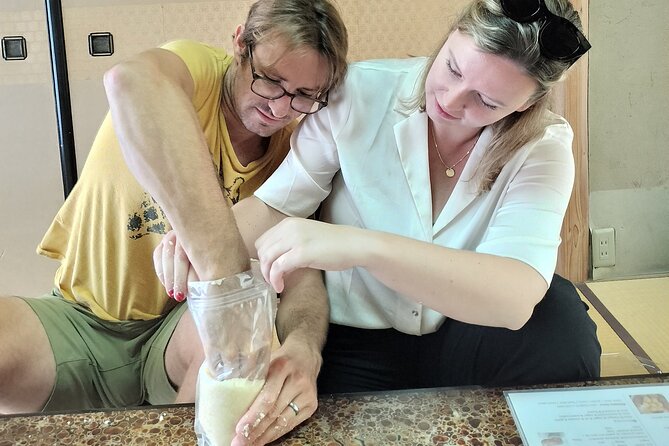
Expect an explanation of miso’s benefits and how to make it, followed by the hands-on work. This is not just a recipe card and a bowl of ingredients. Naomi guides the process, and you mix your own ingredients under her direction.
That practical format is one of the class’s strengths. You’re likely to remember a process you’ve done with your hands better than one you’ve only watched. The experience is also described as peaceful, which fits a short class centered on careful mixing rather than a race through a busy kitchen.
The wellness angle is best treated as part of the conversation, not a substitute for medical advice. You’ll hear about miso and gut health in the context of a cooking experience. If you’re booking mainly for a technical fermentation course, note that the class is brief and built around this simplified okara method.
What you’ll make, taste, and carry home
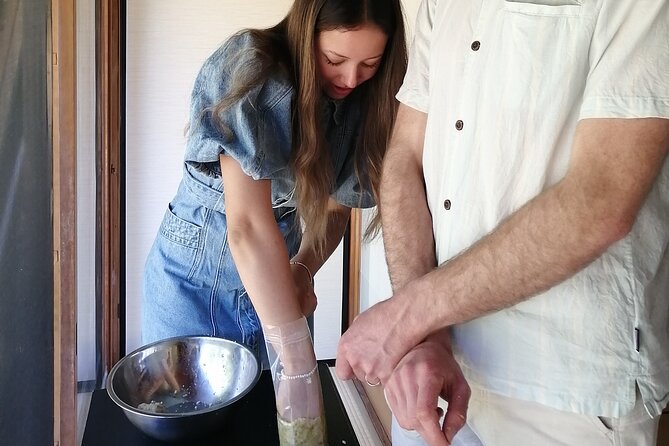
After Naomi’s introduction, you make okara miso by mixing the ingredients she provides and explains. The method is designed to be quicker than the traditional process using soaked and boiled whole soybeans. You’ll do the work yourself, with direction along the way.
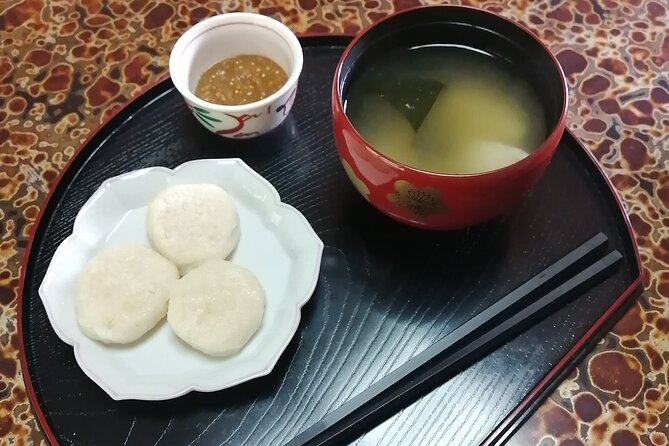
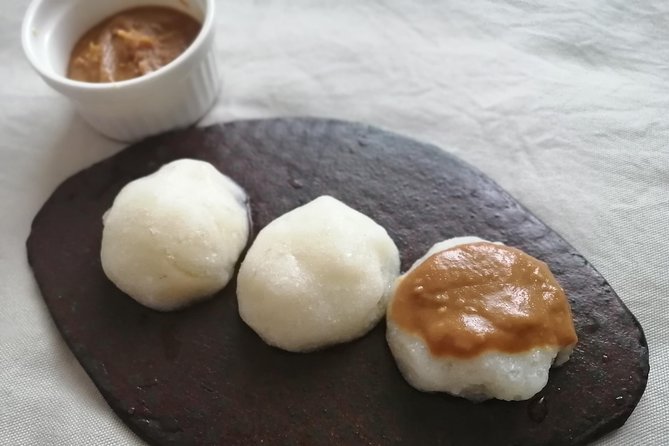
The tasting adds a welcome second half to the lesson. You can try miso soup, miso paste, and okara mochi. The range gives you a few ways to encounter the ingredient, from soup to paste to a mochi made with okara.
The mochi deserves special mention. Naomi’s reply to a participant highlights how much they enjoyed the handmade mochi and encourages them to try making it themselves. That makes it a useful part of the session for anyone curious about Japanese home cooking beyond miso alone.
At the end, you take home about 500g of the miso you made. It’s a tangible souvenir, though not one to open right away: it needs more than three months to ferment. If you can keep track of the batch and wait for it to mature, the experience continues after your Kyoto visit.
Same city, a different side of it:
- Kyoto Geisha Walking Tour: Gion District & Hidden Gems
★ 4.7 · 3,273 reviews - Kyoto: Tea Ceremony Ju-An at Jotokuji Temple
★ 4.9 · 3,207 reviews - Kyoto: Gion Magical Night Walking Tour with Geisha Trivia
★ 4.9 · 2,393 reviews - Kyoto: 45-Minute Tea Ceremony Lesson Experience
★ 4.3 · 2,378 reviews
Food needs and what the menu promises
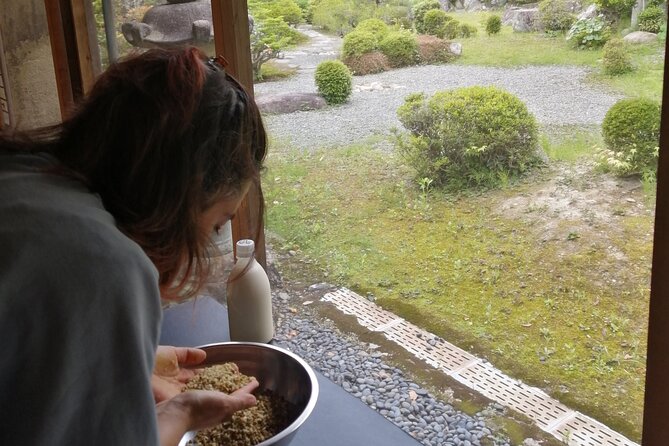
The dishes served in the class are gluten-free and MSG-free, and vegan options are available. That’s useful if you’re planning around dietary preferences, but the details of the options are not specified. If you have an allergy or a strict dietary requirement, contact the provider before booking rather than assuming every ingredient will suit you.
The session uses koji seasoning, a traditional Japanese seasoning, as part of its focus on natural ingredients. You’ll get a chance to taste the food as well as learn about the miso process, making this a more rounded experience than a short demonstration alone.
There’s a practical difference between a class that simply tells you miso is versatile and one that lets you taste it in several forms. Here, the soup, paste, and mochi help put the ingredient in context. You can leave with a better sense of how it fits into Japanese cooking, along with a batch to use later.
Is $46.15 good value?
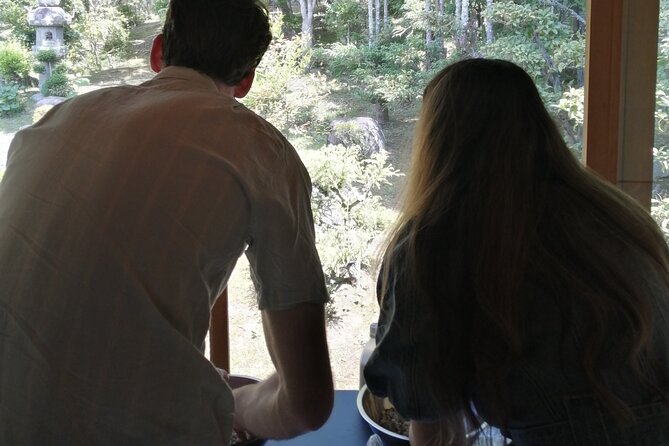
At $46.15 per person, this is a short experience, not a full-day food tour. The value comes from the mix of a guided, hands-on activity, a small group, tastings, and about 500g of homemade miso to take away.
You’re also paying for a class with a distinct method and a personal instructor, rather than simply buying a prepared jar. The use of okara gives the lesson an environmental angle and makes the process accessible within an hour. For a visitor interested in Japanese food culture and practical cooking, those details help justify the price.
The value is less compelling if you want a long culinary workshop, a full meal, or miso that’s ready to eat immediately. The class is concise, and fermentation takes months. Think of it as a focused introduction with a take-home project, not an all-afternoon cooking course.
Timing, booking, and cancellation details
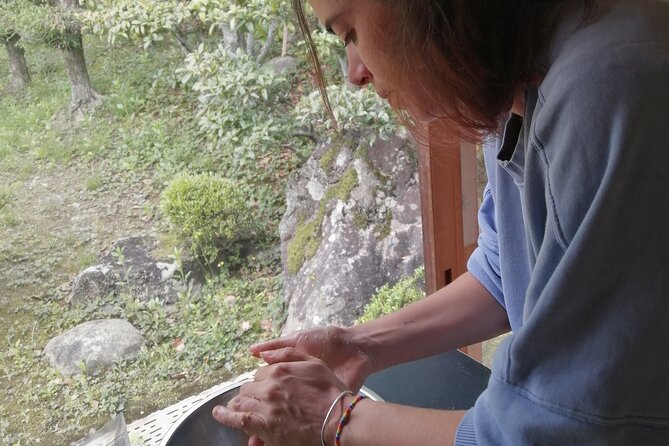
The activity lasts about one hour and is booked at a reserved start time. Confirmation is provided within 48 hours of booking, subject to availability. It is typically booked around eight days in advance, so don’t assume you can always arrange it at the last minute.
The experience is listed as requiring good weather. If poor weather forces cancellation, you’ll be offered another date or a full refund. Otherwise, the stated policy is strict: the booking is non-refundable and cannot be changed for any reason. Read those terms carefully before paying.
Who should book this class?
I’d recommend it if you’re curious about Japanese home cooking, fermentation, or food-waste reduction, and you want a small activity that fits into a busy Kyoto itinerary. It’s especially suitable if you enjoy learning by doing and don’t mind waiting months before your own batch is ready.
It also works well for someone who likes food experiences with a personal wellness thread. Naomi’s background spans massage, tea, and cooking instruction, and the class includes a discussion of gut health alongside the recipe.
Skip it if you need a long class, want a full meal, or expect to take home finished miso for immediate use. But if a peaceful hour of mixing, tasting, and learning in an old Kyoto residence sounds worthwhile, the modest group size and 500g take-home batch make this a distinctive choice.
FAQ
Where does the miso-making class take place?
It takes place at Kaze no Waon, 14 Utanokitanoinchō, Ukyo Ward, Kyoto, 616-8201, Japan.
How long is the activity?
The class lasts about one hour.
How much does it cost?
The listed price is $46.15 per person.
How much miso can I take home?
You can take home about 500g of the miso you make.
Is the miso ready to eat after the class?
No. The miso takes more than three months to ferment.
What ingredient is used instead of whole soybeans?
The class uses okara, soybean pulp produced during tofu-making.
What will I taste during the class?
The tasting includes miso soup, miso paste, and okara mochi.
Are vegan options available?
Yes. The dishes are described as gluten-free and MSG-free, with vegan options available.
How many people can join?
The maximum group size is six people.
What happens if poor weather cancels the class?
You’ll be offered a different date or a full refund if the activity is canceled because of poor weather.
Newly added in Kyoto
- Uji: Private immersion into Kyoto’s tea and reglious culture★ 5.0 · 17 reviews
- Whisk Your Own Matcha: A Zen Matcha Experience at Temple★ 3.6 · 7 reviews
- Kyoto tea town for matcha lovers★ 5.0 · 16 reviews
- Treasures of Kyoto: Gion & historical Walking Tour★ 5.0 · 6 reviews
- Kyoto Matcha Green Tea Tour★ 4.5 · 23 reviews
- Uji and Wazuka Matcha Farm Half Day Private Guided Tour★ 5.0 · 21 reviews
- Utilising upcycled Matcha! Creating matcha incense (Uji, Kyoto)★ 5.0 · 6 reviews
- Slow Cycling Tour at Uji’s Matcha Green Tea Fields and Heritage★ 5.0 · 25 reviews
Kyoto Tours, compared.

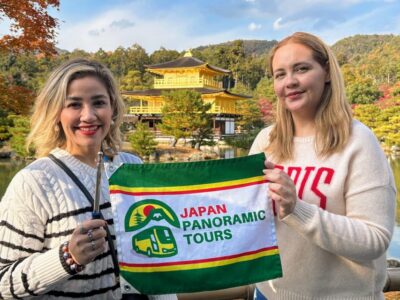
Fushimi Inari, Kinkakuji, Bamboo Grove 1 Day Bus Tour
Read our review →
Tea Ceremony in a Traditional Tea House in Kiyomizu
Read our review →
Kyoto Geisha Walking Tour: Gion District & Hidden Gems
Read our review →
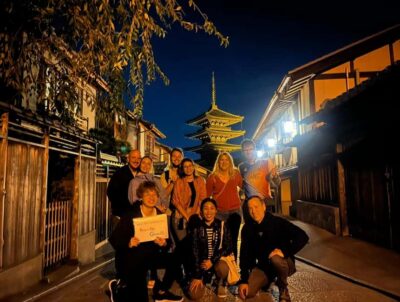
Gion Magical Night Walking Tour with Geisha Trivia
Read our review →