Reviewed · KYOTO TOURS
Hidden Kyoto E-Biking tour
Kyoto’s famous temples are only part of the story. On this 3-hour-45-minute e-bike ride, you pedal from Kinkakuji and other well-known sites into quieter lanes, temple grounds and gardens that are easy to miss on foot or from a bus. The route covers roughly 7 to 8 kilometers, with electric assist to help on hills.
I like two things especially: the mix of landmark temples and calm backstreets, and the guides’ knack for turning a ride into a lively introduction to Zen, Shinto and Kyoto customs. The group is capped at eight, so there’s room to ask questions and keep a relaxed pace.
One thing to weigh: this is still a bicycle tour, not a sightseeing shuttle. You need to be comfortable riding, and you must arrive 15 minutes early. Kinkakuji can draw crowds, and the route includes some hills, though the e-bike assist helps.
At a glance
- A short route with variety: Ride roughly 7 to 8 kilometers, linking major temples with less-traveled streets and gardens.
- Five named stops: The route includes Kinkakuji, Daitokuji, Kitano Tenmangu, Koto-in and Zuihoin.
- Electric assist takes the edge off: Guides provide bikes and helmets, and the e-bikes help with hills.
- A small group: No more than eight people join, which suits questions and conversation.
- Local stories are part of the ride: Guides such as Yuta, Michael, Sean and Henry have brought in topics from Zen and Shinto to geisha history and temple etiquette.
- Plan for the basics: Water is included; food and other drinks are not. The minimum age is 13.
Kyoto beyond the headline temples
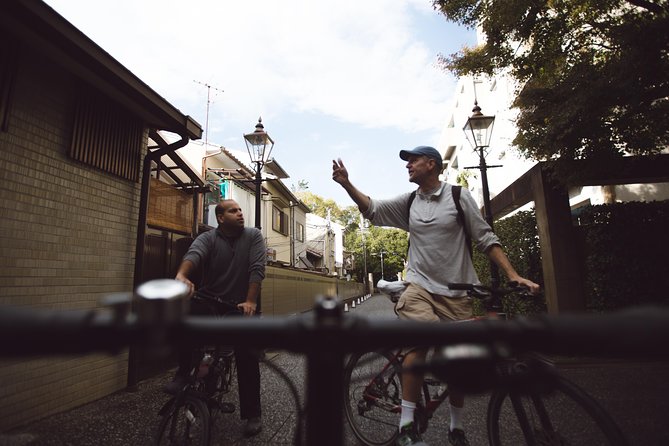
The tour’s appeal is its change of pace. Kyoto’s major temples are extraordinary, but the usual pattern of crowded buses and busy approaches can make a day feel like a checklist. Here, you travel between sights under your own power, then stop to hear the stories behind them.
The route combines recognizable places with quieter corners of the city. That balance matters: Kinkakuji gives you the famous Kyoto sight, while the temple complex, gardens and backstreets offer a more intimate feel. The ride also lets you see how one area gives way to another, rather than hopping between isolated attractions.
The group size helps make that combination work. With a maximum of eight, the guide can keep an eye on the riders and respond to questions without turning each stop into a lecture for a crowd. You still need to follow the group and ride safely, but the format is more personal than a large coach outing.
More Kyoto tours in Kyoto:
- PERFECT KYOTO 1-Day Bus Tour
★ 5.0 · 13,518 reviews - Kyoto: Fushimi Inari, Kinkakuji, Bamboo Grove 1 Day Bus Tour
★ 4.8 · 4,316 reviews - Kyoto: Tea Ceremony in a Traditional Tea House in Kiyomizu
★ 4.9 · 3,519 reviews
Starting at NORU and settling onto the bike
Meet at NORU Kyoto Bike Tours, at 429-22 Takigahanachō in Kamigyo Ward. The ride returns to the same point, so you won’t need to arrange a separate pickup at the end. The meeting point is near public transportation.
Arrive 15 minutes before departure. Tour times are listed at 8:30, 9:00, 12:30 and 1:00. Being on time matters: if you miss the departure, the booking is not refundable or transferable.
Your bike, helmet and water are included. The bikes are described as foldable, and the ride is repeatedly characterized as electric-assisted. That makes the route more approachable if you’re worried about hills or haven’t cycled for a while, but it doesn’t remove the need to balance, steer and pay attention to the road.
A guide helps you get used to the e-bike before setting off. Still, be honest with yourself about your comfort level. The minimum age is 13, and choosing not to ride or finding you cannot ride does not qualify for a refund.
Kinkakuji: a famous first stop
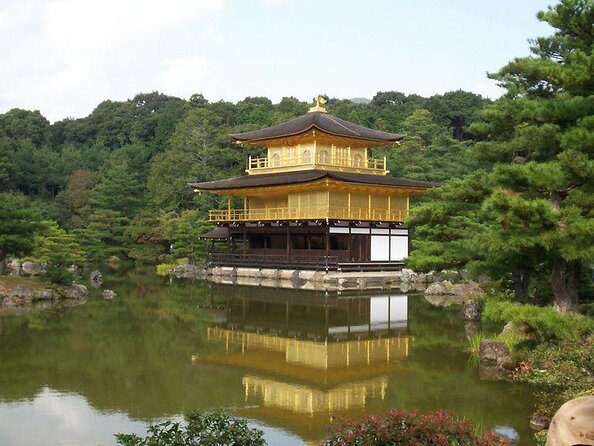
Kinkakuji, the UNESCO-listed Golden Pavilion, is the most familiar name on the route. It gives you a chance to see one of Kyoto’s best-known temples as part of a broader neighborhood ride, rather than making the entire outing about a single landmark.
It is also the stop most likely to feel busy. The tour’s quieter route can reduce the crowds between sights, but it cannot make a famous temple private. If you’re hoping for a calm visit at every stop, adjust that expectation here.
The guide adds value by supplying context and helping you understand the religious and cultural setting. This is a useful way to approach a major sight: take in the place, then carry a little more understanding with you to the smaller temples that follow.
Daitokuji: a temple complex, not just a photo stop
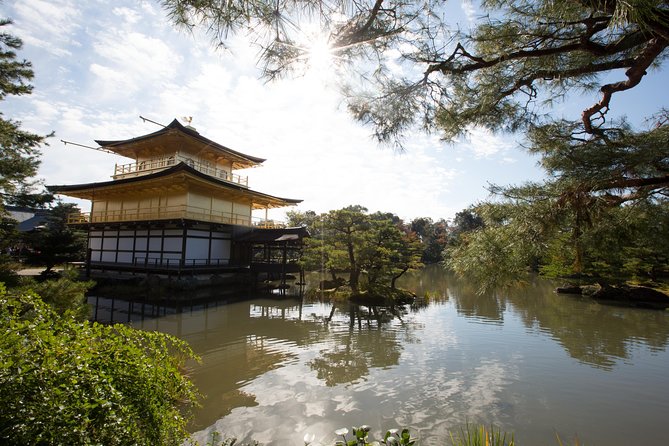
From Kinkakuji, the route continues to Daitokuji Temple Complex. The scale and range of a complex give the guide room to talk about Buddhist practice and Zen, themes that come up often during this ride.
The tour is not simply a string of quick photo stops. Guides have been praised for explaining how Buddhist and Shinto traditions differ, and for connecting those ideas to the places you see. If you enjoy asking questions, this is a good setting to do it.
The trade-off is that a talkative guide may spend time explaining rather than letting you wander independently. The pace is designed around a group ride and guided visits, not an extended, unstructured temple stay. If you prefer to explore each site alone for as long as you like, a bike tour may feel a little directed.
Same city, a different side of it:
- Kyoto Geisha Walking Tour: Gion District & Hidden Gems
★ 4.7 · 3,273 reviews - Kyoto: Tea Ceremony Ju-An at Jotokuji Temple
★ 4.9 · 3,207 reviews - Kyoto: Gion Magical Night Walking Tour with Geisha Trivia
★ 4.9 · 2,393 reviews - Kyoto: 45-Minute Tea Ceremony Lesson Experience
★ 4.3 · 2,378 reviews
Kitano Tenmangu: a shrine with a different feel
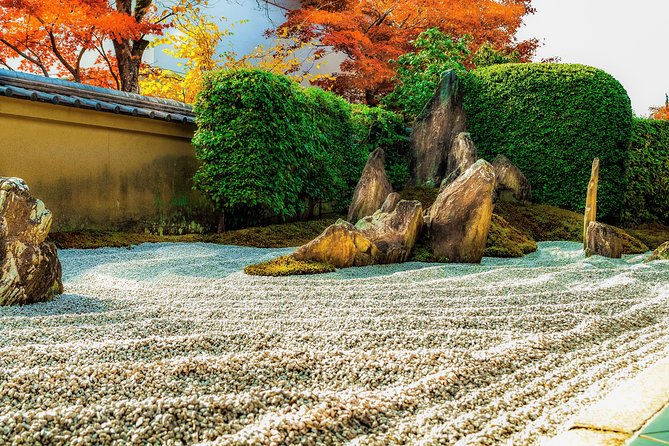
Kitano Tenmangu adds a shrine to a route otherwise strongly associated with temples and Zen. That contrast gives you a practical way to notice that Kyoto’s religious life is not one single tradition. Guides have used stops like this to explain Shinto and Buddhist customs, as well as the etiquette of visiting sacred places.
You’ll be cycling between sites rather than walking the full distance, which makes it easier to fit several places into a half-day. The ride also gives you a look at ordinary streets and local surroundings that can blur into a blur of taxi rides if you travel only by car.
As with any guided visit, your time at the shrine depends on the group’s pace and the guide’s explanations. If you’re eager to study every detail at length, consider that this tour covers several stops in under four hours.
Koto-in and Zuihoin: quieter temple spaces
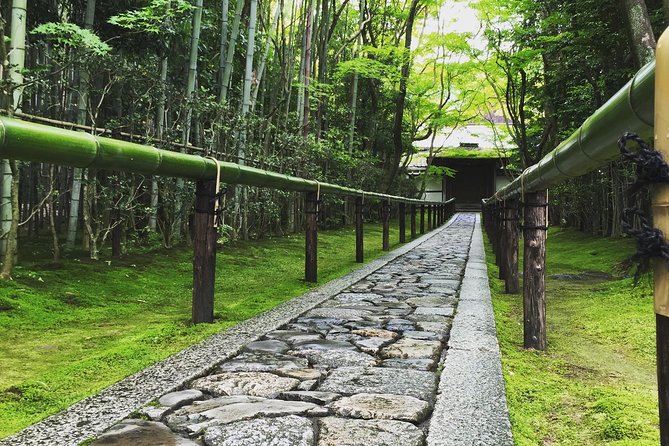
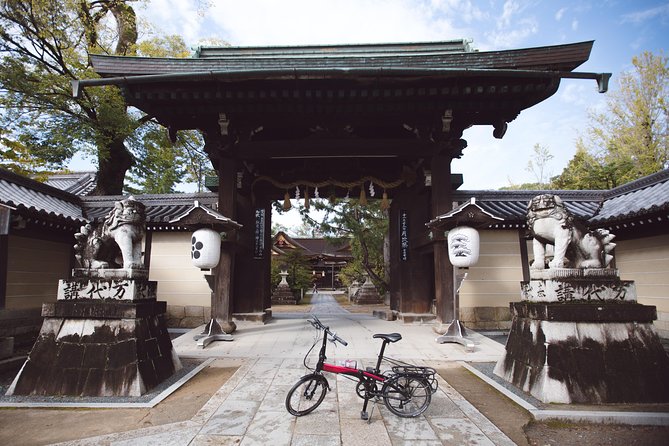
Koto-in and Zuihoin are the stops that give the tour its quieter character. Their intimate garden settings offer a contrast with the best-known temple on the route, and they are the kind of places that can be harder to work into a first visit without local direction.
These stops also leave room for a slower kind of attention. Instead of rushing from one major sight to another, you can pause, take in the garden and listen as the guide places it in a wider context. Zen teachings and the details of temple etiquette have been part of the explanations on this tour.
The gardens are not a substitute for a long visit to Kyoto’s major temple districts, and the route may not cover every site you want to see. Think of them as a focused introduction to a less hurried side of the city, not an exhaustive temple tour.
The ride between the stops is part of the point
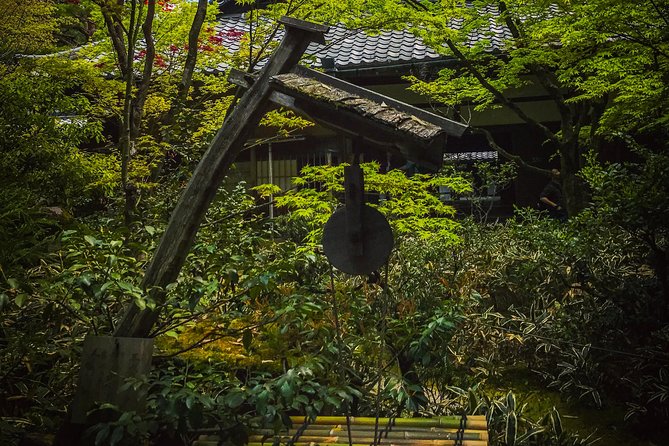
The e-bike links the headline sights with narrow backstreets and calmer neighborhoods. That in-between time is valuable: you see the city changing around you instead of experiencing Kyoto only through temple gates and bus windows.
The advertised ride length is given as roughly 4.3 to 4.9 miles, or about 7 to 8 kilometers. That is a modest distance over nearly four hours, with much of the time spent stopping and listening. The electric assist helps make hills manageable, and guides have led groups along quieter roads and paths.
Do not mistake “easy” for “no effort.” You still need to ride, stay alert and handle the bike on descents. The route has been described as safe and manageable, including by people who were nervous about cycling, but your own comfort on a bicycle matters more than the tour’s average pace.
Weather can change the feel of the outing. The tour may be canceled for poor weather, in which case you can be offered another date or a full refund. If rain is forecast and you decide to go, bring suitable rain gear; one guide has also been prepared with wet-weather equipment, but you should not count on that for your own comfort.
The guides make the history approachable
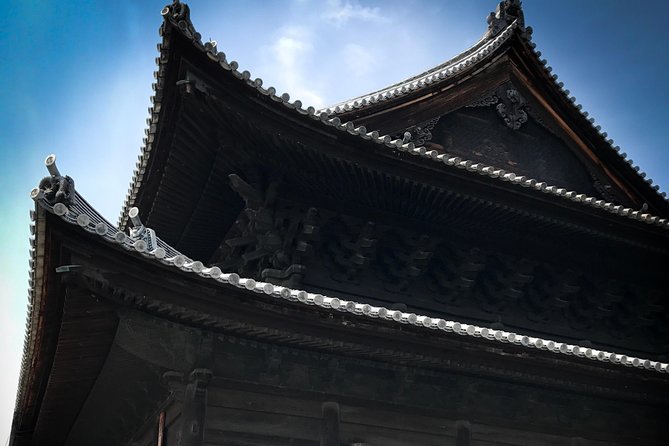
A good guide is central to this tour. Names associated with the experience include Yuta, Michael, Sean, Henry and Shizuka. The coordinator speaks English, and the guide’s explanations are a major part of what you’re paying for.
Expect more than dates and names. Guides have discussed Zen Buddhism, Shinto, samurai history, geisha and maiko traditions, tea customs, and practical etiquette at shrines and temples. Some have also shared restaurant suggestions for after the ride, which can make the tour useful as an orientation early in your stay.
The style can vary. Many people appreciate a guide who tells detailed stories and makes cultural connections, but one rider may prefer more time to explore and less time listening. If you like context, questions and conversation, you’ll likely value the narration. If your ideal tour is mostly silent cycling and independent wandering, this may not be your match.
A tea or sweets stop has been part of some outings, with one account describing a particularly old local shop. Treat that as a possible extra, not a guaranteed part of every departure. Food and drinks are not included unless specified, so bring money if you want to buy something along the way.
Is $116 a fair price?
At $116 per person, this is not the cheapest way to see Kyoto. But the fee includes an e-bike, helmet, water and an English-speaking guide for about three hours and 45 minutes. You’re paying for transport between several sites, local context and a small group, not just a rental bike.
The value is strongest if you want to visit places that are less straightforward to connect on your own and appreciate a guide’s explanations. The electric assist also helps you cover more ground without making the day feel like a strenuous cycling workout. If you already know Kyoto well, have your own bicycle and prefer to explore at your own pace, you may get less from the guided format.
For a first visit, it can be a useful way to get oriented and discover where you might want to return. For a repeat visit, the quieter lanes and temple gardens can give you a fresh angle beyond the standard sightseeing circuit.
Who should book this ride?
I’d consider this tour if you can ride a bicycle, enjoy learning as you go and want a mix of celebrated sights and quieter corners. It can suit families with teenagers, since the minimum age is 13, and the e-assist helps if you’re concerned about hills or stamina.
It is also a good fit if you want a small-group experience and value cultural explanation as much as the places themselves. The guides’ stories about religion, history and local customs are a central feature, not background chatter.
Skip it if you cannot ride, do not want to cycle in city conditions, or would rather spend a long time at one temple than make several stops. Also consider your weather tolerance: rain does not necessarily stop the ride, and the tour requires suitable conditions to operate.
Should you book?
Book the Hidden Kyoto E-Biking tour if you want an active, guided introduction to temples, shrines and quieter streets, and you’re comfortable on a bicycle. Its strongest value is the combination of electric-assisted riding, a small group and guides who can make Kyoto’s religious and cultural traditions easier to understand.
If you book, arrive early, bring weather-appropriate clothing and treat Kinkakuji as one popular stop within a more varied route. You can cancel for a full refund up to 24 hours before the start time; changes or cancellations inside that window are not accepted. For a calm, well-explained look at Kyoto beyond its busiest sights, this is a strong choice.
FAQ
How long is the Hidden Kyoto E-Biking tour?
The tour lasts about 3 hours and 45 minutes. The route is described as roughly 7 to 8 kilometers, or about 4.3 to 4.9 miles.
Which temples and shrines does the ride visit?
The listed stops are Kinkakuji Temple, Daitokuji Temple, Kitano Tenmangu Shrine, Koto-in and Zuihoin.
What is included in the price?
The tour includes an English-speaking route coordinator, a rental bike, a helmet and water. Food and drinks are not included unless specified.
How old do you need to be to join?
The minimum age is 13. Participants need to be able to ride a bicycle; choosing not to participate or being unable to ride does not qualify for a refund.
Where does the tour start and end?
Meet at NORU Kyoto Bike Tours, 429-22 Takigahanachō, Kamigyo Ward, Kyoto. The tour ends back at the meeting point.
Can I cancel if my plans change or the weather is poor?
You can cancel at least 24 hours before the start time for a full refund. If poor weather cancels the tour, you’ll be offered another date or a full refund.
Newly added in Kyoto
- Uji: Private immersion into Kyoto’s tea and reglious culture★ 5.0 · 17 reviews
- Whisk Your Own Matcha: A Zen Matcha Experience at Temple★ 3.6 · 7 reviews
- Kyoto tea town for matcha lovers★ 5.0 · 16 reviews
- Treasures of Kyoto: Gion & historical Walking Tour★ 5.0 · 6 reviews
- Kyoto Matcha Green Tea Tour★ 4.5 · 23 reviews
- Uji and Wazuka Matcha Farm Half Day Private Guided Tour★ 5.0 · 21 reviews
- Uji Tea Ceremony and UNESCO Heritage Walking Tour★ 5.0 · 20 reviews
- Utilising upcycled Matcha! Creating matcha incense (Uji, Kyoto)★ 5.0 · 6 reviews
Kyoto Tours, compared.

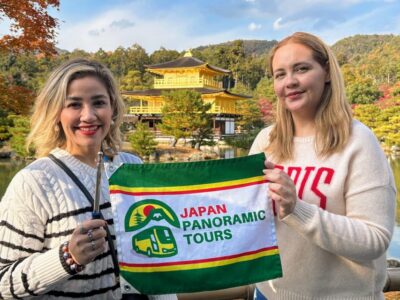
Fushimi Inari, Kinkakuji, Bamboo Grove 1 Day Bus Tour
Read our review →
Tea Ceremony in a Traditional Tea House in Kiyomizu
Read our review →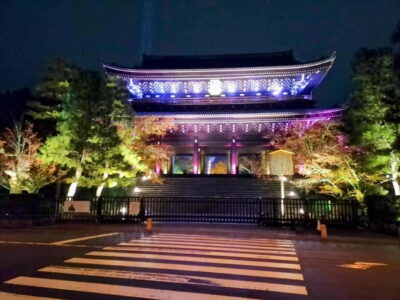
Kyoto Geisha Walking Tour: Gion District & Hidden Gems
Read our review →
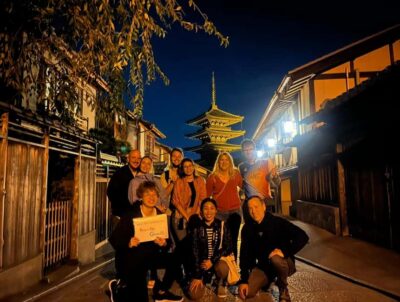
Gion Magical Night Walking Tour with Geisha Trivia
Read our review →