
Reviewed · KYOTO TOURS
Concerts Played with Traditional Instruments in Kyoto
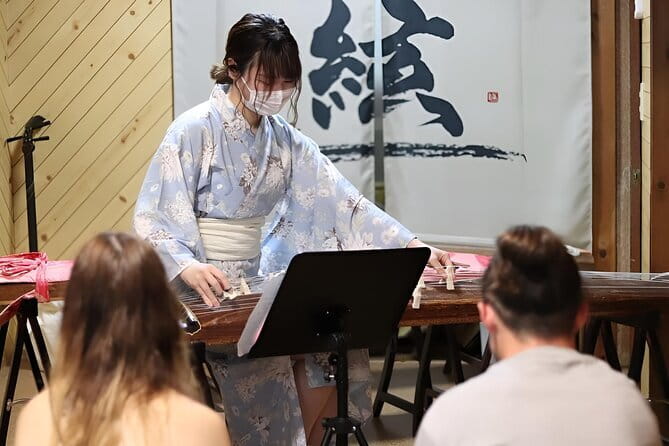
A concert in a Kyoto home feels different from hearing traditional instruments in a hall. Here, the setting is part of the experience: you step into a home arranged as a small stage, hear the koto and shamisen up close, and meet the musicians after the performance.
I like two things in particular: the brief introduction gives you a way into the music before it begins, and the Q&A lets you ask about the instruments and performance. You can also choose an option that includes a chance to play a simple piece on the koto.
The main consideration is the short running time. At about 50 minutes, this is a focused introduction rather than a long concert, and tea or coffee and transportation are not included.
- Home concert setting: Hear the performance in a traditional Kyoto home, not a large concert venue.
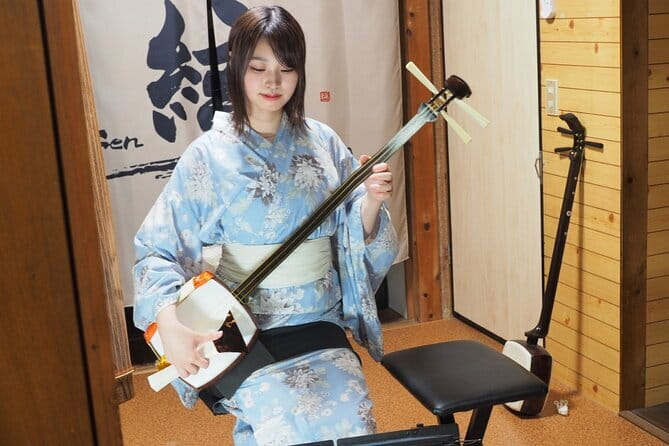
- Two instruments: The program centers on the koto and shamisen, with a short explanation before the music.
- Classical and newer music: The set can include pieces such as Chidori no Kyoku, Rokudan no Shirabe, and Kajimakura, alongside modern and original compositions.
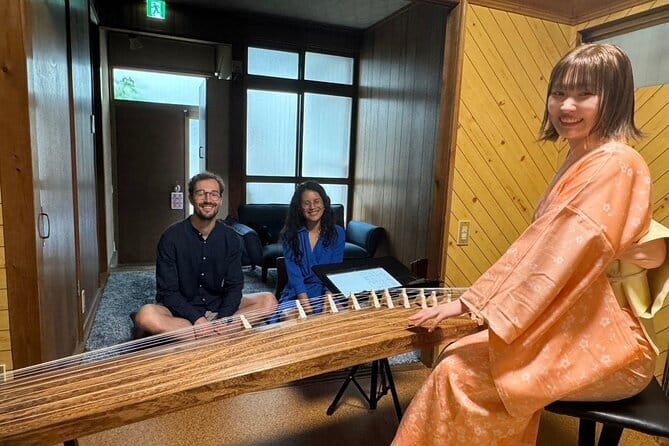
- Meet the musicians: A Q&A and photo time follow the concert.
- Optional koto session: Some options let you try playing a simple piece yourself.
- A compact stop: Allow about 50 minutes, with several start times offered during the day.
A Kyoto home becomes a concert room
The appeal of this experience begins with its scale. You are invited into a traditional home that has been turned into a performance space, making the concert feel close and personal. That is a welcome change from a formal hall, where the audience can feel far removed from the people making the music.
The home setting also puts the focus on listening. There is no long sightseeing route or busy schedule to manage once the concert begins. You arrive, learn a little about the instruments, hear the performance, and have time afterward to speak with the musicians.
The concert is described as private or small-group, which helps explain its intimate character. Exact group size is not specified, so I would not book on the assumption that you will have a one-to-one session. Think instead of a compact performance where you can listen closely and take part in the conversation afterward.
Gen Home Saiin is the listed location. The experience is in Kyoto, and the venue is near public transportation. Private transport is not included, so plan to reach the home on your own.
Meet the koto and shamisen before the music starts
The short introduction matters. Traditional instruments can be beautiful to hear, but a little context helps you listen with more purpose. Before the concert, the musicians explain the koto and shamisen, giving you a basic sense of what you are hearing before the first piece begins.
The available information does not give detailed instrument-making demonstrations or a long technical lesson. Expect a brief explanation, not a full music class. That is enough to make the performance easier to follow without turning a compact concert into a lecture.
The two instruments are the heart of the program. The concert combines classical pieces with modern and original compositions, so the music is not limited to a single period or style. If you arrive expecting a purely historical recital, the newer selections may be a pleasant surprise.
The experience is presented in English, which is useful if you want to understand the introduction and take part in the Q&A. The musicians are described as professionals, but no individual performer names are provided.
A few more Kyoto experiences worth booking
- Kyoto: Traditional Concert at Townhouse or Bathhouse
★ 4.9 · 224 reviews - Kyoto: Japanese Koto & Shamisen Concert and Koto Class
★ 4.9 · 31 reviews - Traditional Concert in Public bath near Kyoto Station
★ 5.0 · 5 reviews
Listen for three named pieces and newer compositions
The program may include Chidori no Kyoku, Rokudan no Shirabe, and Kajimakura. These pieces are associated with the tradition of koto music, and the experience also connects the repertoire with figures such as Yoshizawa Kengyo, Yatsuhashi Kengyo, and Kikuoka Kengyo.
You do not need to know these names in advance. The point is not to arrive with a music-history checklist, but to hear a live performance and leave with a few musical reference points. The introduction helps set the scene, while the range of classical, modern, and original works gives the concert more variety than a strictly historical program.
One selection, Chidori no Kyoku, has moved listeners deeply. That is a useful clue about the emotional side of the performance: this is not only an instrument demonstration. The music can be affecting even if you have never heard it before.
The exact order and content of the program are not specified, so treat the named pieces as examples rather than a guaranteed set list. If one title is especially important to you, you can ask about it during the Q&A.
Stay after the last note for questions and photos
The performance does not end as soon as the music stops. A Q&A gives you a chance to ask the musicians about the instruments, the pieces, or their approach to playing. This exchange is one of the experience’s most useful features, especially if you are curious but not familiar with Japanese music.
There is also time for photos. That makes the visit feel less like a concert where you simply take your seat and leave, and more like a chance to meet the performers after hearing their work. The exact length of the discussion and photo time is not stated, so keep in mind that the full visit is still around 50 minutes.
The session is also a good moment to ask about details that interest you personally. You might want to know how the koto differs from the shamisen in sound, or what inspired a modern piece. The format is described as a Q&A, so you can listen to other questions too, rather than needing to arrive with a prepared list.
Decide if the hands-on koto option suits you
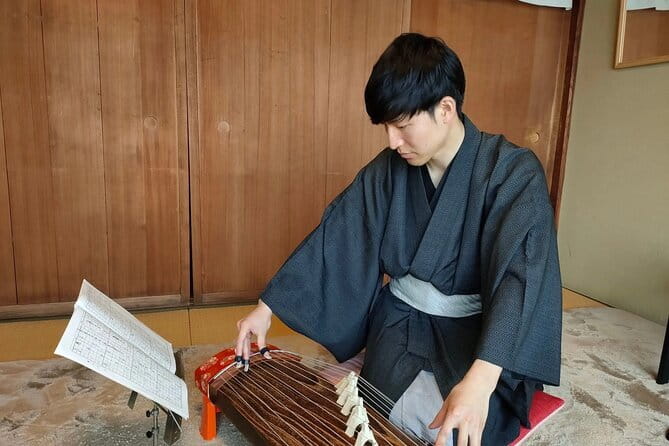
Some booking options include a chance to try the koto and play a simple piece. This is the right choice if you want to do more than listen and would enjoy a brief, guided introduction through practice.
Keep your expectations in proportion: the session is described as trying a simple piece, not learning to play the instrument in depth. It is a small taste of playing, and that can be enough to make the instrument’s demands more tangible. If you would rather focus on the concert, you can choose an option without the hands-on session.
The price for the experience starts at $39.63 per person, but the price of the upgrade is not specified here. Check the available options before booking so you can compare what each includes. The value is strongest for someone who wants a personal cultural experience, a live performance, and direct contact with musicians in one compact visit.
More Kyoto tours in Kyoto:
- PERFECT KYOTO 1-Day Bus Tour
★ 5.0 · 13,518 reviews - Kyoto: Fushimi Inari, Kinkakuji, Bamboo Grove 1 Day Bus Tour
★ 4.8 · 4,316 reviews - Kyoto: Tea Ceremony in a Traditional Tea House in Kiyomizu
★ 4.9 · 3,519 reviews - Kyoto Geisha Walking Tour: Gion District & Hidden Gems
★ 4.7 · 3,273 reviews
What 50 minutes and $39.63 buy you
At about 50 minutes, this is easy to fit into a Kyoto day. It can work well between larger sightseeing plans, or as a quieter stop after a day spent walking around the city. The short duration is also a limitation: if you want a full evening of music or an extended lesson, this is not that.
For the listed price, you get the concert, a brief introduction and explanation of the koto and shamisen, and the chance to take part in the Q&A and photo time. Landing and facility fees are included. WiFi is listed among the inclusions, though it is unlikely to be the deciding reason to book a traditional music performance.
Coffee and tea are not included, and neither is private transportation. There is no need to build the experience around a meal or a long transfer, but do account for your own route to the venue. Several start times are available throughout the day, making it easier to fit the visit around other plans.
This experience is booked, on average, 33 days ahead. That does not mean you must reserve exactly a month early, but it is a sensible signal to check availability before leaving the decision until your final days in Kyoto, particularly if you want a particular time or the hands-on option.
Who will enjoy this Kyoto music experience
I would recommend this to you if you want a close encounter with traditional Japanese music without committing half a day to a lesson or performance. It suits first-time listeners because the instruments are introduced before the concert, and the Q&A gives you a chance to ask questions afterward.
It is also a good fit for anyone who values a personal setting. The home venue is a central part of the experience, and a smaller concert can make it easier to focus on the musicians than a large auditorium would. If you are interested in music, culture, or simply trying something beyond the usual temple visit, this offers a different kind of Kyoto memory.
Families and visitors with varied levels of musical interest may also find the format approachable, since most people can participate. Still, the central activity is listening. If you are travelling with someone who has little interest in music, the concise length helps, but it may not be enough to win them over.
The best match is a curious listener who is open to a focused performance and a little conversation. If you want a long recital, extensive instruction, or transport arranged for you, look elsewhere.
Should you book the concert?
Book this if the idea of hearing koto and shamisen in a Kyoto home appeals to you, especially if you would enjoy asking the musicians questions or trying the koto yourself. The combination of live music, a short introduction, and a personal setting makes the price reasonable for a compact cultural experience.
Skip it if you are looking for a lengthy concert or a full instrument lesson. The 50-minute format is deliberately brief, and the hands-on option is a simple trial rather than a course. For a manageable, personal introduction to Japanese music, though, it is an appealing use of part of a Kyoto day.
FAQ

How long is the concert?
The experience lasts approximately 50 minutes.
Where does the concert take place?
It takes place at Gen Home Saiin in Kyoto, in a traditional Japanese home arranged as a performance space.
Which instruments are featured?
The concert features the koto and shamisen, with a brief introduction and explanation of both.
What music might I hear?
The program can include classical pieces such as Chidori no Kyoku, Rokudan no Shirabe, and Kajimakura, as well as modern and original compositions.
Is there a chance to try playing an instrument?
Yes. Some options include a hands-on koto session where you can try playing a simple piece.
Is there time to speak with the musicians?
Yes. A Q&A session follows the performance, along with time for photos.
Is the experience offered at different times?
Yes. Multiple options are available throughout the day.
What is included in the price?
The concert, a brief introduction and explanation of the koto and shamisen, landing and facility fees, and WiFi are listed as included.
Are tea, coffee, or transportation included?
No. Coffee or tea and private transportation are not included.
Can I cancel for a refund?
Yes, you can cancel for a full refund if you do so at least 24 hours before the experience start time. Cancellations made less than 24 hours ahead are not refunded.
Newly added in Kyoto
- Uji: Private immersion into Kyoto’s tea and reglious culture★ 5.0 · 17 reviews
- Whisk Your Own Matcha: A Zen Matcha Experience at Temple★ 3.6 · 7 reviews
- Kyoto tea town for matcha lovers★ 5.0 · 16 reviews
- Treasures of Kyoto: Gion & historical Walking Tour★ 5.0 · 6 reviews
- Kyoto Matcha Green Tea Tour★ 4.5 · 23 reviews
- Uji and Wazuka Matcha Farm Half Day Private Guided Tour★ 5.0 · 21 reviews
- Uji Tea Ceremony and UNESCO Heritage Walking Tour★ 5.0 · 20 reviews
- Utilising upcycled Matcha! Creating matcha incense (Uji, Kyoto)★ 5.0 · 6 reviews
Kyoto Tours, compared.


Fushimi Inari, Kinkakuji, Bamboo Grove 1 Day Bus Tour
Read our review →
Tea Ceremony in a Traditional Tea House in Kiyomizu
Read our review →
Kyoto Geisha Walking Tour: Gion District & Hidden Gems
Read our review →
Gion Magical Night Walking Tour with Geisha Trivia
Read our review →
Gion Geisha District Walking Tour – Stories of Geisha
Read our review →Browse the lists this tour appears in