
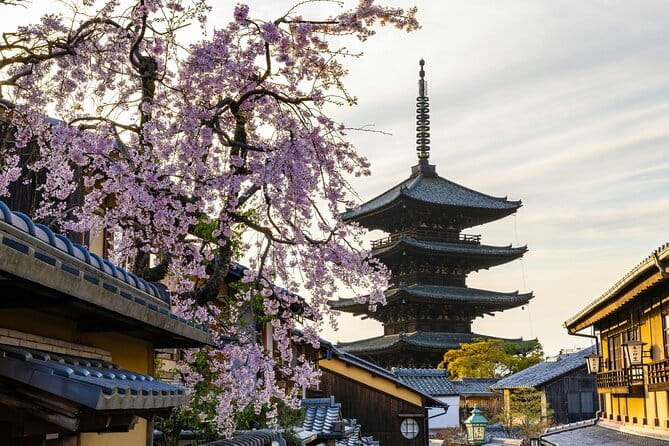
Reviewed · KYOTO EARLY MORNING TOURS
Kyoto Gion Early Morning Walking Tour
Kyoto’s old lanes feel different before the day’s crowds fill them. This three-hour morning walk links Gion’s wooden streets with Kiyomizu-dera, the sloping lanes of Sannenzaka and Ninenzaka, Yasaka Pagoda, and Yasaka Shrine, giving you a useful first look at several of the city’s best-known sights.
I like the early start, which gives you a quieter chance to take in the streets and temples, and the small group, capped at 12, which makes it easier to ask questions. Guides Caleb, Hiro, and Vincent are praised for explaining Kyoto’s past and present with warmth and humor.
The trade-off is that an early start still cannot guarantee an empty Kiyomizu-dera. One tour reached the temple after crowds had gathered, so go for a calmer introduction, not a promise of crowd-free sightseeing. The ¥500 temple entry fee is extra.
At a glance
- Six distinctive stops: Gion Shirakawa, Hanamikoji Street, Kiyomizu-dera, Sannenzaka and Ninenzaka, Yasaka Pagoda, and Yasaka Shrine.
- About three hours on foot: The route includes several stops and plenty of walking, so wear comfortable shoes.
- A maximum of 12 people: A modest group gives you more room to hear the guide and ask questions.
- English-speaking guides: Caleb, Hiro, and Vincent are among the guides named by people who took the tour.
- One extra cost to plan for: Kiyomizu-dera admission is ¥500 per person and is not included.
- Start and finish in the Gion area: The meeting point is by the Statue of Izumo-no-Okuni, and the tour returns there.
Why see Gion before the day gets busy
Gion is famous for its traditional streets, teahouses, and connections to geisha culture. By morning, you can take in the wooden facades and narrow lanes at a gentler pace than you might find later in the day. The quiet is part of the appeal: you can look closely at the architecture rather than simply trying to move through a stream of people.
This tour also gives you context as you walk. A guide can help connect the streets and religious sites to Kyoto’s history and local customs, and you can ask questions along the way. That matters in a district where a quick photo can show you a pretty street but tell you little about how the area fits into the city.
The tour is designed for up to 12 people. That is small enough to make conversation with the guide practical, though it is not a private tour. If you like asking questions, or want help noticing details you might otherwise pass, that format is a strong reason to book with a guide rather than walk the route alone.
More Gion tours in Kyoto:
- Kyoto Geisha Walking Tour: Gion District & Hidden Gems
★ 4.7 · 3,273 reviews - Kyoto: Gion Magical Night Walking Tour with Geisha Trivia
★ 4.9 · 2,393 reviews - Kyoto: Gion Geisha District Walking Tour – Stories of Geisha
★ 4.7 · 2,187 reviews
Gion Shirakawa: river, willows, and machiya
The walk begins with Gion Shirakawa, where the Shirakawa River runs beside traditional machiya houses and weeping willows. This is one of the route’s most atmospheric introductions to old Kyoto. The river and historic buildings create a quieter scene than the main shopping streets, especially in the early hours.
You have about 15 minutes here. That is enough for a first look, some photographs, and a little orientation, but not a long wander. Treat the stop as an introduction to Gion’s character rather than a chance to explore every lane.
The guide’s role is useful from the outset. Instead of simply passing a row of attractive buildings, you can ask about the neighborhood and its traditions. The walking tour is a good fit if you prefer a place to come with some explanation, not just a camera stop.
Hanamikoji Street and Kyoto’s geisha district
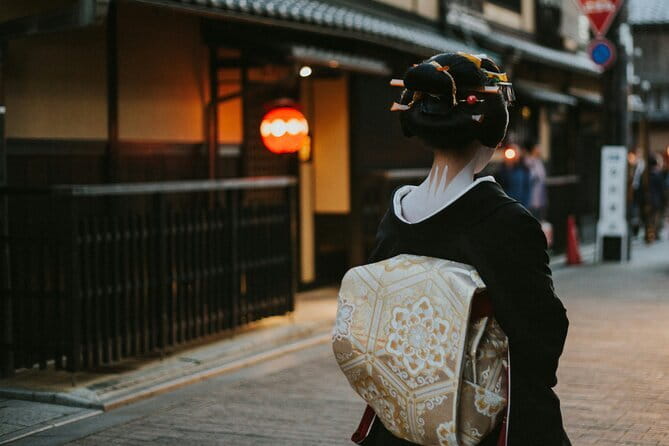
Next comes Hanamikoji Street, a central thoroughfare in Gion known for its historic wooden machiya and traditional teahouses, called ochaya. The route allows about 20 minutes here. You’ll have time to look at the street’s distinctive buildings and learn about its connection to geisha and maiko culture.
Keep expectations sensible. The stop introduces you to the district; it does not promise a geisha or maiko sighting. What you can count on is a walk through an area closely tied to Kyoto’s performing arts and teahouse traditions, with a guide available to explain what you’re seeing.
I especially like this part of the route for visitors who want more than a checklist of famous sights. Gion’s streets make more sense when someone explains the culture behind them, and the small-group format gives you a natural chance to ask follow-up questions. The street itself is also a working part of the city, so look with care and respect.
Kiyomizu-dera: views, history, and an extra fee
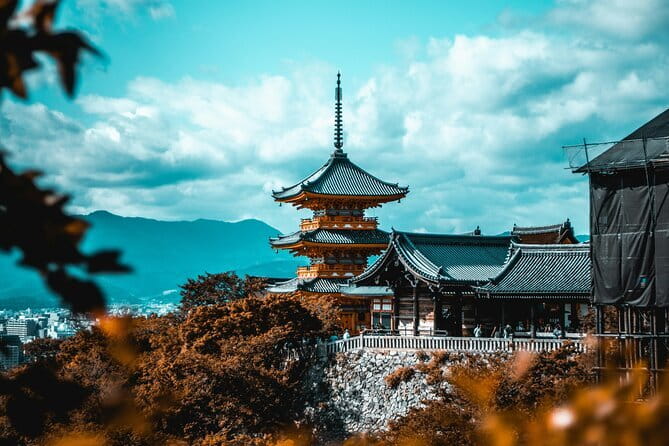
Kiyomizu-dera is the tour’s longest stop, at about one hour. The temple is known for its large wooden stage and views over Kyoto. The surrounding scenery changes with the seasons, including cherry blossoms in spring and autumn color later in the year.
Admission is not included. Budget an additional ¥500 per person for entry. The tour price of $49.42 covers the English-speaking guide and the approximately three-hour experience, but not this temple ticket. That is a modest extra charge, though it is worth knowing before you set out.
The early timing is meant to help you reach the major sights before the heaviest crowds. It can improve the experience, but it is not a guarantee: Kiyomizu-dera is popular, and one outing found the temple already crowded by the time the group arrived. If a nearly empty temple is essential to you, be aware that the tour’s start time is not specified here, and the temple’s popularity can defeat even a morning plan.
A guide adds value at a site of this scale. The complex can feel like a string of impressive buildings and viewpoints if you are moving without context. With a guide, you can ask about the temple’s place in Kyoto’s spiritual life and connect what you see to the rest of the walk.
More early morning tours in Kyoto:
- Kyoto Early Morning Tour with English-Speaking Guide
★ 5.0 · 1,427 reviews - Kyoto: Early Morning Tour with English-Speaking Guide
★ 4.9 · 1,128 reviews - Nara Early Morning Tour (Kyoto or Osaka Departure Available)
★ 5.0 · 676 reviews - Arashiyama Bamboo Forest & Hidden Gems Bike Tour (Early Bird)
★ 5.0 · 613 reviews
Sannenzaka and Ninenzaka: Kyoto’s sloping lanes

From Kiyomizu-dera, the route continues through Sannenzaka and Ninenzaka. These stone-paved lanes are lined with traditional wooden townhouses and local shops, and they lead toward the temple area. The scheduled stop is about 30 minutes.
This is a good stretch for slowing down and noticing the details: the old-style streetscape, the shopfronts, and the way the lanes follow the slope. It also makes a natural contrast with the temple grounds. You move from a major religious landmark into streets shaped by everyday commerce and visitors.
The lanes are popular, and the tour’s early start is meant to give you a better chance of enjoying them before they fill up. Still, don’t expect to have the whole area to yourself. The value of the guided walk is less about getting an exclusive view and more about seeing the lanes as part of a connected route rather than navigating them alone.
Yasaka Pagoda: a short stop with a famous view
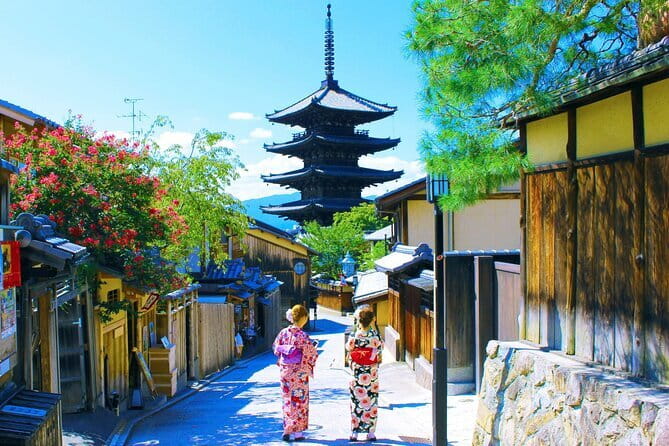
Yasaka-no-To, or Yasaka Pagoda, is one of Kyoto’s most recognizable landmarks. The tour allows about 10 minutes here, enough to pause, take in the pagoda’s silhouette, and capture a few photographs.
This is a brief stop, so think of it as a visual highlight rather than a full visit inside a religious site. Its position among the old streets gives you a strong sense of how Kyoto’s famous buildings and historic neighborhoods sit alongside one another.
The guide can help you make sense of the landmark’s place in the route, while the short pause gives you a moment to look around. If photography is important to you, the quieter morning light and lower foot traffic may help, though conditions vary.
Yasaka Shrine: traditions and lanterns

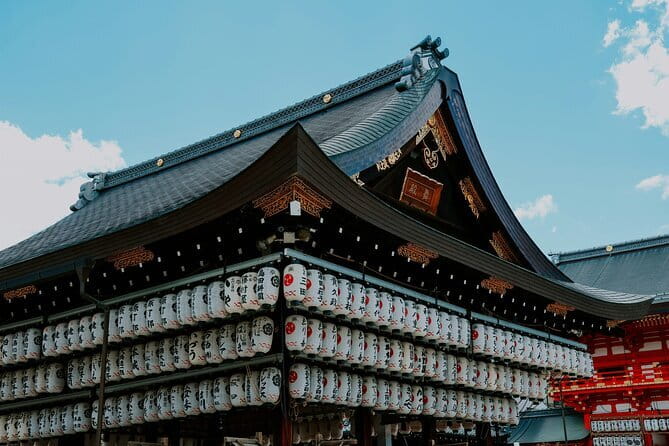
The final scheduled attraction is Yasaka Shrine, with about 30 minutes to explore. It is one of Kyoto’s best-known Shinto shrines, associated with a long tradition of protecting the city. Its vermilion gate and lantern-lit dance stage are among the features to look for.
This stop gives the walk a different religious perspective from Kiyomizu-dera. The tour moves between Buddhist temple grounds and a Shinto shrine, which helps you see that Kyoto’s spiritual heritage is not confined to one tradition or one type of building.
The shrine is free to enter, according to the tour details. After the stop, the activity ends back at the starting meeting point. Since the walk returns to where it began, you can plan the rest of your day from the Gion area without arranging a separate ride back.
What the guide adds to the walk
The tour’s strongest feature is the chance to hear about Kyoto from a local guide while moving through the city. Caleb is praised for his enthusiasm for history and for making the early start worthwhile. Hiro is noted for connecting Japanese history to a wider world context, as well as bringing humor to the walk. Vincent is described as taking time to explain the sights and answering questions beyond the planned route.
Guide assignments can vary, so you should not book on the assumption that you will be led by one specific person. What the format does promise is an English-speaking guide, and the small group makes it easier to engage than on a large coach tour.
A guide also takes care of navigation. That is especially useful when you are trying to fit several well-known spots into a short morning and would rather focus on what you are seeing than on maps and turns. You still need to be ready for a substantial walk, but you can leave the route-finding to someone who knows the area.
Is $49.42 good value?
At $49.42 per person, this is not the cheapest way to see Gion and the eastern temple district. You can visit the public streets and shrines on your own, and you can avoid paying for a guide if you are comfortable navigating and researching the sites yourself.
The fee buys something more specific: about three hours with an English-speaking guide, a planned route through six stops, and a group capped at 12. That can be worthwhile if you want local context, a clear route, and the chance to ask questions. The extra ¥500 for Kiyomizu-dera is the main stated cost beyond the tour price.
Think of this as an orientation walk, not an all-day deep exploration of every site. The schedule gives each place a set amount of time, and the temple and old lanes may tempt you to linger. If you prefer to move slowly or spend hours inside each attraction, a self-guided visit may suit you better.
Practical details before you book
The tour lasts approximately three hours and starts at the Statue of Izumo-no-Okuni in Kawabatacho, Higashiyama Ward. It ends back at that meeting point. The activity is near public transportation, but hotel pickup is not included, so you’ll need to make your own way to the start.
The exact start time is not stated in the information provided. Since the main appeal is seeing Kyoto’s sights in the morning, check the booking details for the time before you commit, then plan your trip to the meeting point with a little room to spare.
Wear comfortable walking shoes. The route includes several neighborhoods, temple grounds, and sloping historic lanes. The tour is open to most participants, but it is still a walking experience, not a seated sightseeing trip.
A mobile ticket is available. Confirmation is received at booking, and free cancellation is available if you cancel at least 24 hours before the experience begins. Changes or cancellations made less than 24 hours in advance are not accepted for a refund.
Who should book this Kyoto morning walk?
Book it if you have limited time in Kyoto and want a guided introduction to Gion, Kiyomizu-dera, and the nearby historic streets. It should especially suit first-time visitors who value local explanation, want help with navigation, or enjoy asking questions as they walk.
It is also a good choice if you like seeing famous places at a measured pace before the busiest part of the day. Just keep the crowd caveat in mind: early does not always mean empty, particularly at Kiyomizu-dera.
If you want to explore every temple at length, avoid group schedules, or would rather start your day later, go independently instead. For a compact, informative introduction to this corner of Kyoto, the guided walk offers a useful mix of famous sights and neighborhood character.
FAQ
How long does the Kyoto Gion Early Morning Walking Tour last?
It lasts approximately three hours.
What is the tour price?
The listed price is $49.42 per person. Kiyomizu-dera admission costs an additional ¥500 per person.
How many people can join the tour?
The group is capped at 12 travelers.
Is the tour conducted in English?
Yes. An English-speaking guide is included.
Where does the tour start?
It starts at the Statue of Izumo-no-Okuni in Kawabatacho, Higashiyama Ward, Kyoto.
Where does the tour end?
It ends back at the meeting point.
Which places are included in the walking route?
The route includes Gion Shirakawa, Hanamikoji Street, Kiyomizu-dera, Sannenzaka and Ninenzaka, Yasaka Pagoda, and Yasaka Shrine.
Is Kiyomizu-dera admission included?
No. Entry costs ¥500 per person and is paid separately.
Is hotel pickup included?
No. You need to make your own way to the meeting point.
Can I cancel for a full refund?
Yes, if you cancel at least 24 hours before the tour’s start time. Cancellations or changes made less than 24 hours before the start are not accepted for a refund.
More walking tours in Kyoto
- Night Walk in Gion: Kyoto’s Geisha District
★ 4.5 · 2,003 reviews - Kyoto Gion Geisha District Walking Tour – The Stories of Geisha
★ 5.0 · 1,441 reviews - Nishiki Market Brunch Walking Tour (7 Tastings + Brunch)
★ 5.0 · 1,355 reviews - Kyoto Arashiyama Walking Tour: Bamboo, Monkeys, Gardens & Secrets
★ 5.0 · 1,216 reviews
Newly added in Kyoto
- Uji: Private immersion into Kyoto’s tea and reglious culture★ 5.0 · 17 reviews
- Whisk Your Own Matcha: A Zen Matcha Experience at Temple★ 3.6 · 7 reviews
- Kyoto tea town for matcha lovers★ 5.0 · 16 reviews
- Treasures of Kyoto: Gion & historical Walking Tour★ 5.0 · 6 reviews
- Kyoto Matcha Green Tea Tour★ 4.5 · 23 reviews
- Uji and Wazuka Matcha Farm Half Day Private Guided Tour★ 5.0 · 21 reviews
- Uji Tea Ceremony and UNESCO Heritage Walking Tour★ 5.0 · 20 reviews
- Utilising upcycled Matcha! Creating matcha incense (Uji, Kyoto)★ 5.0 · 6 reviews
Kyoto Early Morning Tours, compared.
Kyoto Early Morning Tour with English-Speaking Guide
Read our review →
Nara Early Morning Tour (Kyoto or Osaka Departure Available)
Read our review →
Arashiyama Bamboo Forest & Hidden Gems Bike Tour (Early Bird)
Read our review →

Kyoto Early Bird English Tour: Fushimi-Inari and Arashiyama
Read our review →
Browse the lists this tour appears in