
Reviewed · FUSHIMI INARI TOURS
Kyoto Fushimi-Inari Night Walking Tour
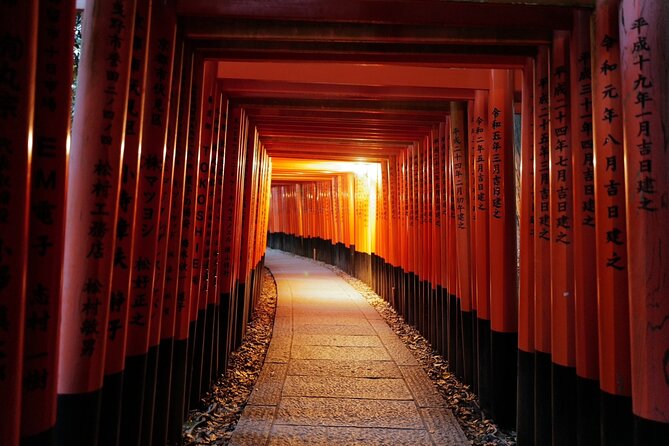
At Fushimi-Inari, the famous red gates lead away from the city and up Mount Inari, where the mood shifts as daylight fades. This evening walk offers a chance to see the shrine in a different light and hear how its gates, fox statues, and rituals fit into Shinto tradition.
I like two things in particular: the evening setting, which brings cooler air and fewer people as the night goes on, and the small group, capped at 12, which makes it easier to ask questions and keep pace together. Guides including Jem, Tammy, Caleb, Masaki, and Hiro are praised for clear explanations, stories, and practical help along the route.
One thing to plan for: this is a walk on mountain paths, and much of the tour may take place in darkness. Bring comfortable shoes and layers for cool weather, and expect some people to remain at the shrine, especially near the start.
Key points
- Nightfall changes the mood: See the torii gates and shrine paths as evening turns to night.
- Expect a guided walk, not just a photo stop: Guides explain the shrine’s history, Shinto customs, and how to pray at different sites.
- The group stays small: A maximum of 12 participants gives you room to ask questions and take photos.
- The route includes a short uphill walk: Paths lead toward Mount Inari, with smaller shrines, fox statues, and scenic viewpoints along the way.
- The shrine is not guaranteed to be empty: Crowds tend to thin as the evening progresses, but there may still be people around.
- The tour costs $43.11 per person: Shrine admission is free, so the fee mainly pays for the guide and the context that can be hard to get on your own.
Why Fushimi-Inari feels different after dark
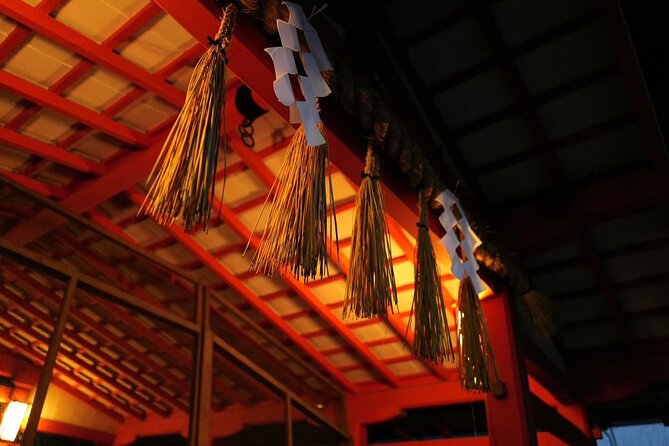
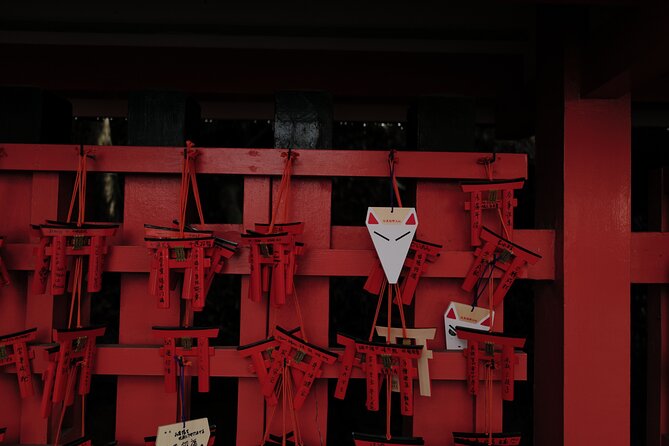
Fushimi-Inari is famous for its rows of red torii gates, but the shrine is more than a photogenic tunnel. It is dedicated to Inari, the Shinto deity associated with rice, agriculture, and business. People come to pray for success, health, and happiness, and the grounds contain smaller shrines and stone fox statues as well as the main route up the mountain.
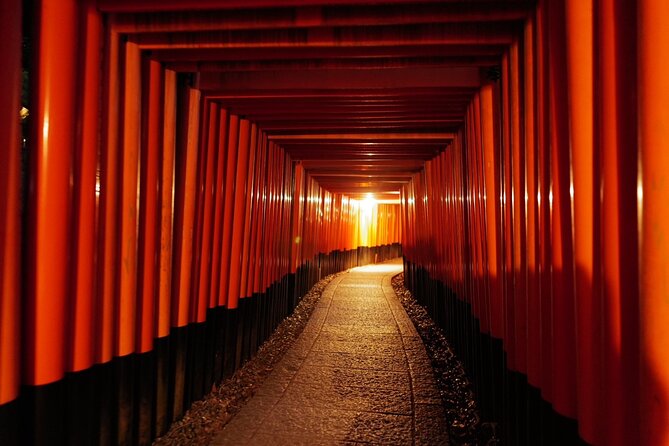
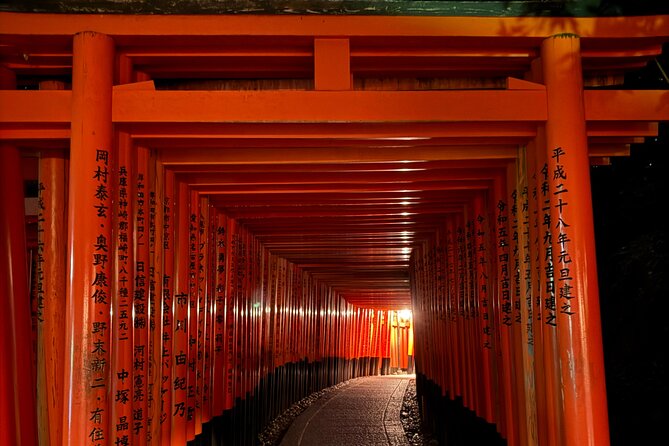
An evening visit changes how you take it in. The bright colors of daytime give way to a more subdued scene, with gates and paths lit against the dark. You have a better chance of seeing the shrine at a calmer pace, though it is worth being realistic: the tour can start while other people are still there. The numbers tend to ease later in the evening, rather than vanish all at once.
The setting also makes a guide useful. Fushimi-Inari is a large site with branching paths and many shrines. At night, having someone lead the way can help you focus on the place instead of worrying about where to turn. You will hear context for the details around you, including the meaning of the shrine and the customs involved in praying at different sites.
More Fushimi Inari tours in Kyoto:
- Kyoto: Fushimi Inari, Kinkakuji, Bamboo Grove 1 Day Bus Tour
★ 4.8 · 4,316 reviews - Fushimi Inari Hidden Hiking Tour (Private Option Available)
★ 5.0 · 1,750 reviews - Kyoto/Osaka: Nara, Fushimi Inari Taisha, Arashiyama Bus Tour
★ 4.7 · 1,275 reviews
Following the torii gates up Mount Inari
The tour begins at the fox statue by the entrance to Fushimi-Inari Taisha Shrine and ends back at the same meeting point. From there, the group walks through the shrine grounds and onto paths leading up Mount Inari. The listed duration is about 90 minutes to two hours, with the route described as a small hike.
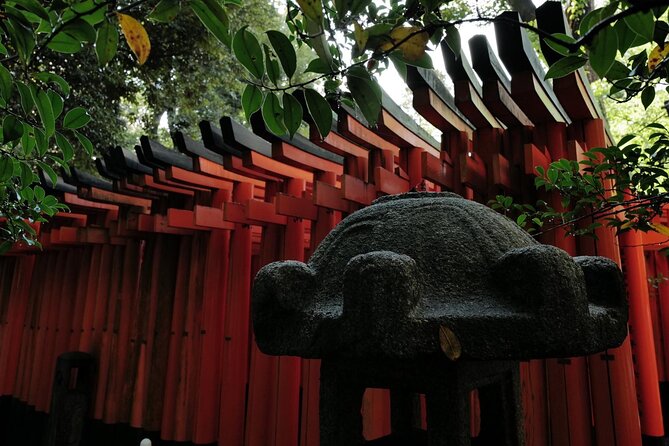
The torii gates are the visual heart of the visit. Walking beneath them gives you time to notice how the path changes as you move through the rows, rather than treating the gates as a quick backdrop for a photo. At dusk, the transition from daylight to darkness adds another layer to the experience. If photography matters to you, leave yourself time to stop and take pictures; guides have been described as patient with photo breaks.
Along the way, expect more than the main gate-lined path. The route includes smaller shrines and stone fox figures, and you may reach scenic viewpoints as you climb. The guide can point out details you might otherwise pass without noticing, and explain the customs and prayers associated with different places. Yessi, for example, has been praised for showing how to pray at several sites.
The uphill walk is manageable for many people, but it is still a walk on mountain paths. Wear shoes you are comfortable walking in, and take care in the dark. A past December visit prompted a practical tip to bring layers, while summer visitors appreciated the cooler evening air. In other words, the timing can improve comfort, but it does not replace sensible clothing.
What the guide adds to the walk
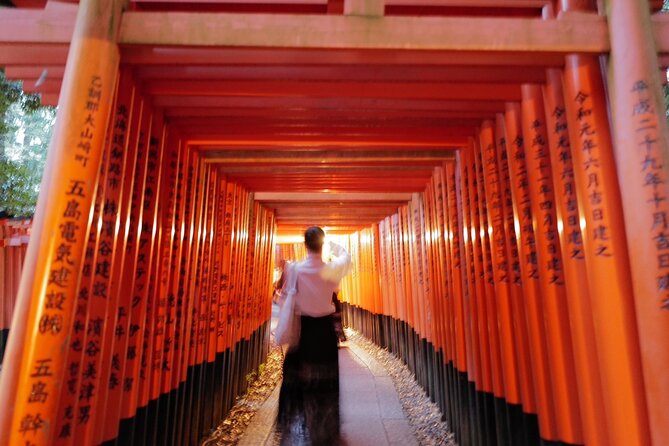
A self-guided visit lets you wander at your own pace, but it can be hard to understand what you are seeing. The guide’s value here is not simply pointing out the route. It is explaining why the shrine matters, what certain features mean, and how the practices at the site work.
The guides named by participants include Jem, Tammy, Caleb, Masaki, Hiro, Navi, Vincent, Yessi, and Cade. Their styles vary, but the qualities most often praised are warmth, clear explanations, engaging stories, and patience with questions. Caleb is noted for making information easy to follow, including for children. Masaki has been appreciated for explaining traditions and prayers, while Hiro’s guidance has helped visitors feel welcome and stay oriented.
That personal approach matters in a small group. With a maximum of 12, the walk is less likely to feel like a crowd being moved from one stop to the next. You can ask about what you see, pause for a photo, and keep up a conversation with the guide. The group size also means the guide has a better chance of keeping everyone together on the paths.
The explanations are intended to add meaning without turning the evening into a lecture. Some guides share stories and cultural details; others also answer questions about the surrounding area and suggest places to eat or other attractions. If you value context and conversation, this is likely the strongest reason to book.
Crowds, lighting, and the best time to go
The main promise of an evening visit is a different atmosphere, not a private shrine. Early in the tour, you may still encounter plenty of people. As night advances, the paths tend to become quieter, giving you more room to look around and talk with your guide.
A start around 6 p.m. has worked well for some visitors: it can mean cooler temperatures and a chance to see the shrine as daylight fades. But exact conditions depend on the season and the tour time. One evening began in daylight and turned dark soon after; another visit took place mostly in proper nighttime. If you want dusk photographs, check the start time when booking and remember that the light changes quickly.
The paths have lights, but do not assume the whole walk will feel bright. A visitor on a later tour described walking the mountain paths through the gates in the dark. That is part of the appeal for many people, but it is also a practical consideration if you feel uneasy on dim paths or need to walk slowly.
Rain can be part of the evening too. The tour has gone ahead with a small group in rainy conditions, but the available details do not specify a weather cancellation policy. Dress for the forecast and wear shoes with a secure grip. In summer, the later hour can be a welcome break from the heat; in winter, bring layers.
More night tours in Kyoto:
- Kyoto: Gion Magical Night Walking Tour with Geisha Trivia
★ 4.9 · 2,393 reviews - Night Walk in Gion: Kyoto’s Geisha District
★ 4.5 · 2,003 reviews - Kyoto Night Foodie Tour in Gion (9+ dishes + 6 Sake tastings)
★ 5.0 · 1,762 reviews - Kyoto Gion Night Walk & Geisha District Guided Tour
★ 5.0 · 786 reviews
Is $43.11 a fair price?
At $43.11 per person, this is not the cheapest way to see Fushimi-Inari. Admission to the shrine is free, and you can walk the grounds without a guide. The added cost pays for a guided route and explanations about the shrine’s history, significance, and customs, plus the ease of having someone lead the way after dark.
For a visitor who enjoys learning as they go, that can be good value. The guide helps turn a walk through striking gates into a visit with context. The small group and the chance to ask questions also give the experience a more personal feel than simply following a route alone.
If you are mainly after photographs or want to hike at your own pace, you may prefer to visit independently. You can still see the gates without paying for a tour. But if this is your first visit, you want help understanding what you are seeing, or nighttime navigation sounds less appealing on your own, the fee is easier to justify.
Who will enjoy this evening walk
This tour suits visitors who want more than a quick look at the gates. It is a good fit if you are curious about Shinto practice, want a guide to explain the site, or prefer an organized walk to finding your own way through the grounds. It can also suit families: one guide has been praised for keeping explanations engaging and understandable for children.
The experience is less suited to anyone who wants a fully quiet or solitary visit. Fushimi-Inari remains popular, and you may share the paths with other people, particularly near the start. Nor is this a seated tour or an easy stroll on flat ground. The route involves walking uphill on mountain paths, sometimes in darkness.
For the best experience, arrive ready to walk and listen. Wear comfortable shoes, bring an extra layer if the weather is cool, and allow time for photos without expecting to stop at every turn. If you want a guide’s recommendations for dinner or other places in Kyoto, you can ask; some guides have offered useful local suggestions.
Practical details before you book
The meeting point is the fox statue at the entrance to Fushimi-Inari Taisha Shrine, at Fukakusa Inarionmaechō in Fushimi Ward. The activity ends at the same place. It is near public transportation, and confirmation is provided at booking.
The tour lasts approximately 1 hour 30 minutes to 2 hours. Most people can participate, and service animals are allowed. The maximum group size is 12. Mobile tickets are available.
You can cancel for a full refund up to 24 hours before the start time. Cancellations or changes made less than 24 hours in advance are not accepted for a refund or change. The cutoff follows local time in Kyoto.
Should you book the Fushimi-Inari night tour?
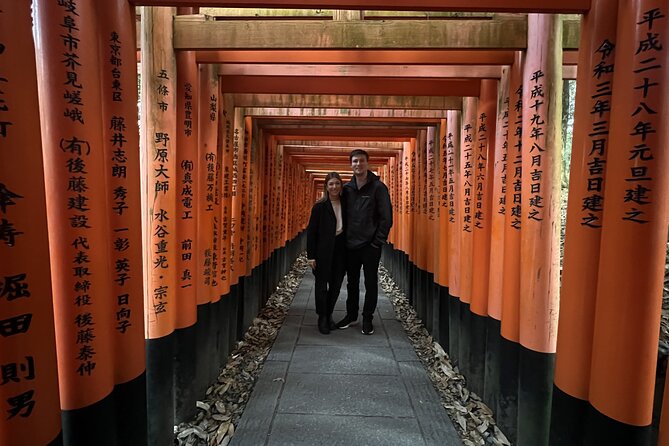
Book it if you want a guide to make the shrine’s stories and customs easier to understand, and you like the idea of walking beneath the gates as evening settles in. The strongest reasons are the small group, the guide’s explanations, and the chance to experience the paths in cooler, quieter conditions.
Skip it if you would rather wander alone, avoid walking uphill, or expect the shrine to be empty. At $43.11, the tour earns its price through context and guidance, not access to a site that is otherwise closed to you. For a first visit, especially if you are uneasy navigating the shrine after dark, that added help can make the evening feel more rewarding.
FAQ
How long does the tour last?
It lasts about 1 hour 30 minutes to 2 hours. The route is a walking tour on paths leading up Mount Inari.
Where does the tour begin and end?
It starts at the fox statue by the entrance to Fushimi-Inari Taisha Shrine and ends back at the same meeting point.
How much does the tour cost?
The listed price is $43.11 per person.
Is shrine admission included?
Admission to the shrine is free. The tour price is for the guided experience.
How large is the group?
The maximum group size is 12 participants.
Is the shrine empty during the tour?
No. There may still be people at the start, but the paths tend to become quieter as the evening goes on.
Can I cancel for a refund?
You can cancel for a full refund at least 24 hours before the start time. Cancellations and changes made less than 24 hours before the tour are not accepted.
More walking tours in Kyoto
- Kyoto Geisha Walking Tour: Gion District & Hidden Gems
★ 4.7 · 3,273 reviews - Kyoto: Gion Geisha District Walking Tour – Stories of Geisha
★ 4.7 · 2,187 reviews - Kyoto Gion Geisha District Walking Tour – The Stories of Geisha
★ 5.0 · 1,441 reviews - Nishiki Market Brunch Walking Tour (7 Tastings + Brunch)
★ 5.0 · 1,355 reviews
Newly added in Kyoto
- Uji: Private immersion into Kyoto’s tea and reglious culture★ 5.0 · 17 reviews
- Whisk Your Own Matcha: A Zen Matcha Experience at Temple★ 3.6 · 7 reviews
- Kyoto tea town for matcha lovers★ 5.0 · 16 reviews
- Treasures of Kyoto: Gion & historical Walking Tour★ 5.0 · 6 reviews
- Kyoto Matcha Green Tea Tour★ 4.5 · 23 reviews
- Uji and Wazuka Matcha Farm Half Day Private Guided Tour★ 5.0 · 21 reviews
- Uji Tea Ceremony and UNESCO Heritage Walking Tour★ 5.0 · 20 reviews
- Utilising upcycled Matcha! Creating matcha incense (Uji, Kyoto)★ 5.0 · 6 reviews
Fushimi Inari Tours, compared.

Fushimi Inari, Kinkakuji, Bamboo Grove 1 Day Bus Tour
Read our review →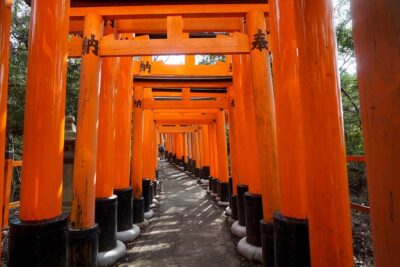
Fushimi Inari Hidden Hiking Tour (Private Option Available)
Read our review →
Nara, Fushimi Inari Taisha, Arashiyama Bus Tour
Read our review →
Arashiyama, Nara & Fushimi Inari Shrine w/Lunch
Read our review →
Nijo Castle, Kiyomizu & Fushimi Inari Guided Tour
Read our review →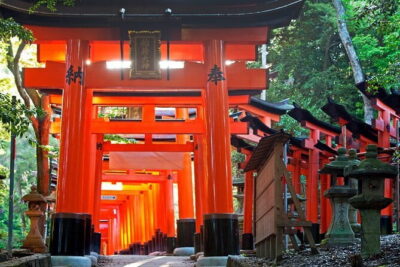
Nijo, Kinkaku-ji, Arashiyama, Kiyomizu & Fushimi Inari
Read our review →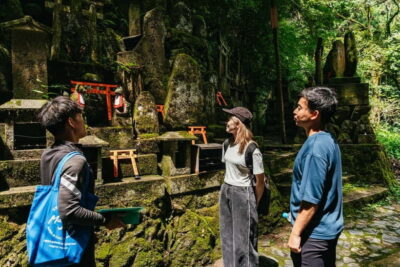
Kyoto Early Bird English Tour: Fushimi-Inari and Arashiyama
Read our review →Browse the lists this tour appears in