Reviewed · KYOTO TOURS
Kyoto Half Day Highlights Tour
Kyoto’s old streets lead to a forest of bright red torii gates on this compact walk from Gion to Fushimi Inari. In about three and a half hours, you’ll see Gion, Yasui-Konpiragu Shrine, Yasaka Pagoda, the lanes of Ninenzaka and Sannenzaka, Kiyomizu-dera Temple, and Fushimi Inari-taisha.
I like two things in particular: the route links several of Kyoto’s best-known sights without asking you to plan the transfers, and a guide can add useful context about geisha culture, Buddhist temples, and Shinto shrines. The group is capped at 12, which should make it easier to hear the guide and ask questions.
The main trade-off is the pace. There’s a lot of walking and several stops are brief, so this is a sampler, not a slow visit to every site. Wear comfortable shoes, bring water, and remember that public transport and snacks cost extra.
At a glance
- A cross-town route: Begin at Gion-Shijo Station and finish near Fushimi Inari Shrine.
- Six varied stops: See Gion, Yasui-Konpiragu, Yasaka Pagoda, Ninenzaka and Sannenzaka, Kiyomizu-dera, and Fushimi Inari.
- A small group: The maximum group size is 12 people.
- The guide adds context: Guides named Mari and Marie are associated with lively explanations of local customs and history; one guide is also praised for taking photos.
- Plan for a walk: The tour calls for moderate fitness, and transport between locations costs extra.
- A useful short-stay option: At $50 per person, it suits you if you want a guided introduction without spending a full day on sightseeing.
A route from Gion to Fushimi Inari
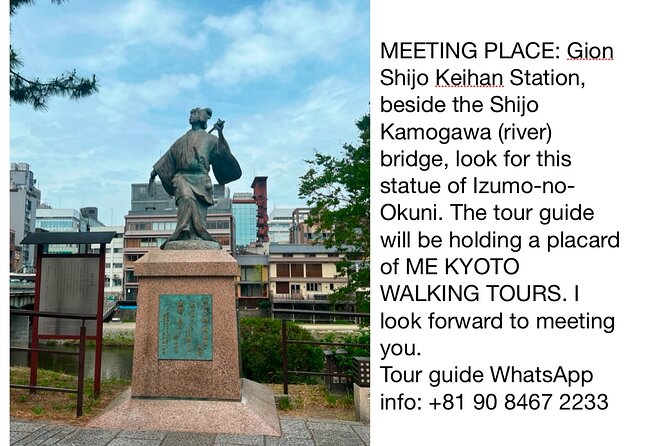
This tour works best as an orientation to Kyoto’s eastern sights. It starts in Gion, crosses through the historic Higashiyama district, visits Kiyomizu-dera, and ends at Fushimi Inari in the south. You get a clear sense of how the city’s temples, shrines, old lanes, and religious customs fit together, rather than visiting one landmark in isolation.
The scheduled visit times add up to about three hours, while the overall experience lasts roughly three and a half. That leaves time for walking between stops and any transport used along the way. Public transport is not included, and the listed cost is ¥220 per person. The route is not just a string of photo stops: you’ll need to keep moving to cover it in the allotted time.
The tour begins at 3:00 pm at Gion-Shijo Station and ends at Inari Station, near the entrance to Fushimi Inari Shrine. That one-way format is convenient if you want to continue exploring the shrine area afterward or take a train onward. It also means you should not expect to finish back where you started.
More Kyoto tours in Kyoto:
- PERFECT KYOTO 1-Day Bus Tour
★ 5.0 · 13,518 reviews - Kyoto: Fushimi Inari, Kinkakuji, Bamboo Grove 1 Day Bus Tour
★ 4.8 · 4,316 reviews - Kyoto: Tea Ceremony in a Traditional Tea House in Kiyomizu
★ 4.9 · 3,519 reviews
Gion: a first look at Kyoto’s geisha district
The first stop is a 30-minute walk through Gion, Kyoto’s famous geisha district. It’s a useful place to begin because the streets offer an immediate introduction to the older side of the city. Rather than trying to decode the district on your own, you can ask your guide about its traditions and the role of geisha culture in Kyoto.
Thirty minutes is enough for a guided first impression, not a thorough exploration. The tour is a walking overview, so don’t count on a long stretch of free time for browsing or lingering. If Gion is high on your list, you may want to return independently later.
The guides named in accounts of the tour include Mari and Marie, with Maricel also mentioned. The accounts describe guides who explain history and customs, answer questions, and bring in local stories. Names vary, so it’s sensible to treat those as guides associated with the experience rather than a guarantee of who will lead your departure.
Yasui-Konpiragu and Yasaka Pagoda
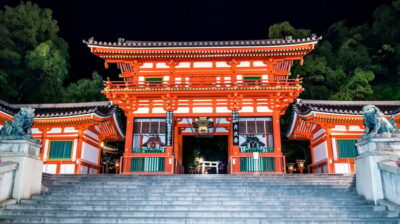
Next comes a short visit to Yasui-Konpiragu Shrine, scheduled for 10 minutes. Its distinctive feature is a power stone with a symbolic passageway. The shrine offers a change of mood from Gion’s streets and a chance to hear about local religious practice, but the stop is brief. Think of it as a focused introduction, not time to explore the grounds at length.
A 10-minute stop follows at Hokan-ji Temple, better known as Yasaka Pagoda. The five-story pagoda is 46 metres tall and is described as the last remaining structure of a sixth-century temple complex. It provides a striking landmark in the Higashiyama area, and the guide can put its past into context.
These short visits show the tour’s basic bargain: it takes you to several places efficiently, but you’ll have limited time at each. If you prefer to sit, sketch, or study temple details at your own pace, you may find the schedule brisk. If your priority is to see a range of major sights with a guide, the quick stops help make that possible.
Ninenzaka and Sannenzaka: the old lanes uphill
The tour allows 20 minutes for Ninenzaka and Sannenzaka, two stone-paved slopes leading toward Kiyomizu-dera. Their traditional streets and buildings give you a feel for the historic Higashiyama district and create a natural transition from the pagoda to the temple above.
The uphill approach matters. You’re not simply being driven from one entrance to another; this is a walking route through the district. Take care on the slopes, keep a steady pace, and wear shoes you trust on stone paving. The schedule does not promise time for a leisurely browse, and shops or other diversions may have to wait for another visit.
Same city, a different side of it:
- Kyoto Geisha Walking Tour: Gion District & Hidden Gems
★ 4.7 · 3,273 reviews - Kyoto: Tea Ceremony Ju-An at Jotokuji Temple
★ 4.9 · 3,207 reviews - Kyoto: Gion Magical Night Walking Tour with Geisha Trivia
★ 4.9 · 2,393 reviews - Kyoto: 45-Minute Tea Ceremony Lesson Experience
★ 4.3 · 2,378 reviews
Kiyomizu-dera: the longest temple stop
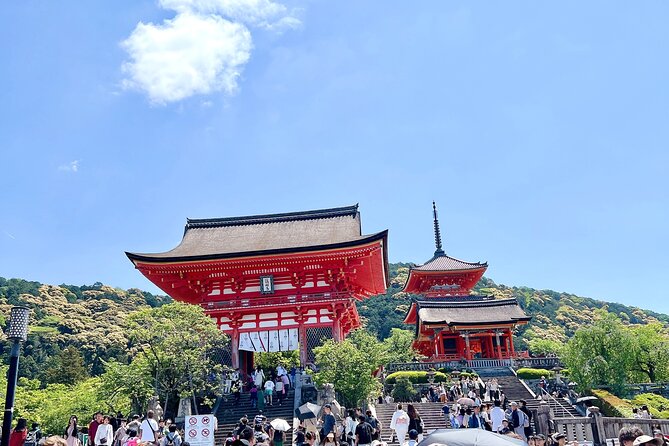
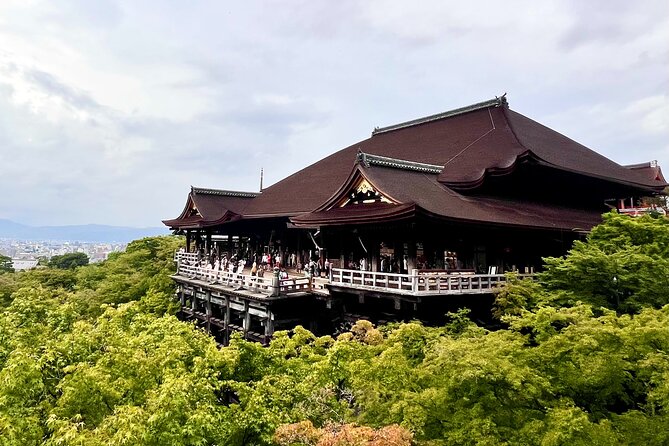
Kiyomizu-dera gets 45 minutes, the longest stop before Fushimi Inari. The temple is known for its wooden terrace and views over Kyoto, as well as its pagodas and sacred waterfalls. Admission is included, which makes the price easier to assess and saves you from arranging a separate entry ticket for this stop.
Forty-five minutes gives you a reasonable guided visit, but not an exhaustive one. You’ll have time to see key areas and hear why the temple matters, though the route continues afterward. If you want a long pause on the terrace or time to explore every corner, plan a separate visit.
This is where a guide’s explanation can make a practical difference. A temple can be beautiful on its own, but the meaning of its buildings and religious features may be less obvious without context. Guides named Mari and Marie are described as sharing details about Buddhism, local history, and customs in a friendly, engaging way. You’ll get more from the stop if you ask questions as you go.
Fushimi Inari: an hour among the torii gates
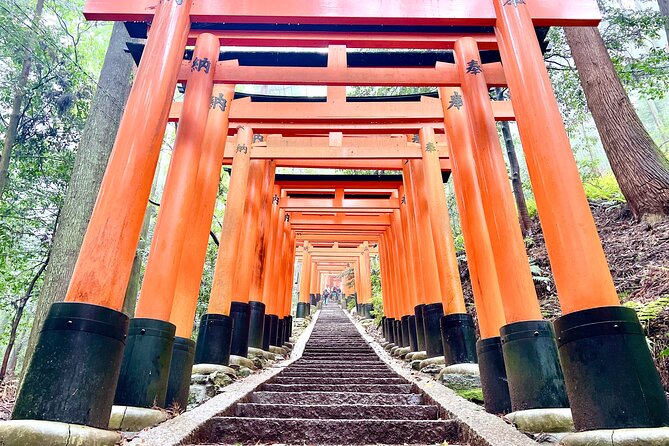
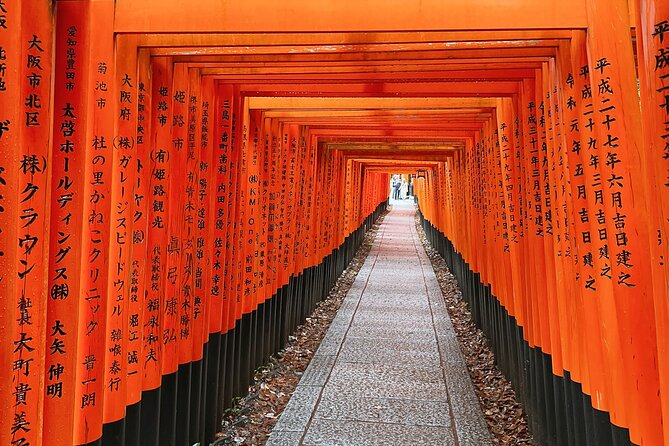
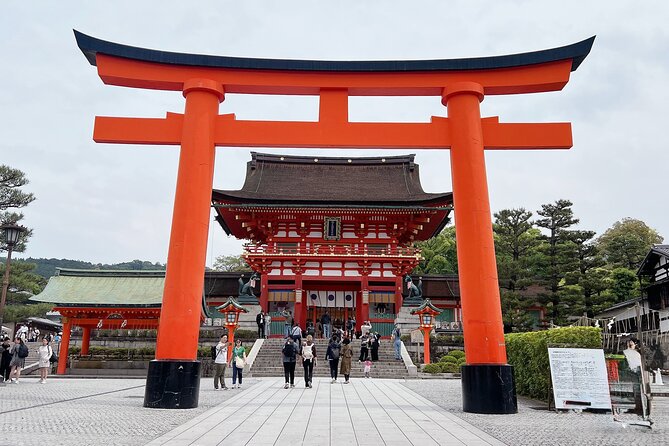
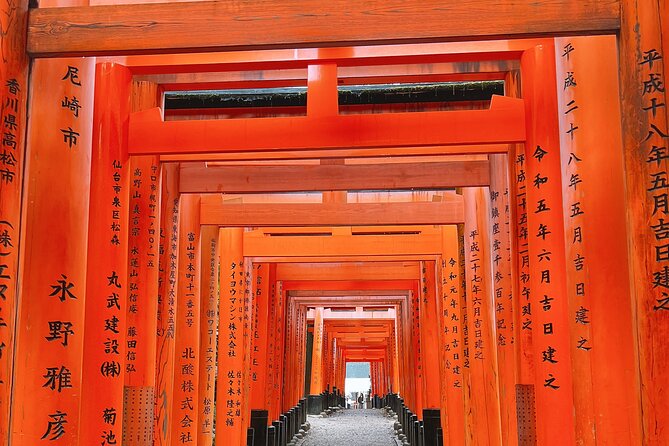
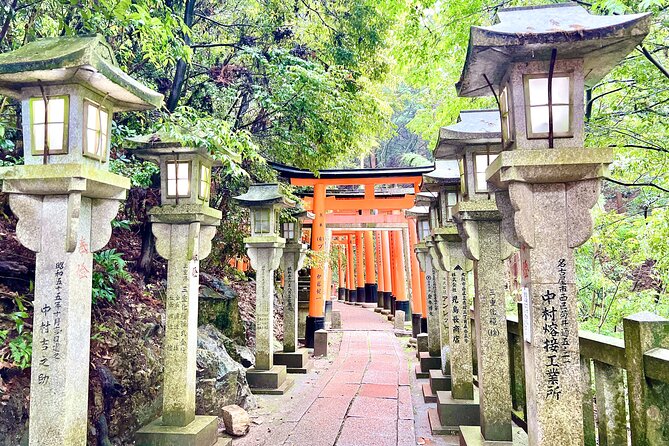
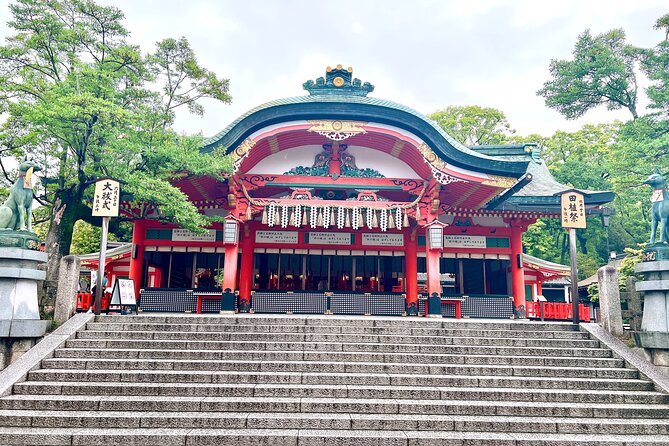
The final stop is Fushimi Inari-taisha, with about an hour set aside. The shrine is famous for its thousands of orange-red torii gates, which line paths winding up the mountain. It is the visual climax of the tour, and the time here is longer than at any other stop.
The hour gives you a chance to walk through part of the gate tunnels and hear about the shrine’s connection to rice and prosperity. It is not a full mountain hike: the tour description promises a walk along the winding paths, but does not specify how far uphill the group goes. If you want to climb farther, ask the guide how the schedule works before setting off, and be prepared to continue on your own after the tour if time allows.
This stop also explains why comfortable footwear matters. You will have already walked through Gion and Higashiyama before reaching the shrine, so your legs may be ready for a pause. The torii gates are memorable, but the path is part of an active walking tour, not a seated sightseeing stop.
What the $50 price covers
At $50 per person, the tour’s value comes from combining a guide, a route across several districts, and included admission. For a short stay in Kyoto, that can be a fair trade: you spend less time working out the order of sights and more time hearing about what you’re seeing.
The price includes guide service and an admission fee. Kiyomizu-dera is specifically marked as including admission in the stop details. Public transport, listed at ¥220 per person, and snacks are not included. Budget for those separately, and bring a drink or buy one before the tour if you know you’ll want refreshment during a long walk.
There is no promise of a private tour. The group can include up to 12 people, which is small enough to feel more personal than a large coach outing, but still means you’ll share the guide’s attention. The tour is most valuable if you want someone to lead the way and explain the sites. If you’re comfortable navigating Kyoto and prefer to set your own pace, you could visit these places independently instead.
Pace, fitness, and weather
The tour calls for moderate physical fitness. It includes extended walking, slopes in Higashiyama, and a final visit to shrine paths. The exact distance is not specified, so I would not book it assuming you can avoid walking or sit out large sections. Comfortable shoes are the most useful preparation.
Weather is worth considering, too. The experience requires good weather; if poor weather causes cancellation, you’ll be offered another date or a full refund. Kyoto’s humidity can make walking feel harder, so carry water and dress for the conditions. Snacks are not provided.
The departure is at 3:00 pm, which makes this a practical choice if you have a free afternoon rather than a full day. It does mean you should arrive ready to walk, with enough time to reach Gion-Shijo Station before the group sets off. The tour ends at Inari Station, not at the starting point.
Who should book this Kyoto walk?
I’d consider this tour if you have limited time in Kyoto and want a guided route through several high-profile sights. It suits first-time visitors who value clear explanations, appreciate a small group, and are happy to keep moving. It can also work well for solo visitors: the group format gives you company while the guide takes care of the route.
It is less suitable if you want long, unhurried visits at each temple or need a low-walking outing. The itinerary packs in six stops, and the short visits at Yasui-Konpiragu and Yasaka Pagoda are there to broaden the experience, not to provide deep exploration. If one site matters most to you, a separate visit may be more satisfying.
The guide’s role is a major part of the value. The named guides Mari and Marie are associated with clear historical explanations, local stories, flexibility, and help with photos. Since the specific guide is not guaranteed, book for the route and format first, while treating those personal touches as a welcome possibility.
FAQ
How long is the Kyoto Half Day Highlights Tour?
It lasts approximately 3 hours and 30 minutes.
What time does the tour start?
The start time is 3:00 pm.
Where does the tour begin?
It begins at Gion-Shijo Station, at 1 Chome Miyagawasuji in Kyoto’s Higashiyama Ward.
Where does the tour end?
It ends at Inari Station, in front of Fushimi Inari Shrine. The station is accessible from the Fushimi Inari JR Line and Keihan Line.
How much does the tour cost?
The listed price is $50 per person.
How many people can join the tour?
The maximum group size is 12 people.
What is included in the price?
Guide service and an admission fee are included. Admission to Kiyomizu-dera is specified as included.
Are public transport and snacks included?
No. Public transport is listed at ¥220 per person, and snacks are not included.
Can I cancel if my plans change?
You can cancel at least 24 hours before the start time for a full refund. If poor weather cancels the tour, you’ll be offered a different date or a full refund.
Newly added in Kyoto
- Uji: Private immersion into Kyoto’s tea and reglious culture★ 5.0 · 17 reviews
- Whisk Your Own Matcha: A Zen Matcha Experience at Temple★ 3.6 · 7 reviews
- Kyoto tea town for matcha lovers★ 5.0 · 16 reviews
- Treasures of Kyoto: Gion & historical Walking Tour★ 5.0 · 6 reviews
- Kyoto Matcha Green Tea Tour★ 4.5 · 23 reviews
- Uji and Wazuka Matcha Farm Half Day Private Guided Tour★ 5.0 · 21 reviews
- Uji Tea Ceremony and UNESCO Heritage Walking Tour★ 5.0 · 20 reviews
- Utilising upcycled Matcha! Creating matcha incense (Uji, Kyoto)★ 5.0 · 6 reviews
Kyoto Tours, compared.

Fushimi Inari, Kinkakuji, Bamboo Grove 1 Day Bus Tour
Read our review →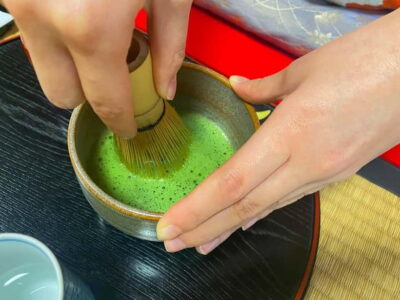
Tea Ceremony in a Traditional Tea House in Kiyomizu
Read our review →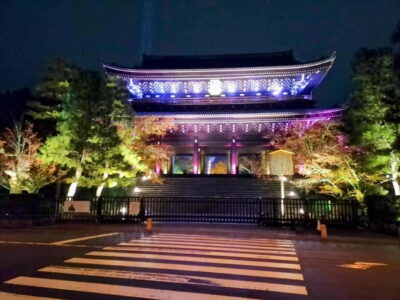
Kyoto Geisha Walking Tour: Gion District & Hidden Gems
Read our review →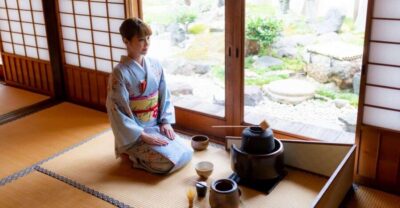
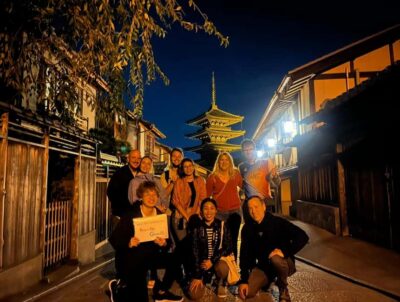
Gion Magical Night Walking Tour with Geisha Trivia
Read our review →