Reviewed · KYOTO TOURS
Kyoto Cultural IKEBANA Experience@SEKKA FLOWERS
Ikebana turns a few flowers and branches into a study of shape, space, and restraint. At SEKKA FLOWERS, you make your own arrangement in a traditional townhouse near Kinkaku-ji and Daitoku-ji, with instruction that leaves room for your own decisions.
I like two things in particular: the small group, capped at six, makes a quiet, personal lesson possible, and the finished arrangement is displayed in a tokonoma, the alcove found in traditional Japanese rooms. A possible catch is the short 40-minute session: it offers a thoughtful introduction, not a full course in the art.
- A century-old setting: The flower shop occupies a renovated traditional townhouse in northern Kyoto.
- Classical ikebana: The focus is on the natural beauty of flowers and branches, not elaborate decoration.
- Beginner-friendly guidance: Instructors introduce the art and its principles while giving you room to make your own choices.
- A tokonoma display: Your finished arrangement is placed in a traditional alcove.
- A small class: No more than six people take part.
- A compact outing: The session lasts about 40 minutes and returns to its meeting point.
A quiet pause near Kyoto’s famous temples
SEKKA FLOWERS is in Kita Ward, near Kinkaku-ji Temple and Daitoku-ji Temple. The workshop offers a different kind of Kyoto outing from temple visits: instead of moving through a series of sights, you spend a short stretch of time looking closely at flowers, branches, and the space between them.
That change of pace is part of the appeal. Kyoto’s best-known sights can fill a day with walking and crowds. Here, the setting is a renovated townhouse about 100 years old, and the activity is small enough to feel focused rather than staged for a large group.
The location may suit a day built around the city’s northern temples, but the class is its own appointment, not a guided temple visit. Plan your temple stops separately, and allow for the time it takes to get to the meeting point at 44-4 Murasakino Kamimonzenchō. The experience ends where it begins.
What the ikebana lesson asks you to notice
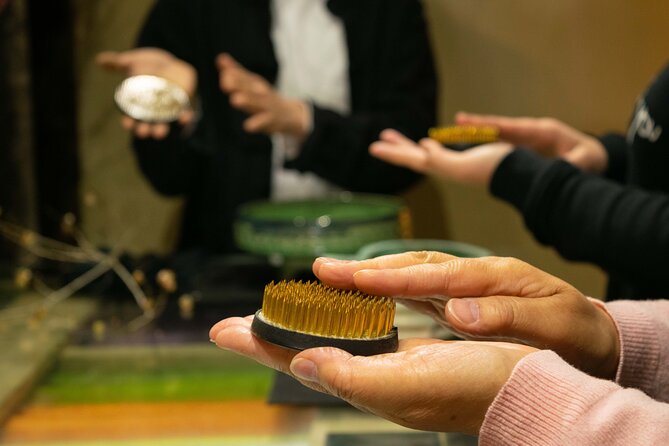
Ikebana is Japanese flower arrangement, but the approach here is more considered than simply placing blooms in a vase. The workshop draws on classical forms and asks you to bring out the natural character of the flowers and branches. The stated aim is to respect their original shapes rather than force them into a decorative pattern.
The session also introduces wabi-sabi, an aesthetic that finds beauty in the natural, imperfect, and understated. You do not need prior experience to take part. Beginners are welcome, and the lesson is framed as a chance to notice and respond, not to arrive with a practiced hand.
That makes the activity accessible even if you have never arranged flowers. You can expect instruction about ikebana’s history and art, alongside time to make an arrangement of your own. The class is not described as a lecture or a long technical course, so go in ready to learn a few guiding ideas and apply them at your own pace.
More Kyoto tours in Kyoto:
- PERFECT KYOTO 1-Day Bus Tour
★ 5.0 · 13,518 reviews - Kyoto: Fushimi Inari, Kinkakuji, Bamboo Grove 1 Day Bus Tour
★ 4.8 · 4,316 reviews - Kyoto: Tea Ceremony in a Traditional Tea House in Kiyomizu
★ 4.9 · 3,519 reviews
From the townhouse entrance to your own arrangement
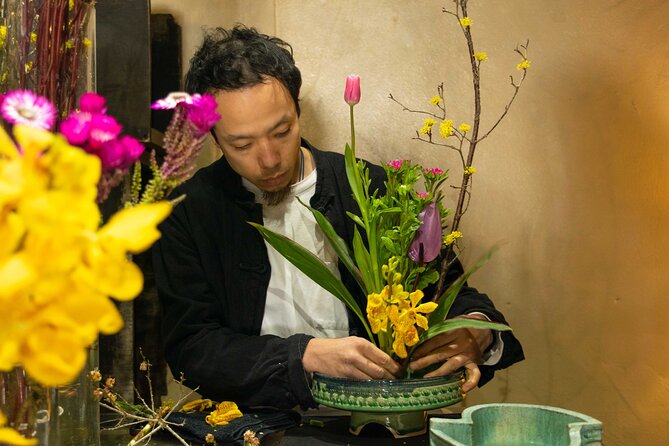
The workshop takes place inside a flower shop in the renovated townhouse. The setting gives the activity a domestic scale, a useful contrast with Kyoto’s larger cultural venues. You are not just watching a demonstration from a distance; the purpose is to create a piece yourself, with an instructor there to guide you.
The precise minute-by-minute sequence is not set out, so it is best not to expect a fixed list of steps or a particular flower selection. The experience is described as a lesson in ikebana’s history and art, followed by hands-on arranging. Flowers and branches reflect Japan’s seasons, so the materials may connect to the time of year, though specific varieties are not promised.
You will make your own arrangement while learning the classical approach. The instructor’s role appears to balance explanation with independence: you receive enough direction to understand the principles, but the finished work remains yours. That is a good fit if you want to try a cultural craft without being asked to copy an exact model.
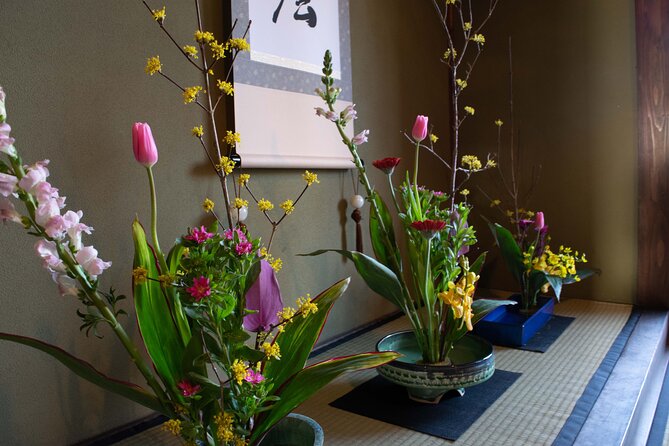
After you finish, your work is displayed in the tokonoma, a traditional alcove in a Japanese room. This is a distinctive part of the workshop. The arrangement is seen in the setting it was made for, where its form and use of space can be appreciated as more than a tabletop decoration.
The activity lasts about 40 minutes, so the pace is necessarily brisk. You will get an introduction and time to make something, but this short visit cannot cover every school or technique in ikebana. Think of it as a compact first encounter, rather than a credential or a complete course.
Friendly instruction, with room to experiment
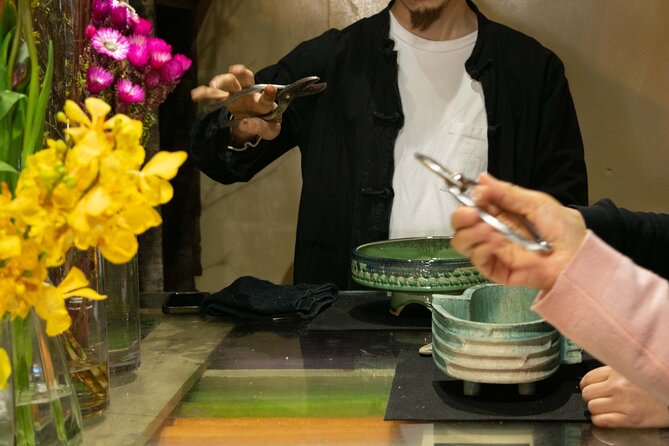
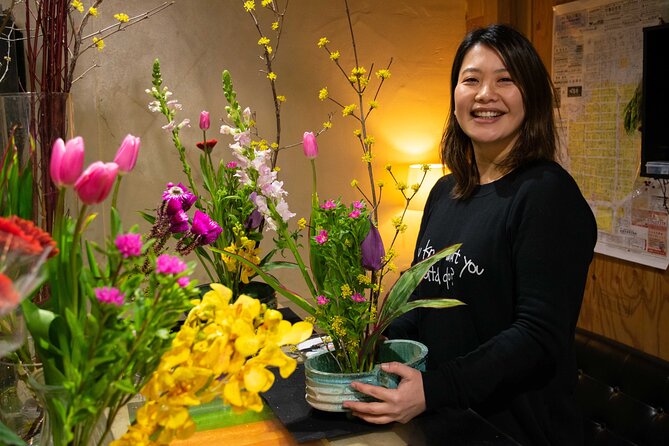
Taro-san and Chiaki-san are named as instructors in the experience’s participant accounts. Their teaching style is described as welcoming, informative, and not overly hands-on. That matters in an art form where too much correction could flatten the personal choices that make each arrangement different.
One useful reassurance is that there is no single right answer to your arrangement. The workshop invites you to work with the flowers and branches in front of you, guided by principles rather than a rigid template. If you enjoy learning by doing, that balance should feel comfortable. If you prefer detailed, step-by-step instruction, you may want to ask what level of individual guidance is available before booking.
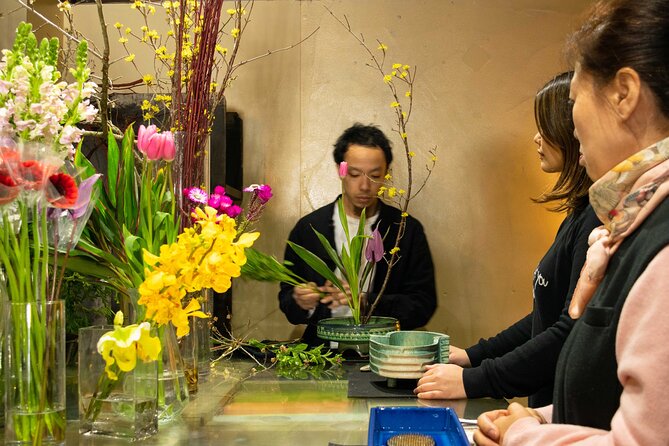
The class has a maximum of six participants. A small cap does not guarantee a private lesson, but it does limit the group size and gives the instructors a more manageable setting than a large workshop. It should also make it easier to ask questions while you work.
Families can take part: one family described enjoying the class together, including children. The information does not give a minimum age, so check directly if you are planning to bring a young child. The activity is also open to most participants, and service animals are allowed.
A finished piece, and a practical delivery detail
The arrangement does not have to be admired only during the lesson. In some cases, the instructors have delivered the finished flowers to a participant’s accommodation afterward. That is a thoughtful extra, especially if you want to enjoy your work beyond the 40-minute class.
Do not assume delivery is automatically included or available for every booking. The information does not specify a delivery radius, fee, or arrangement procedure. If carrying flowers through the rest of your day would be inconvenient, ask SEKKA FLOWERS about delivery before you book.
This point is worth considering when you plan the rest of your Kyoto schedule. A fresh arrangement may be awkward to take from the workshop to a temple, restaurant, or train. If delivery is possible for your plans, it could make the class easier to fit into a busy day. If not, you may prefer to schedule the workshop toward the end of your sightseeing.
Same city, a different side of it:
- Kyoto Geisha Walking Tour: Gion District & Hidden Gems
★ 4.7 · 3,273 reviews - Kyoto: Tea Ceremony Ju-An at Jotokuji Temple
★ 4.9 · 3,207 reviews - Kyoto: Gion Magical Night Walking Tour with Geisha Trivia
★ 4.9 · 2,393 reviews - Kyoto: 45-Minute Tea Ceremony Lesson Experience
★ 4.3 · 2,378 reviews
Is $65.15 good value for 40 minutes?
At $65.15 per person, this is a short, specialized activity rather than a low-cost drop-in craft. The price buys more than a few minutes of flower arranging: you are in a traditional townhouse, learning from an instructor, exploring a Japanese art form, and making a personal piece that is displayed in a tokonoma.
The six-person limit is part of the value. A small group supports the attentive, hands-on format that makes a brief lesson worthwhile. The price will make most sense if you value cultural context and the chance to create something yourself, rather than judging the outing by minutes alone.
Still, the duration deserves a clear-eyed look. Forty minutes is enough for an introduction and a finished arrangement, but it is not long enough to explore ikebana in depth. If you want a long workshop with multiple designs or detailed technical practice, this may feel too brief. If you want a compact activity between other Kyoto plans, the short format is an advantage.
The experience is booked, on average, about 35 days in advance. That is not a promise that every date sells out, but it suggests you should look ahead if the timing matters to your itinerary. The group limit is six, so leaving the decision until the day before is a gamble.
Who will get the most from this Kyoto class
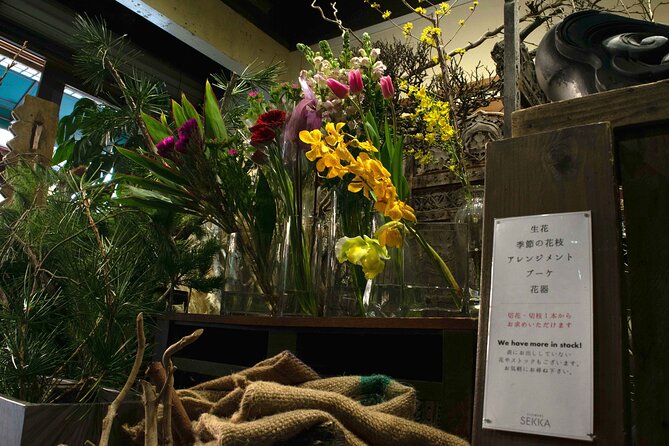
This workshop suits you if you are curious about Japanese arts and want to participate rather than simply watch. It is especially appealing if you enjoy flowers, appreciate calm settings, or want an activity that offers a change of pace from temples and city streets.
It also works for a couple or family looking for a shared project. The class does not require prior skill, and the emphasis on personal interpretation takes pressure off making a perfect arrangement. You can try something unfamiliar without needing to perform or compete.
You may want to choose another activity if you need a long, intensive course, a guaranteed take-home arrangement, or a clearly specified list of materials and techniques before booking. Those details are not stated. The lesson is best approached as a short cultural introduction, with a chance to make and display your own work.
Booking advice before you set your Kyoto schedule
The meeting point is 44-4 Murasakino Kamimonzenchō, Kita Ward, Kyoto, and the activity ends there. It is near public transportation, though exact directions and travel times depend on where you are staying. Build in enough time to reach the townhouse rather than trying to squeeze the class between tightly timed stops.
A mobile ticket is provided, and confirmation arrives at booking. The booking has free cancellation up to 24 hours before the start time. Within 24 hours, the payment is not refunded, and changes are not accepted. Those terms make it sensible to choose a time that leaves some room in your Kyoto day.
The workshop is recommended by everyone who has rated it so far, though the total number of ratings is small. Treat that as encouraging, not as a guarantee that every detail will suit you. The strongest reasons to choose it are the intimate setting, the accessible instruction, and the chance to see your arrangement in a traditional room.
Should you book the SEKKA FLOWERS ikebana experience?
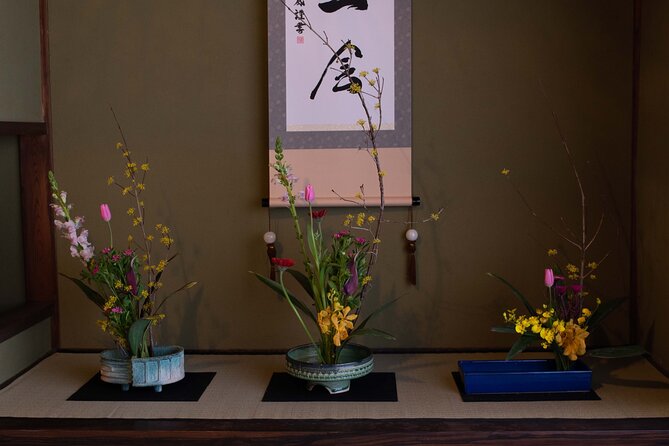
Book it if you want a brief, hands-on introduction to ikebana in a traditional Kyoto townhouse, and if the idea of making a personal arrangement appeals more than taking home a polished souvenir. Taro-san and Chiaki-san guide the process, beginners are welcome, and the group stays small.
Skip it if you are looking for an extended course or need certainty about flower varieties, delivery, or take-home arrangements. For most curious beginners, though, 40 minutes is a manageable way to meet an art form that asks you to look carefully and leave room for nature to do some of the work.
FAQ
How long does the ikebana experience last?
The session lasts approximately 40 minutes.
Where does the workshop take place?
It takes place at 44-4 Murasakino Kamimonzenchō in Kita Ward, Kyoto, in a flower shop located in a renovated traditional townhouse.
Is the class suitable for beginners?
Yes. Beginners are welcome, and the session introduces the history and art of ikebana.
How many people can join the class?
The maximum group size is six participants.
Is the activity close to public transportation?
Yes. The meeting point is near public transportation.
What is the cancellation policy?
You can cancel at least 24 hours before the experience’s start time for a full refund. Cancellations or changes made less than 24 hours before the start time are not accepted for a refund or change.
Newly added in Kyoto
- Uji: Private immersion into Kyoto’s tea and reglious culture★ 5.0 · 17 reviews
- Whisk Your Own Matcha: A Zen Matcha Experience at Temple★ 3.6 · 7 reviews
- Kyoto tea town for matcha lovers★ 5.0 · 16 reviews
- Treasures of Kyoto: Gion & historical Walking Tour★ 5.0 · 6 reviews
- Kyoto Matcha Green Tea Tour★ 4.5 · 23 reviews
- Uji and Wazuka Matcha Farm Half Day Private Guided Tour★ 5.0 · 21 reviews
- Uji Tea Ceremony and UNESCO Heritage Walking Tour★ 5.0 · 20 reviews
- Utilising upcycled Matcha! Creating matcha incense (Uji, Kyoto)★ 5.0 · 6 reviews
Kyoto Tours, compared.

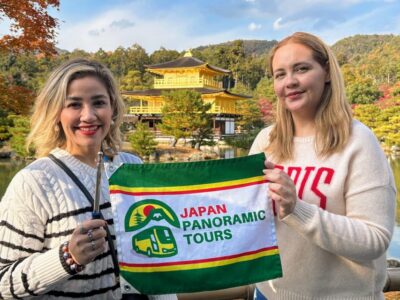
Fushimi Inari, Kinkakuji, Bamboo Grove 1 Day Bus Tour
Read our review →
Tea Ceremony in a Traditional Tea House in Kiyomizu
Read our review →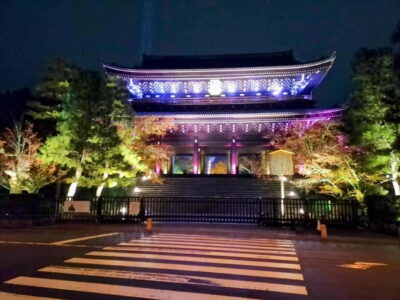
Kyoto Geisha Walking Tour: Gion District & Hidden Gems
Read our review →
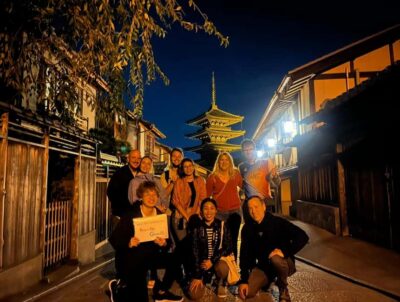
Gion Magical Night Walking Tour with Geisha Trivia
Read our review →