Reviewed · KYOTO TOURS
Private Koto Lesson in Kyoto with a Professional Koto Performer
The best part of this Kyoto lesson is getting your hands on a koto, a traditional Japanese instrument associated with formal ceremonies, rather than only hearing one played. A professional performer guides you through the basics and helps you work toward Sakura, a familiar traditional song.
I like two things in particular: the private instruction, which gives the teacher room to help each person, and the chance to hear the performer play after your own attempt. One consideration: 80 minutes is a short introduction, not a full course, so arrive ready to learn a few basics rather than master the instrument.
What makes this koto lesson worth your time
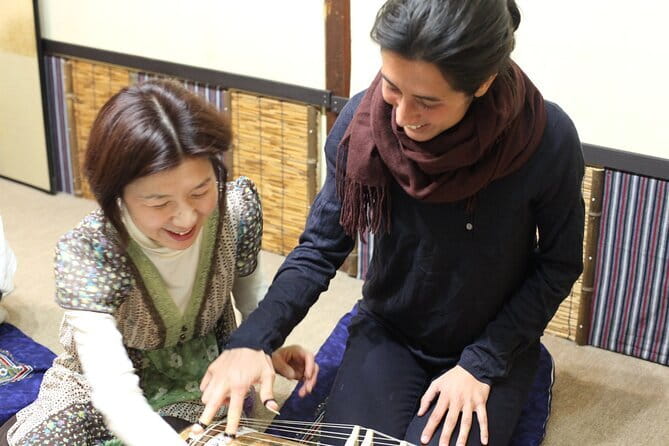
- You learn from a professional performer: The instructor teaches you how to play and shares the instrument’s history and traditions.
- The lesson has a clear musical goal: You work on Sakura, and one young student was able to play the song by the end.
- Your group has the session to itself: This is a private activity, not a class shared with unrelated participants.
- The instrument and notation are provided: You do not need to bring lesson materials or pay a separate instrument-use fee.
- Tea and a teacher performance round out the session: After playing, you can take a break and listen to your instructor.
- It suits a wide age range: The experience is described as suitable for everyone from age three to older adults.
Play first, then learn the story behind the koto
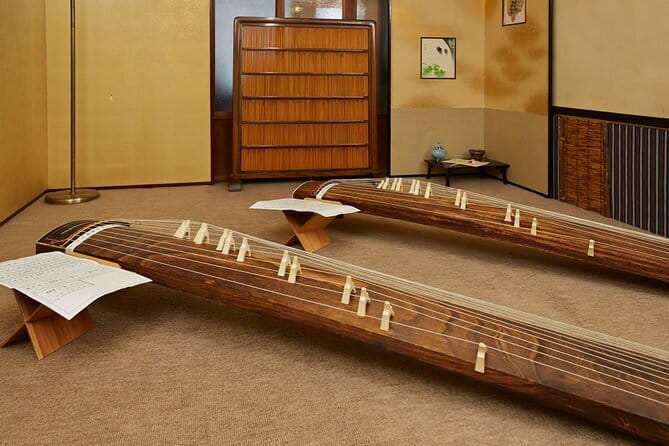
Soushunan’s lesson is built around participation. You do not simply watch a demonstration and leave with a few facts about Japanese music. The instructor helps you play the koto yourself, while explaining its history and place in Japanese tradition.
The koto is described as an instrument used in formal ceremonies in Japan. That context gives the lesson a useful frame: you are learning a practical skill, but also meeting an instrument with a role beyond entertainment. The teacher’s professional performance experience matters here. You can see the instrument in capable hands, then try to make music with it yourself.
The focus song is Sakura. It is a sensible choice for a first lesson because the aim is to get you playing a traditional Japanese song within a limited session. You should not expect a long list of pieces or advanced technique in 80 minutes. Instead, the pleasure is in moving from first instructions to a recognizable musical result.
A review of the lesson describes a son working hard and managing Sakura by the end. That is an encouraging sign for families, though every person learns at a different pace. The instructor is also described as kind and patient, qualities that matter when the instrument is new and your fingers need a little coaching.
More private tours in Kyoto:
- Fushimi Inari Hidden Hiking Tour (Private Option Available)
★ 5.0 · 1,750 reviews - Private Kyoto Tour with a Local, Highlights & Hidden Gems, Personalised
★ 5.0 · 1,543 reviews - Kyoto 6hr Private Tour with Government-Licensed Guide
★ 5.0 · 1,369 reviews
An 80-minute lesson with a natural change of pace
The session lasts about 1 hour and 20 minutes. It begins at Soushunan, where the teaching takes place, and ends back at the same meeting point. The exact sequence may depend on your group, but the experience has several clear parts.
First comes an introduction to the koto and its traditions. You can expect the teacher to explain the instrument and give you guidance before you begin playing. The information provided does not specify a set lecture length, so the balance between explanation and hands-on practice may vary. The central purpose, though, is learning to play rather than attending a talk.
Next, you try the instrument with the teacher’s help. The koto, lesson materials, and music notation are supplied, so you can focus on following instructions instead of worrying about equipment. You work toward Sakura, with the performer offering guidance as you go. For a first-timer, that step-by-step help is more useful than being handed notation and left to puzzle it out.
After the playing portion, the lesson includes a tea break. You can then enjoy a performance by your teacher. That closing shift is one of the strongest parts of the format: you have just tried to make music on the same instrument, so listening to a professional gives you a clearer sense of what the koto can do.
This is a compact cultural activity, not an all-day program. Its length makes it easy to fit around other Kyoto plans, while still leaving time for instruction, practice, and listening. If you want several hours of music study or a deep technical course, this will feel brief. If you want one focused encounter with the instrument, the timing is a good fit.
Why the private format helps
Only your group takes part, which makes this a private activity. That matters for a hands-on lesson. You can ask questions, move at a comfortable pace, and receive direct help without sharing the teacher’s attention with a room of strangers.
The format also suits mixed-age families. The activity is described as appropriate from age three through older adulthood, and a parent’s account of the lesson says the teacher helped a son learn the song. That does not guarantee every young child will sit through the full session or play at the same level. Still, the broad age range and patient instruction make it a more promising family outing than a concert where children are expected to sit quietly throughout.
If you are going with a child, keep the goal modest: trying a new instrument, following a few steps, and enjoying the performance can be a satisfying result even if the song takes practice. Adults who are nervous about having no musical background should take the same approach. The lesson is designed for participants to try the koto, and the equipment is provided, but no prior music experience is specified as a requirement.
The private format is especially useful if your group has different levels of confidence. One person may be eager to play while another prefers to listen closely first. You can approach the session as a shared cultural activity rather than a test of musical ability.
The teacher is part of the experience
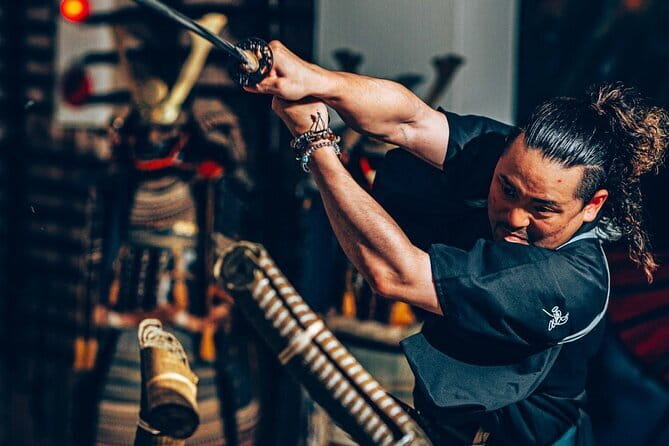
The instructor is the owner of Soushunan and a professional koto performer. No teacher name is provided, so you cannot request a specific named instructor from the information available. What you can expect is a lesson led by someone who performs on the instrument and can demonstrate it as well as teach it.
That combination gives the session a practical advantage. A teacher can correct your approach during the lesson, then show you a more polished performance during the closing portion. The positive descriptions of the instructor emphasize patience, kindness, and strong musical ability. For a first lesson, these qualities can matter as much as the instrument itself: clear encouragement helps you keep going when your first notes are tentative.
The teacher also brings cultural context into the lesson. You are not only learning how to make sounds. You hear about the instrument’s history and tradition as you work. The details of that discussion are not set out in advance, so it is best to arrive curious and ask questions rather than expect a fixed lecture on particular dates or historical figures.
More Kyoto tours in Kyoto:
- PERFECT KYOTO 1-Day Bus Tour
★ 5.0 · 13,518 reviews - Kyoto: Fushimi Inari, Kinkakuji, Bamboo Grove 1 Day Bus Tour
★ 4.8 · 4,316 reviews - Kyoto: Tea Ceremony in a Traditional Tea House in Kiyomizu
★ 4.9 · 3,519 reviews - Kyoto Geisha Walking Tour: Gion District & Hidden Gems
★ 4.7 · 3,273 reviews
What the $60 price covers
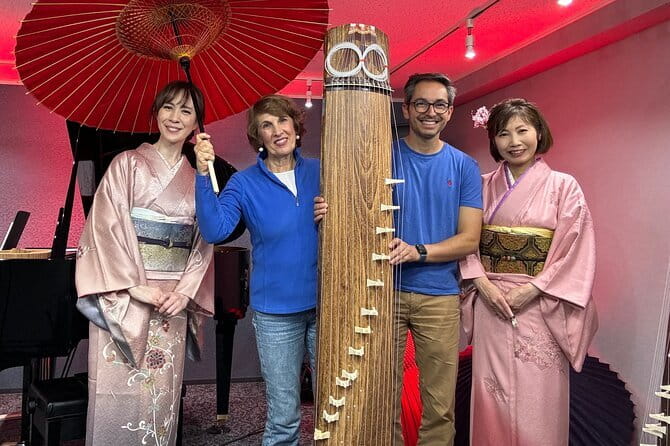
At $60 per person, the price includes the lesson, use of the koto, all fees, and taxes. Music notation and the equipment needed for the session are available, too. That makes the cost easier to assess: you are paying for expert instruction and access to an instrument, not just a seat in a demonstration.
The private format adds value if you are booking as a couple or family, since the session is reserved for your group. The price is per person, however, so the total rises with each participant. Before booking, calculate the group cost and consider how much you value a direct, hands-on lesson compared with a larger public demonstration or performance.
Private transportation is not included. The meeting point is Soushunan, at 288-2 Higashishinmeichō, Kamigyo Ward, Kyoto, 602-8162, Japan. The location is noted as being near public transportation, but no route or station details are provided. Plan your own way there and check directions using the full address.
Who will get the most from it
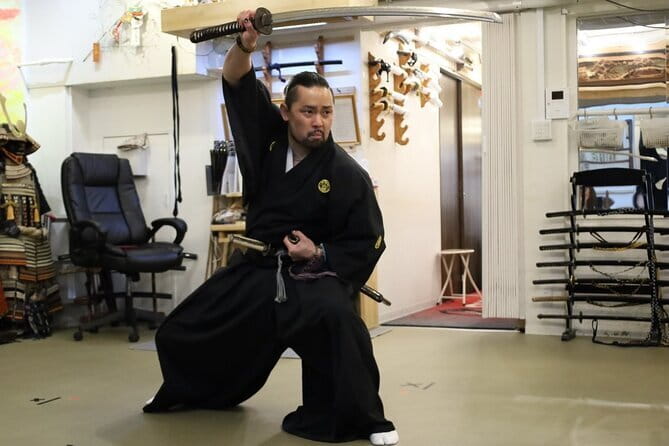
I would choose this lesson if you want to do something cultural in Kyoto that asks you to participate. It gives you a first-hand introduction to a traditional instrument, a chance to work on a specific song, and a short performance from a professional. You come away with more than a photograph of an instrument or a brief explanation of what it is.
It is a strong fit for families, especially those looking for an activity that can bring children and adults into the same room around a shared task. It also suits music lovers who are curious about Japanese instruments, even if they have never played one. The teacher’s patience and the clear beginner-friendly goal make the experience feel approachable.
It may be less suitable if you want a long performance, a broad survey of Japanese music, or guaranteed mastery of a piece. The lesson centers on one instrument and one song, and the full session lasts about 80 minutes. That focus is a strength when you want a close introduction, but a limitation if you expect a full-scale music program.
Booking and practical details
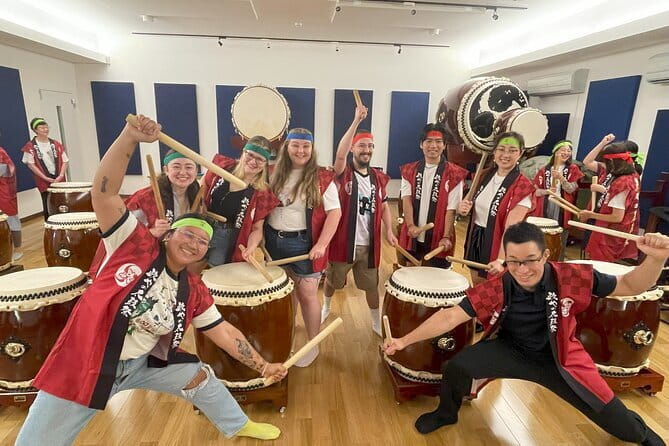
The activity takes place at Soushunan and returns to the same meeting point. It is offered as a mobile ticket, and confirmation is expected within 48 hours of booking, subject to availability. It is booked an average of 57 days in advance, so it is sensible to plan early if this is important to your itinerary. That average is a planning clue, not a guarantee that every date needs that much notice.
Service animals are allowed, and the activity is noted as near public transportation. Most people can participate. If you need to cancel, you can receive a full refund by cancelling at least 24 hours before the start time. Changes or cancellations made inside that window are not accepted for a refund.
Should you book the Soushunan koto lesson?
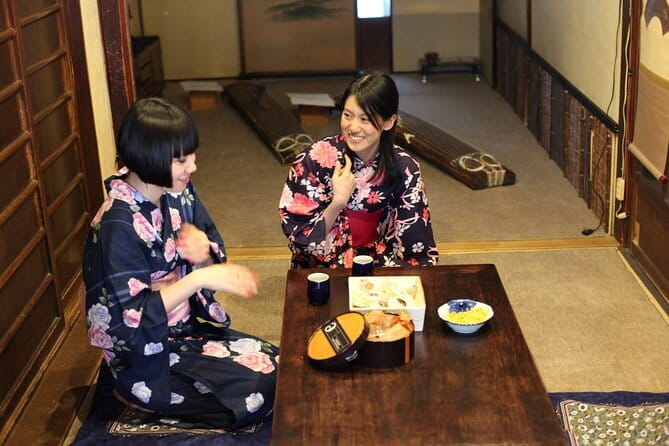
Book it if you want a private, practical introduction to the koto and like the idea of learning a short traditional song with a professional performer. The lesson’s best features are its hands-on format, patient teaching, and the chance to hear the instrument played after you try it. At $60 per person, the value is strongest for people who want personal instruction rather than a passive cultural stop.
Skip it if your priority is a long concert or extensive music training. For a family, a curious first-timer, or anyone who wants a meaningful hour away from Kyoto’s usual sightseeing routine, this is a focused and memorable choice.
FAQ
How long is the koto lesson?
The lesson lasts approximately 1 hour and 20 minutes.
What song will I learn?
The teacher will help you play Sakura, a traditional Japanese song.
Is the lesson private?
Yes. Only your group participates.
Is the koto provided?
Yes. Use of the koto, lesson, and music notation are provided. All fees and taxes are included in the stated price.
Where does the activity start and end?
It starts at Soushunan, 288-2 Higashishinmeichō, Kamigyo Ward, Kyoto, 602-8162, Japan, and ends back at the same meeting point.
What is the cancellation policy?
You can cancel at least 24 hours before the start time for a full refund. Cancellations or changes made less than 24 hours before the start time are not accepted for a refund.
Newly added in Kyoto
- Uji: Private immersion into Kyoto’s tea and reglious culture★ 5.0 · 17 reviews
- Whisk Your Own Matcha: A Zen Matcha Experience at Temple★ 3.6 · 7 reviews
- Kyoto tea town for matcha lovers★ 5.0 · 16 reviews
- Treasures of Kyoto: Gion & historical Walking Tour★ 5.0 · 6 reviews
- Kyoto Matcha Green Tea Tour★ 4.5 · 23 reviews
- Uji and Wazuka Matcha Farm Half Day Private Guided Tour★ 5.0 · 21 reviews
- Uji Tea Ceremony and UNESCO Heritage Walking Tour★ 5.0 · 20 reviews
- Utilising upcycled Matcha! Creating matcha incense (Uji, Kyoto)★ 5.0 · 6 reviews
Kyoto Tours, compared.

Fushimi Inari, Kinkakuji, Bamboo Grove 1 Day Bus Tour
Read our review →
Tea Ceremony in a Traditional Tea House in Kiyomizu
Read our review →
Kyoto Geisha Walking Tour: Gion District & Hidden Gems
Read our review →
Gion Magical Night Walking Tour with Geisha Trivia
Read our review →