
Reviewed · KYOTO BIKE TOURS
Kyoto Shogun Cycling Tour
Kyoto’s Shogun-era story comes into focus on this ride from the city’s northwest toward central Kyoto. You visit the gold-covered Kinkakuji, the quieter Toji-in Temple and Nijo Castle, with a guide to connect three very different sites.
I like the route’s easy downhill direction and its mix of famous landmarks with a quieter temple garden. I also like that it is a private tour, with no more than six people per guide. One thing to weigh: at $153.50 per person, it is a costly way to see these sights if you would rather explore at your own pace.
What to know before you book
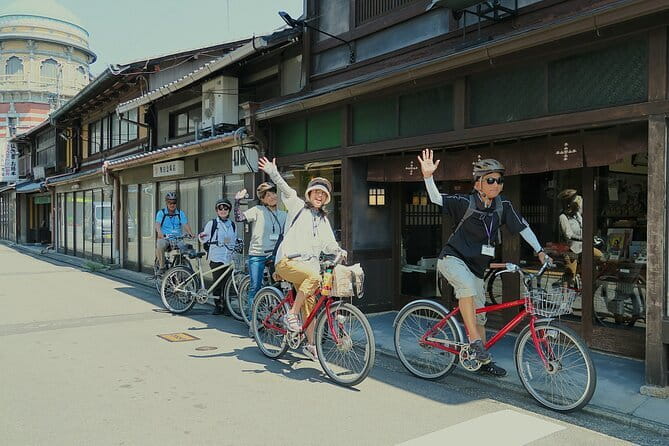
- Three major stops: Kinkakuji, Toji-in and Nijo Castle each get a guided visit.
- A downhill ride: The route runs from Wara Tenjin-mae to the Kyoto Station Cycle Terminal.
- A small private group: One guide can take two to six people. Larger groups of seven to twelve can arrange an extra guide.
- Temple and castle admissions included: Matcha service is not included.
- Rain need not cancel the outing: You can ride with a provided poncho or switch to a walking tour by public transport.
- A fit for confident young riders: Children must be at least 10 years old, 145 cm tall and able to ride safely on the road without help.
Ride Kyoto’s Shogun-era route
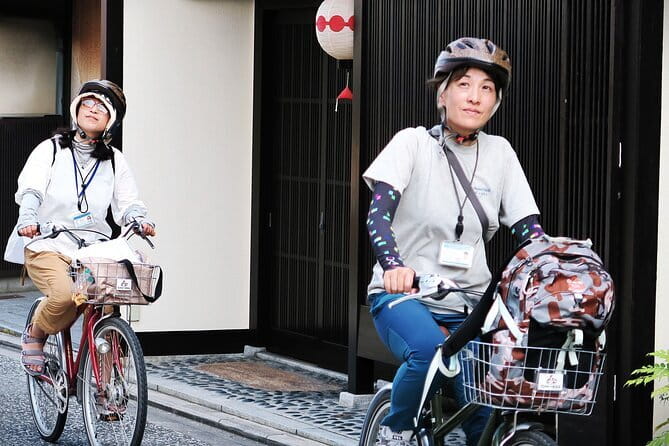
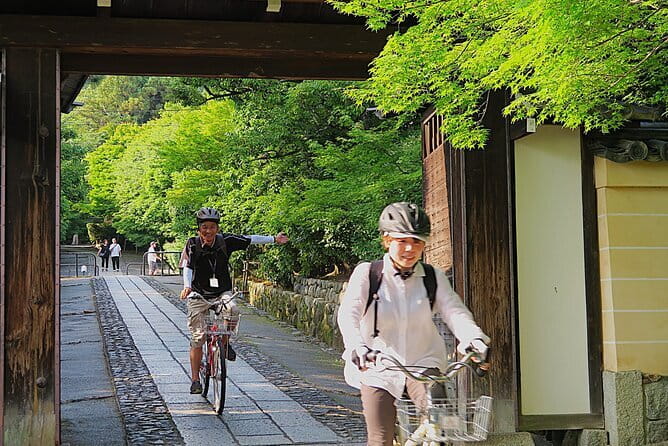
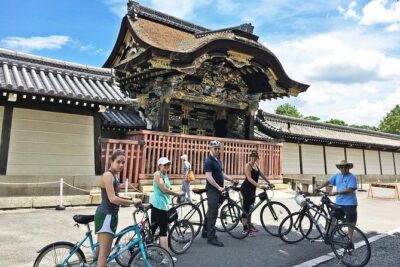
This tour is built around a useful contrast: the visual drama of Kinkakuji, the calm garden setting at Toji-in and the political weight of Nijo Castle. You are not just pedaling past landmarks. Your guide takes you inside the temple visits and around the castle grounds, giving the route a clear historical thread.
The direction helps, too. The ride is described as an easy downhill route, starting near Wara Tenjin-mae in the northwest and ending at the Kyoto Cycling Tour Project’s Kyoto Station Cycle Terminal. That makes the finish convenient if you are continuing your day from the station area. The tour lasts about three and a half hours, with scheduled visits of one hour at Kinkakuji, one hour at Toji-in and an hour and a half at Nijo Castle.
Because those visit allocations add up to the full tour duration, expect a well-paced half-day rather than a long, leisurely ramble. The guide manages the transitions and the sightseeing, while you get the pleasure of moving through the city under your own power. The exact cycling time between stops is not specified, so I would not plan a tight appointment immediately afterward.
The tour is private, which means you ride and visit with your own party rather than joining a large mixed group. The standard guide group is two to six people. A solo participant cannot book, while groups of seven to twelve can arrange an additional guide. That small scale matters at temple grounds, where it is easier to ask questions and keep the group together.
More bike tours in Kyoto:
- Bike Tour Exploring North Kyoto plus Lunch
★ 5.0 · 1,087 reviews - Arashiyama Bamboo Forest & Hidden Gems Bike Tour (Early Bird)
★ 5.0 · 613 reviews - 5 Top Highlights of Kyoto Full Day Bike Tour (E-bike option)
★ 5.0 · 511 reviews
Kinkakuji: Kyoto’s Golden Pavilion
Kinkakuji is the tour’s most immediately striking stop. The Golden Pavilion is covered in gold and sits within a garden that you explore on foot with your guide. It is a famous sight for good reason, but its fame also means it can feel like a brisk, popular stop rather than a secluded retreat.
The site’s historical link gives the visit more depth than a photo opportunity. The pavilion is tied to the Ashikaga Shoguns and was once at the centre of their government. Your guide can help explain that political context as you take in the building and its grounds, turning a short visit into an introduction to Kyoto’s warrior leadership.
The one-hour allocation should give you time to see the temple and walk through the surrounding garden. Still, this is not a long period for quiet contemplation or an unhurried solo circuit. If you have a particular interest in temple architecture or garden design, you may want to return independently later and spend more time.
Toji-in: a quieter garden and tea house
Toji-in offers a change of pace after the Golden Pavilion. This historic temple is associated with the resting place of the Ashikaga, and the visit focuses on its interiors, garden and quaint tea house. The mood is more restrained than at Kinkakuji, making it a useful pause in a route full of major historical names.
The temple is connected with the Japanese aesthetic of wabi-sabi, a Zen approach that finds appeal in simplicity and imperfection. You are invited to appreciate the groomed garden and the tea house from the temple setting, rather than racing straight from one famous building to the next. The guide’s explanation can help make these quieter details legible, especially if you are new to Japanese temple culture.
You have an hour here, including the guided look through the temple’s interiors. That is a generous share of the tour compared with a quick roadside stop, but it is still a scheduled visit. Matcha service is not included, so do not count on a tea tasting as part of the price. If tea is important to you, ask the operator whether it can be arranged separately.
Nijo Castle: the political story turns
Nijo Castle brings the route to a more imposing finish. It served as the Kyoto residence of the Tokugawa Shogunate, and its role in the end of the Shogun era gives the visit a different feel from the temples. Here the focus is on a seat of power and the events that helped shape Japan’s political future.
The castle grounds include ornamental carvings and grand buildings, with roughly 400 years of history to take in. The 90-minute allocation is the longest of the three stops, which makes sense: the site has more ground to cover and a distinct story to follow. Your guide leads you through the grounds and helps connect the architecture with the change in power.
Nijo Castle is not just a final photo stop. It rounds out the day by showing how the Shogun story moved from religious and cultural settings into the political heart of Kyoto. If you have limited time in the city, this combination of temple gardens and castle grounds is a practical way to see several facets of the period in one outing.
More Kyoto tours in Kyoto:
- PERFECT KYOTO 1-Day Bus Tour
★ 5.0 · 13,518 reviews - Kyoto: Fushimi Inari, Kinkakuji, Bamboo Grove 1 Day Bus Tour
★ 4.8 · 4,316 reviews - Kyoto: Tea Ceremony in a Traditional Tea House in Kiyomizu
★ 4.9 · 3,519 reviews - Kyoto Geisha Walking Tour: Gion District & Hidden Gems
★ 4.7 · 3,273 reviews
The guide can make the history click
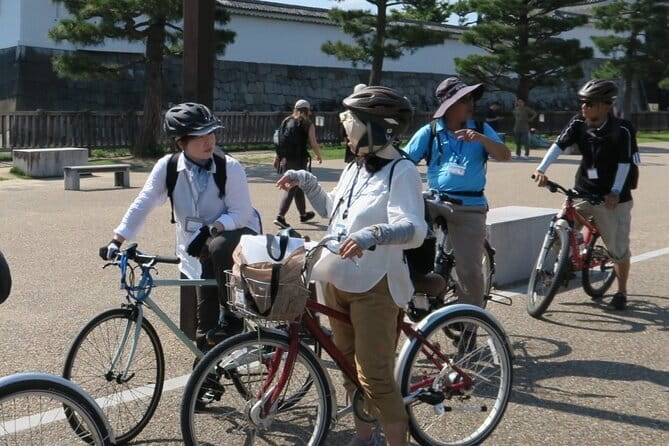
The route is only part of the value. A good guide can help you see why the gold of Kinkakuji, the quiet garden at Toji-in and the scale of Nijo Castle belong in the same story. Guides associated with this cycling operation have included Seiya, Makoto, Nozomi, Yutaka Kaneda, Yasunobu Yagyu, Kaz and JJ. The person assigned to your tour may differ, so do not book expecting a specific guide unless the operator confirms it.
The strongest praise for the guides focuses on clear English, warmth and the ability to make history engaging. Families may especially appreciate that a guide has been able to keep a 12-year-old interested. Other accounts describe guides adding local context or adjusting the outing to include a festival. Those are encouraging signs of a personable approach, but the listed route and timing should remain your expectation.
The tour is private, which gives your guide room to respond to your group’s questions. It does not guarantee that every stop will run long or that the route will change. If you have a particular interest, such as Shogun history, temple aesthetics or Kyoto’s broader cultural story, tell the operator when you book and ask whether the guide can focus on it.
What the price includes, and what it does not
At $153.50 per person, this is not a budget bike rental. You are paying for a private guided experience, a bicycle, helmet, rainwear and admission tickets for the three listed stops. The guide and included entry fees make the price easier to justify if you want historical context and do not want to plan the visits yourself.
The value is strongest for a pair or small group that wants a structured half-day with transport between sites built in. You get a route that links places with different roles in Kyoto’s Shogun history, plus a guide who can explain what you are seeing. For a solo visitor, this particular tour is not an option, and for independent cyclists who are happy to navigate and pay admissions separately, the premium may not be worthwhile.
Matcha service is not included. The tour also does not list meals or refreshments, so plan around the three-and-a-half-hour schedule rather than assuming food is provided. The practical inclusions are simple: bike, helmet, rainwear and admission to the scheduled attractions.
The tour has a 4.9 rating from 13 ratings, with 100 percent recommended. That is a positive signal, though the number of ratings is small. The most consistent strengths are the guides’ English, their friendly manner and the variety of the route. Use those as a reason to consider booking, not a promise that every guide or day will be identical.
Rain, riding ability and meeting points
The tour operates in rain. You can continue by bicycle using a free rain poncho, or switch to a walking tour using public transport, with bus or metro costs included in the tour fee. That flexibility is valuable in Kyoto, where wet weather can change the feel of a long ride. If you strongly prefer not to cycle in rain, contact the operator before the day to confirm how the switch is handled.
Children must be at least 10 years old, at least 145 cm tall and able to ride a bicycle safely on the road without assistance. This is not a ride for a child who is still learning. The tour is described as suitable for most participants, but the road-riding requirement is the key test for families.
The start point is Wara Tenjin-mae, in Kinugasa Oharaicho, Kita Ward. The ride ends at the Kyoto Cycling Tour Project’s Kyoto Station Cycle Terminal, at 552-13 Higashiaburanokoji-cho, Shimogyo Ward. Since the start and finish are different, plan your arrival at the first location and do not assume you will return to your starting point by bike.
Confirmation is due within 48 hours of booking, subject to availability. There is a discrepancy in the supplied cancellation terms: one says to request a refund at least three days before the tour by 18:00 Japan time, while another says the experience is non-refundable and cannot be changed. Confirm the applicable rule with the operator before paying, rather than relying on either wording alone.
Should you book the Kyoto Shogun Cycling Tour?
Book it if you want a guided, active half-day that links Kinkakuji, Toji-in and Nijo Castle, and if cycling is part of the fun for you. It is especially appealing for a couple, family with older children or small private group that values clear English explanations and a route planned around Kyoto’s Shogun-era sites.
Skip it if you want to linger at each temple for as long as you like, are not comfortable riding on roads, or are mainly looking for a low-cost way to reach the attractions. The price buys more than a bicycle, but the real benefit is the guide and the carefully connected history. For a first visit with limited time, that combination can be worthwhile.
FAQ
How long does the tour last?
The tour lasts approximately three hours and 30 minutes. The scheduled visits are one hour at Kinkakuji, one hour at Toji-in and one hour and 30 minutes at Nijo Castle.
Which places does the tour visit?
It visits Kinkakuji Temple, Toji-in Temple and Nijo Castle. Your guide leads you through the temple visits and the castle grounds.
What is included in the price?
Use of a bicycle, a helmet, rainwear and admission tickets for the listed stops are included. Matcha service is not included.
What happens if it rains?
The tour operates in rain. You can continue by bike with a free rain poncho or switch to a walking tour using public transport, with bus or metro included in the tour fee.
Can children join the tour?
Children must be at least 10 years old and 145 cm tall. They also need to be able to ride a bicycle safely on the road without assistance.
Where does the tour start and finish?
It starts at Wara Tenjin-mae in Kita Ward and ends at the Kyoto Cycling Tour Project’s Kyoto Station Cycle Terminal in Shimogyo Ward.
Newly added in Kyoto
- Uji: Private immersion into Kyoto’s tea and reglious culture★ 5.0 · 17 reviews
- Whisk Your Own Matcha: A Zen Matcha Experience at Temple★ 3.6 · 7 reviews
- Kyoto tea town for matcha lovers★ 5.0 · 16 reviews
- Treasures of Kyoto: Gion & historical Walking Tour★ 5.0 · 6 reviews
- Kyoto Matcha Green Tea Tour★ 4.5 · 23 reviews
- Uji and Wazuka Matcha Farm Half Day Private Guided Tour★ 5.0 · 21 reviews
- Slow Cycling Tour at Uji’s Matcha Green Tea Fields and Heritage★ 5.0 · 25 reviews
- Uji Tea Ceremony and UNESCO Heritage Walking Tour★ 5.0 · 20 reviews
Kyoto Bike Tours, compared.
Arashiyama Bamboo Forest & Hidden Gems Bike Tour (Early Bird)
Read our review →
5 Top Highlights of Kyoto Full Day Bike Tour (E-bike option)
Read our review →
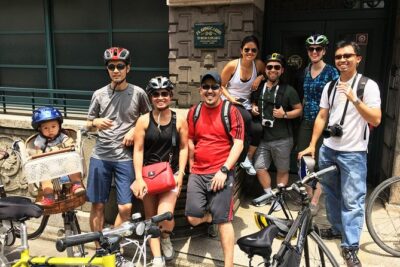
South Kyoto in a Nutshell: Gentle Backstreet Bike Tour!
Read our review →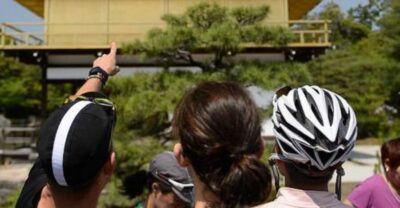
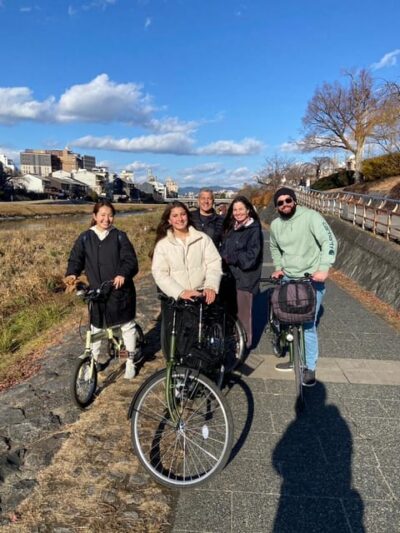
Hidden Gems E-Bike Tour with Local Japanese Guide
Read our review →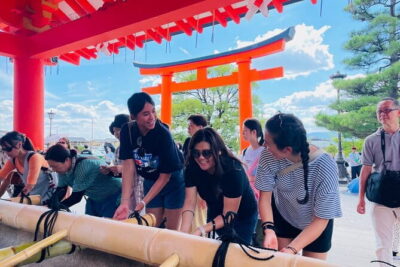
Pedal Adventure Kyoto’s iconic landmarks on an e-bike tour
Read our review →Browse the lists this tour appears in