Reviewed · KYOTO TOURS
Kyoto Urushi Lacquer Factory Tour and Chopstick Making Experience
Kyoto’s Tsutsumi Asakichi Urushi factory refines more than 70 percent of Japan’s domestic urushi lacquer. This 90-minute visit takes you from the shop floor to the work of preparing lacquer for artisans, then gives you a chance to apply it yourself. It’s an unusually direct look at a craft most visitors encounter only in finished objects.
I like two things here: you see the process behind the lacquer, including its refinement and coloring, and you get to try fuki-urushi on chopsticks you can take home. The small group, capped at five, also gives the guide room to explain the work and answer questions. One consideration: the experience costs $97.55, and the booking is non-refundable if you change your plans.
What to know before you book
- A working lacquer specialist: The factory, founded in 1909, refines urushi for artisans across Japan.
- The material is the subject: Learn how lacquer tree sap is collected, refined, and colored for use.
- A hands-on finish: Apply lacquer to a pair of chopsticks using the fuki-urushi technique.
- A small English-language group: The tour is conducted entirely in English and has a maximum of five participants.
- Plan for the practical details: It starts at 10:00 am, lasts about 90 minutes, and requires at least two participants to operate.
Inside a factory that supplies Japan’s lacquer artisans
The experience begins at Tsutsumi Asakichi Urushi, a family-run factory with roots going back to 1909. Its work happens before lacquerware becomes a bowl, tray, or decorative object. The factory refines urushi, the sap of the Japanese lacquer tree, and supplies the material to lacquerware artisans and craftsmen around the country.
That behind-the-scenes role is the tour’s central appeal. Finished lacquerware can be admired in shops and museums, but it is harder to see how the material itself is prepared. Here, the guide explains how sap is collected and refined, then shows how the factory produces lacquer suited to local craftspeople’s needs.
The scale of the operation gives the visit extra weight: the factory refines more than 70 percent of Japan’s domestic urushi lacquer. That figure helps explain why this is more than a small demonstration set up for tourists. You are visiting a specialist whose work supports craft production throughout the country.
The family’s history also brings a useful perspective. The factory has lived through a decline in the production and everyday use of traditional lacquer during the 20th century. Its current fourth-generation owner is working to bring urushi into modern life, not only keeping it connected to traditional objects but also encouraging its use in contemporary goods.
You won’t need to know anything about lacquer before arriving. The guide introduces the process in English and takes you through the factory’s work in a way that connects the raw material to the finished craft. If you’re curious about how traditional skills survive when everyday habits change, this context is a meaningful part of the visit.
More Kyoto tours in Kyoto:
- PERFECT KYOTO 1-Day Bus Tour
★ 5.0 · 13,518 reviews - Kyoto: Fushimi Inari, Kinkakuji, Bamboo Grove 1 Day Bus Tour
★ 4.8 · 4,316 reviews - Kyoto: Tea Ceremony in a Traditional Tea House in Kiyomizu
★ 4.9 · 3,519 reviews
From tree sap to usable urushi
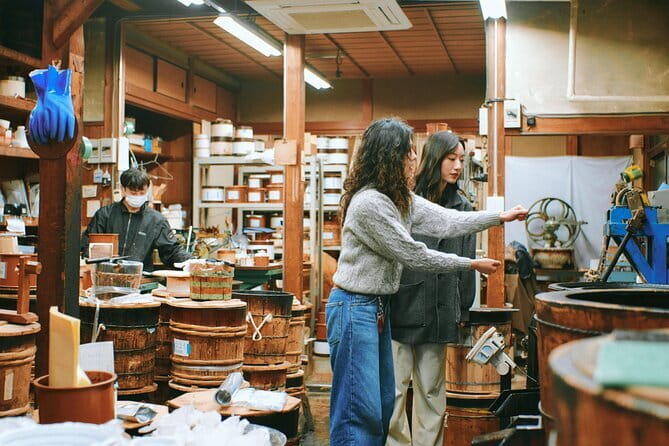
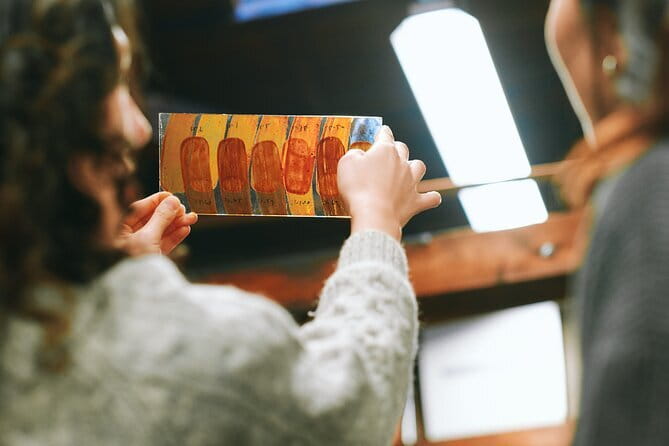
The factory tour follows lacquer through several stages, beginning with the collection of sap from the Japanese lacquer tree. The guide then explains how that sap is refined until craftsmen can use it. This progression makes the tour easier to follow: instead of seeing lacquer as a mysterious finish, you learn that it is a material requiring careful preparation before it reaches an artisan’s workshop.
You’ll also see some of the factory’s methods for refining and coloring lacquer. These are described as closely guarded elements of the work, so the visit offers a view into a specialized process without suggesting that every detail is made public. That balance is part of the interest. You get a practical introduction to the craft, along with a sense that expertise is built through knowledge the factory has developed and protected over generations.
This section is likely to appeal most if you enjoy understanding how things are made. It is less about a broad survey of Kyoto culture and more about following one material through a focused, technical process. The subject is specific, but that is also its strength: you leave with a clearer idea of what makes lacquer work possible.
The small group size supports that kind of close explanation. With no more than five participants, the tour is not set up for a large crowd moving quickly through a factory. If you have a question about the material or the steps you’re seeing, there should be room to ask, although the experience remains a short visit of about an hour and a half.
A shop for lacquerware artists, not just souvenirs
The visit begins in the factory store, called Und., which specializes in items and tools for lacquerware artists. That focus gives you a different view of a craft shop than you might get in a general souvenir store. The products and tools are connected to the working needs of people who make lacquerware, so the shop helps set the scene for the factory tour.
The store also offers a first impression of the traditions surrounding the craft. The experience describes the atmosphere as one shaped by generations of artisans, and the setting introduces that long continuity before you see the refining work itself. You can look around, get a sense of the materials and tools involved, and then connect what you see in the shop with the explanation in the factory.
Keep your expectations focused. This is a tour of a specialist store and factory, not a long shopping stop or a broad craft-market visit. The value lies in seeing how the supply side of lacquerware fits together, from the material and tools to the people who use them. If you’re hoping for a chance to browse a range of Kyoto crafts, this isn’t designed to fill that role.
Applying lacquer to your own chopsticks
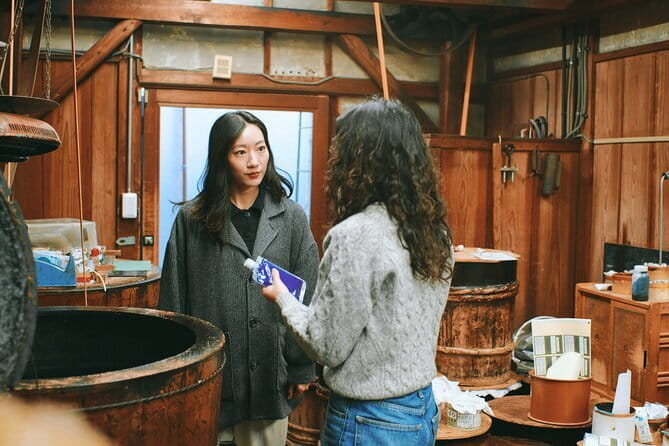
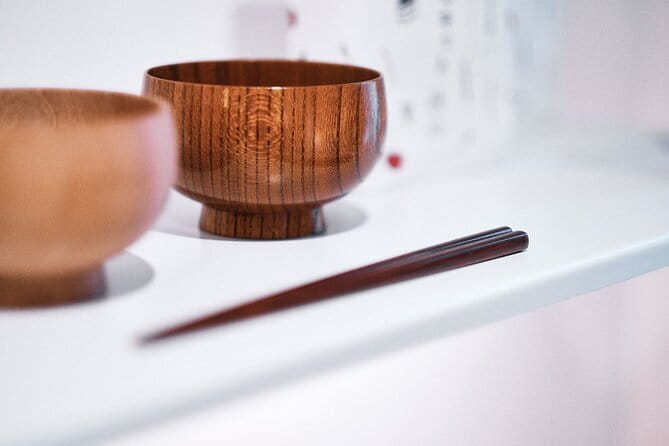
After the factory portion, you head to the workshop area on the top floor. There, you apply lacquer to a pair of chopsticks using fuki-urushi, a traditional technique. It is a simple but satisfying shift from watching the process to handling the material yourself.
The workshop is short, so think of it as an introduction rather than a full course in lacquerwork. You’ll get a guided chance to apply the technique, but the experience doesn’t promise that you will master every part of the craft in 90 minutes. That’s a fair trade: the factory explanation gives context, and the hands-on step gives you a personal connection to the material.
You take the chopsticks home, which makes the activity more memorable than a demonstration alone. They are a practical keepsake and a reminder of the factory visit, though the information provided doesn’t specify drying time or when they can be used. Follow the guide’s instructions for handling them after the workshop.
Wear clothes that can get dirty. That advice matters for a hands-on activity involving lacquer, even if the workshop is brief. There is no large-luggage storage, so avoid arriving with bulky bags if you can. The factory is near public transportation, and private transport is not included.
Same city, a different side of it:
- Kyoto Geisha Walking Tour: Gion District & Hidden Gems
★ 4.7 · 3,273 reviews - Kyoto: Tea Ceremony Ju-An at Jotokuji Temple
★ 4.9 · 3,207 reviews - Kyoto: Gion Magical Night Walking Tour with Geisha Trivia
★ 4.9 · 2,393 reviews - Kyoto: 45-Minute Tea Ceremony Lesson Experience
★ 4.3 · 2,378 reviews
Is $97.55 good value?
At $97.55 per person, this is not a bargain-priced craft activity. You are paying for a specialist factory visit, an English-language guide, a small group, an explanation of lacquer processing, and the chance to apply lacquer to chopsticks that you keep. The factory’s role in supplying more than 70 percent of Japan’s domestic urushi also makes the visit unusually specific.
The price makes the most sense if you care about craft process, Japanese materials, or the link between traditional production and modern use. You see more than a finished object and have time to try a technique yourself. If you mainly want a quick souvenir-making session, you may find the cost harder to justify.
The experience is about 90 minutes, so it can fit into a day of sightseeing without taking over your schedule. Still, the short duration means you should value the explanation and setting, not expect a full workshop with extended practice. No private transportation is included, and getting to the meeting point is up to you.
Bookings average about 18 days in advance, which is useful to keep in mind if this is a priority on your Kyoto itinerary. The tour starts at 10:00 am, requires at least two participants to run, and may be cancelled if that minimum is not met. In that case, you’ll be offered another date or experience, or a full refund.
Who will get the most from this visit?
I’d choose this tour if you like seeing the production behind everyday objects, or if traditional Japanese crafts interest you beyond their finished appearance. The mix of factory explanation and hands-on lacquer application gives you both context and a modest practical experience.
It also suits travelers who want an activity with a clear focus and a small group. The guide conducts the tour entirely in English, and the maximum group size is five. Most people can participate, but you should be comfortable following the workshop instructions and wearing clothes that may get dirty.
Families or groups can book for any size, but the activity still needs at least two participants to operate and has a maximum of five. The information provided does not specify a minimum age, so check directly with the provider if you’re planning to bring a young child.
You may want to skip it if your schedule is tight around the 10:00 am start, you need to bring large luggage, or you’re looking for a long, advanced craft class. It is a concise introduction to a specialized trade, not a full day at the workbench.
Should you book the Tsutsumi Asakichi Urushi tour?
Book it if you want a close look at how Japanese lacquer is prepared and value the chance to try fuki-urushi yourself. The factory’s longstanding role and the guide’s clear, accommodating approach make the experience especially worthwhile for anyone curious about traditional craft in present-day Japan.
Pass if your main goal is a low-cost activity, a lengthy workshop, or a general overview of Kyoto culture. At $97.55, this tour rewards focused interest. If that sounds like you, reserve ahead, wear practical clothes, and arrive without bulky luggage. Keep in mind that the experience is non-refundable if you cancel or request a change.
FAQ
How long is the experience?
It lasts about 90 minutes.
What time does the tour start?
The start time is 10:00 am.
Where does the tour begin and end?
It begins at Tsutsumi Asakichi Urushi in Kyoto’s Shimogyo Ward and ends back at the meeting point.
Is the tour conducted in English?
Yes. The tour is conducted entirely in English.
How many people can join?
The tour has a maximum of five participants. It requires at least two participants to operate.
What will I do during the workshop?
You’ll apply lacquer to a pair of chopsticks using the traditional fuki-urushi technique.
Can I take the chopsticks home?
Yes. You take the chopsticks with you after the workshop.
Should I bring large luggage?
No. Large-luggage storage is not available.
Can I cancel for a refund?
The experience is non-refundable and cannot be changed. If the tour is cancelled because the minimum number of participants is not met, you’ll be offered another date or experience, or a full refund.
Newly added in Kyoto
- Uji: Private immersion into Kyoto’s tea and reglious culture★ 5.0 · 17 reviews
- Whisk Your Own Matcha: A Zen Matcha Experience at Temple★ 3.6 · 7 reviews
- Treasures of Kyoto: Gion & historical Walking Tour★ 5.0 · 6 reviews
- Kyoto tea town for matcha lovers★ 5.0 · 16 reviews
- Kyoto Matcha Green Tea Tour★ 4.5 · 23 reviews
- Uji and Wazuka Matcha Farm Half Day Private Guided Tour★ 5.0 · 21 reviews
- Uji Tea Ceremony and UNESCO Heritage Walking Tour★ 5.0 · 20 reviews
- Utilising upcycled Matcha! Creating matcha incense (Uji, Kyoto)★ 5.0 · 6 reviews
Kyoto Tours, compared.


Fushimi Inari, Kinkakuji, Bamboo Grove 1 Day Bus Tour
Read our review →
Tea Ceremony in a Traditional Tea House in Kiyomizu
Read our review →
Kyoto Geisha Walking Tour: Gion District & Hidden Gems
Read our review →
Gion Magical Night Walking Tour with Geisha Trivia
Read our review →