
Reviewed · KYOTO COOKING CLASSES
Gyoza Cooking Class in Kyoto: Traditional Japanese Dumplings
Gyoza begin with a bit of handwork: you choose a filling, make the wrappers, then learn to fold and cook the dumplings. This class takes place in a traditional Kyoto townhouse, where food is the main event and a little samurai history adds local context.
I like two things here: you leave with a practical cooking skill you can repeat at home, and the class gives you a personal taste of Japanese culture beyond sightseeing. Instructors such as Hama, Maya, Ryo, and Yo have led classes, and participants have praised their clear, friendly teaching.
The main consideration is the price, $118.19 per person, for a class of about 90 minutes. Some sessions have run closer to two hours, so leave a little breathing room in your schedule. The optional armor photos add fun, but they are not the reason to book.
- Make wrappers from scratch: Learn the process from dough to dumpling, not just how to fold a ready-made wrapper.
- Choose your filling: You get to select a filling before shaping your gyoza.
- Practice the folding: The instructor teaches the art of wrapping, with paper practice mentioned as a helpful touch.
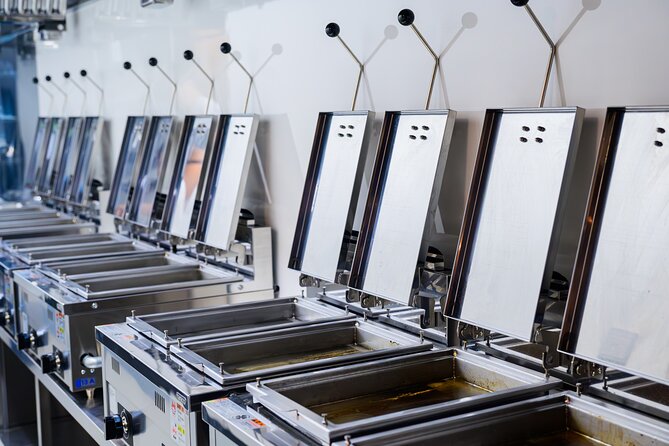
- Cook your own dumplings: A professional baking machine is used to cook the gyoza.
- Hear about samurai culture: Japanese history and gyoza provide conversation alongside the cooking.
- Try on samurai armor: Dressing up for photos is optional, so you can enjoy the class without it.
A Kyoto townhouse becomes the cooking classroom
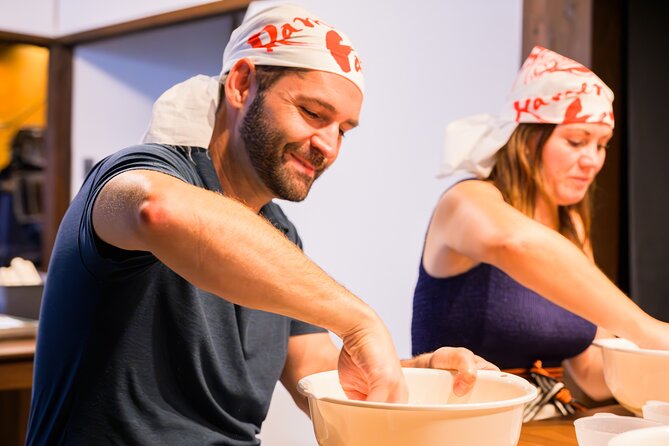
The class starts at 230-1 Kamimyōkakujichō in Nakagyo Ward, and finishes back at the same meeting point. It is held in a traditional Kyoto townhouse, a fitting place to spend time on a dish that is both everyday comfort food and a point of cultural exchange.
An English-speaking instructor leads the activity, and cooking tools are provided. That matters if you are visiting from abroad: you can focus on the steps instead of trying to decipher kitchen instructions or bringing your own equipment.
The class has a stated maximum of 20 participants. That is small enough to make a hands-on format possible, though it is not a private lesson by default. Some participants have had a class to themselves when no one else booked that time, but you should treat that as a lucky possibility, not a promise.
The instructors named in past sessions include Hama, Maya, Ryo, and Yo. The specific teacher may vary, but the teaching style has been described as friendly and easy to follow. If you are nervous about cooking in a group or trying to keep up in English, that clear, approachable instruction is a welcome part of the experience.
Choosing a filling before the folding begins
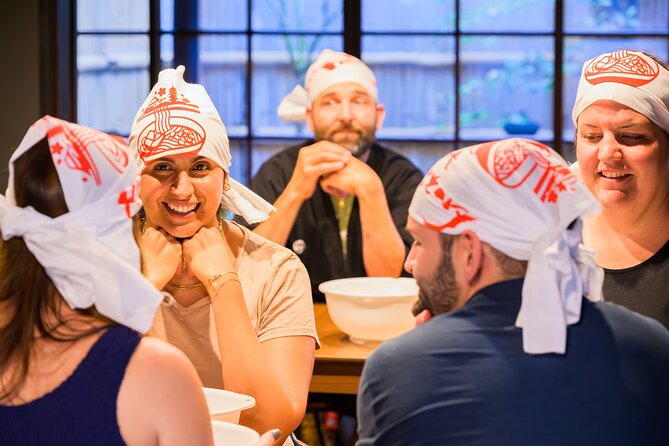
The first hands-on choice is your gyoza filling. The class lets you choose a favorite, which gives you a small say in the finished meal rather than asking you to follow a single fixed recipe from start to finish.
The exact filling options are not specified, so do not count on a particular ingredient or assume the class can accommodate a dietary restriction. If you have an allergy or need a special diet, ask the operator before booking. The details provided do not promise substitutions.
There is a useful bit of food history behind the meal. Gyoza originated in China, then changed over time into a popular Japanese dish with different sizes and styles. That background helps make the class more than a recipe demonstration: you are learning how a food can travel, adapt, and become part of daily life in another country.
More cooking classes in Kyoto:
- Ramen Cooking Class at Ramen Factory in Kyoto
★ 5.0 · 1,937 reviews - Sushi Making in Kyoto! Same-day bookings welcome!
★ 5.0 · 713 reviews - Kyoto: Ramen Cooking Class at a Ramen Factory with Souvenir
★ 4.9 · 532 reviews
Making wrappers from scratch
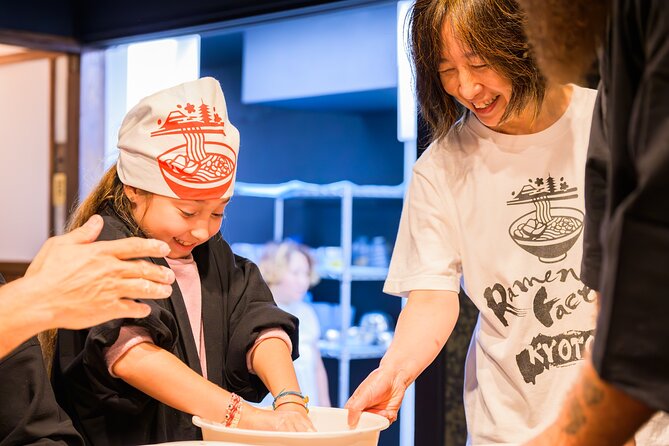
Next comes the wrapper, made from scratch rather than taken from a packet. It is a modest but meaningful distinction. You learn a part of the process that many quick cooking sessions skip, and you get a better sense of how the dumpling comes together as a whole.
The class is built for beginners. The steps have been described as simple and easy to understand, and paper practice has been used to help participants learn the folds before handling the actual dumplings. That kind of rehearsal can take the pressure off. Your first gyoza does not have to look like a tiny piece of origami made by a master.
The class is hands-on, and individual workstations have been noted in past sessions. This gives you room to do the shaping yourself instead of watching an instructor make every dumpling while you stand by. You should still expect some shared instruction, especially with a group of up to 20.
Learning the fold, one dumpling at a time
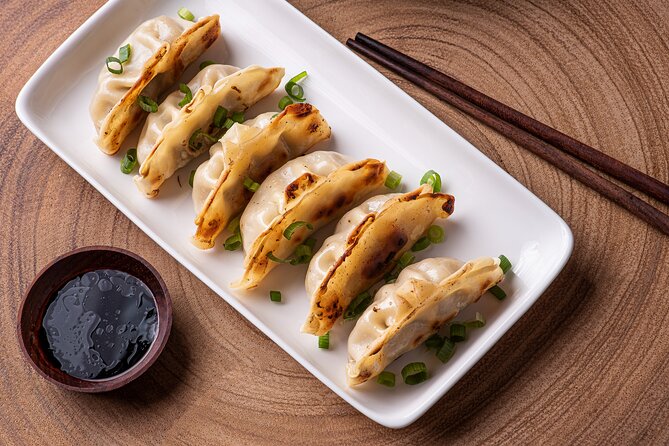
Wrapping is where the class turns from preparation into a small craft lesson. The instructor shows you how to shape and seal the dumplings, then you practice the technique yourself. The results need not be perfect to be useful: once you know the basic method, you can keep improving at home.
Some participants have made about 10 to 12 gyoza per person. Treat that as a rough indication, not a guaranteed serving count, since the amount may vary. It does suggest that you will have enough repetition to get the feel of the fold rather than making only one dumpling for a photograph.
This is one of the most practical reasons to choose the class. Photos are a nice record of a Kyoto visit, but a method you can use again is a better souvenir. Several participants have been keen to recreate the recipe for friends and family, and the operator has offered to send the recipe if someone forgets to collect it at the end. Make a point of asking for the instructions before you leave.
Cooking your gyoza with the class equipment
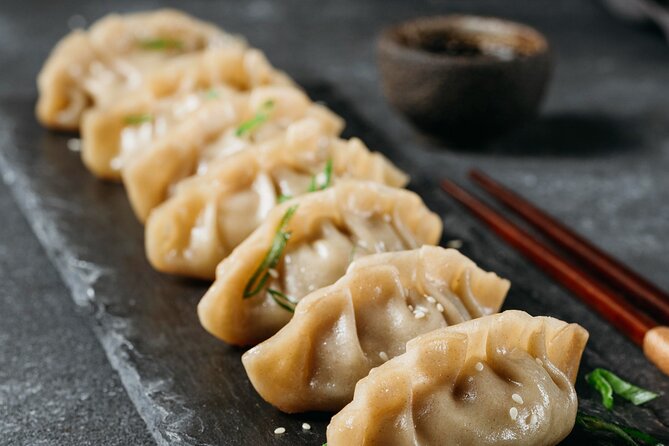
Once the dumplings are shaped, you cook them using a professional baking machine. The class provides the cooking tools, so you do not need to bring anything from your own kitchen. The equipment also means the final step is part of the guided activity, rather than a guess at how to cook your batch safely and evenly.
The most satisfying part is simple: you get to eat what you made. Participants have described the gyoza as delicious, and one reported making 10 to 12 per person. Go hungry enough to enjoy your own work, but do not assume a specific meal size beyond the portions the class produces.
If you are looking for a full restaurant dinner, this may not replace one. The focus is on learning and making dumplings, not on a long multi-course meal. Think of it as a compact cooking experience with food at the finish, then plan the rest of your evening according to your appetite.
More Kyoto tours in Kyoto:
- PERFECT KYOTO 1-Day Bus Tour
★ 5.0 · 13,518 reviews - Kyoto: Fushimi Inari, Kinkakuji, Bamboo Grove 1 Day Bus Tour
★ 4.8 · 4,316 reviews - Kyoto: Tea Ceremony in a Traditional Tea House in Kiyomizu
★ 4.9 · 3,519 reviews - Kyoto Geisha Walking Tour: Gion District & Hidden Gems
★ 4.7 · 3,273 reviews
Samurai stories and optional armor photos
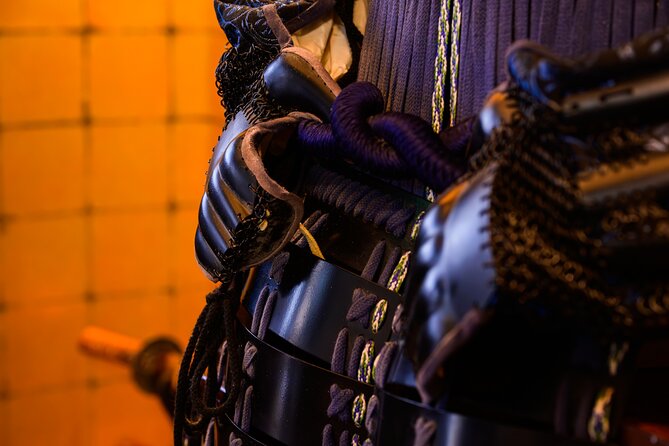
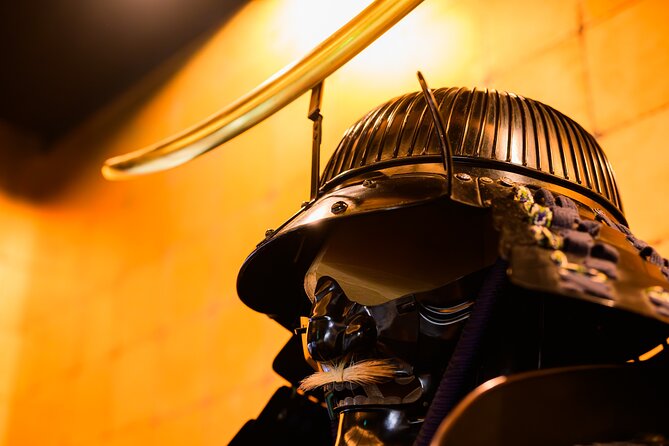
Cooking is paired with a little Japanese history and samurai culture. The exact length and depth of the history portion are not specified, so I would not book this as a dedicated history lesson. Instead, expect cultural context alongside the cooking, a welcome change from an activity that teaches only technique.
After the class, you can choose to put on samurai armor and take photos. It is optional, which keeps the cooking at the center and makes the costume portion easy to skip if it is not your style. For families, older children and teens may find the chance to dress up a lively extra after the meal.
The class has appealed to families, including one family with a 10-year-old child. That is a helpful sign for parents considering a shared activity, but it is not a formal age recommendation. The most important factor is whether your child will enjoy following cooking steps, shaping dumplings, and taking part in a group class.
What the time and price mean for your day
The stated duration is about 1 hour and 30 minutes. Some participants have found the whole experience took closer to two hours, so avoid scheduling a tight connection or an immediate appointment afterward. The class starts and ends at the same address, which makes planning simpler once you have reached the townhouse.
At $118.19 per person, this is not a low-cost meal. The value comes from the combination of instruction, ingredients and equipment for the activity, a chance to make wrappers and dumplings yourself, cultural conversation, and the finished food. You also gain a recipe skill you can take home, rather than paying only for a meal that ends when the plate is cleared.
The class is a stronger value if you enjoy doing things yourself and want an activity that works for a couple, family, or small group. It is less compelling if you only want to eat gyoza, have a strict budget, or prefer a longer culinary workshop. The session is short by design, and its price reflects a guided cultural activity, not simply the cost of dumplings.
A mobile ticket is provided, and confirmation is received at booking. The location is near public transportation, but private transportation is not included. You will need to arrange your own way to the meeting point.
The activity is listed with free cancellation up to 24 hours before its start time. Cancellations made less than 24 hours in advance are not refundable, and changes inside that window are not accepted. The cutoff follows local time in Kyoto, so check the time carefully if you are arranging plans from another time zone.
Who will get the most from this class
I would choose this experience if you like food activities that teach you something you can use again. It suits curious cooks, families with children who enjoy hands-on projects, and anyone who wants a relaxed cultural stop between temples, shops, and other Kyoto sights.
It is also a good fit if you are traveling with someone who is less interested in formal history but enjoys making things. The cooking keeps the activity active, while the stories and optional armor give the session a local theme without requiring you to be a samurai enthusiast.
If your main goal is deep culinary instruction, ask about the exact class format before booking. The information available promises a guided introduction to making gyoza, not an advanced course or a detailed exploration of every regional style. Likewise, if you need a special filling or have dietary restrictions, confirm what is possible first.
The class receives a five-star rating from 210 participants, with a 100 percent recommendation rate. Those figures point to a reliably well-liked activity, but they do not change the practical tradeoff: you pay a premium for a short, guided experience. I would book it for the instruction, the shared activity, and the chance to make a dish you can repeat, not for the armor photo alone.
FAQ
How long does the gyoza class last?
The estimated duration is about 1 hour and 30 minutes. Some sessions have taken about two hours, so allow extra time in your schedule.
Where does the class start and end?
It starts at 230-1 Kamimyōkakujichō, Nakagyo Ward, Kyoto, 604-0025, Japan, and ends back at the same meeting point.
Is the class taught in English?
Yes. An English-speaking instructor leads the class.
What do I do during the class?
You choose a filling, make gyoza wrappers from scratch, learn to wrap the dumplings, and cook them using a professional baking machine.
Is samurai armor part of the class?
You can optionally dress in samurai armor and take photos after the cooking class. It is not required.
Is transportation included?
No. Private transportation is not included. The meeting point is near public transportation.
Can I cancel for a refund?
You can cancel at least 24 hours before the experience start time for a full refund. Cancellations made less than 24 hours beforehand are not refunded.
Newly added in Kyoto
- Uji: Private immersion into Kyoto’s tea and reglious culture★ 5.0 · 17 reviews
- Whisk Your Own Matcha: A Zen Matcha Experience at Temple★ 3.6 · 7 reviews
- Kyoto tea town for matcha lovers★ 5.0 · 16 reviews
- Treasures of Kyoto: Gion & historical Walking Tour★ 5.0 · 6 reviews
- Kyoto Matcha Green Tea Tour★ 4.5 · 23 reviews
- Uji and Wazuka Matcha Farm Half Day Private Guided Tour★ 5.0 · 21 reviews
- Uji Tea Ceremony and UNESCO Heritage Walking Tour★ 5.0 · 20 reviews
- Utilising upcycled Matcha! Creating matcha incense (Uji, Kyoto)★ 5.0 · 6 reviews
Kyoto Cooking Classes, compared.
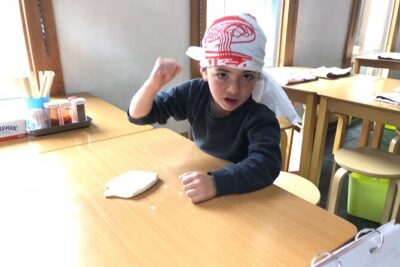
Ramen Cooking Class at Ramen Factory in Kyoto
Read our review →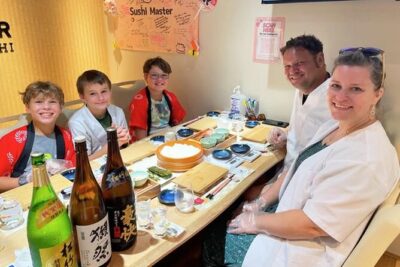
Sushi Making in Kyoto! Same-day bookings welcome!
Read our review →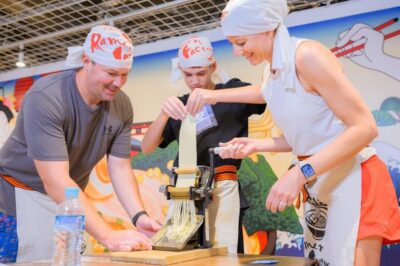
Ramen Cooking Class at a Ramen Factory with Souvenir
Read our review →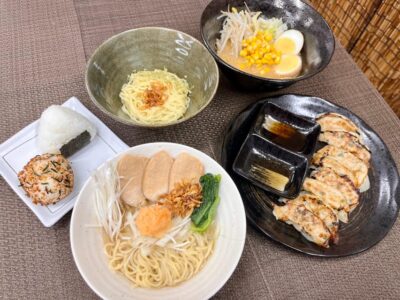
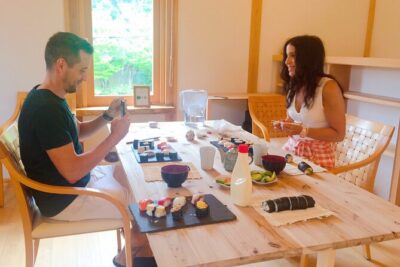
The Original Small-Group Sushi Making Class in Kyoto
Read our review →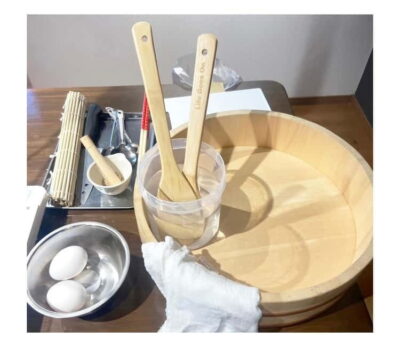
Japanese Washoku Bento Small Group Cooking Class
Read our review →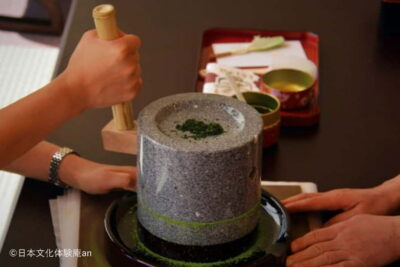
Japanese Traditional Sweets Making and Tea Ceremony
Read our review →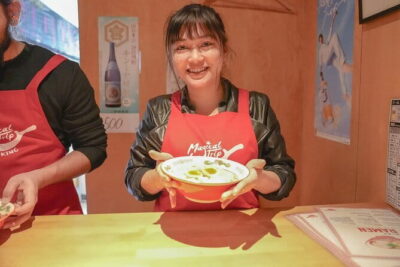
Kyoto Ramen and Gyoza Cooking Class with Professional Chefs
Read our review →Browse the lists this tour appears in