Reviewed · KYOTO TOURS
Ikebana Traditional Japanese Art of Flower Arranging
Ikebana means giving cut flowers new life by arranging them with care for their natural shape and character. In this Kyoto class, you work with seasonal flowers and learn how balance, space, and restraint can make a simple arrangement feel complete.
I like two things in particular: Mana teaches two beginner-friendly styles, Nageire and Moribana, and the lesson combines hands-on practice with a mindful way of looking at nature. The group is capped at six, so there’s room to work at your own pace.
One consideration: this is a short introduction, not a full course in ikebana history or its many schools. If you want a detailed lecture before you pick up the flowers, the 90-minute format may feel practice-heavy.
- Two styles in one class: See demonstrations of Nageire and Moribana before creating your own arrangement.
- Seasonal flowers: Work with flowers selected for the season and learn to notice their individual shapes.
- English-speaking instruction: Mana teaches traditional techniques and offers practical guidance as you arrange.
- Small group size: No more than six people take part, keeping the class intimate.
- Mindfulness through making: The lesson puts attention on balance, natural form, and the wabi-sabi appreciation of imperfection.
- Useful flower-care advice: Learn tips that can help cut flowers stay fresh for up to two weeks.
Let the flowers guide the arrangement
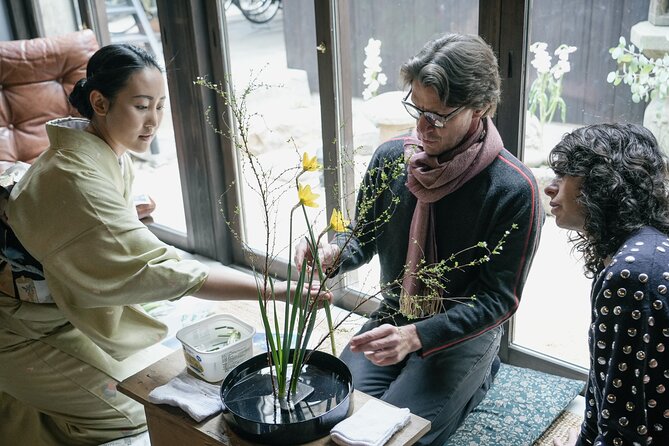
Ikebana is not simply a matter of placing attractive flowers in a vase. The art asks you to notice what each stem is already doing: where it bends, how its leaves spread, and the direction its blooms face. You arrange those qualities into a composition that feels balanced, rather than forcing every flower into a matching shape.
That approach gives this class a useful focus beyond making a souvenir. You’re invited to pay attention to the living material in front of you, and to make decisions one stem at a time. The result is a hands-on introduction to both flower arranging and a more deliberate way of looking at nature.
The activity describes ikebana as a practice with about 300 years of history. Its central idea is to give flowers new life through arrangement, using their natural characteristics to create harmony. That’s a different goal from filling a container with as many blooms as possible. Space and line matter, too.
The class also introduces wabi-sabi, a Japanese aesthetic that values simplicity and the character of things as they are. In practice, that can mean appreciating an imperfect curve or leaving open space instead of trying to make every part of an arrangement symmetrical. You don’t need prior experience to understand the basic idea, but you do need to be willing to look closely and experiment.
A short lesson with two ikebana styles
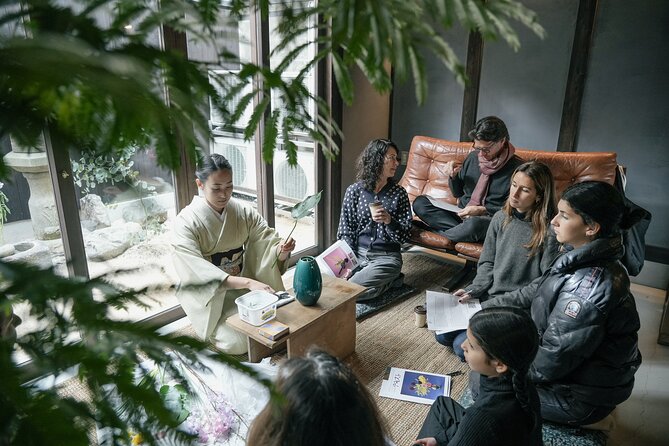
The class lasts about an hour and a half, and the planned flow is compact: an introduction to ikebana, demonstrations by Mana, and time for you to make an arrangement. The instructor demonstrates two forms, Nageire and Moribana, which are presented as accessible styles for beginners.
Seeing both before you begin is useful. A demonstration gives you a model to study, while two different approaches show that ikebana isn’t one fixed recipe. You can see how the same broad principles of balance and harmony can guide distinct arrangements.
After the demonstrations, you work with seasonal flowers and apply the techniques yourself. Mana’s instruction is in English, and the activity is designed to be practical as well as reflective. You can expect guidance on how to arrange the flowers, with room to make choices rather than simply copy a finished example.
That flexibility is part of the appeal for couples or friends taking the class together. You’re learning the same basic methods, but you can create arrangements that suit your own eye. One couple described having plenty of freedom while still receiving thorough instruction, a balance that matters in a short class: too little guidance can leave a beginner unsure where to start, while too much can turn the activity into a follow-along exercise.
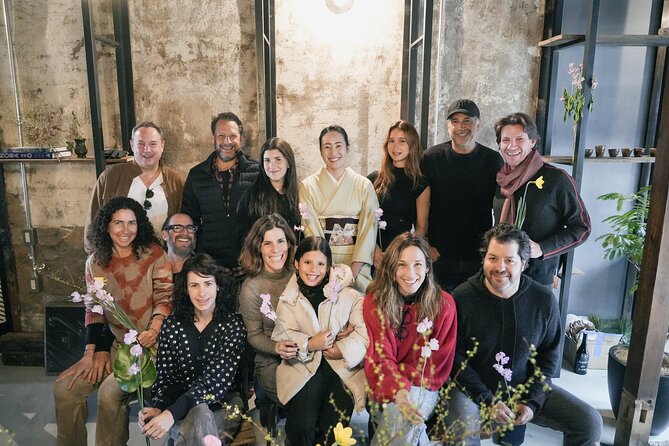
The class is small, with a maximum of six participants. That limit makes this a more personal activity than a large demonstration, and gives the instructor a better chance to see what you’re doing and offer help. It also means you should not expect a big group event or a busy, social workshop.
More Kyoto tours in Kyoto:
- PERFECT KYOTO 1-Day Bus Tour
★ 5.0 · 13,518 reviews - Kyoto: Fushimi Inari, Kinkakuji, Bamboo Grove 1 Day Bus Tour
★ 4.8 · 4,316 reviews - Kyoto: Tea Ceremony in a Traditional Tea House in Kiyomizu
★ 4.9 · 3,519 reviews
Seasonal flowers and the pleasure of making
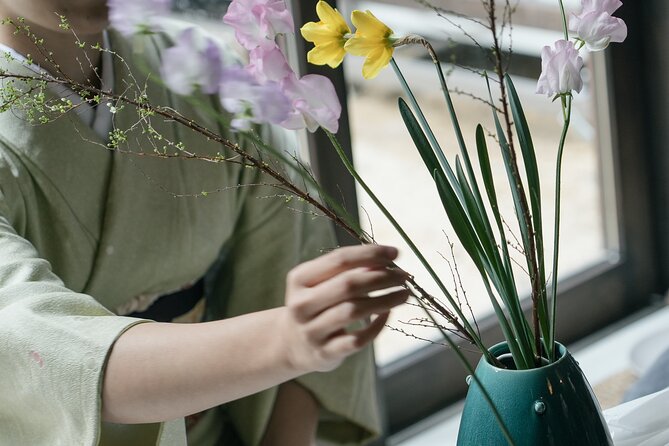
Seasonal flowers are central to the experience. You aren’t just learning a set of rules in the abstract; you’re arranging actual flowers and responding to the forms available on the day. The specific flowers can vary by season, so the composition you make is tied to the time of year.
This makes the class a good fit for anyone who enjoys craft, design, or nature but doesn’t want an activity that depends on prior skill. The focus is on learning how to see and arrange, not on arriving with a trained florist’s eye. You can take your time, notice the stems, and build a composition with the instructor’s help.
Mana’s lesson also includes tips for keeping cut flowers fresh, with advice intended to help them last up to two weeks. That’s a practical bonus: the class connects the arrangement you make with what you can do afterward at home. The stated duration is a possible result of applying the care tips, not a guarantee that every flower will last that long.
There’s a quiet mindfulness element here, but it comes through the task itself. You make choices about shape, balance, and placement, then adjust as the arrangement takes form. For a short break from Kyoto sightseeing, that change of pace may be as valuable as the new skill.
What the instruction does well, and where it may feel brief
The strongest reason to book is the combination of clear demonstration and personal practice. Mana is described as pleasant, prepared, and thorough, and the class has been praised for explaining both the practical steps and the philosophy behind ikebana. That range is useful for a beginner: you learn what to do with the flowers and why the arrangement is approached this way.
The experience can also cover a surprising amount for its length. Two styles are demonstrated, and one participant noted that both were taught in the short session. That’s a generous introduction, though it also means you should not expect a slow, detailed study of every technique or tradition.
Depth is the main possible limitation. The activity describes traditional methods and the wider history of ikebana, but the time available is about 90 minutes. If your priority is a detailed account of different schools, historical development, or formal rules, you may want to ask how much discussion will fit into your session. The emphasis appears to be on learning by doing, with explanation woven into the class.
This balance is not necessarily a weakness. Many people would rather spend the time arranging flowers than sitting through a long lecture. But it’s worth choosing this class for a practical introduction and a chance to make something, not as a comprehensive survey of Japanese floral art.
The Kyoto setting and meeting point
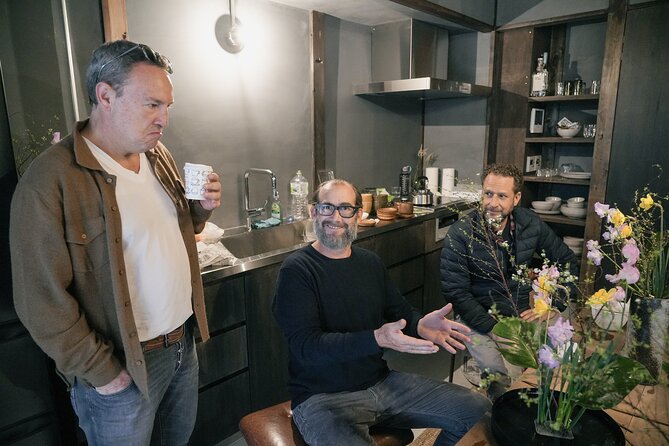
The class meets at 3481 Tanbayachō, Kamigyo Ward, Kyoto, postal code 602-8287, at the address identified as Symphony Kitano East. It ends back at the same meeting point, so you don’t need to plan a separate transfer at the conclusion.
The setting has been described as a typical Japanese home, which may add a domestic feel to the lesson rather than the formality of a public gallery or studio. That detail can make the activity feel connected to everyday Japanese life, though the exact room or setting should not be assumed beyond the information provided.
The meeting point is near public transportation. Check the address and route before you set out, especially if you have a tight schedule; the class is short, and arriving on time gives you the full introduction and demonstrations. Confirmation is provided at booking, and the ticket is mobile.
Same city, a different side of it:
- Kyoto Geisha Walking Tour: Gion District & Hidden Gems
★ 4.7 · 3,273 reviews - Kyoto: Tea Ceremony Ju-An at Jotokuji Temple
★ 4.9 · 3,207 reviews - Kyoto: Gion Magical Night Walking Tour with Geisha Trivia
★ 4.9 · 2,393 reviews - Kyoto: 45-Minute Tea Ceremony Lesson Experience
★ 4.3 · 2,378 reviews
Is $72.26 good value for 90 minutes?
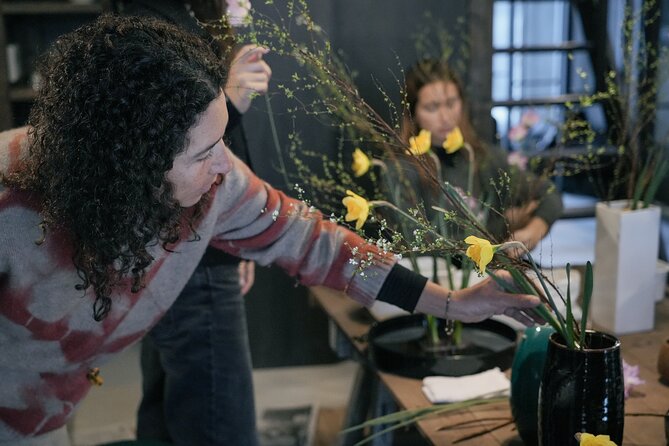
At $72.26 per person, this is not a bargain-basement craft activity. The value depends on what you want from the time. You’re paying for an English-speaking instructor, a small group capped at six, seasonal flowers, demonstrations of two styles, hands-on instruction, and flower-care advice.
For someone interested in Japanese arts, design, or a calm activity between sightseeing stops, that mix can justify the price. The small group and direct instruction are meaningful parts of the cost, since a large class would offer less room for individual guidance. The experience also gives you a skill and a new way to appreciate flowers, rather than just a short performance to watch.
If you mainly want a long history lesson, or expect to leave with extensive technical training, the price may feel high for a 90-minute introduction. Think of it as a focused beginner class, not a certification course or a full-day workshop. It is booked about 30 days in advance on average, so it’s sensible to reserve ahead if this is a priority for your Kyoto plans.
Who will enjoy this class most
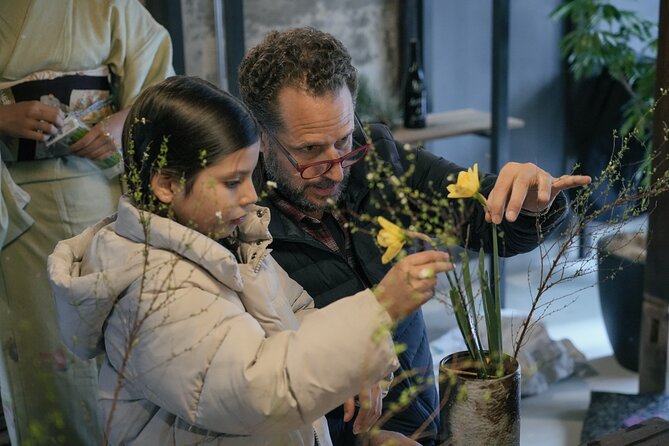
I’d recommend this for curious beginners, couples, and small groups who like making things and want to try a distinctly Japanese art form. It suits people who value a calm, hands-on activity and are happy to learn through demonstration and practice. You don’t need to arrive with flower-arranging experience.
It may be less suitable if you want a deep academic account of ikebana, or if you prefer a strictly structured lesson with extensive history and theory. The class offers context, but the short duration puts the flowers and the act of arranging them at the center.
Most travelers can participate, according to the activity information. No special experience is stated as a requirement. If you have a particular need or question about participation, contact the provider before booking rather than assuming details that aren’t specified.
Should you book the ikebana class?
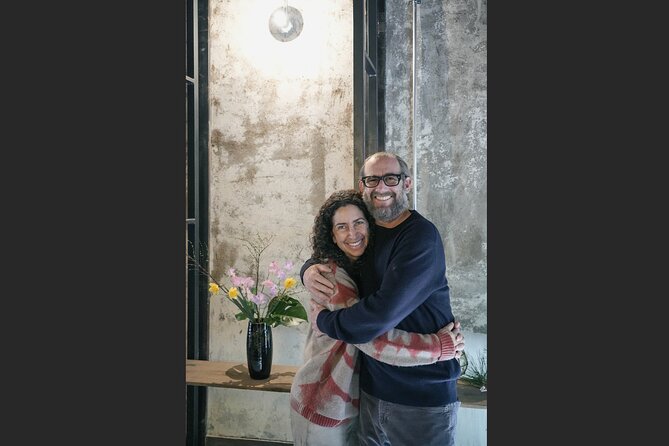
Book it if you want a small, practical introduction to ikebana with an English-speaking instructor, two demonstrated styles, and time to create your own arrangement. The seasonal flowers, mindful approach, and care tips make it more than a quick craft stop.
Skip it if your main goal is a detailed history of ikebana or instruction in many schools and advanced techniques. At roughly 90 minutes, the class is best understood as a thoughtful first lesson. With free cancellation up to 24 hours before the start time, it can be a manageable addition to a Kyoto itinerary, provided you confirm your plans in time.
FAQ
How long does the ikebana class last?
The activity lasts approximately 1 hour and 30 minutes.
What is the price per person?
The listed price is $72.26 per person.
Who teaches the class?
The class is taught in English by ikebana instructor Mana.
Which ikebana styles are included?
Mana demonstrates Nageire and Moribana, two styles presented as suitable for beginners.
Will I arrange flowers myself?
Yes. After the introduction and demonstrations, you have time to practice arranging seasonal flowers.
How many people can join?
The maximum group size is six participants.
Where does the class meet?
It meets at 3481 Tanbayachō, Kamigyo Ward, Kyoto, postal code 602-8287, at Symphony Kitano East.
Does the activity end at the meeting point?
Yes. The class ends back at the same meeting point.
Is the ticket mobile?
Yes. A mobile ticket is available.
Can I cancel for a full refund?
You can cancel for a full refund at least 24 hours before the experience’s start time. Cancellations or changes made less than 24 hours before the start time are not accepted.
Newly added in Kyoto
- Uji: Private immersion into Kyoto’s tea and reglious culture★ 5.0 · 17 reviews
- Whisk Your Own Matcha: A Zen Matcha Experience at Temple★ 3.6 · 7 reviews
- Kyoto tea town for matcha lovers★ 5.0 · 16 reviews
- Treasures of Kyoto: Gion & historical Walking Tour★ 5.0 · 6 reviews
- Kyoto Matcha Green Tea Tour★ 4.5 · 23 reviews
- Uji and Wazuka Matcha Farm Half Day Private Guided Tour★ 5.0 · 21 reviews
- Uji Tea Ceremony and UNESCO Heritage Walking Tour★ 5.0 · 20 reviews
- Utilising upcycled Matcha! Creating matcha incense (Uji, Kyoto)★ 5.0 · 6 reviews
Kyoto Tours, compared.

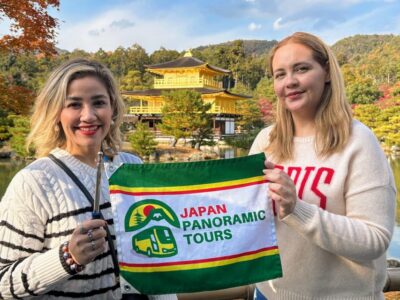
Fushimi Inari, Kinkakuji, Bamboo Grove 1 Day Bus Tour
Read our review →
Tea Ceremony in a Traditional Tea House in Kiyomizu
Read our review →
Kyoto Geisha Walking Tour: Gion District & Hidden Gems
Read our review →
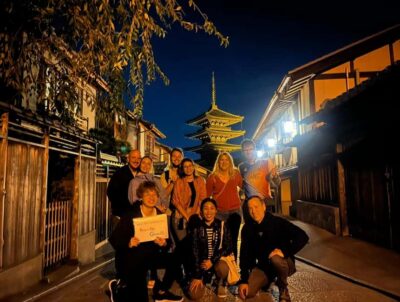
Gion Magical Night Walking Tour with Geisha Trivia
Read our review →